标签: Belize

伯利兹

  • Will Belize “Capitulate” to US Pressure?

    Will Belize “Capitulate” to US Pressure?

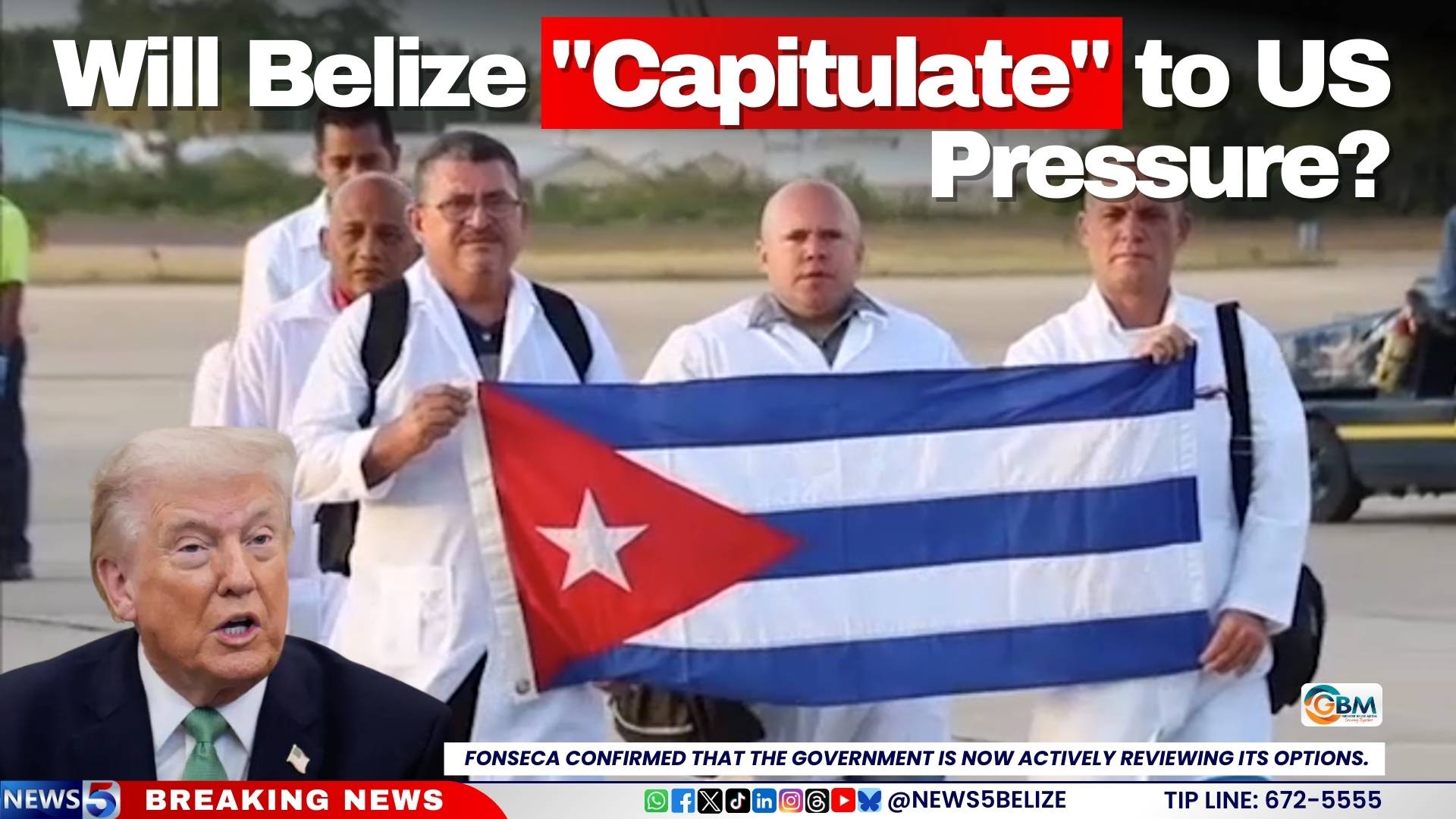
    The Belizean government has initiated a comprehensive review of its longstanding medical cooperation program with Cuba as mounting diplomatic pressure from the United States creates regional tensions. This development comes amid what Foreign Minister Francis Fonseca characterizes as Cuba’s “most difficult period in perhaps the last 40 years.

    Cabinet has formally instructed the Ministry of Foreign Affairs and the Ministry of Health and Wellness to develop contingency plans for the Cuban Medical Brigade program, which has served as a fundamental component of Belize’s public healthcare infrastructure for decades. The program currently employs 92 Cuban medical professionals throughout Belize, including 45 physicians who have been instrumental in delivering healthcare services to remote rural communities.

    Minister Fonseca confirmed the review during recent statements, emphasizing that while no direct threats or sanctions have been issued by US officials, the American position on Cuba remains unequivocal. “The Americans have made no secret about the fact that this is a priority issue for them in the Western Hemisphere,” Fonseca noted, referencing diplomatic exchanges with US Secretary of State Marco Rubio during regional meetings in St. Kitts.

    The Foreign Minister maintained that discussions with US representatives have been conducted respectfully, describing them as “pragmatic and practical” without elements of intimidation. However, he acknowledged that the changing circumstances in Cuba necessitate strategic preparation to ensure the continuity of Belize’s healthcare system.

    While several Latin American nations have already scaled back or terminated similar medical agreements with Cuba under US pressure, Belize has until now maintained its program. The current evaluation represents a significant shift in approach, though government officials continue to express profound gratitude for Cuba’s medical contributions to the nation’s development.

    The contingency planning process will examine multiple options, including the possibility of transitioning away from Cuban medical support, though no definitive decisions have been announced. The primary objective remains safeguarding Belize’s healthcare infrastructure during a period of regional geopolitical uncertainty.


  • Kim Jong Un Wins “Perfect” Election Amid Rare Dissent

    Kim Jong Un Wins “Perfect” Election Amid Rare Dissent

    In a meticulously orchestrated electoral process, North Korean leader Kim Jong Un has been re-elected to the Supreme People’s Assembly with an officially proclaimed 99.93% endorsement from voters. The March 15 election, which recorded a purported 99.99% participation rate, marks Kim’s fifteenth term in the authoritarian regime’s parliamentary body.

    For the first time in nearly seven decades, state-controlled media outlets acknowledged a marginal fraction of opposition votes, with 0.07% of ballots reportedly cast against the leader. This rare admission has ignited waves of speculative commentary and sardonic humor across international online platforms, highlighting the unprecedented nature of this disclosure within North Korea’s political landscape.

    The election process itself functions under the absolute dominance of the Workers’ Party of Korea, which maintains stringent control over candidate selection, media representation, and public discourse. While the system technically permits voters to reject official candidates, this requires participating in a separate, non-confidential voting procedure that inevitably exposes dissenters to potential scrutiny and repercussions.

    Political analysts interpret the minimal opposition figure as a calculated gesture rather than genuine political liberalization. The inclusion of dissenting statistics appears designed to project an illusion of limited electoral freedom while simultaneously reinforcing the leadership’s unwavering authority. The Supreme People’s Assembly is scheduled to convene shortly in Pyongyang to formalize leadership appointments and potentially deliberate on constitutional amendments, following what observers characterize as Kim’s strategic restructuring of the assembly to replace established power centers with unquestionably loyal supporters.

  • “Fresh Drop” No Work!

    “Fresh Drop” No Work!

    BELIZE CITY – In a definitive stance against prevalent food handling misconceptions, Dr. Nathalie Gibson of the Belize Agricultural Health Authority (BAHA) has publicly discredited the ‘fresh drop’ rule, asserting that any food contacting the floor must be immediately classified as waste. The declaration was made during a recent food safety presentation, where Gibson emphasized that repackaging or reusing such products constitutes a severe consumer health hazard.

    Gibson elaborated that authentic food safety protocols extend far beyond superficial practices like wearing hairnets and handwashing. She detailed BAHA’s comprehensive monitoring framework, which scrutinizes a multitude of factors within food establishments. This includes the fundamental design of facilities, the efficacy of pest control measures, and strict adherence to employee health standards by all staff members.

    A critical point underscored by Gibson was the crucial distinction between apparent cleanliness and verifiable sanitation. She posed a pivotal question to industry operators: ‘A surface might appear clean, but is there a verified protocol to ensure all food-contact surfaces have been adequately sanitized before operations commence?’

    Furthermore, Gibson highlighted that BAHA’s inspections evaluate more than just procedural compliance; they assess whether a pervasive culture of food safety is actively promoted and enforced by management. This holistic approach ensures responsibility is not relegated solely to frontline workers. Every aspect, from correct storage procedures to meticulous surface cleaning, falls under rigorous examination during official facility checks.

    Operating for nearly 26 years, BAHA’s core mandate remains the unwavering protection of public health across Belize, safeguarding consumers from preventable foodborne illnesses through education and stringent regulatory oversight.

  • Police Respond to Incident Near Bank

    Police Respond to Incident Near Bank

    Belize City authorities mobilized in response to a security incident occurring in proximity to the Belize Bank Northside Branch on Thursday. The event unfolded at the Matalon Building complex situated along the Philip Goldson Highway, triggering a swift police response.

    Preliminary investigations indicate the incident potentially involved an attempted targeting of a commercial delivery vehicle operating in the vicinity. An eyewitness account provided to authorities described observing an individual sprinting along Coney Drive before hastily mounting the rear of a waiting motorcycle, which subsequently accelerated from the scene.

    Despite the disruption, financial operations at the Belize Bank Northside Branch continued uninterrupted throughout the event. The establishment maintained normal business hours while accommodating customer transactions unimpeded. The surrounding commercial district reportedly sustained regular pedestrian and vehicular traffic flow during and after the police intervention.

    Law enforcement officials have launched a comprehensive investigation into the circumstances surrounding the incident. The precise nature of the security threat and the identities of the individuals involved remain under active investigation as authorities work to determine whether any criminal statutes were violated.

  • 50,000 Gallons of Diesel, No Paperwork…GOB Will Seize

    50,000 Gallons of Diesel, No Paperwork…GOB Will Seize

    The Government of Belize has initiated a comprehensive investigation following the unexplained arrival of an oil tanker carrying approximately 50,000 gallons of diesel fuel without proper documentation. Prime Minister John Briceño confirmed in an exclusive interview with News 5 that authorities have seized the vessel Humilder Viajero, currently docked at Big Creek Port, after it failed to produce necessary paperwork for its cargo.

    Speaking with measured caution due to anticipated legal proceedings, Briceño revealed the peculiar circumstances surrounding the tanker’s appearance. ‘This tanker just showed up. There was no documentation,’ the Prime Minister stated. ‘I’m told even the captain said he didn’t know what they had there—no invoice, nothing. Then, all of a sudden, some papers appeared.’

    The Panamanian-flagged multi-purpose offshore vessel, measuring 34 meters in length and 8 meters in width according to maritime tracking data, has triggered significant regulatory concerns. Briceño confirmed the government’s intention to potentially confiscate the diesel fuel, noting, ‘We have seized that tanker, and whosoever is responsible will have to answer in a court of law. If necessary, we’re going to seize those 50,000 gallons of diesel to put to use, possibly selling it to Puma to help with some of the challenges we’re facing.’

    The investigation involves coordinated efforts between the Attorney General’s Ministry, the Department of the Environment, and the Customs Department to determine whether any laws were violated. The Prime Minister emphasized the government’s commitment to addressing the situation ‘to the full extent of the law’ should any illegal activities be uncovered.

  • ICJ Admits Guatemala into Sapodilla Cayes Sovereignty Dispute

    ICJ Admits Guatemala into Sapodilla Cayes Sovereignty Dispute

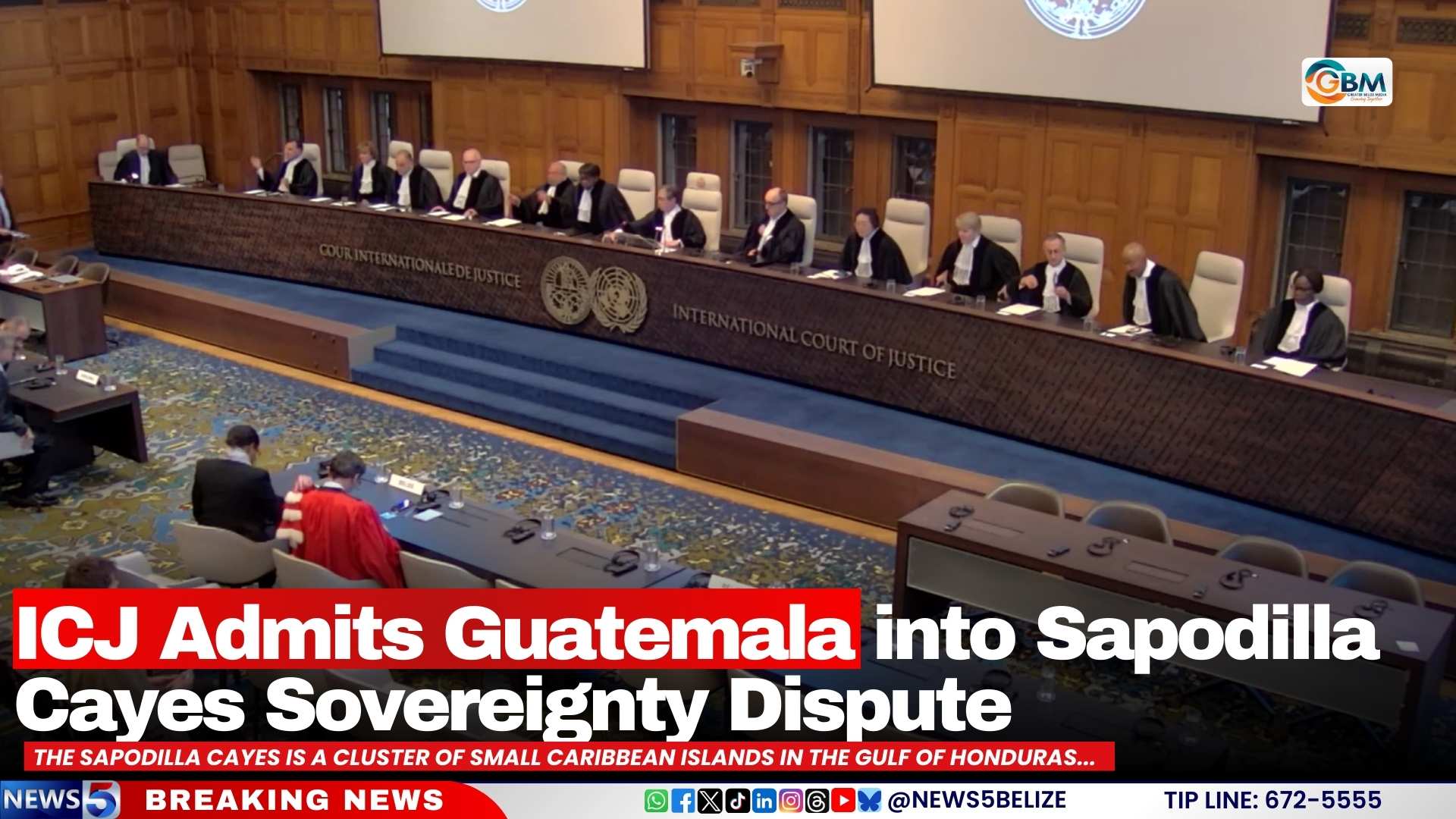
    In a landmark procedural ruling with significant geopolitical implications, the International Court of Justice (ICJ) has unanimously granted Guatemala intervenor status in the ongoing territorial dispute between Belize and Honduras over the strategic Sapodilla Cayes archipelago. The March 19, 2026 decision transforms what was previously a bilateral confrontation into a triangular legal battle concerning sovereignty over these contested Caribbean islands.

    The ruling, delivered at the Peace Palace in The Hague, does not address the fundamental question of territorial ownership but substantially alters the procedural landscape of the case. Guatemala will now participate as a non-party intervener specifically to safeguard its legal interests and formally present the nature and scope of its competing sovereignty claim to the judicial panel.

    The Sapodilla Cayes—a cluster of predominantly uninhabited coral islands situated at the convergence point of Belizean, Guatemalan, and Honduran maritime boundaries in the Gulf of Honduras—possess strategic and legal importance vastly disproportionate to their physical size. While administratively controlled by Belize since its independence, all three nations assert historical claims rooted in colonial succession narratives.

    Belize grounds its sovereignty argument on continuous peaceful administration inherited from British colonial authority, supplemented by allegations of Honduran acquiescence. Honduras, referring to the territory as Cayos Zapotillos, bases its claim on succession from Spanish colonial title and assertions of continuous administrative control. Guatemala’s parallel claim similarly derives from alleged succession to Spanish sovereignty, currently being litigated in a separate ICJ case against Belize encompassing broader territorial and maritime disputes.

    Guatemala’s December 2023 intervention application, filed under Article 62 of the ICJ Statute, sought limited participation to ensure the Belize-Honduras proceedings wouldn’t prejudicially affect its separate legal battle with Belize. While Belize raised no objections, Honduras vehemently opposed Guatemala’s intervention, arguing it failed to demonstrate precise legal interests, constituted procedural redundancy, and represented an abuse of court mechanisms.

    The ICJ comprehensively rejected Honduras’s objections, determining Guatemala satisfied all four requisite conditions under Article 62 of the Statute and Article 81 of the Rules of Court. The court characterized Guatemala’s claim as a “real and concrete” legal interest rather than merely political or strategic, noting that any sovereignty determination would inevitably impact Guatemala’s parallel litigation against Belize.

  • Cane Farmers Weigh Costly Compromise with T&L

    Cane Farmers Weigh Costly Compromise with T&L

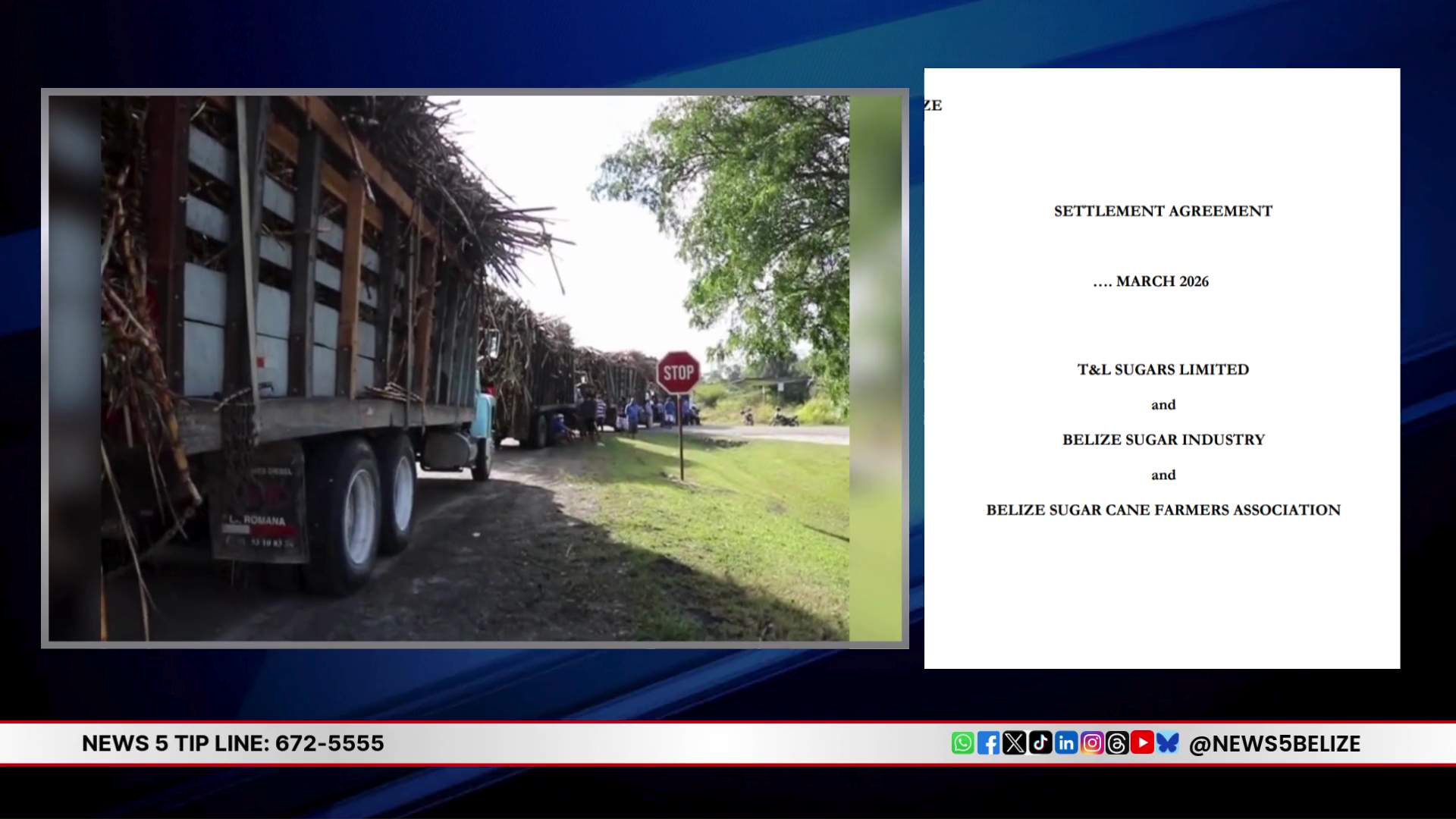
    Belize’s sugar cane industry stands at a critical juncture as the Belize Sugar Cane Farmers Association (BSCFA) contemplates a controversial settlement proposal that would terminate its protracted legal battle with Belize Sugar Industries and T&L Sugars. The association has been pursuing approximately five million dollars in unpaid Fairtrade premiums from the 2021-22 and 2022-23 seasons, plus additional payments for subsequent crops.

    The proposed agreement, scheduled for decision in March 2026, would completely nullify these financial claims in exchange for a single one-year Letter of Enhancement for the 2026-27 season. This document outlines potential premium calculation methods but grants T&L exclusive authority to determine which sugar qualifies, with no commitment to issue future letters beyond this period.

    A commissioned legal analysis characterizes the proposal as profoundly unfavorable, indicating the association could forfeit over eight million dollars in Fairtrade premiums without obtaining guaranteed compensation. Attorney Magali Marin Young cautioned that farmers would become vulnerable to corporate discretion, potentially being excluded from the Fairtrade system if future disputes arise.

    Additional complications include dispute resolution protocols requiring litigation under English law in London—a geographically and financially burdensome process for Belizean farmers. The absence of Belizean government participation in the agreement further eliminates potential safeguards should the settlement prove disadvantageous.

    Proponents present the agreement as fostering improved collaboration, enhanced data transparency, and long-term industry sustainability. However, the BSCFA must weigh these optimistic projections against substantial financial concessions and legal vulnerabilities.

    The association’s membership remains divided ahead of a decisive vote scheduled for Sunday in San Roman. Orange Walk Branch Chairman Alfredo Ortega leads opposition to the proposal, asserting it lacks fairness, transparency, and meaningful long-term security for growers. Ortega emphasized that accepting the settlement would represent signing ‘the cover of our coffin,’ urging farmers to carefully evaluate the agreement’s implications.

    The outcome will profoundly impact Belize’s agricultural economy and establish precedents for corporate-farmer relations in the sugar industry.

  • PM Briceño Talks Leadership and Development as UB’s Guest Lecturer

    PM Briceño Talks Leadership and Development as UB’s Guest Lecturer

    Prime Minister John Briceño assumed the role of guest lecturer at the University of Belize on March 18, 2026, delivering a comprehensive address on governance, economic strategy, and national development. The two-term leader, who received an honorary doctorate from Taiwan in 2022, engaged with students and faculty in Belmopan, offering insights into contemporary challenges facing the nation.

    During the interactive session, Briceño addressed pressing concerns regarding escalating fuel prices, attributing the surge to geopolitical tensions involving Iran. He acknowledged the global nature of inflationary pressures while emphasizing Belize’s limited control over international market fluctuations.

    The Prime Minister provided particularly revealing commentary on Belize-Cuba relations, specifically addressing the delicate status of the Cuban Medical Brigade. Briceño expressed profound gratitude for Cuba’s decades-long medical support, particularly in specialized care and rural healthcare delivery where Belize faces significant capacity gaps.

    His remarks revealed complex trilateral negotiations involving Belize, Cuba, and the United States. Briceño articulated the diplomatic tightrope his administration must walk, noting substantial pressure from Washington regarding continued cooperation with Havana. He illustrated the potential consequences of defiance, including visa restrictions for Belizean citizens seeking to travel to the United States.

    The Prime Minister emphasized efforts to develop a hybrid solution that would preserve medical collaboration while addressing international diplomatic concerns. Simultaneously, he acknowledged the necessity of strengthening Belize’s domestic healthcare workforce amid Cuba’s ongoing humanitarian challenges and shifting regional political dynamics.

    Briceño’s lecture highlighted the multifaceted challenges of leadership in a small nation navigating complex international relationships while addressing domestic development needs.

  • Farmers Warn: Walking Away Could Cost Millions

    Farmers Warn: Walking Away Could Cost Millions

    A significant conflict is emerging within Belize’s sugar sector, creating a complex standoff between the government and agricultural stakeholders. Prime Minister John Briceño’s administration faces allegations of pressuring the Belize Sugar Cane Farmers Association (BSCFA) to terminate its ongoing legal dispute against Belize Sugar Industries and multinational conglomerate Tate & Lyle.

    The association’s legal counsel has issued a stark warning that abandoning the litigation could result in the forfeiture of approximately nine million dollars—funds they anticipate securing through a favorable judicial ruling. This financial stake represents a critical potential gain for the farming community amid ongoing economic challenges.

    Prime Minister Briceño has publicly denied applying direct pressure on the association, stating, “Government has not proposed for them to drop the case. What the government has been saying is that it is their right if they want to go to court.” However, he emphasized the substantial hidden costs of prolonged litigation, noting that the legal battle is causing farmers to lose valuable Fair Trade revenue.

    Adding a layer of political complexity to the situation, Briceño confirmed his personal departure from BSCFA to join the Progressive cane farmers’ association, a move that has raised eyebrows within agricultural circles. This transition comes as the sector prepares for a pivotal vote this Sunday that could determine the future direction of Belize’s sugar industry.

    The Prime Minister defended his decision by highlighting Progressive’s Fair Trade certification, stating, “Progressive has signed on to Fair Trade, so we will be able to get the support from Fair Trade.” This development underscores the deepening divisions within Belize’s agricultural community as different factions pursue varying strategies for economic stability and growth.

  • PM Urges Prudence as Fuel Prices Climb

    PM Urges Prudence as Fuel Prices Climb

    BELIZE CITY – Prime Minister John Briceño has firmly rejected opposition calls for immediate fuel tax reductions, advocating instead for fiscal prudence amid volatile global oil markets. The response comes after Opposition Leader Moses Barrow publicly demanded relief for consumers facing escalating pump prices.

    In a measured rebuttal, PM Briceño highlighted the contrasting fiscal realities between administrations, noting his predecessor benefited from substantial PetroCaribe revenues and oil income exceeding one billion dollars, separate from taxation. “They could have probably done some of that,” Briceño stated, referencing previous governments’ resource advantages.

    The Prime Minister emphasized his administration’s commitment to balancing public relief with economic stability. “We are going to do what is necessary to help our people,” he affirmed during a press briefing. “We have to find that balancing act as to how best to manage these high prices coming to Belize.”

    When pressed about potential government intervention, Briceño maintained a cautious stance, explaining that the 2026/2027 budget already projected specific fuel revenue streams. Any reduction would necessitate compensatory measures—either alternative revenue generation or program cuts. “It is too early to say,” he commented. “We have to act prudently and not hastily as if we are in a panic.”

    The Prime Minister concurrently urged citizens to adopt more fuel-efficient practices, recommending wiser vehicle usage during this period of economic uncertainty. This dual approach of fiscal caution and public behavioral adaptation characterizes the government’s strategy toward managing the fuel price crisis.