标签: Belize

伯利兹

  • Is a Government Job About to Get Easier to Land?

    Is a Government Job About to Get Easier to Land?

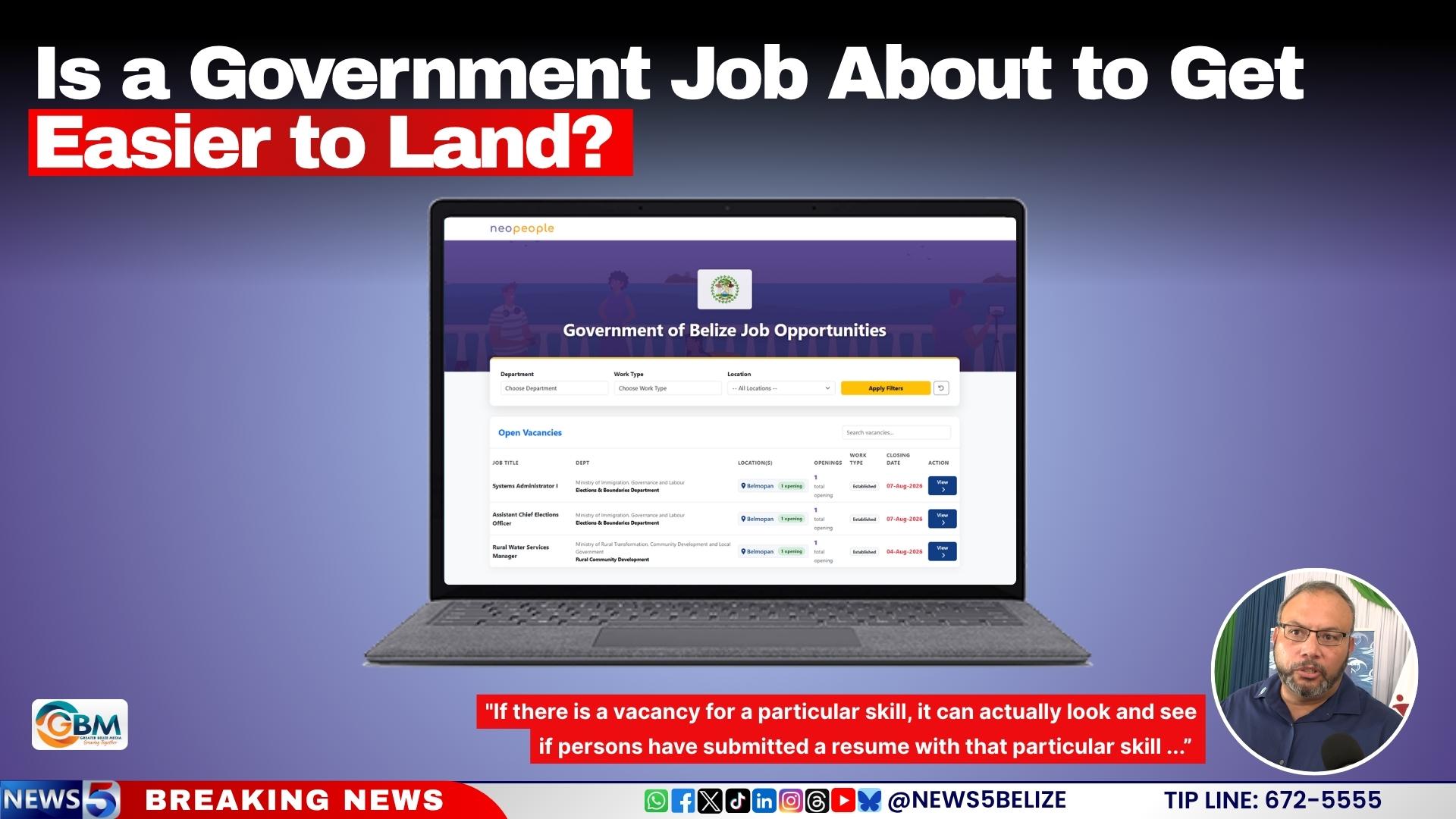
    In a major push to modernize public sector recruitment and open up more accessible government employment pathways for Belizean workers, the Ministry of Public Service rolled out an enhanced online job portal earlier this month. The new digital platform is built to streamline connections between local job seekers and open vacancies across the country’s public service, bringing a suite of functional upgrades that aim to cut down on bureaucratic friction for both applicants and hiring teams.

    Among the most notable improvements is expanded server storage capacity, which can accommodate a far higher volume of resume submissions and job postings than the previous outdated platform. But the standout feature, according to Public Service Minister Henry Charles Usher, is the platform’s new automated resume matching tool.

    Usher explained that the intelligent matching algorithm reworks how open roles are filled: rather than waiting for candidates to actively apply for a advertised vacancy, the system scans its existing database of submitted resumes to identify applicants whose skills and qualifications align directly with the role’s requirements. Hiring teams can then proactively reach out to these matched candidates, opening the door for opportunities that many job seekers may not have even known were available. “If there is a vacancy for a particular skill, it can actually look and see if persons have submitted a resume with that particular skill and try to match them so that we could maybe contact the person without that person having to say, I’m interested in the job,” Usher said of the tool’s functionality.

    This portal upgrade is not an isolated project, it forms a core component of a broader national initiative to modernize Belize’s entire public service apparatus. The entire modernization effort, which also includes digitizing other key administrative functions such as workforce attendance tracking and end-to-end recruitment workflows, is financed through a development loan from the Inter-American Development Bank (IDB). Government officials expect the digital shift will not only make government jobs more accessible to Belizeans, but also improve the overall efficiency and transparency of public sector hiring moving forward.


  • Five Years Later, Belize City’s Fire Service Still Waiting for a Permanent HQ

    Five Years Later, Belize City’s Fire Service Still Waiting for a Permanent HQ

    It has been five full years since Belize City’s National Fire Service sold its former headquarters, yet the critical emergency response agency remains fragmented across disconnected temporary locations, with no firm timeline for a unified permanent facility due to unmet funding requirements.

    In a press briefing held on July 27, 2026, Minister of Public Service and Disaster Risk Management Henry Charles Usher confirmed that the long-awaited new headquarters project has not moved forward because the Briceño administration has yet to secure the necessary capital to break ground.

    Usher pointed to the chaos created by the previous UDP administration’s 2020 decision to sell the agency’s former Cleghorn Street facility without a pre-planned relocation strategy. When the property was sold to Atlantic Bank for $2.8 million in 2020, firefighters were forced to vacate the site by the end of that same year, leaving the service with no permanent base of operations. At the time, the UDP government justified the sale, arguing that the 1992 facility, which cost $8 million to build, was poor value for public funds: it suffered from chronic overcrowding and lacked sufficient space to support efficient emergency deployment.

    Left without a home, the fire service first relocated to temporary accommodations at Marion Jones Stadium, a space Usher described as wholly unsuited to the needs of a professional emergency response agency. Forced to move yet again in September 2025, the service relocated its administrative division to a temporary site on Calle Al Mar Street, leaving other units scattered across additional separate locations. This split arrangement has created ongoing operational challenges for firefighters responding to emergencies across Belize City.

    According to Usher, the current administration has at least finalized plans for the new facility. A parcel of land has already been designated for the project near the Eleanor Hall building, and the planned headquarters is designed to consolidate all of the service’s divisions in one place – bringing administrative offices, a mechanical yard, and a training yard onto a single campus for the first time in five years. Until funding is secured, however, the project remains stuck in the planning phase, leaving the National Fire Service waiting for the permanent home it has needed for half a decade.

  • Venezuela Withdraws from International Criminal Court

    Venezuela Withdraws from International Criminal Court

    In a landmark move that deepens long-running rifts between the South American nation and the global justice body, Venezuela has formally notified the United Nations of its decision to withdraw from the International Criminal Court (ICC). Caracas has long accused the tribunal of systemic political bias, claiming it disproportionately targets sovereign nations in Africa and Latin America, a grievance that sits at the core of its departure.

    Venezuelan Foreign Minister Felix Plasencia confirmed the withdrawal from the Rome Statute — the foundational treaty that established the ICC — in an official announcement, framing the step as a “firm and irrevocable” assertion of national sovereignty. Interim President Delcy Rodríguez echoed this criticism, arguing that the court has been fully politicized and weaponized to advance political agendas against her government.

    The decision comes after more than half a decade of escalating tensions between Venezuela and the ICC. In 2021, the court opened a formal investigation into allegations of crimes against humanity that were purportedly committed during the Venezuelan government’s 2017 crackdown on widespread anti-government protests. Thousands of people who say they were victimized by the crackdown have already submitted sworn testimony to ICC investigators as part of the inquiry.

    Even following Venezuela’s formal notification, the ICC has made clear that its ongoing investigation will proceed uninterrupted. Per the terms of the Rome Statute, a member state’s withdrawal only takes effect 12 months after the United Nations receives official notification, and it does not have the power to halt investigations that have already been launched before the withdrawal takes effect.

    Human rights advocates have raised urgent concerns about the long-term implications of the move. They warn that Venezuela’s exit could create new barriers to holding senior government officials accountable for the alleged abuses at the center of the investigation, weakening prospects for justice for survivors.

    The United States has publicly welcomed Venezuela’s decision, with the State Department repeating longstanding criticism that labels the ICC a “corrupt” institution. The U.S. has also issued a call urging all other ICC member states to follow Venezuela’s lead and exit the court. This position aligns with the stance taken by the Trump administration, which repeatedly attacked the court and worked systematically to curtail its global influence.

    Legal analysts who specialize in international criminal law note that while the withdrawal is unlikely to disrupt the current investigation into the 2017 events, it will probably limit future cooperation between Venezuelan authorities and ICC prosecutors. This could hamper any additional inquiries or prosecutions that the court may pursue moving forward, creating new hurdles to justice in potential future cases.

  • The Old Capital Is Now Tsunami-Ready, What Does That Mean for You?

    The Old Capital Is Now Tsunami-Ready, What Does That Mean for You?

    After nearly eight years of incremental planning, hands-on training, and widespread public outreach, Belize’s former capital city Belize City has formally received the UNESCO Tsunami-Ready designation, marking a major milestone in Caribbean coastal disaster risk reduction. As the 23rd community in the Caribbean region to meet the strict international preparedness standard, the milestone shines a spotlight on Belize’s years-long push to protect its vulnerable coastal population from one of the region’s deadliest natural hazards.

    The journey to recognition has not been smooth. The initiative first launched in 2018, starting with preliminary hazard modeling and the drafting of public evacuation maps, but progress stalled soon after the initial phase. Christa von Hillebrandt-Andrade, Deputy Director of the International Tsunami Information Center-Caribbean Office, explained that the extended delay nearly cost Belize the designation entirely. With U.S. funding for the project set to expire, the international team was prepared to redirect its support to another community that ultimately secured its own Tsunami-Ready status in Belize’s place.

    It was not until 2024 that momentum reignited, when Belize’s national and municipal authorities — including the National Emergency Management Organisation (NEMO), the National Meteorological Service (NMS), and the Belize City Council — restarted collaboration with the U.S. National Oceanic and Atmospheric Administration (NOAA) and the National Weather Service to push the project across the finish line.

    Today, Belize City boasts a completed network of marked evacuation assembly points and clear directional signage installed across all high-risk coastal zones of the city. Henry Charles Usher, Belize’s Minister of Disaster Risk Management, clarified the function of these new gathering points for local residents: Designated staff from the Belize City Council, the City Emergency Management Organization (CEMO), and NEMO will be on site to coordinate crowds and guide evacuees to safe zones during an emergency, though transportation to the final safe areas is not guaranteed to be available for all evacuees.

    Despite the celebratory milestone, both national officials and international partners emphasize that the designation does not eliminate Belize City’s inherent tsunami risk, nor does it mark the end of preparedness work. “This is really just the beginning of the process,” Usher noted. “This is all about continuing to be ready, continuing that community engagement, preparedness, and education and awareness when it comes to tsunami.”

    Looking ahead, the government plans to expand the Tsunami-Ready framework beyond Belize City to build coordinated disaster preparedness across the entire country, with ongoing investment in public education, infrastructure upgrades, and community engagement to keep coastal populations safe as climate change increases the risk of extreme coastal events globally.

  • “You Are NEMO”: Orange Walk Rural Gets 23 New CERT First Responders

    “You Are NEMO”: Orange Walk Rural Gets 23 New CERT First Responders

    On a Thursday in late July 2026, 23 residents from two rural villages in Orange Walk, Belize – San Antonio and Santa Cruz – marked a major milestone for local disaster preparedness by graduating as the nation’s second cohort of Community Emergency Response Team (CERT) members. Unlike professional emergency personnel who often require travel time to reach rural communities, these newly trained first responders are based directly in the villages they serve, ready to step into action immediately after an emergency strikes, before external professional support can arrive.

    Over the course of their training, participants mastered a broad suite of critical emergency skills ranging from foundational disaster preparedness and life-saving first aid to fire safety protocols, light search and rescue operations, emergency radio communications, and post-disaster damage assessment. Program organizers intentionally designed the cohort to include diverse representation across the community: members from local education institutions, public health services, village councils, youth groups, and independent community residents all participated, reflecting a core belief that meaningful community resilience can only be built when every segment of a community contributes.

    Andrea Grosvenor, Business Development Manager at the Caribbean Disaster Emergency Management Agency (CDEMA), which provided technical support for the initiative, emphasized the inclusive vision behind the project. “This project intentionally brought together representatives from the education and health sectors, village councils, youth, and other community members, recognising that resilience requires the participation of the entire community,” Grosvenor explained.

    Daniel Mendez, National Emergency Coordinator for Belize’s National Emergency Management Organization (NEMO), which led the implementation of the CERT program, framed the expansion of community first responder teams as a cornerstone of national efforts to build safer, more self-reliant communities. Speaking directly to the graduating class, Mendez noted that the training was far from easy, requiring commitment, collaborative teamwork, and courage from all participants. “Community resilience starts here at the community where you are going to be able to help each other first before help arrives,” he told graduates, reminding them “Remember that you are NEMO” – a nod to their role as the first line of emergency response for their home communities.

    Abdiel Teyul, Chairman of San Antonio Village, spoke on behalf of all 23 graduates, highlighting the transformative impact the team will have for the two neighboring villages. Located in a region vulnerable to seasonal hurricanes and flooding, Teyul explained that the trained cohort leaves San Antonio and Santa Cruz far better equipped to handle emergency events before outside help arrives. He urged his fellow graduates to keep their core mission front of mind: “Remember to always serve with empathy, with the safety of lives as a priority.”

    To support the new responders in their work, each graduate received a personalized emergency response kit for on-the-ground use. The village councils of both San Antonio and Santa Cruz also received dedicated coordination equipment to strengthen their ability to organize local response efforts during large-scale disasters.

    The CERT training program is funded by the European Union under the Building Resilience to Climate and Hazard Impacts in the Caribbean (BRICS) programme, marking a key investment in regional climate adaptation and community safety. This 2026 graduating cohort from Orange Walk follows the first ever CERT graduation, which took place in Toledo district last year, as NEMO continues to roll out community-focused emergency response capacity across the country.

  • Rights Group Raises Questions Over Reports of Belarusian Deportations to Belize

    Rights Group Raises Questions Over Reports of Belarusian Deportations to Belize

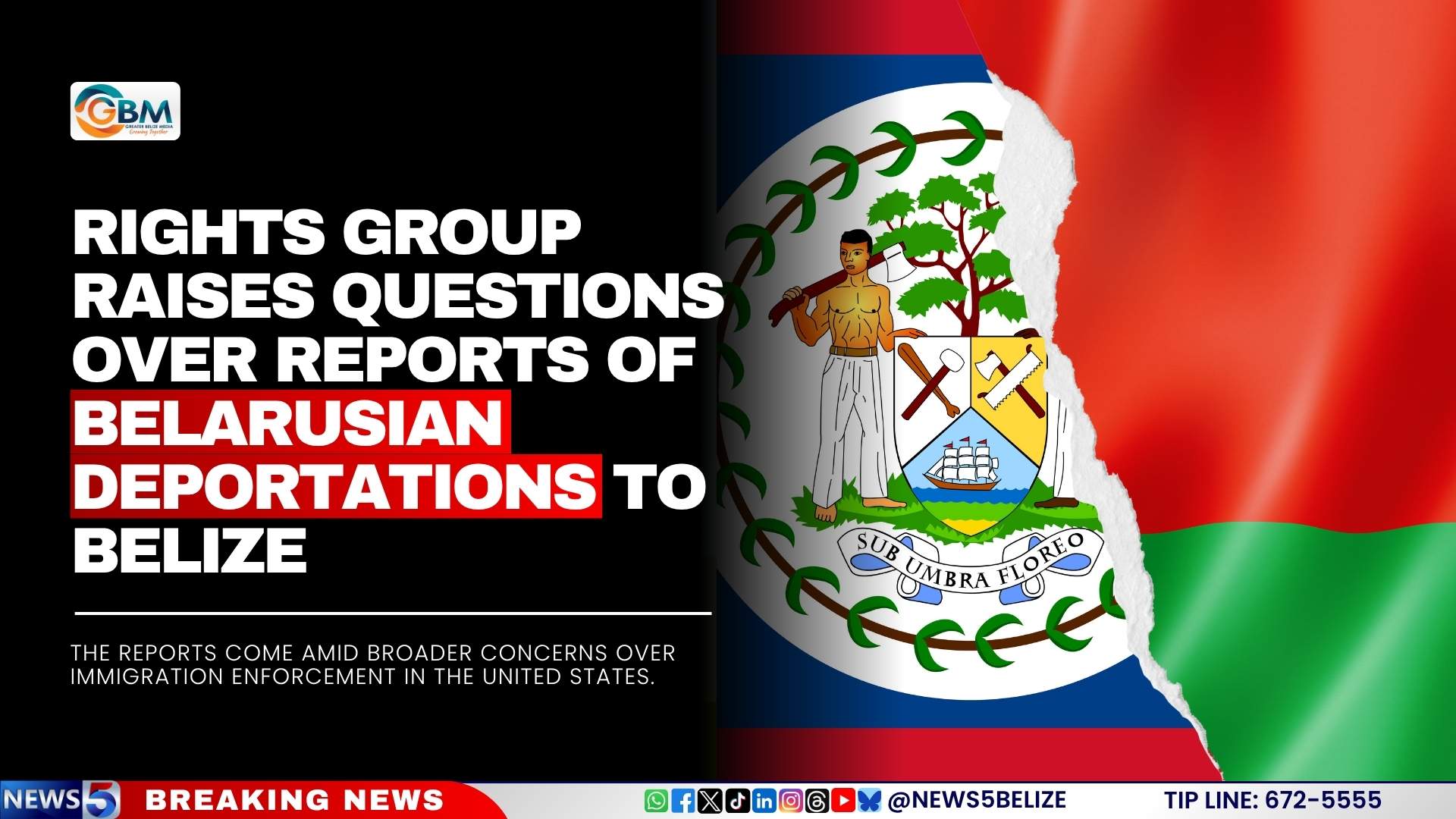
    In a development that shines a new light on shifting U.S. immigration enforcement practices, a Belarusian human rights organization is pushing for full transparency following emerging reports that American immigration courts have issued deportation orders sending Belarusian citizens to Belize – a move that has raised significant procedural and geopolitical questions, even as no concrete confirmation exists that the removals have been carried out.

    ByAction, a grassroots human rights initiative focused on Belarusian displaced communities, confirmed it has documented two specific cases where a California immigration judge signed off on orders to remove two Belarusian nationals to the Central American nation of Belize. In a subsequent clarification, however, the group acknowledged that it currently lacks verifiable evidence proving the two individuals were actually transported to Belize following the court rulings.

    Yauhen Zhdanovich, founder of ByAction, shared that the organization’s current information is limited to the basic fact of the court orders, which were issued by a judge sitting at the West Los Angeles Immigration Court. Critical details remain shrouded in uncertainty: the full identities of the Belarusian citizens involved, information about their legal representation, and even whether the pair have filed appeals against the deportation rulings have not been made publicly available.

    Beyond the lack of clarity around the cases themselves, ByAction has raised pointed questions about the practical feasibility and logistics of deporting Belarusian nationals to Belize, a small Caribbean nation that has no formal established travel or deportation reciprocity agreement with either the United States or Belarus. The group is specifically questioning whether Belize has the infrastructure, policy frameworks, and willingness to accept third-country nationals from a European nation located thousands of miles outside of its traditional regional migration sphere.

    These unconfirmed reports emerge against a backdrop of growing scrutiny of U.S. immigration enforcement actions targeting citizens from Eastern Europe and the former Soviet bloc. ByAction previously documented that at least seven Belarusian citizens were taken into custody by U.S. Immigration and Customs Enforcement agents in the first months of 2026, and that multiple other Belarusian nationals have been deported from the United States since the start of 2024. The organization is now calling on U.S. immigration authorities and the Belizean government to release full details about the deportation orders to address growing concerns among the Belarusian diaspora in the United States.

  • Taiwan Expands Trade Office to Include Belize and Five Other Regional Allies

    Taiwan Expands Trade Office to Include Belize and Five Other Regional Allies

    On July 27, 2026, Taiwan announced a major expansion of its regional trade initiative, rolling out a broader platform to deepen economic engagement with Belize and five additional diplomatic allies across the Latin American and Caribbean region. The newly inaugurated Latin American and Caribbean Trade Office (LACTO), which opened its headquarters in Taipei on Friday, replaces the decades-old Central America Trade Office (CATO), an initiative that previously only focused on advancing commercial ties with Belize and Guatemala.

    Unlike its narrow-focused predecessor, the expanded LACTO extends its official remit to cover four more regional allies: Paraguay, Saint Kitts and Nevis, Saint Lucia, and Saint Vincent and the Grenadines. The restructured office is designed to build a cohesive regional network that unlocks new growth opportunities across four key areas: cross-border trade, foreign direct investment, tourism cooperation, and private sector business partnerships.

    Taiwan’s Foreign Minister Lin Chia-lung framed the institutional expansion as a landmark milestone for bilateral and multilateral economic collaboration between Taiwan and its regional partners. Speaking at the office’s opening ceremony, Lin emphasized that LACTO will serve as a centralized bridge connecting private enterprises across participating economies, streamline investment promotion processes, and strengthen long-standing commercial relationships rooted in diplomatic cooperation.

    Augusto Chou-Fu Chan, the newly appointed executive director of LACTO, noted that the rebranding and expansion represent far more than a superficial institutional change. He explained that the overhaul comes with an expanded mission: to deliver hands-on support to small and medium-sized enterprises, foster cross-border industrial collaboration, and open new mutually beneficial economic channels between Taiwan and the Latin American and Caribbean region.

    Moving forward, LACTO has outlined a clear agenda to advance its goals. The office will prioritize promoting high-quality goods and key industries from all six participating nations, ranging from agricultural commodities, fisheries products, and processed food to tourism experiences and greenfield investment opportunities. Planned activities to deliver on these goals include large-scale regional trade exhibitions, one-on-one business matchmaking events, cross-border procurement roundtables, and high-level official exchange delegations to strengthen personal and institutional connections.

    As one of the two original partner economies served by the former CATO, Belize is positioned to continue reaping the benefits of the unified trade platform. The expanded office’s broader mandate will amplify global visibility for Belizean and other regional products, while actively targeting increased foreign investment flows from Taiwan to the region, supporting inclusive economic growth across all participating allies.

  • A Kids’ Summer Camp to Revive a “Dying” Agriculture Industry

    A Kids’ Summer Camp to Revive a “Dying” Agriculture Industry

    Across Belize, a quiet crisis has been unfolding in the agriculture sector: fewer and fewer young people are stepping forward to take up farming as a lifelong career, leaving the industry at risk of gradual decline as the current farming population ages. But one grassroots initiative at Central Farm is working to turn this tide, engaging children early through an immersive summer camp designed to spark lasting interest in agricultural careers.

    The Cayo Central Youth in Agriculture Summer Camp concluded its 2026 session last Friday with a celebratory certificate distribution ceremony, closing out a week of hands-on learning that gave 116 young participants direct exposure to a wide range of agricultural disciplines. Over the seven days, the campers traded traditional classroom desks for interactive lessons at fish ponds, working vegetable gardens, and livestock pens, donning custom green camp t-shirts as they moved through the Central Farm compound to learn practical skills in crop cultivation, livestock management, aquaculture, agro-processing, and beekeeping.

    Alex Balona, the Area Representative for Cayo Central and Minister of State in Belize’s Ministry of Agriculture, shared that this year’s participation numbers exceeded all organizing expectations. “Last year we had 103 campers, and this year we welcomed 116 participants by the end of the week. So I am very happy,” Balona noted. The steady uptick in turnout is particularly encouraging for the camp’s core mission, he explained, at a time when Belize is facing a growing shortage of new farmers to replace retiring producers.

    “Interest in agriculture is dying, and there are many factors contributing to that trend,” Balona explained. “Without farmers, our tables will not be set for us. That is why I am pushing to sensitize our children early, so that by the time they enter adolescence and move on to high school, they will consider choosing agriculture as a viable career path.”

    For many of the young campers, the hands-on approach opened their eyes to opportunities in agriculture they had never considered before. Twelve-year-old Gabriella Hall counted tilapia farming as the highlight of her week, noting that the experience left her open to building a future in the sector. “We got to see the different types, like the red and the grey tilapia, and they were really beautiful,” she said. “I can definitely see myself pursuing agriculture down the road.”

    Another participant, Rayanne Requena, left the camp already considering new career paths in marine biology or veterinary science, sparked by the camp’s aquaculture modules. “I enjoyed the aquaculture, and I loved the agro-processing sessions,” she said. “The camp showed you how you can turn one simple thing into something much more valuable than it originally is. That adds value to a basic product, and I think that’s pretty cool.”

    Even for campers like Aquim Canto, who grew up in a farming family, the program reinforced his commitment to carrying on his family’s tradition. “Planting is important because you get to produce more fruits and vegetables so people can buy and eat,” Canto said. “That’s why I came to learn more, and now when I go home, I’m even more motivated to keep going.”

    Organizers have already announced plans to expand the camp for 2027, with Balona confirming that the team is working to bring the Belize Agricultural Health Authority (BAHA) on board next year to add specialized training on livestock veterinary care. For returning and future participants, the verdict is clear: camper Nayanni Maree is already encouraging more young people to sign up for next year’s session. “It’s great, and you will enjoy it here, and you should come,” Maree said. “You’re gonna learn something new, and it will be so much fun.”

    The 2026 camp program was sponsored by RF&G Insurance Ltd., whose slogan is “It Pays to Get it Right.”

  • India’s Cockroach Movement Forces Education Minister’s Resignation

    India’s Cockroach Movement Forces Education Minister’s Resignation

    In a landmark political shift that underscores the growing power of youth activism in South Asia, India’s federal Education Minister Dharmendra Pradhan has stepped down from his post, capping off a week of mass nationwide protests triggered by a high-stakes examination leak scandal that roiled the country and galvanized millions of young people.

    The controversy began when confidential documents for multiple competitive entrance exams and government job recruitment tests were circulated illegally online, forcing more than 3 million aspirant students and job seekers to reschedule and retake their assessments. The disruption and uncertainty sparked immediate public anger, which deepened when local Indian media confirmed links between the scandal and the suicides of at least 14 young people who said they could not bear the stress of the delayed testing process.

    The widespread demonstrations were organized by the youth-led Cockroach Janta Party (CJP), a grassroots movement that adopted its unusual name from a controversial 2025 comment by a sitting judge, who infamously labeled unemployed Indian youth as “cockroaches” and “parasites” draining public resources. Rather than rejecting the derogatory label, movement organizers reclaimed it as a badge of identity, building a national campaign that united students across regional, caste, and class lines. The CJP laid out four core demands: Pradhan’s immediate resignation, sweeping structural reforms to India’s hyper-competitive education and recruitment system, financial compensation for the families of the students who died by suicide, and legal protections for peaceful demonstrators from police crackdowns.

    Protests gained rapid traction after security forces in New Delhi deployed tear gas and baton charges to disperse a largely peaceful gathering of thousands of students in the capital. Images of the crackdown spread widely across social media, drawing hundreds of thousands more participants to rallies held in every major Indian city over the following days.

    In his formal resignation letter submitted to Prime Minister Narendra Modi’s office, Pradhan said he was stepping down to prevent what he framed as “anti-national forces” from exploiting the public unrest to destabilize the national government. He also included a rare acknowledgment of the anger among India’s youth, writing that he respected their career aspirations and shared their frustration over the ongoing crisis.

    Pradhan’s departure marks the first time in more than 11 years that a sitting federal minister in Modi’s ruling government has resigned in response to sustained public protest, a shift that political analysts say signals shifting pressure on established parties to respond to youth demands.

    Following the announcement of Pradhan’s resignation, CJP leaders confirmed that the movement had agreed to suspend all nationwide demonstrations after entering into formal negotiation talks with senior government officials. In a public statement, the group called Pradhan’s resignation “a victory for Indian democracy” and a proof that collective grassroots action can force accountability from even the most powerful national institutions.

  • Tongue-Controlled Device Offers New Option for People With Limited Mobility

    Tongue-Controlled Device Offers New Option for People With Limited Mobility

    After years of rigorous private testing, a groundbreaking assistive technology that empowers users to operate digital devices solely through tongue movements has hit the commercial market in the United States, bringing new independence to millions of people living with limited upper-body mobility.

    Developed by U.S. startup Augmental, the innovative product named MouthPad is engineered as a compact, wireless trackpad that custom-fits to the roof of the user’s mouth. By combining intentional tongue gestures and subtle head movements, users can complete a full range of digital functions—from moving on-screen cursors, clicking, and scrolling to executing more advanced commands—all without relying on their hands or arms.

    The commercial launch comes after a multi-year real-world testing phase, where more than 100 participants with mobility impairments integrated the device into their daily lives to provide feedback and refine its functionality. The first commercially available version of MouthPad includes upgraded features, adding support for custom keyboard shortcuts and basic gaming controls that expand its use beyond work and communication into recreational activities.

    The device is targeted primarily at people living with paralysis, limb loss, spinal cord injuries, and a range of other chronic conditions that impair upper-body mobility. Assistive technology accessibility experts note that MouthPad fills a critical gap in the current market: while existing solutions such as eye-tracking systems and voice control tools have transformed accessibility for many, these options are not practical or effective for all users. Innovations like MouthPad expand the range of choices available, making digital access more inclusive for people with varying accessibility needs.

    Despite its promising potential to improve quality of life for users, MouthPad faces notable barriers that could slow widespread adoption. The device carries a retail price of $1,400, putting it out of reach for many users without insurance or financial assistance. Additionally, the product requires a custom dental scan to ensure a proper fit before manufacturing, and as of launch, fitting services are only available within the United States, restricting access for international users who could benefit from the technology.

    On the performance side, MouthPad boasts broad cross-platform compatibility, working seamlessly across Windows, macOS, Linux, iOS, and Android devices. A single full battery charge delivers more than seven hours of continuous use, supporting most daily activity needs for users.