标签: Belize

伯利兹

  • How Public Officers Can Protect Their Pension Benefits

    How Public Officers Can Protect Their Pension Benefits

    July 30, 2026 — For public sector employees across Belize, the dream of a financially secure retirement hinges on a smooth, timely pension disbursement — a reality that has grown increasingly out of reach for many workers who have dedicated decades to public service. Growing public frustration over crippling processing delays, with some retirees passing away before ever accessing their earned benefits, has sparked renewed calls for proactive, pre-retirement planning to cut through bureaucratic gridlock and prevent avoidable complications. News Five reporter Britney Gordon explores the key steps public officers can take years before leaving service to protect their hard-earned pension benefits, and addresses systemic gaps that have turned the post-retirement benefit process into a chaotic, exhausting ordeal for many families.

    Retirement stands as the capstone milestone of a public officer’s decades-long career, with promised pension benefits designed to deliver consistent financial stability once they step away from their duties. But for far too many Belizean public servants, the journey to accessing those benefits has become nothing short of a bureaucratic nightmare, marked by long waits, lost paperwork, and unnecessary hurdles that leave retirees in financial limbo. Local attorney Richard “Dickie” Bradley has emerged as a vocal critic of the broken system, pointing to the most extreme example of its failure: retirees who die without ever receiving the pension they spent their working lives earning. “People die and no seeing pension. What kind of country we run?” Bradley asked, amplifying widespread public anger over ongoing inefficiencies.

    While systemic reform will take time, industry and retired administrative experts agree that proactive personal action years in advance of retirement can drastically reduce the risk of costly delays. According to Carol Gentle, a retired administrative officer who spent nearly 40 years working within Belize’s public service system, successful pension processing is a shared responsibility between the employee and the administrative teams that manage their employment files.

    Gentle emphasized that all public officers hold a clear legal right to review their official employment files at any point during their career, and encouraged workers to start the review process long before their planned exit from service. “I recommend to public officers, when you reach the age of, say, between fifty to fifty-three, you try and find your administrative officer and ask them to set a date for you to go through your file, because you have that right to see your file. You peruse your file, check to see what’s on your file, and ask questions,” Gentle explained.

    The core of pre-retirement preparation is confirming that every required document is properly filed and accurate, from approved leave histories and updated personal records to all mandatory performance evaluations. Gentle noted that it is the employee’s own responsibility to follow up on missing paperwork, even for workers who have reached the top of their pay scale. Pension processing officially begins one year before a public officer’s planned retirement at age 55, so any gaps in documentation discovered that late can already trigger major delays. “If it is not, it is you the officer’s responsibility to ensure that your supervisor do your appraisal and have it affixed to your file. Even if you’re at the end of your pay scale, it’s your obligation to get it done or else your file will not be processed,” Gentle said.

    The most common avoidable issues that slow pension and gratuity calculations include missing employment history records, incomplete performance appraisals, and discrepancies between the name on a worker’s employment file and their official birth certificate. Gentle explained that these name mismatches are surprisingly common, and resolving them can take months of extra work if left until the last minute. “I found in my experience a lot of people are in the public service with one name, and for some reason when they go to the vital statistics for their birth paper, they are registered in a different name. They have to go through the process, and that’s why I advise them that they get their birth paper way in advance, years in advance,” she added.

    Rather than waiting for the official pre-retirement processing window to open, Gentle advised public officers to conduct annual reviews of their employment files to catch gaps early. This regular audit schedule gives workers enough time to locate missing documents, resolve discrepancies, and correct errors long before their retirement package is submitted for processing, eliminating the avoidable delays that have derailed so many Belizean public servants’ retirement plans. Britney Gordon, News Five, Belize.


  • Mayor Nuñez Promises Updates in Murder Investigation

    Mayor Nuñez Promises Updates in Murder Investigation

    A double homicide that has shaken the quiet island community of San Pedro, Belize has spurred public calls for accountability, with local leaders moving to address growing public anxiety over public safety. In late July 2026, the killings of local businessman David Harmouch and employed security guard Daniel Jones triggered a public demonstration by members of the island’s Lebanese community, who gathered outside the San Pedro Police Station to demand immediate answers from law enforcement and elected officials.

    In response to the public outcry, San Pedro Mayor Wally Nuñez has moved to reassure both the victims’ families and the broader community that local authorities are prioritizing the ongoing investigation. Nuñez confirmed that city officials have maintained consistent, direct communication with the grieving families of Harmouch and Jones, and committed to delivering regular, public updates on the case’s progress as investigators work to identify and apprehend the perpetrator.

    “This is an undeniably tragic event for our island,” Nuñez stated in an interview following the protest. “We have personally engaged with the community organizers and the families, and we have given our formal commitment that the investigation will move forward transparently, with regular updates shared at every key stage.”

    Notably, Nuñez emphasized that violent homicide remains an extremely rare occurrence on the island, framing the incident as an isolated event that has nonetheless upended local residents’ sense of personal safety. “This kind of violence deeply affects how our community feels about safety here,” he added. “That is why this case demands our full attention, and we are fully committed to seeing it through to justice.”

    As of the latest update, law enforcement has not made any arrests in connection with the double murder. This report is adapted from a transcribed broadcast of local evening news, originally published online following the on-air segment.

  • SP Town Council Reallocates Over $2 Million to Tackle Sargassum

    SP Town Council Reallocates Over $2 Million to Tackle Sargassum

    As of July 30, 2026, the idyllic island of San Pedro, Belize, is grappling with a persistent and costly environmental crisis that is straining municipal finances: a massive, unrelenting influx of sargassum seaweed washing onto its iconic shorelines. San Pedro Mayor Wally Nuñez confirmed in a recent broadcast interview that the town council was forced to reallocate more than $2 million from other municipal programs last year alone to fund emergency sargassum removal efforts, a financial burden that has impacted nearly every other area of local public service. What makes the situation even more urgent is that the flow of invasive seaweed shows no sign of abating, prompting local leaders to pursue long-term, more efficient solutions to protect the island’s coastal ecosystem and tourism-dependent economy.

    Nuñez emphasized that the crisis is far from a local problem alone — it is a widespread regional challenge impacting coastal communities across the Caribbean Basin, stretching from Central American nations to coastal areas of the United States. For San Pedro, which relies heavily on its clean, attractive beaches to draw international tourists, the immediate priority remains rapid removal before the sargassum can decompose in nearshore waters, which would worsen water quality and drive away visitors. Currently, most of the town’s removal efforts are concentrated along the 1-mile stretch surrounding the town port, a small fraction of San Pedro’s total beachfront, leaving much of the coastline’s cleanup to private resorts and community volunteers.

    Local leaders are actively evaluating a range of new approaches to tackle the issue, including investing in specialized, heavy-duty removal equipment that can clear sargassum directly from the water before it reaches the shore. Nuñez also noted that entrepreneurs have pitched a variety of repurposing plans for collected sargassum — including the production of so-called sarga blocks for construction and other commercial uses — but for cash-strapped local leaders, speed of removal remains the top priority. Last year marked one of the worst on record for sargassum inundations in San Pedro, leaving the council with no choice but to shift limited resources away from other planned municipal projects to fund emergency cleanup.

    Fortunately, San Pedro is not facing the challenge alone. Mayor Nuñez confirmed that multiple regional agencies and key local stakeholders, including the Belize Tourism Board, have stepped in to provide additional equipment, logistical support, and funding to help the town manage the ongoing crisis. Private resorts along the island’s extended coastline have also deployed their own removal strategies, while community volunteers have contributed to local cleanup efforts to protect the island’s most valuable natural asset.

  • Stoll Fined for Handling Jaguar Cub as Authorities Pursue Brother

    Stoll Fined for Handling Jaguar Cub as Authorities Pursue Brother

    A widely circulated viral video showing two men interacting with a protected jaguar cub in Belize has resulted in legal consequences for one sibling, while authorities continue to pursue the other for violating the nation’s wildlife protection laws.

    On July 30, 2026, Ruben Stoll returned to Belize, turned himself in to the country’s Forest Department, and completed payment of a $1,000 fine for illegally handling the vulnerable wild big cat. Speaking on the case, Forest Officer Victoria Chi confirmed that Stoll issued a formal apology for his actions and openly acknowledged the dangers of unauthorized interference with native wildlife populations. Unlike his cooperative brother, Victor Stoll has refused to surrender to authorities and continues to claim that neither he nor Ruben committed any offense.

    Chi addressed public criticism that the $1,000 penalty is too lenient for the violation, explaining that the fine amount is bound by Belize’s current wildlife legislation. “Critics say one thousand dollars is insignificant, and I wish we could impose a larger fine,” Chi stated. “But we are limited by the existing legal framework, so we can only charge the maximum amount allowed under current law.”

    Beyond legal penalties, Chi emphasized the broader public health and conservation risks that come with close, unsanctioned contact with wild jaguars. She noted that wild animals carry a range of transmittable diseases that can spread to humans through direct touching, scratching, or contact with contaminated surfaces. Close encounters also put not only the individual at risk but also broader community public health at large.

    “These animals are wild, not domestic pets,” Chi explained. “The core message we want to send to every visitor and resident is simple: admire wildlife from a distance. You can observe them, take photos to remember your encounter, but never enter their space or engage in close physical contact.”

    Under Belize’s protected species laws, jaguars are classified as a protected wildlife population, making unauthorized handling a punishable offense. Chi confirmed that Ruben, who directly petted the jaguar cub, was the sibling issued the fine to date. Ruben has also stated he intends to convince his brother Victor to turn himself in to face potential charges.

    To ensure Victor will be apprehended if he re-enters the country, Belize’s Forest Department has issued an official alert to the nation’s Immigration Department, instructing border officials to monitor for Victor Stoll’s arrival and detain him for processing upon entry. Officials have stressed that the high-profile case is intended to set a clear public precedent for wildlife protection across the country, reinforcing that unauthorized interaction with protected species will not go unpunished.

  • Belize Basketball Bounce Back With Blowout of Guatemala

    Belize Basketball Bounce Back With Blowout of Guatemala

    Just 48 hours after a gut-wrenching last-minute three-point defeat to host Dominican Republic, the Belize men’s national basketball team delivered a statement response at the 2026 Central American and Caribbean (CAC) Games in Santo Domingo. Facing off against long-time regional rival Guatemala on July 30, the team shrugged off any potential post-loss letdown to secure a resounding 94-64 victory that keeps their medal aspirations on track.

    Belize caught fire from the opening tip-off, exploding out of the gate to build an insurmountable advantage by halftime. The squad’s sharp shooting and aggressive defense allowed them to race to a 29-point halftime lead, sitting comfortably at 57-28 as the teams headed into the locker room. Any expectation that Belize would ease off the gas in the second half proved wrong: the team maintained its intensity on both ends of the court, extending its lead through the third and fourth quarters before cruising to the 30-point final margin.

    Offensively, Belize was led by standout guard Josiah Moseley, who put on a shooting masterclass to earn a game-high 22 points. Moseley finished the contest an incredible 9-of-10 from the field, turning nearly every one of his offensive opportunities into points. Behind Moseley, Elijah Favela contributed a solid 17 points to the final scoreboard, while forward Michael Caceres added 14 more to round out Belize’s top three scorers.

    With the convincing win over Guatemala, Belize has officially advanced to the medal round of the tournament. Per current seeding projections, the team is set to face Puerto Rico in its upcoming semifinal matchup, where it will fight for a spot in the gold medal game.

  • CONCACAF Rebels Against Infantino’s World Cup Plan

    CONCACAF Rebels Against Infantino’s World Cup Plan

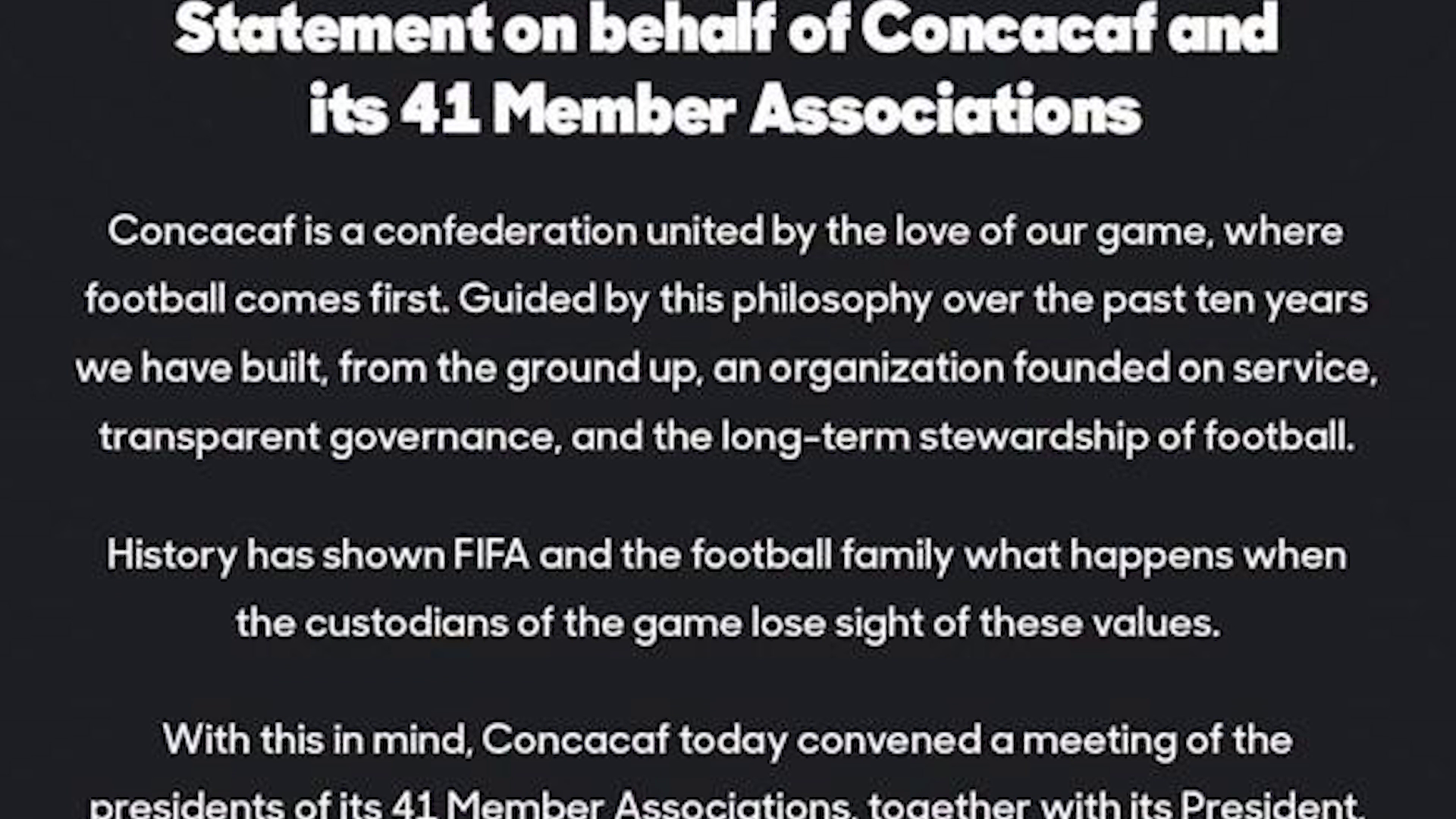
    A high-stakes power clash is roiling the upper ranks of global football, with the Confederation of North, Central America and Caribbean Association Football (CONCACAF) taking an uncompromising stand against a controversial FIFA initiative led by association president Gianni Infantino. On July 30, 2026, CONCACAF and its 41 member national associations formally announced their rejection of a proposal that would open the FIFA World Cup to ownership stakes from private investors.

    The regional confederation has raised sharp red flags over the plan, warning that it poses major threats to transparency, sound governance, and the sovereign control of football’s most prestigious global tournament. After a meeting of member nations held the same day, the bloc made its official opposition public through a formal press release. News Five reached out to Sergio Chuc, president of the Football Federation of Belize, to unpack what the opposition means for Belize and the broader CONCACAF region.

    Chuc emphasized that FIFA’s existing financial standing is more than robust enough to fund World Cup operations without turning to outside private capital. “The organization is strong enough. There are enough reserves to put this same offer to all members without having to raise funds from any equity funds out there or mutual funds,” Chuc explained. He also added that even CONCACAF representatives who hold seats on FIFA’s governing board were kept in the dark about the proposal, a departure from the confederation’s standard collaborative processes. “We were quite surprised and that is not the channel the CONCACAF follows. Over the last decade we have worked tirelessly to change the CONCACAF image and don’t go back to those dark days. We have set certain standards and values that our members follow, our council follow and we at CONCACAF would not operate that way,” Chuc said.

    CONCACAF’s formal rejection is not the only pushback Infantino’s plan has faced: European football’s governing body UEFA has already issued a threat to boycott the upcoming World Cup should FIFA move forward with implementing the private investment scheme. The growing coalition of opposition underscores deep divisions within global football’s leadership over the future direction of the sport’s marquee event, as regional blocs push back against what they see as a threat to the governance norms they have worked to build in recent decades.

  • Here’s What You Should Do Before Turning 55 and Retiring

    Here’s What You Should Do Before Turning 55 and Retiring

    For thousands of public sector workers across Belize counting down to their retirement at age 55, the dream of a smooth transition to pension benefits is often overshadowed by bureaucratic gridlock that leaves many waiting months – or even forever – for their earned payments. Now, widespread frustration over persistent systemic delays has pushed the issue into the public spotlight, with critics calling for urgent overhauls of the country’s public service pension processing framework.

    On Wednesday, veteran attorney Richard “Dickie” Bradley publicly called out the broken current system, questioning the ethics of a process that leaves beneficiaries without critical income. “People die and never see their pension. What kind of country do we run?” Bradley asked. His blunt critique resonated deeply with hundreds of Belizean public servants and their families who have navigated the broken system firsthand, with dozens reaching out to local outlet News 5 to share their own horror stories of unfulfilled claims.

    One woman shared the devastating experience of her family, whose intergenerational financial security was upended by processing delays. “My dad died and got nothing because of the slow turnaround. He got a stroke and never recovered. My mom applied before he died because he was gravely ill from the stroke, but even now, my mom still can’t get the pension,” she explained. “This really needs to change.”

    Other callers and respondents criticized the confusing, contradictory rules that govern the application process. Many noted that while officials require public servants to submit all required documentation up to a full year before their 55th birthday, applicants are often forced to make repeated trips to administrative offices to correct gaps, and rarely receive responses to emailed inquiries for updates on their claims.

    Amid the growing public anger, one seasoned public service insider says that many of the most common delays are avoidable with proactive preparation from workers themselves. Carol Gentle, a retired Administrative Officer who spent nearly 40 years working in Belize’s public sector, explained that workers have the legal right to access and review their official personnel files at any time during their employment.

    Gentle recommends that public officers begin auditing their own retirement paperwork between the ages of 50 and 53, years before their planned retirement date. “I recommend to public officers, when you reach the age of, say, between fifty to fifty-three, you try and find your administrative officer and ask them to set a date for you to go through your file,” she said.

    A complete retirement file requires a range of verified documentation: approved leave records, updated birth certificates and marital status paperwork, and full, signed performance appraisal histories. While administrative officers are required to conduct annual file audits to flag missing materials, Gentle emphasized that workers bear personal responsibility for verifying their own records are complete long before they submit their retirement application for processing. Early identification of gaps gives workers time to source and replace missing documents, avoiding last-minute delays that can hold up pension payments for months.

    To hear more personal accounts and details of required documentation for public service retirement, tune in to News Five’s full broadcast tonight at 6:00 local time.

  • Could Fish Skin Become Belize’s Next Big Business?

    Could Fish Skin Become Belize’s Next Big Business?

    In the coastal Belizean town of Hopkins, a groundbreaking regional workshop last week is opening doors to an unexpected new economic opportunity: turning discarded fish waste into high-value, sustainable handcrafted goods. The initiative, which targeted local women, young entrepreneurs, and small-scale fishing community members, trains participants to convert fish skin that would otherwise be thrown away into durable, natural leather for products ranging from handbags and wallets to footwear and apparel.

    This upskilling program is a core component of the SICA Azul Project, an initiative focused on unlocking additional revenue streams from Central America’s fishing industry by leveraging underutilized byproducts. Leading the hands-on training was Pili Luna, a Honduran innovator who traveled to Belize through the Consejo Agropecuario Centroamericano. Luna holds a international patent for her unique fish skin-to-leather conversion method, which stands out for its low-barrier, eco-friendly design.

    Unlike industrial leather production that relies on heavy machinery, toxic chemicals and high energy inputs, Luna’s process is 100% natural, fully artisanal, and requires no electricity or specialized industrial equipment. The entire workflow takes just three hours of labor per week per batch, with finished, usable leather ready for production within two weeks — all starting from material that once ended up in landfills or discarded as waste after fish processing.

    For participating local entrepreneurs, the training has already sparked new business plans. Ashanti Martinez, founder of Belizean brand Ashanti’s Crochet Design, intends to integrate the sustainable fish skin leather into her existing line of handmade bags to create unique, locally sourced products. Another participant, Leshawn Woodye, noted the versatility of the material, pointing out that it can be used to manufacture everything from clothing to high-quality footwear.

    Hally Faux, a local fisher based in Hopkins, described the workshop as a transformative shift in how fishing communities view industry waste. “All that skin goes to waste after a while because of the fillet and whatever they do with it, and as a fisher myself, I learned to turn the fish skin into leather, and now I have a short business idea,” Faux explained.

    Belize’s Agriculture Minister Rodwell Ferguson has already pledged government support to help participants turn their new skills into a viable, scalable industry. Ferguson announced plans to assist the participating women in forming a collective cooperative, as well as helping the group access startup funding to launch their businesses. “This is our income for them as a mother, as a wife, so I’m going to work with them for it to be accomplished,” Ferguson said.

    If successful, the new fish leather industry could deliver dual benefits for Belize: it would cut down on organic waste from the country’s large fishing sector while creating stable, locally controlled income streams for marginalized groups including women, youth and small-scale fishing families that rely on the ocean for their livelihoods.

  • “It’s Not Just a Dirty Job”: Reshaping How Kids See Farming

    “It’s Not Just a Dirty Job”: Reshaping How Kids See Farming

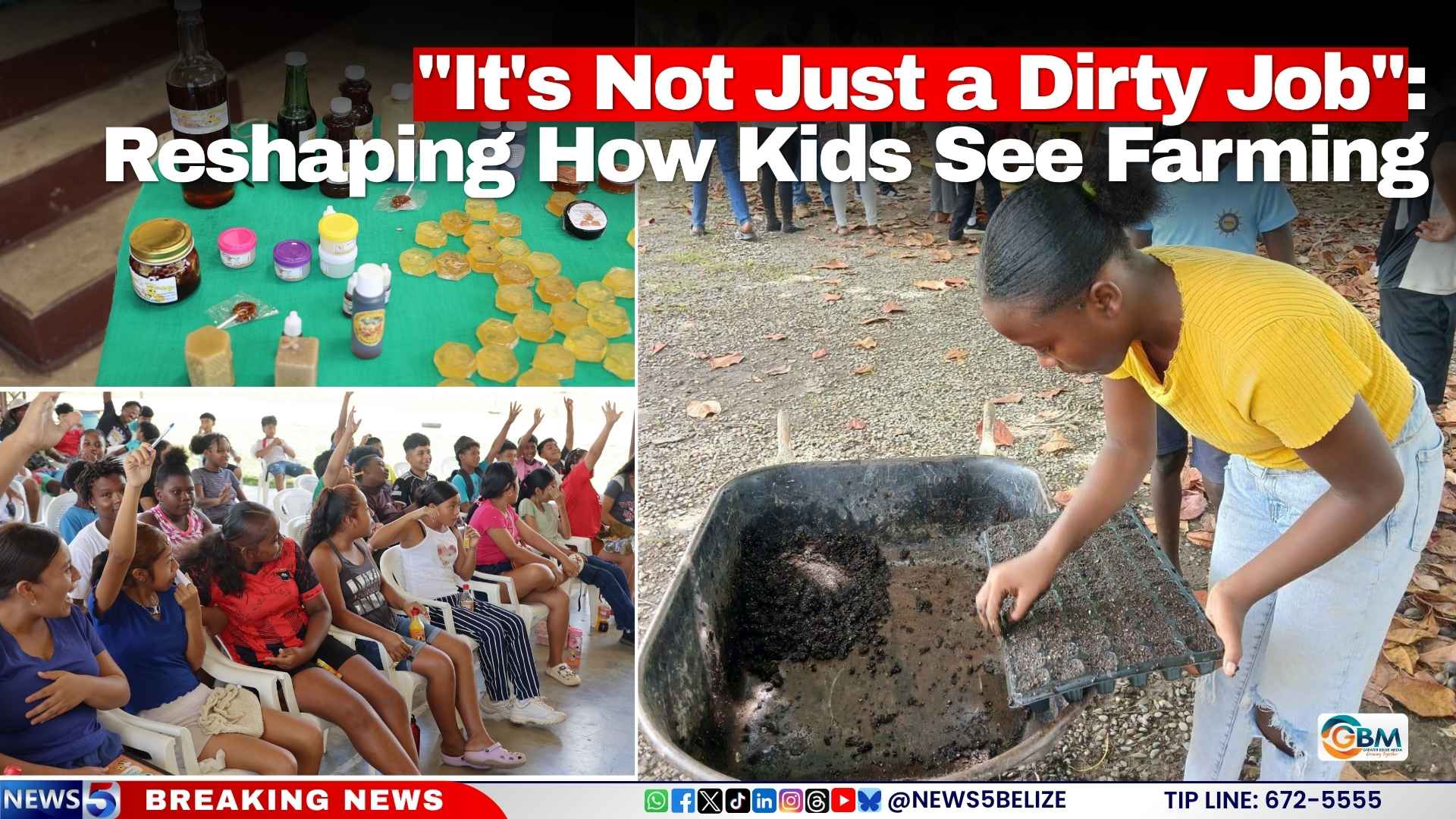
    In the heart of Stann Creek District, a transformative summer agriculture camp is challenging long-held stereotypes about farming, giving nearly 70 young people aged 7 to 17 a firsthand look at the diverse, critical work that underpins global food security. Running through this week at Georgetown Technical High School, the camp is the second of two week-long immersive programs organized by Belize’s Ministry of Agriculture, Food Security and New Growth Industries this summer, following an opening session held earlier at the Agriculture and Natural Resource Institute. The initiative is proudly sponsored by RF&G Insurance Ltd., whose guiding brand slogan “It Pays to Get it Right” aligns with the camp’s mission to build accurate, informed understanding of modern agriculture among the next generation.

    Each day of the camp introduces participants to a new specialized area of agricultural work, building a comprehensive foundation over the week. The curriculum kicks off with core lessons in horticulture and livestock care, before moving to hands-on workshops in beekeeping, agro-processing, and concluding this Friday with deep dives into aquaculture. Unlike traditional classroom learning that frames farming as manual, unskilled labor, the camp prioritizes experiential activities that let young participants engage directly with modern agricultural practices, from planting greenhouse tomato seedlings to examining the inner workings of a functioning beehive.

    Bernadette Cob, an Agriculture Field Officer leading the program, explains that the core goal of the initiative goes far beyond teaching basic farming skills: it aims to completely reshape young people’s relationship with and perception of agriculture as an industry. “We work hard to make every participant feel included, and to help them understand just how central agriculture is to our daily lives and national stability,” Cob shared in an interview during the camp. “Too often, young people grow up thinking farming is just a dirty, low-value job. We want to change that narrative. We need a new generation engaged in agriculture to protect our food security, and to build sustainable food systems for the future.”

    Cob noted that one of the most encouraging outcomes of the camp so far has been the high level of engagement from young female participants, who have not only taken the lead on many hands-on activities but have also encouraged their male peers to dive into the practical work. “It’s incredibly inspiring to see how they’ve embraced the work, and how they’re breaking gender stereotypes around agricultural labor right here in the camp,” she added.

    For 12-year-old participant Zemvirson Juarez, the week has already been packed with new discoveries that have changed his own view of farming. On his first day, he planted his own tomato seedling in the camp’s greenhouse and brought it home to continue growing it – but it was the beekeeping session that left the biggest impression. “I learned so many things I never knew before,” Juarez said. “I had no idea a single beehive can hold up to 80,000 bees. I also learned that honey comes in different colors depending on what flowers the bees collect nectar from, and got to see beeswax, royal jelly, bee venom, and even all the different products people make from beehive byproducts, like soaps.”

    As the camp prepares to wrap up its final day with aquaculture training, organizers say the program is already laying the groundwork for a more engaged, diverse next generation of agricultural leaders, proving that changing public perceptions of farming starts with giving young people the chance to experience the industry for themselves.

  • Belize’s Imports Jump 21.3% in June, Exports Decline

    Belize’s Imports Jump 21.3% in June, Exports Decline

    Newly released official trade data from Belize’s Statistical Institute paints a sharply divided picture of the country’s external commerce for June 2026, with total merchandise imports jumping by more than a fifth year-over-year even as domestic exports contracted by nearly 8%.

    According to the institute’s latest External Trade bulletin, overall imports hit $275.8 million in June 2026, marking a 21.3% increase compared to the same month in 2025. The growth was widespread across nearly all major commodity groups, with just one category – Other Manufactures – posting a monthly decline.

    The single largest contributor to the import expansion was the Mineral Fuels and Lubricants sector, which saw a $15.2 million jump to reach $48.2 million for the month. Two key factors drove this rise: elevated global crude and refined fuel prices, plus the resumption of large-scale premium fuel purchases that had been paused for a full 12 months. Following fuel, the Food and Live Animals category recorded a $12.1 million increase, fueled by rising imports of coffee and general grocery goods. Chemical Products also saw substantial growth, adding $9.8 million in import value as fertilizer costs climbed for local buyers.

    When looking at cumulative trade activity for the first half of 2026, the import growth trend holds even stronger: total inbound goods reached $1.651 billion, a 19.1% increase compared to the first six months of 2025. Fuel imports again led the way, growing by $92.8 million, while machinery and transport equipment – which included one large aircraft purchase – added another $60.7 million in import value over the half-year period.

    On the export side of the ledger, however, the performance told a far different story. Domestic exports from Belize fell 7.9% year-over-year in June 2026, dropping to just $26.0 million. The steepest declines were concentrated in key agricultural export sectors that form the backbone of Belize’s outbound trade: citrus export earnings plummeted by $10.1 million, sugar exports fell by $8 million, and cattle shipments dropped by $4.2 million. Banana and red kidney bean exports also posted lower earnings for the month, extending the downward trend across most agricultural categories.

    That said, not all export segments faced headwinds in June. Marine product exports bucked the trend, posting a $3.2 million increase in earnings, supported by both stronger global pricing and higher shipment volumes.

    For the full first half of 2026, the export contraction aligns with the monthly trend: total outbound domestic goods hit $166.6 million, representing a 12.7% drop compared to the same six-month period in 2025.