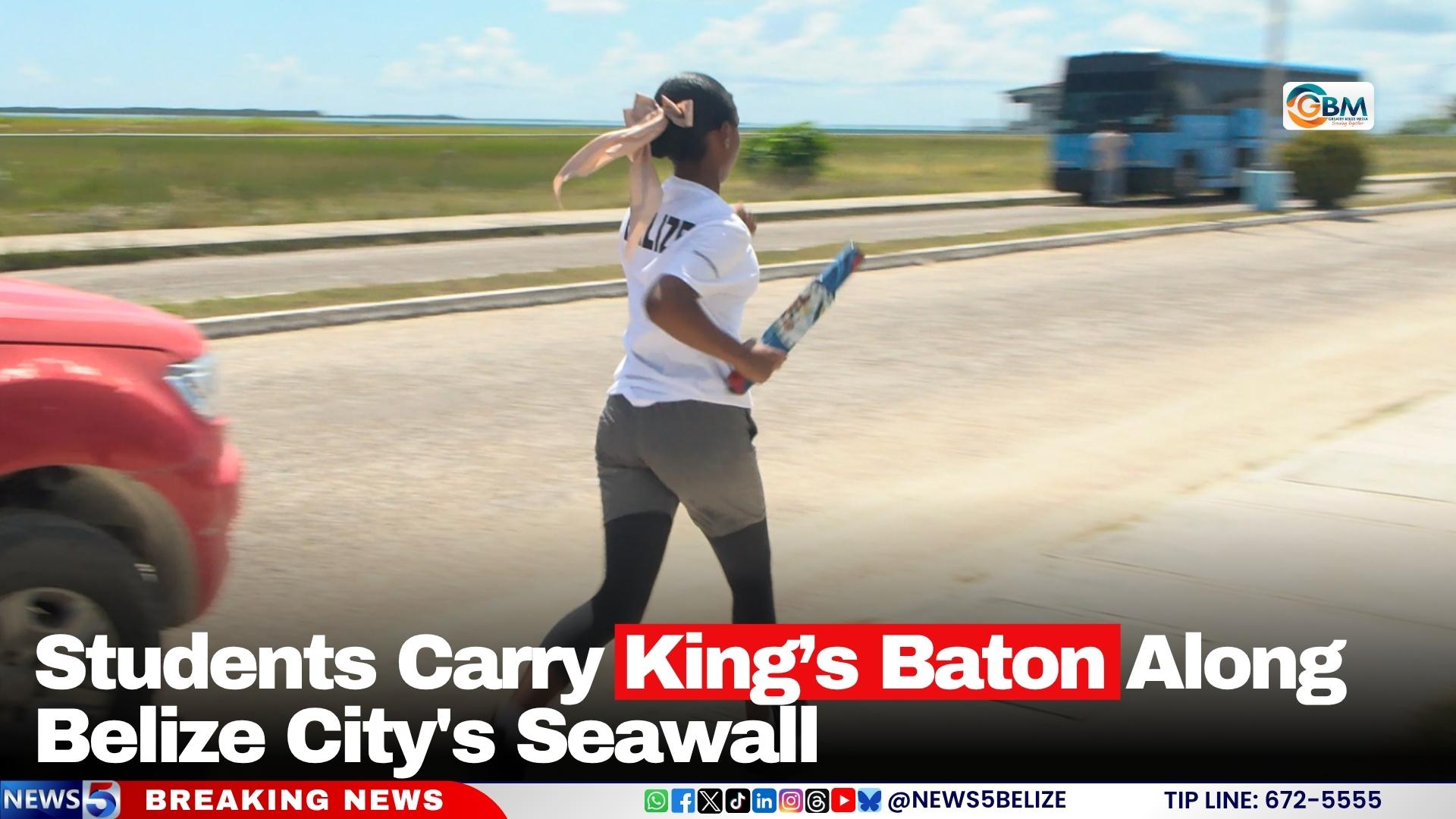
As the global countdown to the 2026 Glasgow Commonwealth Games continues, Belize has added its own unique, community-focused chapter to the historic King’s Baton Relay, blending youth engagement, environmental stewardship, and centuries-old cultural celebration into a memorable event held along Belize City’s iconic coastline on Tuesday, April 21.
The day’s activities centered on young people carrying on the relay tradition, with student athletes from Saint Catherine’s Academy taking on the leg of the journey, running the baton along the city’s scenic seawall to the iconic Baron Bliss Lighthouse. Following the celebratory relay, the group shifted focus to environmental action, launching a organized coastal clean-up initiative led by the school’s Oceana Wavemakers Club, a youth group dedicated to marine conservation.
Leticia Westby, a board member of the Belize Olympic and Commonwealth Games Association, explained that the pairing of the relay with a clean-up was no accident. The dual activity was designed to tie global sporting unity to local environmental responsibility, with a core goal of removing plastic waste from Belize’s coastal ecosystems to protect ocean health for future generations.
The King’s Baton Relay is a centuries-old tradition that precedes every edition of the Commonwealth Games, requiring the ceremonial baton to travel through all 74 member nations and territories of the Commonwealth in the months leading up to the opening ceremony. Belize’s stop on the global tour showcases not only the country’s commitment to the Commonwealth sporting movement, but also its distinct national and cultural identity, reflected in the custom design created for the country’s leg of the journey.
Local Belizean artist Keion Griffith was commissioned to craft the one-of-a-kind design for Belize’s segment of the relay. The baton’s artwork integrates iconic national symbols: Belize’s official national flag, the world-famous Great Blue Hole, ancient Mayan ruins, and imagery representing the country’s rich sporting and cultural legacy. One of the most meaningful inclusions is a reference to Pok-ta-Pok, the traditional ancient Mayan ballgame that remains a beloved cultural practice in Belize today.
Westby emphasized the importance of highlighting this indigenous cultural heritage on the baton. “The Mayans have been in Belize or have been on this side of the world from before Christ, and they still remain, and we are still playing the game of Pok-ta-Pok,” she said, noting that Belize claimed the world championship title for the traditional sport just a few years ago.
To cap off the week of relay-related cultural and community activities, event organizers have planned a public exhibition match of Pok-ta-Pok this coming Friday at Jardin Pachamama Field in Orange Walk, inviting community members to experience the ancient sport firsthand and celebrate Belize’s enduring indigenous roots.
The event in Belize demonstrates how the Commonwealth Games’ traditional relay has evolved to incorporate modern priorities like youth empowerment and climate action, while also creating space for nations to showcase their unique cultural identities to the global community.