标签: Belize

伯利兹

  • BWSL Criticised for Cutting Water Over $5 Balances

    BWSL Criticised for Cutting Water Over $5 Balances

    What started as scattered customer frustrations has erupted into public controversy surrounding Belize Water Services Limited (BWSL), with dozens of consumers and a sitting senator condemning the utility’s aggressive policy of cutting running water for unpaid balances as low as just five dollars.

    The wave of public criticism began when affected customers took to social media to share their disruptive, often infuriating experiences with the service cuts. One Belizean household described how their supply was cut off before a pending online payment—for an $8.41 balance—could clear due to routine banking processing delays. With a full family relying on running water at home, the sudden disconnection created immediate daily disruption that could have been easily avoided with a short grace period.

    Another customer recounted her own encounter last week: she was home when technicians arrived to cut service over a $6 unpaid balance, and was stunned to learn that the mandatory reconnection fee was actually larger than the original outstanding debt. The technician on site confirmed to her that the utility was actively disconnecting customers for balances of this size, with no exceptions being made for minor amounts.

    A third social media user added that their cousin had their entire water supply shut off over an unpaid balance of exactly $5, noting that the company had offered no flexibility, grace period, or compassionate adjustment for low-income or household customers facing small accidental shortfalls.

    The controversy moved from social media outrage to official parliamentary discussion last Tuesday, when United Democratic Party Senator Sheena Pitts raised the issue on the Senate floor. Pitts shared her own first-hand experience with the policy: her business, which regularly pays water bills in advance, accumulated a small unnoticeable outstanding balance of just $10.51 over time. Before any notice or grace period, BWSL cut off the firm’s water service. To restore access, Pitts was forced to pay $25 to resolve the balance plus additional fees, and was required to put down a new security deposit on top of the steep reconnection charge.

    Pitts labeled BWSL’s current policy “oppressive”, arguing that the rigid practice of cutting service for such minor balances places unnecessary, disproportionate hardship on working households and small businesses across Belize. Many low-income families, she noted, cannot absorb unexpected reconnection fees that often exceed the original debt, pushing already cash-strapped households into further financial strain.

    Local media outlet News 5 has confirmed that it has reached out to BWSL to request an official statement and explanation of the utility’s policies, but no response from the company has been released publicly as of the June 9, 2026 reporting date.

  • ‘Please Come to Chetumal’: Mexico Ambassador Addresses Safety Fears

    ‘Please Come to Chetumal’: Mexico Ambassador Addresses Safety Fears

    In a public appearance on the popular local talk show *Open Your Eyes* on June 9, 2026, Ana Luisa Vallejo Barba, Mexico’s recently confirmed ambassador to Belize, moved directly to address growing safety concerns that have deterred Belizean travelers from crossing the border into southern Mexico. Opening her appeal to visitors, the ambassador extended a warm invitation: “Please come again to Chetumal. It’s safe, and everybody’s waiting for you.”

    Vallejo Barba acknowledged that security challenges persist in multiple Mexican states, but emphasized that the federal government has implemented sweeping additional security measures specifically focused on the southern border region adjacent to Belize. Widespread anxiety over travel safety in the area stems from a surge in drug cartel activity that intensified dramatically following the high-profile capture of Nemesio Rubén Oseguera Cervantes, the notorious cartel leader widely known as “El Mencho.” Critics have labeled the operation that led to El Mencho’s arrest as poorly planned and destabilizing.

    Pushback against the grim narratives circulating online and in local discourse, the ambassador contended that the actual on-the-ground situation has improved dramatically after the security reinforcement. She argued that sensationalized misinformation has wildly exaggerated the scope of instability, noting that the crisis tied to the El Mencho operation was an isolated, 24-hour event that has long since been contained.

    Beyond addressing travel concerns, Vallejo Barba highlighted the robust bilateral security partnership between Mexico and Belize. The two nations maintain a long-standing cooperation mechanisms, including regular intelligence sharing initiatives, joint training programs to build law enforcement capacity, and scheduled high-level command meetings that take place every six months to coordinate cross-border security efforts.

  • Israel Continues Strikes on Lebanon Despite Trump’s Request to Stop

    Israel Continues Strikes on Lebanon Despite Trump’s Request to Stop

    Fresh regional escalation has roiled the Middle East just one day after a tentative pause in direct hostilities between Israel and Iran, brokered by outgoing U.S. President Donald Trump. On Tuesday, Israeli airstrikes targeting the southern Lebanese coastal city of Tyre left at least eight people dead, confirming that Israel has rejected calls to extend its ceasefire commitments to its campaign against Iranian-backed militant group Hezbollah in Lebanon.

    The ceasefire breakthrough came Monday, when Trump took to his social platform Truth Social to announce the deal. “Both sides, Israel and Iran, are looking to do an immediate CEASEFIRE! Final negotiations on ‘Peace’ are proceeding, subject to ignorance or stupidity getting in its way,” he wrote in the post. Iran quickly signaled that the truce would only hold as long as Israel held back from attacks on Hezbollah, the powerful militant and political organization based in southern Lebanon that Tehran has long armed and funded.

    Israel, however, has drawn a clear line between its understandings with Iran and its military operations in Lebanon, insisting the conflict against Hezbollah is unrelated to any ceasefire agreement reached through U.S. mediation. The Tyre strike makes clear that Israel has no intention of pausing its cross-border campaign, raising the risk that the tentative Israel-Iran truce will collapse entirely.

    Tensions have spiked simultaneously in another critical flashpoint: the Strait of Hormuz, the strategic waterway through which roughly 20% of global oil supplies pass. A U.S. Army Apache attack helicopter on patrol near the strait went down Tuesday, though the two crew members on board were rescued by a U.S. Navy drone within roughly two hours of the crash.

    Trump quickly blamed Iran for the incident, writing on Truth Social: “I have just been informed by our Great Military that last night the Iranians shot down one of our highly sophisticated Apache Helicopters while patrolling over the Strait of Hormuz…the United States must, of necessity, respond to this attack.” Tehran has not yet issued an official response to Trump’s accusation.

    The Strait of Hormuz has been a major point of contention since the outbreak of the latest regional war. Iran has blocked most commercial shipping traffic through the waterway, prompting the U.S. to impose a reciprocal naval blockade on Iranian ports in response. U.S. Energy Secretary Chris Wright noted in recent comments that while ship traffic through the strait has begun to inch upward, it will likely take many months for traffic volumes to return to pre-war levels even if a ceasefire is reached.

  • Red Alert: Belize Heads into Worst Sargassum Phase Yet

    Red Alert: Belize Heads into Worst Sargassum Phase Yet

    A state of emergency has been declared over the massive sargassum inundation hitting Belize, with officials warning the country is bracing for the most damaging algal bloom event in its history. Even as coastal communities and local authorities mobilize every available resource to clear the impacted shorelines, projections indicate the crisis is set to worsen in the coming days.

    The San Pedro Town Council officially issued the red alert in a public statement released this Monday, laying out a comprehensive multi-pronged response strategy currently underway. Cleanup teams have been working extended 12-hour shifts, deploying heavy machinery including tractors and dump trucks alongside upgraded specialized equipment to clear rotting algal mats off public beaches. The municipality has also expanded its cleanup workforce to handle the increased volume, and has begun establishing temporary composting sites as part of efforts to reclaim impacted sand areas.

    Local officials are currently negotiating with private landowners to secure permanent long-term deposition sites for the collected sargassum, a critical piece of infrastructure needed to manage the ongoing inflow of algae. The council confirmed it is also actively lobbying national government bodies for additional financial and logistical support to scale up the response.

    Speaking last Thursday at a meeting of the cabinet’s sargassum subcommittee, Belize Tourism Minister Anthony Mahler openly addressed the gaps in regional coordination that have left countries ill-prepared to tackle the growing transboundary crisis. “I don’t think we as a region have taken this problem seriously enough,” Mahler said. “We have not collaborated collectively, backed by scientific research, to develop long-term strategies to address this issue.”

    Mahler pointed to the ongoing massive sargassum outbreak currently overwhelming neighboring Mexico to illustrate the sheer scale of the threat facing the entire Caribbean region. “We got lucky over the past month,” he explained. “Most of the migrating algal masses drifted north to Mexico, and they are taking the full brunt of the crisis right now. Even with a far larger cleanup budget, active Coast Guard support, and a fully mobilized response, Mexico still cannot keep up with the inflow.”

    Despite Belize’s unprecedented mobilization of resources, including a steadily increasing cleanup budget allocated specifically to addressing the persistent thick algal mats washing ashore daily, Mahler noted the problem shows no sign of slowing. “It just keeps coming,” he said. “By the time crews finish clearing beaches at the end of one day, another full boatload of sargassum will wash up overnight, ready to be cleared again the next morning.”

  • ‘Our History Will Not Be Erased’: Kriol Council Joins Land Rights Fight

    ‘Our History Will Not Be Erased’: Kriol Council Joins Land Rights Fight

    In a significant development amplifying the growing push for ancestral land rights in Belize, the National Kriol Council has formally entered the national debate, demanding an end to the systemic exclusion of Kriol communities from critical conversations over territory, cultural heritage, and formal indigenous recognition.

    Kriol communities position themselves as one of the foundational population groups of Belize, with well-documented evidence of continuous historical presence, long-term territorial occupation, generations of cultural stewardship, and organized political agency that stretches back centuries before later waves of migration arrived on Belizean soil, the council emphasized in its official statement released Monday.

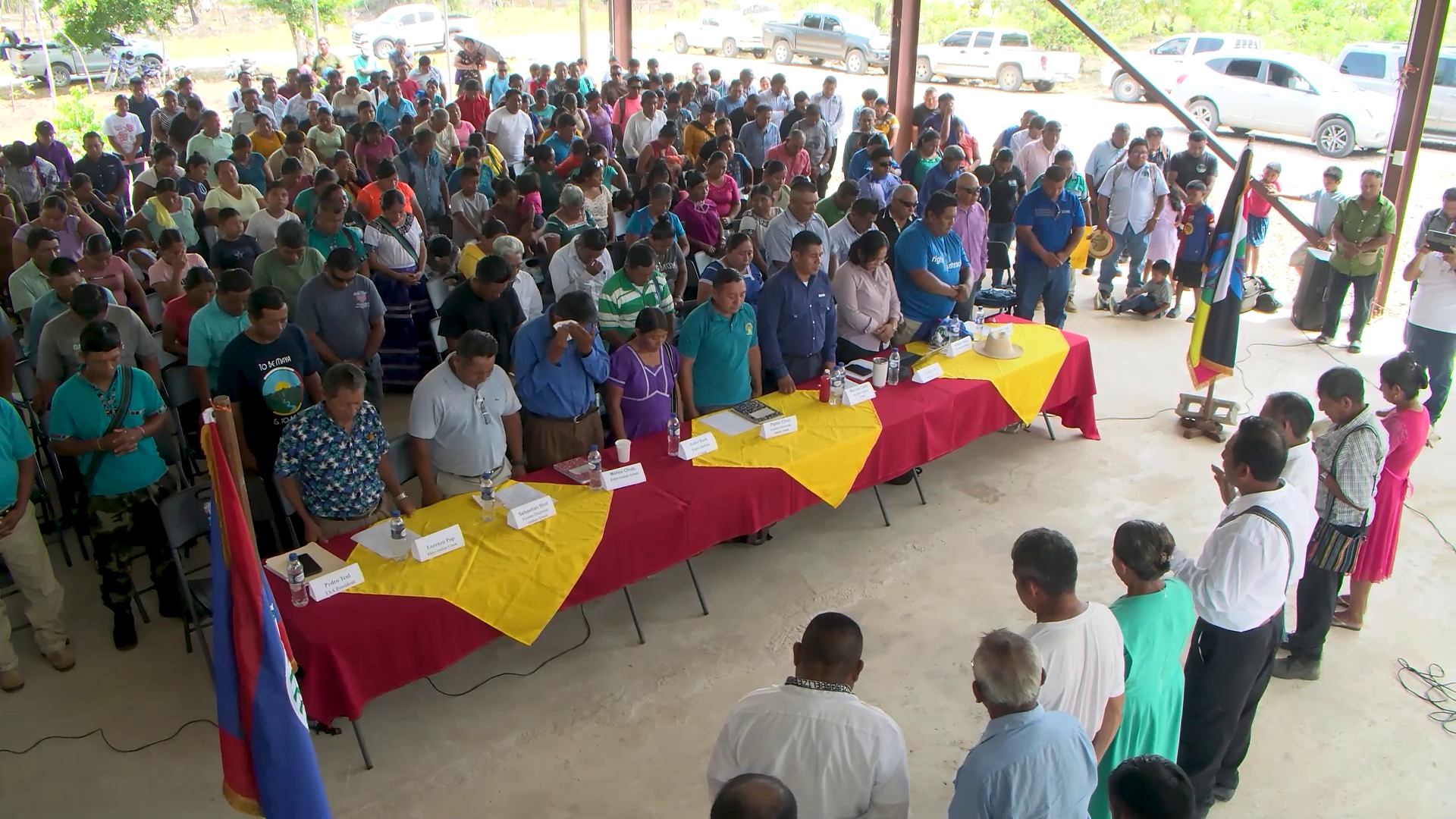
    The council’s decision to add its voice to the movement comes just days after two other major Indigenous groups, the Maya and Garifuna peoples, announced a public coalition to advance their shared demands for protection of ancestral land claims across southern Belize. That coalition has already been at the forefront of pushback against government-led boundary-redrawing initiatives in the high-profile Sittee River-Hopkins dispute, one of the most contentious ongoing land conflicts in the region.

    Across more than a dozen Kriol ancestral communities—including major population centers like Placencia, Gales Point Manatee, Belize City, and Punta Gorda—the council warned that no Kriol community should face exclusion, forced displacement, arbitrary reclassification, or administrative reduction of their land rights without prior, meaningful consultation and formal legal recognition of their centuries-long historical occupancy.

    The council anchors its land rights claims in binding international legal frameworks, specifically citing the United Nations Declaration on the Rights of Indigenous Peoples, Belize’s own constitutional guarantees of equal treatment under the law, and regional legal precedents that have formally affirmed the collective territorial rights of Afro-descendant Indigenous peoples.

    “No community that has maintained a continuous, documented presence on this land for centuries should be forced to repeatedly defend its very existence in the face of intentional historical omission or political convenience for current ruling interests,” the statement added.

    The council explicitly rejected what it frames as ongoing efforts to erase, subordinate, or invalidate the unique historical and Indigenous status of Kriol communities across Belize. It has issued a clear call to the Belizean government: implement formal constitutional safeguards to recognize and protect Kriol ancestral communities, and codify their undeniable historical ties to the lands they have stewarded for generations.

    “Our communities are not invisible. Our history will not be erased,” the statement concluded, marking a firm new front in Belize’s expanding movement for Indigenous land justice.

  • Tropical Storm Cristina Forms Off Nicaragua

    Tropical Storm Cristina Forms Off Nicaragua

    The 2026 Eastern Pacific hurricane season has produced its second named storm, and the first tropical hazard for Central America, as Tropical Storm Cristina formed off Nicaragua’s Pacific coastline over the weekend. Upgraded from Tropical Depression Three-E by the U.S. National Hurricane Center (NHC) on Monday afternoon, the system has already triggered official warnings across a wide stretch of the region’s Pacific shoreline.

    As of the NHC’s latest update, Cristina is positioned roughly 105 miles west-northwest of Nicaragua’s capital Managua. The storm currently carries maximum sustained winds of 45 miles per hour and is creeping northeastward at just 3 miles per hour, a glacial pace that has raised concerns among forecasters and local emergency management teams. A Tropical Storm Warning is now in effect for the entire Pacific coast from Nicaragua’s Puerto Sandino northward to the border crossing between Guatemala and El Salvador.

    Authorities across Nicaragua and El Salvador have activated continuous monitoring protocols, as current projections show the system will remain stalled near the Central American coastline for multiple days. The primary danger posed by Cristina is not extreme wind, but extreme precipitation: forecasters warn that prolonged, heavy rainfall will sweep through parts of Costa Rica, Nicaragua, Honduras, El Salvador, and Guatemala through the middle of the week, creating conditions for life-threatening flash flooding and catastrophic landslides.

    The NHC projects widespread rainfall accumulations between 4 and 8 inches across the region, with isolated, hard-hit areas seeing as much as 12 inches of rain. Low-lying coastal communities and mountainous villages, which are particularly prone to soil displacement and flash inundation, have been flagged as the most vulnerable populations. While meteorologists predict Cristina will slowly weaken in strength by midweek, its unusually slow forward movement means the threat of sustained rainfall will be stretched out across days, amplifying the risk of weather-related disasters.

    Cristina marks the second named storm of the 2026 Eastern Pacific hurricane season, following closely on the heels of Tropical Storm Boris. That earlier system formed off Mexico’s Pacific coast, moved inland over southern Mexico, and dissipated fully by Tuesday.

  • Seally Brothers Among Three Killed in Horriffic Crash

    Seally Brothers Among Three Killed in Horriffic Crash

    A quiet weekend in the northern Belize village of Sarteneja turned into a scene of unspeakable tragedy, leaving three people dead — including two brothers from the Seally family — and a nation already reeling from a week of deadly violence grappling with more grief. The June 8 crash, which investigators are probing as a deliberate act tied to a long-simmering dispute and escalating road rage, has left relatives demanding urgent justice and community members stunned by the senseless loss of life.

    What began as a casual gathering among locals quickly spiraled into violence, according to accounts from Melvin Seally, brother of the two slain brothers. The conflict stretched back to an old argument over a local boat race, a minor disagreement that had festered for months before erupting into open conflict that night. As tensions boiled over at the gathering, a physical fight broke out: the man later identified as the suspect, Amadi Gangara, reportedly pulled a pipe and attacked one of Seally’s cousins, before bystanders stepped in to separate the two groups. Witnesses have shared that a local Chinese business owner recorded the entire altercation on camera, footage that has since become a key piece of evidence for investigators.

    Instead of letting the conflict end with the broken-up fight, Gangara waited for the group to leave the gathering and initiated a high-speed chase in his Ford pickup truck, Melvin Seally told reporters. The group he was pursuing was riding on a single three-wheeled utility tricycle, a common form of local transport in the village. As Gangara closed in near the village credit union, he rammed the back of the tricycle in an attempt to force the vehicle and its passengers off the road. One of the cousins involved in the earlier fight managed to jump off before impact, but not everyone was fast enough to escape.

    The force of the collision sent the tricycle veering out of control, and ultimately Gangara’s pickup slammed into a nearby residential building, according to initial police summaries. Brothers Godwin and Ignacio Seally, who had just come to the gathering to enjoy a night out and had no part in the original disagreement, were killed instantly at the crash site. The tragedy did not end there: Israel Chocon, a local man who was simply riding his bicycle through the area at the wrong time, was caught in the impact and also suffered fatal injuries. Two other passengers on the tricycle were badly injured; Derrick Arceo, one of the wounded, was first rushed to the local Corozal Community Hospital before being transferred to Belize City’s Karl Heusner Memorial Hospital in critical condition as of Sunday night.

    Assistant Superintendent of Police Stacy Smith confirmed the basic details of the ongoing investigation in a public statement, noting that investigators are working to piece together the full sequence of events leading up to the crash. As of Monday morning, no arrests had been made in connection with the three deaths — a delay that has left the Seally family furious and heartbroken. For Melvin Seally, the crash is no ordinary traffic accident: it is a deliberate, premeditated act of murder that has stolen three innocent lives far too soon.

    “This is not an accident. This is something intentionally,” Melvin Seally told local outlet News Five in an interview. “If I had killed even a foal, police would have come and arrested me already.”

    The deadly crash pushes Belize’s road death toll for just that single weekend to seven, a staggering figure that has left families across the country processing simultaneous waves of grief. As investigators continue to review evidence and interview witnesses, the tight-knit community of Sarteneja is coming together to support the Seally and Chocon families, even as they grapple with shock over how a minor old disagreement ended in such senseless destruction.

  • Shattered by Loss, Family Pushes for Justice After Fatal ATV Collision

    Shattered by Loss, Family Pushes for Justice After Fatal ATV Collision

    On a tragic weekend in Belize, a preventable traffic collision has robbed a close-knit community of a beloved young resident, leaving his grieving family demanding urgent justice and systemic change. Twenty-seven-year-old Thomas Martinez, an auto-body technician from Georgeville, lost his life on the evening of Saturday, June 6, 2026, just minutes after leaving a family barbecue in nearby Esperanza Village, where he had been sharing laughter and a meal with his relatives.

    According to initial reports from Belizean law enforcement, Martinez was operating his all-terrain vehicle (ATV) along the highway from Esperanza Village to Georgeville when a red Dodge Charger, driven by 20-year-old Hai Ming Chen, struck the ATV from behind. The sheer force of the impact threw Martinez from his vehicle into a roadside drainage ditch, leaving him with catastrophic, fatal injuries. Both the ATV and the Charger sustained extensive damage in the collision.

    Assistant Superintendent of Police Stacy Smith shared details of the ongoing investigation with local outlet News Five, confirming that responding officers found a gravely injured Martinez being treated by paramedics upon arrival, with the wrecked ATV approximately 20 feet from his position. Investigators have already collected a urine sample from Chen to test for potential impairment, a standard step in fatal collision probes.

    Martinez’s family has pushed back against any suggestion that the deceased bore responsibility for the crash, confirming that his ATV had fully functional lights, and that Martinez always carried valid registration and licensing when operating the vehicle. While the family acknowledges that the stretch of highway where the collision occurred is unlit and notoriously dark, they argue that an attentive driver would have easily spotted Martinez on the road.

    In an emotional interview with News Five reporter Britney Gordon, Roshida Reynolds-Martinez, Martinez’s sister-in-law, described the disorienting shock of the tragedy, which unfolded less than 10 minutes after Martinez left the family gathering. She noted that Martinez had just withdrawn cash from an ATM for his mother; when his family later collected his belongings from police, only $5 remained, a small, devastating detail that has deepened their grief.

    Remembered by loved ones as a humble, hardworking person who was always ready to help others, Martinez leaves behind a community that mourns his sudden loss. The family has voiced frustration with what they perceive as delays in the investigation, saying they fear the case will be swept under the rug. They reject that outcome, calling the crash a clear case of negligent manslaughter that demands full accountability.

    “No one deserves to lose a loved one to someone else’s negligence,” Reynolds-Martinez said. “We want justice. Justice is all we’re asking for.” Beyond holding the driver accountable, the family is also pushing the Belizean government to improve road lighting and visibility on the accident-prone stretch of highway, which has been the site of multiple previous crashes. As of June 8, 2026, police have not filed any charges against Chen, and the investigation remains active.

  • Young Rider Found Dead Beside Wrecked Motorcycle

    Young Rider Found Dead Beside Wrecked Motorcycle

    Authorities in western Belize have launched an official investigation into the first of a string of deadly weekend traffic incidents, after a 30-year-old local security guard was found dead next to his destroyed motorcycle off a major highway.

    According to official statements from the San Ignacio Police Department, first responders were dispatched to the Kontiki area of the George Price Highway, near the 72-mile marker, shortly after 6:45 a.m. on Friday, June 5 following a report of a crash site spotted off the roadway.

    Upon arrival, officers confirmed the presence of an adult male’s body and a heavily damaged motorcycle, later identified as belonging to Geromey Chuc, a resident of Benque Viejo Town.

    “On Friday fifth June at around six forty-five AM, police in Kontiki were advised that the body of a male person and an extensively damaged motorcycle were observed off road in the vicinity of mile seventy-two on the George Price Highway,” explained Assistant Superintendent of Police Stacy Smith, the department’s Staff Officer, in an official briefing. “The officers responded where they were able to confirm this report and subsequently learned the identity of the deceased male person to be thirty-year-old Jerome Chuc, a Belizean security guard of Benque Viejo Town. The scene was processed as a part of the ongoing investigation into this incident.”

    Based on initial evidence collected at the crash site, police preliminary findings suggest Chuc lost control of his two-wheeled vehicle while traveling along the highway, causing him to veer off the paved roadway and suffer fatal trauma in the impact.

    Chuc’s death marks the opening fatality in a sequence of deadly traffic accidents that occurred across the region over the following weekend, with the San Ignacio Police Department continuing to process evidence and build out a full timeline of the crash to confirm the exact circumstances that led to the incident.

    This report is adapted from a transcribed broadcast of the original evening television newscast.

  • Chinese Businessman Dies After Losing Control of Vehicle

    Chinese Businessman Dies After Losing Control of Vehicle

    A deadly single-vehicle crash on Belize’s George Price Highway has ended the life of a young local businessman, marking the third fatal road accident recorded across the country in a single Sunday afternoon in June 2026.

    First responders were dispatched to the stretch of highway between mile markers 21 and 22 just after 2 p.m. on June 8, 2026, following reports of a crash. When police arrived at the scene, they made a grim discovery: a heavily damaged gray Ford EcoSport SUV resting roughly 200 feet off the paved roadway, and 43 feet away from the wrecked vehicle lay the unresponsive body of 29-year-old Jii Lung Wu, a Chinese entrepreneur based in Belmopan City.

    Preliminary findings from the ongoing investigation outline that Wu was traveling alone in his SUV when he lost control of the vehicle at the mile 21 marker. The SUV rolled multiple times after veering off the highway, ejecting Wu from the cabin, said Assistant Superintendent Stacy Smith, a Belize Police Department staff officer, in an official briefing.

    This latest tragedy comes only days after another motorcyclist was killed in a crash just 50 miles north, near the highway’s mile 72 marker. Shockingly, this incident was not an isolated fatality: officials confirmed that Wu’s death was one of three fatal road traffic accidents that occurred across Belize on that same Sunday, pointing to a troubling spike in deadly road incidents in the region.

    Local law enforcement teams continue to work to pinpoint additional contributing factors to the crash, including whether speed, weather conditions, vehicle mechanical failure, or driver impairment played a role in the loss of control. This report is adapted from a transcript of a televised evening newscast original published by the local media outlet.