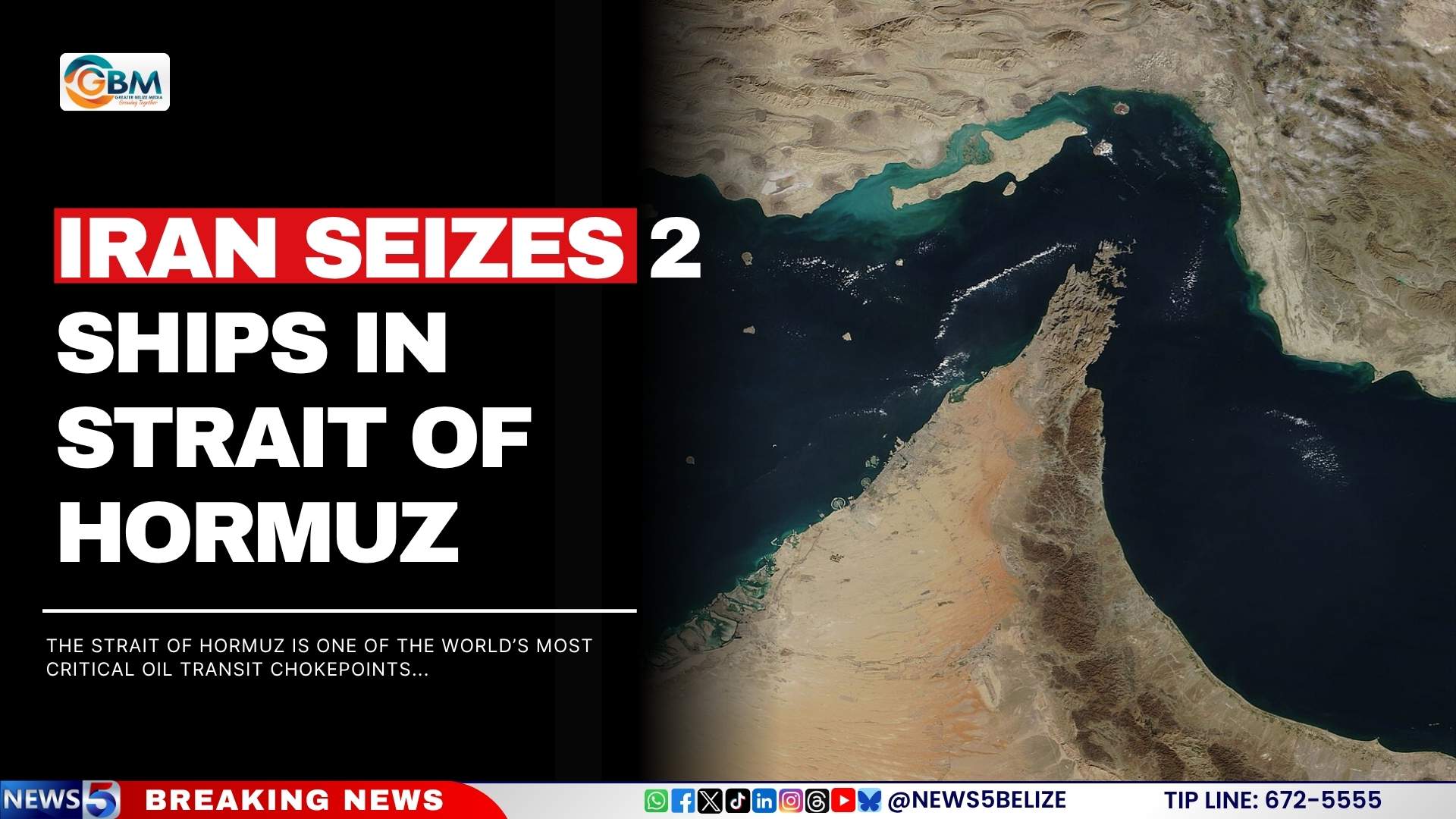
The Strait of Hormuz, one of the global energy market’s most critical strategic chokepoints, has become the site of sudden maritime escalation after Iran’s Islamic Revolutionary Guard Corps (IRGC) announced it seized two transiting vessels and brought them into Iranian territorial waters. A third commercial ship was also targeted in the incident, leaving it disabled off Iran’s coastline, according to multiple regional and security sources.
The provocative maritime move came just hours after United States President Donald Trump extended a temporary ceasefire agreement with Tehran, granting Iranian leadership a limited timeframe to submit what Trump described as a “unified proposal” to restart negotiations aimed at reviving the stalled nuclear and peace talks between the two nations.
Iranian state media confirmed that IRGC naval units carried out the strike on the third vessel, leaving it immobilized in waters near the Iranian coast. Early reports from a private international maritime security agency had previously noted that at least two container ships had sustained damage from gunfire while traversing the key waterway, which connects the Persian Gulf to the open ocean and carries roughly a fifth of the world’s daily oil consumption.
Greece’s foreign ministry has verified that one of the vessels involved in the incident is a Greek-owned cargo ship flying under the flag of Liberia, though officials noted that it remains unclear whether the vessel has been formally seized alongside the two confirmed. In response to the escalation, the Greek government has issued an urgent advisory for all Greek-owned or Greek-operated vessels to avoid transiting the Strait of Hormuz entirely until further notice, and to exercise extreme caution if passage through the region cannot be avoided.
Any disruption to shipping traffic through the Strait of Hormuz carries immediate and far-reaching consequences for the global economy, as disruptions to oil supplies through the chokepoint typically trigger sharp volatility in international energy prices and ripple across global manufacturing, trade, and consumer markets.
U.S. officials have previously signaled that the current temporary ceasefire will not be extended indefinitely, and according to anonymous sources familiar with internal administration discussions, the White House believes that applying incremental mounting pressure on Tehran will force Iranian leaders to return to the negotiating table with a willingness to reach a diplomatic breakthrough quickly.