标签: Belize

伯利兹

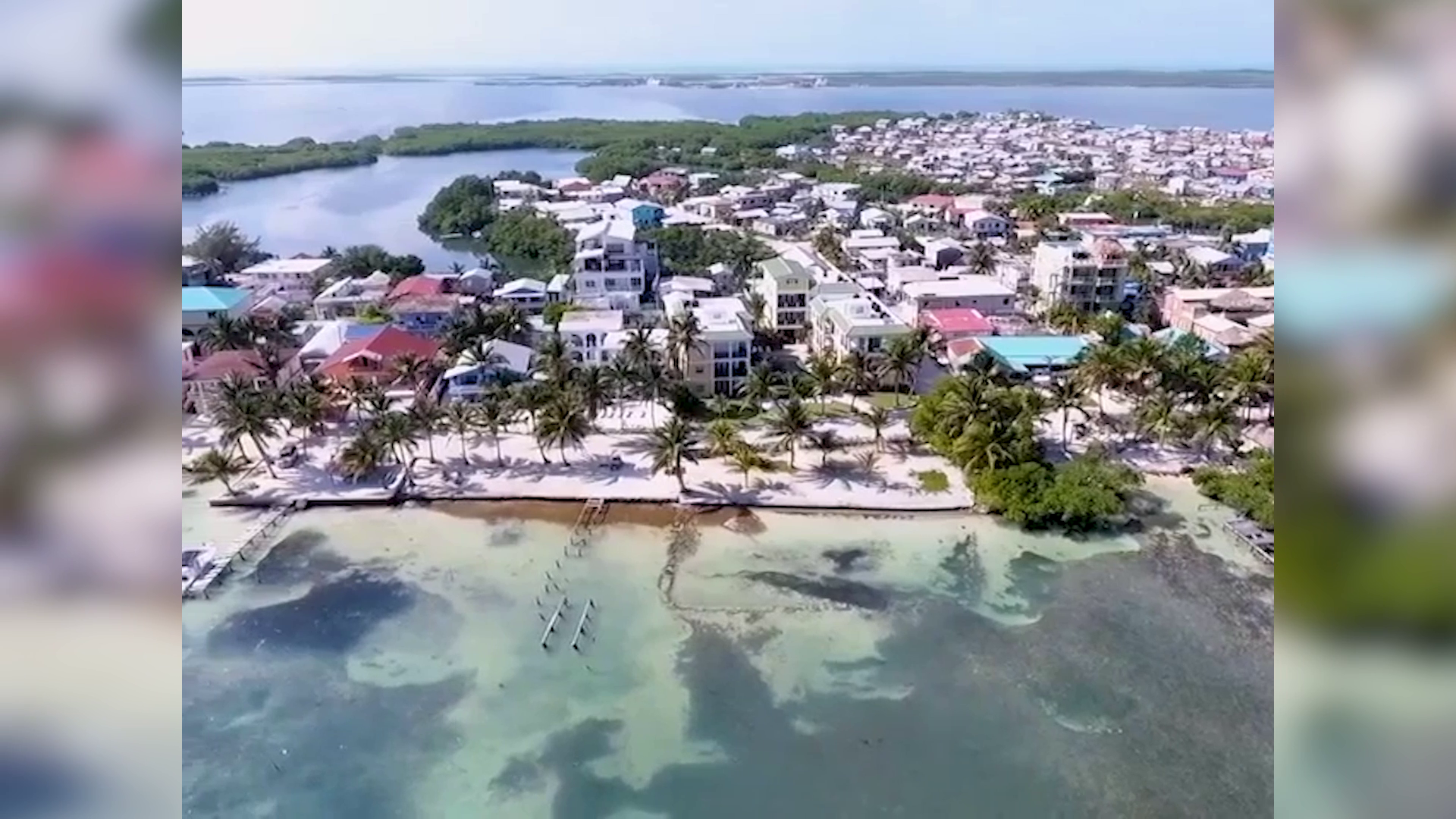
  • San Pedro’s Boom: Progress or Overdevelopment?

    San Pedro’s Boom: Progress or Overdevelopment?

    The Caribbean island of San Pedro, Belize, is experiencing an unprecedented period of exponential growth that has divided local opinion over whether the expansion represents welcome progress or reckless overdevelopment. With construction cranes dotting the skyline, new commercial and residential developments breaking ground regularly, and large-scale dredging projects underway, the northern stretch of the island in particular has seen explosive expansion that shows no immediate signs of slowing. As public debate intensifies over the costs and benefits of this rapid transformation, Area Representative for Belize Rural South Andre Perez has opened up about the government’s approach to managing San Pedro’s boom, addressing concerns ranging from housing affordability to crippling traffic congestion.

    Perez acknowledges that the island’s growth has outstripped many early projections, describing the expansion as moving by leaps and bounds, with exponential gains concentrated in northern areas of the island. He says the government is acutely aware of the growing friction between two opposing camps: tourism stakeholders who warn that unregulated rapid development risks eroding the natural charm that draws millions of visitors to the island each year, and local residents who argue they have a fundamental right to access land to build homes and achieve what Perez calls the Belizean dream of property ownership on the island. Perez concedes that the current pace of growth may require a deliberate pause to assess long-term impacts, saying “it’s going a bit too fast” and that the government is actively working to strike a sustainable balance between development opportunity and livability.

    One of the most contentious claims surrounding San Pedro’s boom is that rising land values are pricing native Belizeans out of the housing market. Perez pushes back against this narrative, while acknowledging that past policy missteps created the current affordability problem. He explains that under the previous administration, land allocation policies prioritized outside investment over local access, leaving a legacy of systemic exclusion that the current government is still working to untangle. To counteract this gap, the current administration has developed more than 1,000 new residential lots specifically designated for first-time local landowners, ensuring that young Belizeans and new generations of residents still have a path to property ownership on the island.

    Beyond land use debates, San Pedro’s exploding population and tourist traffic have created a parallel crisis on the island’s streets: a surplus of golf carts, the primary mode of local transportation for both residents and visitors, that has caused widespread congestion, noise pollution and safety hazards. Perez says officials have implemented targeted reforms to address this crisis, including pausing new approvals for golf cart rental businesses and capping the total number of rental vehicles allowed to operate. Under the new rules, only replacement vehicles are approved for existing rental operations, and priority for new personal golf cart registrations is given to residents in the remote northern stretches of Ambergris Caye, who rely on the vehicles to travel long distances for work and daily needs.

    To address a second major traffic issue – constant heavy construction truck traffic cutting through the heart of San Pedro’s town center that created persistent noise and gridlock – the government has opened two new off-shore ports on the island’s less developed eastern side. Construction materials are now unloaded and transported via these alternate routes, eliminating the need for heavy trucks to pass through residential and commercial districts. Perez notes that the policy has already produced a noticeable improvement in quality of life for town center residents, and traffic conditions are significantly better than they were just six months ago.

    Even with these targeted reforms in place, Perez emphasized that San Pedro’s unrelenting growth requires continuous monitoring and adaptive policy making. The island’s boom shows no signs of stagnating, meaning local officials will need to remain proactive to address emerging challenges and protect the needs of local residents while still supporting sustainable economic expansion.
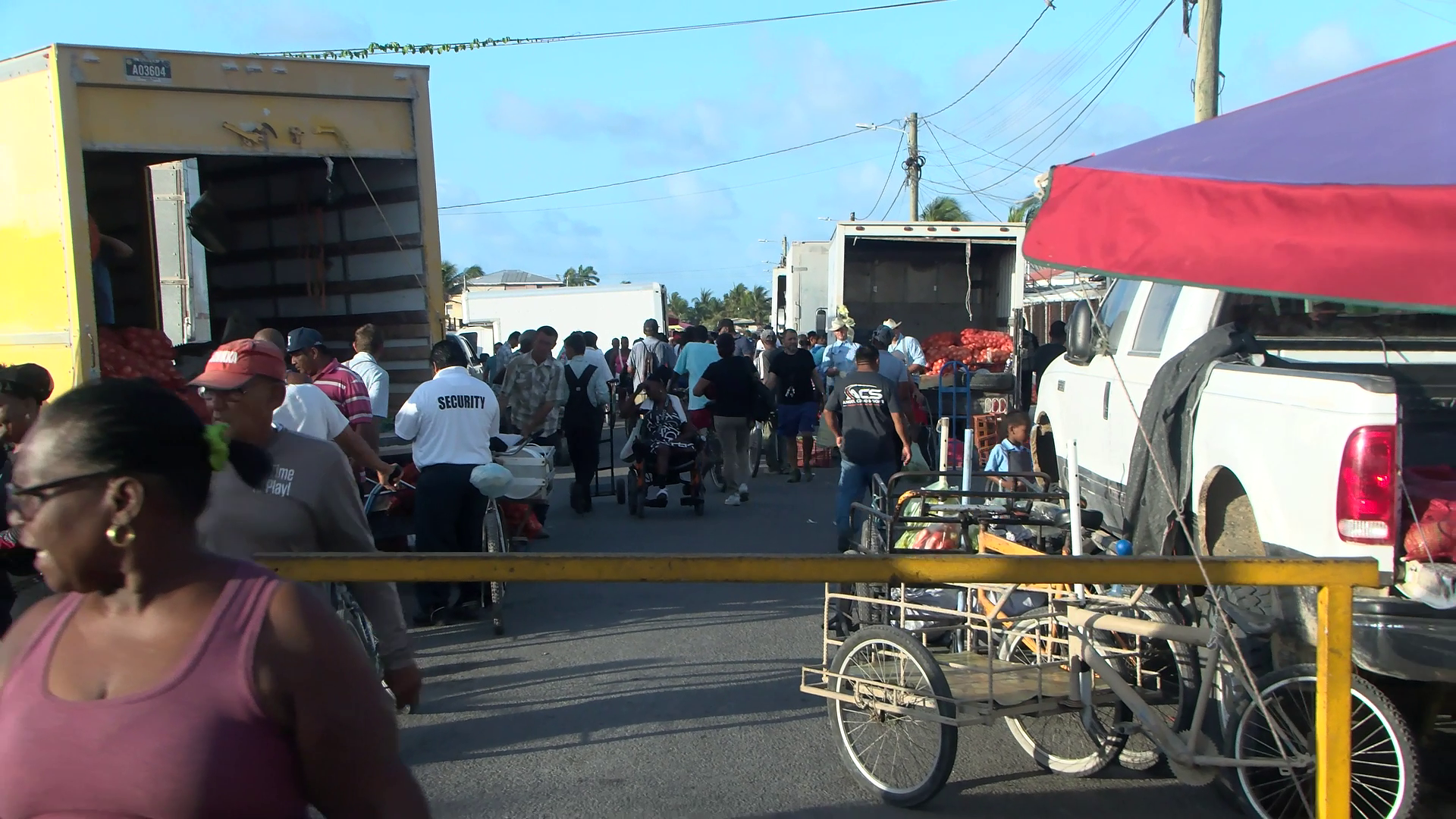

  • Market Vendors Say Current Regulations Will Affect Their Livelihoods

    Market Vendors Say Current Regulations Will Affect Their Livelihoods

    A simmering dispute over operating day allocations at Belize City’s Michael Finnegan Market continues to unfold, as small retail farmers push back against existing regulations that they say threaten their economic survival. This latest chapter of the conflict comes after multiple retail producers were turned away from the market earlier this week, when enforcement of a longstanding rule that reserves Tuesdays and Fridays exclusively for wholesale operations, leaving only Saturdays for retail vendors, was strictly implemented.

    For many small-scale farmers who rely on the market as their primary source of income, being limited to just one selling day a week is a devastating blow. Many travel from outlying districts to Belize City to sell their produce directly to consumers, and the restriction has cut into their earnings at a time when small agricultural producers already face steep economic headwinds. Multiple vendors have told reporters that the one-day limit makes it impossible to cover their travel and production costs, forcing many to consider exiting the market entirely.

    When pressed by reporters this week on whether the current regulations could be adjusted to address the vendors’ concerns, Delroy Herrera, market manager for the Belize City Council, did not rule out changes. But he made clear that any amendment to the existing rules will follow formal, legal processes rather than being rushed through in response to individual complaints.

    Herrera emphasized that inclusive public consultation is the first and most critical step toward resolving the standoff. “Public consultation is always good because that’s how you get your feedback once you’re in political life,” Herrera said. “I understand we are at capacity inside the market right now, but we want all our people – especially the small farmers who are struggling – to come to the table and lay out the challenges they are facing.”

    He acknowledged that many small producers who travel to Michael Finnegan from other districts already face barriers and unfair treatment in their home regions, driving them to seek more open selling opportunities in Belize City. “They already feel like they are being bamboozled in their districts, so they come here to get a fair shot,” Herrera noted.

    Herrera framed the existing regulatory structure as a necessary framework to keep the market operating orderly, comparing it to household rules that keep daily life running smoothly. “Every house has rules, right? And so it’s simple to understand the rule, to work around the rule, or to amend the rule, but we have to do it respectfully, and we have to do it with the constraint of the law,” he explained.

    Once the consultation process is complete, Herrera said the council will draft a formal proposal outlining potential adjustments to the day allocation rules, with the goal of reaching a solution that works for all stakeholders – the council, wholesale vendors, and small retail producers. “Once we have that done, then from there we can do whatever amendment needs to be done to incorporate everybody so that everybody can move harmoniously,” he said.

    The market manager did, however, set a clear condition for any meaningful progress: rather than submitting scattered, individual complaints, retail vendors must organize and present their shared demands as a unified collective. “The council cannot act on scattered individual complaints,” Herrera stressed. “For any real change to happen, retail vendors will need to unite, bring their concerns to the table as one voice, and give the process a chance to work.”

    As of Thursday, no formal date for the public consultation has been announced, and vendors are still in the early stages of organizing to coordinate their collective demands. The dispute highlights the ongoing tension between regulatory order and the livelihood needs of small, independent producers in Belize’s informal agricultural sector.

  • New Wildlife Bill, But Who’s Left Out of the Decisions?

    New Wildlife Bill, But Who’s Left Out of the Decisions?

    Scheduled for publication in May 2026, this report examines a pivotal shift in Belize’s approach to protecting its unique native biodiversity, as the country’s cabinet has introduced a long-awaited Wildlife Conservation and Management Bill designed to replace outdated legislation that has governed wildlife protection for decades. The legislative update has drawn initial praise from leading environmental voices in the country, including Dr. Celso Poot, managing director of the iconic Belize Zoo, a prominent institution at the forefront of Central American conservation work. Alongside the new bill, government officials have approved a 12-month hunting moratorium covering three at-risk native species: the white-lipped peccary (locally known as warries), the yellow-headed Amazon parrot, and the brown brocket deer.

    Despite welcoming the broad push to update Belize’s wildlife governance, Dr. Poot has emerged as a key critic of the process, highlighting that frontline conservation scientists were excluded from the negotiations that shaped both the bill and the moratorium. His core concern centers on whether the new policy can deliver meaningful conservation outcomes without input from the researchers who study Belize’s declining wildlife populations.

    Dr. Poot emphasized that evidence-based decision-making, rooted in rigorous population data, is the foundation of effective wildlife management. He pointed out that the current moratorium only covers three species, while many other native wildlife populations across Belize face sustained downward trends. For the yellow-headed Amazon parrot, a species illegally targeted for the pet trade within Belize, he argued a one-year pause in hunting is far too short to allow populations to recover, as large-bodied, slow-reproducing wildlife require years of protection to rebound from overexploitation.

    For the white-lipped peccary, Dr. Poot noted that recent population assessments confirm dramatic declines: the species is now only found in large, remote protected areas, and individuals are far smaller on average than they were in past surveys. While he welcomes the inclusion of the species in the moratorium, he questions whether a 12-month protection period is sufficient to reverse its decline. When it comes to the brown brocket deer, he raises even more pressing concerns: the species remains understudied in Belize, with little reliable data on its current population size or distribution. Compounding this enforcement challenge, the average hunter cannot easily distinguish the brown brocket from the more common red brocket deer, raising questions about how the hunting ban can be practically enforced on the ground.

    Beyond gaps in the current moratorium, Dr. Poot has called for the addition of hicatee turtles to the protected list, arguing the species also faces severe population threats that warrant immediate hunting protection. For Belize’s conservation community, the new bill represents a critical step forward in modernizing outdated environmental policy, but the exclusion of scientific expertise from decision-making has left serious doubts about whether the reform will deliver the meaningful biodiversity protection the country urgently needs.

  • Super Nationals Set to Redefine Youth Sports in Belize

    Super Nationals Set to Redefine Youth Sports in Belize

    For generations, young competitive athletes across Belize have longed for access to high-stakes competition and pathways that could carry their sporting careers beyond the country’s borders. In 2026, that long-held dream is set to become a reality, as the nation’s National Sports Council unveils Super Nationals: a transformative new annual national competition designed to reshape the landscape of youth athletics in the Central American country.

    The inaugural tournament will bring together the most exceptional young talent from across Belize, split into two divisions for primary and secondary school athletes, across four core sporting disciplines: football, basketball, volleyball, and track and field athletics. Unlike existing competitions that pit entire school teams against one another, Super Nationals restructured format pools the top individual athletes from every district to form unified district squads, a change that organizers say addresses a longstanding gap in Belize’s youth sports ecosystem.

    Kaya Cattouse, National Sports Coordinator for Belize, explained the core logic behind the new event in an interview. For years, the country has hosted national championship tournaments for primary school teams, where squads represent their individual schools at the national level. But due to limited talent pools within single schools, the overall level of competition has remained stagnant, preventing the most promising young athletes from testing their skills against equally talented peers. By combining the best athletes from all schools in a district into one all-star squad, Cattouse notes, Super Nationals will immediately raise the competitive bar, creating a concentrated showcase of elite young talent.

    The strategic goals of the tournament stretch far beyond a single week of games. For primary school athletes, the high-profile competition creates a clear talent identification pipeline for domestic high schools seeking skilled student athletes to award institutional scholarships. For the high school division, organizers plan to invite international college scouts to the annual one-week event, creating direct access to international collegiate sports scholarships that were previously out of reach for most young Belizean athletes.

    “This initiative is fundamentally about creating life-changing opportunities for Belize’s young athletes, and building a stronger, more sustainable future for sports across our country,” Cattouse emphasized, noting that the event is a collaborative effort between the National Sports Council and Belize’s national sporting federations.

    The first edition of Super Nationals will kick off following the end of the 2026 academic year. The Primary Schools division will take place first, with matches scheduled for June 22 and 23. The High Schools division will follow immediately after, running from June 29 through July 3 for a full week of elite competition. A formal opening ceremony will launch the tournament at Belize’s Civic Center on the opening Monday, where fans will get their first chance to meet the competing student athletes before game action begins.

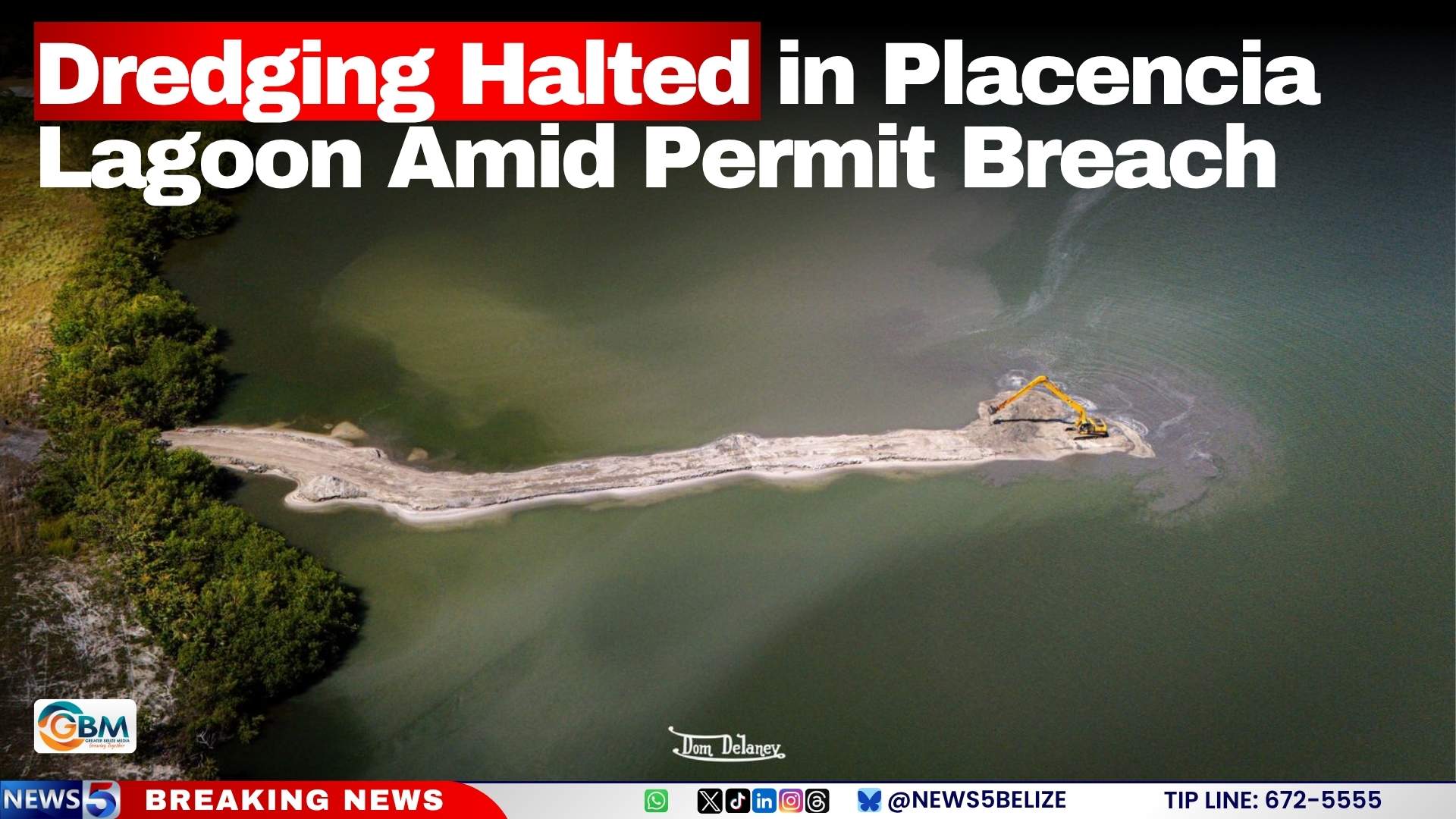
  • Dredging Halted in Placencia Lagoon Amid Permit Breach

    Dredging Halted in Placencia Lagoon Amid Permit Breach

    In a development that highlights gaps in environmental regulation enforcement, all dredging work at Belize’s Placencia Lagoon has been ordered to stop immediately after regulators uncovered that the project contractor violated critical terms of its operating permit, prompting heightened public alarm over damage to a protected manatee feeding ground.

    The Belize Department of the Environment (DOE) has publicly confirmed that it initially granted formal approval for the dredging project. However, the agency’s chief executive officer admitted that department officials had no knowledge of prior ecological studies marking the excavation area as a critical manatee habitat when the permit was issued.

    According to DOE statements, the dredging site falls under the administrative jurisdiction of Seine Bight Village. As part of the national permitting workflow, the local Seine Bight Village Council previously issued a formal no-objection letter to support the project’s application. But despite that early approval, regulators confirmed the contractor never fulfilled all binding requirements laid out in the final approved permit.

    Local media outlet News Five reached out to Seine Bight Village Council Chairman Jose Aleman to clarify the council’s decision to back the project application. Aleman explained that issuing a no-objection letter is a standard procedural step required for all development permit applications in the region, and this step is necessary for applicants to secure final approval from Belize’s Mining Department.

    He went on to note that controlled development activity is a regular occurrence across the Placencia Peninsula. From the council’s perspective, reviewing the application and issuing the required no-objection letter was simply a formal step to ensure the project would follow all applicable national legal protocols, rather than an endorsement of unregulated work.

    “As such, we saw that as a suitable move in terms of not doing anything illegal but trying to fit the necessary requirements in obtaining a permit,” Aleman stated in his comments to reporters. The halt in dredging work has renewed discussion about the need for improved inter-agency information sharing to protect ecologically sensitive coastal habitats in Belize.

  • Two Detained After 9 Y/O Girl Dies in Red Bank Village RTA

    Two Detained After 9 Y/O Girl Dies in Red Bank Village RTA

    A tragic traffic incident in Red Bank Village has ended the young life of 9-year-old Vanessa Cal, leaving local communities in mourning and prompting law enforcement to take two people into custody as the investigation into the crash proceeds. The fatal collision, which occurred on [May 14, 2026], unfolded at a local intersection in circumstances that have been outlined by police in initial briefings.

    Assistant Superintendent of Police Stacy Smith shared details of the incident with reporters this afternoon, confirming that Cal was riding her bicycle near the intersection when the crash occurred. According to Smith’s account, the driver of a sport utility vehicle lost control and struck a perimeter fence at the junction, and the moving vehicle subsequently collided with the young cyclist.

    The female driver, who was behind the wheel at the time of the crash, told responding officers that she had meant to press the brake pedal to slow or stop the vehicle, but mistakenly hit the accelerator instead, leading to the unintended loss of control that caused the crash. After the collision, the driver told investigators she checked the scene immediately, where she found Cal’s bicycle damaged, but the child did not appear to have any obvious outward injuries and remained responsive following the impact.

    Cal was moved to a nearby residential property to receive initial care while waiting for emergency medical support, but her condition declined rapidly despite initial observations that her injuries were not visible. No further details on the timeline of her condition deterioration or the exact cause of death have been released ahead of a scheduled postmortem examination, which will formally document the cause and manner of the young girl’s death.

    Both the female driver and a male passenger who was in the SUV at the time of the incident have been taken into police custody to await further investigation. Law enforcement has not yet filed formal charges against either individual, and the investigation remains active as officers work to piece together the full circumstances of the crash. Cal’s body remains in police custody ahead of the postmortem examination, which is expected to provide critical clarity for the ongoing investigation.

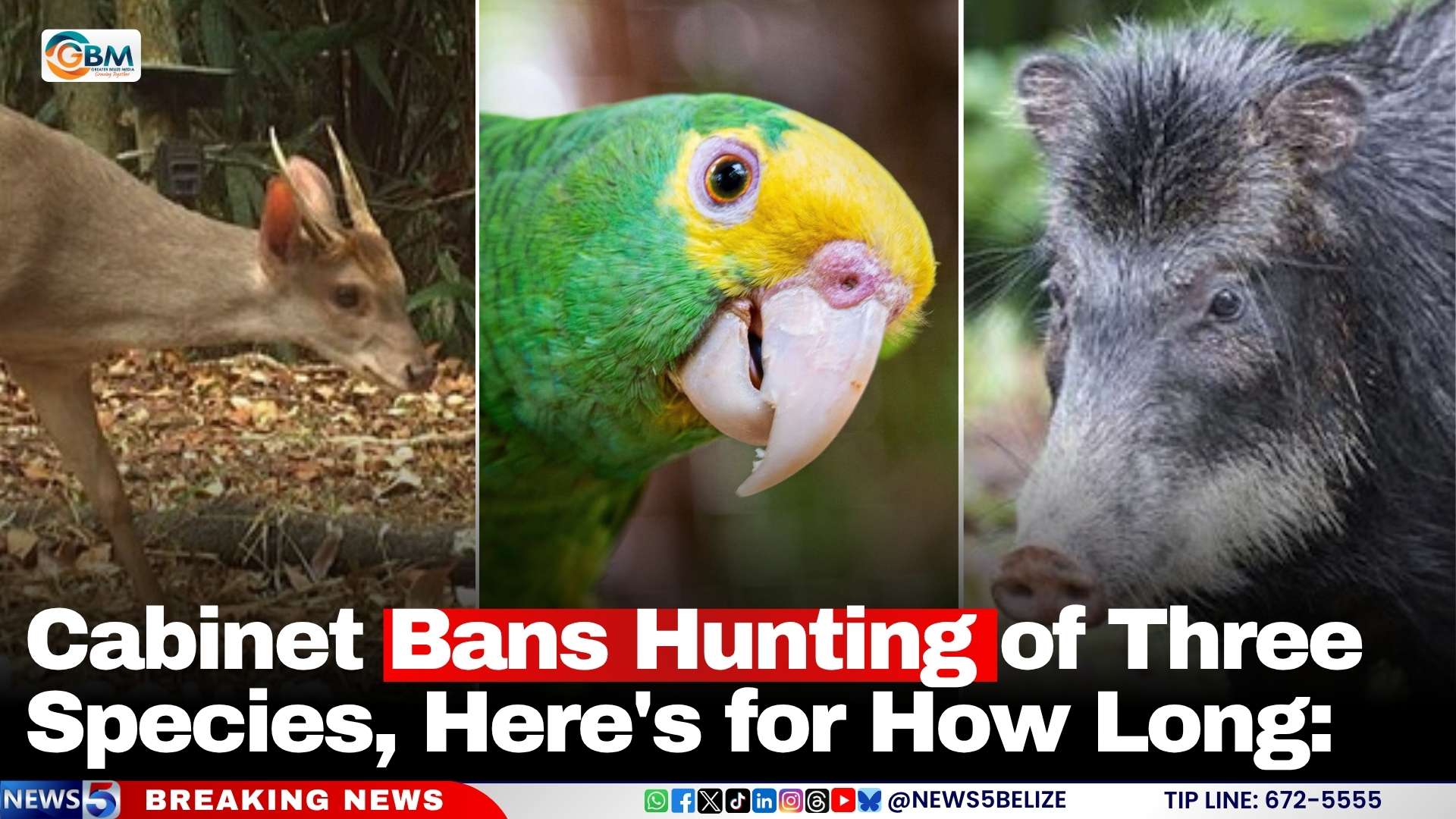
  • Cabinet Bans Hunting of Three Species, Here’s for How Long:

    Cabinet Bans Hunting of Three Species, Here’s for How Long:

    In a developing environmental policy announcement dated May 14, 2026, Belize’s national Cabinet has greenlit a 12-month moratorium on all hunting and capture activities for three native wildlife species, paired with a sweeping update to the country’s outdated wildlife protection legal framework — a move that has drawn both praise and measured criticism from regional conservation leaders. The temporary ban specifically targets three at-risk populations: the white-lipped peccary, the yellow-headed Amazon parrot, and the brown brocket deer, all of which have recorded sustained population declines in recent decades due to unregulated hunting and habitat loss across Belize. Alongside the hunting restriction, Cabinet formally approved the new Wildlife Conservation and Management Bill, a piece of legislation designed to replace the decades-old original Wild Life Protection Act that has guided the country’s conservation rules for generations. Dr. Celso Poot, the long-serving Managing Director of the Belize Zoo and a prominent voice in Central American wildlife conservation, described the policy updates as a long-awaited milestone for the region’s environmental community. In his response to the announcement, Poot emphasized that the revised legislation has been years in development, shaped by extensive cross-stakeholder consultations that address gaps in the country’s original, outdated regulatory framework. “This is something that has been in the works for many years. A lot of consultations have gone into the updating of it… I think that will be welcomed by the conservation community because we have a lot of antiquated laws,” Poot stated. Despite his support for the broader regulatory overhaul, Poot raised pointed questions about whether the one-year timeline for the hunting ban will be sufficient to allow the protected species’ populations to recover to sustainable levels. He noted that the three species included in the ban are just a small fraction of the Belizean wildlife currently facing downward population trends, adding that most vulnerable large mammal and bird species require far longer than 12 months of protection to rebound from decades of overexploitation. Poot further argued that hicatee turtles, a critically endangered freshwater turtle species native to Central America, should have been added to the list of species protected under the new moratorium, given their ongoing population collapse across the country. This developing story will be updated with full additional details in a broadcast airing at 6:00 p.m. local time.

  • Catholic Church Defends HPV Vaccine Position

    Catholic Church Defends HPV Vaccine Position

    A public debate over HPV vaccination policy in Belize has intensified in recent days, as the Catholic Diocese of Belize City and Belmopan has issued an official statement clarifying and defending its long-held stance on school-based administration of the vaccine, pushing back against widespread misinterpretation of its position.

    Contrary to circulating rumors that the Church opposes the life-saving immunization itself, the diocese made clear that it fully acknowledges the public health value of HPV vaccines and deems them ethically acceptable for use. The core of the institution’s objection is not to the vaccine, but to the government’s chosen model of delivering doses directly on school campuses, a policy the Belizean Ministry of Health has already implemented across the country.

    Under the ministry’s current nationwide initiative, registered nurses and other qualified medical personnel travel to public and private schools to administer HPV vaccines to eligible students. The diocese argues that this framework is improper for a vaccine that targets a sexually transmitted infection, centering its critique on the critical issue of informed parental consent.

    In its statement, the diocese emphasized that parents must receive full, unfiltered medical information about the vaccine without any external pressure or coercion to consent. The institution maintains that decisions about childhood HPV vaccination should be made exclusively in clinical settings, where parents — who hold the legal and ethical right and responsibility to make medical decisions for their minor children — can weigh the risks and benefits alongside trusted healthcare providers, aligned with their own moral and cultural values.

    The Church also raised a practical note about the limitations of the most widely used HPV vaccine, Gardasil 9. While acknowledging that the shot provides robust protection against multiple high-risk strains of the virus, the diocese pointed out that it does not cover every cancer-causing HPV variant circulating in Belize. This clarification aligns with data from the U.S. Centers for Disease Control and Prevention (CDC), which confirms that more than 200 distinct HPV strains exist globally, and Gardasil 9 only targets the nine strains responsible for the majority of HPV-related cancers and genital warts.

    Despite its public disagreement with the ministry’s rollout model, the diocese stressed that it shares the same core goal as the government: protecting the health and wellbeing of Belizean children. The institution added that it remains open to collaborative dialogue with the Ministry of Health to adjust the policy, though it has no plans to reverse its position on the inappropriate nature of school-based delivery. For its part, the Ministry of Health has stood firm on its current strategy, framing the nationwide HPV vaccination initiative as a critical public health priority.

    The debate comes as global health authorities widely recommend HPV vaccination for pre-adolescent children, as the vaccine provides the strongest immune protection before the onset of sexual activity, when exposure to the virus typically occurs.

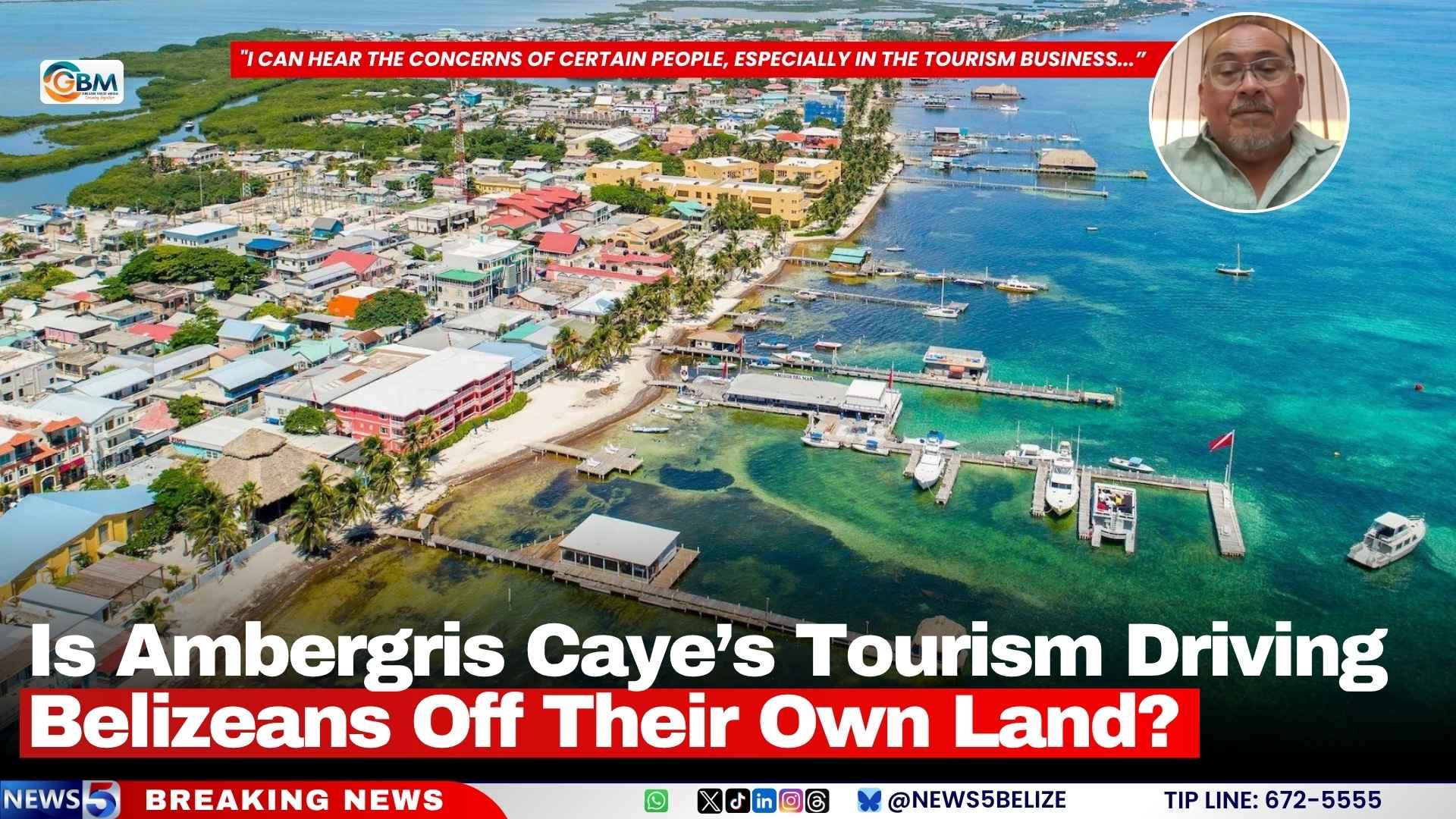
  • Is Ambergris Caye’s Tourism Driving Belizeans Off Their Own Land?

    Is Ambergris Caye’s Tourism Driving Belizeans Off Their Own Land?

    Nestled in the heart of Belize’s Caribbean coastline, Ambergris Caye has long stood as one of the country’s most popular tourist destinations, drawing thousands of annual visitors with its turquoise waters, coral reefs, and laid-back island culture. But as the tourism sector continues to expand at a breakneck pace, a growing public debate has emerged over who exactly benefits from this boom — and whether long-time local residents are being pushed off the land their communities built.

    As of May 14, 2026, Andre Perez, the area’s elected representative, acknowledged publicly this week that large-scale development across the island has progressed “a bit too fast,” confirming that the national government has been “acutely aware” of the mounting pressures facing local communities. Despite this acknowledgment, construction activity shows no signs of slowing: cranes remain operational across the island, dredging work for new resort and residential projects continues, and new construction sites are still being cleared, particularly in the less developed northern stretches of the caye.

    This unrelenting growth has forced an uncomfortable question into the public spotlight: Is the island’s main town of San Pedro being developed for native Belizeans, or exclusively for the foreign tourists that power its economy?

    Perez pushed back against widespread claims that local residents are being priced out of the land market in an interview with local outlet News 5 on Wednesday. He pointed to a government initiative that has delivered more than 1,000 developed lots to first-time Belizean landowners as evidence that officials are still working to preserve access for locals. He argued that this program directly counters narratives of displacement, noting that young, first-time buyers now have clear pathways to secure property on the island.

    “Everyone here, the new generation, first-time landowners, are getting the opportunity to get a piece of land,” Perez told reporters. “So that is actually counteracting those that are saying [they] are being outpriced.”

    He added: “It remains on them to decide whether they want to sell or not, but they have been delivered in their hands a title that says they have a piece of Ambergris Caye.”

    While the government frames its land initiative as a solution to affordability concerns, local residents argue that rising property values driven by tourism investment are about more than just upfront housing costs. The steady influx of outside capital and tourism-related infrastructure has gradually shifted the island’s cultural and economic identity, reshaping a community that was once built around local fishing and small-scale commerce into a hub catering almost exclusively to international visitors.

    Many locals now worry that the same rapid growth that has boosted the island’s GDP will ultimately displace the intergenerational communities that gave Ambergris Caye its unique character. Perez acknowledged these growing anxieties this week, admitting that calls for a slowdown in development merit serious consideration.

    “I can hear the concerns of certain people, especially in the tourism business,” Perez said. “Perhaps it’s time to look and say, ‘Let’s take a pause in development,’ because it’s going a bit too fast. So as a government, we are aware of it, acutely aware of it.”

  • Should Retail Vendors Unite to Push for More Selling Days?

    Should Retail Vendors Unite to Push for More Selling Days?

    A growing debate over selling day restrictions at Belize’s Michael Finnegan Market has moved into the spotlight this week, as city authorities confirm they are willing to revise existing rules— but only if retail vendors band together to formally push for change.

    Currently, local retail vendors at the popular public market are only permitted to sell goods on Saturdays, a regulation that has sparked growing frustration among small-scale producers and street vendors who rely on the market for their primary income. The dispute boiled over earlier this week, when a routine regulatory enforcement operation turned away multiple retail vendors who attempted to set up their stalls outside of the allowed single weekend day.

    Delroy Herrera, the manager of Michael Finnegan Market, outlined the city council’s position in an interview with local outlet News 5 on Tuesday. He emphasized that the council does not reject the idea of expanding selling days, but any adjustment to existing policy must follow official legal and procedural channels.

    “Every organization, every public space operates with clear rules, right? It’s straightforward: you can follow the rule, work within the framework of the rule, or push to amend the rule. But that change has to happen respectfully, and it has to stay within the constraints of local law,” Herrera explained.

    For many retail farmers and small vendors, the current one-day restriction has already caused measurable financial harm. Multiple vendors reported that their weekly incomes have dropped significantly under the existing policy. Some producers, who travel multiple hours from outlying districts to reach the Belize City market, added that many of their regular customers only attend the market on Tuesdays and Fridays, forcing them to lose out on consistent sales that they depend on to cover living and production costs.

    Herrera reiterated that the Belize City Council is prepared to hear vendors’ concerns and negotiate potential changes, but collective organization from the vendor community is a non-negotiable prerequisite for moving forward.

    “Once vendors have organized themselves and presented a unified position, we can work through whatever amendments are needed to create a framework that works for all stakeholders: the city council, local farmers, and every person who relies on this market,” he said.

    The next step, Herrera explained, will be for organized vendors to collaborate with market leadership to draft a formal proposal outlining their requested changes, which will then be submitted to the Belize City Council for review and a final vote on whether to amend the existing market day regulations.