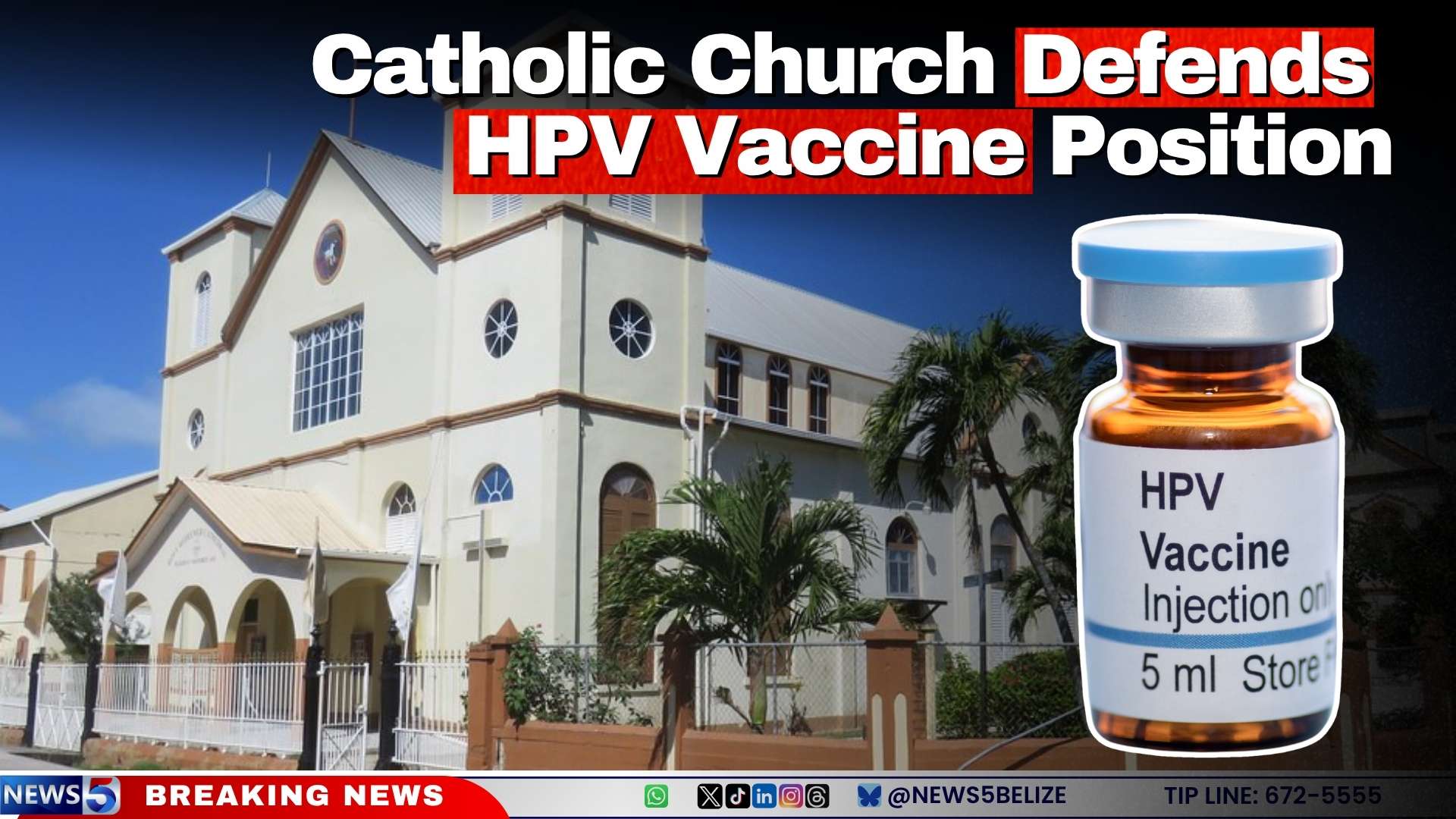
A public debate over HPV vaccination policy in Belize has intensified in recent days, as the Catholic Diocese of Belize City and Belmopan has issued an official statement clarifying and defending its long-held stance on school-based administration of the vaccine, pushing back against widespread misinterpretation of its position.
Contrary to circulating rumors that the Church opposes the life-saving immunization itself, the diocese made clear that it fully acknowledges the public health value of HPV vaccines and deems them ethically acceptable for use. The core of the institution’s objection is not to the vaccine, but to the government’s chosen model of delivering doses directly on school campuses, a policy the Belizean Ministry of Health has already implemented across the country.
Under the ministry’s current nationwide initiative, registered nurses and other qualified medical personnel travel to public and private schools to administer HPV vaccines to eligible students. The diocese argues that this framework is improper for a vaccine that targets a sexually transmitted infection, centering its critique on the critical issue of informed parental consent.
In its statement, the diocese emphasized that parents must receive full, unfiltered medical information about the vaccine without any external pressure or coercion to consent. The institution maintains that decisions about childhood HPV vaccination should be made exclusively in clinical settings, where parents — who hold the legal and ethical right and responsibility to make medical decisions for their minor children — can weigh the risks and benefits alongside trusted healthcare providers, aligned with their own moral and cultural values.
The Church also raised a practical note about the limitations of the most widely used HPV vaccine, Gardasil 9. While acknowledging that the shot provides robust protection against multiple high-risk strains of the virus, the diocese pointed out that it does not cover every cancer-causing HPV variant circulating in Belize. This clarification aligns with data from the U.S. Centers for Disease Control and Prevention (CDC), which confirms that more than 200 distinct HPV strains exist globally, and Gardasil 9 only targets the nine strains responsible for the majority of HPV-related cancers and genital warts.
Despite its public disagreement with the ministry’s rollout model, the diocese stressed that it shares the same core goal as the government: protecting the health and wellbeing of Belizean children. The institution added that it remains open to collaborative dialogue with the Ministry of Health to adjust the policy, though it has no plans to reverse its position on the inappropriate nature of school-based delivery. For its part, the Ministry of Health has stood firm on its current strategy, framing the nationwide HPV vaccination initiative as a critical public health priority.
The debate comes as global health authorities widely recommend HPV vaccination for pre-adolescent children, as the vaccine provides the strongest immune protection before the onset of sexual activity, when exposure to the virus typically occurs.