标签: Belize

伯利兹

  • Police Officer Who Shot and Killed Laddie Gillett Loses Appeal

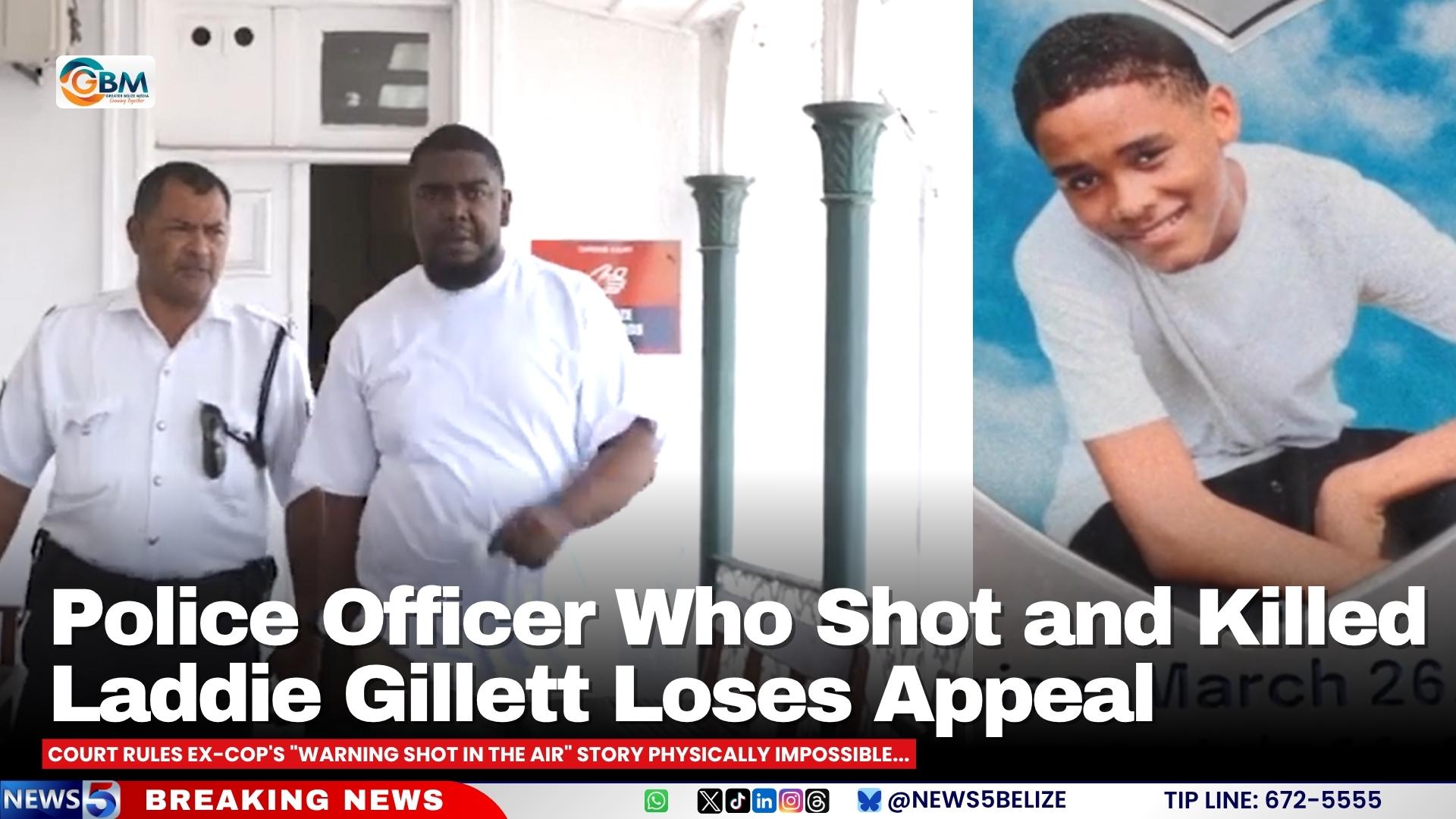
    Police Officer Who Shot and Killed Laddie Gillett Loses Appeal

    In a landmark ruling delivered this week, Belize’s Court of Appeal has unanimously upheld the manslaughter conviction and 18-year prison sentence of former police corporal Kareem Martinez, ending his legal challenge over the 2021 fatal shooting of 14-year-old Laddie Gillett on a Placencia beach.

    The fatal incident unfolded on the night of July 14, 2021, at the height of COVID-19 pandemic restrictions when a national 10:00 p.m. curfew was in effect. Gillett and his best friend had spent the evening celebrating a birthday with cake on the beach, and were hurrying along the beachfront back to the Chabil Mar resort to meet the curfew deadline. As they rounded a corner near the Placencia Beach Club Resort, the pair unexpectedly encountered a team of four police officers responding to a security guard’s report of suspicious persons in the area.

    Startled by the sight of uniformed officers in dark clothing, both teenagers turned and fled. Moments later, a single gunshot rang out, and Gillett was struck in the back. The bullet passed through his chest, and he was pronounced dead just 21 minutes after the incident at 10:21 p.m. His friend was taken into custody for curfew violation and held at the local police station.

    During Martinez’s original trial, prosecution evidence overwhelmingly tied him to the fatal shot. Investigators recovered a single 9mm shell casing near the spot where Gillett fell, and forensic analysis from Belize’s National Forensic Sciences Services confirmed the round had been fired from Martinez’s issued Bersa Thunder 9 pistol, which was seized from him the same night. The three other officers on scene all testified they had not fired their weapons, despite the trial judge noting all three appeared evasive in their accounts, clearly attempting to distance themselves from the shooting. Gillett’s friend, whom the judge deemed a thoroughly credible witness, also confirmed neither teen was armed, nor was there any physical altercation before the shot was fired.

    Martinez chose not to give sworn testimony during his trial, instead offering an unsworn statement claiming he fired a single warning shot 10 feet into the air after spotting a shiny object he believed to be a gun. He further claimed the fatal shot had actually been fired by fellow officer PC Augustine at the exact same time, explaining why witnesses only heard one bang. The trial judge rejected this account as physically incredible, pointing out that for Martinez’s story to hold, a bullet fired 10 feet into the air would have had to travel 75 to 90 feet backward and downward to strike Gillett in the back in the span of just six seconds. The Court of Appeal fully endorsed this finding, confirming the scenario was physically impossible.

    On the alternative claim that Augustine was the actual shooter, the appellate panel also dismissed the theory out of hand. Augustine was positioned closer to witnesses than Martinez, the court noted, and if he had drawn and fired his weapon, at least one of the five other people present would have seen the action. No witness testified to seeing Augustine fire, and the court ruled accepting the alternative shooter claim would require pure, unfounded speculation. While the trial judge did find Augustine had lied about carrying a personal licensed firearm that night, she also concluded he did not fire the weapon that killed Gillett, a finding the appeal court saw no reason to overturn.

    In its written ruling, the appellate court joined the trial judge in harshly criticizing the conduct of officers involved in the incident. The three officers who testified for the prosecution were found to have deliberately downplayed their own roles in the events of the night, with the court describing their overall conduct as “less than exemplary.” Even the security guard who placed the original call about suspicious persons was found to have lied about his presence at the scene, with the judge confirming he was present during the chase despite his claims to the contrary. The court emphasized, however, that these shortcomings in police conduct were not enough to undermine the overwhelming core of the prosecution’s case against Martinez.

    Martinez’s legal team had submitted eight separate grounds of appeal, arguing the investigation was biased toward prosecuting Martinez, that investigators failed to test other officers’ hands and weapons for gunfire residue, that the trial judge had improperly overstepped by asking too many questions during proceedings, and that she had incorrectly shifted the burden of proof onto the defendant. The three-judge appellate panel rejected every single ground, concluding the trial judge’s management of the case was “detailed, sound and flawless,” and that she had consistently and correctly upheld the principle that the prosecution, not the defense, bears the burden of proving guilt beyond a reasonable doubt.

    With the appeal dismissed, Martinez will now serve out his full 18-year prison sentence for manslaughter. The case remains a high-profile example of police accountability in Belize, four and a half years after the 14-year-old’s death during a public health curfew.


  • Nearly 6 Years Later, Businessman Convicted of Human Trafficking

    Nearly 6 Years Later, Businessman Convicted of Human Trafficking

    On June 12, 2026, a major human trafficking case that stretched across nearly six years reached a landmark guilty verdict in Belize’s Dangriga High Court. Businessman Jin Zhou Wu was found guilty on all four counts of human trafficking brought against him, splitting into two charges of trafficking for forced labor and two additional charges of trafficking for sexual exploitation.

    The origins of the case date back to mid-2018, when the Belize Police Department first received anonymous tips alleging that Wu was exploiting vulnerable women at his commercial property in southern Belize. Formal arrests would not come until 2020, when three Honduran women filed official complaints against the businessman that corroborated the earlier intelligence.

    According to official case documents, the three young victims—aged 20 and 21 at the time of their exploitation—were lured across the border from Honduras in June 2019 with false promises of legitimate waitressing jobs. Once they crossed into Belize illegally with the help of a local female recruiter working for Wu, their situation quickly turned exploitative. Wu immediately seized their passports and other travel documents, confiscated their personal cell phones to cut off contact with the outside world, and forced them into sex work at his Sky Blue Bar located in Bella Vista Village, Toledo District.

    Wu was first arraigned on the charges in October 2020 and was remanded to Belize Central Prison to await trial. He was later released on bail set at $15,000, a decision that drew quiet criticism from anti-trafficking advocates who argued he posed a flight risk. Following the guilty verdict delivered this week, Justice ordered Wu to be taken back into custody immediately. A sentencing hearing is scheduled for June 26, where the court will determine the length of his prison term and any additional penalties.

    The prosecution was led by Director of Public Prosecutions Cheryl Lynn Vidal on behalf of the Crown, while Wu was represented by defense attorney Emerita Anderson throughout the trial. Anti-trafficking organizations in Belize have welcomed the conviction as a critical win for holding traffickers accountable, noting that long-running cases like this highlight the systemic challenges of prosecuting human trafficking crimes in small Central American nations.

  • Motorcycle Passenger Killed in San Pedro RTA

    Motorcycle Passenger Killed in San Pedro RTA

    A fatal road traffic accident in San Pedro Town, Belize has claimed the life of a local resident just before midnight on Thursday, June 11, 2026, leaving another person injured and triggering an official police investigation into the crash.

    The victim, identified as 33-year-old Gilberto Noble, was riding as a rear passenger on a red Lifan motorcycle operated by 23-year-old Vincent Donaji Canul when the collision unfolded. According to initial details from law enforcement investigators, the motorcycle was traveling south along Pescador Drive when Canul initiated a maneuver to overtake a yellow golf cart traveling in the same direction. The impact between the two vehicles occurred shortly before 11 p.m.

    Noble suffered severe, fatal head trauma in the crash. First responders rushed both he and Canul to the local San Pedro Polyclinic for emergency care, where medical staff pronounced Noble dead upon arrival. Canul, meanwhile, walked away with non-life-threatening injuries to his right foot and remains receiving treatment at the same medical facility.

    Footage captured at the crash site documents the immediate aftermath of the incident: emergency medical workers loaded an injured Canul onto a stretcher for transfer to care, while Noble’s body remained at the scene as uniformed officers carried out forensic evidence collection and processed the crash site to document key details.

    In a procedural update, law enforcement officials confirmed they have issued notices of intended prosecution to both the motorcyclist Canul and the golf cart driver involved in the incident. As part of standard investigation protocol for fatal road crashes, investigators obtained a blood sample from Canul to test for potential alcohol or drug impairment, with full results of that analysis still pending as the inquiry moves forward.

  • Elon Musk is Currently the World’s First Trillionaire

    Elon Musk is Currently the World’s First Trillionaire

    In a landmark milestone that has sent shockwaves through global financial markets, Elon Musk has cemented his place in history as the world’s first person to amass a net worth exceeding $1 trillion, propelled by a stellar first-day trading surge for his aerospace pioneer SpaceX on the U.S. public markets.

    SpaceX opened trading on June 10 with an initial public offering (IPO) price set at $135 per share. By the following morning’s early trading window, shares had skyrocketed roughly 20% to hit $162 apiece, pushing the space exploration company’s total market capitalization across the $2 trillion threshold. This jump came amid overwhelming retail investor enthusiasm that saw the stock become the second-most purchased equity on its debut day, trailing only chip and AI giant Nvidia.

    Musk holds a 38% controlling stake in SpaceX, which alone is valued at roughly $800 billion at the current traded share price. When combined with his 10% stake in electric vehicle manufacturer Tesla, worth approximately $165 billion, plus his portfolio of other smaller private and public investments, his combined wealth pushed across the once-unthinkable $1 trillion mark for the first time ever. To put this unprecedented fortune in perspective, the entire 2026 national budget of Belize totals just $1.9 billion — Musk’s net worth is more than 526 times that entire national government budget.

    Prior to SpaceX’s IPO, financial publication Forbes had already estimated Musk’s net worth at close to $980 billion, meaning only a modest uptick in the company’s share price was enough to push him across the trillion-dollar threshold. In the first 20 minutes of public trading alone, small-scale retail investors injected $18 million into SpaceX stock, underscoring the broad public enthusiasm for the aerospace firm that has revolutionized commercial space launch and NASA crew missions.

    It is important to note that Musk’s trillion-dollar status is not held in liquid cash or bank reserves. Nearly all of his wealth is tied up in equity stakes in the companies he founded and leads, and a standard IPO lock-up agreement bars him from selling any of his SpaceX shares for 366 days after the public listing. Market analysts have also issued a cautious note that his historic title hinges entirely on sustained high share prices for SpaceX: a drop in the stock to just $138 per share would pull his net worth back below the $1 trillion mark, erasing his unique status as the world’s first trillionaire.

  • “We Just Want to Be Seen”: Protests Shadow World Cup Kick-Off

    “We Just Want to Be Seen”: Protests Shadow World Cup Kick-Off

    The 2026 FIFA World Cup’s highly anticipated opening in Mexico City was overshadowed by violent confrontations between demonstrators and law enforcement just outside the iconic Azteca Stadium on June 12, 2026. Thousands of protesters took to the capital’s streets just hours before the tournament’s opening match between host nation Mexico and South Africa, turning the global celebration of football into a platform for long-simmering public grief and anger.

    The demonstrators were largely relatives of the more than 130,000 people reported missing across Mexico, a crisis that has gone unresolved for decades. Marching with hand-held photographs of their lost loved ones and lit candles to honor their memories, they demanded accountability from the Mexican government, which they accuse of failing to investigate disappearances or deliver closure to affected families.

    “We just want to be seen,” Adriana Lozano, a 56-year-old mother who has searched for her son for nine years, told PBS News. “What we are looking for is peace.”

    Despite extensive security measures including road closures extending two miles around the stadium perimeter, at least five separate protest groups converged on the area ahead of kickoff, according to reporting from The Guardian. A faction of roughly 200 demonstrators attempted to breach reinforced security barriers, leading to violent clashes with Mexican police. Verified footage from the scene shows protesters throwing bricks, glass bottles, and petrol bombs at responding officers.

    Mexican law enforcement confirmed that dozens of protesters were taken into custody following the unrest, and multiple officers were treated for injuries sustained during the confrontations. The incident has cast a spotlight on Mexican President Claudia Sheinbaum, who previously downplayed risks of social unrest ahead of the tournament, insisting publicly that “Everything is under control.” Sheinbaum has faced widespread public criticism for her decision not to attend the opening match in person, a move many observers and critics interpret as an attempt to avoid confrontation with demonstrators and the ongoing controversy over the missing persons crisis.

    Though fears of widespread disruption forced authorities to heighten security protocols, the opening match proceeded as planned with a massive security deployment across all host cities. More than 100,000 personnel from the Mexican military, national police force, and National Guard were deployed to stadiums and public areas across the country to maintain order during the tournament. In the end, the host nation secured a 2-0 victory over South Africa in the opening fixture, maintaining a longstanding tradition of host countries winning their opening World Cup matches.

    The 2026 FIFA World Cup is the first iteration of the expanded 48-team tournament, co-hosted by Mexico, the United States, and Canada. Following the opening match in Mexico City, Canada is set to play its first ever match as a World Cup host nation on the tournament’s second day, facing the United States in Toronto.

  • PSU Says Finance Officers are ‘Accomplices to Corruption’

    PSU Says Finance Officers are ‘Accomplices to Corruption’

    In a sharp rebuke of alleged systemic financial misconduct in Belize’s public sector, the Public Service Union (PSU) has launched a formal legal push for transparency, accusing government finance officials of intentionally structuring large payments to evade mandatory oversight and enabling public funds misappropriation. The union’s action, filed June 12, 2026 under the Freedom of Information Act (FOIA), comes on the heels of explosive reports revealing Jenny Armstrong, sister of incumbent Belmopan Area Representative and Home Affairs Minister Oscar Mira, collected over $1.7 million in government disbursements between 2020 and 2025.

    At the center of the PSU’s allegations is a 2023 transaction that underscores the supposed illicit practice: on September 14 of that year, 12 separate invoices totaling more than $103,000 were approved for Armstrong alone. As the PSU outlines in its official request, breaking a single large payment into a dozen smaller chunks requires manual creation of 12 distinct entries in the government’s SmartStream financial system. The union argues it is extraordinarily improbable that each invoice accurately disclosed that it was just one segment of a larger aggregated payment. If the transaction’s true nature was intentionally omitted from the invoice comment fields, the PSU contends, every entry qualifies as a premeditated false record entered into the government’s official financial infrastructure.

    The alleged scheme is designed to circumvent strict financial controls put in place by the Belize government in 2022. Circular No. 1 of 2022 mandates that any single payment exceeding $10,000 must go through rigorous multi-level oversight, including two separate approval checks by the Treasury Department. By contrast, payments that fall below the $10,000 threshold can be processed entirely internally within individual government ministries and departments, with no external Treasury review. The PSU’s claim is that finance officers are deliberately splitting large payments into sub-$10,000 chunks to skip this mandatory oversight process.

    Notably, the union stops short of placing direct blame on elected ministers, noting that cabinet members do not personally process or approve routine payments. Instead, the full weight of responsibility is placed on the finance officers who enter and sign off on the manipulated invoices. The PSU also notes that department heads and chief executive officers may have ordered finance staff to structure payments in this way, making them complicit in the misconduct.

    In its formal statement, the PSU did not mince words describing the practice: “They are accomplices to corruption. This is not a simple mistake; it is a deliberate and corrupt scheme to steal the public’s money without being caught.”

    Through the FOIA request, the union is seeking a full breadth of records covering a five-year window from April 2021 to March 2026. The requested documents include the identities of all ministries, departments, finance officers, department heads, and CEOs implicated in the payment-splitting practice, as well as the names of all vendors that received these structured disbursements. The PSU has also requested complete copies of all relevant SmartStream invoices, purchase orders, and approval documentation related to the transactions.

    Beyond the information request, the PSU is calling on Belize’s Auditor General to launch a full independent review of government financial records covering the same five-year period, and to publish a complete unredacted report of its findings for the public. In cases where misconduct is confirmed, the union is pushing for immediate suspension or termination of all involved personnel, and referral of the cases to the Belize Police Department and Director of Public Prosecutions to open criminal investigations into potential charges including fraud and abuse of public office.

    The Accountant General, Auditor General, and Contractor General now have 30 days to respond to the FOIA request, with a formal response deadline set for July 10, 2026.

  • ‘Be Alert’: Central and South of Belize Warned of Flash Flooding

    ‘Be Alert’: Central and South of Belize Warned of Flash Flooding

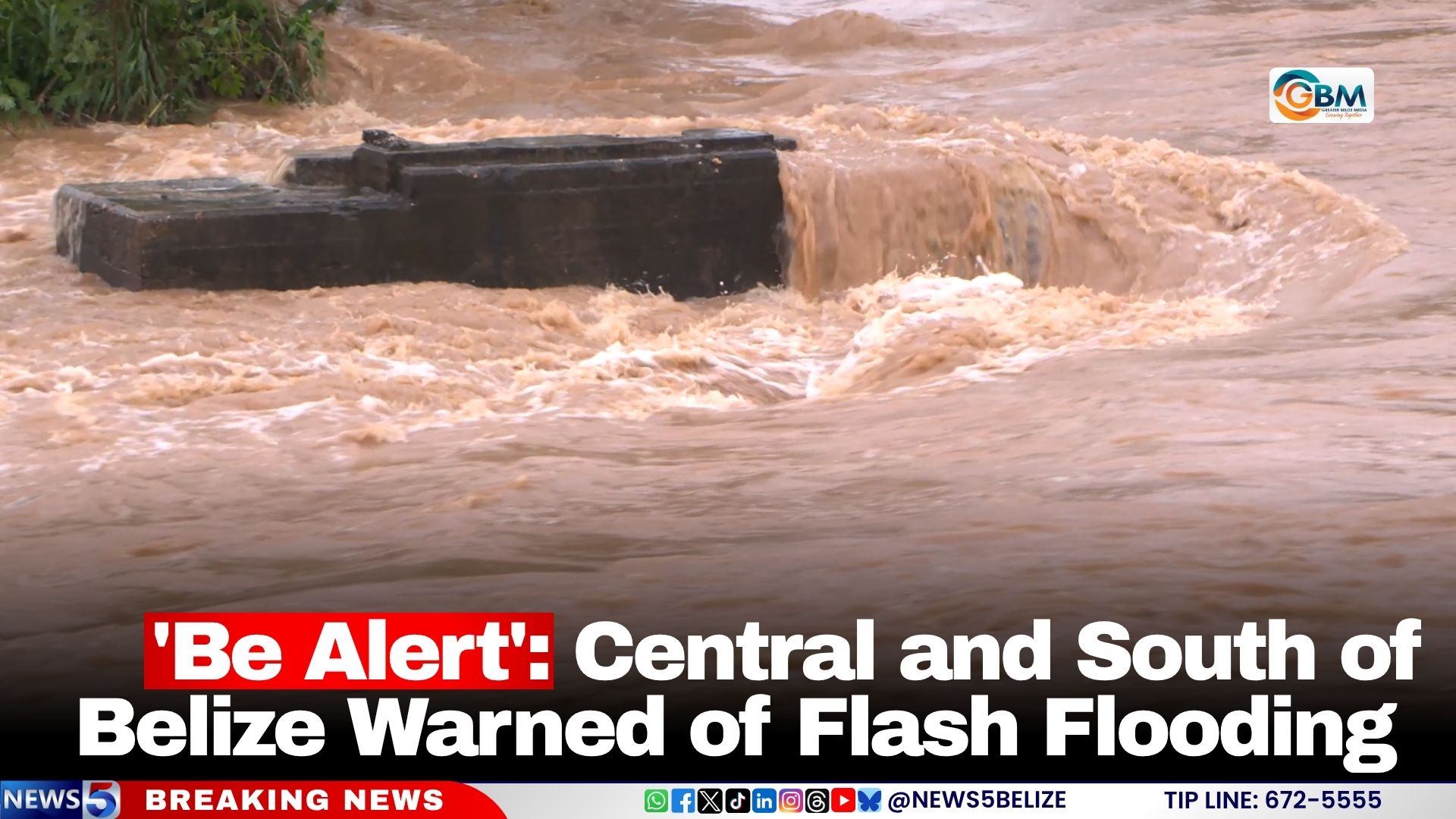
    In the wake of persistent, heavy rainfall that hammered multiple regions of Belize on June 11, 2026, ongoing flash flood and river rise threats continue to loom over large swathes of the country, with official warnings extended to central and southern areas.

    Three of Belize’s top emergency and environmental agencies — the National Emergency Management Organization (NEMO), the National Hydrological Service (NHS), and the National Meteorological Service — have joined forces to issue urgent alerts, urging at-risk communities to stay on high alert amid unstable meteorological conditions. In its third public information bulletin on the unfolding situation, NEMO emphasized that dynamic weather patterns are keeping flood risks elevated across much of the nation.

    Active flood warnings are currently in place for central and southeastern Belize, with a specific focus on communities situated along the Sittee River in the Stann Creek District. Monitoring data from the NHS shows that water levels at the Kendal monitoring point on the Sittee River have already climbed past bankfull capacity, putting adjacent low-lying areas at immediate risk of inundation. Both NEMO and NHS warned that additional heavy rainfall would exacerbate existing flood conditions, triggering both urban flooding and sudden flash floods that can develop rapidly with little to no advance warning. “Take immediate action to protect your property and personal safety,” the agencies urged residents.

    A separate lower-level Flood Alert remains active for western and central parts of the country, where hydrological teams are conducting round-the-clock monitoring of river levels to catch any sudden changes in conditions. Residents who make their homes near rivers, streams, and designated flood-prone zones have been instructed to maintain emergency preparedness, ready to evacuate at short notice if conditions worsen.

    Infrastructure impacts are already being reported across affected regions. While most roads and bridges remain passable, officials warn that drivers must exercise extreme caution when traveling through flood-hit areas. The popular Hopkins Road, a key transport route in the region, is currently only open to high-clearance vehicles, with standard passenger cars advised to seek alternative routes.

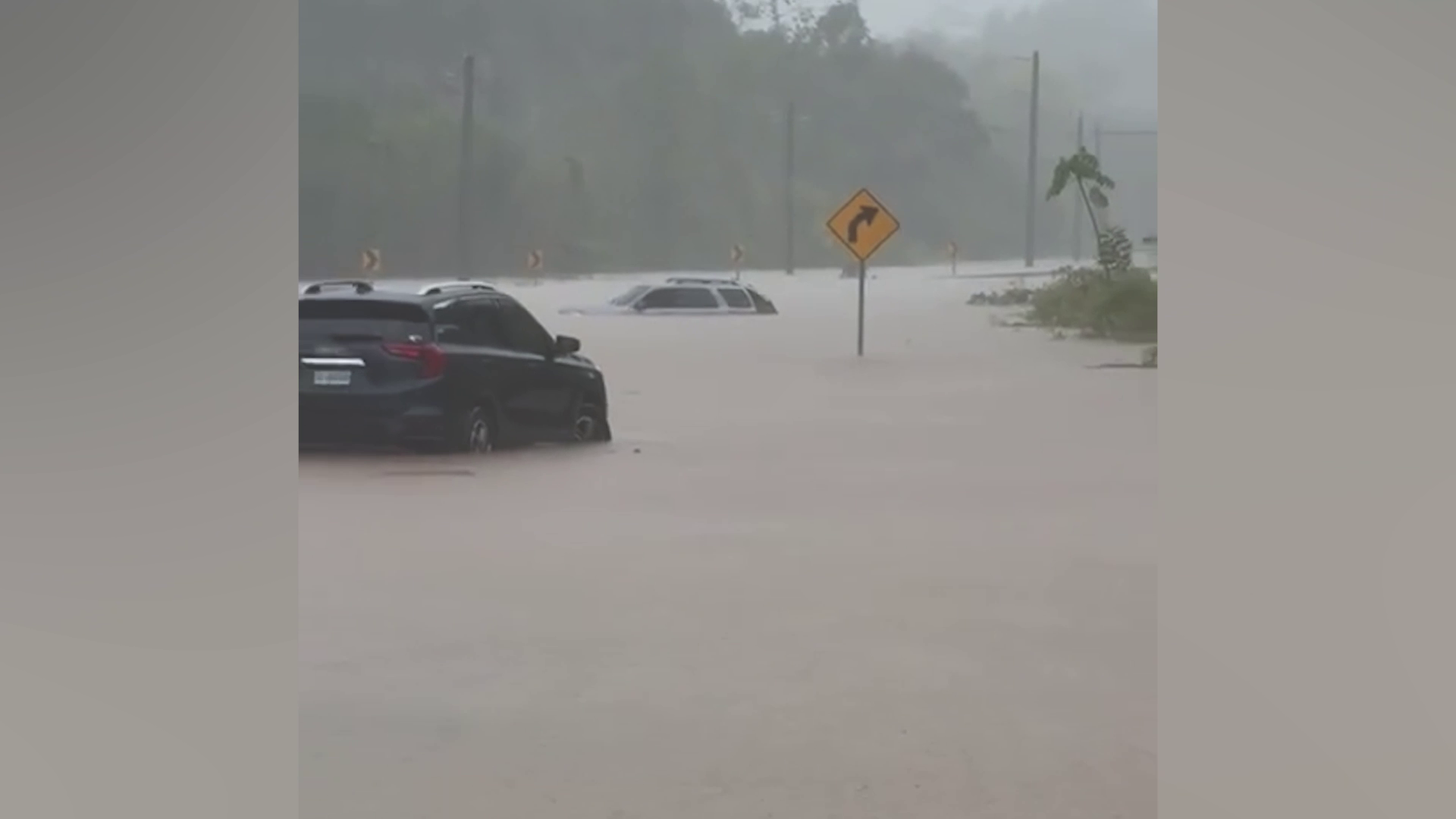
    Authorities have issued a critical safety reminder for motorists: never attempt to drive through submerged roadways, as water depths and undercurrents are often difficult to judge, and hidden debris or collapsed road surfaces can create catastrophic hazards. The public is also urged to stay alert for washed-out infrastructure, falling debris, and rapidly shifting water levels across the warning area.

    As of the latest update, all three national agencies are maintaining continuous monitoring of weather and hydrological conditions across the entire country, with new bulletins set to be issued as soon as conditions change.

  • Flash Floods Turn Roads to Rivers, Sweep Bus Off Highway

    Flash Floods Turn Roads to Rivers, Sweep Bus Off Highway

    On June 11, 2026, communities across southern and central Belize woke to a landscape transformed into chaos after extreme overnight rainfall triggered devastating flash flooding that has put the entire nation on high emergency alert.

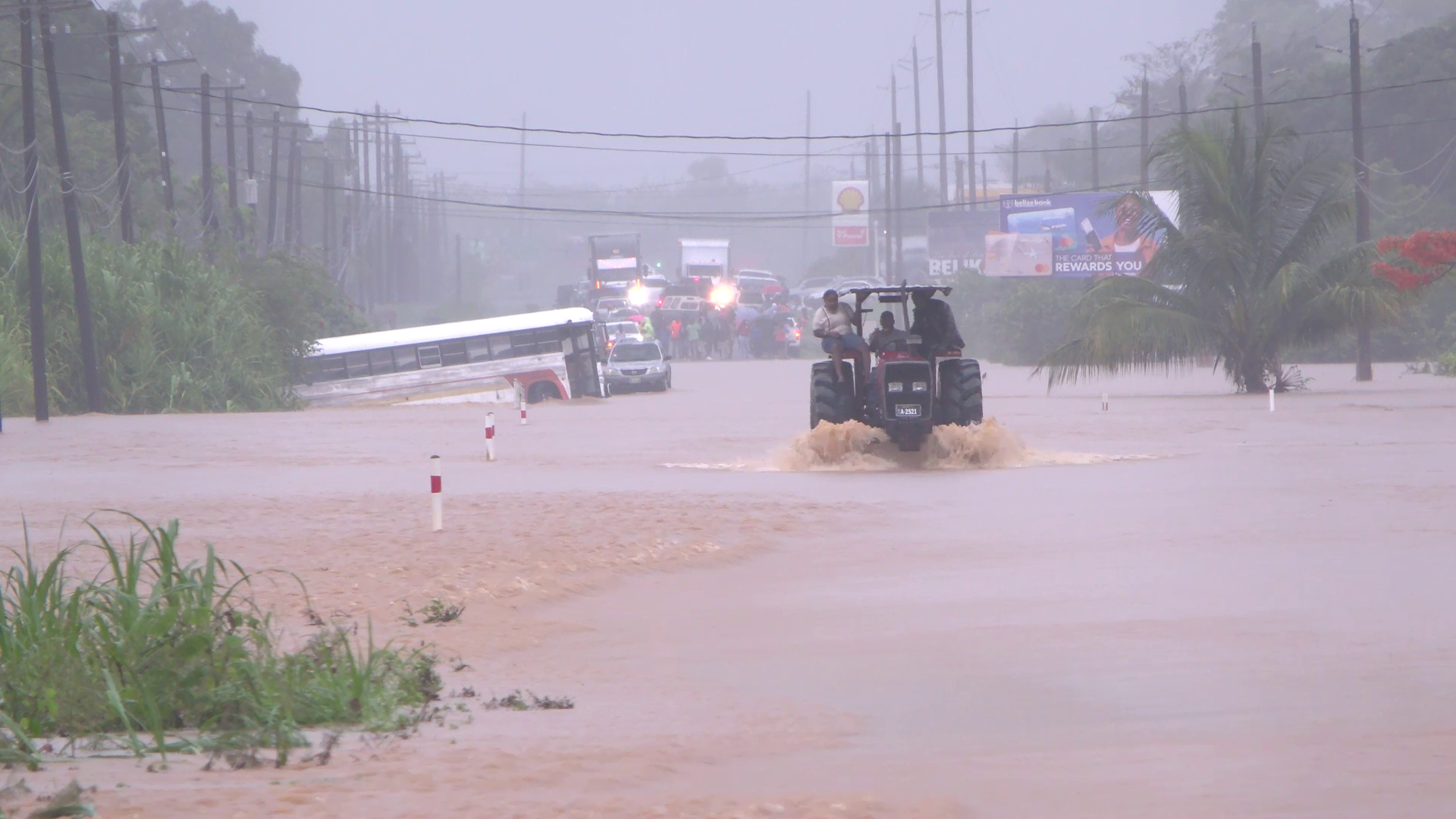
    The relentless downpour dumped unprecedented volumes of water across large swathes of the country, overwhelming drainage infrastructure, pushing natural waterways far past their safe thresholds, and turning paved highways into rushing, mud-choked rivers. In one of the most dramatic incidents of the disaster, fast-moving floodwaters swept a full passenger bus off a major highway, leaving emergency responders scrambling to assess the situation as conditions continue to evolve.

    Meteorological data collected from Belize’s network of automatic weather stations confirms the extreme intensity of the precipitation. From 6 p.m. the previous day through the early morning, the Middle Sex region recorded more than eight inches of rain in less than 24 hours. Nearby Kendal clocked seven inches of rainfall, while La Democracia saw between four and five inches. According to Ronald Gordon, Belize’s Chief Meteorologist, this extreme rainfall event can be traced to Tropical Storm Christina, which has now dissipated over the Eastern Pacific Ocean, but left behind moisture that is continuing to drive dangerous weather across the country.

    Gordon warned that there is no immediate end to the dangerous conditions, forecasting another heavy downpour overnight that will continue into early tomorrow morning. The worst of the new rainfall is expected to shift north, with northern Belize bracing for four to six additional inches of rain, with some areas potentially seeing as much as eight more inches.

    Tennielle Hendy, Principal Hydrologist for Belize, echoed Gordon’s warning, noting that the entire country remains at elevated risk of flooding. “We are seeing this weather system advance across most of the nation, with precipitation now pushing into northern regions,” Hendy explained. “Northern areas face a very high risk of localized and urban flooding from the excessive rainfall. For southern and central Belize, the nation’s hilly terrain means rainwater flows quickly down slopes into low-lying communities, worsening already dangerous flood conditions.”

    The National Emergency Management Organization (NEMO) has activated full alert status across the country. National Emergency Coordinator Daniel Mendez confirmed that response teams have already been deployed to the Stann Creek District, where multiple flood-related incidents have already been reported. Local NEMO coordinators have been on the ground assisting impacted residents since early morning. “All of our regional offices are in constant communication, and the entire country remains on high alert,” Mendez said. “While full system activation has not been required at this point, we stand ready to scale up our response rapidly if conditions worsen.”

    Emergency officials are urging all residents in at-risk areas to stay updated on weather alerts, prepare for potential evacuation, and avoid flooded roadways. With more rain on the way, response teams are working around the clock to monitor rising water levels and coordinate rescue and relief efforts as the disaster unfolds.

  • A Generational Weather Event: Stann Creek Valley Flooded

    A Generational Weather Event: Stann Creek Valley Flooded

    On June 11, 2026, what began as a routine education assignment for a News Five reporter became an on-the-ground chronicle of a sudden national weather emergency in southern Belize’s Stann Creek District. Reporter Shane Williams originally set out to cover the official opening of a new training facility at the Stann Creek Institute of Technical and Vocational Education and Training (ITVET), an event scheduled to feature a keynote address from Minister of State Dr. Louis Zabaneh. But overnight torrential rain upended every planned schedule, transforming a soft news story into a first-hand account of flood-driven survival.

    Before the sun rose over the district, social media platforms erupted with user-generated footage showing passenger vehicles stranded in waist-deep floodwaters along the Coastal Highway, the primary route south to Stann Creek. Williams’ team immediately adjusted their travel plans, departing earlier than scheduled and rerouting to the longer inland Hummingbird Highway. As the team traveled, new urgent updates emerged: Stann Creek West Area Representative Rodwell Ferguson posted a public call for rescue for Augustine Cho, a local farmer stranded on his property as floodwaters rose rapidly across the Stann Creek Valley. By the time the reporting team reached Belmopan, footage had already circulated showing evacuations of Mennonite communities in the valley’s most flood-prone lowlands.

    After navigating a multi-hour internet blackout through the Hope Creek section of the Hummingbird Highway, the team received official confirmation that the ITVET opening had been canceled due to unsafe conditions. Less than two miles further along the route, the team encountered Dr. Zabaneh, the keynote speaker they had traveled three hours to interview, standing on the shoulder of the highway alongside dozens of stranded commuters, monitoring the rising floodwaters.

    “The water has pulled back slightly over the last hour,” Dr. Zabaneh explained to the reporter on site. “Local police have been incredible, they’ve been posted here blocking incoming traffic to prevent more people from getting stuck. Earlier, only large trucks and high-clearance pickups could make it through. You can see what just happened back there: a bus driver got too close to the shoulder, the water pushed the rear of the bus off the pavement into the ditch. Thankfully, everyone on board escaped unharmed. We’re holding traffic here now, only allowing large, capable vehicles through.”

    With the route south completely impassable, Williams’ team turned back toward Belize City, but first stopped to document the unfolding crisis in the Mountain View Mennonite community, one of the hardest-hit settlements in the Stann Creek Valley. Community leader John Penner described the terrifying speed of the flood’s rise overnight.

    “It just rained and rained all night long,” Penner recalled. “We were watching and wondering if the water would come for us, and then it rose so fast – faster than anyone expected. We were scrambling to secure our belongings, before rescuers arrived with motorboats to evacuate all of us across to higher ground.”

    On the return journey, the team caught up with Ferguson, who was traveling door-to-door across flooded villages to assess damage and check on stranded residents. Ferguson provided an update on the stranded farmer Augustine Cho, explaining that Cho had stayed on his farm overnight to care for a group of young piglets, and became trapped when waters cut off his exit. After Ferguson put out a public call for rescue on social media, a local boat owner from Pomona responded to pull Cho to safety.

    “He ended up climbing a tree to stay above the water, but he made sure he got all three of his young pigs out safe too,” Ferguson said. “The good thing about flooding in the Stann Creek Valley is that it only stays as long as the rain keeps falling. Once the rain stops, the water drains away really quickly.”

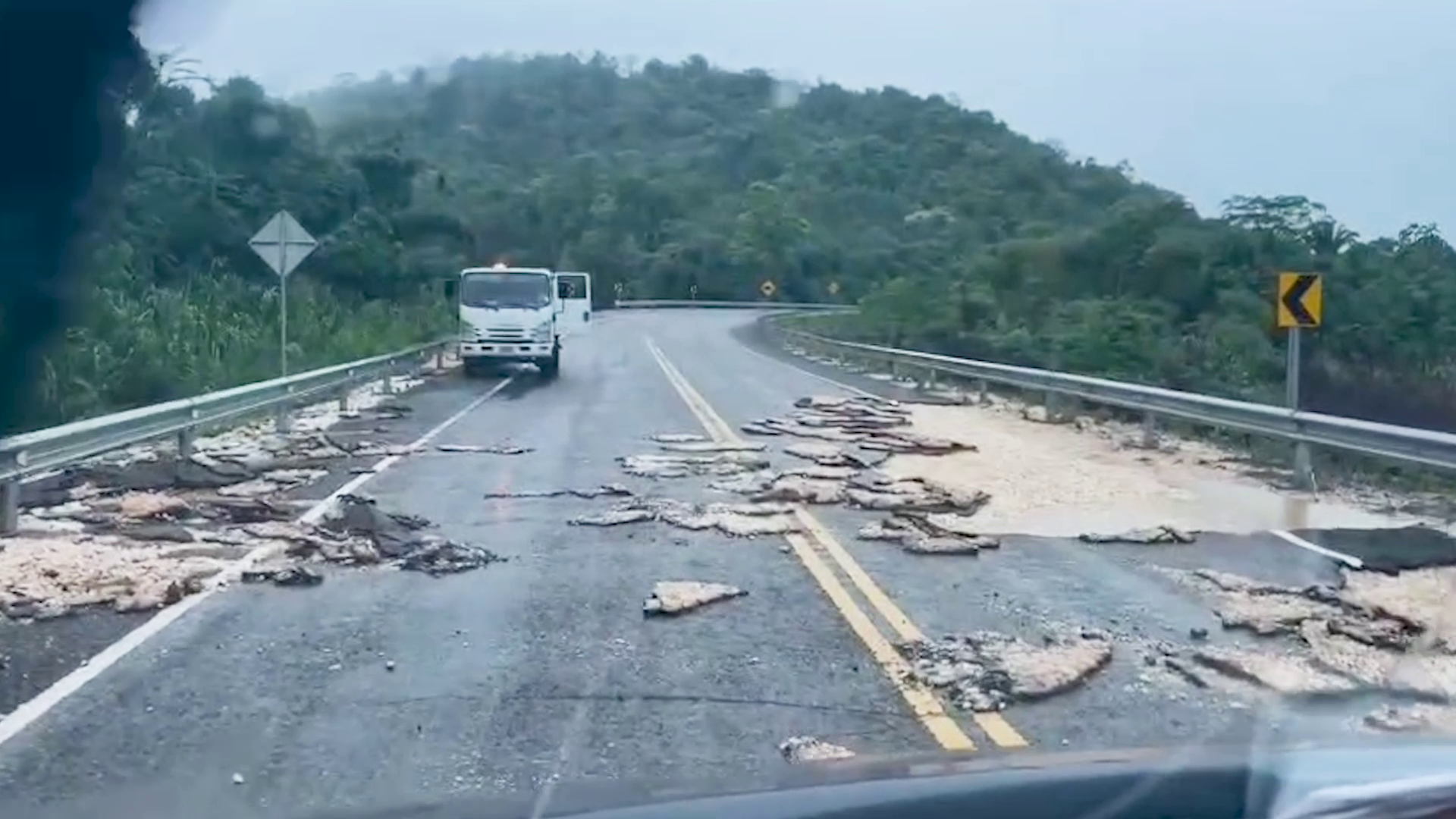
    By mid-afternoon, unofficial reports indicated that floodwaters along the original Coastal Road route had dropped significantly, leaving only scattered debris, damaged pavement and a closed sign at the Gales Point junction. The team decided to attempt the crossing back to Belize City along that route, but hit another wall at the 16-mile marker, where floodwaters stretched across the entire roadway, reaching nearly two feet deep. A brief attempt to cross confirmed that the conditions were too dangerous, forcing the team to retreat back to the Hummingbird Highway once again.

    In a separate on-site report, News Five confirmed that floodwaters across the Hummingbird Highway had brought all regional traffic to a complete standstill, disrupting travel for teachers heading to work, students traveling to class, and families and visitors crossing the district. Stranded commuters told reporters that the sudden flood had completely upended their daily schedules, leaving them with no option but to wait out the rising waters.

    In his closing sign-off, Williams noted that the team did eventually reach the Stann Creek ITVET campus, but what began as a story about educational development had transformed into an intimate, first-hand look at the growing threat extreme weather poses to communities across Belize. This report is a transcript of an evening television newscast prepared for online publication.

  • Flooded Roads Disrupt Travel Across Southern and Central Belize

    Flooded Roads Disrupt Travel Across Southern and Central Belize

    As of the evening of June 11, 2026, unrelenting floodwaters have thrown travel across central and southern Belize into chaos, leaving multiple key routes closed, forcing motorists onto unplanned detours, and testing the patience of commuters across the region. One of the hardest-hit major corridors is the Coastal Plain Highway, which remains fully submerged and closed to all traffic as of Tuesday evening, though transportation officials have noted that partial reopening could come later the same night once water levels recede sufficiently. In a small reprieve for drivers, the Mile 7 stretch of the Hummingbird Highway — which was closed earlier in the day due to rising floodwaters — has been cleared and reopened to through traffic. Even on routes that remain accessible, conditions remain far from normal, with standing water, slippery pavement, and hidden hazards posing constant risks to road users. Transportation authorities have issued urgent warnings for drivers to reduce speeds and remain extra vigilant in high-risk areas, including the Mountain View access road, Canada Hill Junction near Hope Creek, and the approaches to Kendal Bridge on the Thomas Vincent Ramos Highway. To get the most up-to-date assessment of the unfolding flood crisis and its impact on Belize’s road network, local reporters spoke with Evondale Moody, Chief Engineer at the Ministry of Infrastructure and Development (MIDH), who has been leading on-the-ground monitoring of flood damage across the affected regions. Moody confirmed that new flooding has emerged in the Sarawee Village area between Mile 3 and Mile 4 of the Hummingbird Highway, with water levels continuing to climb steadily through the day. His team is maintaining constant surveillance of this stretch to assess when it may need to be closed to keep drivers safe. The most severe damage has been recorded near the Soldier Creek Bridge at Mile 16 on the Coastal Plain Highway, where intense floodwaters have caused scouring and erosion to the road pavement. Moody noted that this same stretch suffered identical damage roughly two years prior, prompting a major infrastructure upgrade in the area. Two years ago, engineering teams raised the elevation of the Soldier Creek Bridge approach and paved 50 additional meters of the vulnerable stretch with reinforced concrete, extending the protected area to 200 meters total. However, the 24-hour rainfall that triggered the current flood event far exceeded the volumes recorded during the 2024 incident that led to the original repairs. The erosion that has occurred in the current event is located beyond the 200-meter reinforced section, confirming that the intensity and volume of floodwater this time around far outpaced the design parameters put in place during the 2024 upgrades. In line with national emergency guidance, transportation officials have repeated a critical warning for all motorists: under no circumstances should drivers attempt to cross flooded road segments, as hidden damage, swift currents, and submerged debris create extreme risks of vehicle entrapment or drowning. This report is a transcript of an evening television newscast covering the developing flood situation, with all local Kriol language quotations transcribed using a standardized spelling system for accessibility. Readers can access the full video broadcast via the original publication’s website.