标签: Belize

伯利兹

  • Shot Dead Near Police Checkpoint

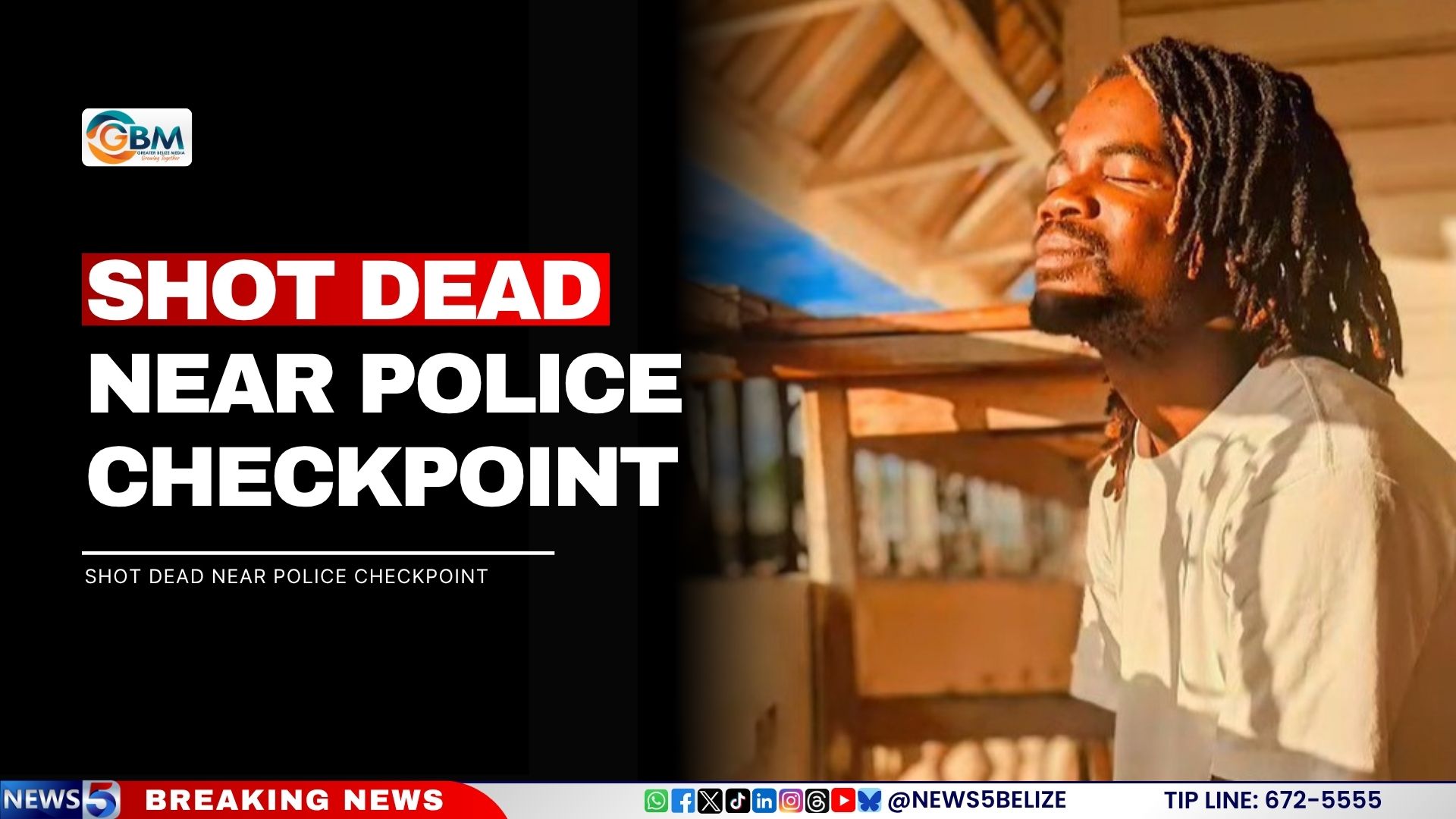
    Shot Dead Near Police Checkpoint

    A senseless act of violence has left the close-knit community of Belize City in mourning, after 36-year-old local resident Eric Nelson was shot and killed late Saturday evening just steps from a heavily monitored intersection.

    The shooting unfolded at the corner of Lakeview and Banak Streets, a location that sits less than 10 meters from a fixed police surveillance camera and roughly 90 meters from a permanent 24-hour police checkpoint, according to initial law enforcement details. In a devastating twist for Nelson’s loved ones, the killing came less than a full day after Nelson accepted a promotion at the local call center where he had worked for several years. Authorities have confirmed that Nelson had no documented connections to gang activity or organized crime, leaving investigators with no clear early motive for the attack.

    As forensic teams processed the crime scene over the weekend, investigators confirmed that they will prioritize reviewing footage from the nearby police camera as they work to identify and track down the gunman. Law enforcement officials note that the camera’s close proximity to the shooting site could provide critical evidence to move the case forward, though no suspects have been named publicly as of early Monday.

    In a statement released through local community leaders Sunday, Nelson’s family said they are reeling from the sudden, violent loss of a man they described as hardworking and dedicated to his career. The family issued two urgent requests: first, that any graphic user-recorded videos of the crime scene circulating on social media platforms be taken down immediately out of respect for Nelson, and second, that the public grant the family space and privacy to grieve together in the coming days.

    The Belize Police Department has announced that it plans to release an official update on the investigation to local media outlets by Monday afternoon, as the search for leads continues across the city.

  • U.S. and Iran to Sign Agreement Ending Over 100 Days of War

    U.S. and Iran to Sign Agreement Ending Over 100 Days of War

    Four months of open military conflict between the United States and Iran will come to a formal close this week, after negotiators finalized a landmark ceasefire agreement set for signing in Geneva, Switzerland on Friday. But the fragile truce faces a major existential threat before the ink is even dry: Israel’s steadfast refusal to pull its occupying forces out of Lebanese territory, a core condition of the deal.

    Iran’s Supreme National Security Council announced the terms of the agreement in an official statement released on Sunday, confirming that all military operations across every active front—including the conflict zone in Lebanon—would cease immediately and permanently as of Sunday night. The statement also confirmed that the full U.S.-led naval blockade on Iranian territorial waters would be lifted without delay, opening global shipping lanes to commercial traffic once again.

    Pakistan, which played a key behind-the-scenes role as the neutral mediator for the months-long negotiations, confirmed the upcoming signing ceremony in a statement from Prime Minister Shehbaz Sharif’s office. Iranian Deputy Foreign Minister added that following the initial ceasefire signing, negotiators will enter a 60-day extended negotiating window to hammer out a full, comprehensive long-term agreement that addresses outstanding geopolitical disputes between the two nations.

    Former U.S. President Donald Trump, who has been a prominent voice pushing for an end to the conflict, celebrated the breakthrough on his social media platform Saturday. “I hereby fully authorise the toll-free opening of the Strait of Hormuz, and, simultaneously herewith, authorise the immediate removal of the United States Naval blockade. Ships of the World, start your engines. Let the oil flow!” he wrote.

    The deal almost collapsed entirely just hours before it was finalized, however, when Israeli Defense Forces carried out a strike on the southern suburbs of Beirut. Trump told U.S. news outlet Axios in an interview that he was “furious” over the uncoordinated attack, which delayed the finalization of the ceasefire by multiple hours, and hit out at Israeli Prime Minister Benjamin Netanyahu, arguing he had demonstrated poor judgment in greenlighting the strike.

    Tensions remain high after the ceasefire announcement, with Israeli Defense Minister Israel Katz confirming Monday that Israeli forces will maintain an open-ended military presence in Lebanese territory, as well as positions in Syria and Gaza. That stance puts the entire agreement at risk, according to veteran Israeli political commentator Gideon Levy, who spoke to Al Jazeera Monday. “It’s very, very fragile,” Levy said of the truce. “Israel is still in Lebanon, has no intention to withdraw from Lebanon, and as long as the troops are there, there will be no total ceasefire.” The comment echoes broader warnings from global analysts that unresolved Israeli occupation of Lebanese land could reignite cross-border violence and unravel the U.S.-Iran breakthrough.

  • Think It’s Just Social Media Drama? It Could Be Abuse

    Think It’s Just Social Media Drama? It Could Be Abuse

    For many people, harmful behavior carried out over social media and digital platforms is often dismissed as trivial online drama. But a new legislative proposal in Belize could change that narrative forever, by formally reclassifying technology-facilitated domestic abuse as a criminal offense on par with physical violence.

    First tabled in March 2026 by Minister of Human Development Thea Garcia-Ramires, the Domestic Violence (Prohibition) Bill 2026 marks a historic first for Belizean law: it would for the first time explicitly recognize digital abuse as a formal category of domestic violence. Under the proposed legislation, harmful acts including cyberstalking, non-consensual sharing of intimate images, online harassment, and digital intimidation targeting a current partner, former partner, or family member would fall under the same legal framework that already penalizes physical and emotional abuse.

    Global data compiled by UN Women underscores the urgency of this policy shift. The organization warns that fewer than half of all countries worldwide have formal laws in place to criminalize online abuse, and enforcement of existing regulations is even weaker. Abusers often exploit the anonymity of digital spaces and cross-border jurisdictional gaps to avoid accountability, while survivors are left without accessible pathways to justice.

    The proposed bill lays out a broad, comprehensive definition of cyberstalking that covers a wide spectrum of harmful digital behavior. This includes the repeated sending of obscene or threatening messages via any electronic platform, threats of harm against a victim or their loved ones, unauthorized tampering with a person’s personal data or digital images to cause emotional distress, and threats to distribute intimate or suggestive content to humiliate or coerce a partner.

    Beyond codifying digital abuse, the legislation also expands critical protections for survivors by updating the scope of who qualifies for legal protection. Current Belizean domestic violence law largely limits protections to people who share a household with their abuser. The new bill would extend coverage to people in dating relationships, casual visiting relationships, and former relationships, meaning survivors no longer need to have cohabited with their abuser to seek legal intervention.

    Additional key reforms included in the bill streamline access to urgent protection for at-risk survivors. The legislation introduces expedited court hearings for protection order applications, and allows select senior justices of the peace to issue immediate interim protection orders, cutting through red tape to get safety safeguards to victims faster.

    Garcia-Ramires introduced the bill during the country’s Women’s Month, a deliberate scheduling choice that the minister says signals the Belizean government’s firm commitment to strengthening safety and protections for women and families across the nation. As of mid-June 2026, the bill remains under legislative consideration and has not yet been passed into law.

  • Do You Know How Many Caribbean Countries Reached the World Cup?

    Do You Know How Many Caribbean Countries Reached the World Cup?

    The 2026 FIFA World Cup, football’s most prestigious global tournament, is set to mark an unprecedented milestone for Caribbean football, as two nations from the region will compete on the sport’s biggest stage this year — a rare achievement that has not happened in the tournament’s history. For context, only five Caribbean nations have ever earned a World Cup qualifying spot before 2026: Cuba, the trailblazer that first qualified in 1938, Haiti (1974), Jamaica (1998), and Trinidad and Tobago (2006).

    This year’s tournament breaks new ground for the region, with two standout stories capturing global football fans’ attention. First, Haiti secures its return to the World Cup after a 52-year absence, becoming the first Caribbean nation ever to qualify for the tournament twice. Even more remarkable is the historic debut of Curaçao, a tiny Caribbean island nation tucked just 37 miles off Venezuela’s northern coast. With a total land area of just 171 square miles — smaller than most individual districts in Belize — and a population of barely more than 150,000 people, Curaçao will go down in history as the smallest country ever to compete at a FIFA World Cup.

    Curaçao’s journey to the 2026 tournament was no easy feat. The underdog side fought through two grueling qualifying rounds, competing in 10 matches, claiming seven wins, and finishing the entire qualification process undefeated to claim their spot. Their Cinderella run will now face its toughest test, as they have been drawn into Group E alongside formidable opposition: four-time World Cup champions Germany, South American contender Ecuador, and African powerhouse Ivory Coast. All of Curaçao’s group stage matches will be hosted across venues in the United States, one of the three host nations for the 2026 tournament.

    For Haiti, the long-awaited return to the World Cup kicked off on June 14 with their first Group C match against Scotland at Boston’s Gillette Stadium in Massachusetts, where the side suffered a narrow 1-0 defeat. Haiti’s next group stage challenge is scheduled for June 19, when they will take on five-time World Cup winners Brazil, in what is expected to be one of the most watched group stage matches of the tournament. For Caribbean football as a whole, the 2026 World Cup stands as a landmark moment, proving that even the smallest and most under-resourced footballing nations can compete with the world’s best.

  • Belize’s Jungles and Coastlines Used as Cartel Routes

    Belize’s Jungles and Coastlines Used as Cartel Routes

    On June 12, 2026, senior military leaders from Belize and Mexico gathered in Belize City for the 21st iteration of the bilateral Border Commanders Conference, where the two nations formally recommitted to deepening cross-border security collaboration to dismantle drug trafficking operations that have exploited Belize’s remote jungles, unmonitored river systems, and extensive coastlines for decades.

    The high-level meeting opened with a keynote address from Florencio Marin Jr., Belize’s Minister of National Defence, who opened his remarks by acknowledging a long-standing diplomatic tie: Mexico was the first sovereign nation to formally recognize Belize’s independence back in 1981. Marin emphasized that transnational criminal networks have systematically taken advantage of the rugged, sparsely populated shared terrain between the two countries to move illicit drug shipments, presenting a growing threat to the security and stability of both nations. He stressed that unilateral action cannot address this networked threat, stating, “Standing isolated against such a threat is not an option. To defeat a networked adversary, we must operate as an interconnected, seamless network.”

    The conference brought together top security officials from both sides: senior commanders from the Belize Defence Force and Belize Coast Guard met with their counterparts from Mexico’s national army and navy to align strategies for countering organized criminal activity across all domains. Attendees discussed plans to expand coordinated patrols on land, at sea, and in the air, as well as to strengthen real-time intelligence sharing that allows security forces to disrupt trafficking operations before shipments move across the border.

    By the close of the conference, delegations from both countries signed formal, bilingual agreements — drafted in both English and Spanish — that codify the new framework for closer coordination. The updated partnership creates a more unified front against cartel activity, closing critical gaps that criminal networks have long exploited to move illicit goods through Central America’s transit corridors.

  • More Details on the Murder of Oscar Flota

    More Details on the Murder of Oscar Flota

    A brutal fatal assault has shaken the small island community of Caye Caulker, where a well-known local man identified as Oscar Flota, who went by the nickname Fox, was killed in a violent attack on Saturday night. The incident unfolded on the island’s northern side, where multiple eyewitnesses confirmed that Flota was struck repeatedly with a shovel by an attacker he was personally acquainted with.

    According to unconfirmed information obtained by local outlet News 5, the primary suspect is a squatter residing in the Caye Caulker area who already has documented connections to regional criminal activity. Local residents have long linked this individual to gang affiliation and illicit drug distribution operations.

    In the hours following the attack, multiple witnesses provided formal statements to law enforcement officers, who maintained a visible investigative presence across the northern district of the island through all of Sunday morning. While reports circulating in the community indicate that several people connected to the killing have been taken into police custody, official law enforcement representatives have not yet released any public confirmation of these detentions.

    Local residents told reporters that interpersonal and territorial tensions have been simmering in the area for months, with repeated reports of property disputes and violent threats filed with governing authorities over that period. News 5 has announced that it will continue providing updated coverage as new details about the investigation and legal proceedings emerge.

  • Is Peace Between the U.S. and Iran Finally Close?

    Is Peace Between the U.S. and Iran Finally Close?

    June 13, 2026 — Diplomatic efforts to end months of open conflict between the United States and Iran have entered their final stretch, with multiple key players confirming a landmark peace agreement is within reach, even as fresh military escalation continues to roil the broader Middle East.

    On Saturday, the Israeli military launched a series of airstrikes targeting areas across southern Lebanon, one day after issuing evacuation orders for approximately 20 local population centers. The new strike comes amid ongoing low-level violence that has persisted even as ceasefire and peace talks between Washington and Tehran gain momentum.

    Pakistan, which has served as the neutral mediator for the indirect US-Iran negotiations, has offered the most optimistic timeline for the deal. Pakistani Prime Minister Shehbaz Sharif took to the social platform X Saturday to announce that an agreement is closer to completion than at any previous point in the talks, with finalization expected to occur within the next 24 hours. Iran’s Foreign Ministry struck a more cautious note, however, stating that the formal signing process could stretch into the coming days rather than being completed within hours.

    US President Donald Trump has echoed Sharif’s optimistic tone, asserting that the agreement will be signed imminently. In a post on his Truth Social platform, Trump confirmed that “The Deal is scheduled to get signed tomorrow, and immediately after it is signed, the Hormuz Strait is OPEN TO ALL.”

    The Strait of Hormuz, a narrow maritime chokepoint that carries roughly a fifth of the world’s daily oil and natural gas shipments, has been closed to commercial international traffic since the outbreak of war earlier this year. The closure has triggered sustained price hikes for fuel and energy across global markets, creating widespread economic pressure for nations around the world.

    The core terms of the proposed deal, as outlined by Trump, would permanently block Iran from pursuing a nuclear weapon. “The new agreement would ensure Iran does not ‘purchase, develop, or in any other form procure’ a nuclear weapon,” Trump wrote, adding “They no longer want a Nuclear Weapon, nor will they have one.” The president also included a stark warning for Tehran, noting that if the agreement fails to hold, the US retains what he called the “ultimate alternative,” which he expressed hope would never need to be deployed.

    As of Saturday evening, Iran has not issued a direct public response to Trump’s remarks. Over the past week, the two sides have released conflicting accounts of the deal’s final terms, with Trump dismissing details of the agreement published by Iranian state media as completely inaccurate.

    The current conflict between the US, Iran and their regional allies began on February 28, when joint US-Israeli military strikes targeted Iranian infrastructure across the Middle East. A formal ceasefire was reached between the parties in April, but intermittent exchanges of fire have continued across regional front lines, and the Strait of Hormuz has remained closed, leaving global energy markets in disruption for nearly four months.

  • Brazen Daylight Shooting in Downtown Belize City

    Brazen Daylight Shooting in Downtown Belize City

    On the morning of June 13, 2026, a bold daylight shooting shattered the routine of downtown Belize City, leaving local resident Kiffer McKenzie injured and the local community in shock. The incident unfolded just after 10 a.m. at the intersection of Albert and Orange Streets, where gunfire suddenly erupted in the busy city center.

    After being struck by gunshots, McKenzie, who was behind the wheel of a vehicle, lost control shortly after leaving the intersection. His car traveled a short distance before colliding with a parked vehicle directly in front of the Belize Bank Business Centre, a prominent commercial location in the area.

    First responding police officers quickly arrived at the crash site to secure the area. They immediately extracted McKenzie from his damaged vehicle and rushed him by emergency transport to Karl Heusner Memorial Hospital, the country’s main public medical facility. As of initial reports following the shooting, no updated information has been released regarding McKenzie’s current medical condition, leaving loved ones and community members waiting anxiously for updates.

    News of the shooting has drawn an outpouring of reaction from across Belize’s law enforcement and community development circles. Douglas Hyde, National Youth Program Coordinator for the Belize Police Department, shared his personal connection to McKenzie in a heartfelt social media post that quickly spread across local platforms.

    Hyde expressed deep shock and sorrow over the attack, revealing that he had only just recently put forward McKenzie’s name for a key new position. “This is really sad, sad,” Hyde wrote. “I just called your name to the Director of the Major Crimes Unit (LIU) for us to bring Kiffer McKenzie on as a Program Coordinator in LIU’s new restructuring.”

    Hyde went on to describe McKenzie as a passionate community advocate who was deeply committed to expanding recreational opportunities for young people in Majestic Alley and nearby neighborhoods. He recalled that McKenzie was consistently proactive in pushing for more youth sports programming, and always made a point to connect with him to advance that work. “You are one of the guys who highly respected me and anywhere you saw me you would hail ‘Mr. Doug we need to do more sports,’” Hyde added.

    The daytime shooting in a busy central commercial district has reignited local discussions about public safety in Belize City, where violent crime has remained a persistent community concern. As police launch an investigation into the attack, no suspects have been named publicly, and no motive has been confirmed as of this update.

  • Unbuilt Projects Must Go Back for Approval, Says Hol Chan

    Unbuilt Projects Must Go Back for Approval, Says Hol Chan

    In a significant policy shift aimed at protecting Belize’s vulnerable coastal and marine ecosystems, the management of Hol Chan Marine Reserve announced Friday that it has immediately withdrawn all previously issued “letters of no objection” for unbuilt development projects within its protected boundaries. The new rule does not apply to developments already under construction that hold all valid, up-to-date regulatory permits, the agency clarified in its official notice.

    Hol Chan officials explained the reasoning behind the retraction: environmental conditions along the reserve’s coastlines and regional coastal development standards evolve over time. Approvals granted based on outdated environmental assessments from years prior no longer align with current ecological realities, particularly for projects that have remained stalled for an extended period after initial approval. Going forward, any developer seeking to restart a previously approved but unstarted development will be required to submit an entirely new application for review before any ground can be broken.

    The agency also took the opportunity to remind stakeholders of the regulatory structure for development in the protected reserve: a letter of no objection from Hol Chan is never a final construction approval. Any construction within the reserve’s boundaries requires both formal sign-off from reserve management and valid permits from other relevant government regulatory bodies before work can commence.

    This policy update comes just three weeks after Belize’s national government enacted a sweeping six-month moratorium on approving and constructing buildings over 45 feet tall or three stories in four nearby coastal communities. That moratorium does not formally extend to the territory of Hol Chan Marine Reserve, but the reserve’s new move aligns with growing calls for more cautious development in sensitive protected areas. The national Cabinet’s decision to implement the moratorium followed sustained advocacy from national and international environmental groups, which have pushed for a full pause on new development approvals in all protected areas and ecologically sensitive habitats until full, inclusive community consultations can be completed.

  • PSU Leader Alleges Widespread Procurement Abuse Across Multiple Ministries

    PSU Leader Alleges Widespread Procurement Abuse Across Multiple Ministries

    A brewing public spending controversy in Belize has escalated far beyond an initial single case of suspicious payments, with the country’s top public service union leader now calling for a full, cross-government investigation into what he calls deeply rooted, systemic corruption in state procurement processes.

    The scandal first came to public attention when it was revealed that more than $1.7 million in public funds had been disbursed to Jenny Mira, sister of Minister of State Oscar Mira, in contracts awarded through the Ministry of National Defense. While ministry officials have defended the awards and insisted all contracted goods and services were delivered as agreed, public scrutiny has refused to die down, and has now expanded to question procurement practices across the entire government.

    Speaking in an on-the-record interview with local outlet News Five, Public Service Union (PSU) President Dean Flowers argued that the Mira family contracts are just one visible thread of a much broader pattern of abuse. He pointed to a wide web of ongoing business interests tied to the minister and his extended relatives, with family members holding contracts across multiple sectors: from his sister’s vegetable supply contracts, to brothers’ holdings in air conditioning services and construction, to in-law-led firms winning roadwork projects. Flowers questioned how the minister’s family was able to finance the construction of a private gated community, raising implicit questions about the source of their wealth from public sector contracts.

    Francis Usher, Chief Executive Officer of the Ministry of National Defense, pushed back against the allegations, defending the Mira family’s long history as government suppliers. He confirmed the family has provided produce to the Belize Defence Force and Coast Guard dating back to the early 2010s, years before the current administration took office, and emphasized they have been consistent, reliable partners over that time. Usher also rejected claims of payment fraud, stating, “There is nothing that is being paid for that is not being provided,” pushing back against long-running unconfirmed complaints from service members about substandard or insufficient rations.

    On the widely noted practice of splitting large invoices into amounts just under the $10,000 threshold that triggers mandatory additional oversight from the Treasury Department and Ministry of Finance, Usher denied that government officials ever instruct suppliers to split contracts to avoid scrutiny. He suggested suppliers independently adopted the practice because it speeds up payment processing, as lower-value contracts do not require multi-layered approval from additional government bodies.

    Flowers, however, remains unconvinced by the ministry’s denials. Drawing on his decades of experience working in Belize’s public service, he argued that official records frequently do not align with on-the-ground realities, a pattern well-known to the country’s Auditor General. He pointed to a previous confirmed scandal at the Ministry of Transport, where the government paid for high-end air conditioning units but received cheaper, lower-quality models instead, as an example of the kind of fraud that systemic weak oversight enables.

    The PSU president also pushed back against Usher’s claim that all contracted goods have been delivered, questioning how the CEO could personally verify every delivery made across thousands of contracts. He called on Belize’s top independent oversight officials—including Maria Rodriguez, Teresita Miranda, and Maria Arthurs—to launch a full investigation and prove their commitment to protecting public funds and Belizean taxpayers.

    Flowers also expanded the scope of accountability beyond elected ministers, arguing that long-tenured public finance officers are often the enablers of these corrupt practices. He claimed that new politicians and CEOs entering government are frequently introduced to end-runs around oversight rules by career public officers, who then allow the practice to be exploited to redirect public funds into private hands. To advance the investigation, the PSU has already filed formal Freedom of Information requests to obtain full procurement records from the Accountant General, Auditor General, and Contractor General. Flowers stressed that the probe must examine not just political leaders, but the public officials who processed the questionable transactions.

    The unfolding scandal has sparked growing public demand for transparency and accountability around the management of public funds in Belize, with the outcome of the requested investigation expected to set a major precedent for government oversight reform going forward.