标签: Belize

伯利兹

  • U.S. Lawmaker Takes Stake Bank Dispute to Secretary of State Marco Rubio

    U.S. Lawmaker Takes Stake Bank Dispute to Secretary of State Marco Rubio

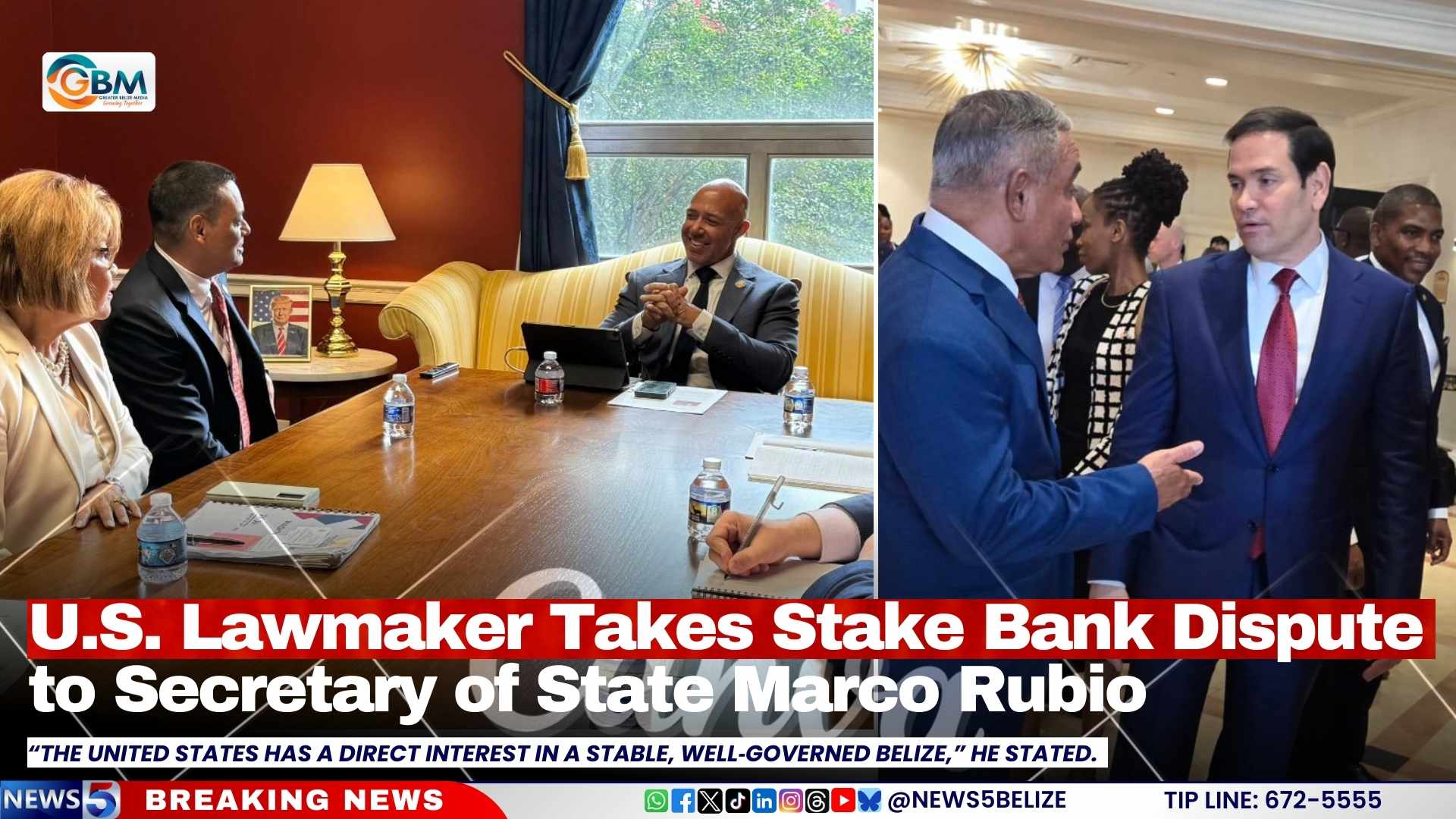
    In a significant diplomatic move, Chairman Brian J. Mast of the U.S. House Foreign Affairs Committee has formally requested Secretary of State Marco Rubio to conduct an official assessment of Belize’s investment climate and rule of law standards. The March 10, 2026 communication highlights growing concerns about systemic governance issues potentially affecting American business interests in the Central American nation.

    While acknowledging Belize’s status as a democratic ally, Mast’s detailed letter identifies multiple areas of concern including allegations of undue political influence, corruption impediments, and problematic judicial backlogs. The correspondence specifically references the protracted Stake Bank Island cruise port project, where ownership disputes and compulsory acquisition proceedings have remained unresolved for years.

    Beyond individual investment cases, the lawmaker outlined broader governance deficiencies including delayed Auditor General reports on government expenditures, parliamentary reviews falling years behind schedule, and chronically under-resourced courts resulting in frequent case adjournments. Mast emphasized that these collective issues warrant particular attention from U.S. diplomatic channels.

    The intervention carries geopolitical significance as Belize remains one of the few nations maintaining official recognition of Taiwan rather than China. Mast cautioned that governance weaknesses could potentially create openings for expanded Chinese influence in the region, making Belize’s stability a matter of strategic American interest.

    The Feinstein family, original developers of the Stake Bank project, welcomed the congressional involvement, characterizing it as a elevation of their dispute from private matter to subject of U.S. foreign policy oversight. This development signals increasing Washington scrutiny of investment protection mechanisms in bilateral relations with Caribbean partners.

  • Belizean Lawyer Fights U.S. Extradition, Says the Evidence Is Illegal

    Belizean Lawyer Fights U.S. Extradition, Says the Evidence Is Illegal

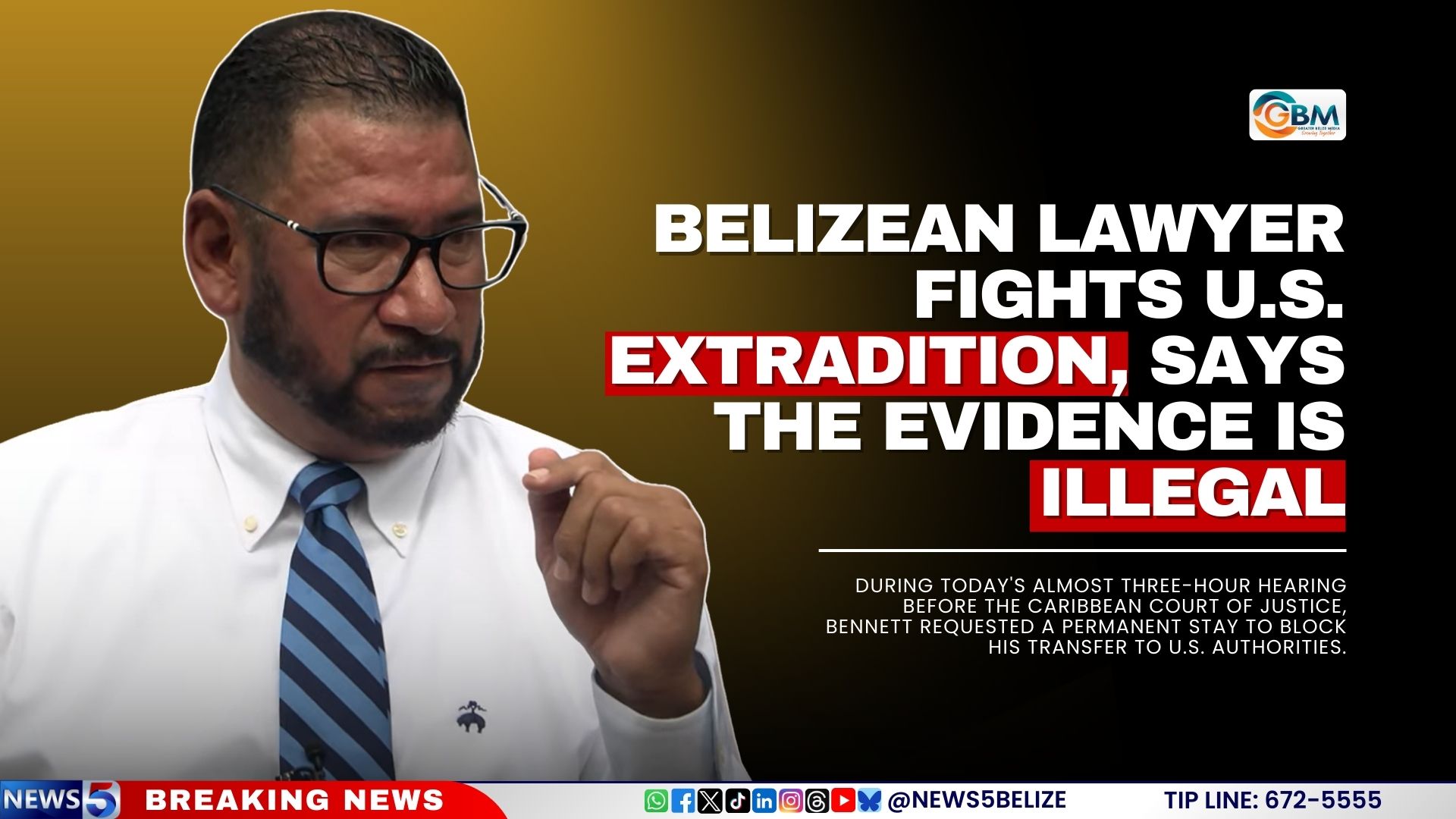
    In a landmark legal battle at the Caribbean Court of Justice, Belizean attorney Andrew Avelline Bennett is vigorously contesting his potential extradition to the United States. The case centers on serious allegations that U.S. authorities unlawfully obtained critical evidence through unconstitutional surveillance methods.

    The controversy stems from a 2015 indictment issued by the District of Puerto Rico, charging Bennett with seven counts of money laundering. The United States has been seeking his transfer to face these charges for nearly a decade. However, Bennett’s legal team, led by renowned King’s Counsel Edward Fitzgerald and Attorney Hector Guerra, presented a compelling argument during a nearly three-hour hearing that could set significant precedents for digital privacy rights.

    At the heart of the defense’s position is the assertion that U.S. investigators illegally obtained private WhatsApp messages through participant surveillance without proper authorization. Fitzgerald argued vehemently that this evidence collection method violated Bennett’s constitutional rights and his legitimate expectation of privacy in digital communications.

    “The unregulated and unauthorized extraction of these WhatsApp messages through participant surveillance was fundamentally unconstitutional,” Fitzgerald stated during the proceedings. “Our client had no knowledge he was communicating with an undercover agent who intended to harvest these private messages for prosecution purposes.”

    Attorney Samantha Matute represented the respondents in the case, which has drawn attention to the evolving intersection of digital privacy and international law. The Caribbean Court of Justice has reserved its decision, indicating the complexity and significance of the matters under consideration.

    The outcome of this case could have far-reaching implications for how digital evidence is obtained and used in cross-border legal proceedings, particularly concerning messaging applications and undercover operations.

  • “Budgeting for Belizean Prosperity”: Briceño Tables $1.9 Billion Budget

    “Budgeting for Belizean Prosperity”: Briceño Tables $1.9 Billion Budget

    BELMOPAN, BELIZE – Prime Minister John Briceño presented a transformative $1.902 billion national budget for fiscal year 2026/2027 to the House of Representatives on March 10, 2026, under the ambitious theme “Budgeting for Belizean Prosperity.” This comprehensive financial plan allocates a record-breaking $606.8 million to capital investment projects, representing 32% of total expenditures – the highest proportion in the nation’s history.

    The budget framework projects revenues and grants at $1.792 billion, marking an 8.5% increase ($139 million) over the previous fiscal year. Despite global economic headwinds, the government forecasts a primary surplus of 1.07% of GDP with an overall deficit contained at -1.49% of GDP.

    Economic indicators reveal remarkable stability: unemployment has plummeted to a historic low of 2.0%, inflation remains subdued at 1.1%, and GDP growth reached 1.9% in 2025 with projections of 2.3% for 2026. The nation’s public debt has been dramatically reduced from over 130% to 66.6% of GDP, while central bank reserves stand robust at $1.1 billion.

    Social investments feature prominently, with all 15,000 public officers, teachers, and security personnel receiving a 4% salary increase – the second consecutive raise following last year’s 4.5% adjustment. This $28.5 million commitment brings total wage and pension allocations to $78.7 million annually.

    Healthcare transformation continues with the complete nationwide rollout of the National Health Insurance programme, now extending to the Cayo District’s 80,000 eligible residents. With $57 million allocated to NHI, $52.5 million to Central Medical Stores, and $33.7 million for operational support of the Karl Heusner Memorial Hospital, Belize’s medical infrastructure receives unprecedented funding. A Taiwan-funded state-of-the-art hospital in San Pedro Town receives $19.1 million in capital budget allocations.

    Infrastructure development represents the budget’s centerpiece, featuring the comprehensive upgrade of the George Price Highway from Belize City to Belmopan. The project utilizes a $34.5 million Caribbean Development Bank loan and Kuwait Fund financing, with civil works commencing in April 2026. Simultaneously, two critical Belize City bridges will be replaced: the Belcan Bridge through Taiwan’s $20 million investment and the historic Swing Bridge via $28 million in Japanese grant aid through JICA.

    Educational reforms achieve landmark status with the government’s Upliftment Project expanding to 27 secondary schools, serving over 14,000 students – a 1,000% increase from the 947 students covered at its 2022 inception. All government secondary school students now attend tuition-free, with 83% of nationwide secondary students receiving financial assistance. The US$125 million Millennium Challenge Corporation compact with the United States continues, directing US$53.8 million to education and US$41.7 million to energy initiatives.

    Energy security advances through plans to add over 100 megawatts of renewable capacity within three years, supported by Saudi Fund for Development solar investments and IFC-backed private sector programs. The recently nationalized hydroelectric facilities, rebranded as Hydro Belize Limited, successfully raised $134.8 million through an oversubscribed share offering to local investors.

    Fiscal modernization measures include transforming the Belize Tax Service into a Semi-Autonomous Revenue Authority, introducing electronic invoicing systems, and establishing an ambitious target to reduce public debt below 50% of GDP by 2030.

  • Fight Leads to BDF Soldier’s Death

    Fight Leads to BDF Soldier’s Death

    BELIZE CITY – A tragic incident has claimed the life of Belize Defence Force (BDF) soldier Private Rasheed Flowers, who succumbed to fatal stab wounds following an altercation on Monday evening. The Belize Police Department has launched a comprehensive investigation into the circumstances surrounding the soldier’s untimely death.

    According to Assistant Commissioner of Police Hilberto Romero, head of the National Crimes Investigation Branch, law enforcement personnel responded to an emergency report originating from Gladden Street. Preliminary information indicates that Flowers was present in a residential yard when a physical confrontation erupted, resulting in multiple stab wounds inflicted by an assailant.

    Despite receiving immediate medical attention, the soldier was pronounced deceased at the treatment facility. Police authorities have confirmed they are actively pursuing a single suspect in connection with the stabbing incident. ACP Romero disclosed that preliminary evidence suggests alcohol consumption may have contributed to the altercation, and that both the victim and alleged perpetrator were previously acquainted.

    ‘The victim sustained multiple penetrating injuries during the incident,’ Romero stated, adding that investigators are currently reviewing potential surveillance footage from the vicinity to gather additional evidence.

    The Belize Defence Force has officially characterized Flowers’ passing as a ‘sudden loss’ to the military community. Major Kevin Campbell, director of the BDF Band, revealed that the deceased soldier had served as a full-time military musician since 2019, specializing as a trombonist within the armed forces’ musical division.

    Major Campbell memorialized Flowers’ exceptional musical aptitude and professional dedication: ‘He possessed remarkable ability to quickly assimilate and retain complex musical arrangements. Notably, on March 9th, he was actively participating in uniform during the Heroes and Benefactors parade mere hours before this tragic occurrence.’

    On behalf of the Ministry of Defence and BDF leadership, Campbell extended formal condolences to Flowers’ family and colleagues, emphasizing the profound impact of his loss on the military community. The BDF has announced that Private Flowers will receive full military honors at his funeral proceedings.

  • Catholic Bishop Accused of Stealing $250,000

    Catholic Bishop Accused of Stealing $250,000

    In a significant development within the Catholic Church, the Vatican has formally accepted the resignation of Bishop Emanuel Hana Shaleta of San Diego following his arrest on serious financial misconduct allegations. The prelate, who has led the local Chaldean Catholic community since 2017, faces sixteen criminal charges including embezzlement and money laundering totaling approximately $250,000 in congregational funds.

    The case unfolded when a vigilant church employee identified financial discrepancies in 2024, prompting an internal investigation that revealed substantial missing funds. The matter was subsequently escalated to law enforcement authorities, leading to a formal criminal investigation.

    According to the San Diego Sheriff’s Office, Bishop Shaleta was apprehended on March 5th at San Diego International Airport while attempting to depart the United States. The arrest occurred amidst what authorities characterize as an active effort to leave the country following the discovery of the alleged financial improprieties.

    During Monday’s court proceedings, Deputy District Attorney Joel Madero presented the prosecution’s case while the bishop’s legal representative entered a plea of not guilty to all charges. The defense counsel contended that Shaleta’s travel plans represented a previously scheduled trip to Germany rather than an attempt to evade justice.

    The case has sent ripples through the local religious community, particularly among the Chaldean Catholic congregation that Bishop Shaleta has served for nearly a decade. Church officials have emphasized their commitment to financial transparency and cooperation with ongoing investigations.

  • BCJW Protests in Belmopan as PM Briceño Presents Budget

    BCJW Protests in Belmopan as PM Briceño Presents Budget

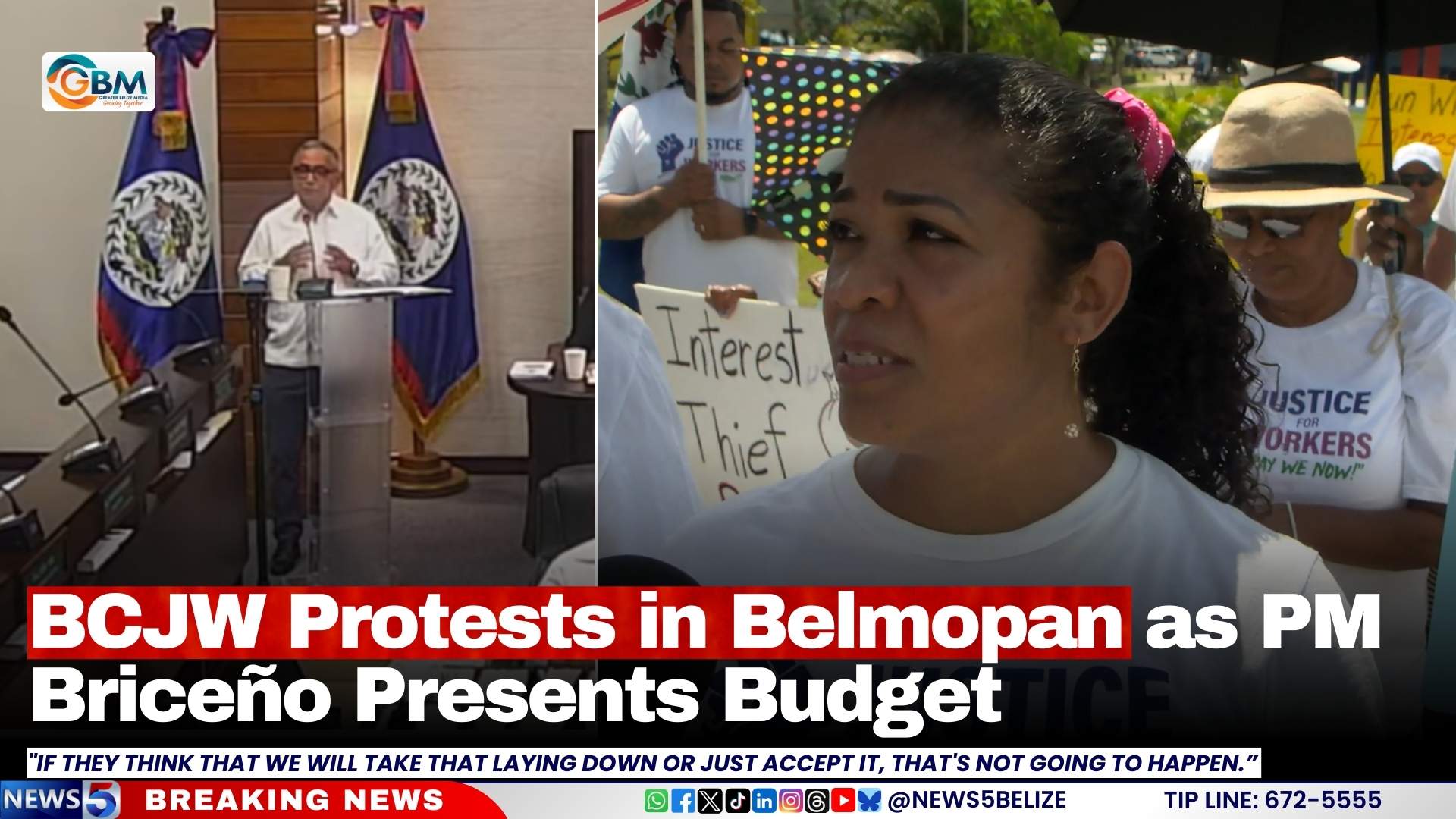
    Former employees of Belize Telemedia Limited (BTL) mobilized in the capital city of Belmopan on March 10, 2026, staging a coordinated demonstration during Prime Minister John Briceño’s presentation of the national budget. The protest highlighted an ongoing severance compensation dispute between the telecommunications company and its retired workforce.

    The Belize Communications Workers’ Justice group (BCWJ), representing the former employees, asserts that BTL has terminated negotiation efforts and is offering inadequate severance packages. The company’s current proposal includes 6% interest payments exclusively dating from November 5th, a settlement terms that protesters vehemently reject.

    Michael Augustus, a demonstration organizer, emphasized the temporal dimension of the conflict: “They have retained our funds for over thirty years in certain instances, and for others more than a decade.” The protesters criticized both BTL management and the board of directors, demanding parliamentary intervention to secure legally mandated compensation.

    Emily Turner, another organizational leader, articulated the collective sentiment: “BTL is owned by the citizens of Belize… We constitute part of that ownership. We are the individuals who constructed this nation.” She further emphasized their determination: “If they anticipate our passive acceptance of this proposal, that expectation is profoundly mistaken.”

    The protest featured innovative tactics, with 310 former employees—including international residents—sending coordinated text messages to area representatives during the parliamentary budget session. Turner indicated these communications would likely multiply throughout the proceedings.

    Despite receiving responses from certain elected officials, the group reports their concerns are being redirected back to the BTL board, raising questions about governance accountability. The workers demand full 6% interest payments from their actual dates of employment cessation, citing judicial precedents that they believe substantiate their claim.

  • Will Protesting Paddlers Still Get Their Prizes?

    Will Protesting Paddlers Still Get Their Prizes?

    The 2026 La Ruta Maya Belize River Challenge concluded with unprecedented drama on Monday as multiple competing teams staged a symbolic protest against the event’s revised finish line. Instead of concluding their race at the newly designated endpoint near Haulover Bridge adjacent to the Grand Resort, these dissenting paddlers continued their journey to the traditional termination point at Belcan Bridge within Belize City.

    This act of defiance resulted in their conspicuous absence from the official awards ceremony, immediately sparking widespread speculation regarding the distribution of medals, special station prizes, and substantial cash payouts to these athletes. The protest highlighted deeper tensions between tradition and modernization within the event’s organization.

    In a significant development, the Belize Canoe Association has officially intervened to address the growing controversy. Elvin Penner, the Association’s Vice President, provided unequivocal clarification to News 5, asserting that the protesting teams meticulously adhered to all competition regulations throughout the entire race duration. Penner emphasized that the athletes’ decision to extend their course beyond the new finish line did not constitute any violation of the established rules.

    “The organizing committee will be obligated to distribute every prize and trophy to the deserving recipients,” Penner declared, indicating that the Association would ensure full recognition of athletic achievement regardless of the ceremonial protest. This statement suggests potential friction between event organizers and the governing canoe association regarding the interpretation of race protocols and the consequences of non-traditional finishes.

    The situation continues to develop, with further details expected in the evening newscast, promising additional insights into this extraordinary conclusion to Belize’s premier river challenge.

  • Motorcyclist Killed in Armenia Collision

    Motorcyclist Killed in Armenia Collision

    Authorities in Belize are conducting an active investigation into a deadly traffic incident that resulted in the death of a motorcyclist on Sunday, March 10, 2026. The collision occurred in the village of Armenia, prompting an immediate response from local law enforcement.

    Assistant Commissioner of Police Hilberto Romero, who leads the National Crimes Investigation Branch, provided initial details from the scene. Police units arriving at the location discovered a damaged Toyota pickup truck alongside a severely wrecked motorcycle, indicating a high-impact collision.

    Preliminary findings suggest the pickup truck, operated by Glendy Rodriguez, collided with a motorcycle entering the highway. The deceased motorcyclist has been officially identified as Lazarus Chun.

    As part of standard investigative procedures following serious traffic incidents, authorities collected a urine sample from Rodriguez to determine potential impairment. ACP Romero emphasized that the investigation remains ongoing and no conclusive determinations have been made regarding responsibility.

    Legal proceedings have been initiated with Rodriguez receiving formal notice of intended prosecution from Belizean police authorities. The case continues to develop as investigators reconstruct the sequence of events leading to the fatal crash.

  • Mexican Government Invests Millions to Rebuild Old Border Bridge

    Mexican Government Invests Millions to Rebuild Old Border Bridge

    In a significant infrastructure development for Central American cross-border relations, the Mexican government has launched a major reconstruction project for the aging Río Hondo International Bridge. This critical passageway connecting northern Belize with southern Mexico’s Quintana Roo state will undergo complete demolition and replacement with a modern structure.

    The six-decade-old bridge, situated in the border community of Subteniente López near Chetumal, has served as one of the region’s busiest transit points. Mexican authorities have allocated 42.7 million pesos (approximately 4.7 million Belize dollars) to fund the comprehensive rebuilding initiative aimed at enhancing regional connectivity.

    The engineering blueprint calls for substantial dimensional improvements, with the bridge’s width expanding from nine to thirteen meters. This design enhancement will facilitate smoother vehicular and pedestrian movement while implementing contemporary safety standards. Project timelines indicate a six-month construction period with anticipated completion before December 2026.

    During the renovation phase, immigration processing will transition temporarily to the adjacent Chactemal International Bridge (Subteniente López II), where officials will manage Regional Visitor Card issuance and maintain cross-border traffic flow.

    Quintana Roo Governor Mara Lezama emphasized the project’s strategic importance, noting that the infrastructure upgrade will stimulate economic exchange and tourism development in southern Quintana Roo while fortifying commercial partnerships with Belize. The initiative represents a tangible investment in bilateral relations and regional economic integration.

  • Jamaica Reveals Reason Behind Cuba Medical Programme Collapse

    Jamaica Reveals Reason Behind Cuba Medical Programme Collapse

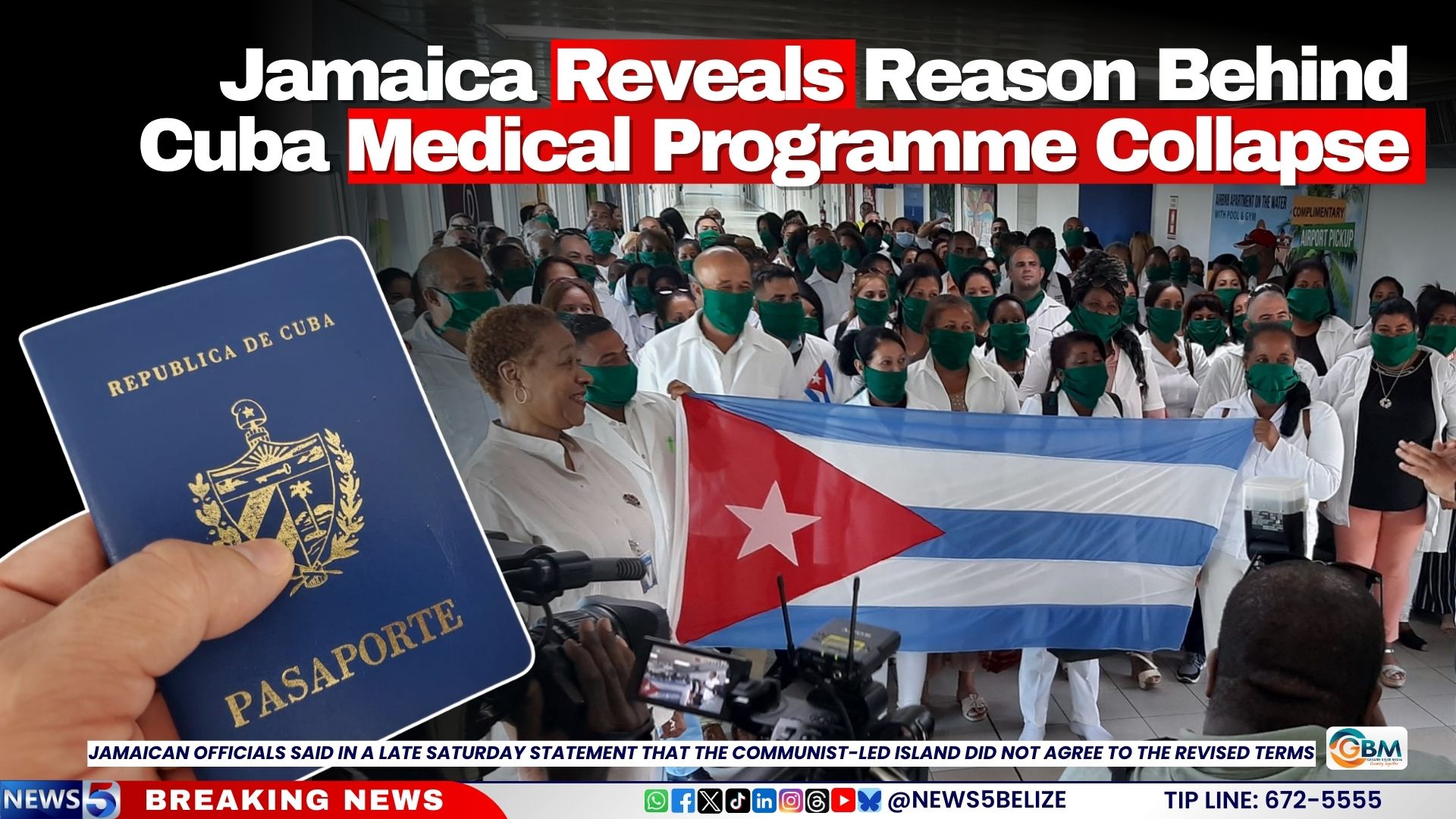
    Jamaica’s government has formally attributed the termination of its five-decade medical cooperation agreement with Cuba to fundamental violations of national law and international labor standards. The breakdown occurred after a comprehensive review by Jamaica’s Ministry of Foreign Affairs and Foreign Trade identified systemic issues that Havana ultimately refused to rectify through renegotiated terms.

    The investigation revealed two primary concerns: Cuban medical personnel were systematically denied possession of their own passports, and compensation arrangements violated basic labor principles. While Jamaican authorities calculated salaries at parity with local medical professionals, these payments were directed to the Cuban government in U.S. dollars rather than to the individual doctors. Only overtime payments were disbursed directly to personnel, with no transparent accounting for what portion of their base salaries they actually received.

    Jamaican officials emphasized that despite these contractual deficiencies, Cuban medical workers were treated well regarding accommodation, leave entitlements, and freedom of movement. The government acted promptly to address the passport issue by engaging both immigration authorities and Cuban officials to ensure workers could hold their travel documents.

    Following months of unsuccessful renegotiation attempts—including Jamaica’s proposal to pay medical workers directly—Cuba unilaterally withdrew its medical brigade from the island. Jamaica expressed disappointment at this decision, noting that the requested terms aligned with agreements Cuba has accepted with other Caribbean nations.