标签: Belize

伯利兹

  • Panton Calls Proposed $73M BEL Share Investment a “Bailout”

    Panton Calls Proposed $73M BEL Share Investment a “Bailout”

    A planned $73 million government investment into Belize Electricity Limited (BEL) has ignited sharp political debate in Belize, as the opposition lashes out at the proposal framing it as an underdisclosed bailout that will ultimately burden ordinary taxpayers.

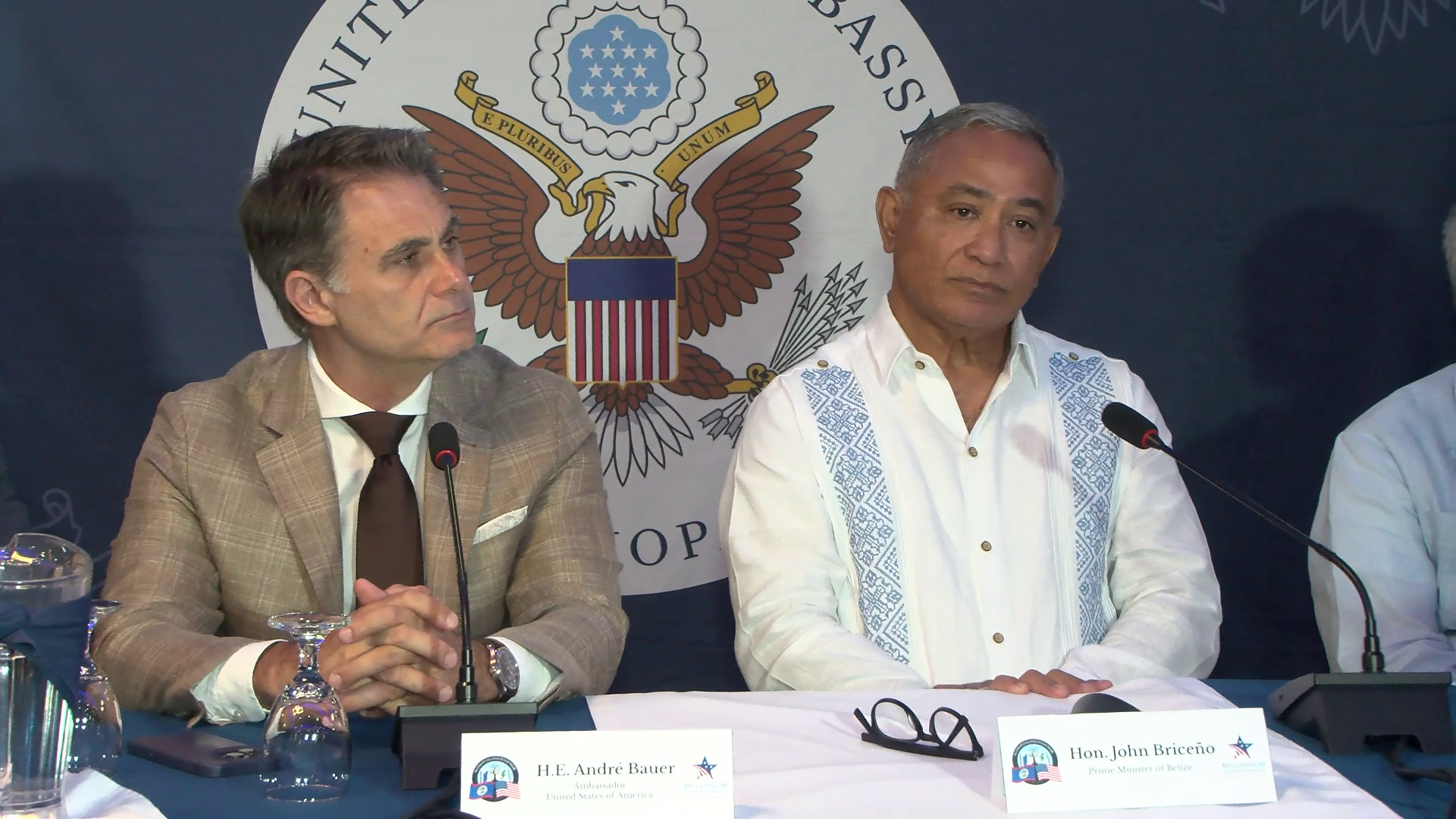
    The initiative, put forward by Prime Minister John Briceño’s administration, asks for legislative approval to acquire just over 8.1 million newly issued shares of BEL at a price point of $9 per share. In defending the plan, Briceño has emphasized that the core goal of the investment is to reinforce national control over Belize’s critical electricity infrastructure, strengthening domestic ownership of the country’s core power supply network.

    But the proposal has quickly drawn fierce scrutiny from the country’s political opposition. Tracy Panton, leader of the United Democratic Party, is leading the charge against the plan, questioning both the source of the $73 million in funding and the ultimate impact on public finances. During a press briefing held by her party on June 16, 2026, Panton publicly labeled the share acquisition nothing more than a bailout for the state-linked power provider.

    Panton raised concerns specifically about whether the government intends to draw funds from Belize’s Social Security Board (SSB) to cover the cost of the purchase, a move she argues would put retirement and social welfare funds at risk. Ahead of a scheduled House of Representatives committee meeting set to discuss the proposal the following day, Panton warned she would immediately make the information public if there was any confirmation of SSB funds being tapped for the investment.

    The opposition leader also noted that while she had directly raised the funding question to a member of the ruling People’s United Party (PUP) during a visit to Belmopan, she did not receive a clear response. The ruling party member did, however, deny that SSB funds would be used for the share purchase.

    Despite that denial, Panton maintained her position that no matter what funding stream the government chooses to use, the full cost of the $73 million investment will eventually be passed on to the Belizean public. She added that while Belizeans would likely be far more open to supporting public spending on the power sector if it translated to lower monthly electricity bills or more reliable service, she remains deeply skeptical that the proposal will deliver any such tangible benefits for ordinary citizens.

    The upcoming House committee meeting is expected to be the first major legislative step for the proposal, where further details on funding and policy goals will likely be debated publicly.

  • Old Haulover Bridge to Connect Six Communities to Twin Towns

    Old Haulover Bridge to Connect Six Communities to Twin Towns

    As June 2026 progresses, a transformative infrastructure project in western Belize is moving steadily toward completion, set to unlock new connectivity and economic opportunity for thousands of residents across northern Cayo District. The project, led by Belize’s Ministry of Infrastructure Development and Housing, repurposes the decommissioned old Haulover Bridge from Belize City to create a new crossing linking the twin towns of San Ignacio and Santa Elena to six underserved communities in Cayo Northeast.

    For local leaders and everyday residents, the upcoming opening of the bridge is far more than just a new road crossing—it is a long-awaited solution to decades of travel delays and limited access to essential services. Silas Sabal, Vice Chairman of the Santa Familia Village Council, shared that the project has generated widespread excitement across the region, thanks to the wide-ranging benefits it will deliver. Most immediately, the new crossing will cut average travel time between the six communities and the twin towns by 15 to 20 minutes. In emergency medical situations, that time saving is life-changing: Sabal noted that residents in critical need will now be able to reach hospitals in Santa Elena in just five minutes or more, rather than facing a much longer, potentially dangerous journey.

    Daily commuters, particularly education workers, are also celebrating the improved connection. Shajira Ayala, a local teacher, explained that the shorter, more direct route will eliminate the daily stress of long commutes for hundreds of educators who travel from Santa Elena and surrounding districts to reach schools in the Cayo Northeast communities.

    Beyond easing daily travel, village leaders say the bridge will put smaller, less well-known communities like Santa Familia firmly on Belize’s tourism and economic map. Julian Carrias, Chairman of Santa Familia, emphasized that the improved access will draw more visitors to the area, opening new opportunities for local small businesses, agricultural vendors, and community-led tourism initiatives. “A lot of people don’t know where Santa Familia is located,” Carrias noted, adding that the bridge will change that permanently.

    Orlando Habet, Belize’s Minister of Sustainable Development, outlined the full scope of the project’s impacts in an official Facebook post, highlighting that the benefits extend across all segments of the local population. “The bridge will provide safer and faster access for our farmers transporting their produce, our teachers and students commuting daily, and the many families and residents who travel between our villages and the Twin Towns,” Habet wrote.

    Beyond the time savings, the new crossing dramatically reduces overall travel distances for common local routes. For residents traveling from Santa Familia to Spanish Lookout, the new route cuts roughly 6 miles off the previous journey. For commuters traveling between the six Cayo Northeast communities and San Ignacio via the old Iguana Creek Bridge route, the reduction hits nearly 11 miles—an annual saving of hundreds of miles of driving for regular travelers, cutting fuel costs and vehicle wear and tear for working families and businesses across the region.

  • Are Children Still Getting Through? TikTok Sued Again

    Are Children Still Getting Through? TikTok Sued Again

    In a fresh escalation of regulatory scrutiny on social media platforms’ handling of underage users, the U.S. state of Florida has launched a new lawsuit against ByteDance-owned TikTok, accusing the platform of violating state child protection laws by enabling children under 14 to create accounts and exposing young users to harmful violent and sexual content.

    The legal action was filed Tuesday by Florida’s Republican Attorney General James Uthmeier, who leveled sharp accusations that TikTok deliberately misled parents and sidelined child safety to prioritize corporate profit gains. “TikTok knowingly deceives parents and allows children to be exposed to harmful and inappropriate content in direct violation of Florida law,” Uthmeier outlined in an official statement accompanying the lawsuit. “We have zero tolerance for companies that prioritise profit over children’s safety.”

    At the core of the complaint is a demand for a court injunction to force TikTok to fully comply with Florida’s House Bill 3 (H.B. 3), a landmark child protection regulation for social media that took effect in January 2025. The statute explicitly bans social platforms from permitting users under the age of 14 to open personal accounts, and mandates verifiable parental consent for any account registration by users between 14 and 16 years old.

    TikTok has forcefully pushed back against the state’s allegations, pushing back on claims that it has failed to enforce child safety rules. A company spokesperson noted that the platform has already been in ongoing communication with Florida state officials over compliance issues, and had previously taken action to notify users under 14 that their accounts would be suspended for violating the platform’s age policies. “We are evaluating the state’s complaint and are prepared to defend our strong record on minor safety,” the spokesperson added.

    The Florida lawsuit is far from an isolated action: TikTok already faces coordinated legal challenges from more than 25 other U.S. state attorneys general, who argue the platform’s algorithm is intentionally designed to foster addiction among young users, and has contributed to the growing youth mental health crisis across the country.

    This latest case adds to a rapidly growing wave of legal pressure on large social media corporations across the United States, as state regulators move to enforce stricter child safety safeguards and force platforms to prove that protecting young users is prioritized above unbridled user growth and profit margins.

  • Making Women Seen in Belize’s Fishing Industry

    Making Women Seen in Belize’s Fishing Industry

    On June 16, 2026, the ninth annual Women in Fisheries Forum kicked off in Belize, shining a long-overdue spotlight on a pressing, underdiscussed challenge facing the Central American nation’s critical fishing industry: the systemic invisibility of women who power the sector across every step of the supply chain.

    While Belize’s multi-million dollar fishing economy relies heavily on women’s labor—from catching and processing seafood to managing coastal households, adding product value, and running small marine-focused businesses—industry data and official records have largely erased their contributions. For decades, many women working in the sector have been undocumented, overlooked for professional opportunities, and locked out of critical benefits and resources simply because their work is not formally recognized. Most commonly, women who sell their catch to fishing cooperatives have their products registered under their spouse or husband’s name, leaving their individual labor unaccounted for entirely.

    This two-day convening brings together a cross-section of stakeholders: artisanal fishers, female marine entrepreneurs, conservation leaders, and policy advocates, all united around a shared goal of breaking down the barriers that hold women back. This year’s forum centers the blue economy, with a specific focus on helping women expand beyond the traditional high-demand species of fin fish, lobster, and conch into new, sustainable fisheries segments that offer greater economic stability.

    Ralma Lamb-Lewis, Marine Conservation Director at the Wildlife Conservation Society, a key organizer and stakeholder in the event, emphasized that while progress has been made in recent years to acknowledge women’s fundamental role in Belize’s fishing sector, the conversation must now move from recognition to action. “We’ve definitely gained traction in terms of recognising the role that women play within this space,” Lamb-Lewis noted. “But more so what we want to transition into now is for us to be able to definitely increase their access to some of the resources available out there.”

    The stakes of formal documentation are high for women across the sector. Without official recognition of their work, women cannot access basic social security benefits, workplace injury protection, or targeted funding and capacity-building opportunities offered by non-governmental organizations, government agencies, and international donor groups. “Once they’re documented, it allows you to access more opportunities,” Lamb-Lewis added. Participants at the forum are expected to draft collaborative policy recommendations and partnership frameworks to address the documentation gap and expand equitable access to leadership, financing, and resources for women working across Belize’s fishing industry.

  • Greater Belize Media Tops Caribbean Region with 93 Nominations

    Greater Belize Media Tops Caribbean Region with 93 Nominations

    In a landmark achievement for regional media in the Caribbean, Greater Belize Media (GBM), parent company of News 5 Live, has secured a leading position ahead of the 37th Caribbean Broadcasting Union (CBU) Media Awards, capturing an unprecedented 93 nominations across every major award category – more than any other participating media organization across the region this year.

    GBM’s broad slate of nominations spans every core sector of modern media, starting with television, the awards program’s most hotly contested competitive track. The Belize-based media house earned nods across 15 television categories, including high-profile divisions such as Best News Story, Best Investigative Report, Best Documentary Programme, and Best Sports Story, alongside category recognition for Best Entertainment Programme, Best Magazine Programme, Best Comedy Item, Best Advertisement, and Best Public Service Announcement. GBM also picked up nominations for specialty journalistic awards, including Financial Literacy Journalism, Excellence in Media Coverage of Caribbean Arts and Culture, Excellence in Environmental Reporting on Mangrove/Seagrass, and Best Production on Land Degradation Neutrality.

    Notably, GBM dominated the Child Rights Champion award track, securing nominations in all three subcategories: Investigative Reporting on Child Rights, Elimination of Violence Against Children, and Children Who Inspire Story. Beyond television, the organization earned three nominations in digital media for Best News Story, Best Sports Story, and Best Investigative Item, plus a single nomination for Best Sound Engineer in the radio division.

    In the People’s Choice Awards, the only CBU category decided by direct public voting from Caribbean audiences, GBM picked up three additional nods for Best Music Reel, Best Educational Reel, and Best Comedy Reel. Rounding out its historic haul, the media house earned two more nominations in Special and Individual Awards: Best Social Media Content Creator and Best Videographer.

    All award winners will be revealed at the 37th CBU Media Awards Gala, scheduled for August 19, 2026. The gala will take place during CBU’s 57th Annual General Assembly, branded #CBUAGA57, which will be hosted this year in Georgetown, Guyana by the Guyanese government.

    This year’s general assembly has been organized around the timely central theme “Caribbean Media and AI”, a topic that carries growing urgency for newsrooms across the region as the industry navigates both the transformative opportunities and disruptive impacts of artificial intelligence on journalism, content creation, and audience engagement. CBU President Anthony Greene formally confirmed the theme and venue in a pre-recorded video message shared with CBU members and industry stakeholders earlier this year.

    The three-day gathering is expected to bring together a diverse cross-section of global and regional media stakeholders, including media executives, working journalists, academic researchers, independent content creators, international development partners, and media equipment and service suppliers. The event’s programming will include professional development workshops, panel discussions on emerging industry trends, networking opportunities, and the formal celebration of regional media excellence through the awards gala. The CBU Annual General Assembly has long stood as one of the Caribbean’s premier forums for cross-sector dialogue and collaboration within the regional media industry.

    As event preparations progress, CBU will release full registration details and complete programming information through its official website and social media channels in the coming weeks.

  • $340K Water Equipment to Hook up Homes in 15 Villages

    $340K Water Equipment to Hook up Homes in 15 Villages

    On a ceremonial handover held Monday, the Belizean government has distributed roughly $340,000 BZ worth of critical water system equipment and maintenance supplies to 15 rural communities spread across three districts: Cayo, Stann Creek, and Toledo. The initiative, led by the Ministry of Rural Transformation, Community Development & Local Government, includes a broad range of essential assets to upgrade and expand community-run water access, from large storage tanks, connecting piping and water meters to general plumbing materials, drainage culverts, and maintenance tools such as weed eaters and a commercial lawnmower.

    Addressing attendees at the event, Rosaura Chan, president of the National Association of Village Councils, framed the handover as both a transformative opportunity and a collective obligation for recipient communities. “The true value of these resources will not be measured by what is received today, but by how well they are maintained and how many lives they continue to improve in the years ahead,” Chan remarked. She also emphasized the foundational role of rural communities to national strength, noting, “The strength of Belize is not found only in towns and cities. It is found in our villages.”

    In remarks that carried clear political overtones, cabinet minister Oscar Requena drew a sharp contrast between the current administration and the previous 13-year rule of the United Democratic Party (UDP). Requena directly questioned event attendees, asking repeatedly if the former government ever delivered comparable infrastructure investments to rural villages, before concluding that such a commitment to rural communities “never” happened under UDP leadership. Requena also pushed back against growing calls to transfer management of all rural water systems to the national utility Belize Water Services, arguing that community-governed water boards keep revenue and resources local to directly benefit residents. As evidence of this model’s success, he pointed to two rural communities, San Antonio in Toledo and Hopkins, which have paid off tens of thousands in collective debt and built up significant community savings after installing community-managed metered systems.

    Osmond Martinez, the area representative for the district that includes three of the 15 beneficiary villages, Bladen, San Isidro, and Bella Vista, highlighted the urgent unmet need driving the investment. Martinez noted that Bella Vista has experienced an unprecedented 88% population growth between 2010 and 2022 – a faster rate of expansion than any other village in Belize’s history – leaving dozens of local homes still without access to piped running water.

    Fellow cabinet minister Dr. Louis Zabaneh closed out official remarks by reaffirming the current government’s commitment to directing public and donor funding toward rural community needs. “It is important for us to continue to give as much as we can to our communities and to our people, because that is what the balance is,” Zabaneh said. “It is by what we’re doing, by taking the taxpayers’ money, by taking grant funds, loan funds, or whatever it is, and using it properly and the right way.”

  • Belizean Deported After Leading Hunger Strike in ICE Jail

    Belizean Deported After Leading Hunger Strike in ICE Jail

    In a move that has reignited debates over immigration detention conditions and retaliation against activist detainees, a Belizean man who emerged as a key organizer of a high-profile hunger strike at a U.S. Immigration and Customs Enforcement (ICE) facility in California has been deported back to his home country. Immigrant rights organizations are calling the deportation an act of retaliation for Kyron Shakeel Swaso’s public criticism of abusive and unsanitary conditions inside the Adelanto ICE Processing Center.

    Per accounts from local outlet CALÒ News and legal nonprofit Immigrant Defenders Law Center (ImmDef), Swaso’s removal followed a pattern of improper transfers to detention facilities in Texas and Louisiana, carried out in what advocates say is violation of existing legal requirements. His deportation came fewer than 14 days after he held a meeting with members of the U.S. Congress, where he helped deliver a formal petition signed by 150 fellow detainees detailing systemic poor conditions at the Adelanto site.

    The document signed by detainees raised multiple serious allegations: toxic mould growth in holding areas, contaminated drinking water supplies, insufficient and low-quality food, and persistent barriers to accessing necessary medical care. In a final statement released before his deportation, Swaso emphasized the demands of the protesting detainees. “We want this place shut down and we want to be released… Our due process rights are being violated. They are using taxpayer dollars to abuse immigrants. The things they say publicly do not match what we are living through,” he said.

    ImmDef’s legal team has pushed back against the government’s process, confirming that Swaso was transferred out of California without the mandatory advance notice required under a federal court order. The organization argues the irregular transfers and subsequent deportation were explicitly retaliatory measures targeting Swaso for his leadership in the hunger strike and his willingness to bring detention abuses to national attention.

    The U.S. Department of Homeland Security (DHS), the federal agency that oversees ICE, has confirmed Swaso’s deportation but forcefully rejected all claims of retaliation. According to remarks shared with DemocracyNow, DHS stated that Swaso had already received a final, legally binding order of removal, and his transfer and deportation followed standard operating procedures for immigration removal cases. The agency also outlined background on Swaso’s immigration history: he entered the United States on a tourist visa in 2019, and overstayed the terms of his visa. DHS additionally claimed Swaso faced a series of criminal charges, including aggravated assault on a law enforcement officer, illegal firearm possession, and drug possession.

    ImmDef has pushed back against these criminal allegations, countering that the only charges on record against Swaso are minor drug offenses that were ultimately dismissed and cleared through post-conviction relief processes. The organization says Swaso has no other active convictions on his record.

    Beyond the dispute over Swaso’s deportation, DHS has also denied that any hunger strike is currently ongoing at the Adelanto facility, and rejected all allegations of systemic abuse against detainees. This official denial stands in direct contradiction to claims from current detainees and immigrant rights advocates, who have repeatedly documented poor conditions at the site. Local reporting from CALÒ News has recorded at least four detainee deaths at the Adelanto facility in recent years, further fueling calls for independent oversight and facility closure.

  • ‘Win-Win’ or Not? US and Iran Sign a Page-and-a-Half MoU

    ‘Win-Win’ or Not? US and Iran Sign a Page-and-a-Half MoU

    After 109 days of open conflict between the United States and Iran, the two nations have finalized an electronic signature on a short ceasefire memorandum of understanding (MoU), but the fragile deal has already been mired in conflicting claims over its core terms and faces fierce resistance from key regional stakeholders.

    The June 16 agreement was billed by former U.S. President Donald Trump as a step toward opening up the strategically vital Strait of Hormuz to full commercial navigation by this coming Friday. Trump confirmed that he, U.S. Vice President JD Vance, and Iran’s chief negotiator and Parliament Speaker Mohammad Bagher Ghalibaf had all appended their signatures to the document. For its part, Iran’s National Security Council framed the deal as a full cessation of hostilities across all active fronts, including the Lebanese theater, and said it would bring an end to the U.S. naval blockade of Iranian territorial ports.

    However, major contradictions quickly emerged over the economic terms of the ceasefire. A senior anonymous Iranian official told Reuters that Washington had committed to unlocking $25 billion in Iranian assets that have been frozen by U.S. sanctions and temporarily waiving restrictions on Iranian oil exports. These claims were immediately rejected by Vance, who publicly emphasized that no provisions for sanctions relief or asset unfreezing are included in the text. Vance also clarified the scope of the agreement, describing it as a vague general document that totals only one and a half pages in length.

    Under the terms of the current framework, formal negotiations on more substantive issues – including Iran’s nuclear program and the future of U.S. sanctions on the country – are scheduled to begin after the MoU is formally signed in Geneva, Switzerland, on Friday, with a 60-day window allocated for these follow-up talks.

    The uncertain terms of the ceasefire have already sent ripples through global energy markets. As traders weighed the potential positive impact of a fully reopened Strait of Hormuz – through which roughly 20% of the world’s daily oil supplies pass – against the lack of clarity around the agreement’s actual guarantees, international crude prices moved upward in early trading.

    The deal also faces a major challenge from Israel, a key U.S. ally in the Middle East that has been actively involved in the regional conflict. Israeli Prime Minister Benjamin Netanyahu announced that Israeli military forces will continue their occupation of southern Lebanon regardless of the U.S.-Iran ceasefire agreement, and senior members of Netanyahu’s cabinet have explicitly stated that Israel does not consider itself bound by the terms of the MoU. Even as leaders on both sides claim a breakthrough toward de-escalation, ongoing fighting is still being reported in multiple conflict zones across the region, leaving the durability of the fragile ceasefire in serious doubt.

  • Gunman Opens Deadly Fire on Kiffer McKenzie with Children Inside Vehicle

    Gunman Opens Deadly Fire on Kiffer McKenzie with Children Inside Vehicle

    On a busy Saturday morning in downtown Belize City’s central commercial district, a brazen daylight shooting has claimed the life of 29-year-old Kiffer McKenzie, leaving the local community reeling and reigniting long-simmering debates about systemic cycles of violence and harmful community stigma. The incident marked the fourth fatal killing across the country over that single weekend, capping a period of escalating violence that has shaken public confidence in safety.

    According to initial law enforcement accounts, McKenzie was seated in his parked vehicle near the Belize Bank on Albert Street, accompanied by his two young children aged 3 and 6, when an unidentified gunman approached and opened fire. In a desperate attempt to protect his children and escape the attack, McKenzie accelerated his vehicle up Albert Street, but lost control and crashed into a stationary car only moments later. He succumbed to his gunshot wounds at the scene; miraculously, his children emerged from the attack unharmed.

    Investigators believe the shooter arrived and fled the scene on a motorcycle. In a promising early development, Belize police have detained one suspect in connection with the killing, thanks in part to advances in investigative technology. Stacy Smith, a staff officer with the department, explained that the crime fusion center’s digital tools allowed investigators to quickly locate the abandoned motorcycle and shooter’s helmet used in the attack. Forensic technicians have already lifted usable fingerprints from both items, and the helmet is currently undergoing additional DNA testing to build a solid case against the responsible party.

    McKenzie’s killing is far more than an isolated violent incident: it lays bare the devastating intergenerational cycle of violence that has haunted his family for decades. A lifelong resident of Belize City’s Majestic Alley neighborhood, McKenzie was the son of George “Junie Balls” McKenzie, a former gang figure who was murdered in 2007. The pattern of loss continued nine years later, when McKenzie’s older brother George McKenzie Junior was also gunned down in 2016. Years before his brother’s killing, as early as 2015, McKenzie’s mother Melissa Major had made a desperate public plea for police protection after her son received explicit death threats while attending Wesley Junior College.

    In that 2015 appeal, Major told authorities that her son had avoided criminal activity and was not causing trouble, begging law enforcement to intervene to protect his life. Now, nine years after that plea, Major has lost her last child to gun violence.

    Close family members, speaking to local outlet News Five on condition of anonymity, say McKenzie was unfairly stigmatized from birth because of his family’s past. “If you watch the news and all, you’d never see he had any murder charges or anything like that,” the relative explained. “I feel like because his dad was who he was, they just painted him bad from the start. Nine years after they killed his father, they killed his brother, and nine years later they got him. It’s just about where you come from—they label you. You come out of Majestic Alley, you come from the hood, that’s how people see you, even when you’re not doing bad things, even when you’re trying to do right.”

    Community and youth leaders who worked closely with McKenzie confirm that account, painting a portrait of a man who dedicated himself to breaking his family’s cycle of violence and building a stable, positive life for his two young children. Douglas Hyde, National Youth Program Coordinator with the Belize Police Department, has known the McKenzie family for more than 30 years, dating back to his work with Kiffer’s father in the 1990s. In recent years, he worked directly with Kiffer through the William Dawson community sports programs, which use athletics to steer young people away from violence.

    “When I got to know him as a young adult, he’d finished high school and sixth form, and he was looking for work,” Hyde recalled. “I remember Kiffer telling me over the past year that he didn’t just want any ordinary job. He wanted something he could be proud of, something his kids could look up to him for. When he got the opportunity to work at the Immigration Department, that was one of his proudest achievements.”

    McKenzie had worked for the Immigration Department for four years at the time of his death, and the department released a statement acknowledging his positive contributions to the agency. Andrew Dawson, Acting Director of the Leadership Intervention Unit, a program that supports people leaving high-risk lifestyles to build productive lives, added that the organization was just weeks away from hiring McKenzie as a program coordinator.

    “Kiffer was one of the first people we talked about bringing onboard as a coordinator, because we all saw he had successfully transitioned into a stable, productive life,” Dawson said. “He worked in immigration, and he was incredibly instrumental in our work using sports to promote peace in the community.”

    As investigators continue to process evidence and build their case against the detained suspect, McKenzie’s death adds another tragic chapter to a family story defined by generational loss. For his loved ones and community supporters, his killing stands as a stark reminder of the harm caused by systemic stigma and persistent cycles of violence—even for those who work every day to escape them. This report was compiled from original on-the-ground reporting by Paul Lopez of News Five.

  • Grief at Sadie Vernon as 17-Year-Old Slain in Suspected Bicycle Dispute

    Grief at Sadie Vernon as 17-Year-Old Slain in Suspected Bicycle Dispute

    The hallways of Sadie Vernon High School are heavy with unspoken grief this week, as a third-form student who should be wrapping up his end-of-year exams is gone, killed in a fatal shooting that has shocked the small community. Seventeen-year-old Derrick Morris was shot dead outside his Brown Street residence late Sunday, just moments after he answered a knock at the front door, law enforcement officials confirmed.

    Initial investigative findings point to a senseless escalation of what began as a minor disagreement over a bicycle, a trivial conflict that ended with a teenager’s life cut short. Stacy Smith, a staff officer with local law enforcement, outlined the basics of the case to reporters: Two unidentified individuals arrived at the Morris family home, where one called for a resident of the property. When Morris stepped to the door to respond, he was immediately met with gunfire.

    Investigators have linked the killing to a pre-existing dispute over a bicycle between Morris and the prime suspect, an 18-year-old male who has already been taken into custody. The suspect was identified after authorities reviewed surveillance footage at the department’s Crime Fusion Center, leading to his detention in connection with Morris’s murder. He is expected to face formal murder charges in the coming days.

    On campus, the void left by Morris’s sudden death is impossible to miss. His usual classroom desk sits empty, with a single flickering candle placed beside a framed photo of the teen. A black memorial bow hangs at the school’s main entrance, a quiet symbol of the loss shared by students and staff alike.

    Sadie Vernon High School principal Deborah Martin remembered Morris as a young man with a larger-than-life personality, despite his small stature, who was well-known across the school campus. Like many teenagers, Morris occasionally challenged classroom rules and had faced past academic setbacks linked to behavioral issues, but he had made marked progress in recent months. Martin recalled recognizing Morris just one week before his killing for turning in all his required coursework on time, noting the bright smile he gave when he was commended for working toward promotion to fourth form. An avid football fan, Morris could almost always be found on the school field playing with friends during break and lunch periods, Martin added. Teachers had remained dedicated to supporting Morris as he worked to get back on track toward graduation, making his sudden passing all the more devastating.

    Community members are now grappling with the devastating reality that a minor disagreement between two young people ended in lethal violence, leaving a family shattered and a school community mourning a life with so much potential left unfulfilled.