标签: Belize

伯利兹

  • “Random Shopping” Turns Into a $20,000 Scratch and Win Prize

    “Random Shopping” Turns Into a $20,000 Scratch and Win Prize

    An ordinary errand for groceries has turned into a life-changing windfall for one scratch-and-win game participant, who walked away with a $20,000 grand prize after a random stop at Minnesota’s Twin Super Market in late July 2026.

    The winner, who has chosen to remain private, shared that her big win came entirely by chance. During an unplanned trip to pick up essentials at the local grocery store, she made a split-second decision to grab two scratch-and-win tickets on a whim, never expecting the outing would lead to a major payout.

    Unusually, the winning ticket sat unused for nearly a full week after purchase. It was not until last Sunday that the winner finally found a spare moment to scratch off the ticket’s coating and reveal her result. She recalled the moment of realization in an interview, explaining that she had to double and even triple-check the matching symbols to confirm what she was seeing. When the full extent of the win hit her – two matching combinations that added up to $20,000 – she was overcome with excitement and still says she can hardly believe her luck.

    More than a week after claiming her prize, the winner has not yet locked in concrete plans for how she will use her unexpected earnings. The only idea she has floated so far is a small, relaxing escape: a weekend mini-vacation to celebrate her good fortune, with the exact destination still to be determined.

    For other casual players who have been hesitant to try their hand at scratch-and-win games, the new jackpot winner has a simple, encouraging message. She says the prizes are not just myth or marketing – ordinary players really do win, and she urges anyone on the fence to take a chance, just like she did.

  • Can Belize’s Grid Handle the Electric Vehicle Push?

    Can Belize’s Grid Handle the Electric Vehicle Push?

    As Belize advances its ambitious push to accelerate a national transition from gasoline-powered vehicles to electric vehicles, a critical question about energy infrastructure has moved to the center of public debate: is the country’s existing electricity grid robust enough to handle the coming surge in power demand? With local residents already voicing persistent concerns about inconsistent power reliability and limited overall capacity, local outlet News Five sat down with Dr. Leroy Almendarez, Chief Executive Officer of Belize’s Ministry of Public Utilities and Energy, to discuss whether the nation has the necessary infrastructure to support widespread EV adoption.

    Almendarez emphasized that a successful large-scale shift to electric vehicles cannot proceed without massive targeted investment in three core areas: expanded power generation, utility-scale energy storage, and comprehensive upgrades to the national grid. Notably, he added, many key upgrade projects are already in the planning and development pipeline. Almendarez explained that granular energy consumption data will guide utility provider Belize Electricity Limited (BEL) in calculating exactly how much additional capacity the nation will need, as widespread EV adoption will add new, consistent demand from public and private charging stations on top of existing residential power use.

    Addressing common public assumptions that Belize’s abundant solar resources alone can meet the new demand without additional infrastructure, Almendarez noted: “I keep hearing people saying ‘the sun is shining,’ but you can’t just take the sun and put it in your vehicle. And I don’t mean to be cynical, but it simply means you must have infrastructure in place.”

    Contrary to widespread public pessimism, Almendarez pointed out that Belize is much further along in preparing for increased energy demand than many residents assume. The nation is currently accepting proposals for a new 80-megawatt solar power facility, which is scheduled to enter operation in the first quarter of 2028. This new solar generation capacity will be paired with 40 megawatts of utility-scale battery storage, both zero-emission clean energy assets designed to stabilize national power supply as EV-driven demand grows.

    For shorter-term demand needs, an additional 15 megawatts of generation capacity is expected to come online from the Belize Caribbean Biofuel Company Limited (BABCOL) by November 2026.

    Even with expanded generation and storage capacity, however, Almendarez stressed that growing energy demand requires upgrades to the grid itself. Adding more power is only one piece of the broader infrastructure puzzle; the transmission and distribution network must be capable of delivering that extra energy to end users where and when it is needed.

    “The grid must be able to dispatch that, to distribute that, to make sure that you can get access to that energy,” he said. “And you don’t want competing forces either. Otherwise, we’ll end up in a serious situation.”

    New data shared during a recent public energy briefing also confirmed longstanding regional concerns: southern Belize currently faces the greatest strain on existing grid infrastructure, a challenge that will require targeted upgrades to avoid reliability issues as EV adoption expands.

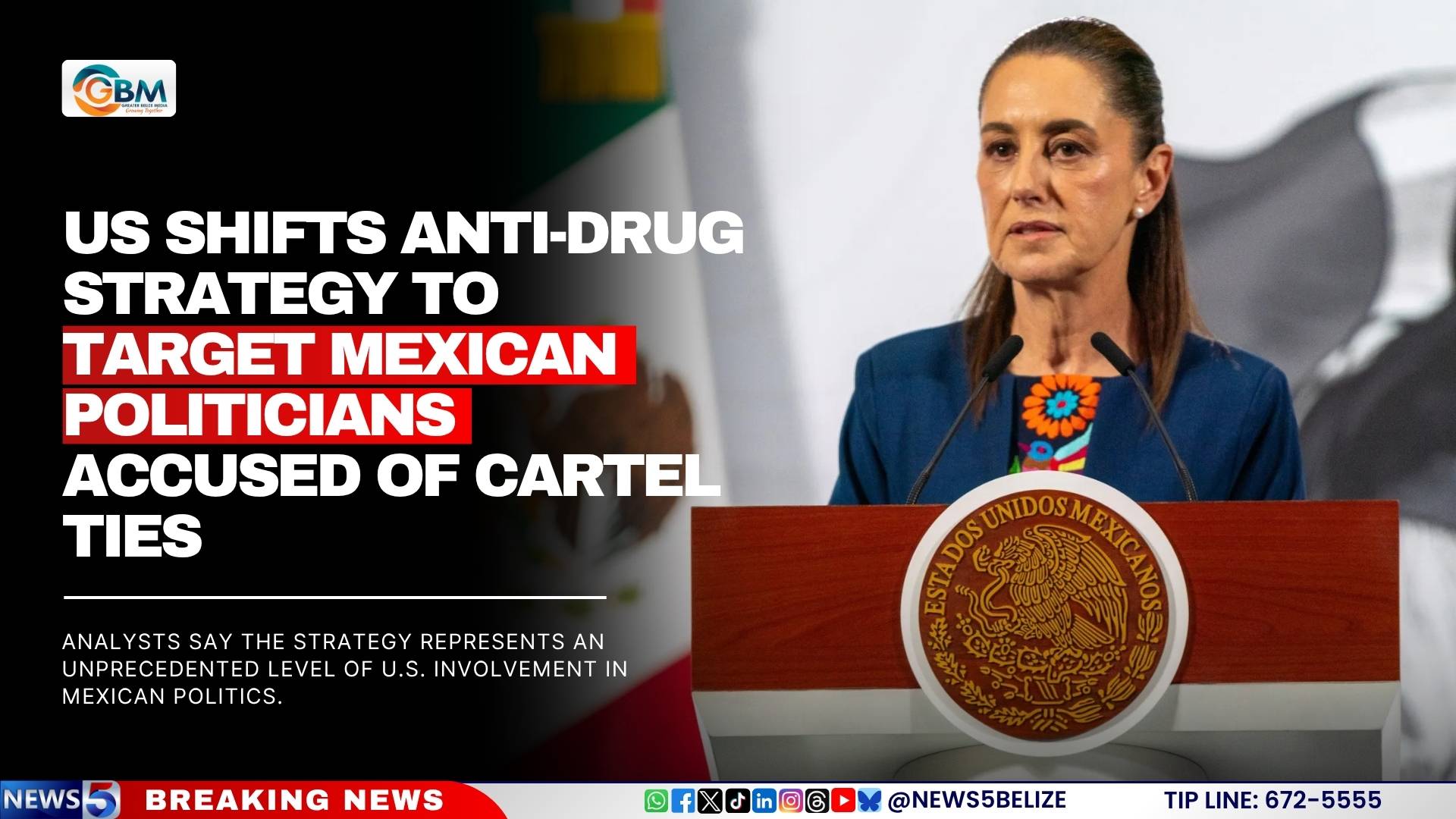
  • US Shifts Anti-Drug Strategy to Target Mexican Politicians Accused of Cartel Ties

    US Shifts Anti-Drug Strategy to Target Mexican Politicians Accused of Cartel Ties

    In a major departure from decades of counter-narcotics policy that centered on capturing or killing cartel kingpins, the United States has announced a sweeping new anti-drug strategy that directly targets Mexican public officials accused of accepting illegal funding and bribes from transnational criminal organizations.

    The Trump administration’s new approach rests on the claim that drug cartels have systematically infiltrated Mexican politics by funneling untraceable cash into electoral campaigns to install candidates who will protect the cartels’ smuggling routes, production operations, and illegal business interests. This shift has already sent ripples through bilateral relations, igniting a fierce public dispute over national sovereignty between the two North American neighbors.

    To date, U.S. authorities have already enacted concrete measures under the new policy: multiple Mexican officials have had their U.S. travel visas revoked, including Marina del Pilar Ávila Olmeda, the sitting governor of Baja California. In a highly unprecedented move, Rubén Rocha Moya, governor of the key cartel heartland state of Sinaloa, has been formally indicted by a U.S. federal court on charges of accepting hundreds of thousands of dollars in bribes and electoral support from the infamous Sinaloa cartel. Both governors, who belong to Mexico’s ruling Morena party, have issued categorical denials of all allegations against them.

    Security and policy analysts note that this strategy marks an extraordinary escalation of direct U.S. involvement in Mexico’s domestic political affairs. Many observers suggest the new charges stem from fresh evidence obtained through recent high-profile arrests and extraditions of top cartel leaders, which have yielded detailed records of criminal payoffs to public officials at multiple levels of government.

    Corruption researchers who study organized crime’s penetration of Mexican politics have long warned that cartel financing of electoral campaigns has grown increasingly pervasive, especially at the state and local level. Regional and local political campaigns in Mexico often rely heavily on unreported cash contributions that are nearly impossible to trace. A 2018 academic analysis found that candidates running for governor routinely spend two to three times the amount they officially disclose to election regulators, with the unaccounted funds linked to cartel donations, embezzled public funds, and private business interests seeking political favors.

    Mexican President Claudia Sheinbaum has openly challenged the credibility of Washington’s accusations, warning that the U.S. campaign against Mexican elected officials poses a direct threat to Mexico’s national sovereignty. While her administration has implemented its own reforms to screen political candidates for ties to organized crime and has maintained ongoing military and law enforcement operations against cartel networks, Sheinbaum has rejected a U.S. extradition request for Governor Rocha. She emphasized that U.S. authorities have failed to share sufficient concrete evidence to justify the detention and extradition of a sitting Mexican governor.

    The ongoing dispute has significantly strained already tense U.S.-Mexico relations, with Sheinbaum repeatedly accusing the United States of attempting to interfere in Mexico’s internal political processes. Independent security analysts have struck a cautious tone on the new U.S. strategy: while targeting corrupt officials who protect cartels can help weaken and expose criminal networks, they argue that lasting progress in dismantling transnational organized crime will require long-term, systemic reforms to strengthen Mexico’s independent judiciary, professionalize its law enforcement institutions, and root out systemic political corruption. Without such deep reforms, analysts warn, the strategy risks only exacerbating bilateral tensions without delivering meaningful progress in reducing drug trafficking and violence.

  • Don’t Send the Money: Doony’s Warns Customers About Loan Scam

    Don’t Send the Money: Doony’s Warns Customers About Loan Scam

    A long-running Belize City business is sounding the alarm over a coordinated loan scam that has already cheated multiple local consumers out of their money, as fraudsters abuse social media platforms to impersonate the company’s legitimate lending services. Doony’s, which has offered in-person instant payday loans to local residents for more than two decades, has confirmed that scammers have created a fake social media profile mimicking its brand to trick victims into sending advance payments in exchange for promised loans that never materialize.

    Chinique Kemp, a customer service representative for Doony’s, told reporters this week that multiple affected customers have visited the company’s physical store to follow up on their loan applications, only to discover they had sent money to criminal actors operating outside the business. “We have observed that a lot of customers are coming in and talking to us about money that they have transferred, and we do not do business like that,” Kemp said in an interview. “We’re actually living in an era where technology now is being used to deceive people.”

    The fraudulent scheme lures victims with a false promise: applicants who deposit a $100 advance fee to a scammer-controlled account are told they will receive a larger instant loan in return. But Kemp emphasized that this model has never aligned with Doony’s actual operating policies, which have remained consistent since the business launched more than 20 years ago.

    “Do we do instant payday loans? Yes, absolutely,” Kemp clarified. “But we do not ask you to transfer any money into any account to access those loans.”

    Kemp added that this is not the first time similar fraudulent impersonation scams targeting Doony’s customers have been documented. The company has already reported previous incidents of this scam to local law enforcement and regulatory authorities, and is encouraging any consumer who has interacted with the fake social media page or sent money to scammers to file an official report as soon as possible.

    To avoid falling victim to the scam, Doony’s reminded the public that all of its loan services require an in-person visit to its physical Belize City location, and the business will never request advance online transfers or deposits from prospective borrowers. Consumers who spot the fake page or receive suspicious outreach claiming to be from Doony’s are encouraged to report the content to the social media platform and alert the legitimate business directly.

  • Who Funds Belize’s Politics? Here’s a Warning on Political Financing

    Who Funds Belize’s Politics? Here’s a Warning on Political Financing

    Nearly two years from now, a groundbreaking policy analysis from one of Belize’s leading independent research institutions has sounded a loud alarm over the systemic risks posed by the nation’s incomplete framework for regulating political money. The Belize Policy Research Institute (BELPRI) has released its latest assessment, *Money in Belizean Politics: Breaking the Regulation Gap*, which makes clear that Belize stands out among the global community as one of a small handful of nations without full, binding legislation to oversee the operations of political parties and the funding of their election campaigns.

    In an official presentation of the report’s findings, BELPRI Executive Director Dr. Dylan Vernon laid out the core risks of the status quo: without formal regulation of private political donations, the entire political system is left vulnerable to infiltration by illegal interests. He explained that unvetted donations can trace their origins to transnational or domestic criminal activity, and that sitting politicians face constant temptation to bend rules to divert public assets and government services to bolster their reelection efforts through off-book campaign support.

    Beyond the risks of private criminal donations, Dr. Vernon highlighted a less discussed but fast-growing channel for unintended political influence: the misuse of existing public constituency spending. Though Belize does not operate an official public campaign financing system, government-controlled development funds already play an outsize role in shaping electoral outcomes through discretionary spending allocations. Currently, two major pots of public money — the longstanding constituency support budget and the newer $6.2 million Constituency Development Fund — are split between the nation’s 31 elected area representatives. Dr. Vernon emphasized that the core concern is not whether these community development funds serve a necessary public purpose, but rather the lack of clear rules governing who controls allocations, how funding decisions are made, and what this discretionary power means for unequal political influence across parties and constituencies.

    To address these gaps, BELPRI is calling on Belize’s legislative bodies to move forward with urgent, comprehensive reform. The institute’s top recommendations include introducing mandatory transparency requirements for all political donations, enacting the nation’s first full campaign finance legislation, and building stronger accountability mechanisms to close off opportunities for corruption and undue influence in the country’s electoral process.

  • Cop Pleads Guilty to Four Counts of Sex With a Minor

    Cop Pleads Guilty to Four Counts of Sex With a Minor

    A 29-year-old serving Belize Police Constable, Dexter Diego, has been taken into custody to await sentencing after entering guilty pleas to four separate charges of unlawful sexual intercourse with an underage victim. Court documents confirm the victim was just 13 years old when the first abuse occurred, and had turned 14 by the time the three subsequent offenses were committed. Diego’s guilty plea was formally submitted before High Court Justice Nigel Pilgrim on a Monday, with the entire hearing concluding in under an hour, and the defendant represented by defense attorney Hurl Hamilton. Per the agreed statement of facts presented to the court, Diego was a trusted family friend of the victim. He first formed a connection with the minor in 2022, and over roughly 10 months, the pair developed a hidden relationship that the victim’s mother had no knowledge of. All of the offenses took place while Diego was actively employed in his role as a police constable, a position that put him in a position of public trust. The first abusive incident occurred sometime between December 31, 2022 and February 1, 2023, when the victim was working as a babysitter for family members. The next two offenses followed between February and March 2023, while the fourth and final charge dates back to March 2026, when the offense was committed while Diego was wearing his official police uniform. Justice Pilgrim has opted to defer the sentencing hearing until September 8, 2026, and has ordered three key pre-sentencing reports to inform his ruling: a full Prison Report to assess correctional placement considerations, a Social Inquiry Report to contextualize the offense and the defendant’s background, and a Victim Impact Statement to document the harm inflicted on the underage victim.

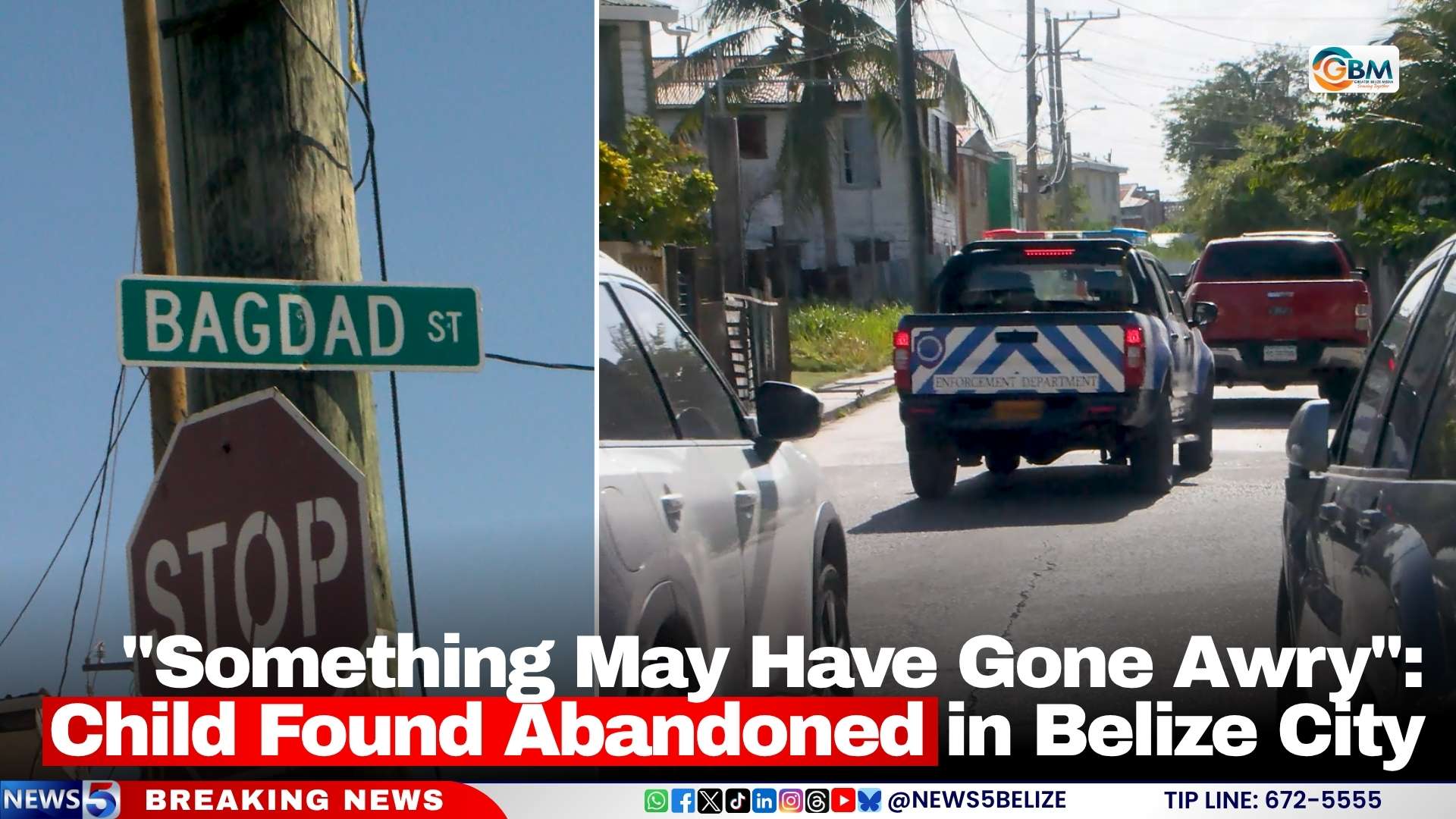
  • “Something May Have Gone Awry”: Child Found Abandoned in Belize City

    “Something May Have Gone Awry”: Child Found Abandoned in Belize City

    On a Sunday night in late July 2026, a routine emergency response to a small residential fire in Belize City led local police to uncover a heartbreaking case of child abandonment on Bagdad Street. What began as a call to extinguish a blaze in a neighborhood stairwell ended with a young child placed in the protective care of Belize’s Human Services department, after the fire incident inadvertently exposed the child’s unacknowledged presence in the area.

    Senior Superintendent Stacy Smith detailed the sequence of unexpected discoveries that unfolded after first responders arrived at the scene. As crews worked to put out the flames, a local resident found a discarded birth certificate near the site of the fire. The document bore a name that struck a chord with another woman living in the neighborhood: she recognized it as the first name of a woman who had stopped by her home earlier that same day with a young child in tow.

    According to Smith’s account, the unnamed mother had asked the local resident for a small favor during her visit: to help her call a taxi while she attended to an urgent matter. While the pair waited for the ride to arrive, the child drifted off to sleep, and the mother asked to leave the sleeping toddler inside the resident’s home temporarily. She left the property to handle her business, and never came back for her child.

    “It was only when that incident happened that she [the local resident] realised that something may have gone awry,” Smith explained to reporters. Once authorities connected the dots between the found birth certificate and the unclaimed child, they launched an immediate investigation to track down the mother. Investigators have since successfully located the woman, though no formal charges or public statements have been released from her side as of yet.

    Moving forward, Smith noted that officials will conduct a formal welfare consultation and assessment to unpack the circumstances that led the mother to leave her child behind. “We need to see what exactly went wrong that caused the mother to take that course of action that she took,” Smith added. Authorities have not yet released details on the cause of the stairwell fire that sparked the discovery, but have confirmed that no individuals suffered injuries in the blaze.

    The story has circulated widely across social media since news broke, drawing an outpouring of sympathy from online users. Many commentators have pushed back against immediate judgment of the mother, suggesting she may have faced overwhelming crisis that left her with no other perceived options. One social media user wrote, “She might be having a meltdown and struggling to deal with everything life keeps throwing her way.”

    As the investigation continues, child welfare officials are focused on ensuring the abandoned child receives consistent care and support while authorities work to resolve the case long-term.

  • Who’s Eating All That Meat?

    Who’s Eating All That Meat?

    A procurement scandal is unfolding in Belize after leaked tender documents revealed dramatic pricing discrepancies in food contracts awarded to private suppliers for the Belize Defense Force (BDF) during the 2023-2024 fiscal year, prompting a formal investigation into potential waste of taxpayer funds. The documents, which detail hundreds of thousands of dollars in public spending on meat, seafood and staple goods for BDF kitchens, show that multiple suppliers charged prices far above the national average tracked by the country’s official statistical agency, leaving public officials and observers questioning the transparency and value of the government’s defense spending.

    Cabinet Minister Kareem Musa confirmed that the inconsistent pricing uncovered in the leaked records is the core focus of the ongoing inquiry, noting that government procurement should prioritize the lowest available cost for comparable goods while publishing all contracts for full public transparency. “So if the Miras are offering the same vegetables at a lower cost than say, Save U and or Brodies, then we should go the Miras, but at the end of the day it should be published for transparency purposes,” Musa told reporters.

    The Statistical Institute of Belize (SIB), which publishes monthly national consumer price benchmarks via its consumer price index survey, provides an independent standard to compare government purchase prices against average market rates. Jacqueline Sabal, manager of SIB’s Economic Statistics Department, explained in June that the agency collects price data from retailers across the country every month to build an accurate picture of prevailing consumer costs.

    When SIB’s 2023-2024 price data is compared to the actual rates paid by the Ministry of Defense, the gap between market averages and government spending is impossible to overlook. For chicken breast, the highest national average price recorded between 2023 and 2024 was $4.73 per pound in April 2024. But leaked records show the Ministry of Defense paid J&J Imports $7.76 per pound for the same product – a $3 markup per pound over the peak national average.

    At that inflated rate, the ministry spent $7,760 per month, or more than $93,120 annually, on chicken breast from J&J Imports alone. If the ministry had purchased chicken breast at a rate close to the national average of roughly $5 per pound, it would have saved an estimated $33,000 per year on just this single item. A second supplier, Kukulcan, charged $5.50 per pound for chicken breast – closer to the national average but still above market rates, costing the ministry $4,801.50 per month. Combined, annual spending on chicken breast from the two suppliers exceeded $150,000.

    Fish fillet represented another major line item with extreme markups. Kukulcan charged the Ministry of Defense $23 per pound for fish fillet, adding up to $23,000 per month or $276,000 per year. J&J Imports charged a slightly lower $20.71 per pound, costing the government just over $30,000 monthly for this product alone.

    Premium seafood items pushed total public spending even higher. Annual spending on lobster from J&J Imports reached $24,402, while combined annual shrimp purchases from the two major suppliers totaled $177,420. Baby back ribs cost the ministry an additional $19,260 over the fiscal year, priced between $14 and $15 per pound. Ground steak, supplied by J&J Imports, Kukulcan and one smaller vendor, added $157,500 to annual defense food costs.

    When adding up spending on just seven core items – chicken breast, whole chicken, fish fillet, lobster, shrimp, baby back ribs and ground steak – the Ministry of Defense’s annual food expenditure for BDF comes out to nearly $600,000. This total does not include additional spending on beef steak and ground chicken purchased during the same period, meaning the actual total annual food budget for the defense force is substantially higher than the half-million-dollar figure compiled from the leaked documents.

    The markup-riddled procurement contracts have reignited debates over public spending accountability in Belize, with critics calling for sweeping procurement reform to enforce transparent, competitive pricing that protects taxpayer dollars. As the investigation continues, the central question remains unanswered: did Belize’s Ministry of Defense secure fair value for public funds, or did it systematically overpay connected suppliers to keep BDF kitchens stocked?


  • Who Makes Sure Your Medicine Is Safe? Belize Just Took a Major Step

    Who Makes Sure Your Medicine Is Safe? Belize Just Took a Major Step

    For consumers everywhere, the question of medication safety is foundational to public health: every time a patient picks up a prescription or purchases over-the-counter treatment, they rely on rigorous regulatory systems to vet for unexpected side effects, manufacturing quality flaws, and dangerous counterfeit products. In a landmark step for both national public health and global drug safety cooperation, the Central American nation of Belize has now secured full membership in the World Health Organization’s (WHO) Programme for International Drug Monitoring (PIDM), cementing years of progress in strengthening its national pharmacovigilance infrastructure.

    The new full membership status grants Belize direct access to submit local medication safety reports to VigiBase, the WHO’s comprehensive global database that tracks adverse drug events and safety concerns from across the world. Belize’s Ministry of Health and Wellness emphasized that this international recognition validates the substantial work the country has put into building a robust national system for monitoring medication safety and responding quickly to public health risks tied to pharmaceutical products.

    The Pan American Health Organization (PAHO), which has provided ongoing technical and institutional support to Belize’s pharmacovigilance efforts over the past several years, noted that full membership in the PIDM reflects Belize’s expanded capacity to carry out core public health functions: detecting potential adverse reactions, assessing risks, understanding emerging safety issues, and preventing harm from problematic medications. Beyond national benefits, PAHO highlighted that Belize’s full membership means the country will now contribute its own local data and on-the-ground expertise to the global drug safety network coordinated by the WHO, strengthening collective global protections.

    Belize’s journey to full membership began back in 2020, when it first joined the PIDM as an associate member. In the years since that initial association, the country has undertaken targeted upgrades to its regulatory infrastructure: it has expanded the capacity of its national Drug Inspectorate Unit, improved post-market surveillance protocols to catch safety issues that emerge after a drug reaches consumers, broadened the network for reporting adverse medication events, and integrated its national reporting systems with the WHO’s global safety database.

    According to Belize’s Ministry of Health and Wellness, the upgraded full membership status will transform the country’s ability to both contribute to and benefit from global drug safety efforts. Moving forward, Belize will be able to participate more actively in international monitoring work, while also gaining immediate access to the latest global safety data to inform local regulatory decisions and better protect patients across the country. PAHO echoed this assessment, noting that full membership will give Belize access to cutting-edge international safety analyses while allowing the nation to contribute to early detection of emerging drug safety risks at the global level, creating a win-win outcome for both national and global public health.

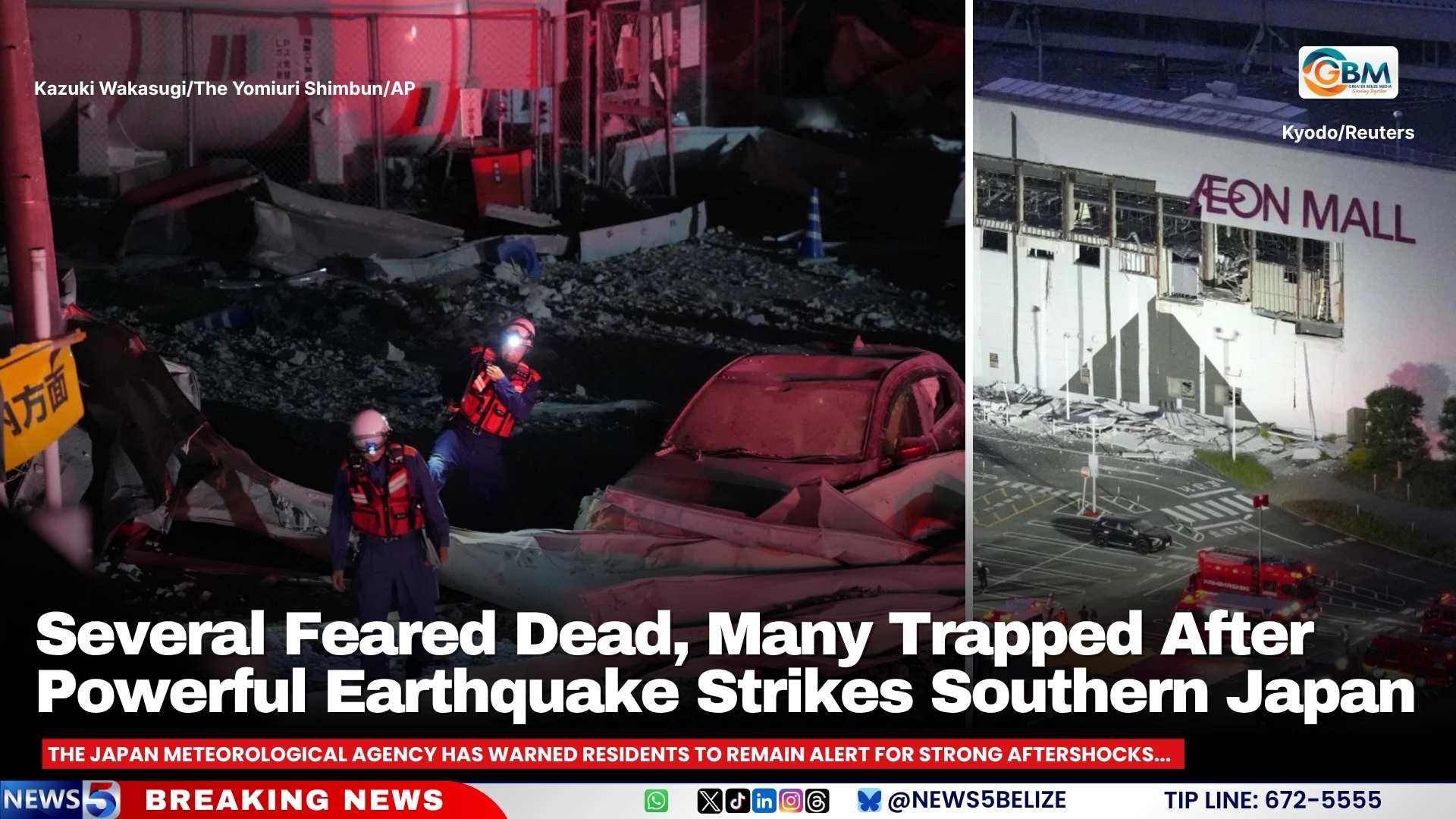
  • Several Feared Dead, Many Trapped After Powerful Earthquake Strikes Southern Japan

    Several Feared Dead, Many Trapped After Powerful Earthquake Strikes Southern Japan

    On July 28, 2026, a powerful 6.8-magnitude seismic event rocked southern Japan’s Kumamoto Prefecture, triggering widespread destruction that has left several people feared dead, dozens injured, and an uncertain number of individuals trapped inside a partially collapsed regional shopping center.

    The structural failure occurred at Aeon Mall Kumamoto, one of the prefecture’s busiest retail hubs, where search-and-rescue teams have been deployed in urgent operations to locate and extract surviving people trapped beneath rubble. Local disaster management authorities confirmed that 20 to 30 mall employees have not yet been contacted, while the full scope of missing customers remains unclear as officials work to cross-check visitor logs and witness accounts.

    Japan’s national public broadcaster NHK documented that over 50 people affected by the quake have already received emergency medical care at a single local hospital. A small number of passengers traveling on a high-speed rail route through the region also sustained injuries during the shaking. Local police, speaking to regional media outlets, have confirmed that multiple fatalities have been recovered from the collapsed shopping mall, though government officials have not published an official, confirmed death toll as of Tuesday.

    Beyond the mall collapse, the earthquake caused extensive damage across Kumamoto Prefecture: a key highway bridge sustained structural damage, all regional passenger rail services were suspended for safety inspections, Kumamoto Airport was forced to halt all operations temporarily, and the iconic, historic Kumamoto Castle suffered additional damage. The landmark had been undergoing years of reconstruction after being heavily damaged in the devastating 2016 Kumamoto earthquakes that killed over 50 people.

    Emergency response officials are currently investigating unconfirmed reports that a gas leak sparked by the seismic shaking caused an explosion at the shopping mall, but no definitive conclusions about any secondary triggers of the collapse have been released. The Japan Meteorological Agency has issued a formal public warning urging all residents of southern Kumamoto to remain on high alert for powerful aftershocks and rain-triggered landslides over the next seven days, as intensive rescue operations continue across the affected region.