On a Tuesday afternoon in late April 2026, a fast-spreading wildfire swept through San Pedro Columbia, a small village located in Belize’s southern Toledo District, leaving more than a dozen families displaced and without shelter after destroying or damaging more than 10 residential and community structures.
Local emergency officials confirmed the blaze originated in the kitchen of a village church, before rapidly spreading through adjacent thatch-roofed homes—construction common in the rural community that allowed the fire to accelerate faster than first responders could initially contain it. By the time fire crews fully extinguished the flames, the damage had already been done: years of personal possessions, household assets, and accumulated livelihood resources were reduced to ash, with total economic losses estimated to exceed $50,000 Belize dollars.
A diverse cross-section of the village’s small population was impacted by the destruction, including a local pastor, a small-scale farmer, an elderly resident, a young mother, and an off-duty local police officer. Remarkably, no injuries or fatalities were reported in connection with the blaze, a small silver lining for the affected community.
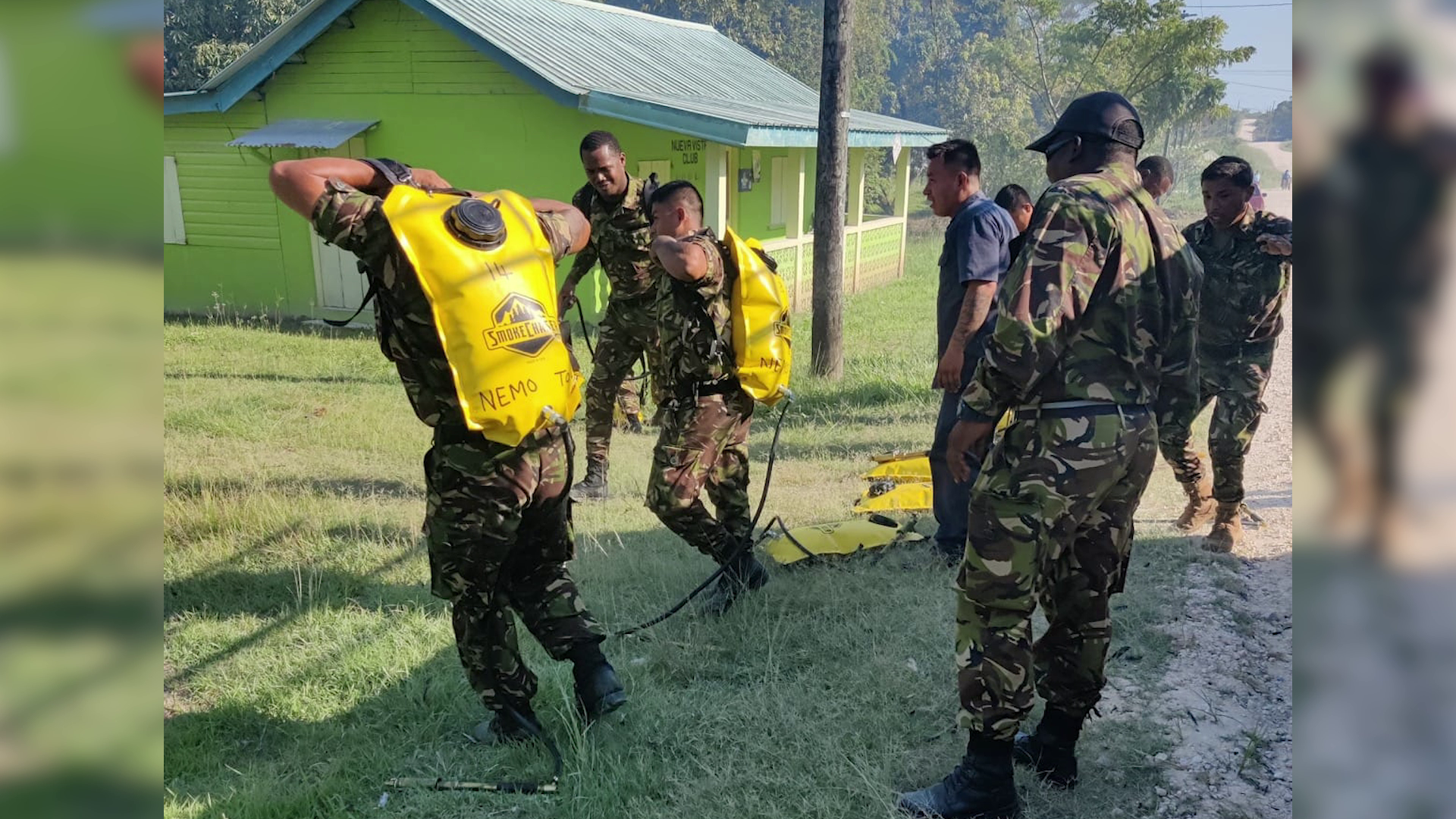
A multi-agency emergency response was mobilized to bring the fire under control: local firefighting units led containment efforts, backed by personnel and logistical support from the Belize Defense Force and the Belize Police Department, which deployed more than 40 officers to assist with the response. As of Wednesday morning, the official cause of the fire had not been determined, and an active investigation into the origin of the blaze was ongoing.
Within hours of the fire being contained, neighboring community organizations and volunteers had already mobilized support for the displaced families. Domingo Choc, chairman of the nearby Indian Creek community, arrived at the site alongside local council members and civilian volunteers to lead debris cleanup operations, while in-kind and cash donations began flowing in from across the region to support affected households.
In comments to local media, Choc emphasized the spirit of mutual aid that has defined the response to the disaster. “This morning, all we’ve been doing is showing up for these families who lost everything,” Choc said. “Our council met immediately after we heard the news, and we organized our team to come help. It’s devastating to see people lose every single thing they’ve worked for their whole lives. But this is what community is—we help each other. Any one of us could wake up tomorrow facing this same disaster, so we’re doing everything we can to support our neighbors right now.”
Rear Admiral Elton Bennett, CEO of Belize’s Ministry of Home Affairs, praised the coordinated emergency response from government agencies while acknowledging the devastating scale of the loss for the small rural community. “This is an incredibly tragic situation where entire families have lost their homes and their livelihoods all in one afternoon,” Bennett said. “It’s a huge blow to this whole community. But I have been encouraged by how quickly our government services stepped up: the Belize Defence Force, Belize Police Department, and fire services all moved fast to contain the blaze and protect residents.”
A critical challenge remains for the affected families moving forward: none of the destroyed or damaged structures carried property insurance, meaning the full cost of rebuilding will fall entirely on already vulnerable households. Rebuilding is expected to be a long, difficult process for the village, and community leaders have issued a public call for additional donations from anyone willing to support recovery efforts.
Those interested in providing assistance have been directed to reach out to community leadership in the Toledo District to coordinate contributions.