标签: Belize

伯利兹

  • Politics Fuel Debate Over Gas Relief; Zabaneh Defends Government

    Politics Fuel Debate Over Gas Relief; Zabaneh Defends Government

    As global fuel market volatility continues to squeeze household budgets across small developing nations, a political dispute over consumer fuel relief has erupted in Belize, centered on a unilateral initiative launched by an opposition politician. The conflict began when United Democratic Party (UDP) figure Edward Broaster, representative for the Belize Rural Central constituency, rolled out an independent fuel assistance program for local constituents, drawing sharp pushback from ruling party officials who have labeled the effort a self-serving political stunt.

    Dr. Louis Zabaneh, the governing People’s United Party (PUP) Area Representative for Dangriga, openly challenged Broaster’s approach in a recent press interaction, stopping short of rejecting the goal of easing consumer burden but questioning the scope and intent of the single-constituency program. In his remarks, Zabaneh acknowledged that any targeted support aimed at reducing cost-of-living pressures for Belizean households is a welcome gesture in principle, even when launched by an opposition politician. But he argued that localized, constituency-only relief cannot match the scale of responsibility that falls to an elected national government, which is obligated to deliver support to every community across the country rather than just one electoral district.

    Zabaneh extended a direct invitation to Broaster to expand his initiative beyond Belize Rural Central, noting that sky-high fuel prices are a universal strain hitting every corner of Belize, not just a single constituency. “I would invite him to use his resources across the country. If he is able to do that, everybody needs relief. So, not just BRC, let’s do it all. Come to Dangriga and do that, we would love that,” Zabaneh stated. He pushed back against any implicit criticism that the current administration lacks compassion for struggling families, pointing out that the global energy market pressures driving Belize’s high fuel prices are completely outside of the national government’s control. Small, open economies like Belize are uniquely vulnerable to spillover shocks from international market volatility, he explained, meaning relief efforts that deliver national impact require millions of dollars in public spending that only a state can mobilize. He emphasized that the Briceño administration has already been working to mitigate the impact of these global headwinds for all Belizean citizens to the best of its ability.

    When asked whether he would back calls for Broaster to publicly disclose his program’s donors and total operating budget, Zabaneh declined to dive into detailed demands, but raised concerns about the political timing and motivation of the initiative. “I would not want to get into all of that and what he is doing. In this environment, in any environment where you are having a crisis, you should never do it for personal and political gain. If you do something out the kindness of your heart then great, but it does not have to cross the line where we are saying, if I can do it here then it should be done across the board,” Zabaneh said.

    The ruling party’s criticism extends beyond Zabaneh: News Five reached out to incumbent PUP Belize Rural Central Area Representative Dolores Balderamos-Garcia for comment, who also rejected the opposition’s program, describing it outright as a calculated “political gimmick.” Local journalists with News Five plan to deploy on the ground in Belize Rural Central on the following day to assess what real impact, if any, Broaster’s program has delivered to local constituents. This report is adapted from a transcript of an evening television news broadcast.

  • Overcharging Passengers Could Put Bus Operators Off the Road

    Overcharging Passengers Could Put Bus Operators Off the Road

    Starting May 12, 2026, bus operators across Belize will access targeted relief from skyrocketing fuel costs, through a joint $3 per-gallon diesel subsidy program launched by the Belize Bus Association and the country’s Ministry of Transport. The Belizean government is committing $1.5 million in public funds to cover the subsidy over a three-month period, framing the policy as a shared effort to balance the pressures of rising operational costs for transit providers and affordability for daily commuters. The intervention comes amid growing public frustration, as regular commuters have reported widespread complaints that some unscrupulous bus operators have already raised ticket prices far above the officially approved fare levels, leaving working households squeezed by ongoing cost-of-living increases. Transport Minister Dr. Louis Zabaneh addressed the delicate balancing act between supporting transit providers and protecting consumers in an interview with local media, explaining that the final subsidy amount was a compromise that reflected the country’s fiscal constraints. “We do have persons who naturally will express their views that things are difficult,” Zabaneh noted. “I must say that the adjustment is less than what was contemplated three weeks ago. Even so, we understand it is a shared burden between the operators who did not get how much they were asking for in the subsidy. Some were asking for ten dollars. That was not palatable. They got three dollars.” Under the policy framework, operators are permitted to raise fares by up to $1 for long-distance routes, a far smaller increase than the $3 to $4 hike that some operators had initially pushed for. This means both commuters and the general public, through taxpayer-funded subsidy contributions, share the weight of higher global diesel prices, according to the minister. In response to public reports of unapproved overcharging, the Ministry of Transport has launched a public reporting mechanism to hold rogue operators accountable. The ministry has published a dedicated phone number and announced the reporting initiative across its official social media channels, encouraging commuters to submit reports of inflated fares immediately after an incident. Ministry enforcement teams will launch prompt investigations into every credible claim, Zabaneh confirmed, and operators found guilty of consistent overcharging will face severe penalties, up to and including revocation of their operating licenses. Local resident Paul Lopez echoed the concerns of many commuters, saying, “There are some residents complaining that on certain rides they are paying more than what they understand they are supposed to be paying.” This report is a transcript of an evening television newscast covering the policy rollout, originally published online for audiences unable to view the live broadcast.

  • Who’s in the Dark Over Caye Caulker Police Station Plans?

    Who’s in the Dark Over Caye Caulker Police Station Plans?

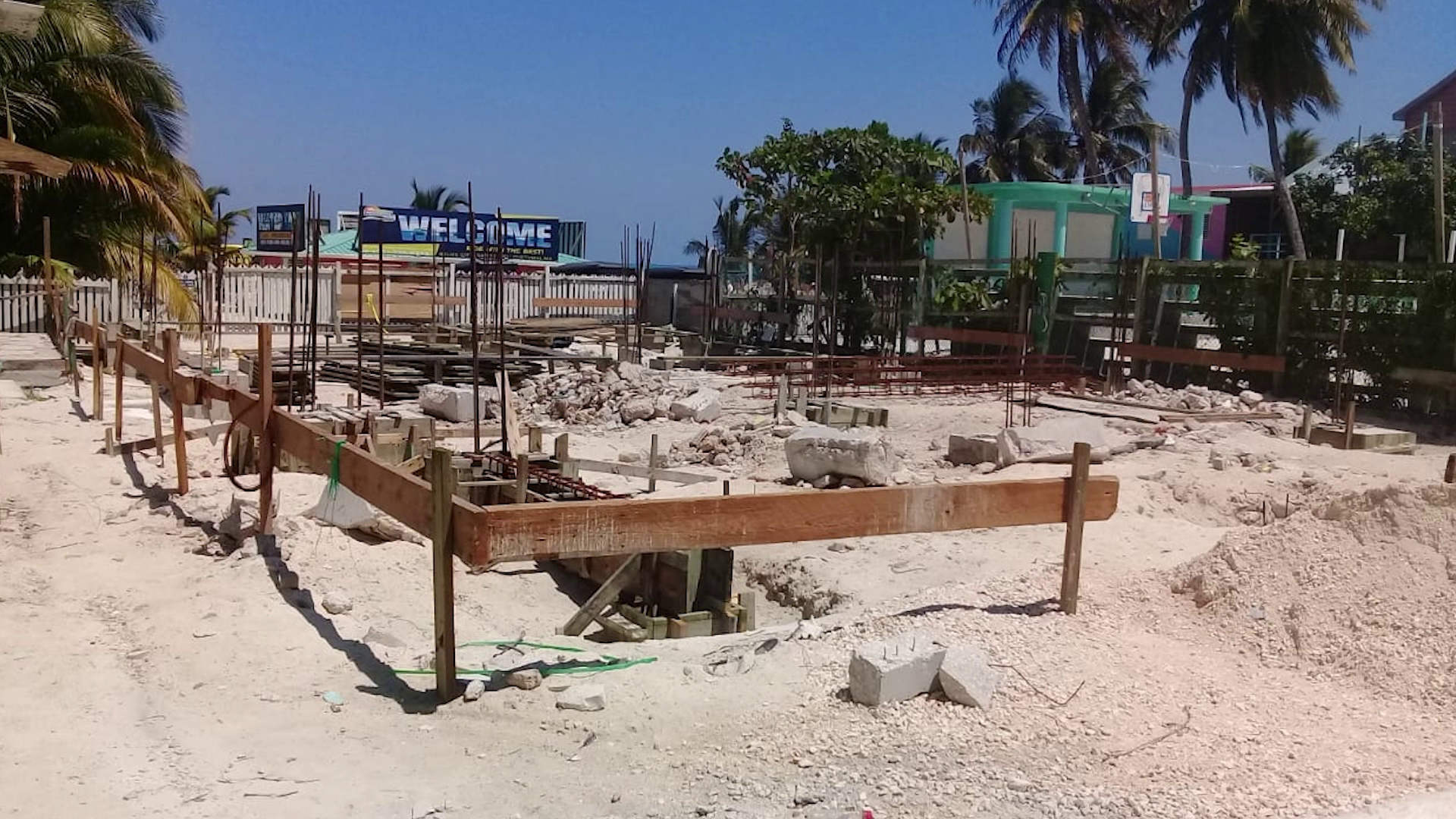
    A long-running public dispute over the planned new police station on the Belizean island of Caye Caulker has entered a new phase, this time centered on accusations of poor communication between local elected leaders and national representatives. As of May 7, 2026, the Caye Caulker Village Council has publicly claimed that it has received no updates on stalled construction timelines for the controversial facility, leaving local governing bodies completely in the dark about the project’s status. However, Andre Perez, the area representative for Belize Rural South, is pushing back hard against those claims, arguing that all delays stem from logistical bottlenecks rather than intentional lack of outreach.

    In detailed comments responding to the council’s concerns, Perez explained that the construction halt was never a secret to local leadership. He confirmed that the project’s contractor was temporarily pulled away to complete work on a parallel police station build in the inland community of Bella Vista, and coordinating the shift of workers, heavy machinery, and construction supplies to the remote island location required significant lead time. Crucially, Perez announced that mobilization for the Caye Caulker project officially kicked off on the morning of May 7, with construction crews already on site to resume work. He dismissed the council’s complaints as overblown, emphasizing that both the council and the broader community were kept informed of the delay at every step.

    The dispute also extends to a second core demand from the village council: a formal transfer of ownership for the project’s land parcel to the local governing body. Perez has confirmed that this request cannot be accommodated under the current terms of the project’s funding. The entire build is financed through a loan agreement with the Central American Bank for Economic Integration (CABEI), which requires that all infrastructure built under the program remain under the formal ownership of a Government of Belize ministry or department – in this case, the Belize Police Department. Perez noted that without adhering to this requirement, the CABEI funding would never have been approved, and the project would never have moved forward. He emphasized that the facility will permanently serve the Caye Caulker community as a police station regardless of formal ownership, and that construction is set to ramp up in earnest over the coming days. Outlets will continue to provide updates as the project progresses.

  • A Human Touch Keeps Belize City’s E-Bus Riders Coming Back

    A Human Touch Keeps Belize City’s E-Bus Riders Coming Back

    As cities across the globe race to adopt fully automated, cashless public transit systems, Belize City’s growing electric bus network is proving that some core elements of public service cannot be replicated by technology. At the heart of this contrast is Bernalita Lewis, a conductor whose consistent warmth and dedication have turned ordinary daily commutes into welcoming experiences for riders of all ages and backgrounds.

    For thousands of Belize City residents who rely on the e-bus system for work, school, and daily errands, Lewis’s smile has become a beloved fixture of their trips. Whether she is greeting schoolchildren as they climb aboard, assisting workers navigating rush-hour crowds, or helping elderly passengers settle into their seats, her role extends far beyond the basic responsibilities printed on a job description. Beyond collecting fares—both in cash and through the city’s new contactless payment system—Lewis maintains order on crowded routes, helps riders with disabilities board safely, answers questions about route schedules, and introduces new users to the e-bus’s modern amenities, from free on-board WiFi to USB charging ports.

    Erin Garnett, Director of Communications for the Belize City Council, explained that Lewis’s contributions have not gone unnoticed by riders or city leadership. “Most of the public comments we get about the service highlight how pleasant she is,” Garnett said. “A welcoming smile and respectful treatment make a huge difference in public transit. That is something technology just cannot replicate.”

    Lewis’s six-year tenure with the city began in the municipal enforcement unit before she moved to her current role with the e-transit department, giving her unique experience in keeping routes running smoothly while prioritizing rider comfort. Just months ago, the single mother reached a major personal milestone: in September 2025, she received the keys to a newly built home of her own, leaving behind a leaking rental property that offered little protection during hurricane season.

    “It means a lot, especially for my kids,” Lewis said of her new home. “The old place wasn’t really a home—you’d sit inside and watch rain pour through the roof. Now I can sit and enjoy the sound of rain on my roof. It feels good, it’s exciting.”

    This week, the Belize City Council formally recognized Lewis’s quiet, consistent contributions to the e-bus system, shining a spotlight on a role that many commuters might take for granted. While city officials have long-term plans to transition the e-bus system to a fully digital, fully automated fare system, Garnett emphasized that the shift will be a gradual, multi-year process. For many local residents, particularly older Belizeans, cash remains the preferred payment method, and many still feel more comfortable interacting with a person than a machine when navigating new services.

    In an era where more and more transit systems are phasing out conductor roles entirely, Belize City’s approach offers a middle ground: blending new electric bus technology with the irreplaceable value of human connection. Commuters echo this sentiment, noting that in a world increasingly dominated by automation and digital screens, small acts of kindness—a friendly greeting, a helping hand, a patient answer to a question—are the details that make public transit feel like a community service, not just a trip from point A to point B. Zenida Lanza reported this story for News Five.

  • From Wage Bands to Percentages: What It Means for Your Paycheck

    From Wage Bands to Percentages: What It Means for Your Paycheck

    As part of a decades-long push to modernize Belize’s public social safety net, the Social Security Board (SSB) is weighing a sweeping structural reform that would replace the country’s outdated fixed wage band contribution model with a progressive percentage-based system, following six weeks of nationwide public consultations that gathered input from more than 1,000 stakeholders. The proposed overhaul, which will not take effect until at least 2027 even if finalized, marks one of the most significant changes to Belize’s social security program in a quarter century.

    Currently, Belize is one of just four nations globally that still relies on a rigid 13-tier fixed wage band system, where workers are sorted into contribution categories based on their weekly earnings. This outdated framework creates redundant administrative work, extra paperwork for both private businesses and the SSB itself, and creates unnecessary complexity for payroll management across the country’s labor market.

    Under the initial draft of the reform, the SSB proposed moving to a single flat percentage contribution model aligned with the CARICOM regional standard, which would split contributions at 5.41% from employers and 4.59% from employees. The proposal also includes a long-overdue update to the minimum contribution floor, raising the baseline from $55 BZD — a figure that has not been adjusted since 2001 — to a proposed $130 BZD. SSB CEO Jerome Palma noted that the $130 baseline was identified as a “sweet spot” during consultations, and clarified that part-time workers, who rarely meet the 40-hour weekly work threshold that would hit the $130 earnings mark, would still be eligible for adjusted contribution terms under existing legislation.

    But feedback from the consultation process revealed a key concern from low-income workers: a single flat rate would actually increase contribution deductions for workers earning near the bottom of the income scale. For example, a worker earning $160 BZD per week currently pays an effective contribution rate of roughly 2.46% under the existing wage band system; under the original flat rate proposal, that worker’s total deduction would rise significantly.

    In response to that widespread feedback, the SSB now plans to revise the proposal to incorporate a multi-tier progressive structure, with three income brackets that maintain higher employer contribution rates for lower-income earners, aligning with public expectations for a progressive system that does not place undue burden on low-wage workers. Palma explained that the overwhelming consensus from consultations called for retaining tiered protection for lower-income workers, a revision the board will integrate into the updated draft.

    Overall, roughly 60% of consultation participants supported the core shift to a percentage-based system, backing the reform with only minor structural adjustments. After revising the draft proposal to incorporate public feedback, the SSB will hold a second round of public consultations later in 2026 to gather additional input before finalizing the plan. Officials have confirmed that no changes to payroll deductions will take effect in 2026, so Belizean workers and employers will not see any adjustments to their Social Security contributions this year regardless of the board’s final decision.

  • SSB Invests Record $130 Million in 2026

    SSB Invests Record $130 Million in 2026

    As Belizean workers continue contributing to the national Social Security system to secure their post-retirement benefits, the board managing the public fund has lifted the curtain on where those contributions are being allocated – revealing a landmark pace of investment activity for 2026 that officials say is designed to safeguard long-term pension payouts.

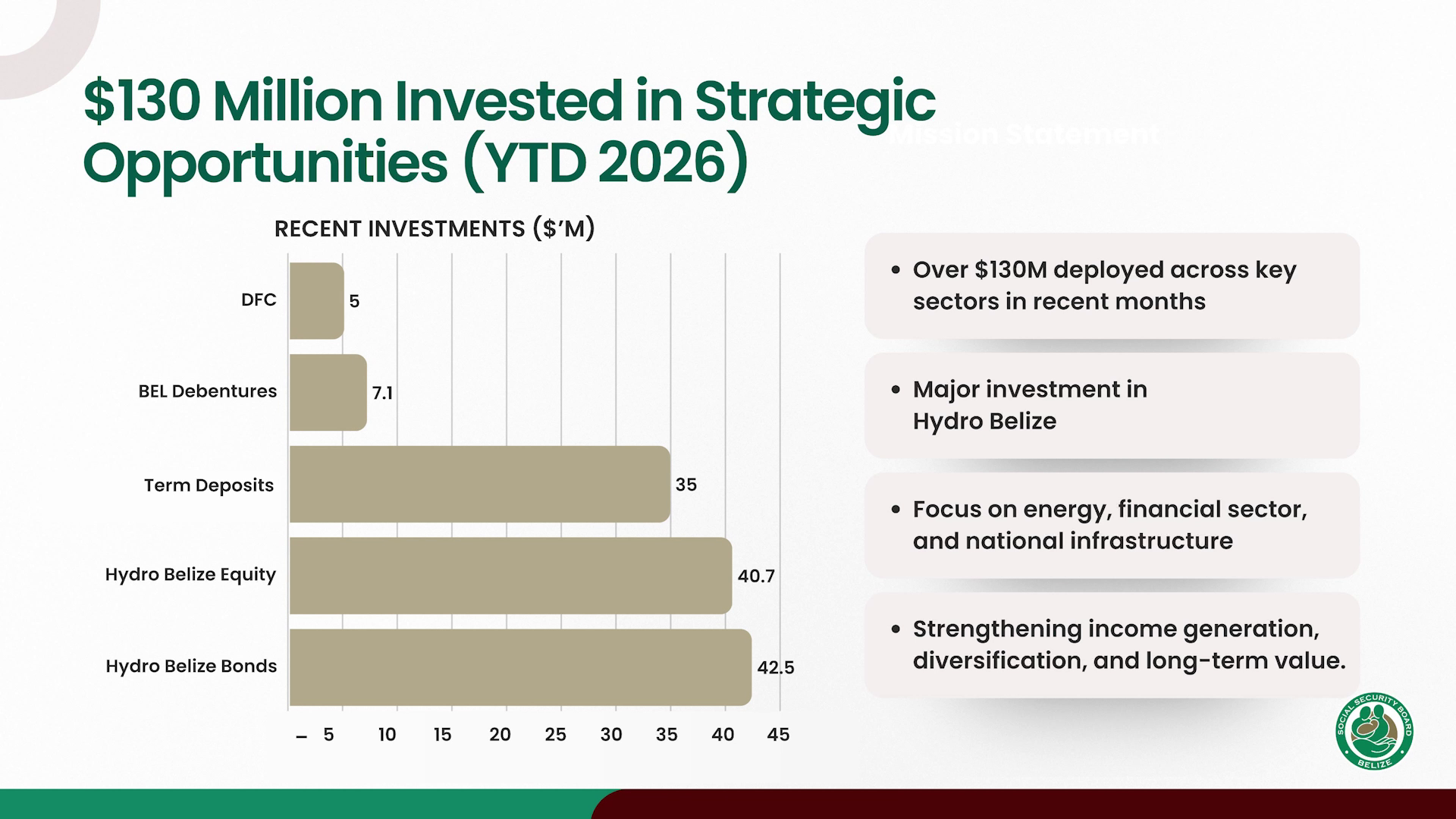
    Between January 1 and April 30 of 2026 alone, the Social Security Board (SSB) has deployed $130 million in new investments across domestic assets, marking an all-time high for any full year of SSB activity, let alone a four-month window. Leo Vasquez, SSB’s General Manager of Finance and Investment, laid out the details of the aggressive investment push, highlighting two Hydro Belize-linked assets as the largest contributors to the year’s unprecedented spending.

    Of the total new investment, $1.4 million has gone toward purchasing equity in Hydro Belize, the independent energy producer that was previously known as Fortis. This stake gives SSB a 30% holding in the firm and two seats on Hydro Belize’s board of directors. Unlike the utility provider BEL, which distributes power across the country, Hydro Belize handles the generation side of the market, supplying 100% of its output to BEL for distribution. SSB projects that the equity stake will generate roughly $4 million in annual dividend payments, and the board plans to hold this asset for far longer than the 20-year term of the second Hydro Belize investment.

    The second, larger Hydro Belize holding is a $42.5 million bond issue carrying a 6% annual return. This bond will mature in 20 years, at which point SSB will recoup the full principal investment. In addition to the Hydro Belize positions, the SSB’s new investments span a range of asset classes, from business loans to domestic commercial ventures and large-scale real estate developments.

    To date, the SSB’s total domestic investment portfolio stands at $654 million. Looking ahead, agency officials have confirmed that they are exploring opportunities to expand the fund’s reach into international markets, a move that would diversify SSB’s holdings and potentially open up new sources of returns to support future benefit obligations.

    This investment push comes as public retirement systems across small developing economies work to grow their asset bases fast enough to keep pace with rising pension demands as populations age. By accelerating investment activity now, SSB leaders say they are positioning the fund to maintain steady pension and benefit payouts to retirees for decades to come.

  • New Drive to Level Parenting Support Across Belize

    New Drive to Level Parenting Support Across Belize

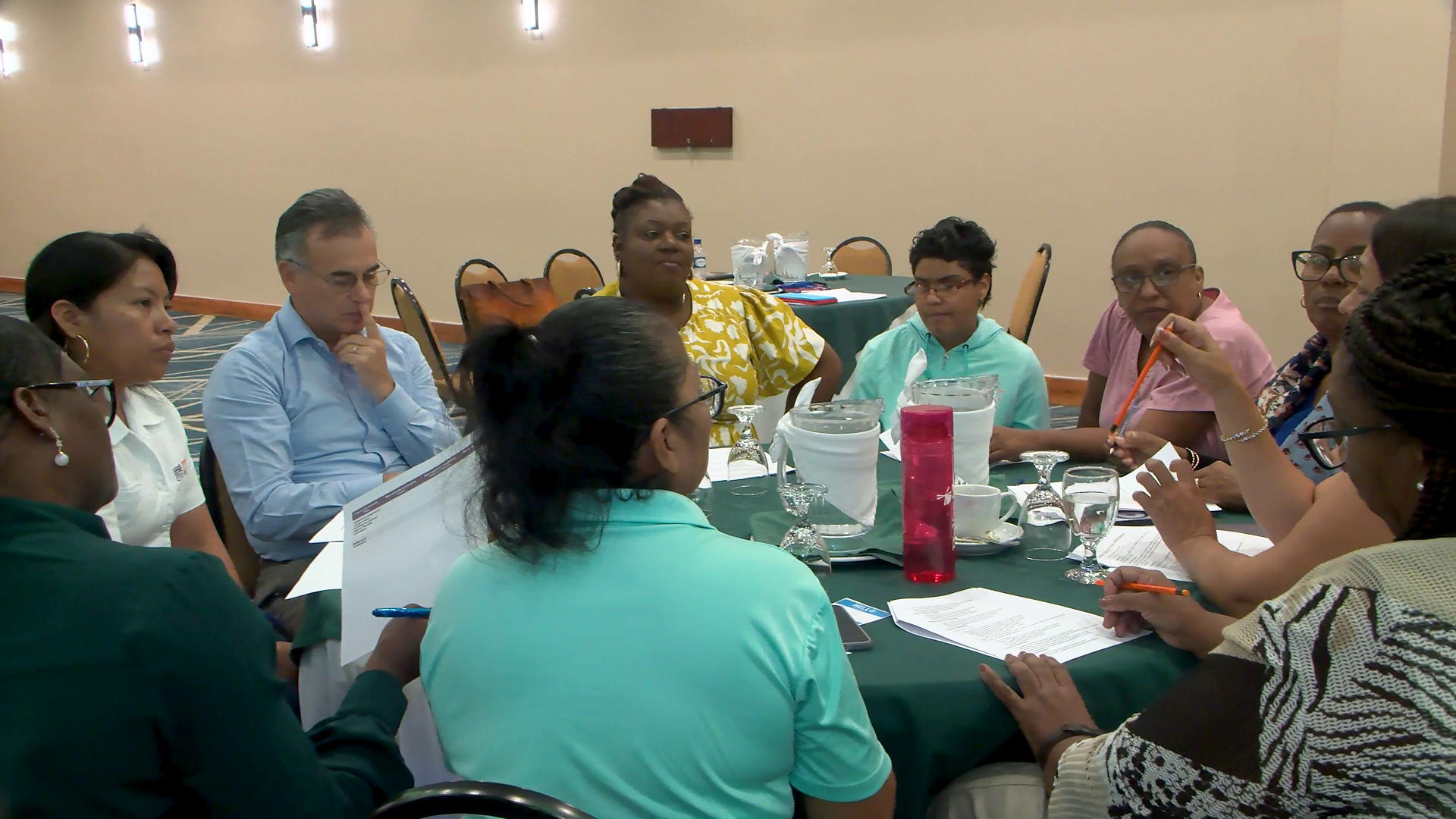
    In a landmark step toward strengthening child and family welfare across the nation, Belize has launched a new coordinated effort to standardize and localize parenting support resources, bringing together government bodies, child welfare advocates, and UNICEF for a foundational policy workshop on May 7, 2026.

    Ditching the outdated top-down policy development model that has left support fragmented for years, stakeholders gathered for the Parenting Guide and Policy Validation Workshop to co-design a unified national parenting framework tailored to the specific cultural and social context of Belize. The initiative addresses a longstanding gap: for years, organizations offering parenting education across the country have relied on inconsistent, externally sourced materials—some pulling guidance from Caribbean neighbors like Jamaica, others adopting resources from the U.S. or Europe, none aligned to Belize’s unique community needs.

    Diana Pook, Human Development Coordinator at Belize’s Department of Human Services, explained that the new framework grows directly from nationwide community consultations that revealed the scope of the inconsistency. “After a consultation, what we noted was that different organizations use different information to do their parenting workshops for parents throughout the country of Belize,” Pook said. “So what we did based on what we found at the consultations, we looked at what Belize has and what is culturally appropriate for Belize and putting it both in the policy and looking at the guide as well.”

    Shakira Sutherland, director of the National Commission for Families and Children (NCFC), emphasized that the collaborative, consultative process is designed to unify the work of the dozens of independent entities offering parenting support across Belize. Many of these groups have operated in isolation for years, unaware of the National Parenting Committee and lacking aligned guidance to serve families consistently. “It’s important for us to all be on the same page in terms of parenting, especially with our Belizean children,” Sutherland noted. The new national policy will serve as an overarching, up-to-date reference that reflects modern challenges facing Belizean families today.

    UNICEF Belize, which has partnered with the Belizean government and local agencies on the initiative, says that investment in evidence-based parenting support delivers widespread, long-term public benefits. Michelle Segura McGann, Child Protection Officer at UNICEF Belize, noted that global health and development bodies including UNICEF, the World Health Organization, and the Pan American Health Organization have all identified evidence-based parenting programs as key drivers to advance global sustainable development goals. These programs reduce violence against children, improve health and nutrition outcomes, and support holistic child development.

    “Parenting is a health issue, an education issue, a social protection issue,” McGann explained, adding that the new framework ties together a range of ongoing national programs focused on child development, from roving caregiver initiatives to nutrition schemes, education access efforts, and campaigns to end violence against children.

    The core goal of the national push is to eliminate geographic disparities in access to quality parenting support. Moving forward, organizers say, no matter where a family lives—whether in the northern district of Corozal, the urban center of Belize City, or the southern town of Punta Gorda—they will be able to access the same consistent, culturally appropriate level of support to build healthy, strong homes for children. The report was filed by News Five’s Shane Williams from the workshop.

  • Viral Child Abuse Video Forces Belize to Rethink Discipline

    Viral Child Abuse Video Forces Belize to Rethink Discipline

    In what has become a defining moment for child welfare reform in Belize, a widely shared viral video depicting alleged abuse by a serving police officer against his stepchild has forced the small Central American nation to confront long-simmering gaps in its approach to child discipline and protection. The footage, which features officer Philip Garbutt, has split public opinion sharply across the country: while thousands have voiced outrage over what they label clear child abuse, a significant portion of the public has defended the actions as a traditional form of strict parental discipline, laying bare a deep cultural divide on the boundaries of punishment for children.

    Child protection advocates emphasize that the incident is far more than an isolated case of parental violence. Instead, they argue, it lays bare a systemic failing: Belize’s child protection framework has long operated on a reactive model, only intervening after harm has already occurred to vulnerable children, rather than putting proactive measures in place to stop abuse before it starts.

    UNICEF’s Belize office has now called for an urgent national shift, moving beyond public anger toward tangible policy and systemic change that prioritizes prevention of violence against children. Michelle Segura McGann, Child Protection Officer for UNICEF Belize, outlined the organization’s path forward for the country.

    “Our role is to support the government of Belize in strengthening child safeguarding,” Segura McGann explained. “Currently, we are working to build out a coordinated national child protection mechanism, led by the Ministry of Human Development, Family Support and Gender Affairs and the High Court. This new framework will bring all relevant stakeholders together to address child violence through an evidence-based approach.”

    Segura McGann stressed that the current system is structured to respond to abuse after it happens, when the damage to children is already done. “We need to shift from a reactive model to a proactive one that centers prevention,” she said. This call is backed by data: a 2023 national evaluation of Belize’s child protection system found clear evidence that widespread preventative infrastructure is urgently needed to reduce rates of child violence across the country.

    This report is a transcript of a televised evening newscast, with Kriol language content transcribed using a standardized spelling system.

  • Social Workers Examine Lasting Effects of Colonialism

    Social Workers Examine Lasting Effects of Colonialism

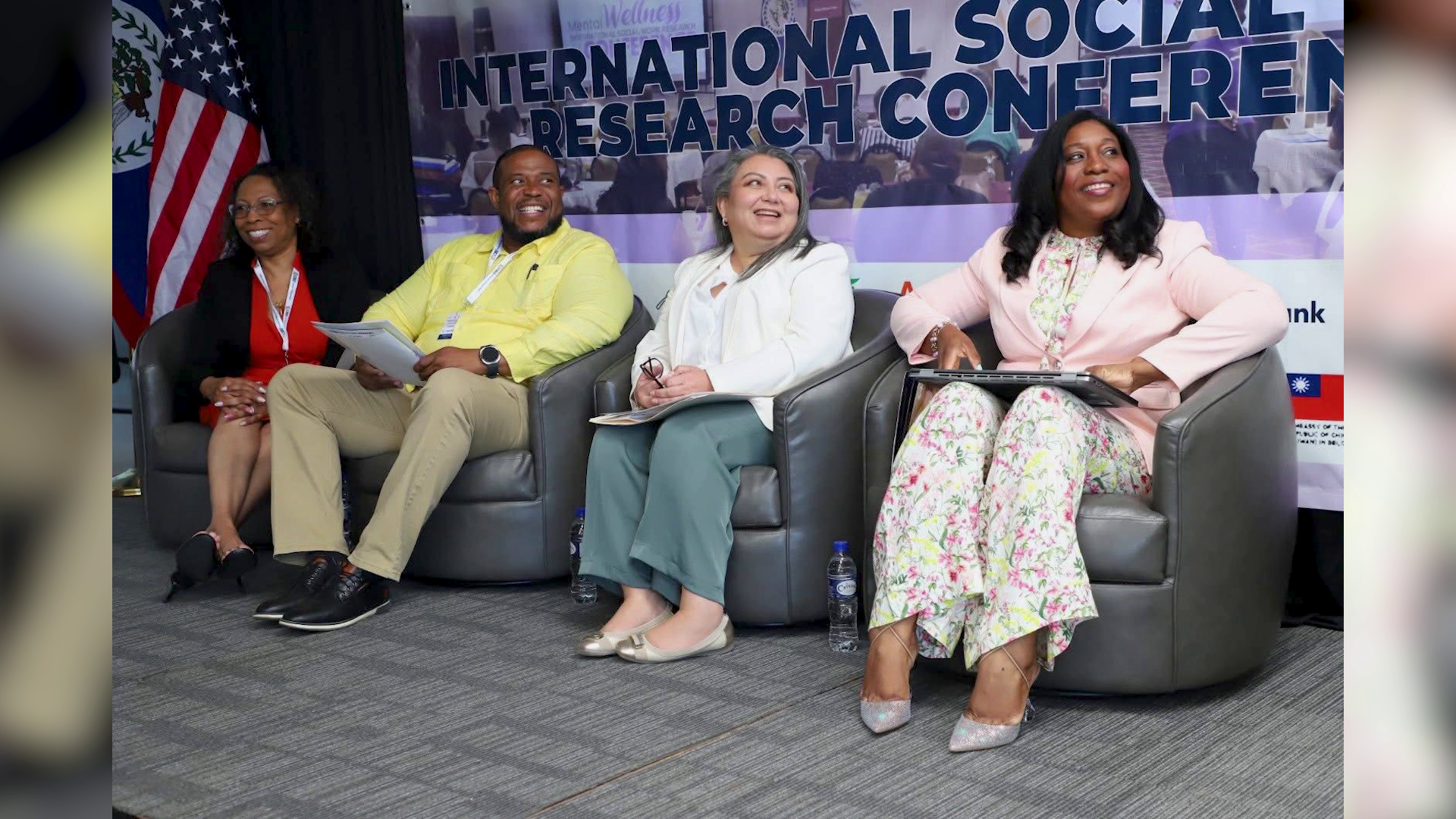
    Opening this week at the University of Belize’s Faculty of Health Sciences, the 2026 International Social Work Research Conference has drawn global attention to the intergenerational scars of colonialism that continue to shape mental health and social outcomes across Caribbean communities. Co-hosted by three academic institutions — the University of Belize, Galen University, and California Baptist University — the five-day gathering convenes a diverse cross-section of stakeholders: practicing social workers, academic researchers, graduate and undergraduate students, and grassroots mental health advocates, all united by a shared goal of unpacking historical harm and advancing inclusive healing practices.

    Central to conference discussions is the urgent question of how unaddressed colonial exploitation, displacement, and cultural erasure have created cycles of generational trauma that persist in Belize and the broader Caribbean region decades, even centuries, after formal colonial rule ended. Attendees are not only documenting the widespread impact of this trauma on community well-being, but also collaborating to design culturally responsive care models that center indigenous and local knowledge systems, rather than relying on one-size-fits-all frameworks imported from high-income Western nations. Organizers and participants alike share a core vision: to leverage evidence-based research and community-centered social work to build more equitable, healthy, and self-determined societies across the region.

    Despite this momentum, attendees acknowledge a major systemic barrier remains: many national and regional development stakeholders still frame mental health as a secondary, low-priority issue, rather than a foundational pillar of sustainable national growth for Belize. Conference organizers hope that the collective findings and conversations from the event will help shift public and policy discourse, making the case that addressing historical trauma and expanding access to mental health care is critical to unlocking long-term social and economic progress for Belize’s communities.

  • A Rare Break for Belize City’s Overworked Nurses

    A Rare Break for Belize City’s Overworked Nurses

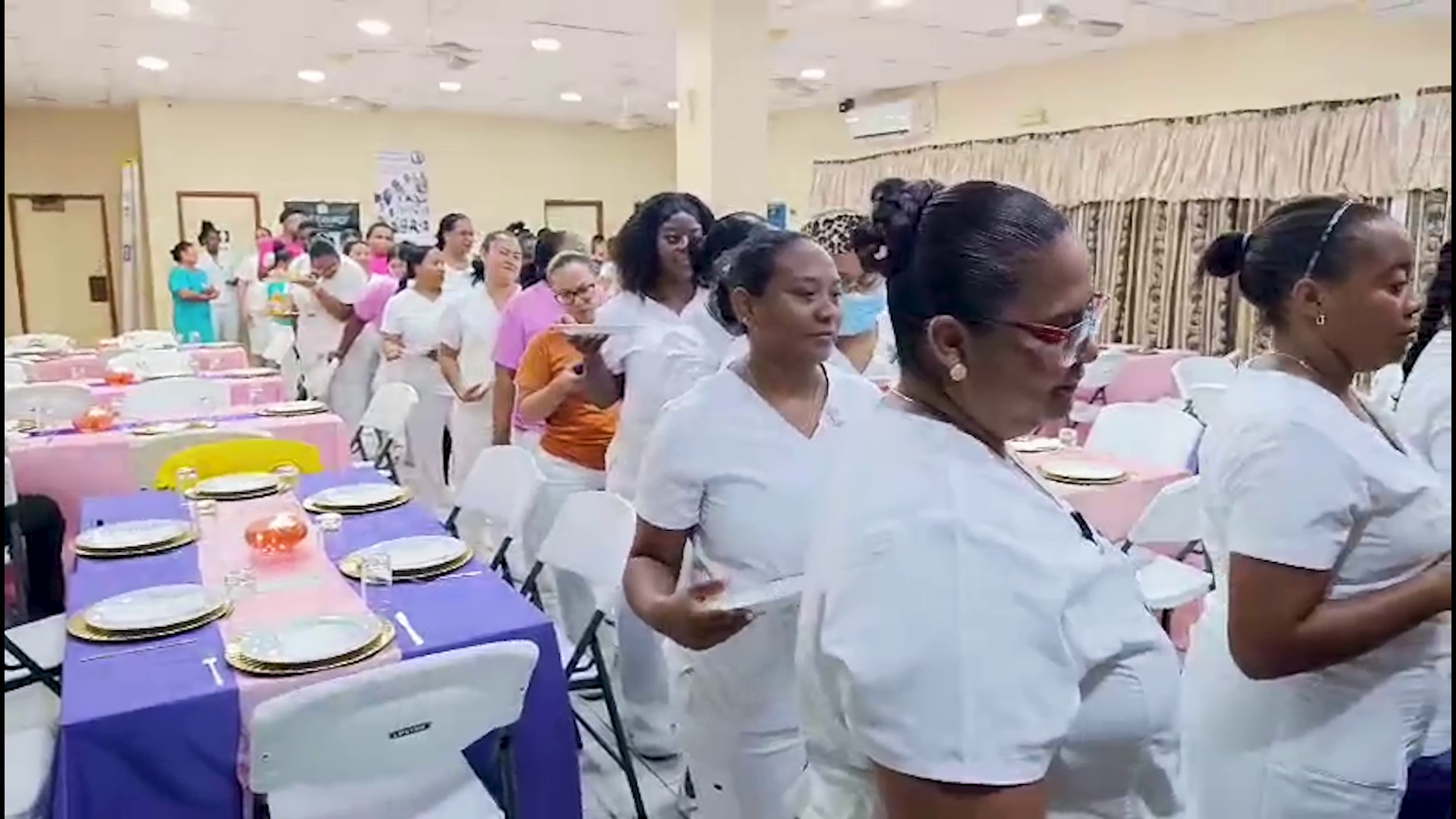
    Nurses form the invisible backbone of global healthcare systems, working grueling, high-stakes shifts to prioritize patient care above their own basic needs. For countless nursing professionals across Belize, long stretches of nonstop clinical work often mean skipping meals, ignoring burnout symptoms, and setting aside personal wellness to keep wards running smoothly. In a rare, intentional gesture of recognition, Belize’s Fort George Hotel and Spa stepped forward on May 7, 2026, to host a free appreciation breakfast for clinical staff at Karl Heusner Memorial Hospital, offering overworked nurses a precious moment to step away from workplace pressure and recharge.

    Far more than a free meal, the event created a space that nurses almost never access during a standard workday: unhurried time to connect with colleagues, breathe, and feel seen for their relentless contributions. Shauna Arnold, Marketing Executive at Fort George Hotel and Spa, opened the gathering by centering the 2026 event theme: “Our Nurses, Our Future, Empowered Nurses Save Lives.” Arnold emphasized that this phrase is far more than a superficial slogan—it is a core truth that underscores the foundational role nurses play in every healthcare system.

    Addressing the attending nurses directly, Arnold highlighted the irreplaceable work they carry out daily: “You are the constant in moments of uncertainty. You are the steady hands in times of crisis, the compassionate voices that bring comfort, and the skilled professionals who ensure that care is not only delivered, but delivered with dignity.” Every shift, every patient interaction, and every critical call nurses make shapes patient outcomes, restores shattered hope, and saves countless lives on a daily basis, she added.
    Arnold went on to stress that nurse empowerment is not an optional add-on to healthcare policy—it is an absolute necessity. True empowerment for nursing professionals means consistent access to up-to-date training, adequate clinical tools, institutional trust, and ongoing support that allows them to act decisively and confidently in high-pressure scenarios. When nurses feel empowered and supported, Arnold argued, entire healthcare systems grow stronger, patient health outcomes improve, and whole communities reap the benefits. “Simply put, when you are supported, all of us benefit,” she told the gathered crowd.

    The event comes amid a growing global and local movement to address crippling nurse burnout, a widespread crisis that has pushed healthcare leaders and community organizations to prioritize nurse wellbeing as much as the care they deliver to patients. For too long, industry norms have expected nurses to sacrifice their own health to serve others, but shifting attitudes are now highlighting that supporting nurses’ personal needs is a critical step toward sustaining a functional, compassionate healthcare system. This small community gesture in Belize City offers one model for how local organizations can step in to recognize and uplift the nursing professionals that keep communities healthy.