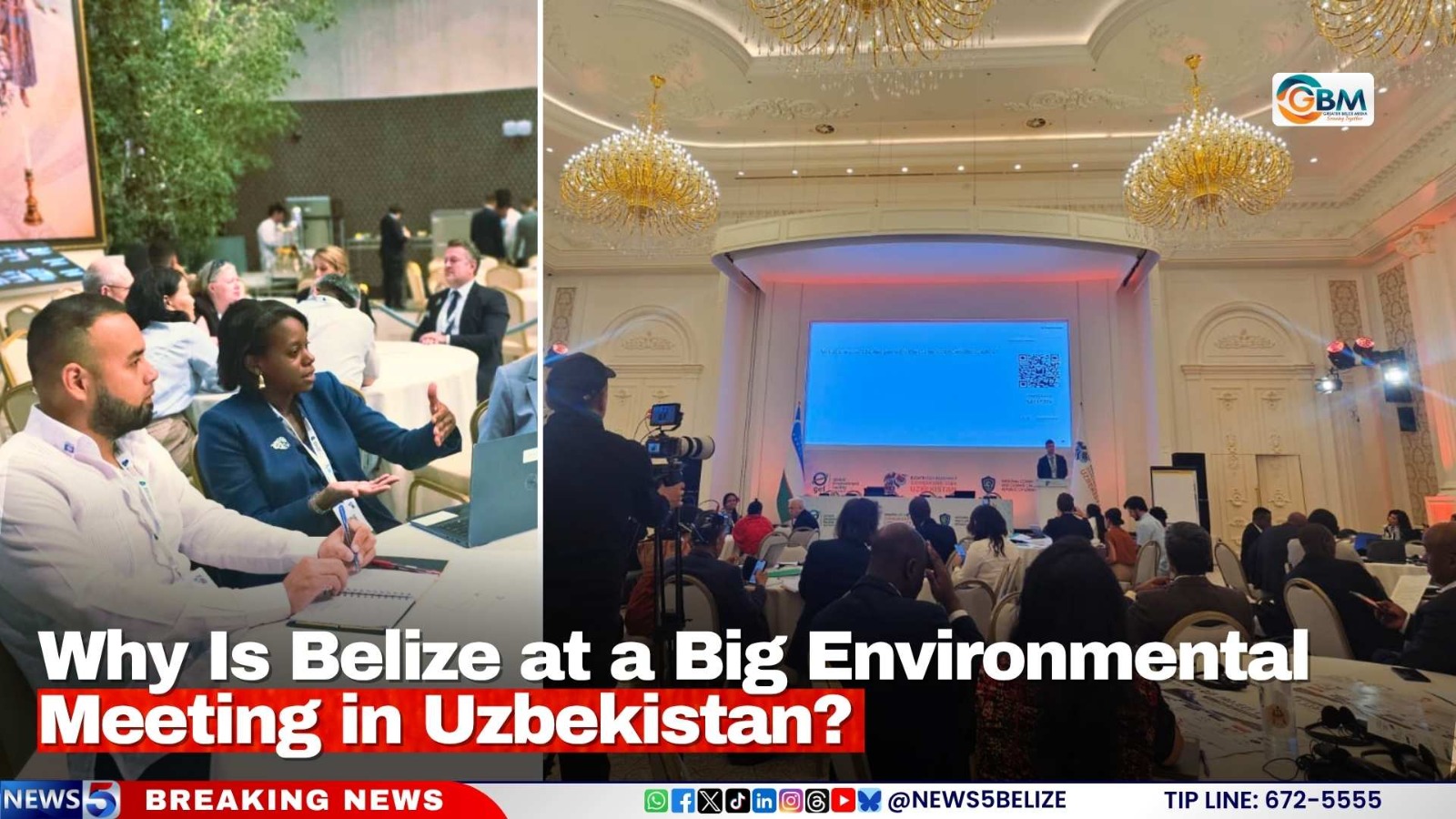
On June 5, 2026, two senior Belizean government officials traveled halfway across the globe to Uzbekistan to participate in one of the world’s most influential high-stakes environmental gatherings, a decision that carries far-reaching implications for the Central American nation’s key economic sectors from southern agricultural regions to coastal fishing communities on the Cayes.
The delegation, led by Judene Tingling-Linares from Belize’s Ministry of Sustainable Development and Leroy Martinez, director of the country’s Climate Finance Unit, is in attendance for the 8th Assembly of the Global Environment Facility (GEF) — a quadrennial summit for the world’s largest multilateral environmental funding body. The gathering brings together cabinet ministers, climate policy leaders, and conservation advocates from every region of the world to set the trajectory for global environmental action for the coming four years.
For context, the GEF functions as a collective global financing pool, designed to support low- and middle-income countries address pressing transboundary environmental challenges that no single nation can resolve alone, from curbing the worst impacts of climate change to safeguarding threatened forest ecosystems and marine biodiversity. Belize has maintained a long-standing partnership with the organization, drawing GEF support for more than three decades to advance a wide range of local environmental initiatives, spanning from professional management of protected natural areas to community-led conservation programs rooted in local livelihoods.
Government data from Belize confirms that past GEF-funded projects have delivered tangible benefits across the country: they have injected critical resources into rural community development, laid the groundwork for sustainable income streams that do not rely on exploiting natural resources, and boosted national efforts to protect vulnerable ecosystems including old-growth forests, the Belize Barrier Reef, and critical watershed systems that supply clean water to communities across the nation.
During the summit in Uzbekistan, the Belizean delegation is not only participating in high-level plenary discussions but also engaging in technical negotiations focused on the GEF’s upcoming four-year funding cycle, labeled GEF-9. This cycle will determine the total amount of global financing available and set the institutional priorities that will guide funding allocation for the next four years, making early positioning a critical strategic step for Belize to secure the resources it needs.
Beyond advancing its own national priorities, Belize is aligning with a broader coalition of Small Island and Coastal Developing States (SIDS) to push for more equitable funding distribution. The coalition emphasizes that nations like Belize face disproportionate climate and environmental vulnerability despite contributing very little to global carbon emissions, and they must not be sidelined or overlooked when global environmental financing is allocated.