标签: Belize

伯利兹

  • No Campus, No Classrooms for Caye Caulker High School

    No Campus, No Classrooms for Caye Caulker High School

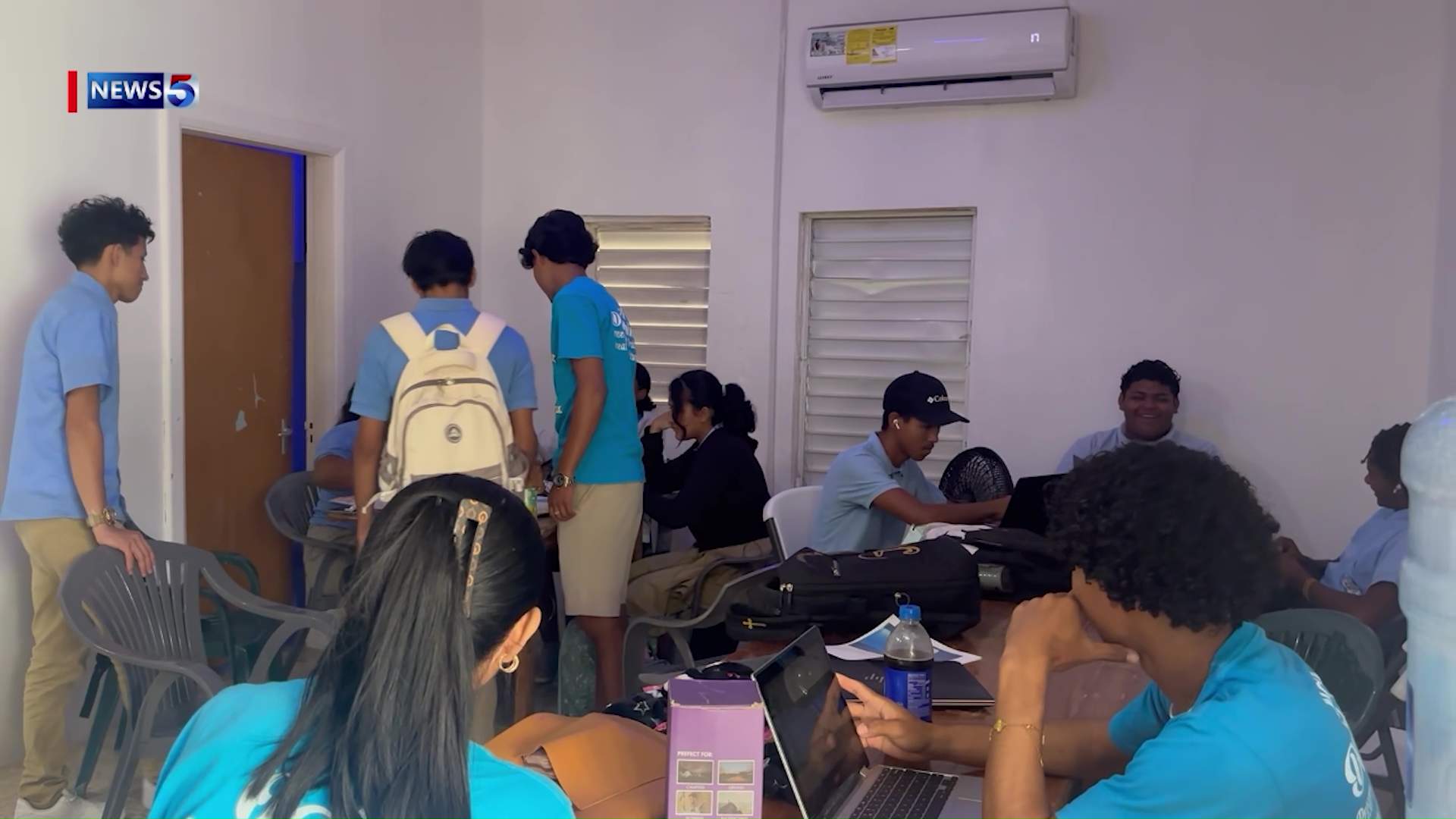
    The Ocean Academy, Caye Caulker’s sole high school, has commenced its new academic term under extraordinary circumstances—entirely without access to its primary campus. For over three weeks, students have been attending classes in borrowed and repurposed spaces including community centers, as their original school facilities remain shuttered due to severe flooding, mold infestation, and critical safety hazards.

    Principal Noemi Zaiden describes the profound operational challenges, noting that limited access to even these temporary spaces disrupts elective courses and general instruction. “It’s starting to wear on just even the resilience of the teachers and the students,” Zaiden stated, highlighting the strain after weeks of displaced learning.

    The situation has escalated into a pressing public issue, with parents, educators, and students collectively urging governmental intervention. In response, Education Minister Francis Fonseca announced the Ministry is exploring immediate remedies, including providing access to ministry-owned land for temporary structures.

    Minister Fonseca clarified the government’s complex position, emphasizing that as a private institution, Ocean Academy does not fall under direct governmental obligation. However, acknowledging the community’s needs, he committed to collaborative efforts with local representatives and educational stakeholders. Fonseca also revealed a long-term solution: a multi-million dollar project earmarked for Caye Caulker that promises new, modern primary and high school facilities designed to serve future generations.

  • Belize Sees Sharp Spike in Severe Flu Cases

    Belize Sees Sharp Spike in Severe Flu Cases

    Health authorities in Belize are confronting a significant public health challenge as the nation experiences a dramatic 50% increase in severe influenza-related hospitalizations compared to the previous year. This surge is placing unprecedented strain on the country’s healthcare infrastructure, with public hospitals and clinics reporting heightened pressure during the current flu season.

    Contrary to international concerns about the Influenza A(H3N2) variant, laboratory testing conducted within Belize has identified Influenza A(H1N1) as the predominant strain responsible for the current outbreak. Respiratory Syncytial Virus (RSV) infections have also shown increased activity, contributing to the overall rise in severe respiratory cases.

    Dr. Laura Friesen, Deputy Director of Public Health and Wellness, provided clarification regarding the viral strains present in the country. “We have not identified the H3N2 strain in Belize beyond two isolated cases detected approximately two months ago,” stated Dr. Friesen. “The current epidemiological pattern indicates H1N1 and RSV as the primary drivers of infection rates.”

    The seasonal pattern of respiratory illnesses typically shows increased transmission during November and December, but health officials note that the current severity exceeds normal annual variations. In response to the escalating situation, health authorities are emphasizing preventive measures including influenza vaccination for eligible populations.

    Dr. Friesen further recommended comprehensive health maintenance strategies: “Maintaining robust immune function through balanced nutrition rich in fruits and vegetables, regular physical activity, and adequate sleep represents a crucial defense against respiratory infections during this high-risk period.” The ministry continues to monitor the situation closely while urging public vigilance against further transmission.

  • ‘They Nearly Killed My Baby’: Mother Speaks Out, Alleges Police Inaction

    ‘They Nearly Killed My Baby’: Mother Speaks Out, Alleges Police Inaction

    A Belize City mother has come forward with grave allegations against local law enforcement following a violent neighborhood altercation that left her infant daughter injured. Amika Betran claims that both she and her one-year-old child were assaulted with a crowbar during a dispute on December 16, just two days before the child’s first birthday.

    According to Betran’s account, the incident occurred while she was walking near her residence with her child. What began as a verbal argument rapidly escalated when a male assailant allegedly struck her with a crowbar, with the weapon making contact with the infant’s head. The child sustained significant facial injuries including lacerations and bruising, requiring immediate medical attention at a local hospital.

    Betran filed an official police report on the day of the incident but alleges systematic inaction and procedural delays from authorities. Despite multiple follow-up visits to the police station, she claims investigators have shown minimal urgency in pursuing the case. In one particularly concerning instance, she was instructed to return to the station at midnight to speak with an officer—a time she notes is highly inconvenient for caring for an injured infant.

    The frustrated mother has raised questions about potential conflicts of interest within the police department, suggesting that a relative of the accused may be serving as an officer. Betran asserts that only one individual has been charged despite multiple participants being involved in the attack.

    Now considering legal action against the police department, Betran emphasizes the need for accountability within law enforcement. ‘When you have officers that don’t show pride and respect toward their jobs,’ she stated, ‘the whole department can be disgraced.’ The case has drawn attention to broader concerns about police responsiveness and procedural transparency in handling violent crimes within the community.

  • New Ozone Protection Rules to Affect Imports of Refrigerators and Air Conditioners

    New Ozone Protection Rules to Affect Imports of Refrigerators and Air Conditioners

    Belize has enacted comprehensive environmental legislation targeting the importation of refrigeration and air conditioning equipment as part of its enhanced commitment to ozone layer preservation and emission reduction. The Department of the Environment (DOE) confirmed that the Environmental Protection (Ozone Layer Protection) Regulations, 2025 will be implemented through a phased approach over the forthcoming quarter.

    The regulatory framework establishes stringent controls over refrigerants—climate-impacting gases utilized in cooling mechanisms—which pose significant environmental threats when improperly handled. Commercial importers now face mandatory registration with the DOE at a fee of $1,000, supplemented by per-shipment licensing requirements processed via the government’s digital permitting platform. The regulations maintain absolute prohibitions on specified obsolete refrigerants known for their ozone-depleting properties, commonly found in aging cooling systems.

    Residential importers receive modified provisions, permitting individuals to import up to two appliances annually for personal utilization through a streamlined exemption process. This simplified pathway, available for $25, exempts household consumers from comprehensive commercial licensing procedures.

    The three-month transitional phase will incorporate public awareness initiatives to facilitate regulatory compliance. Authorities urge both commercial stakeholders and private citizens to familiarize themselves with the updated protocols to prevent potential operational delays or compliance penalties.

  • BCCI Warns Against BTL-SMART Acquisition Without Competition Safeguards

    BCCI Warns Against BTL-SMART Acquisition Without Competition Safeguards

    The Belize Chamber of Commerce and Industry (BCCI) has issued a stark warning regarding the proposed acquisition of Speednet/SMART by state-owned Belize Telemedia Limited (BTL), asserting that the transaction could dramatically reconfigure the nation’s telecommunications landscape with profound implications for consumers, businesses, and national financial stability.

    While acknowledging potential efficiency gains and enhanced investment capacity through market consolidation, the BCCI emphasized that the absence of a robust legal framework and protective measures makes any current endorsement of the deal premature and potentially detrimental to national interests.

    The Chamber delineated four critical areas of concern. First, it highlighted significant transparency deficits, particularly regarding the limited disclosure of ownership structures and valuation methodologies, which obstruct public and stakeholder assessment of the deal’s fairness and underlying motivations. Second, reported connections between Speednet ownership and politically exposed individuals have created perceptions of conflict of interest, raising fundamental questions about whether the acquisition serves public welfare or private advantage.

    Third, the BCCI expressed apprehension about the financial exposure of the Social Security Board as a major shareholder, warning that inadequate oversight could jeopardize its capacity to fulfill benefit obligations to contributors. Finally, the Chamber cautioned that market consolidation without stringent safeguards could precipitate higher consumer prices, diminished service quality, reduced innovation, and weakened bargaining power for both individual consumers and corporate entities.

    The political dimension emerged when Prime Minister John Briceño, addressing the matter in December 2025, distanced himself from the negotiations, characterizing BTL as a private entity despite government ownership and emphasizing that any transaction would require comprehensive public justification.

    Earlier, in July 2025, business magnate Lord Michael Ashcroft provided context during a media appearance, revealing that the Waterloo Charitable Trust—which also controls Universal Health Services—holds majority ownership of Speednet. Ashcroft contended that monopoly concerns should be balanced against BTL’s predominantly government-owned status, suggesting profits ultimately benefit the state. He further argued that strategic consolidation might be necessary for Belize to compete effectively against emerging global competitors like Starlink, warning that failure to adapt could result in foreign dominance of the telecommunications market.

    The BCCI concluded that any consideration of the acquisition must be predicated on the prior establishment and implementation of comprehensive competition and merger control legislation, mirroring frameworks adopted in Jamaica and Trinidad and Tobago. Essential prerequisites include full verified disclosure of beneficial ownership, independent third-party valuation, transparent public consultation processes, binding commitments on pricing and service quality, and absolute protection of public pension funds. The Chamber urgently called upon the Government of Belize and all involved parties to suspend consolidation efforts until these fundamental safeguards are formally enacted.

  • Belize, Guatemala, and the ICJ: Preparing for All Possible Outcomes

    Belize, Guatemala, and the ICJ: Preparing for All Possible Outcomes

    As Belize approaches the pivotal 2026 International Court of Justice ruling on its longstanding territorial dispute with Guatemala, the nation finds itself at the intersection of historical sovereignty claims and evolving global power dynamics. The impending verdict represents a critical juncture for Belizean national identity, with potential outcomes ranging from definitive resolution to heightened regional tensions.

    The historical context of this dispute traces back to 19th century colonial agreements and subsequent interpretations. Guatemala has persistently asserted claims over Belizean territory based on treaties with Britain, while Belize has maintained its sovereignty through international law principles and self-determination rights. The mutual agreement to seek ICJ arbitration, ratified through national referenda, demonstrates both nations’ commitment to peaceful resolution despite decades of unsuccessful negotiations.

    Contemporary geopolitical considerations introduce additional complexity through the modern reinterpretation of the Monroe Doctrine under recent US administrations. Originally articulated in 1823 to deter European colonization in the Americas, this doctrine has experienced significant evolution. The Trump administration’s ‘America First’ approach reinvigorated its principles through explicit linkages to current foreign policy objectives, particularly regarding countering Chinese and Russian influence in the Western Hemisphere.

    This reformulated doctrine carries profound implications for small nations like Belize. While the United States has historically supported Belize’s sovereignty since its 1981 independence—consistently recognizing its borders and opposing Guatemalan claims—the transactional nature of contemporary US foreign policy introduces uncertainty. The strategic partnership developing between Guatemala and the US regarding immigration control and security cooperation potentially alters traditional diplomatic alignments.

    Belize’s unique position as one of few Western Hemisphere nations maintaining diplomatic relations with Taiwan rather than China further complicates its geopolitical positioning. This stance has traditionally aligned with US interests in limiting Chinese regional influence but becomes potentially negotiable within a transactional foreign policy framework.

    The convergence of these factors—the impending ICJ decision, reinterpreted Monroe Doctrine principles, and changing regional alliances—creates a multidimensional challenge for Belizean diplomacy. This situation demands sophisticated navigation of international relations while preserving national sovereignty interests.

    Strategic recommendations for Belize include maintaining diplomatic vigilance through strengthened alliances with CARICOM and United Nations partners, pursuing strategic independence through economic diversification and institutional strengthening, fostering domestic unity regarding territorial integrity, and fully engaging with the ICJ process while preparing for all possible outcomes.

    The broader lesson for small nations emphasizes that sovereignty requires continuous active defense rather than reliance on external guarantees. While historical partnerships remain valuable, ultimate responsibility for national destiny rests with domestic institutions and united citizenry.

  • The New Monroe Doctrine

    The New Monroe Doctrine

    The historical paradigm of global dominance has consistently favored powerful entities throughout civilization. From ancient tribal conflicts over territory and resources to modern ideological confrontations, the pursuit of control has remained humanity’s enduring constant. This pattern evolved significantly following World War II with the emergence of superpower rivalry between the United States and Soviet Union, transforming geopolitical competition from mere territorial expansion to ideological warfare through unconventional persuasion methods.

    The collapse of the USSR left America as the singular global superpower until China’s recent ascent, reestablishing the perpetual competition for supremacy. This dynamic creates exceptional challenges for smaller nations like Belize with limited resources, population, and global influence. Their strategic alignments have become critically consequential, where missteps in alliance selection can provoke severe repercussions.

    Venezuela’s situation exemplifies contemporary power struggles. Despite possessing the world’s largest oil reserves, the nation became an ideological battleground where China, Russia, Iran, and Cuba established significant economic, military, and governance influence. This penetration represented not benevolent cooperation but strategic resource acquisition and control expansion.

    The recent extraction of Maduro demonstrated remarkable operational effectiveness against sophisticated Russian, Chinese, and Iranian defense systems. This operation delivered multiple strategic advantages: it potentially reverses Chinese economic fortunes by controlling vital energy resources, undermines Cuba’s oil-dependent economy, and exposes limitations in rival capabilities. Russia’s engagement in Ukraine, Iran’s focus on Israel, and China’s hesitation regarding Taiwan further constrain their response options.

    This development significantly enhances hemispheric security by reducing oppressive influences and affirming democratic values. The operation serves as a potent reminder to Belize and similar nations about governance accountability and the perils of external manipulation. It underscores that global power dynamics ultimately favor decisive action and strategic capability, presenting smaller nations with clear choices between competing visions of international order.

  • Belize Post Resumed U.S. Shipments January 7

    Belize Post Resumed U.S. Shipments January 7

    The Belize Postal Service (BPS) has officially reinstated all outbound mail and parcel services to the United States effective January 7, 2026, concluding a five-month operational pause that commenced in August 2025. This suspension was a direct response to the United States Government’s implementation of Executive Order 14324, a regulatory shift that eliminated the traditional duty-free exemption for low-value international consignments. The mandate now subjects every parcel entering U.S. territory to applicable customs duties and taxes, irrespective of its declared value.

    In a strategic adaptation to these new trans-border trade regulations, the BPS has integrated the Universal Postal Union’s Delivered Duty Paid (DDP) Global Solution into its logistical framework. This advanced system necessitates the pre-calculation and pre-payment of all anticipated import levies at the point of shipment origin. This procedural modernization is designed to expedite customs processing within the United States, provide customers with absolute cost transparency at the time of posting, and significantly mitigate the risks of delivery delays or forced returns.

    The postal authority asserts that this transition will markedly enhance service reliability and forecasting for its clientele while guaranteeing unwavering adherence to U.S. federal mandates. A pivotal benefit of this change is the sustained and unimpeded access it provides for Belizean micro, small, and medium-sized enterprises (MSMEs) to their vital customer base in the American market, thereby safeguarding a crucial economic conduit.

    Dr. Marsha Price, the Postmaster General, characterized the adoption of the DDP protocol as a testament to the BPS’s dedication to providing secure and internationally compliant postal solutions. She emphasized that this strategic move not only fortifies Belize’s integration into the global e-commerce ecosystem but also future-proofs its export capabilities. Dr. Price extended gratitude to the public for their understanding throughout the service hiatus and operational restructuring.

    Consumers and businesses seeking to utilize the resumed service are encouraged to consult with any BPS branch or customer service representative for comprehensive guidance on the revised shipping procedures, including detailed breakdowns of applicable charges and necessary documentation. The BPS has reaffirmed its core mission of fostering safe, efficient, and regulation-compliant global connections for the nation of Belize.

  • U.S. Delivers Emergency Vehicles to Belize

    U.S. Delivers Emergency Vehicles to Belize

    The United States has delivered a significant boost to Belize’s emergency response infrastructure through a strategic military transport operation. A C-17 Globemaster III aircraft, operated by the U.S. Air Force from Joint Base Lewis-McChord, touched down in Belize this week carrying four specialized emergency response vehicles destined for Southern Emergency Services.

    This delivery represents a substantial enhancement to the nation’s disaster preparedness framework, providing equipment that will be deployed across communities to improve response capabilities for medical emergencies, natural disasters, and other critical incidents. The vehicles will enable more rapid and effective emergency interventions throughout the country.

    The transportation was coordinated under the Denton Humanitarian Assistance Program, a innovative U.S. initiative that maximizes military logistics efficiency by utilizing available cargo space on military aircraft to transport humanitarian supplies. This program operates without cost to donors, transforming otherwise unused capacity into vital assistance.

    According to the U.S. Embassy in Belize, this program regularly facilitates the delivery of essential humanitarian items including medical equipment, educational materials, and food supplies to communities in need. The initiative exemplifies how U.S. Southern Command (SOUTHCOM) strengthens regional partnerships through practical cooperation, contributing to enhanced security and prosperity for Belize and neighboring nations.

    This collaboration demonstrates the ongoing commitment to regional security cooperation and represents a tangible investment in Belize’s emergency response infrastructure that will benefit communities across the nation.

  • Business Chamber Condemns Killing of Delivery Driver

    Business Chamber Condemns Killing of Delivery Driver

    The Business Chamber of Spanish Lookout has issued a forceful condemnation of escalating criminal violence targeting delivery personnel across Belize. This decisive statement comes in direct response to Wednesday’s fatal shooting of Mark Gabourel, a Caribbean Chicken delivery driver, during an apparent robbery attempt.

    Characterizing the attacks as ‘senseless acts of violence,’ the Chamber emphasized the broader implications extending beyond individual tragedy. These criminal incidents pose a direct threat to commercial operations, public security, and national economic stability. ‘This tragic loss of life underscores the alarming escalation of violence confronting hardworking Belizeans,’ the Chamber’s official statement declared. ‘No citizen should fear for their life while performing legitimate employment.’

    The Chamber issued explicit demands for immediate governmental intervention, urging coordinated action between Belize’s law enforcement agencies and judicial system. Specific recommendations included enhanced police patrols, targeted enforcement operations, and stringent legal consequences for perpetrators of violent crimes. The objective remains restoring public confidence in security infrastructure while ensuring swift justice for affected families.

    Expressing solidarity with Gabourel’s family, colleagues, and nationwide delivery workers, the Chamber emphasized that ‘protecting lives and livelihoods must constitute a national priority.’ The incident occurred approximately at 4:30 p.m. on Mountain View Boulevard in Belmopan, where assailants on a motorcycle fired multiple shots at Gabourel’s vehicle as he exited a compound. Despite being accompanied by a 15-year-old assistant, the driver sustained fatal injuries after attackers attempted to forcibly access the truck. Gabourel was transported to Western Regional Hospital where he subsequently succumbed to his wounds.