标签: Belize

伯利兹

  • ‘Society Has Failed Persons With Disabilities’, But Belize Moves to Change That

    ‘Society Has Failed Persons With Disabilities’, But Belize Moves to Change That

    On September 4, 2026, Belize took a landmark step toward advancing disability rights with the official launch of the new National Commission for Persons with Disabilities, an initiative designed to turn the legal framework of the 2024 Disabilities Act into tangible, everyday change for disabled communities across the country.

    Hosted by the Ministry of Human Development, Family Support and Gender Affairs under the unifying theme “Together Towards Inclusion,” the launch event drew a diverse cross-section of stakeholders: disabled people themselves, senior government leaders, civil society organization representatives, and delegates from key national institutions. The establishment of the commission marks the start of a critical new implementation phase for the 2024 Disabilities Act, which laid the legal groundwork for disability rights but lacked a coordinated body to drive cross-sector action.

    The commission’s core mandate centers on pushing for equal rights and access for disabled people across five critical life domains: education, employment, healthcare, public space accessibility, and protection against systemic discrimination. Immediately following its official unveiling, the newly appointed commissioners convened their first working session to review the text of the 2024 Disabilities Act, formalize the body’s internal terms of reference, and open discussions on short and long-term strategic priorities. During the launch ceremony, all commissioners received their formal Instruments of Appointment, officially entrusting them with their responsibilities under the law.

    Minister of Human Development Thea Garcia-Ramirez framed the commission as one of the most significant milestones in Belize’s journey to uphold disability rights. She emphasized that while the 2024 Act established a clear legal framework for protecting disabled people’s rights, meaningful change can only come through coordinated, collective action across all sectors of Belizean society. Without dedicated implementation and coordination, she noted, legal protections remain abstract principles rather than lived realities for disabled Belizeans.

    Special Envoy for the Development of Families and Children Rossana Briceño, who opened the event with a powerful reminder that disability impacts not just individuals but entire families and the nation as a whole, called out the systemic failures that have long excluded disabled Belizean. “When persons with disabilities are excluded, the problem is not that they have failed to fit into society, the problem is that society has failed to remove the barriers that prevent them from participating fully,” Briceño said, challenging the common misconception that frames exclusion as a failure of disabled people rather than a failure of community and policy.

    For disabled advocates on the ground, the launch represents a long-awaited shift toward tangible inclusion. Alison Fisher, a young blind Belizean activist, shared her vision for the commission’s work: moving beyond formal legal recognition to build a country where inclusion is experienced, not just written into policy. “Yes, I am blind, but blindness is only one part of who I am,” Fisher said. “I hope that this commission will help create a Belize where every child and young person with disability can confidently say I belong, I have a voice, I have opportunities, and I can achieve.”

    Moving forward, the commission will serve as a central coordinating body for cross-government and cross-sector efforts to embed inclusion in all areas of Belizean public life, from primary schools and private workplaces to local communities and national public services.


  • PSU: ‘Hit Pause on Revenue Authority Bill’, GOB Responds

    PSU: ‘Hit Pause on Revenue Authority Bill’, GOB Responds

    A simmering policy dispute between Belize’s Public Service Union (PSU) and the national government has reached a new turning point, as the administration has turned aside nearly all of the union’s core demands tied to the controversial 2026 Revenue Authority Bill, making only limited concessions to address labor concerns. The conflict, which has unfolded over the past month, centers on the proposed restructuring of Belize’s tax administration system into an independent revenue authority, a change the government frames as a critical modernization effort, but one the PSU argues leaves current tax workers without adequate protections for their employment, retirement and labor rights.

    Last month, the PSU formally called on the government to hit a pause on the legislative progress of the bill, demanding 16 substantive amendments to the legislation and answers to 22 outstanding questions before any parliamentary movement. The union’s core sticking point was a demand for a legally binding guarantee that all transitioning tax officers would retain employment under terms no less favorable than their current public service positions. That request was among the majority of demands rejected by the government in its detailed, point-by-point response dated August 31, released publicly this week.

    Financial Secretary Joseph Waight, who authored the response, laid out the government’s vision for the new body: the Belize Revenue Authority will operate under a fully restructured organizational model, with updated job descriptions and an independent compensation framework designed to compete for top talent in the field. Unlike the existing public service system, Waight explained, current posts will not automatically transfer over to the new authority. Instead, all sitting tax officers will be required to participate in a new recruitment process, although the government has committed that current staff will receive first preference for open roles.

    Waight emphasized that the core goal of the transition is to build a more effective revenue body that can attract and hold skilled professional workers. To meet that goal, he argued, the authority’s compensation and benefits structure must be competitive and, on the whole, more attractive than the terms offered through the traditional public service system.

    Beyond the employment guarantee, the government also declined to meet the union’s demands for a mandated pension fund and fixed implementation timeline, noting that actuarial assessments required to structure the retirement system are still ongoing. The administration also rejected the push to formally write a collective bargaining mandate into the new legislation, pointing out that this right is already protected under existing national labor law, regardless of explicit inclusion in the bill.

    For tax officers who are not successful in securing a role at the new authority, the government has committed that they will not be left without employment. These workers will remain part of the public service, and will be placed in roles commensurate with their current positions — a wording the government has agreed to formally define in regulation, one of the few small compromises made to the union.

    Waight did concede on two key points to ease the PSU’s concerns. The government has agreed to add an explicit provision to the bill that protects the accrued pension rights of all current officers, a critical win for workers nearing retirement. Additionally, the administration will formally require that the Auditor General’s annual oversight report be submitted alongside the revenue authority’s own annual report to the National Assembly, strengthening legislative transparency.

    In a separate press statement released September 4, the Ministry of Finance pushed back against criticism that the reform is nothing more than a superficial rebranding of the existing tax system. The ministry reiterated that the restructuring is a deliberate effort to modernize Belize’s tax administration, improve efficiency, and bring the country’s revenue collection systems in line with international best practices. Officials also emphasized that the new authority will remain fully subject to the national Constitution and all existing independent oversight mechanisms, addressing concerns that the body would operate outside of standard government accountability frameworks.

  • Could Fi WE Boledo  Fund Belize’s Sporting Future?

    Could Fi WE Boledo  Fund Belize’s Sporting Future?

    As Belize maps out a long-term vision to elevate its domestic sports ecosystem, a pressing question has emerged at the country’s first-ever National Sports Summit: can proceeds from the nation’s popular Fi We Boledo lottery unlock greater funding for athletic growth?

    Projections show Belizean consumers will spend upwards of $144 million on Fi We Boledo in 2026, matching the total revenue the game generated in the 2025–2026 fiscal year. After accounting for $100 million in prize payouts to winners and covering operational overheads, the Belize Lottery Board recorded a $27.4 million net profit from the lottery that year. Currently, only 7% of that profit – equal to $2 million – is allocated to the Ministry of Sports for athlete development and program support.

    Narda Garcia, chair of the Belize Lottery Board, told summit attendees on Tuesday that this contribution does not have to stay static. With the government pushing forward a new, coordinated national strategy to boost sports development and expand support for local sporting associations, Garcia argued that a larger share of Fi We Boledo profits could be redirected to the sector.

    “Even a modest increase in funding would go a long way to cover the overhead costs that sporting associations currently struggle with, and help scale up the pilot programs already in place,” Garcia said.

    The push for increased sports funding aligns with the government’s newly launched long-term sports development plan. The strategy centers on three core priorities: strengthening the operational capacity of local sporting associations, consolidating scattered resources into a coordinated national system, and building early talent identification pathways to nurture athletes from childhood.

    Sports Minister Anthony Mahler also outlined major infrastructure expansion plans as part of the strategy. Building on the success of the existing Marion Jones Sport Complex, the government aims to construct three additional high-performance training facilities across the country: one in Orange Walk District, a second in Cayo District, and a third in one of Belize’s two southern districts.

    Right now, the proposal to redirect more Fi We Boledo revenue to sports remains under discussion. With millions of dollars in annual consumer spending flowing into the national lottery, stakeholders across the sports sector are debating how large a share of those funds should be reinvested into the athletic system that the lottery already helps support.

  • Unconstitutional SOE: Court Orders Major Payout in Damages to Five Detainees

    Unconstitutional SOE: Court Orders Major Payout in Damages to Five Detainees

    In a landmark ruling that reaffirms constitutional protections for fundamental civil liberties, Belize’s Court of Appeal has formally struck down two 2020 States of Emergency (SOE) declarations for Southside Belize City, finding the measures unconstitutional and ordering substantial damage awards to five men who were wrongfully detained under the policies.

    The two emergency orders were first implemented by the Belizean government in March 2020 and again in July of the same year, granting law enforcement sweeping extraordinary powers to arrest and hold individuals in detention without formal criminal charges. Government officials defended the declarations at the time, arguing that a surge in deadly violence — including the murder of two children — created a public safety crisis that regular law enforcement frameworks could not contain.

    Under Belize’s existing constitution, emergency powers that suspend core fundamental rights may only be invoked when a threat reaches a threshold of severity and breadth that outstrips the capacity of standard policing and existing criminal legislation. In its final ruling, the appellate court found the government failed entirely to meet this legal requirement, with no admissible evidence presented to prove a triggering event existed that could not be addressed through normal criminal justice processes.

    The court emphasized that even shocking acts of violence do not automatically justify rolling back constitutional protections. “The evidence of seven murders including children in one day in a particular locality, as hideous as that is, cannot of itself be sufficient to support a declaration of a state of emergency,” the ruling stated. The court further clarified that any disruption to public order must rise to the level of widespread civil unrest that threatens a large number of lives before fundamental rights can be legally suspended.

    Beyond invalidating the SOE declarations themselves, the court also scrutinized the procedural irregularities surrounding the detentions of the five claimants. Each detainee was given only vague justifications for their detention, broadly citing unspecified “gang activities” with no concrete evidence. Belizean law requires that all detentions under emergency powers be reviewed by an independent oversight tribunal, but the government never appointed such a body — leaving the men with no legal avenue to challenge their detention or question the grounds for their incarceration.

    In line with damage awards granted to other plaintiffs who won similar related claims, the court has ordered the government to pay each of the five detainees — Shane Harris, Laquan Shemar Flowers, Dejon Joseph, Dimetris Gordon and Nukie Barrow — a total of $22,000: $15,000 in compensatory damages for the harm suffered, and an additional $7,000 in vindicatory damages to uphold the rule of law.

    Deputy Solicitor General Samantha Matute led the government’s legal argument, alongside attorneys Jarvis Lou and Alea Gomez, while Leeroy Banner and Leslie Mendez served as counsel for the five detainees.

  • Families Mourn Couple Killed in Fatal Philip Goldson Highway Crash

    Families Mourn Couple Killed in Fatal Philip Goldson Highway Crash

    On a routine Wednesday morning travel along Belize’s busy Philip Goldson Highway, a catastrophic collision between a motorcycle and a passenger car cut short two lives, leaving two local families shattered by sudden, devastating loss. Thirty-two-year-old Joseph Williams and his 42-year-old partner Sherlene Rodriguez, who had been together for three years, were killed after their motorcycle struck a BMW driven by 22-year-old Pedro Espat near the highway’s Mile Five marker, as the pair traveled toward Belize City to buy parts for their newly purchased motorcycle. Williams was pronounced dead immediately upon arrival at Karl Heusner Memorial Hospital, while Rodriguez succumbed to her critical injuries hours later during emergency treatment. As investigations into the cause of the crash remain ongoing, the bereaved families are already speaking out, urging all road users to prioritize caution to prevent other families from suffering the same unfathomable pain.

    For Williams’ family, the shock of the tragedy has been compounded by an additional heartless violation: just hours after Williams’ death was confirmed, burglars broke into his home, stealing from the property as the family gathered to grieve. Joy Francisco, Williams’ aunt, described the loss as a blow that has left the entire family unable to cope, noting that her nephew was a cautious, non-troublesome driver who never took unnecessary risks behind the handlebars. “I wake up blessed and I pray every day, but by the end of the day I got news like this,” Francisco shared in an interview with News Five. “I always see stories like this on the news, but this one really hurt me, it hit home because Joseph was never a troublesome person. Joseph was not a fast driver, so somebody has to be at fault here. All I want to tell drivers is to have some respect for people on motorcycles too. Be careful on the road, because I carry this pain for my nephew now, and no one else should have to feel this same pain. That is my sister’s only son, and she cannot cope – she has not been able to get out of bed since she heard the news.”

    For Rodriguez’s family, the loss comes after decades of close bond, as Rodriguez – affectionately nicknamed “Tiny” from birth – was raised by her aunt Faith Flores. Rodriguez was born a surprise twin, arriving half an hour after her sister, leading the family to nickname the pair “Biggy and Tiny.” Flores said she first saw early reports of the crash on social media Wednesday morning, but never imagined the victim would be her niece, until a phone call confirmed the unthinkable. “I was scrolling through Facebook, and I saw the accident alert early that morning,” Flores recalled. “But I would never think it was my niece. It said flash news, but they hadn’t released any names, so I just sat there, not thinking anything of it. Around three o’clock, my niece from Dangriga called me and said ‘Auntie, Tiny is dead.’ I just said ‘No, Tiny can’t be dead.’ It is completely shattered our whole family.”

    Jasmine Cadle, Williams’ sister, remembered her brother as a loving, supportive presence who stepped in to care for her children as if they were his own, since he had no children of his own. “Whenever I was going through a hard time or I needed help, I would call my brother, because he is my one and only brother,” Cadle said. “He would always tell me not to worry, that he would take care of whatever I needed. He did not deserve this, this cruel end to his life, even after he died people have to come rob his home.”

    Law enforcement officials confirmed that Espat, the driver of the BMW involved in the crash, has provided a urine sample for alcohol testing, and has been served with a Notice of Intended Prosecution as the official investigation moves forward. As the families wait for answers to lay their loved ones to rest, they share a single urgent message for all motorists: slow down, stay alert, and respect all other users of Belize’s roads to stop further preventable tragedies. This report was prepared by Britney Gordon for News Five.

  • Mira Millions Probe Targets Defense Ministry’s Internal Watchdog

    Mira Millions Probe Targets Defense Ministry’s Internal Watchdog

    As the scheduled late-September release of a major audit into the high-profile Mira Millions defense procurement scandal approaches, the inquiry has expanded beyond senior political leaders to target the Ministry of Defense’s own internal oversight body, deepening questions about systemic failure in Belize’s public procurement framework.

    With three weeks remaining before Auditor General Maria Rodriguez wraps her investigation, investigators are now zeroing in on the ministry’s inspector general, who holds dual roles as the department’s internal auditor. Their core line of inquiry centers on one pressing question: did the top internal oversight official, who was appointed during former Defense Minister Florencio Marin’s tenure and hails from Marin’s Corozal Southeast constituency, catch the questionable procurement transactions at the heart of the scandal – and if so, did he fail to act?

    Declassified 2025 bid documentation obtained by News Five confirms that ration supply contract submissions from the Belize Defense Force (BDF) were sent directly to the inspector general, placing the sensitive procurement materials firmly within his scope of responsibility. As questions around institutional complacency mount, Rodriguez confirmed her ongoing probe has uncovered new allegations of conflicts of interest that stretch far beyond ministerial offices to reach uniformed and civilian personnel within both the BDF and Belize Coast Guard.

    “We have certainly been able to find more issues at the Ministry of Defense that go beyond ministerial interventions. We have public officers also implicated in alleged conflicts of interest,” Rodriguez stated in an interview with News Five. “So this audit has really opened the box to not just look at the ministerial level but also to the entire ministry and its individual entities, like BDF and Coast Guard.”

    Rodriguez expressed surprise at the apparent disregard for established public financial rules among experienced civil servants. “Regulations clearly outline what your role as a finance officer is, what your role as a CEO and public officer is,” she explained. “When we look at these things it is surprising at some level, because you do expect seasoned public officers to be abiding by the regulations and not letting things slide the way they have.”

    The expanding probe has already thrown former senior defense officials back into the public spotlight. Former Defense Minister Oscar Mira, who remains on administrative leave amid the investigation, recently made a high-profile return to public life, appearing at three official government events over three days alongside top ruling People’s United Party (PUP) officials, including Prime Minister John Briceño.

    Briceño made clear he has no objection to Mira’s public activity, noting that the former minister retains his elected position. “Oscar Mira continues to be an area representative. He continues to represent the people of Belmopan and I welcome him to continue to work in Belmopan and for our government,” Briceño said.

    Marin, the other former Defense Minister placed on administrative leave, has taken the opposite approach, stepping back entirely from public and government events since the investigation launched.

    Per the audit timeline, Rodriguez will convene an exit meeting with relevant stakeholders at the end of September to share preliminary findings. Affected parties will then be granted one to two weeks to submit formal responses before the final report is passed to the financial secretary for further review and official action.

    Public pressure for full accountability has been mounting for months. In mid-August, Belizean unions publicly reaffirmed their commitment to pushing for transparency, warning that the scandal exposed critical vulnerabilities in the country’s public procurement system that cannot be ignored.

    “The Ministry of Defense Procurement Scandal cannot be swept under the rug, because it is showing us the weakness in our procurement system,” Glenfield Dennison, a union senator, said in an August 18 statement.

    As investigators continue to untangle layers of alleged misconduct and institutional failure, the central question hanging over the probe remains unchanged: which officials failed to uphold their oversight responsibilities, and what consequences will follow? This report from Paul Lopez, News Five.

    Note: This article is based on a transcript of News Five’s evening television broadcast.

  • Education Ministry Reviews Louisiana School’s Audit Findings

    Education Ministry Reviews Louisiana School’s Audit Findings

    Almost three months after local outlet News Five first revealed that thousands of dollars had vanished from the accounts of Louisiana Government School, Belize’s Education Ministry has confirmed that its full audit into the alleged financial irregularities is complete, and officials are now evaluating results to decide accountability measures for any wrongdoing uncovered. The case first entered the public eye in June 2026, when News Five broke the story of the unexplained missing funds. The report immediately prompted the Education Ministry to launch a formal investigation and independent financial audit of the school’s operations. Now, as the new academic year gets underway and students have returned to campus for in-person classes, Education Minister Francis Fonseca has shared new updates on the progress of the probe. In a public statement, Fonseca detailed the latest status of the ministry’s review, confirming that the full audit process has been wrapped up by department leaders. “The last update I received from the Chief Education Officer and the general manager was that the audit is finished, and they are scheduled to hold meetings with the school principal, the former bursar, and multiple other finance department staff members,” Fonseca explained. “I cannot confirm if those meetings have been held yet, but I can confirm that the ministry is moving forward with follow-up steps rooted in the audit findings. If any misappropriation of public funds is confirmed, we will ensure that every individual involved in the incident is held fully responsible for their actions.” Beyond the ministry’s ongoing review, additional developments have already emerged in the case: multiple sources familiar with the situation have confirmed to News Five that Debbie Palacio, the long-time principal of Louisiana Government School, has stepped down from her position. The outlet notes that this report is a direct transcript of its evening television broadcast, with all transcribed statements rendered accurately using standard spelling conventions for Kriol language comments included in the original segment. As of the publication of this update, no further details on the specific amount of missing funds or potential charges have been released to the public, with the ministry noting it will share additional information once its internal review of the audit is finalized.

  • Fonseca Caught Off Guard by Education Unions Ultimatum

    Fonseca Caught Off Guard by Education Unions Ultimatum

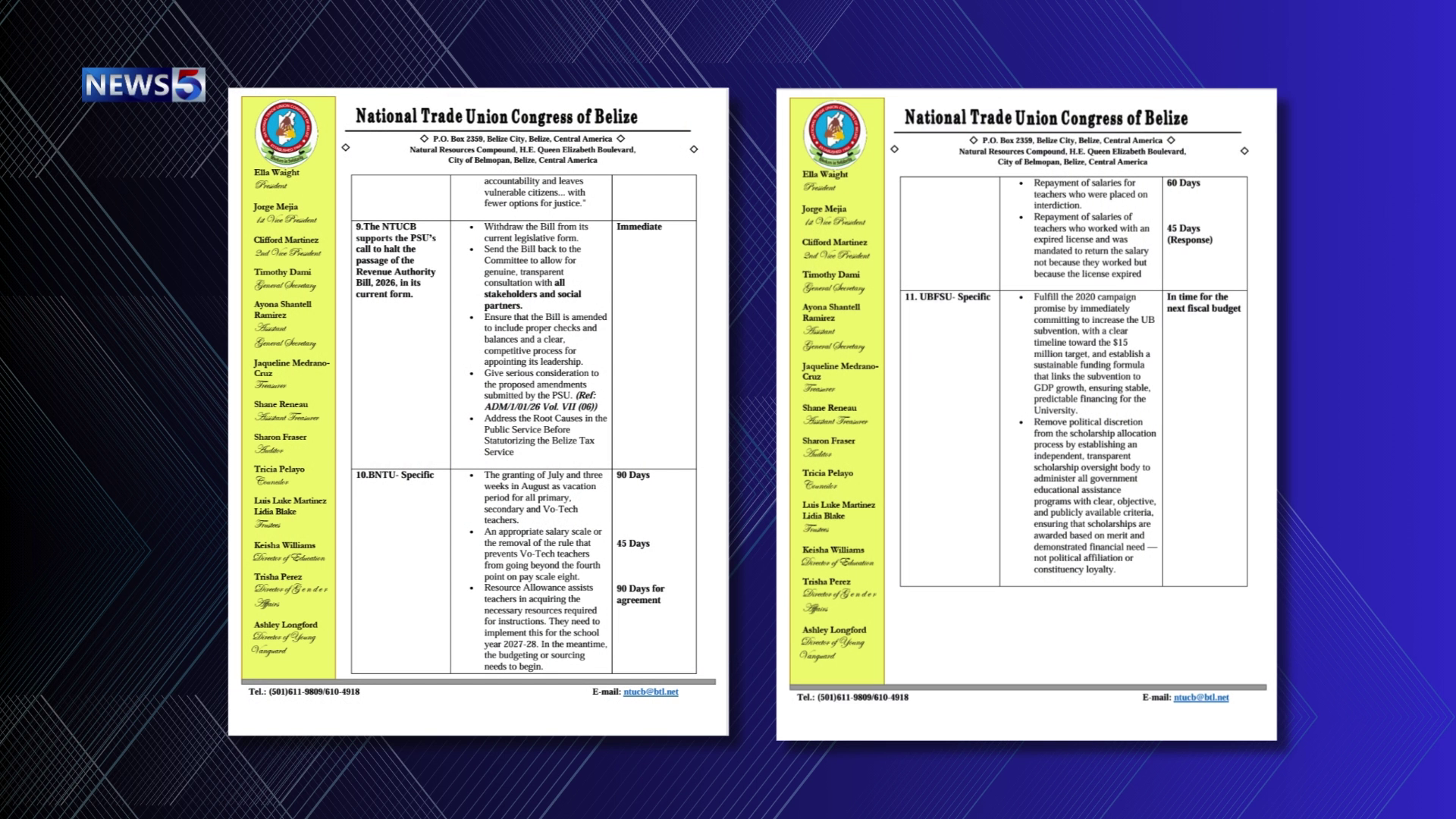
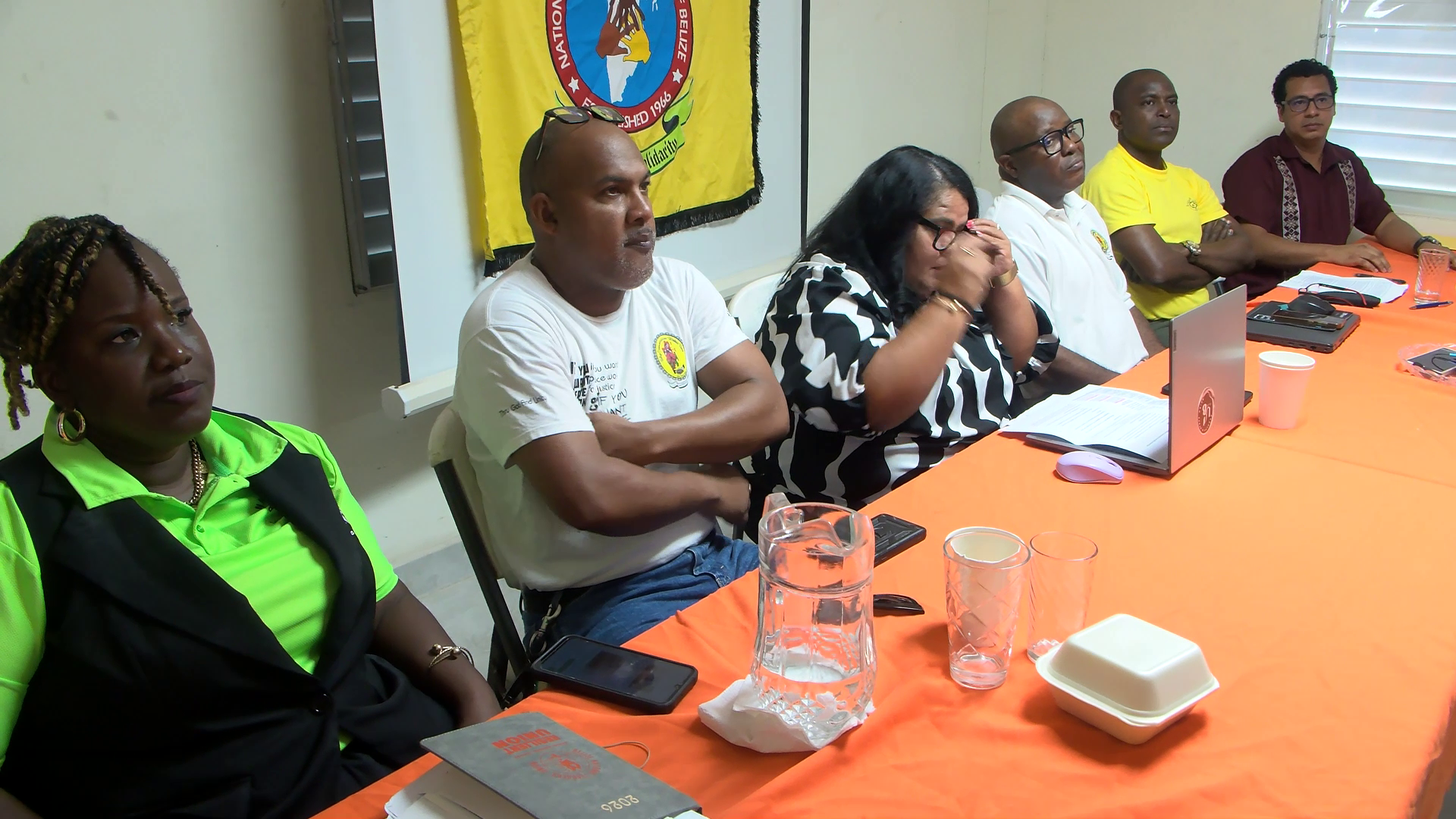
    A major rift has emerged between Belize’s education leadership and the country’s largest teachers’ organization, after the Belize National Teachers’ Union (BNTU) issued a formal 90-day ultimatum to the Ministry of Education, led by Minister Francis Fonseca, centering on 11 core policy and working condition demands.

    At the top of the union’s priority list are demands to reverse recent cuts to educator vacation time, resolve long-running disputes over educator pay scales and professional licensing, and ramp up public funding for the University of Belize (UB), including delivering on a long-standing pledge to increase the institution’s annual government subvention to $15 million.

    In a public statement following the ultimatum, Fonseca acknowledged that the formal public demand caught his ministry by surprise, noting that his team had already been engaged in closed-door bilateral negotiations with the BNTU to address many of the concerns raised in the 11-point list.

    “We’ve already been at the negotiating table with the BNTU, working through these exact issues one by one,” Fonseca explained. “I was surprised to see these demands brought into a broader public forum, but that does not mean we are unwilling to engage. I firmly believe there is significant common ground to find compromise on these issues, and we are committed to working through every point to reach resolution.”

    On the specific demand for full $15 million annual subvention for the University of Belize, Fonseca outlined the progress his administration has made since taking office, when the monthly subvention stood at just $7.5 million annually. Today, the annual subvention sits at $10 million for the current 2026-2027 fiscal year, he noted, adding that progress was slowed by the lingering economic aftermath of the COVID-19 pandemic, which forced the government to delay incremental increases for two years before resuming growth in public funding.

    Beyond the core subvention, Fonseca also highlighted that the Ministry of Education provides an additional $20 million per year to support the university through student scholarship and direct financial assistance programs, a contribution that has grown substantially over the past five years. “UB is our nation’s flagship public university, and strengthening it is one of our core priorities,” Fonseca said. “We are always ready to sit down with university leadership and union representatives to continue growing our partnership and expanding support for the institution.”

    Under the terms of the BNTU’s ultimatum, the ministry has 90 days to deliver a formal response to all 11 demands. For the University of Belize subvention request specifically, the union has given the government until the opening of the next national financial year to meet the full $15 million funding commitment.

  • Auditor General Maria Rodriguez Fires Back at PSU President

    Auditor General Maria Rodriguez Fires Back at PSU President

    A sharp public dispute over accountability for destroyed public sector financial records has broken out between Belize’s top auditor and the leader of the nation’s Public Service Union (PSU), raising urgent questions about who holds public officials responsible for misconduct in the Central American country.

    The conflict ignited two weeks prior to Auditor General Maria Rodriguez’s latest response, when PSU President Dean Flowers publicly questioned Rodriguez over why she had not referred more complaints against misbehaving public officers to the Belize Public Service Commission for disciplinary action. At the heart of the disagreement is confusion surrounding authority to initiate disciplinary proceedings after public officers were found to have intentionally destroyed critical financial documents.

    In a pointed public rebuke delivered September 3, Rodriguez pushed back hard against Flowers’ criticism, laying the blame for the current accountability gap at the feet of the unions themselves. She explained that the existing disciplinary rules governing public service employees were not drafted by her office, but were jointly developed by union representatives and the Ministry of Public Service during collective bargaining negotiations.

    Rodriguez emphasized that the agreed-upon framework explicitly reserves the power to initiate disciplinary cases for Chief Executive Officers (CEOs) of government departments, not the Auditor General’s office. Under the established rules, when a CEO submits a case of misconduct — ranging from minor infractions to major violations like the destruction of financial records — the Public Service Commission reviews the matter, with unions even providing legal representation for the accused public officers at commission hearings.

    “I did not write the rules. I did not write the process for disciplinary action,” Rodriguez stressed, dismissing Flowers’ claims that she is shirking her responsibility as untruthful. “So I don’t understand why they are asking me to take someone to the commission. There is no provision in the rules that says the auditor general can bring disciplinary matters directly to the commission. It is very specific: the Chief Executive Officer is the person who needs to initiate the disciplinary proceedings.”

    Beyond the question of disciplinary authority, Rodriguez also highlighted a second major barrier to holding non-compliant public officers accountable: her office lacks the in-house legal staffing required to pursue criminal charges. While officers who destroy or fail to produce financial records can technically face criminal prosecution under existing law, Rodriguez’s office does not employ dedicated legal personnel to move forward with such cases, leaving that pathway to accountability blocked for the time being.

    This report is a transcribed adaptation of an evening television news broadcast from Belize.

  • Fonseca To Allan Pollard: “Nobody Wants To Hear Whining”

    Fonseca To Allan Pollard: “Nobody Wants To Hear Whining”

    Weeks after the People’s United Party (PUP) wrapped up its hotly contested Belize City mayoral primary, the race’s aftermath has sparked growing conversation around internal party cohesion, as a defeated candidate alleges that unfair playing conditions cost him the nomination.

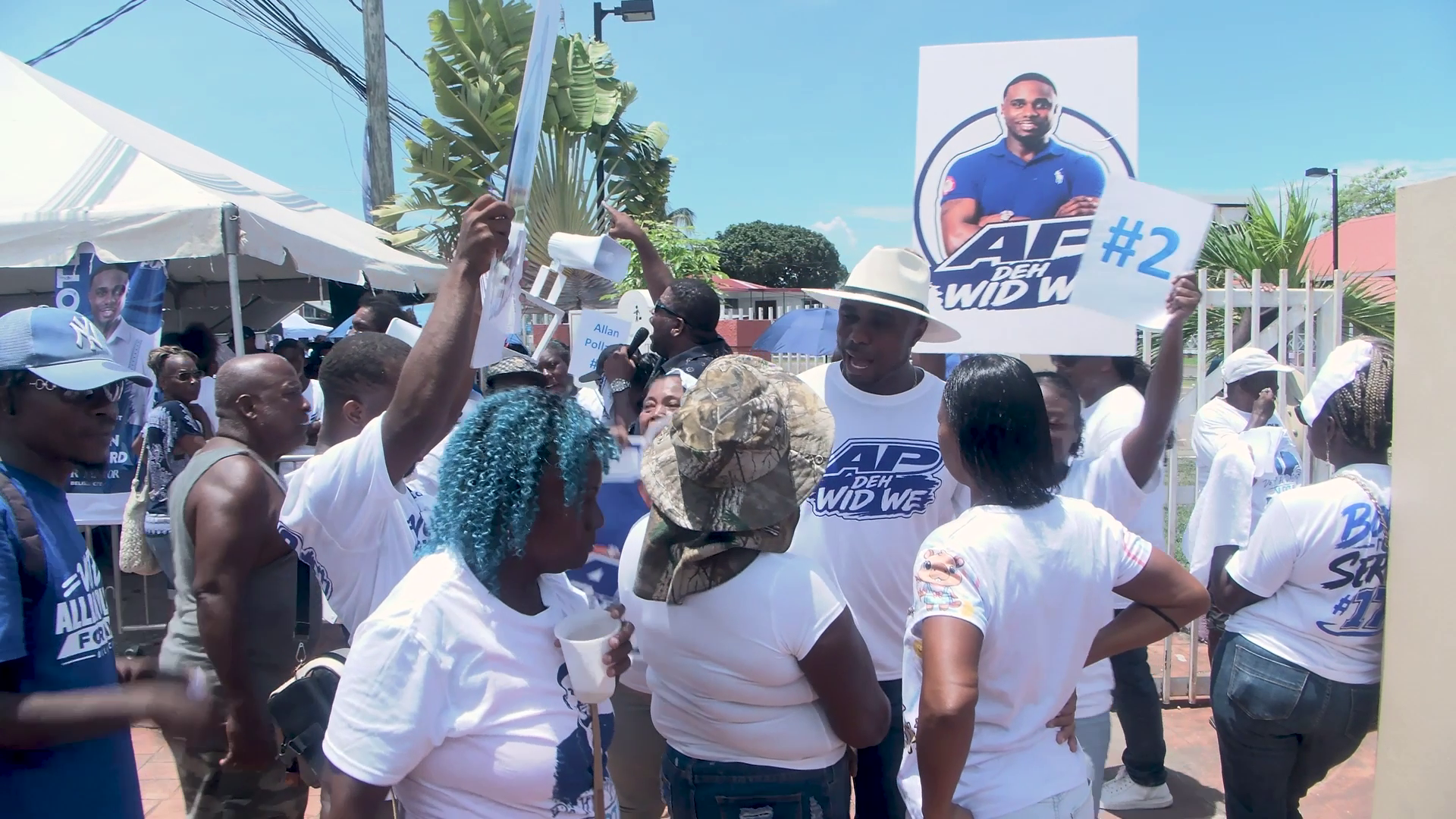
    Allan Pollard, a sitting Belize City councilor who ran against Eluide Miller for the PUP’s mayoral slot, has publicly claimed that the contest was skewed against him. In post-defeat comments, Pollard pointed to targeted personal attacks, entrenched behind-the-scenes political interests, and heavy outside spending funded by deep-pocketed backers as factors that undermined his campaign, even as he noted strong support from local grassroots voters.

    Now, all eyes are on whether Pollard and his high-profile ally, Deputy PUP Leader and Deputy Prime Minister Cordel Hyde, will set aside their differences and back Miller’s full candidate slate in the upcoming March 2026 municipal general election. If the pair withholds support, it could create a damaging rift that hurts the PUP’s chances of holding the Belize City mayoral office in the general contest.

    Francis Fonseca, Belize’s Education Minister and PUP Area Representative for Freetown, has pushed back forcefully against Pollard’s claims that money and political influence won the primary for Miller. In a public statement this week, Fonseca argued that Miller’s victory came down to consistent, on-the-ground campaign work rather than unfair advantages. He called on all PUP members to honor the outcome of the delegate vote and unify behind the party’s officially nominated team ahead of the general election.

    Addressing questions about whether Hyde would remain loyal to the party, Fonseca expressed full confidence in the deputy leader. “If you have any doubt about that, then you don’t know Cordel Hyde. Cordel Hyde believes in the philosophy of the People’s United Party. He supports this party with every fiber of his being. He knows that the People’s United Party always represents the best choice for the people of Belize, and in this case, for the people of Belize City. So there should be no doubt or question about that,” Fonseca said.

    The education minister went on to echo a message he said Deputy Prime Minister Hyde has long emphasized to all party members: public complaints about election defeat hold no appeal for voters. “One of the things the Deputy Prime Minister always reminds us, and it’s a good lesson to everyone because people outside don’t want to hear anybody whine about why they lost the convention. People don’t have time for that. What they’re interested in is how do we move forward, how do we fix the problems of the city,” Fonseca explained.

    He closed by reinforcing the party’s commitment to democratic internal processes, noting that the will of voting delegates should be respected. “The Deputy Prime Minister always reminds us, and it’s a good lesson for everybody that the people are never wrong. The delegates voted on Sunday. They were not wrong. They made the right choice. And we should respect that decision,” Fonseca added.

    This report is adapted from a transcript of a broadcast evening newscast originally published online, with original quoted content preserved in full.