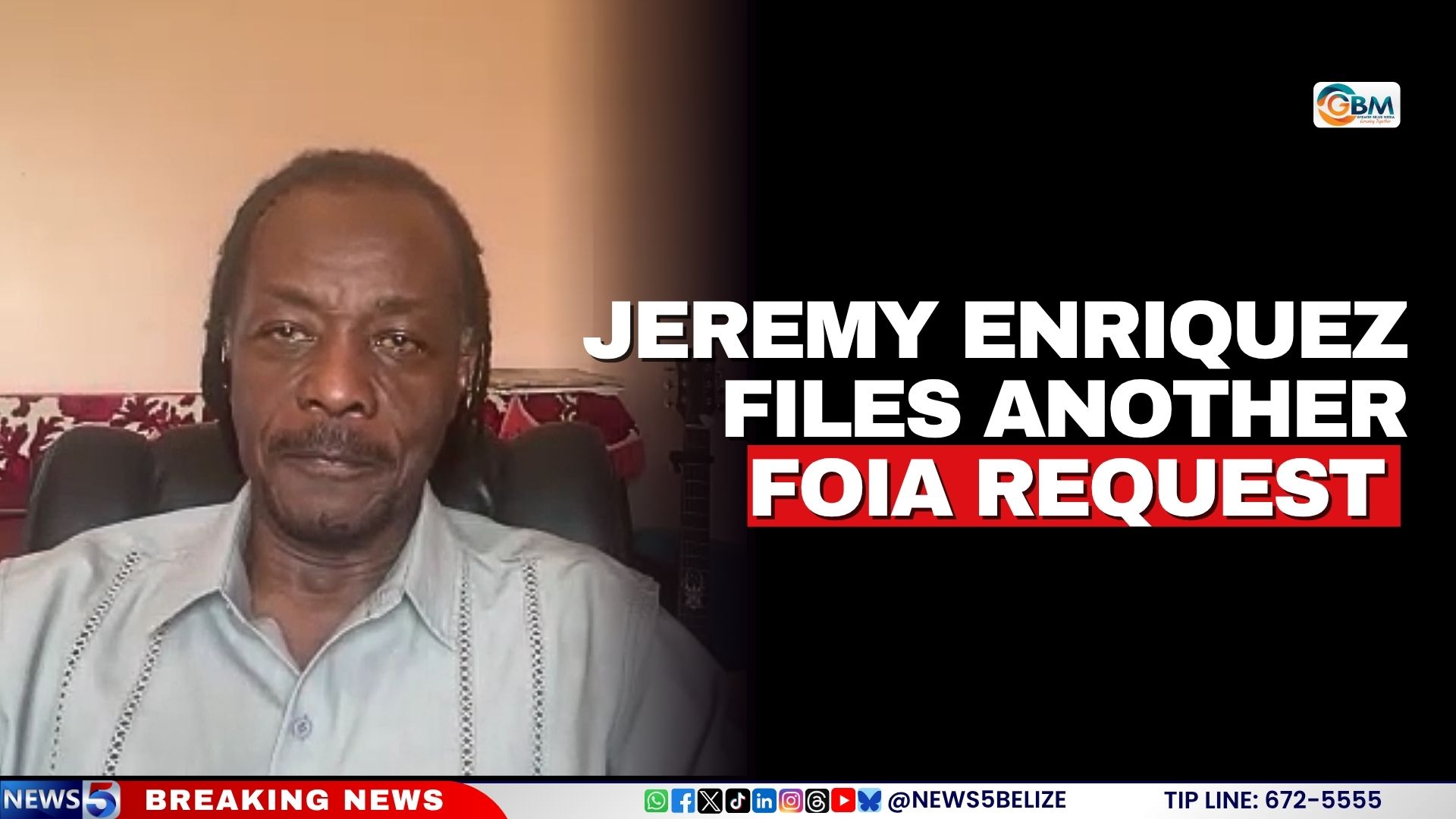
As Belize approaches another national election cycle, long-simmering frustration over the stalled redrawing of electoral constituency boundaries has prompted a leading social activist to escalate his push for government accountability. On June 10, 2026, Jeremy Enriquez, a prominent Belizean advocate for governance reform, submitted a new Freedom of Information Act (FOIA) request to the country’s Elections and Boundaries Commission (EBC), demanding full public disclosure of the current status of the years-delayed redistricting process.
For decades, observers and community organizers have raised alarms about stark inequalities in voter population sizes across Belize’s electoral constituencies, an imbalance that distorts representation and dilutes the voting power of residents in overpopulated districts. Successive governments have pledged to address the issue through a full boundary redraw, but the work has never moved forward as promised.
Enriquez’s latest action comes after repeated public commitments from Belize’s prime minister that the redistricting would be completed by the end of 2025, with a firm fallback deadline of no later than 2026. But with the calendar already at the midpoint of 2026, Enriquez says there has been zero visible progress on core prerequisites of the process, including public consultation campaigns and broad citizen awareness initiatives.
Recalling past unfulfilled promises, Enriquez noted that a similar commitment was made at the start of the 2020 government term. That pledge went unmet, with no redistricting completed by the end of the administration’s tenure. “We cannot go down that road again,” he emphasized.
The details laid out in Enriquez’s FOIA request leave little room for the EBC to withhold granular information. He is demanding a complete accounting of every stage of the redistricting process to date, including a formal updated timeline for completion, documentation of all steps the EBC has taken so far, the full identity of any third-party consultants contracted to support the work, a summary of all professional guidance the commission has received, and access to all ongoing internal reports and demographic analyses that inform the boundary drafting process.
For Enriquez, the request is as much about ending a pattern of opaque governance as it is about securing electoral reform. “No more of this secrecy with which this government tends to operate,” he said. The request sets the stage for a critical test of the Belizean government’s commitment to electoral transparency ahead of the upcoming election cycle, with oversight advocates across the country watching closely to see how the EBC responds.