标签: Belize

伯利兹

  • Belize, Taiwan and the Washington Connection

    Belize, Taiwan and the Washington Connection

    In a recent on-the-record interview with local media conducted in September 2026, new U.S. Ambassador to Belize Andre Bauer addressed key questions surrounding the small Central American nation’s diplomatic relationship with Taiwan, and how that alignment intersects with Washington’s long-held foreign policy framework. The conversation comes against a nuanced global diplomatic backdrop: while Belize extends full formal diplomatic recognition to Taiwan, the United States has for decades maintained its official One China policy, which recognizes the People’s Republic of China as the sole legitimate government of China, and only maintains unofficial, people-to-people and economic ties with Taipei.

    This mismatch in diplomatic postures has long sparked speculation among regional policy analysts: does Belize’s formal recognition of Taiwan help it deepen its bilateral partnership with Washington, and what priority does the U.S. place on this particular diplomatic alignment for Belize? When put to Ambassador Bauer directly, he leaned into personal experience rather than formal policy pronouncement to frame his response.

    Bauer noted that both the U.S. and Belize place significant emphasis on their respective connections with Taiwan, drawing from his own background as a former politician from South Carolina. He recalled personal visits to Taiwan, and pointed to a Taiwanese manufacturing facility that operates in his home state, highlighting the positive economic impact the investment has had on the local community.

    “I have actually been to Taiwan personally. I have spent time with the Taiwanese in South Carolina. They have a manufacturing plant. We have a very good relationship with the Taiwanese and we prioritize that relationship and I am very thankful that Belize has prioritized that relationship as well and I look forward to continue to facilitate that relationship with the Taiwanese,” Bauer said in the interview.

    When reporters pressed Bauer on the core contradiction of why Belize must maintain formal recognition of Taiwan when the U.S. itself adheres to a One China policy that recognizes mainland China, the ambassador deflected calls for a formal policy position, emphasizing that he does not set diplomatic policy for either Belize or the U.S. He again circled back to his first-hand observations of Taiwanese investment, noting that in his experience, Taiwanese stakeholders have operated in good faith, created much-needed jobs in his home state, and proven to be collaborative partners.

    Beyond the Taiwan question, Bauer also addressed another point of regional diplomatic concern: he confirmed that Belize’s current stance on the ongoing Israel-Hamas war in Gaza will not negatively impact or strain the bilateral relationship between Belize and Washington.

    This report is adapted from a transcribed broadcast of a local evening news program, which originally published the full interview alongside an option to view the complete newscast online.

  • Three Months of Low Tourist Arrivals During Sargassum Invasion

    Three Months of Low Tourist Arrivals During Sargassum Invasion

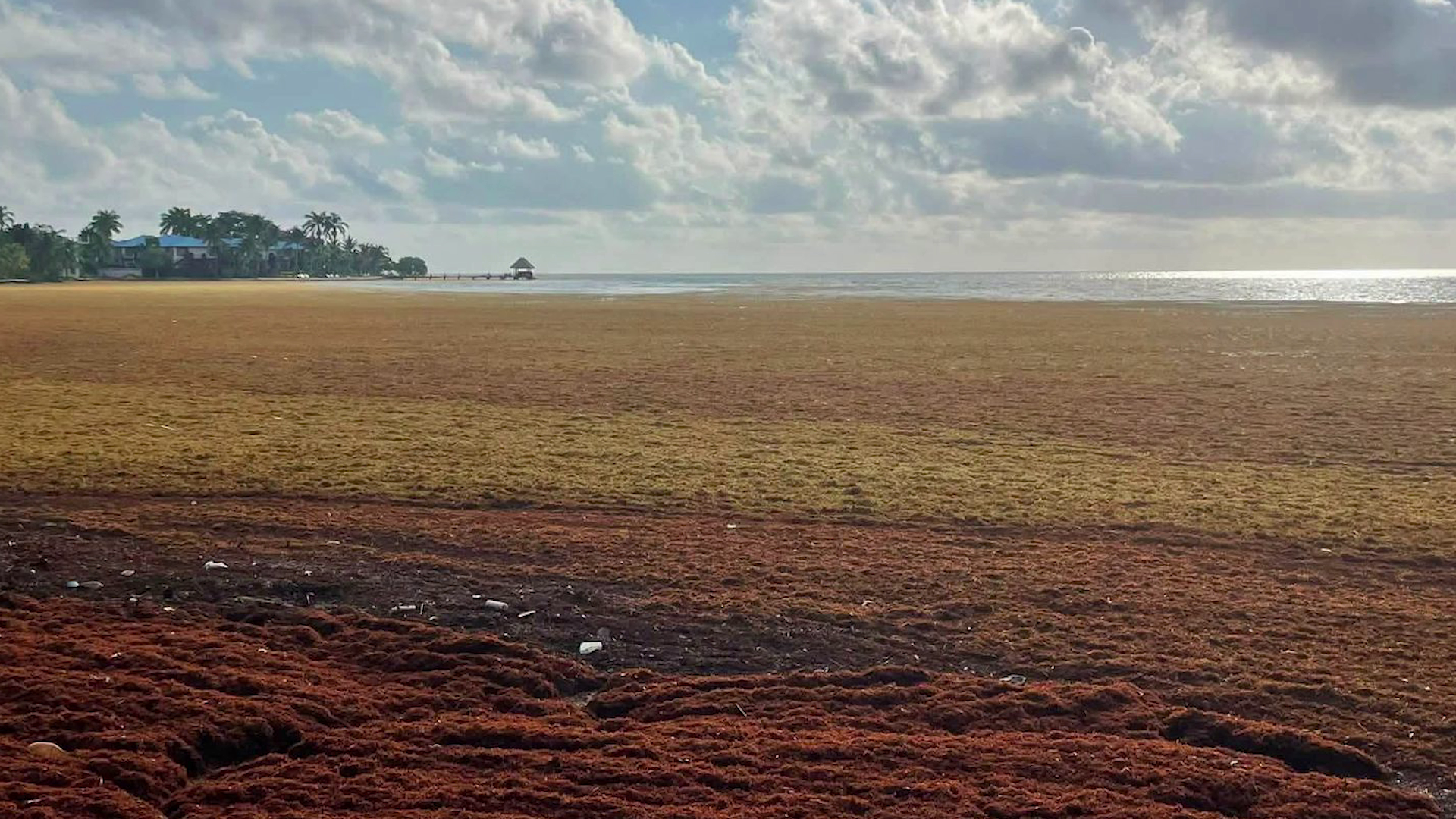
    A massive, ongoing sargassum invasion has choked the popular coastal beaches of Placencia in Belize’s Stann Creek District, leaving vast stretches of shoreline unfit for recreational use and sparking a sharp three-month drop in tourist arrivals that threatens the country’s tourism-dependent economy. As of September 4, 2026, local and national tourism stakeholders have moved into urgent talks to develop targeted mitigation strategies that can reverse the damage and protect Belize’s $4 billion marine tourism sector.

    Representatives from the Belize Tourism Board held a full day of collaborative discussions with the Placencia Village Council this week to map out actionable solutions for the affected peninsula. Tourism Minister Anthony Mahler, who also holds the sports portfolio, has characterized the sargassum incursion as an unprecedented three-pronged crisis: an environmental emergency, a growing public health hazard, and a severe economic shock for coastal communities that rely almost entirely on visitor spending.

    Mahler brings personal perspective to the crisis, having personally cut short a foreign vacation by checking out of an international resort due to unbearable sargassum accumulation on that property’s beaches. He acknowledged that broader global economic and travel headwinds have put downward pressure on Belize’s tourism sector, but emphasized that the invasive seaweed bloom is a major independent driver of the recent three-month downturn in arrivals.

    “For me, and I’ve flagged this enough in cabinet, just like the cost of living, it is a crisis. It has become a health crisis. It has become an environmental crisis, and it has become an economic crisis,” Mahler explained in an address following the stakeholder talks. He noted that local coastal businesses and resorts are already absorbing unexpected, costly damage from the invasion, requiring unplanned repairs and upgrades to infrastructure and guest amenities that cut into already strained profit margins.

    To address the long-term challenge of continuous sargassum inundation, the government is currently testing mitigation systems to identify which approaches work best for Belize’s unique coastal geography through a trial-and-error process. Mahler confirmed that officials have now identified a promising machine-based solution that can operate 23 hours a day to clear seaweed, matching the near-constant pace of sargassum influx along Belize’s coastlines. The new system will require integration with existing coastal infrastructure to reach full operational capacity.

    With 70% of all visitors to Belize traveling to the country for marine-focused activities, protecting clean, accessible shorelines is non-negotiable for the national economy, which draws $4 billion in annual revenue from tourism. “The last few months have been rough. It has, we’ve taken a beating from sargassum, but there are other issues,” Mahler added, referencing the overlapping global challenges hitting the travel sector.

    To secure sustainable funding for long-term mitigation, Mahler has put forward a policy proposal to allocate 1.5 percentage points of a proposed 3.5% hotel tax increase directly to sargassum clearance and prevention measures. The government is also in talks with international financial institutions to secure additional grant and loan funding to scale up mitigation efforts across all affected coastal regions of the country. This report is a transcript of an evening television newscast originally published by the outlet.

  • Belize Takes Historic Step with Disability Commission Launch

    Belize Takes Historic Step with Disability Commission Launch

    In a landmark move toward building a more equitable and inclusive nation, the government of Belize officially inaugurated the National Commission for Persons with Disabilities on September 4, 2026. The new body is tasked with translating the legal protections enshrined in the 2024 Disabilities Act into tangible, life-changing improvements for thousands of Belizeans living with disabilities.

    Composed of 11 cross-sector representatives from government agencies, civil society organizations, the labor movement, and the private sector, the commission will carry out a broad mandate: strengthening legal safeguards for disabled people, upgrading accessibility across public and private spaces, shaping national disability-inclusive policy, and overseeing consistent implementation of the 2024 Disabilities Act. During the official launch ceremony, all commission members received their Instruments of Appointment and have already begun outlining immediate priorities for their work. The commission is chaired by Thea Garcia Ramirez, Belize’s Minister of Human Development.

    In her remarks at the launch, Ramirez highlighted the often invisible systemic barriers that have excluded disabled Belizeans from full participation in public life for generations. “For too long, persons with disabilities have encountered barriers that many of us simply do not see, we do not feel because that staircase can be effectively a wall. A document that cannot be read or heard can mean exclusion from work, from school, or even healthcare. A discriminatory attitude can be as disabling as any physical barrier. And when a person is denied an opportunity because of a disability, it is not only that individual that loses,” Ramirez said.

    While the 2024 Disabilities Act legally guarantees all Belizeans equal right to full societal participation, gaps in implementation have left disabled community members at a persistent disadvantage. Marshall Nunez, Disability Desk Coordinator at the Ministry of Human Development, explained that the new commission will fill this critical gap by leading regulatory alignment, coordinating cross-government policy, and ensuring Belize upholds its international and domestic commitments to disability rights.

    “The most important thing for this new commission is to develop the strategy, create national strategic direction for people with disabilities. The implementation of the law is mandated now by the law. But where we’ll go as a country, the strategy and policies that will be developed out of it. The disability legislation, it’s a very proactive legislation, you know. So there will be regulations and amendment to other type of legislation to be in compliance with what this legislation requires,” Nunez noted.

    Delvitt Samuels, the legal drafter who helped craft the 2024 Disabilities Act and guide its passage, emphasized the commission’s unique role as an accessible grievance mechanism for disabled people who face rights violations. Unlike formal court processes that can create additional barriers for disabled community members, the commission will offer targeted support to help individuals file and resolve complaints meaningfully. “A disabled person specifically who is aggrieved can actually come to the commission or approach the commission, lodge his grievance her grievance and have it properly ventilated without view towards getting a remedy just like any of us would at the court and they will be provided with assistance, requisite assistance where necessary for them to interface or interact with the process meaningfully,” Samuels explained. “They interact meaningful as a matter of substance as opposed to having a rubber stamp type system or a system that pushes them through just because.”

    Beyond core priorities of improving physical accessibility, expanding access to education and employment, and upgrading healthcare access, the commission will also advocate for greater representation of disabled people in Belizean politics and public leadership. The launch marks the first formal, cross-sector national body dedicated to advancing disability rights in the country, widely seen as a historic step toward full inclusion for Belize’s disabled community. This report was prepared by Britney Gordon for News Five.

  • Sports Benefit as Belizeans Spent $144 Million on Boledo!

    Sports Benefit as Belizeans Spent $144 Million on Boledo!

    As 2026 draws toward its final quarter, new data from Belize’s state-owned lottery operator has laid bare the gap between the massive popularity of the national Boledo game and the underwhelming share of its profits flowing to the country’s grassroots and elite sporting communities. For the 2025-2026 fiscal year, total consumer spending on Fi We Boledo reached a staggering $144 million, according to Narda Garcia, chair of Belize Government Lotteries Limited and CEO of the Office of the Prime Minister.

    After accounting for $100 million in payout to winning ticket holders and covering operational costs, the lottery recorded a net profit of $27.4 million for the fiscal period, with projections pointing to even higher consumer spending and profits in the 2026-2027 cycle. To date, the Ministry of Sports has only received $2 million in donations from the lottery – just 7% of the current year’s total net profit – split into two $1 million installments, the first of which was transferred to the National Sports Council at the end of February.

    Garcia has now publicly thrown her support behind securing a guaranteed, larger slice of annual lottery profits for Belize’s sports sector, arguing that increased public funding would meaningfully advance ongoing efforts to strengthen local athletic organizations. Speaking to Sports Minister Kevin Daly, Garcia noted that additional funding would directly support the ministry’s new pilot program, which aims to cover overhead costs for national sports associations to ease their financial burdens and free up resources for athlete development.

    “To ensure that the pilot program you have now… that’s going to go a long way,” Garcia said, adding that the higher projected profits for the coming fiscal year create room to increase the annual contribution to sports. The call for a mandatory dedicated share of Boledo revenues comes as local sports stakeholders have long argued that the sector deserves far more support from the lucrative lottery, which draws widespread participation across Belize and generates hundreds of millions in annual consumer spending. Currently, contributions to sports from the lottery are ad-hoc rather than guaranteed by policy, leaving the sector vulnerable to inconsistent funding that hinders long-term planning for athlete training, facility upgrades, and community programming.

    This report is adapted from a transcribed television evening newscast originally published online.

  • Can National Sports Summit Promises Deliver Serious Results?

    Can National Sports Summit Promises Deliver Serious Results?

    After decades of unmet calls for increased investment, stronger organizational leadership and a cohesive national strategy from Belize’s athletic community, the small Central American nation has hosted its first-ever National Sports Summit, bringing together key stakeholders from across the sector to confront systemic barriers and map a path forward. Held on September 4, 2026, the landmark event drew a diverse cross-section of attendees, from local competitive athletes and national sports federation leaders to senior government officials and globally recognized sports experts, creating a rare space for open dialogue about the gaps that have held Belizean sports back for generations.

    The summit drew high-profile international participation to guide local discussions, including PanAm Sports Secretary General Jimena Saldaña and former Olympian Marion Jones, who joined top local sports leaders to share insights and actionable solutions. In remarks following the conclusion of the summit, Allan Sharp, President of the Belize Olympic and Commonwealth Games Association, expressed cautious optimism about the outcome of the gathering, noting that the energy and commitment on display set this event apart from past unfulfilled policy conversations.

    Sharp praised the summit’s organization and programming, highlighting that it brought together credible, experienced voices from both the global sports community and Belize’s own top local sports professionals. “Not only was this the first summit of its kind for Belize at this scale, the quality of the event and the dialogue was world-class,” Sharp said. “I have not heard a single person complain about the topics we covered. There was a huge exchange of information, and widespread agreement on the core issues we face. For the first time, the gaps in our system are out in the open, and solutions are being articulated collectively.”

    Sharp emphasized that the summit marks the end of the conversation phase and the start of implementation. As key stakeholders have repeatedly noted throughout the event, the next critical step is turning the ideas and commitments agreed upon at the summit into tangible action. Sharp pointed to a clear, public willingness from both government officials and national federations to move quickly to establish a formal national sports plan, putting the commitments made at the summit into practice. Moving forward, national federations and community sports leaders will hold both the government and relevant agencies accountable to deliver on the promises made during the event.

    While the summit itself broke new ground for collaborative sports governance in Belize, industry stakeholders across the country are now watching closely to see whether the momentum generated this week will translate into lasting, meaningful change for local athletes and the broader sports sector. For a community that has long waited for targeted investment and coordinated leadership, the summit has opened a new window of hope that Belize may finally build the robust national sports ecosystem its athletes deserve.

  • Where Did $150K Go? Immigration Audit Moves to Treasury

    Where Did $150K Go? Immigration Audit Moves to Treasury

    A public financial investigation into more than $150,000 in unaccounted funds from Belize’s Immigration Department has entered a new phase this week, with auditors shifting their inquiry to the national Treasury Department to obtain critical missing financial documentation. The probe, which was launched back in late June at the formal request of the Ministry of Immigration, is being led by the Office of the Auditor General to trace the whereabouts of the missing public funds.

    According to Auditor General Maria Rodriguez, the investigation hit a procedural hurdle early on when immigration management failed to produce the required original receipts and internal financial records that would normally be held on-site by the department. These documents, which are standard for tracking public expenditure and revenue, were not available when auditors first conducted on-site examinations of the Immigration Department’s finances, forcing the investigative team to look elsewhere for corroborating records.

    “Our team was unable to get the necessary receipts directly from Immigration management, so we have had no choice but to approach the Treasury Department and the Accountant General’s Department to pull the official copies of these records,” Rodriguez explained in a public update on the inquiry. “Right now, our investigative team is on location at the Treasury Department gathering the financial documents that should have been stored and maintained by the Immigration Department itself.”

    Instead of relying on the internal documentation that should have been retained by the ministry, auditors are now working with the duplicate financial records that are routinely submitted to and stored by the Accountant General. Rodriguez confirmed that these official cross-agency records hold the key to unlocking what happened to the $150,000 as the investigation moves forward.

    This is not the first step taken by the Auditor General’s Office to unpack the case. Early in the probe, a specialized team was deployed directly to the Immigration Department to conduct a full review of its financial operations and pinpoint how the public funds went missing in the first place. Rodriguez also noted that the investigation is not limited to a single person; auditors are actively examining whether multiple individuals may have been involved in the disappearance of the funds, expanding the scope of the inquiry to unpack all potential contributing factors.

  • Cabinet Gives BEL Green Light for More Generation

    Cabinet Gives BEL Green Light for More Generation

    Belize’s national government has given formal approval to an emergency declaration that clears the way for Belize Electricity Limited (BEL), the country’s main power utility, to launch procurement for additional electricity generation capacity. The approval comes in response to a projected significant supply gap that BEL projects will emerge over the coming 12 months.

    In an official press statement, Cabinet emphasized that the decision is a pre-emptive measure designed to guarantee the nation has adequate power reserves to meet rising consumer and commercial energy demand, while preserving the reliability of the national grid that millions of Belizeans depend on daily.

    The policy action arrives after weeks of widespread disruptions to power service across the country, including consecutive blackouts and scheduled nationwide load shedding. These crises were triggered when Mexico’s state-owned power utility Comisión Federal de Electricidad (CFE) cut back the volume of electricity it exports to Belize, a key source of supplemental power for the Central American nation.

    Earlier this week, Dr. Leroy Almendarez, Chief Executive Officer of Belize’s Ministry of Public Utilities, outlined the formal forecasting and approval process that led to the Cabinet’s decision. He explained that long-term energy demand planning is a core responsibility for BEL, as the utility must continuously track available domestic generation capacity against projected consumption growth.

    “As energy demand keeps climbing, advance forecasting is non-negotiable,” Almendarez noted. “BEL has to maintain a clear, up-to-date picture of all available domestic power generation and supply sources at all times.”

    According to Almendarez, BEL regularly produces both annual and five-year demand projections, drawing on decades of historical consumption data to build accurate models of future energy needs. Once these projections are completed, the full dataset is submitted to the Public Utilities Commission (PUC), Belize’s independent energy regulator, for formal review.

    “It is not just a simple notification to the regulator; we provide the full dataset that lays out current supply levels and projected demand clearly,” Almendarez explained. “After the PUC completes its review, it does not send its recommendation directly back to BEL. Instead, the commission forwards the assessment to the Minister of Energy, because emergency generation declarations fall under the authority of the full Cabinet, not the regulatory body.”

    With Cabinet’s formal approval now secured, BEL can immediately move forward with the process of contracting new generation capacity to close the projected supply gap and prevent extended future power disruptions across the country.

  • New Electricity Tax Relief Takes Effect

    New Electricity Tax Relief Takes Effect

    In a direct move to address widespread public anger over growing cost-of-living struggles, the Belizean government has activated a major expansion of sales tax relief for residential electricity users, with the new policy taking full effect on September 1. The Cabinet has formally signed off on raising the monthly GST exemption threshold for home electricity bills from $100 to $200, a change that officials project will deliver direct financial relief to more than 91,000 households across the country.

    This expanded exemption covers 96% of all residential electricity accounts in Belize, bringing relief to the vast majority of domestic consumers. The original $100 threshold had stood for nearly a decade, having first been implemented by the previous United Democratic Party administration back in April 2017.

    The policy change comes amid sharp political friction over the government’s response to the ongoing affordability crisis that has squeezed ordinary Belizean households. Prime Minister John Briceño first announced the plan for the expanded exemption during a public address last Tuesday, when he pushed back against criticism that his government is out of touch with the financial struggles facing everyday citizens.

    The criticism that prompted Briceño’s response came from Union Senator Glenfield Dennison, who argued that government officials who receive generous fuel allowances are unable to fully understand the daily challenge working Belizeans face when stretching their salaries to cover basic expenses. Briceño rejected the critique outright, using the announcement of the new electricity tax relief as tangible evidence of his administration’s commitment to easing consumer burdens.

    “Today right now we are going to bring to Cabinet a paper where we want to present to remove the GST on electricity for consumers, I think for up to two hundred dollars,” Briceño stated during last week’s address. “That in itself is going to be positively affecting consumers.”

    It is important to note that the new exemption does not cover the full cost of residential electricity for qualifying users. Instead, it simply removes the 12% GST from the first $200 of a household’s monthly bill, reducing overall costs for consumers who qualify. As of the latest announcement, the Cabinet has not released any details on how long the expanded exemption will remain in place, leaving consumers uncertain about the long-term future of the relief.

  • “They String Up Me”: Belize City Family Accuses Police of Excessive Force

    “They String Up Me”: Belize City Family Accuses Police of Excessive Force

    A family residing in Belize City’s Oleander and Mahogany Streets intersection is speaking out against what they call persistent aggressive policing, claiming officers have wrongfully targeted their home for nearly two years — with the frequency and intensity of searches spiking following the fatal shooting of 18-year-old Ewart Hernandez Jr. in August.

    The most recent confrontation unfolded earlier this week, when law enforcement officers returned to the property to conduct another search and took Jaime Anderson into custody. Anderson had previously published video footage of prior police searches on social media platforms, and household members say his detention is directly tied to that public documentation of the interactions.

    One unnamed resident of the home shared a detailed account of the encounter, which began when the family returned from a grocery run. “We were just coming back with our food when they stopped us, started asking for my name,” the resident recalled. “I asked if they had a search warrant, and they didn’t answer. When I refused to give my information right away, they restrained me, called me a gang member and asked me which gang I belong to. They keep claiming this whole house is a gang headquarters.”

    The resident emphasized that the family does not oppose legitimate law enforcement efforts to investigate criminal activity in the area, but draws the line at what they describe as ongoing excessive force and unfair profiling. Over two years of repeated searches, the family notes, officers have never recovered any evidence linking the residence or any family member to gang activity or other crimes.

    Local law enforcement officials confirm they are conducting investigations into criminal activity connected to the address, but have not directly addressed the excessive force allegations. Police Commissioner Dr. Richard Rosado told News 5 that he has not yet viewed the footage Anderson posted, and declined to comment on an incident he had not reviewed.

    For the beleaguered family, the repeated incursions and alleged mistreatment have crossed a line: they are now preparing to file an official formal complaint with law enforcement oversight bodies to address the pattern of behavior.

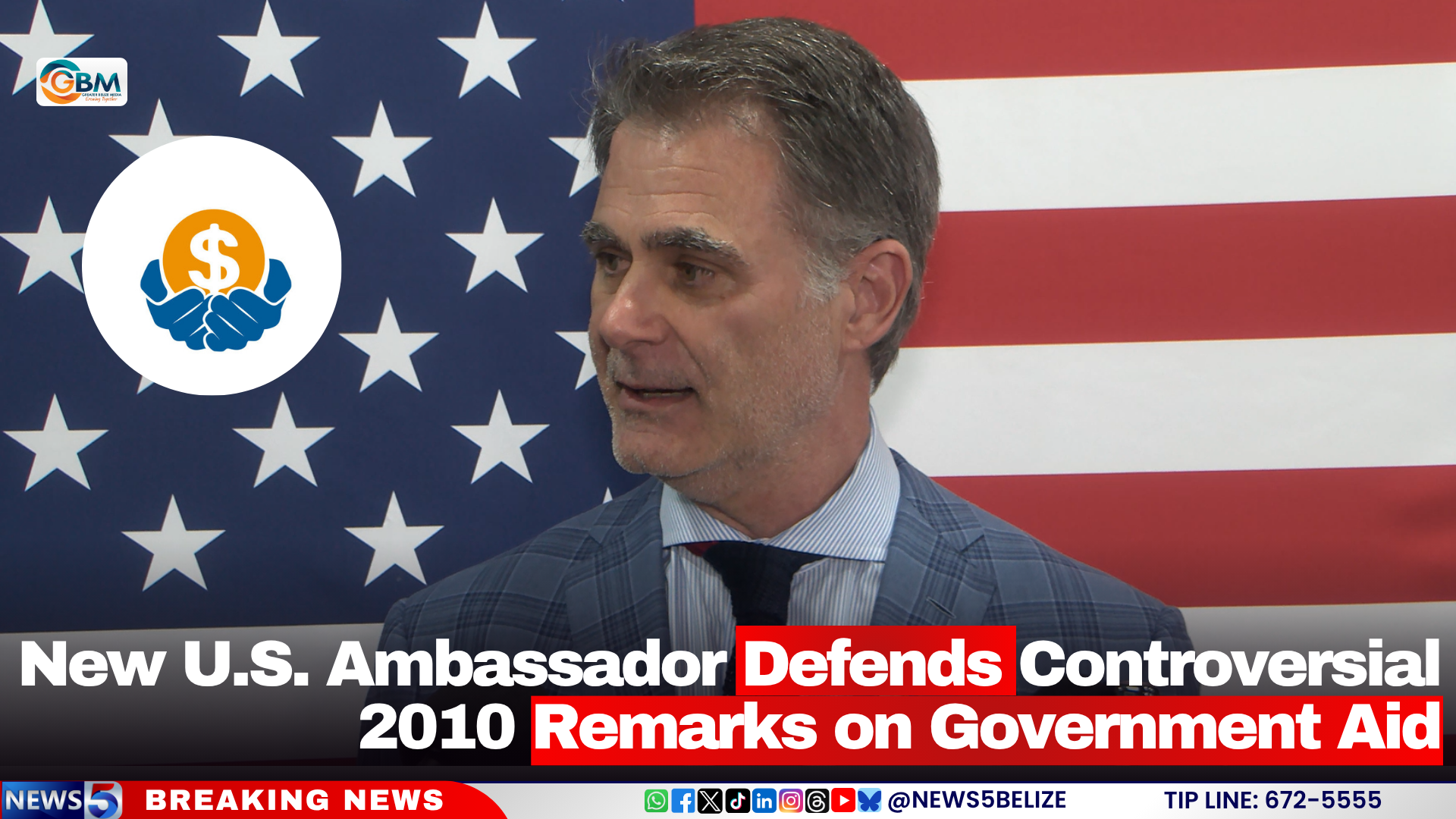
  • New U.S. Ambassador Defends Controversial 2010 Remarks on Government Aid

    New U.S. Ambassador Defends Controversial 2010 Remarks on Government Aid

    More than 15 years after igniting public backlash with inflammatory remarks about government aid for low-income communities, newly confirmed U.S. Ambassador to Belize Andre Bauer is pushing back against criticism, arguing his words were taken out of context and misrepresented by political opponents.

    The controversy dates back to 2010, when Bauer, then serving as an elected official in the U.S., made a now-infamous comparison during a public town hall meeting focused on federal and state assistance programs. During the discussion, he equated ongoing cash aid for unhoused and low-income people to feeding stray animals, a comparison that immediately drew fierce condemnation from across the political spectrum and cemented a reputation for harsh rhetoric around social policy that has followed him to his new diplomatic post.

    In his first public comments addressing the issue since taking up his ambassadorial role, Bauer pushed to reframe the conversation around what he says was the core point of his 2010 remarks. He claims the commentary was never intended to demonize people living in poverty, but rather to critique the structure of long-standing government aid programs that he argues fail to address intergenerational cycles of economic dependency.

    “It was about a generational problem where we don’t lift people up,” Bauer explained in a recent interview. “If you just give someone enough dollars to get by but you show them no vehicle to lift themselves up, America is about opportunity. It’s about giving people a vehicle, pathway to better themselves and their family.”

    Adding personal context to his perspective on social assistance, Bauer also opened up about his own experience growing up in economic instability. He shared that he qualified for free school lunch programs throughout his childhood, raised in a broken home facing significant financial hardship. This personal experience, he says, has shaped his belief that aid programs should be structured to create upward mobility, not just temporary financial relief.

    Instead of direct, unconditional cash assistance, Bauer argues that government support should focus on wrapping around services that remove barriers to economic self-sufficiency. He points to three key investment areas: affordable healthcare, reliable transportation, and accessible childcare, all of which he says remove common obstacles that prevent low-income people from accessing stable employment or continuing education to boost their long-term earning potential.

    At the core of his policy stance is a consistent belief that government should prioritize expanding access to opportunity and creating onramps for economic advancement, rather than enabling permanent reliance on public assistance. As he settles into his role as the top U.S. diplomatic representative to Belize, this framing makes clear his approach to development and aid policy will likely focus on sustainable, self-directed economic progress for recipient communities.