
The 2026 Sectus Technologies Barbados Karting Association (BKA) Championship tightened dramatically last Sunday, as the fourth round at Bushy Park delivered intense on-track competition and shook up the overall title standings across multiple classes. For the top-tier Easykart 125cc division, Aaron Blackett continued his relentless charge toward the overall Champion Driver crown, trimming Edward Norris’ series lead even further after a standout performance that earned him top round points for the second straight event. Now at the championship’s official halfway mark across the eight-round schedule, Blackett has closed the gap to Norris to just 12 total points, setting up a tight title race for the remaining four events. The latest standings show Norris holding a narrow lead with 369 cumulative points, Blackett hot on his heels at 357, and 2024 champion Jacob Mayers sitting third overall with 346 points. Blackett first chipped four points off Norris’ advantage back in April, and he carried that momentum into Sunday’s round, claiming three hard-earned race wins to secure maximum round points and turn the title hunt into a two-horse race heading into the second half of the season. A former 100cc class champion who finished second overall in 2021, Blackett put on a masterclass in wheel-to-wheel racing against Jacob Mayers all day, with finishing margins often separated by mere inches. The young contender set the tone early by clocking the fastest lap in qualifying, but the opening race remained tight until the final circuit: Mayers held the lead through the closing stages, only for Blackett to make a decisive pass on the last lap to take the win by just two tenths of a second. For the second race, which used a reversed starting grid that pushed front-runners to the back of the field, Blackett climbed through the pack early and held off constant pressure from Mayers to defend his lead; Mayers claimed second on the final lap, while Aeden Bruce notched the first of four third-place finishes in an impressive consistent day of racing. The pair swapped positions in the third race: Mayers led from start to finish, edging Blackett across the line by just one tenth of a second. The final 125cc race flipped the script once more, as Mayers fell back early in the running before mounting a late charge to close the gap. By the checkered flag, Blackett held onto the top spot, with Mayers finishing just seven hundredths of a second behind – a margin too close for spectators to call without official timing data. In the smaller 60cc Cadets class, a heated rivalry between overall standings leader Edward Norris and Ava Mayers produced some of the day’s most competitive racing, ending with the two drivers deadlocked on identical points after four hard-fought outings. Mayers made history in April as the first female karter to claim the overall top points scorer honors for a full BKA round, and she carried that form into Sunday by posting the fastest qualifying time among all Cadet entries. She outpaced Norris by three tenths of a second in qualifying, but Norris made a bold pass on the opening lap of the first race to seize control, pulling away to win by three full seconds with Finn Cox rounding out the podium. The pair would split the remaining races evenly: Norris claimed victory in the reversed-grid second race, though his winning margin shrank to just 1.3 seconds, before Mayers struck back. In the third race, she made a last-lap overtake to snatch the win by 0.4 seconds, and held serve in a dramatic final race that saw three lead changes among the top contenders. Mayers took the checkered flag by the same narrow 0.4 second margin to leave the two rivals tied on overall points for the class. The weekend also brought a shakeup to the overall championship standings, after no drivers entered the Easykart 100cc class for the fourth round. This allowed Finn Cox, who finished third all day in the 60cc Cadet class, and 125cc contender Aeden Bruce to overtake previous points leader Jaydn Brathwaite, who dropped to seventh in the overall standings. The 2026 BKA Championship will resume on July 19, when drivers will take to the Bushy Park track for the fifth of the eight scheduled rounds.
标签: Barbados
巴巴多斯
-

BARNUFO, CFPA pay tribute to Dr Shelly-Ann Cox
Two leading industry bodies in Barbados’ fishing sector are honoring the life and legacy of Dr Shelly-Ann Cox, the nation’s Chief Fisheries Officer, who passed away recently. The Barbados National Union of Fisherfolk Organisations (BARNUFO) and the Central Fish Processors Association (CFPA), both led by president Vernel Nicholls, have issued public statements of grief and tribute to the late public servant.
In statements released jointly on behalf of both organizations, Nicholls extended heartfelt condolences to Dr Cox’s immediate family, close friends, professional colleagues and all those who knew her well. He remembered Dr Cox as an unwaveringly committed public servant whose decades of work left an indelible, positive mark on the entire Barbadian fishing industry.
Nicholls emphasized that Dr Cox left the community far too early in her career, highlighting the depth of expertise, steady leadership and contagious passion she brought to advancing the nation’s fisheries every day. He specifically noted her consistent advocacy for adopting new technology, scaling innovative practices and creating more opportunities for young people to join and lead the sector.
Among Dr Cox’s most critical contributions, Nicholls pointed to her work in disaster preparedness and post-storm recovery for fishing communities. After Hurricane Beryl swept through the region, Dr Cox worked around the clock to educate fishers on critical hurricane safety protocols, while pulling together cross-stakeholder collaboration, streamlining inter-agency communication and coordination, organizing critical logistics and leading on-the-ground recovery efforts. Her long-term goal was to build a more resilient, forward-looking framework for disaster risk management that would protect the fishing sector for future generations.
“As we mourn this devastating loss, we sincerely pray that divine strength and comforting peace will surround Dr Cox’s family, friends, co-workers, and all fisherfolk leaders across the country in this difficult time,” Nicholls added.
-

Art of Her crowns first winners as beauty professionals showcase talent
On a bustling Saturday evening at Bridgetown’s Solidarity House, the first-ever Art of Her: The Beauty of South Central competition drew to a close, with three standout female beauty professionals taking home top honors and a collective $20,000 in prizes. The event, born from a vision to elevate women-owned beauty businesses across Barbados, offered creators a rare platform to display their technical skill, build their personal brands, and connect with industry peers — growing far beyond its original goal of highlighting talent within the St Michael South Central constituency after widespread interest from beauty workers across the island.
Organized in partnership with local retailer #1 Beauty Supply, the competition centered on the overarching theme of “Fantasy”, split into three specialized categories: Crowning the Fantasy for hair artistry, The Face of Fantasy for makeup artistry, and Fantasy at Your Fingertips for nail art and design. A panel of four industry judges, led by Chief Judge Debra Proverbs, evaluated the 10 competing artists who created their works live on-site, with attendees free to move between dedicated hair, makeup, and nail stations to observe creative processes and interact with contestants throughout the evening.
At the end of judging, Shanice Thompson claimed first place in the Makeup Artistry category, beating out runner-up Aliyah Daniel and third-place finisher Simone Williams. Thompson’s award-winning look, crafted on model Shakila Bayley, drew inspiration from Barbados’ iconic sunsets, blending bold, warm hues of red, orange, and gold with delicate floral accents. The newly crowned winner called her victory a validation of years of hard work invested in her craft, noting that the competition has already opened new doors for her business through exposure and professional networking.
“It feels amazing to see my hard work, dedication, and passion pay off. I’m grateful for the opportunity and proud of how far I’ve come,” Thompson said, adding that her prizes — which include a professional makeup recliner, lash supplies, a ring light, and a curated gift set — will go directly toward growing her brand and expanding access to new clients.
In the Nail Art and Design category, Antavia Alexander secured the top spot ahead of Richanne Lashley and Ria Browne. Alexander’s intricate nail art, painted on model Jonnell Farrell, celebrated the beauty of sisterhood, drawing inspiration from the quiet joy of women gathering for a picnic. Her design featured detailed depictions of fresh fruit, blooming flowers, and a honeybee, crafted to honor the strength and unity that women provide one another. The shy designer shared that competing in a public setting pushed her far outside her comfort zone, calling the experience a transformative personal and professional milestone. Alexander’s prizes include a professional nail table, lamp, storage trolley, and gift set, which she will use to continue growing her business.
Hair stylist Ashéy Johnson took home the crown in the Hair Artistry category, the only competitor to remain in the field after other contestants dropped out. Rather than treating her solo entry as a formality, Johnson leaned into the unique pressure of the moment and delivered a standout creation titled *Crowned by Kadooment*, which repurposed a Crop Over costume backpack into a vibrant, elaborate hairstyle rooted in Barbadian cultural heritage. Johnson said her work was designed to challenge the idea that local traditions are relics of the past, instead framing them as foundational elements that lift up and shape contemporary Barbadian identity. Her prizes include a professional shampoo station, roller ball hair dryer, and gift set sponsored by Aventa Barbados, and she called the new professional connections and visibility her biggest takeaway from the competition.
Beyond the live competition, the evening offered a full lineup of entertainment and industry engagement. Local soca artist Faith Callender performed her newest singles “From Nothing” and “Keep It”, while the Vida by Esquire Crop Over band opened the event with a cultural showcase. Pageant contestants from the Mum, This One’s For You initiative also made a special stage appearance, and beauty brand Rogue Beautii led a live makeup demonstration using products sponsored by global beauty brand Maybelline. The evening concluded with a Fantasy Finale showcase and official awards ceremony.
Local MP Marsha Caddle, who spearheaded the initiative, emphasized the long-term socio-economic impact of investing in women beauty entrepreneurs. Caddle noted that the global beauty industry generates roughly $700 billion in annual revenue, and supporting local women creators delivers outsized benefits to entire communities. “When we support their productive capacity, we know that families and communities benefit. We know that income in the hands of women tends to have greater multiplier effects for the health and education of children and families,” she said, thanking #1 Beauty Supply owner Mohammed Jaouni, manager Charmaine Carter, and their team for stepping in as immediate partners when the event was first proposed.
Event technical consultant Ashley Lashley shared that the entire event was planned and executed in less than a month — a timeline far faster than the months of preparation typical for large industry events. Lashley credited the quick turnaround to the dedication of the cross-functional planning team, which included Aisha Marshall, Amber Price, Allan Farmer, Tyrique Wilson, Dr Abdul Mohamed, Rico Graham, and Shelly Williams, as well as the support of sponsors, partners, volunteers, and competing artists. Lashley added that the high level of talent on display and strong audience turnout prove there is significant unmet demand for local programming that elevates and showcases Barbadian beauty professionals.
Additional sponsors and partners that contributed to the event’s success include Beyond Design, AccuSounds Inc., Iridescent Lighting, Mayhem Soundz, REI Academy, the Division of Youth and Culture, and the National Cultural Foundation.
-

MP sees beauty industry as part of broader growth strategy
Ahead of Barbados’ 60th anniversary of independence, a senior government official is pushing to unlock the massive economic potential of the local beauty industry, framing it as an underutilized engine for inclusive entrepreneurship, job creation, and broad-based national growth. Marsha Caddle, who serves as both Member of Parliament for St Michael South Central and Minister of Economic Affairs and Planning, made the case for expanded beauty sector investment following the conclusion of the inaugural *Art of Her: The Beauty of South Central* contest, an event she organized at Solidarity House Saturday night.
Caddle explained that the local competition was designed first to spotlight untapped creative talent across her constituency, but also to draw national attention to a global industry that generates more than $700 billion in annual economic activity worldwide. She argued that the beauty sector holds particular promise for expanding economic opportunity for Barbadians, especially women seeking to build their own businesses. “As we head toward our 60th anniversary of independence, I feel like it’s time for us to start exploring other drivers of growth and drivers of growth that are ripe for investment and ownership by many more people so that more people can be a part of the prosperity of Barbados,” Caddle told Barbados TODAY in an interview after the event.
Beyond direct job and business creation, Caddle highlighted the outsized social impact of supporting women-led entrepreneurship in the sector. When women control their own income, she noted, those earnings consistently flow back into improving child health, family education, and broader community well-being, creating ripple effects that extend far beyond individual businesses. “We have to continue to invest in women’s capacities. We have to make sure that women are always controlling income because income controlled by women helps to contribute to the health and education of children and families,” she said.
Caddle’s long-term vision extends far beyond a single constituency contest: she hopes initiatives like *Art of Her* will lay the groundwork for the founding and expansion of hundreds of new women-owned beauty businesses across the country. To support that growth, the Mia Mottley administration is already rolling out broader reforms to improve Barbados’ overall business climate, as part of a national strategy to identify 25 to 50 high-growth companies that can drive more inclusive economic expansion. Caddle confirmed that beauty sector businesses are eligible to be among that targeted group of high-potential enterprises.
What makes the beauty sector particularly compelling, Caddle added, is its deep interconnectedness with other fast-growing creative industries in Barbados, opening up cross-sector growth opportunities that many other sectors cannot match. The industry already has natural synergies with Barbados’ expanding carnival sector, and can provide critical specialized skills to support the country’s emerging film and entertainment sectors.
Caddle pointed to the government’s ongoing plan to launch a national Barbados film festival, part of a broader push to grow the local film industry by attracting both local content creators and international production companies to film on the island. Local beauty professionals with specialized skills in makeup artistry, hairstyling, and other creative services would be positioned to support these productions, creating an entirely new stream of employment opportunities for local workers. “This is a sector that runs deep. It has potential for tremendous linkages to carnivals all over the world, to the film industry, to all the other parts of the creative sector. So I think that it is one that is worthwhile to invest in,” she said.
While identifying high-potential growth sectors like beauty is a key priority for the government, Caddle stressed that ongoing business environment reform is equally critical to unlocking long-term economic expansion. The current administration’s top priorities for reform include cutting red tape and reducing wait times for planning approvals, expanding access to affordable financial services for small and medium enterprises, and cultivating a more competitive national business landscape.
“Both government and the private sector have some work to do on strengthening and modernising what we do, and that is going to be a big focus of mine in the next months and years going forward,” Caddle said. She added that the government’s strategy balances targeted support for emerging high-potential sectors with broad economic reform, noting that intentional investment in sectors with clear existing demand and growth capacity is a core part of the country’s path to shared prosperity. “I think that part of it is to be able to invest in sectors where there’s clearly an interest and there’s clearly capacity for growth, which is what we’re doing with the beauty industry,” she said.
-
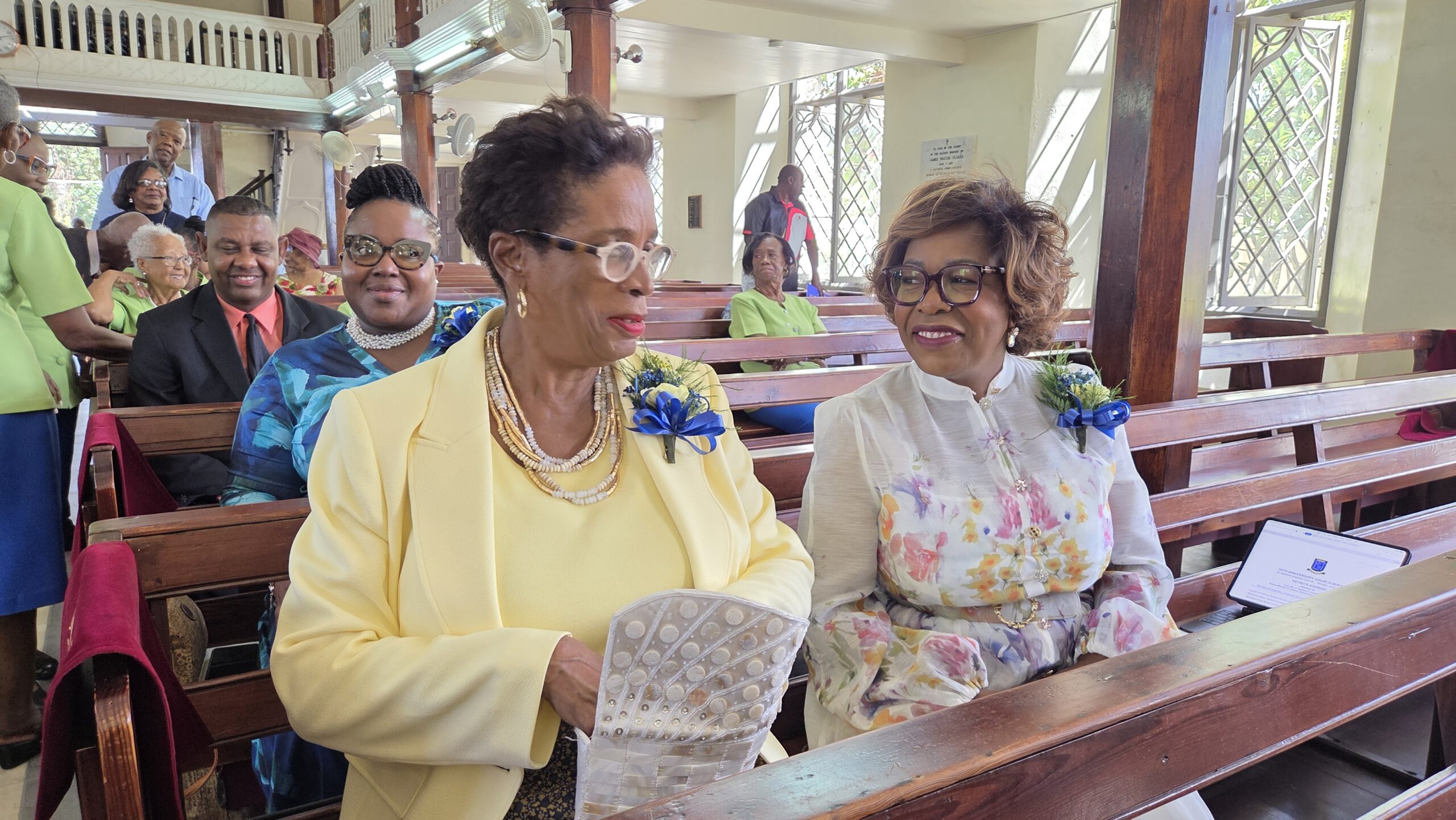
National insurance at 59: Minister urges renewed sense of shared responsibility
As Barbados’ flagship National Insurance and Social Security Service (NISSS) marked its 59th year of operation, acting Social Security Minister Sandra Husbands has issued a urgent call to rebuild the community-focused mutual care ethos that has anchored the program since its launch, warning that the core collective spirit driving the island’s world-class social safety net is fading at the grassroots level.
Husbands delivered the keynote address at the NISSS anniversary commemoration held at St Matthias Anglican Church, stepping in for incumbent Labour Minister Colin Jordan. Opening her remarks, she highlighted that Barbados’ social security framework outperforms most peer nations across the Caribbean and the wider world in the scope of benefits it offers to residents. This broad, inclusive coverage, she emphasized, grew directly from the island’s long-held cultural commitment to collective care and mutual support.
But that foundational commitment is now under threat, Husbands warned. While the NISSS institution itself continues to uphold the principles of mutual aid, the shared community values that make the system viable have begun to weaken among ordinary Barbadians. To reverse this trend, she argued, the island must deliberately rekindle public understanding of interconnected responsibility: that all members of Barbadian society are bound to one another, each holding a obligation both to their neighbors and to themselves to uphold the system that protects everyone.
The NISSS operates on a foundational principle of intergenerational and cross-community solidarity, Husbands explained. Currently employed workers contribute to support retirees; healthy, able-bodied residents cover benefits for those living with illness and vulnerability; and this generation invests in the security of those who will come after. Over its nearly six decades of operation since its 1967 founding, the service has evolved continuously to meet shifting societal needs, adapting its structure to address new economic and public welfare challenges.
Key updates to the program over the years include the introduction of a dedicated Health Service Contribution to sustain the island’s main public care facility, Queen Elizabeth Hospital, and the creation of the Resilience and Regeneration Fund, designed to cushion households and businesses from financial hardship during periods of broad economic shock. A more recent restructuring that rebranded the program from the original National Insurance Scheme to the National Insurance and Social Security Service has also brought critical improvements for independent workers: the new framework allows self-employed Barbadians to contribute on a more flexible schedule, qualify for contributory old-age pensions, and grow their small businesses with the stability of guaranteed income security.
Other expanded access improvements have extended non-contributory pensions to residents living with physical and mental disabilities, boosting their quality of life and reducing financial insecurity. To protect the system for future decades, NISSS has also implemented targeted pension revitalization reforms that will keep the NIS Fund financially strong and sustainable for coming generations. Most recently, the service played a central role in the government’s cost-of-living relief efforts, administering direct cash credits to households struggling with rising prices.
For Husbands, this wide-ranging impact makes clear that the NISSS is far more than a collection of individual benefits: it is a living embodiment of the collective care that holds Barbadian society together, and its long-term strength depends on reviving that spirit in communities across the island.
-
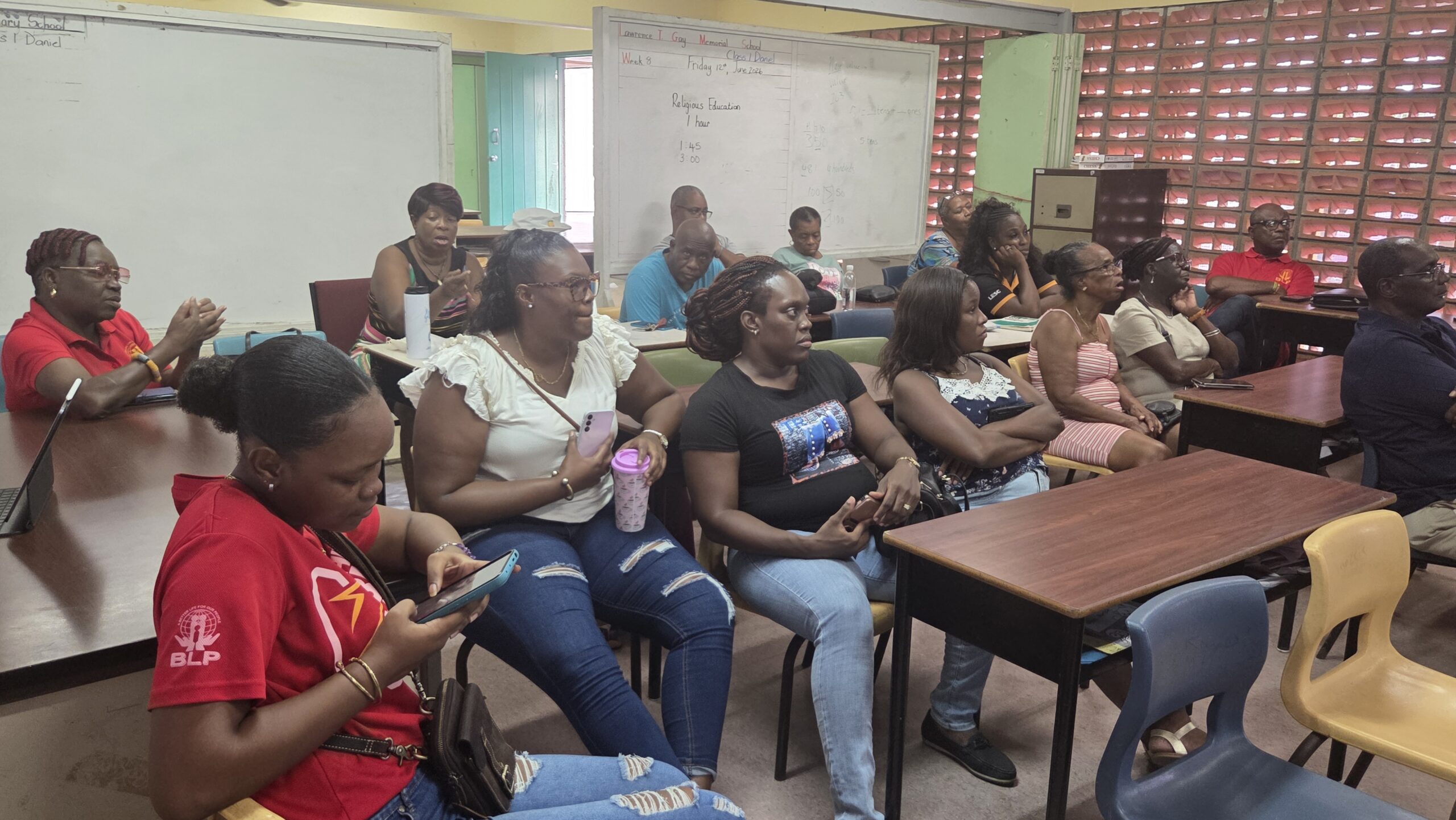
Olympian calls for support system for student athletes abroad
A former Olympic track athlete from Barbados who now works as a sports tourism organizer is sounding the alarm over a growing crisis facing young local student-athletes studying abroad, urging the creation of a formal mentorship network to stop talented competitors from dropping out of post-secondary institutions due to unmanaged academic and personal stress.
Stevon Roberts, who represented Barbados in the men’s 800-meter individual race and the 4×400-meter relay at the 1992 Barcelona Olympic Games, has spent years watching gifted Barbadian athletes leave overseas college programs early – a trend he says is not caused by a lack of ability, but by a complete absence of targeted guidance as they navigate the dual pressures of elite training and academic requirements.
Speaking at a Sunday meeting of the Barbados Labour Party’s St Michael West Central branch, held at the Lawrence T Gay Memorial Primary School, Roberts outlined his proposal for a specialized mentorship club, dubbed the “Big Brother club,” that would pair current student-athletes with experienced former competitors who have already navigated the challenges of competing and studying overseas.
Roberts explained that most student-athletes on international sports scholarships face non-stop demands: daily mandatory training hours, full course loads, and strict grade requirements that, if not met, result in losing athletic eligibility and the financial support that makes their overseas education possible. He shared a recent example of a young Barbadian athlete who returned home, overwhelmed by his workload, on the brink of abandoning his scholarship entirely, with his parents unsure how to support him. He noted that many young athletes hold back from sharing their struggles with their parents out of fear of disappointing them, making peer mentorship from people who have had the same experiences irreplaceable.
Beyond his advocacy for student-athlete support, Roberts used the platform to make the case for expanding sports tourism as a major economic driver for Barbados, pointing to the billions of dollars in global annual revenue the sector generates and the island’s untapped potential in this space.
Highlighting the ripple economic benefits of sports tourism, Roberts explained that visiting athletes and spectators spend across nearly every sector of the local economy – from hotels and lodging to restaurants, local street vendors, leisure activities, supermarkets, and other small businesses. The World Trade Organization projects that sports tourism will soon make up 10 percent of global tourism activity, equal to roughly $842 billion in annual worldwide spending, a huge opportunity that Barbados is only just beginning to capitalize on after decades of underinvestment, Roberts said.
For years, Barbados relied almost exclusively on cricket to draw sports tourism, but Roberts said the island has long failed to leverage its sporting assets for full economic gain. That tide is now turning, he noted, pointing to the Barbados government’s recent major investments in new sports infrastructure: a $25 million upgrade to Kensington Oval, a new national stadium, and an upcoming multi-sports facility that will be built adjacent to the stadium, all designed to attract more international sporting events.
Roberts, who led the organization of last year’s Caribbean Motor Racing Festival, said the event delivered an immediate $3 million in direct tourism spending to the Barbadian economy. For 2024, the family-friendly November event has already secured entries for 80 race cars, signaling growing demand for international sports events on the island.
During his address, Roberts also encouraged parents to support their children’s participation in sports, emphasizing that athletic success can be life-changing, opening up opportunities that transform the trajectory of entire families.
-
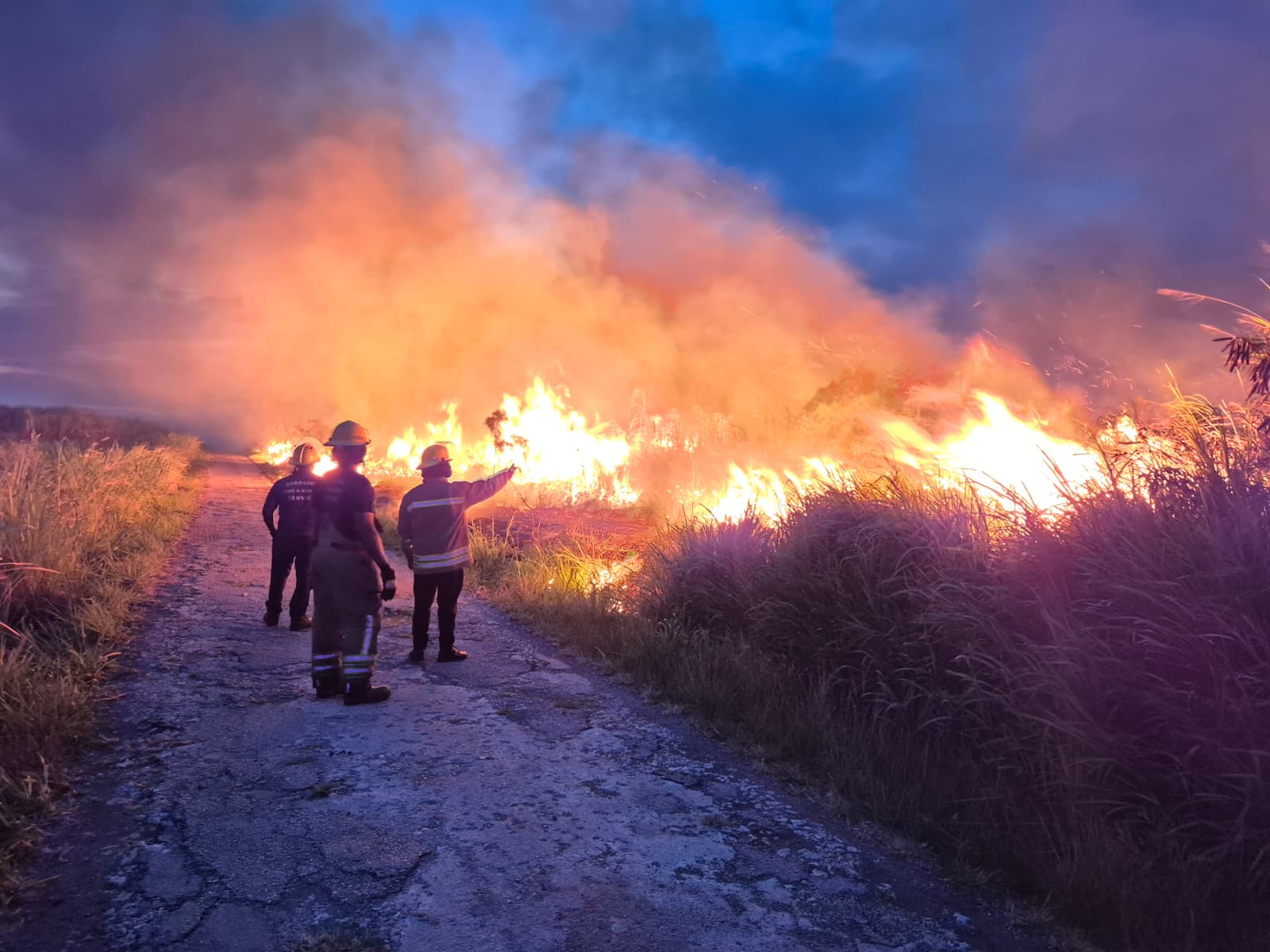
Grass fires to spread faster as heat, winds intensify, fire chief warns
Barbados’ top fire official has issued an urgent public warning, as a combination of soaring temperatures and sustained strong winds is projected to supercharge the spread and intensity of grass fires across the island, stretching emergency resources to their limit and putting residential property, livestock and community public health at severe risk.
Chief Fire Officer Errol Maynard delivered the caution on Monday, explaining that rising seasonal heat has already dried out vegetation across the country, creating tinder-like conditions that will make any accidental or intentional blaze far more destructive than normal. He emphasized that most of these fires are not sparked by the heat itself, but by human activity — and the current climate conditions simply turn small, controlled burns into unmanageable disasters in minutes.
“I am not convinced that the fires are starting because the place is hot. The fires are starting because people light these fires,” Maynard told local outlet Barbados TODAY. “What will happen is that the intensity of the fire, because the place is hotter, it is dry, so you will get a lot more grass fires during this period. It is hot and brown, so the intensity of the fire will increase, and the high winds that you are getting in recent times, the rate of the spread of the fire will also increase.”
The growing number of wildfires does not just threaten communities — it places extraordinary strain on the fire service’s personnel and equipment, Maynard explained. Even with robust training and specialized gear, firefighters are still vulnerable to heat exhaustion and fatigue when responding to multiple blazes in extreme high temperatures, stretching their ability to recover between calls. The department has already recorded multiple cases of private property being damaged when wind-carried burning embers sparked secondary fires on residential land.
Maynard highlighted far-reaching consequences for daily community life, with smoke from large blazes creating public health hazards for residents who are forced to inhale toxic fumes. Multiple schools across northern and eastern parishes of Barbados, including in St. Philip, have already been forced to close for multiple days, disrupting students’ learning and causing extended missed instruction. Just recently, a blaze in St. Lucy killed several grazing sheep and destroyed large patches of grass that local farmers relied on as feed for their livestock, threatening small-scale agricultural livelihoods.
In a stern appeal to local residents, Maynard stressed that ordinary people hold the key to reducing the risk of a catastrophic fire season. Even small open burns intended to clear land for gardening or kill rodents can quickly spiral out of control under current conditions. “When you light fires…because the place is really dry, the embers may blow far away, go into a dry field, burn it, and you might not even know that you spread the fire, or you caused a fire,” he said. “The other thing is, because the wind is high, and you are not skilled to do it, when you light a fire, it can easily get out of control, and that can cause significant problems for other people.”
Against this growing risk, Maynard confirmed that the Barbados Fire Service has had heat mitigation strategies in place for decades, as officials have observed rising average temperatures year over year dating back to the early 2000s. The department has already adjusted its operations to reduce unnecessary heat exposure for personnel: traditional daytime training activities have been shifted to cooler early morning or evening hours, and recruitment practical assessments now take place when temperatures are lower, with lectures scheduled for the hottest parts of the day.
All fire stations across the island have been outfitted with ice machines to provide constant access to cool drinking water, and fire trucks now carry ice-cold beverages for crews responding to extended calls. When firefighters work on a blaze for a prolonged period, the department has formal rehabilitation protocols to bring them in for cooling and refreshment before rotating them back to duty. Maynard added that while the service works to minimize heat stress, all crews still follow strict personal protective equipment protocols. When not working in the hottest active fire zones, firefighters are permitted to remove layers of gear to cool down, balancing safety with heat management.
“We generally look to the best practices in the industry,” Maynard said. “In all that doing, we still have to make sure they are safe. Fire officers understand, based on their training, that they are in the heat.”
-
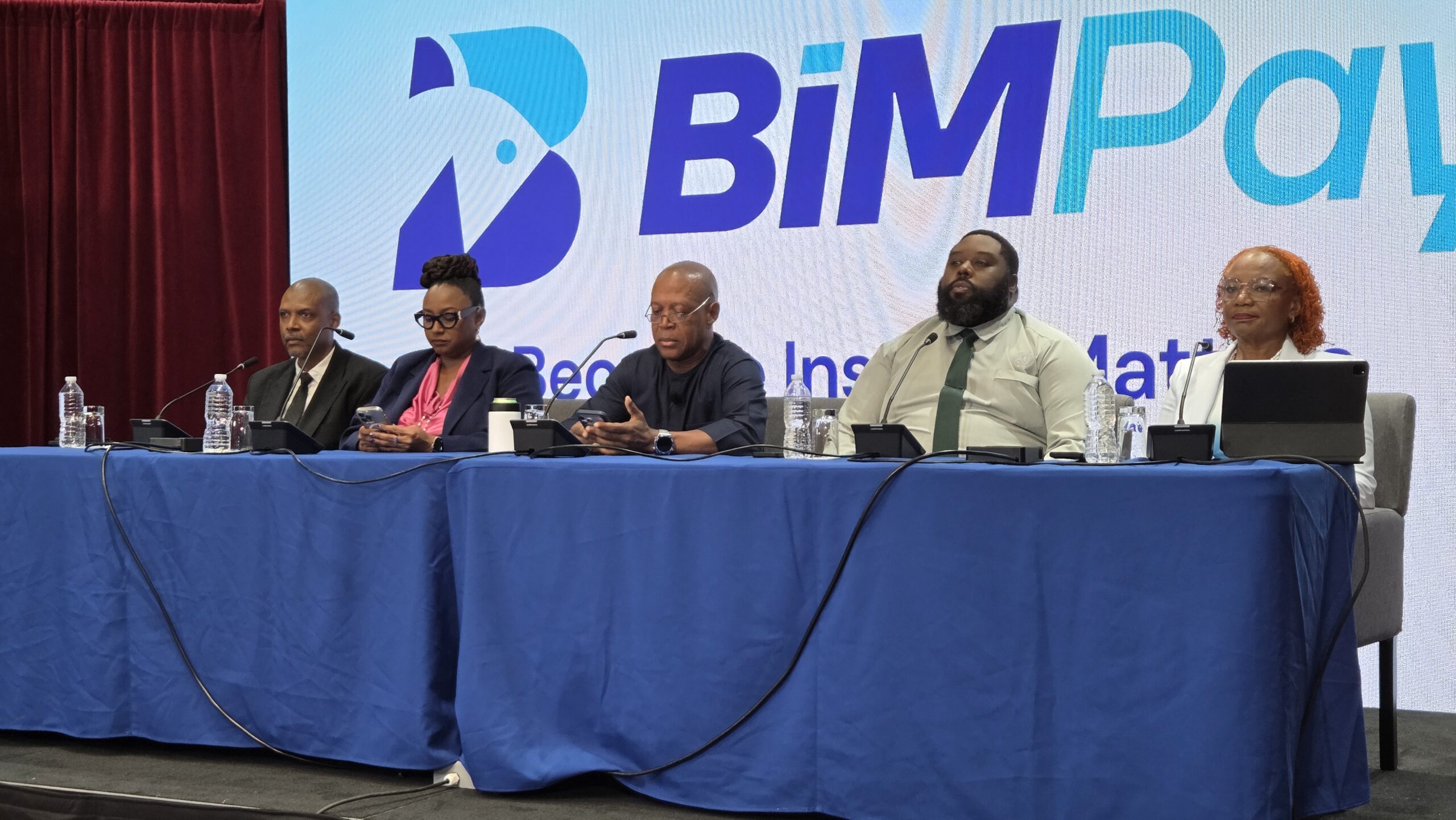
Governor: BiMPay transactions will remain free
Against a global backdrop of rapid digital transformation in financial transactions, the Central Bank of Barbados has moved to calm public uncertainty around the future of physical cash, confirming on Monday that the island nation will not implement a mandatory shift to a fully cashless economy. Central Bank Governor Dr. Kevin Greenidge made the clarification during a press briefing addressing the launch of BiMPay, Barbados’ new nationwide instant digital payment system, which went live last Friday.
Greenidge emphasized that while cash will retain its status as legal tender and remain in permanent circulation, the growing adoption of convenient digital platforms like BiMPay is expected to trigger a gradual, organic decline in cash usage over time. He pointed to successful instant payment infrastructure rollouts across major global markets as a precedent, noting that systems such as Brazil’s Pix, India’s Unified Payments Interface (UPI) and Thailand’s PromptPay all led to a natural reduction in cash reliance without government mandates forcing out physical currency.
“Where you have a convenient alternative, people naturally shift away from cash,” Greenidge explained. “Look at markets like China, India and Kenya — once scanning QR codes for payment becomes widespread, many merchants prefer digital transactions, and consumers opt for them out of convenience. Today, the average person carries debit cards, credit cards, digital wallets and a small amount of cash; people will naturally choose the option that works best for them, and many will decide cash is bulky and unnecessary, that shift just doesn’t need to be forced.”
In its first 48 hours of operation, the BiMPay platform processed roughly 20,000 transactions totaling nearly $8 million, marking a strong early uptake of the new infrastructure by Barbadian consumers and businesses.
Beyond addressing concerns about the future of cash, Greenidge also moved to dispel growing public fears that participating financial institutions would introduce new transaction fees for BiMPay use. The governor stressed that peer-to-peer and consumer-to-business transactions on the platform will remain permanently free, and any bank seeking to implement fees must first secure formal approval from the Central Bank, which he has no intention of granting for these transaction types.
“Central Bank remains the primary regulator for this payment system, and we have not stepped back from that role,” Greenidge said. “Person-to-person and person-to-business transactions on BiMPay will stay free, that policy is not changing, and no financial institution can alter that without our sign-off.”
Greenidge also highlighted the transformative potential of BiMPay for small and micro businesses across Barbados, noting that the platform removes cost barriers that have historically locked many small operators out of card-based digital payments. Traditional credit card processing requires expensive point-of-sale terminals that carry ongoing fees, putting that infrastructure out of reach for many small proprietors such as local rum shop owners. With BiMPay, any business can simply download the mobile app and generate a free QR code, allowing customers to scan and pay directly into the merchant’s bank account at no cost.
“This system saves small businesses money that they would otherwise spend on terminal fees, and it also lets them avoid missed sales from customers who don’t carry enough cash,” Greenidge added. “That accessibility is core to what we want this platform to deliver — inclusive growth that supports small operators across the country.”
-

Future Caribbean launches $140K AI ‘buildathon’ to spur innovation
A groundbreaking new initiative is positioning the Caribbean as a central player in the global agentic AI revolution, with non-profit group Future Caribbean launching a $140,000 agentic AI buildathon to cultivate the next generation of Caribbean-founded technology startups.
The competition was officially unveiled during the Inter-American Development Bank (IDB) Invest Sustainability Week 2026 held in Barbados, marking a key milestone in regional efforts to embed the Caribbean in cutting-edge global tech development. Over a 21-day intensive sprint, 40 selected teams drawn from the Caribbean and across the globe will collaborate to develop open-source agentic AI systems tailored to address the most pressing challenges and unlock untapped economic opportunities across the region.
Unlike traditional generative AI tools that only respond to user prompts or generate on-demand predictions, agentic AI represents a major evolutionary step in artificial intelligence. These autonomous systems are designed to independently pursue pre-defined goals, take proactive actions, and adapt over time. Each AI agent can perceive surrounding conditions, analyze complex scenarios, map out multi-step workflows, integrate external tools and complementary systems, execute planned actions, and continuously reflect on outcomes to refine its performance.
The buildathon is structured around 10 key focus tracks aligned with the Caribbean’s core economic and social priorities, spanning financial inclusion, healthcare access, tourism innovation, sustainable food systems, climate risk mitigation, disaster response coordination, and blue economy development. Teams selected to compete will gain access to high-end NVIDIA H200-Class GPU computing power, plus one-on-one mentorship and targeted support from a network of more than 25 experienced regional and international industry advisors.
Lily Dash, founder of Future Caribbean and co-founder of ACTAI Advisors, explained that the initiative grew out of a core belief that the Caribbean deserves a leading seat at the table shaping the future of global technology. “Future Caribbean started from a conviction: the Caribbean is one of the world’s great opportunity regions. Technology is now the largest driver of economic value creation in the modern global economy. If you have an idea, if you have been building, this is your moment,” Dash said. “The Caribbean should not watch this transformation happen — it should help shape it. Future Caribbean exists to give builders from across the Caribbean and around the world a place to build systems that strengthen the oxygen lines within the region and between the region and global markets.”
Bill Tai, chairman of ACTAI Global and founding partner of Future Caribbean, emphasized that the rise of agentic AI creates an unprecedented opening for small teams and emerging entrepreneurs in the region. “Agentic AI is creating the biggest wave of opportunity we’ve seen in decades, giving small teams a level of leverage that was previously unimaginable. The Future Caribbean Buildathon is placing the region directly in the path of that wave by connecting innovators, governments, investors, and global partners to build solutions that matter,” Tai said.
Leaders of partnering development organizations echoed that the buildathon demonstrates the power of cross-sector regional collaboration to drive inclusive tech growth. Leonardo Mazzei, head of environmental and social governance and stakeholder engagement at IDB Invest, noted that the initiative breaks down barriers to turning early ideas into scalable, real-world impact. “By bringing together entrepreneurs, technology leaders, investors, institutions and development partners, the initiative creates new opportunities for talent, ideas and technologies to move from concept to deployment and scale,” Mazzei said.
Brian Bogart, director of the World Food Programme’s Caribbean Multi-Country Office, added that AI innovation has critical potential to boost climate and food resilience for small island developing states like those across the Caribbean. “I look forward to engaging with teams working on Food Security and Disaster Coordination as they explore practical ideas and potential applications for the Caribbean and other vulnerable regions facing similar challenges,” Bogart said.
Applications for the competition are open through July 3 on the official Future Caribbean website. The 40 selected competing teams will be announced on July 17, and the 21-day build sprint will run from July 17 to August 7. Competition winners will be named on September 1, with top-performing teams advancing to a Caribbean Investor Showcase and a high-profile investor pitch day at the New York Stock Exchange later that month.
-
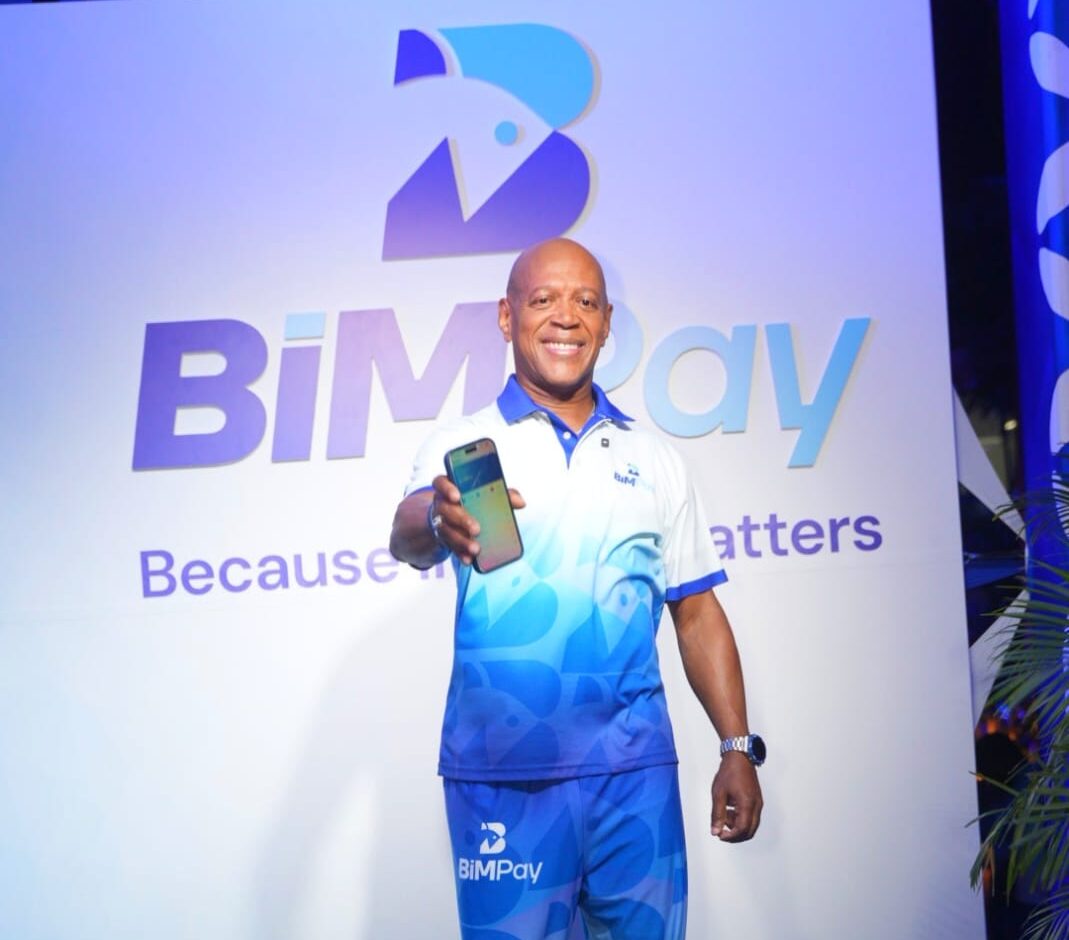
BiMPay moves nearly $8m in first weekend despite early issues
Barbados’ first national instant payment infrastructure, BiMPay, has delivered a solid performance in its first 48 hours of public operation, Central Bank of Barbados Governor Dr. Kevin Greenidge confirmed in a Monday press briefing held at the bank’s Grand Salle. In the two days since the system went live over the weekend, it has processed more than 20,000 transactions totaling nearly $8 million, with a 99% success rate that puts early performance well above expectations for a newly launched fintech platform.
Despite the overall strong showing, Greenidge acknowledged that the rollout hit predictable early-stage “teething issues”, most notably widespread registration difficulties reported by hundreds of users on social media just hours after BiMPay launched Saturday. The governor explained that the overwhelming majority of registration blocks stemmed from an unforeseen interaction with Google’s spam protection systems. In the first hour after launch alone, the BiMPay app was downloaded more than 12,000 times, and a large share of those users registered with Gmail accounts. The sudden volume of verification emails sent from BiMPay’s domain triggered Google’s automated anti-spam defenses, which blocked all outgoing verification messages from the platform, leaving users unable to receive the access codes required to complete registration.
Greenidge noted that prior stress testing ahead of launch could not have predicted this specific outcome, as there was no way to anticipate that such a large majority of early registrants would use Gmail accounts or that Google’s security protocols would flag the verification traffic as malicious. Central Bank teams quickly contacted Google to resolve the issue, and the block was cleared within hours, allowing affected users to complete their registration. Greenidge added that most other early issues have either been fully resolved or are on track to be fixed imminently.
Of the less than 1% of total transactions that failed in the first two days, Greenidge attributed all problems to minor formatting errors, such as incorrect entry of account or branch numbers, rather than fundamental flaws in the BiMPay infrastructure. “This is an extremely strong success rate for a newly launched system,” Greenidge emphasized. “Nearly 99% of 20,000 transactions worth $8 million went through without a hitch, across all participating financial institutions. The system is working exactly as it was designed to.”
Another ongoing adjustment involves the process for retrieving BiMPay access tokens from users’ financial institutions. Currently, users must obtain a unique token from their bank to access BiMPay, either via text, email, or their existing online banking portal. Most participating institutions have opted to host token access through their existing banking apps, but not all have placed the BiMPay token link prominently on their homepage as required. The Central Bank has held multiple meetings with chief executives of participating institutions over the past two days to address this, and is working with all providers to add a clearly labeled “BiMPay Token” button or link to their homepage for easy access.
When pressed for details on the total development and launch cost of BiMPay, Greenidge declined to share a specific figure, but clarified that the project did not draw on taxpayer funds. As an operationally and financially independent institution, the Central Bank of Barbados funds the initiative through its own investment portfolio, rather than government allocations.
Greenidge framed BiMPay as a critical public good for the Barbadian economy, noting that no single domestic financial institution had the scale to develop and roll out a universal instant payment system on its own, given the country’s small size. The upgrade to the national payments infrastructure, he argued, will strengthen Barbados’ economic standing and position the country to capitalize on upcoming regional and domestic development opportunities.
Looking ahead to the second phase of BiMPay rollout, which will onboard additional financial institutions and government agencies including the National Insurance and Social Security Service (NISSS), the Central Bank has declined to set a firm launch date. Deputy Governor Michelle Doyle explained that rigorous standardization of payment data formatting across all new participating entities is a non-negotiable prerequisite for expansion. Without aligned data standards, Doyle noted, there is an increased risk of transaction failures that could undermine user trust in the system. The Central Bank will first complete detailed preparatory work with all prospective new partners to ensure full data standardization, and will only announce a launch date once onboarding preparations are fully complete. “We are prioritizing long-term functionality over a fast rollout,” Doyle explained, “to make sure the entire system works seamlessly for all users when we expand.”