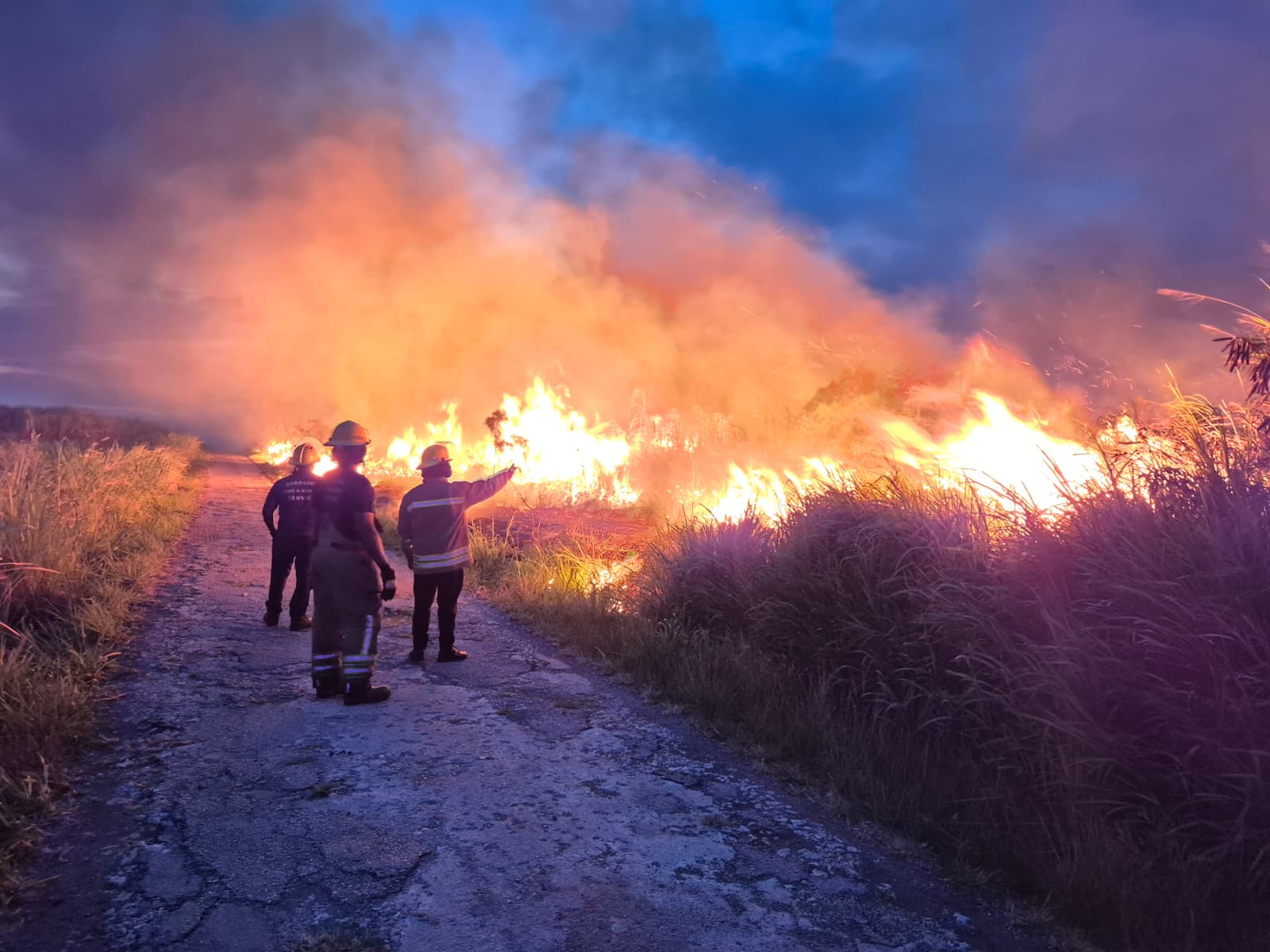
Barbados’ top fire official has issued an urgent public warning, as a combination of soaring temperatures and sustained strong winds is projected to supercharge the spread and intensity of grass fires across the island, stretching emergency resources to their limit and putting residential property, livestock and community public health at severe risk.
Chief Fire Officer Errol Maynard delivered the caution on Monday, explaining that rising seasonal heat has already dried out vegetation across the country, creating tinder-like conditions that will make any accidental or intentional blaze far more destructive than normal. He emphasized that most of these fires are not sparked by the heat itself, but by human activity — and the current climate conditions simply turn small, controlled burns into unmanageable disasters in minutes.
“I am not convinced that the fires are starting because the place is hot. The fires are starting because people light these fires,” Maynard told local outlet Barbados TODAY. “What will happen is that the intensity of the fire, because the place is hotter, it is dry, so you will get a lot more grass fires during this period. It is hot and brown, so the intensity of the fire will increase, and the high winds that you are getting in recent times, the rate of the spread of the fire will also increase.”
The growing number of wildfires does not just threaten communities — it places extraordinary strain on the fire service’s personnel and equipment, Maynard explained. Even with robust training and specialized gear, firefighters are still vulnerable to heat exhaustion and fatigue when responding to multiple blazes in extreme high temperatures, stretching their ability to recover between calls. The department has already recorded multiple cases of private property being damaged when wind-carried burning embers sparked secondary fires on residential land.
Maynard highlighted far-reaching consequences for daily community life, with smoke from large blazes creating public health hazards for residents who are forced to inhale toxic fumes. Multiple schools across northern and eastern parishes of Barbados, including in St. Philip, have already been forced to close for multiple days, disrupting students’ learning and causing extended missed instruction. Just recently, a blaze in St. Lucy killed several grazing sheep and destroyed large patches of grass that local farmers relied on as feed for their livestock, threatening small-scale agricultural livelihoods.
In a stern appeal to local residents, Maynard stressed that ordinary people hold the key to reducing the risk of a catastrophic fire season. Even small open burns intended to clear land for gardening or kill rodents can quickly spiral out of control under current conditions. “When you light fires…because the place is really dry, the embers may blow far away, go into a dry field, burn it, and you might not even know that you spread the fire, or you caused a fire,” he said. “The other thing is, because the wind is high, and you are not skilled to do it, when you light a fire, it can easily get out of control, and that can cause significant problems for other people.”
Against this growing risk, Maynard confirmed that the Barbados Fire Service has had heat mitigation strategies in place for decades, as officials have observed rising average temperatures year over year dating back to the early 2000s. The department has already adjusted its operations to reduce unnecessary heat exposure for personnel: traditional daytime training activities have been shifted to cooler early morning or evening hours, and recruitment practical assessments now take place when temperatures are lower, with lectures scheduled for the hottest parts of the day.
All fire stations across the island have been outfitted with ice machines to provide constant access to cool drinking water, and fire trucks now carry ice-cold beverages for crews responding to extended calls. When firefighters work on a blaze for a prolonged period, the department has formal rehabilitation protocols to bring them in for cooling and refreshment before rotating them back to duty. Maynard added that while the service works to minimize heat stress, all crews still follow strict personal protective equipment protocols. When not working in the hottest active fire zones, firefighters are permitted to remove layers of gear to cool down, balancing safety with heat management.
“We generally look to the best practices in the industry,” Maynard said. “In all that doing, we still have to make sure they are safe. Fire officers understand, based on their training, that they are in the heat.”