标签: Barbados

巴巴多斯

  • Sagicor Bank named Barbados’ Best Consumer Digital Bank

    Sagicor Bank named Barbados’ Best Consumer Digital Bank

    Sagicor Bank (Barbados) has achieved unprecedented recognition in the financial technology sector, securing an impressive 18 awards from Global Finance magazine’s World’s Best Digital Bank Awards for 2025. The institution, which pioneered digital-only banking in Barbados, has been crowned the nation’s Best Consumer Digital Bank for the second consecutive year, demonstrating remarkable growth from its 10 awards in the previous cycle.

    The prestigious international financial publication, established in 1987 and renowned for its financial industry authority, has conducted these awards for 26 years across multiple categories and regions. Sagicor’s accolades include Barbados’ Best Digital-Only Bank, Best Digital Payments Strategy, and Best in Lending—the latter marking a repeated triumph for the bank’s lending division.

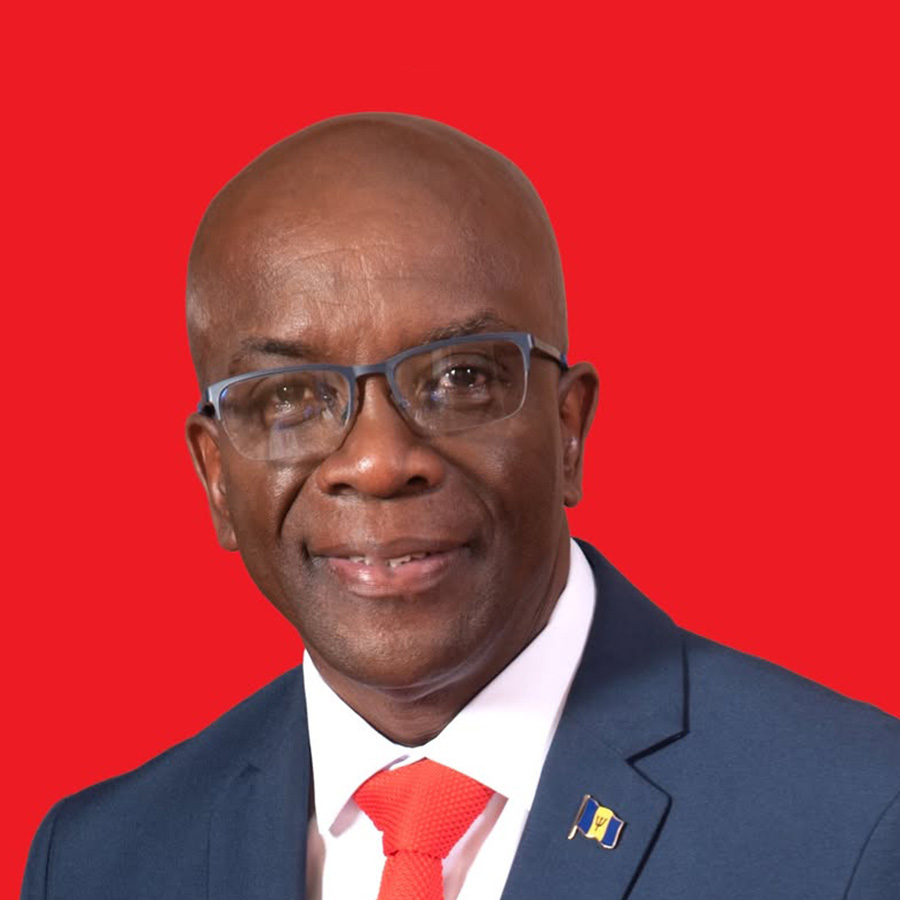
    CEO George Thomas characterized the awards as validation of the bank’s transformative approach to Barbados’ banking landscape. ‘When we first opened our doors, we committed to offering a better banking experience for Barbadians,’ Thomas stated. ‘We’ve built on last year’s progress by actively listening to our clients and adapting accordingly, resulting in this significant award increase from 10 to 18.’

    Thomas extended congratulations to his team for their dedication and thanked clients and business partners for their continued support. The sentiment was echoed by Global Finance’s founder Joseph Giarraputo, who noted that award-winning institutions exemplify innovation in cloud technology and mobile-first strategies that deliver secure, personalized banking experiences.

    The first-round honorees for Latin America and the Caribbean were announced in August 2024, with Sagicor now eligible for regional and global recognition in the second round. The ultimate winners will be revealed at the inaugural Global Finance World’s Best Digital Banks Awards Ceremony on October 7 at London’s historic 8 Northumberland Avenue.

  • Govt to ‘phase’ restoration of historic Carnegie Library

    Govt to ‘phase’ restoration of historic Carnegie Library

    After nearly two decades of closure, Barbados’ iconic Carnegie Library in Bridgetown is set for a comprehensive restoration, Culture Minister Senator Dr. Shantal Munro-Knight announced. The century-old landmark, which has remained shuttered since 2006 due to structural deterioration, will undergo phased reconstruction that blends historical preservation with modern sustainability features.

    The minister revealed the government has allocated approximately $2 million for initial design and structural stabilization work, though she acknowledged this represents ‘a drop in the bucket’ compared to the project’s total anticipated costs. The restoration will address critical issues including complete roof replacement and reinforcement of load-bearing walls while maintaining the building’s original architectural integrity.

    In collaboration with Barbados Tourism Investment Incorporated (BTII), the Ministry of Culture is developing plans for a state-of-the-art facility that will incorporate sustainable design elements, improved public spaces, and modern amenities. The redesigned library will feature café areas, open public spaces, and environmental considerations such as natural lighting optimization.

    Senator Munro-Knight emphasized the library’s dual role as both cultural landmark and community sanctuary, noting that libraries serve as ‘safe spaces’ for residents regardless of their personal circumstances. The restoration initiative forms part of broader government efforts to preserve Barbados’ built heritage, alongside ongoing work to establish a National Art Gallery at The Garrison.

    Originally constructed between 1903-1906 through a gift from Scottish-American philanthropist Andrew Carnegie, the Coleridge Street building was the first and largest Carnegie library in the English-speaking Caribbean. Carnegie’s global library initiative supported over 2,500 libraries worldwide, with several established throughout the Caribbean region.

    The minister appealed for public and private sector partnerships to help fund the ambitious restoration, describing the project as vital to preserving Barbados’ cultural identity while creating functional community spaces for future generations.

  • Deaf advocate calls for greater access to education and interpreters

    Deaf advocate calls for greater access to education and interpreters

    Scott Williams, Vice-President of the Barbados Horizon Deaf Charity (BHDC) and a prominent disabilities advocate, is spearheading a movement to transform educational accessibility for the deaf community in Barbados. His campaign emphasizes two critical pillars: the urgent need for more qualified interpreters and the fundamental integration of deaf-led sign language instruction within the national school system.

    Drawing from his personal experience of becoming deaf in childhood, Williams highlights a significant flaw in current educational approaches. His initial exposure to sign language came through hearing instructors who, despite their good intentions, lacked the intrinsic cultural and experiential understanding that only a deaf individual possesses. This gap, he argues, often leads to instructional inaccuracies and a diluted representation of the language. “With a hearing person teaching a language that is not theirs, how do you know they are teaching it correctly?” Williams questioned in an interview with Barbados TODAY. “Deaf people know our own sign language; it is our native tongue.”

    While Williams acknowledges the valuable role hearing people play in teaching English, he asserts that American Sign Language (ASL) instruction must be led by those for whom it is a first language. His vision includes placing deaf educators and teacher’s assistants in classrooms to ensure linguistic accuracy and cultural authenticity, moving beyond token inclusion to meaningful representation.

    However, Williams clarifies that his advocacy extends far beyond school-aged children, pointing to a pervasive lack of educational access for deaf individuals at all life stages in Barbados. He encourages the public to overcome communication barriers by learning basic sign language or even utilizing simple gestures. “Move your hands, use gestures… It’s easy. It doesn’t have to be complicated,” he advised, emphasizing that effort, not perfection, fosters connection.

    Education is merely one facet of a broader struggle. Williams identifies a suite of interconnected challenges plaguing the deaf community, including severe shortages in interpreter services, rampant employment discrimination, and financial insecurity. The BHDC is actively working to devise solutions, though Williams notes a critical absence of governmental support thus far.

    A profound part of his mission is to dismantle pervasive social stigmas that hinder true inclusion. He rejects the perception of deaf and disabled people as charity cases, stating, “They perceive us as if we can’t do things… We don’t need to have that because we’re deaf.” He frames the disabled community as “one big family” facing similar barriers.

    Williams’s final appeal is for concrete action, particularly in employment and funding. He calls on employers to actively hire qualified individuals with disabilities and for investors to support their entrepreneurial dreams. “If they have a dream, it should be supported. We don’t want any more discrimination,” he stated, underscoring the urgent need for tangible change in a landscape where job access for deaf Barbadians remains critically limited.

  • Call for national dialogue on productivity amid ‘inconsistent service’

    Call for national dialogue on productivity amid ‘inconsistent service’

    Barbados faces a critical productivity challenge that threatens economic competitiveness and business sustainability, according to the nation’s leading business organization. The Barbados Chamber of Commerce and Industry (BCCI) has issued a stark warning about systemic inefficiencies plaguing multiple sectors, from tourism to financial services.

    BCCI President Paul Innis has called for a candid national dialogue to address what he describes as pervasive service inconsistencies and operational delays that drive up costs and diminish value. “There is a concern in Barbados about productivity that a lot of people don’t talk about,” Innis stated during a press briefing. “We need to be mature enough to discuss this openly.”

    The chamber identifies fundamental problems across the business landscape, including inexplicable processing delays at government agencies and variable service quality in private enterprises. Innis highlighted specific examples: “Why should it take five days to complete something achievable in one? Why does vehicle licensing require two weeks and seven visits to the Licensing Authority?”

    Despite these challenges, the BCCI maintains an optimistic outlook about Barbados’s capacity for improvement. The organization is collaborating with the Barbados National Standards Institution (BNSI) to establish minimum service standards across industries. This initiative aims to create consistent service quality whether customers interact with hotels, manufacturing facilities, financial institutions, or port authorities.

    The productivity discussion emerges alongside recent minimum wage increases that took effect in January. The national rate rose from $10.50 to $10.71 hourly, while security guards received an increase from $11.43 to $11.66. These changes follow substantial raises six months prior that lifted rates from $8.50 to $10.50 nationally and from $9.25 to $11.43 for security personnel.

    When questioned about potential conflicts between wage growth and productivity concerns, Innis offered a nuanced perspective: “Policymakers are addressing livable wage requirements, which is important. The relationship between wages and productivity involves multiple dimensions—including modern equipment investments, process improvements, and employee feedback systems—not just individual worker output.”

    The BCCI advocates for comprehensive productivity enhancement through technology adoption, process optimization, and performance-based incentive structures rather than simply criticizing wage increases.

  • PM teases possibility of heading to the polls next year

    PM teases possibility of heading to the polls next year

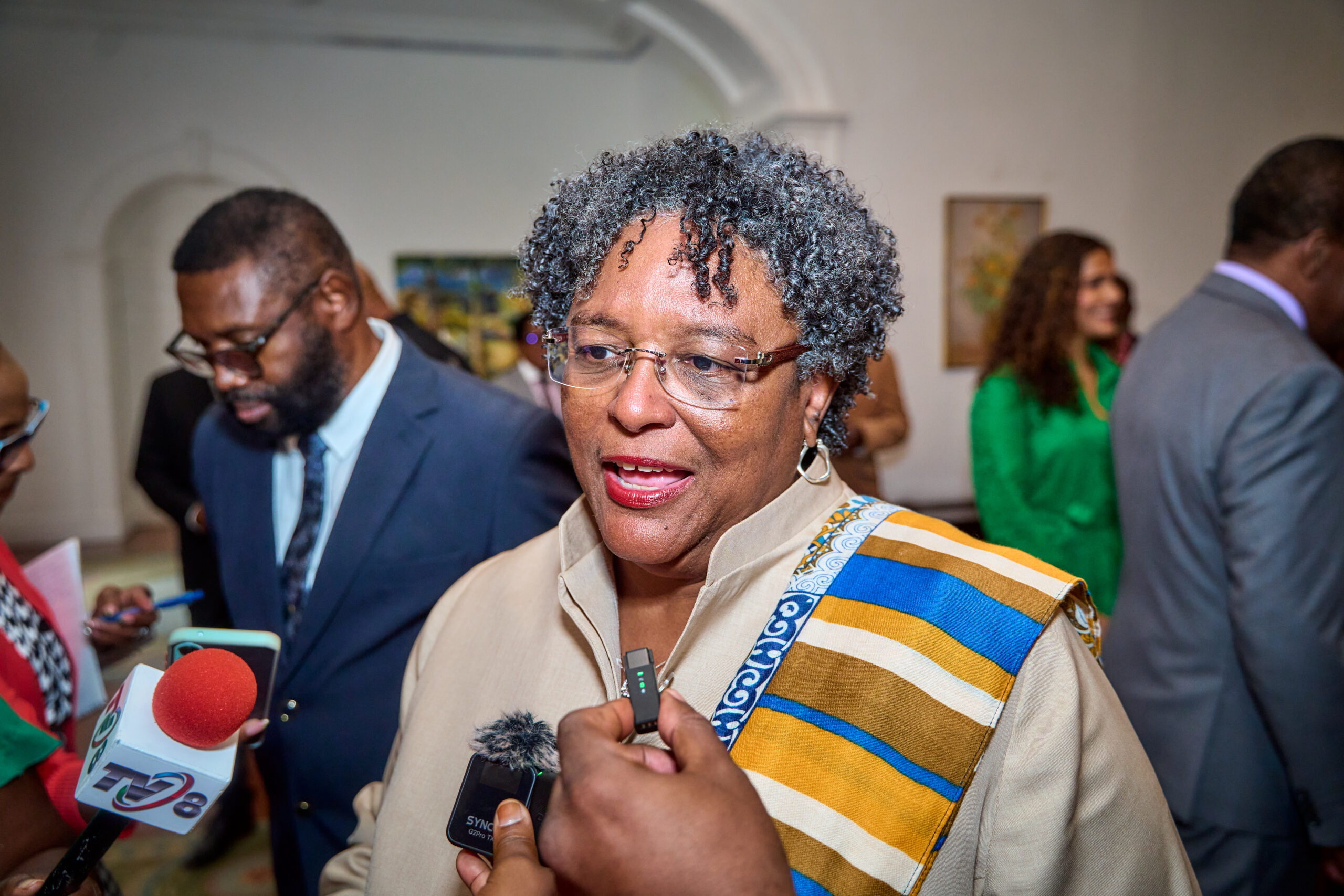
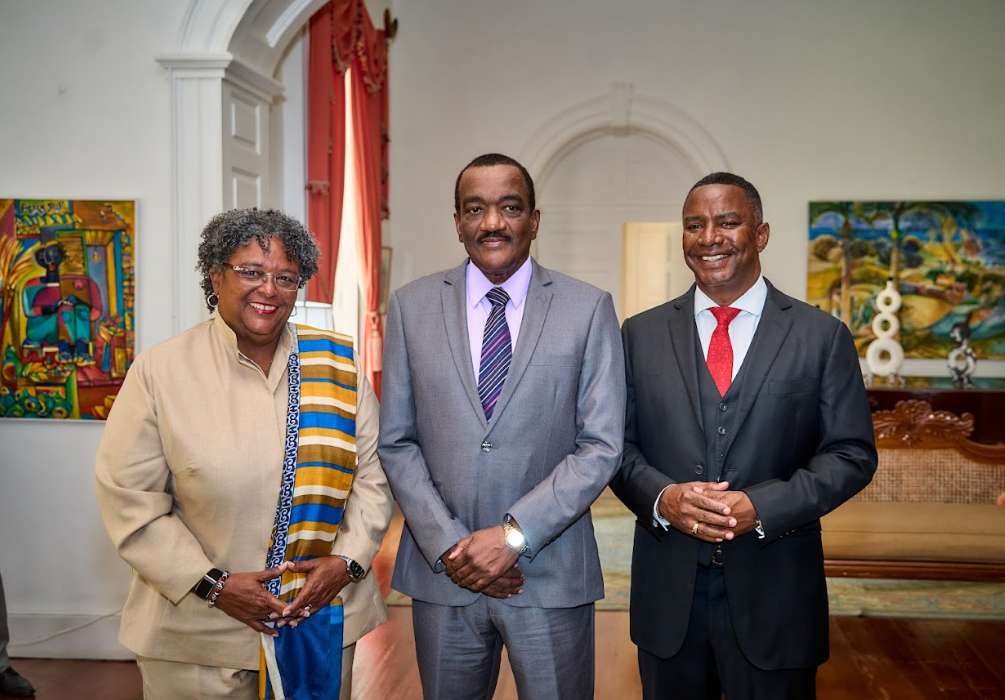
    Barbados Prime Minister Mia Mottley has strongly indicated potential early general elections in 2026, deviating from the constitutionally mandated 2027 timeline. During her Christmas gathering at Ilaro Court, the official residence, Mottley delivered a rallying cry to Barbados Labour Party (BLP) supporters, emphasizing the need for preparedness in the coming year.

    The Prime Minister, who secured unprecedented 30-0 victories in both 2018 and 2022 elections, declared: ‘We are all turning up for work in 2026. If something can be done, it is this Barbados Labour Party that will do it.’ Her address received enthusiastic applause from attendees as she urged party members to remain ‘red and ready’ for potential political mobilization.

    This early election speculation aligns with regional trends, following Saint Lucia’s Prime Minister Philip J. Pierre’s similar decision earlier this month. Political analyst Peter Wickham previously noted the likelihood of Mottley continuing her pattern of early election calls, citing her political history.

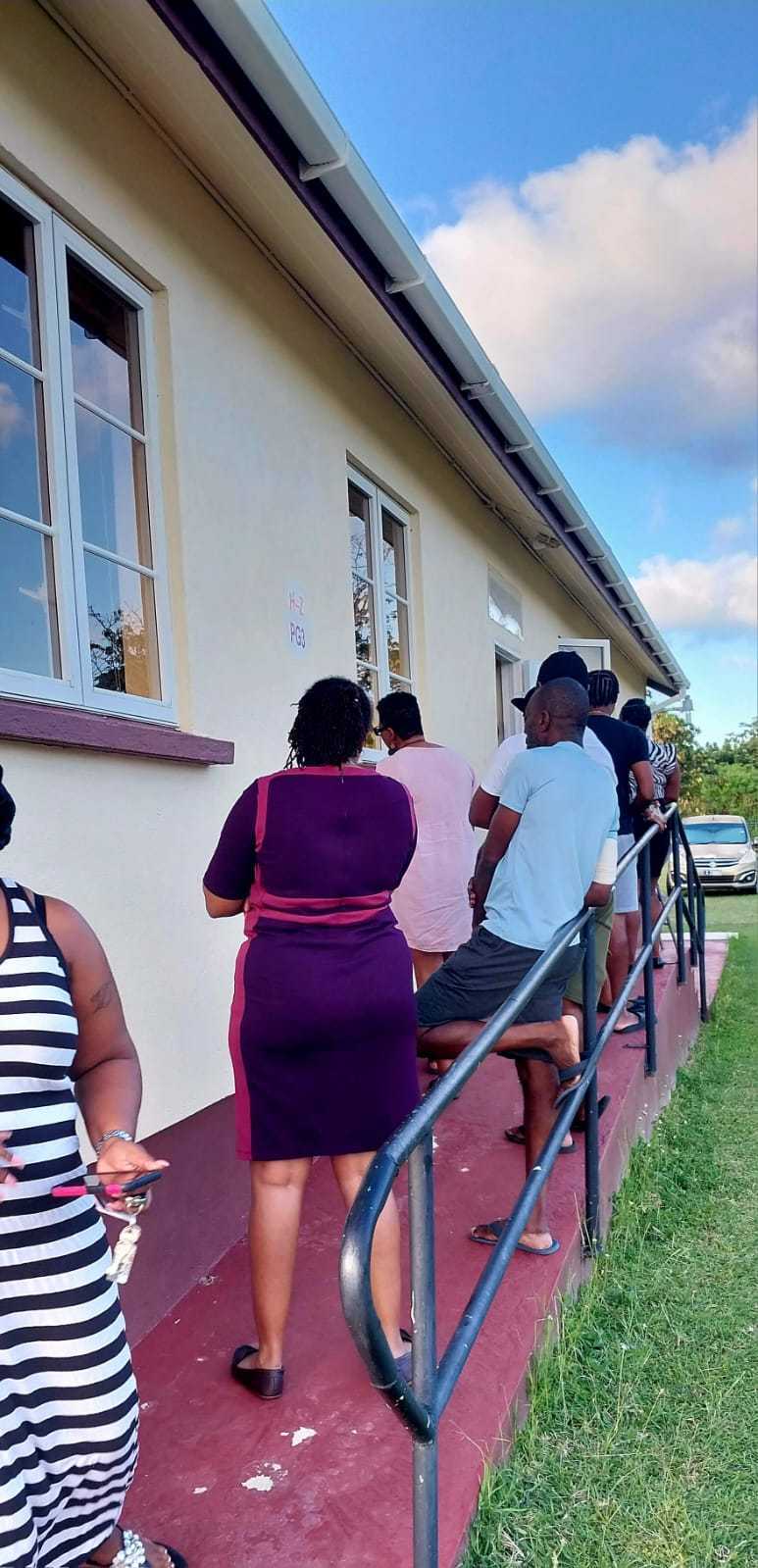
    Several developments suggest election preparations are underway: approximately 2,000 public servants are receiving permanent appointments, teacher vacation leave reinstatements are planned, and significant voter list reforms are progressing. Electoral Boundaries Commission Chairman Ramon Alleyne confirmed the removal of over 8,000 ineligible voters—including 4,923 overseas residents and 3,368 deceased individuals—with a cleaned register targeted for January 31 completion.

    Simultaneously, BLP has addressed parliamentary vacancies created by retiring MPs Dale Marshall (St. Joseph) and Cynthia Forde (St. Thomas), appointing Senator Gregory Nicholls and businessman Ryan Brathwaite as respective replacements. Both governing and opposition Democratic Labour Party representatives have intensified constituency engagements nationwide.

    Mottley framed the Christmas event as a unification opportunity, acknowledging sustained economic progress including 17 consecutive growth quarters, record-low unemployment, and unprecedented foreign reserve levels, while recognizing ongoing challenges requiring continued political commitment.

  • BCCI wants upgraded cargo system implemented at Port

    BCCI wants upgraded cargo system implemented at Port

    Barbadian businesses are facing severe financial strain due to chronic inefficiencies at Bridgetown Port, with the nation’s leading commerce organization revealing that congestion-related costs have reached alarming proportions. The Barbados Chamber of Commerce and Industry (BCCI) has issued an urgent call for accelerated implementation of a new cargo clearance system, citing an annual drain of approximately $19 million in foreign exchange through demurrage charges alone.

    Lalu Vaswani, Chairman of the BCCI Customs and Trade Facilitation Committee, emphasized during a recent press conference that these substantial additional costs are inevitably passed through supply chains to consumers, exacerbating the country’s cost of living crisis. The Chamber is now advocating for decisive government action with established timelines to achieve full pre-clearance implementation.

    The core solution proposed involves fundamentally redesigning Barbados’ trade facilitation framework through pre-clearance procedures that would allow customs documentation to be processed before vessel arrival. This approach could reduce clearance times from five days to 24-48 hours, significantly minimizing exposure to punitive demurrage fees that accumulate when containers are held beyond allotted timeframes.

    Vaswani identified aging port infrastructure, originally designed for significantly lower trade volumes, as a primary contributor to the congestion problems. The BCCI’s reform agenda includes establishing measurable targets, with an initial goal of achieving 50% cargo pre-clearance within twelve months of implementation to demonstrate tangible benefits.

    Further technological enhancements are planned, including an electronic single window system that would streamline approvals across multiple agencies through a unified portal. While acknowledging that external factors like volatile international shipping rates remain challenging, Vaswani noted that government intervention had previously helped mitigate some cost pressures by capping freight charges at historical levels.

    The Chamber insists on universal commitment from all stakeholders, emphasizing that partial participation would undermine the system’s effectiveness. This comprehensive port modernization initiative represents a critical step toward reducing inflationary pressures and enhancing Barbados’ trade competitiveness.

  • Economist wary of financial benefits of cruise tourism to Barbados

    Economist wary of financial benefits of cruise tourism to Barbados

    Dr. Delisle Worrell, former Governor of the Central Bank of Barbados, has issued a compelling call for Caribbean governments to reassess the economic value of cruise tourism through updated data analysis. In his December economic letter, the distinguished economist presents evidence suggesting traditional retail sectors across the region no longer benefit from cruise ship arrivals due to fundamental industry transformations.

    Dr. Worrell identifies three structural shifts undermining local economies: The proliferation of massive cruise vessels now feature extensive onboard shopping complexes offering brands previously exclusive to shore-based retailers. Additionally, the democratization of cruising has altered passenger demographics and spending patterns, with contemporary tourists showing preference for inexpensive imported souvenirs rather than high-value duty-free purchases. Finally, local artisans cannot compete with mass-produced imports on price points, despite offering superior quality and authenticity.

    These market transformations have produced visible economic consequences. The economist cites Punda in Curaçao—once a thriving commercial Mecca for cruise tourists—as now representing a mere shadow of its former glory. Similarly, Bridgetown’s Broad Street in Barbados, which historically flourished with venerable retail establishments and international banking operations, has experienced significant commercial decline. Contemporary travel bloggers now focus on Swan Street’s bazaar rather than the formerly prestigious shopping district.

    Dr. Worrell’s observations extend beyond these documented cases. A recent visit to Bermuda’s Dockyard, despite substantial government investment converting historic naval buildings into commercial spaces, revealed quiet streets and empty shops despite nearby cruise ship presence. The former IMF consultant concludes that the assumed positive economic net balance of cruise tourism requires urgent empirical verification through updated research methodologies.

  • Cave Hill med grads take oath

    Cave Hill med grads take oath

    In a significant milestone for Caribbean medical education, twelve newly minted physicians from the University of the West Indies Cave Hill campus formally entered the medical profession Thursday during a solemn ceremony at Queen Elizabeth Hospital. The graduates, having completed their intensive five-year Bachelor of Medicine and Bachelor of Surgery (MBBS) program, pledged their commitment to medical ethics through the historic Hippocratic Oath.

    Faculty Dean Dr. Damian Cohall addressed the cohort, emphasizing that their oath-taking ceremony marked merely the commencement of their professional responsibilities rather than a culmination of their training. He clarified that provisional registration would enable their transition into internship programs, but stressed this phase demands rigorous accountability and performance evaluation. ‘This internship constitutes far more than merely serving time—it involves continuous assessment leading to full Medical Council registration upon successful completion,’ Dr. Cohall stated.

    The dean notably dispelled any assumptions about automatic internship placements, asserting that positions must be competitively earned rather than expected as entitlements. He simultaneously highlighted Cave Hill’s exceptional educational standards, revealing the campus achieved top performance in recent unified MBBS examinations across Barbados and Trinidad’s St. Augustine campus. Graduate Dr. Liyee Su received special recognition for attaining the highest overall scores and excelling in clinical examinations.

    While celebrating these accomplishments, Dr. Cohall urged graduates to embrace lifelong learning, ethical practice, and compassionate patient care. His sentiments were echoed by QEH Director of Medical Services Dr. Carlos Chase, who reminded the new physicians of their privileged position in one of humanity’s oldest professions. Dr. Chase emphasized the non-traditional nature of medical careers, noting ‘This transcends conventional nine-to-five employment—you carry continuous duty of care responsibilities.’

    Medical Students’ Association president Joshua Grant-Desir reflected on the resilience forged through shared challenges, emphasizing that professional camaraderie would sustain them through future difficulties. Graduating doctor Aleysha Williams acknowledged the demanding nature of their training journey while expressing profound gratitude to faculty, mentors, and family supporters.

    The hybrid ceremony, accommodating virtual participants from Trinidad and Eastern Caribbean nations, included special recognitions for academic excellence. Graduates now await further communication regarding provisional registration and regional internship placements at accredited hospitals throughout the Caribbean.

  • Not ready for work or unfit by design?

    Not ready for work or unfit by design?

    A persistent anxiety reverberates through the employment sector with concerning regularity: employers consistently report that young entrants into the workforce are fundamentally unprepared. The litany of complaints is familiar—deficiencies in communication, independent thinking, and proactive initiative. However, this perceived lack of readiness is not a sudden development manifesting at age eighteen or during job interviews; rather, it represents the culmination of systemic educational and developmental failures that begin in early childhood.

    The foundation of this readiness crisis becomes visible at the earliest stages of formal education. Educators at nursery and reception levels increasingly observe children entering school without foundational abilities once considered basic. These challenges range from difficulties in following simple instructions and inadequate pencil control to incomplete toilet training and an inability to perform basic personal tasks without adult assistance. These observations highlight critical gaps in early development of confidence, motor skills, and self-efficacy—cornerstones of future independence.

    As students progress to primary education, the pattern persists with concerns shifting to academic fundamentals. Educators note declining fluency in reading, deteriorating numeracy skills, and poor recall of basic information such as multiplication tables. The unspoken reality is that these skills were historically reinforced through consistent home and community support—a reinforcement mechanism that has become increasingly inconsistent or absent in contemporary society.

    The transition to secondary education reveals how these early gaps widen into significant deficits. As academic content becomes more demanding, students struggle with shaky foundational skills that affect every subject. Poor reading comprehension hinders learning across disciplines, while weak writing skills mask actual understanding. Organizational deficits are misinterpreted as laziness, and lack of confidence manifests as disengagement—all while education systems prioritize exam results over addressing the missing scaffolding necessary for genuine learning.

    The decline of handwriting offers a particularly revealing case study in this educational crisis. The physical act of writing serves as a cognitive process that strengthens memory, reinforces letter recognition, supports reading development, and builds fine motor skills essential for broader learning. As technology advances, handwriting practice diminishes, leading to deteriorated penmanship that prompts educators to allow typing—addressing immediate legibility concerns while inadvertently weakening the cognitive processes that support deeper understanding.

    These educational deficits do not vanish upon graduation but accompany young adults into vocational training programs and workplace environments. When employers note difficulties with communication, expectation management, and professional adaptation, they are witnessing the end result of years of compounded developmental gaps rather than sudden failures of individual candidates.

    The emergence of artificial intelligence has further complicated this landscape. With AI now capable of generating resumes, cover letters, and application responses, the disconnection between polished documentation and actual capability has never been greater. Educational institutions struggle to detect and restrict AI use, but such prohibitions cannot prevent external utilization of available technological tools.

    This technological shift necessitates a fundamental transformation in both educational assessment and employment recruitment. Evaluation must move beyond polished outputs to demonstrate real-time capability—through interviews requiring verbal explanation of thought processes, practical task completion, problem-solving exercises, and real-time skill demonstration. In an AI-driven world, human interaction skills, adaptive thinking, and responsive communication become increasingly valuable attributes.

    Forward-thinking voices like Philip Tempro of JADA emphasize the critical importance of actual skills over paper qualifications, challenging a system that prioritizes completion certificates over genuine competence while undervaluing technical, creative, and vocational pathways. The resulting surprise at workforce unpreparedness reflects systemic failures rather than individual shortcomings.

    Similarly, employer complaints about unrealistic expectations among young employees reflect an educational system that fails to provide meaningful exposure to workplace realities, progression mechanisms, and the relationship between skill development, effort, experience, and earning potential.

    Addressing this multifaceted crisis requires moving beyond blame directed at youth, parents, or teachers individually. Instead, it demands a comprehensive conversation about multi-level support systems encompassing early childhood development, family engagement, community responsibility, school design, curriculum relevance, and industry partnership. These interconnected elements represent different stages of the same developmental pipeline.

    Historically, communities collectively reinforced learning and development across multiple environments and through various adult influences. While this collective scaffolding has weakened in contemporary society, expectations for capable, work-ready adults remain unchanged despite the erosion of systems that once produced them.

    The fundamental question is not whether young people are ready for work, but whether our education systems, social structures, and collective priorities are prepared to take responsibility for creating the conditions that genuine readiness requires. Without confronting this challenge, we risk perpetuating cyclical debates about educational failure without addressing the systemic design flaws that prevent success.

  • Christmas carelessness could reverse drop in fires – Fire Service

    Christmas carelessness could reverse drop in fires – Fire Service

    The Barbados Fire Service has documented a notable reduction in fire incidents across multiple categories this year, though authorities caution that seasonal complacency during Christmas celebrations could rapidly reverse these safety improvements. Acting Chief Fire Officer Henderson Patrick revealed that emergency responders addressed 1,557 incidents during the initial eleven months of 2025, comprising 64 residential fires, 58 vehicle fires, and 11 commercial property blazes. These figures represent significant decreases of nine percent in both residential and vehicle fires, alongside a four percent reduction in commercial building incidents compared to the equivalent period in 2024.

    Patrick attributed this positive trajectory to enhanced public awareness and improved safety-conscious decision making among citizens. However, he emphasized the heightened vulnerability during the festive period, noting that traditional Christmas activities involving increased cooking, elaborate decorations, extensive travel, and social gatherings substantially elevate fire risks. The Fire Service specifically warned against electrical circuit overloading, unattended cooking appliances, and improper placement of decorative lighting near flammable materials or water sources.

    In his comprehensive Christmas safety message, Patrick urged particular vigilance regarding live Christmas tree maintenance, certified decorative light usage, and overnight unplugging of decorations. The Service additionally reinforced road safety protocols, advocating against speeding, distracted driving, and impaired operation of vehicles following social functions.

    The acting fire chief reiterated the critical importance of immediate emergency reporting through the 311 hotline, emphasizing that prompt notification remains essential for preventing minor incidents from escalating into catastrophic events. Patrick concluded with an expression of continued commitment to public safety education and risk mitigation strategies, while appealing for special community attention toward vulnerable populations including elderly residents, individuals with disabilities, and those living alone during the holiday period.