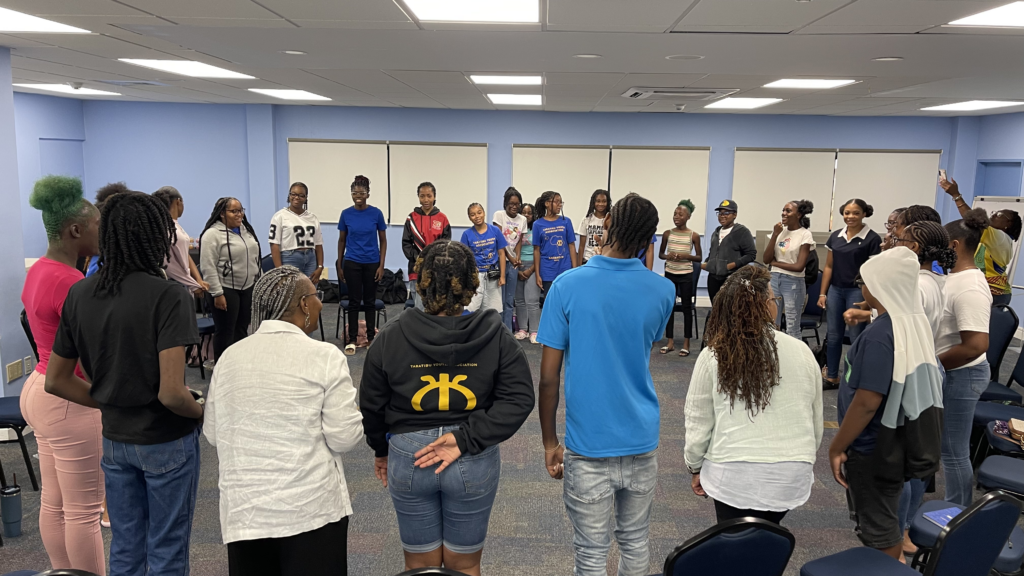
Barbados’ top official for Pan-African Affairs and Heritage is sounding a critical alarm: decades of sidelining the island nation’s own history in national education has left generations disconnected from their core cultural identity, and systemic reform is the only solution to reverse the damage. Trevor Prescod, the minister holding this portfolio, reiterated his urgent call for a complete curriculum overhaul during remarks delivered Wednesday on the margins of a national cultural heritage workshop. He detailed that the gap in historical education stretches across every level of the country’s schooling system, from secondary classrooms through to post-secondary tertiary institutions.
标签: Barbados
巴巴多斯
-

Students prepare for robotics world championship in US
A cohort of talented secondary school students from across Barbados is set to make history this month, representing the small Caribbean island at the 2026 VEX World Robotics Championship in St. Louis, Missouri, following five months of nonstop work to design and build two fully custom competition robots from the ground up.
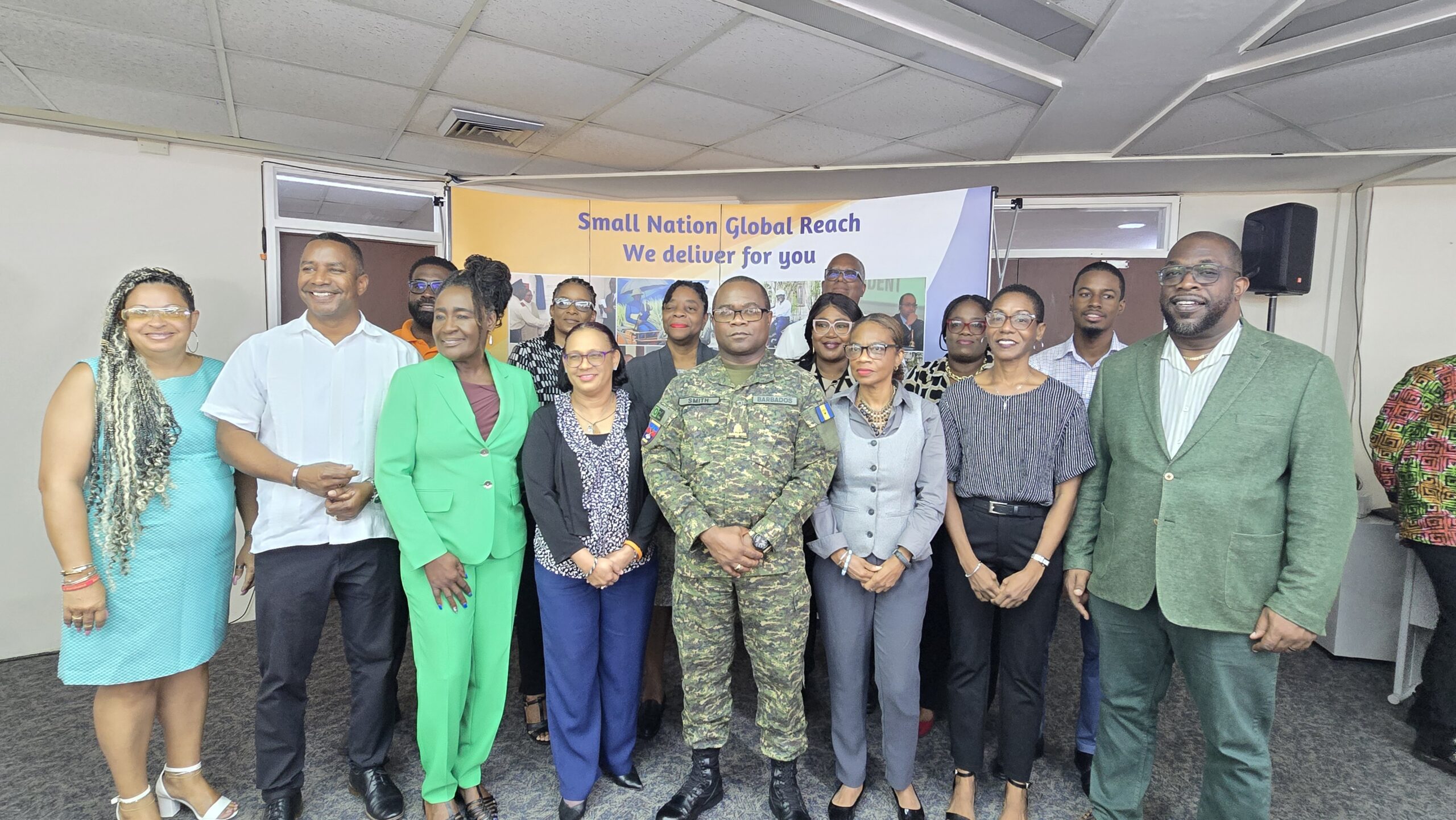
Organized under the banner of the Gears Unboxed 246 Robotics Club, the team draws members from five of Barbados’ top secondary institutions: The St Michael School, Harrison College, Queen’s College, The Lodge School, and the Foundation School. Last week, the young innovators gathered at the Special Education Unit to showcase their months of work to educators, government officials, and program sponsors, demonstrating the core capabilities of their two creations, codenamed *Flying Fish* and *Broken Trident*.
For the team’s volunteer mentors, this milestone is far more than a simple competition trip—it represents a decades-long push to shift Barbados’ relationship with technology from a net importer of foreign ideas and devices to a global exporter of homegrown innovation. “This is about representing the blue, yellow, and black of our nation,” said Shawn Hoyte, a lead coding and robotics mentor and teacher. “I told these young people from day one: this is not beyond us. We can’t keep relying on other countries to build our technology and create our ideas. These are indigenous innovations, built right here by Barbadian youth. They aren’t just leading the way for our country—they are the tip of the spear.”
To reach this point, the team has followed a grueling schedule that far outpaces the average school extracurricular. For five months, members have worked from 9 a.m. to 8 p.m. most days, including weekends, to troubleshoot designs, refine code, and test their robots. What makes the achievement even more notable is that most elite international competitors spend a full year preparing for the championship, while the Barbadian team condensed that entire process into half the time.
Twelve-year-old Paula Bridgeman, a robot builder and driver from Queen’s College, walked audiences through the design of *Flying Fish*, the team’s entry in the championship’s pin-stacking competition, where teams earn points for strategically grouping colored pins. “The autonomous section is where the robot operates entirely on its own, completing all tasks without any human control,” Bridgeman explained. “A single connected pin earns one point, but mixed-color connected clusters give a five-point bonus, so the robot’s positioning and decision-making have to be perfectly calibrated.”
Fifteen-year-old Tykiari Sergeant, a team member from Harrison College, detailed the steep learning curve the group faced to master advanced engineering concepts they had never studied before, including pneumatics and gear ratio tuning. “Every gear on this robot serves a specific purpose—it’s not just for aesthetics,” Sergeant said. “Adjusting the number of teeth on a gear changes the robot’s speed and torque, so we had to test dozens of combinations to get it right. We went through so many iterations because of stability issues, but after hours of research and trial and error, we finally landed on a design that worked.”
Joshua Jupiter, 15, from The St Michael School, explained the team’s advanced technical work on autonomous navigation, noting that they implemented a custom Proportional Integral Derivative (PID) control algorithm to let the robot automatically correct its course during the fully autonomous phase of competition. The team’s second robot, *Broken Trident*, built for the VEX V5 division, features a one-of-a-kind S-shaped intake system engineered to collect and score game balls with far greater efficiency than most standard designs.
The milestone drew praise from top leaders in Barbados’ education sector, with Chief Education Officer Dr. Ramona Archer-Bradshaw in attendance at the demonstration to celebrate the team. Dr. Archer-Bradshaw’s presence was particularly meaningful, as she has been one of the core driving forces behind bringing robotics education to Barbados’ schools for more than a decade. The entire initiative has been made possible by private sponsor support and the volunteer work of teachers who have stepped outside their regular job duties to serve as mentors for the students.
Looking back, Dr. Archer-Bradshaw recalled the origins of the movement back in 2013, when she was a science tutor at Erdiston Teachers’ Training College with a simple but ambitious dream: to embed coding and robotics into Barbados’ national K-12 curriculum to build critical thinking skills among young people. “This journey didn’t start yesterday, and it didn’t start last year—it started back in 2013, when I believed that coding and robotics could change how our children learn to problem-solve,” she shared.
The initiative grew out of an early partnership with the Caribbean Science Foundation and prominent Barbadian scientist Cardinal Ward. After completing personal training in robotics drivetrain design and block coding, Dr. Archer-Bradshaw led a nationwide effort to train teachers across Barbados, an effort that has now resulted in more than 300 local educators earning certification in various VEX robotics platforms.
While qualifying for the world championship represents the highest milestone for the program to date, Dr. Archer-Bradshaw emphasized that the initiative’s true value extends far beyond competition results. “Some people will look at this and say it’s just coding and robotics, but it’s so much more than that,” she explained. “This is a vehicle to teach young people how to think critically, how to solve problems, how to bounce back when you make a mistake, and how to collaborate and communicate with your teammates. Those are skills that will serve them for life, no matter what career they choose.”
The program expanded dramatically in 2022, when the Ministry of Education Transformation supported the integration of coding into nursery, primary, and secondary school curricula, with education reform leaders spearheading sustainable institutional change. The expansion led to the appointment of a dedicated full-time education officer to oversee the program and ensure its long-term growth. When program coordinator Kenneth Harewood first approached Dr. Archer-Bradshaw last year to request support for sending a team to the world championship, she issued a clear challenge: this could not be a one-off event. The team had to build a pathway for future Barbadian teams to compete in years to come. The team met that challenge, clearing the way for this month’s 2026 trip and establishing a sustainable pipeline for future participation.
The Gears Unboxed 246 team enters the championship focused on their ultimate goal of bringing home the world title, a win they frame as a history-making moment for Barbados’ education and technology sectors. “These students deserve to be celebrated, because nothing like this has ever been done for Barbados,” Hoyte said. “I love taking on challenges, and even with all the hard work, nothing compares to the pride of watching these young people represent our country on the world stage.”
Closing out the demonstration, Dr. Archer-Bradshaw credited the initiative’s success to the hundreds of dedicated teachers across the island who have poured extra time into making the program a life-changing opportunity for Barbadian youth. “I’m so happy that the vision and the dream of coding and robotics in our schools has finally come to pass,” she said, as the audience erupted in applause for the departing team.
The 15-member team includes competitors across two divisions: the VEX IQ team features Virineia Lakuboo (1st form, Harrison College), Joshua Jupiter (3rd form, St Michael School), Paula Bridgeman (2nd form, Queen’s College), and Tykairi Sargeant (4th form, Harrison College). The VEX V5 team includes J’nai Thomas (5th form, Christ Church Foundation), Nathan Whittaker (4th form, Alleyne School), Ashley Chase (5th form, St Michael School), and Tyler Marshall Branker (5th form, Christ Church Foundation).
-

‘No retreat’: Face challenges, pursue dreams, President Bostic tells camp boys
On a recent Wednesday visit to the annual Boys 2 Men Easter Camp hosted at St James’ Western Light Church of the Nazarene, Barbados President Jeffrey Bostic delivered a stirring, interactive address centered on building resilience, claiming purpose and nurturing unshakable self-belief among the nation’s young men. Speaking directly to the teen campers, Bostic framed life’s unavoidable hurdles not as permanent barriers, but as natural stepping stones along the journey to personal and professional success, using a simple wooden chair to illustrate his point. If an obstacle blocks your path, he explained, you do not turn around and abandon your goals — you find another way forward. “Challenges will always be in your life, but you do not allow the challenge to stop you from realising your dreams. Find a way. Face the challenge… no retreat, no surrender,” Bostic told the gathered youth. “If you fall, you pick yourself back up, dust yourself off, and start all over again.”
The president turned next to one of the most pressing shared challenges facing many of the camp’s participants: growing up in fatherless households. Acknowledging that this gap can create significant hardships, he emphasized that communities, faith groups, schools, and targeted mentorship initiatives like Boys 2 Men can step in to provide the guidance and support young men need to thrive. Drawing from his own experience growing up in Barbados, Bostic shared that many people from his generation also grew up without fathers in the home, but benefited from positive father figures in community spaces, local sports teams, churches, and school campuses who helped steer them toward healthy, productive lives.
To further drive home his message of possibility, Bostic pointed to two of Barbados’ most iconic national heroes — legendary cricketer Sir Garfield Sobers and global music icon Rihanna — as examples of how humble origins do not limit extraordinary achievement. He also called on the teens to embrace the core philosophy of civil rights leader Dr. Martin Luther King Jr., encouraging them to pursue excellence in every path they choose, stressing that success is not measured by being first, but by giving one’s full effort in every endeavor.
After the prepared address, Bostic opened the floor for questions from campers and counsellors, who quizzed him on his own path to the presidency, his personal life, and updates on the upcoming Chapman Challenge youth initiative. Bostic revealed that the programme, which targets young people ranging from third-grade primary school students to 24-year-old young adults, is in its final stages of development and will launch imminently. Designed to build the mental and psychological preparedness young people need to access existing opportunities, the initiative aims to close the persistent gap between youth and the resources available to help them succeed, he explained. “We have to prepare them to make use of the opportunities… and if we start early, we will see a difference,” Bostic said.
Maria Ambrose, who co-directs the camp with her husband Ambrose Carter, echoed the president’s praise for targeted youth empowerment work, noting that the majority of the camp’s participants come from single-parent households headed by women. Over the course of the one-week programme, facilitators work to instill core life skills and positive habits, from personal conduct to safe online behavior, she explained.
The Boys 2 Men camp is run by the Charity Ammar Empowerment Network, and 2024 marks its third cohort of participants. The daily programme runs from 9 a.m. to 3 p.m. each day for a full week, serving 20 young men between the ages of 13 and 19. A parallel programme for young women, called Preparing Princesses, follows the same core structure. In addition to mentorship and character building, the camp exposes participants to practical, income-generating trades including hat-making, handmade soap production, sewing, baking, and pottery. These hands-on skills are designed to give young people tools to build financial independence and pursue entrepreneurship if they choose. At the close of the president’s visit, campers and co-director Maria Carter presented Bostic with two handcrafted gifts as a token of gratitude for his time, insight, and ongoing support for youth empowerment efforts across the country.
-

Prescod urges Landship ‘rebirth’, slams ‘commercialisation’
One of Barbados’ most cherished, centuries-old community cultural institutions is facing an identity crisis as growing commercialization for tourism pulls it away from the working-class grassroots roots that gave it life, the island’s Minister for Pan-African Affairs and Heritage Trevor Prescod has warned.
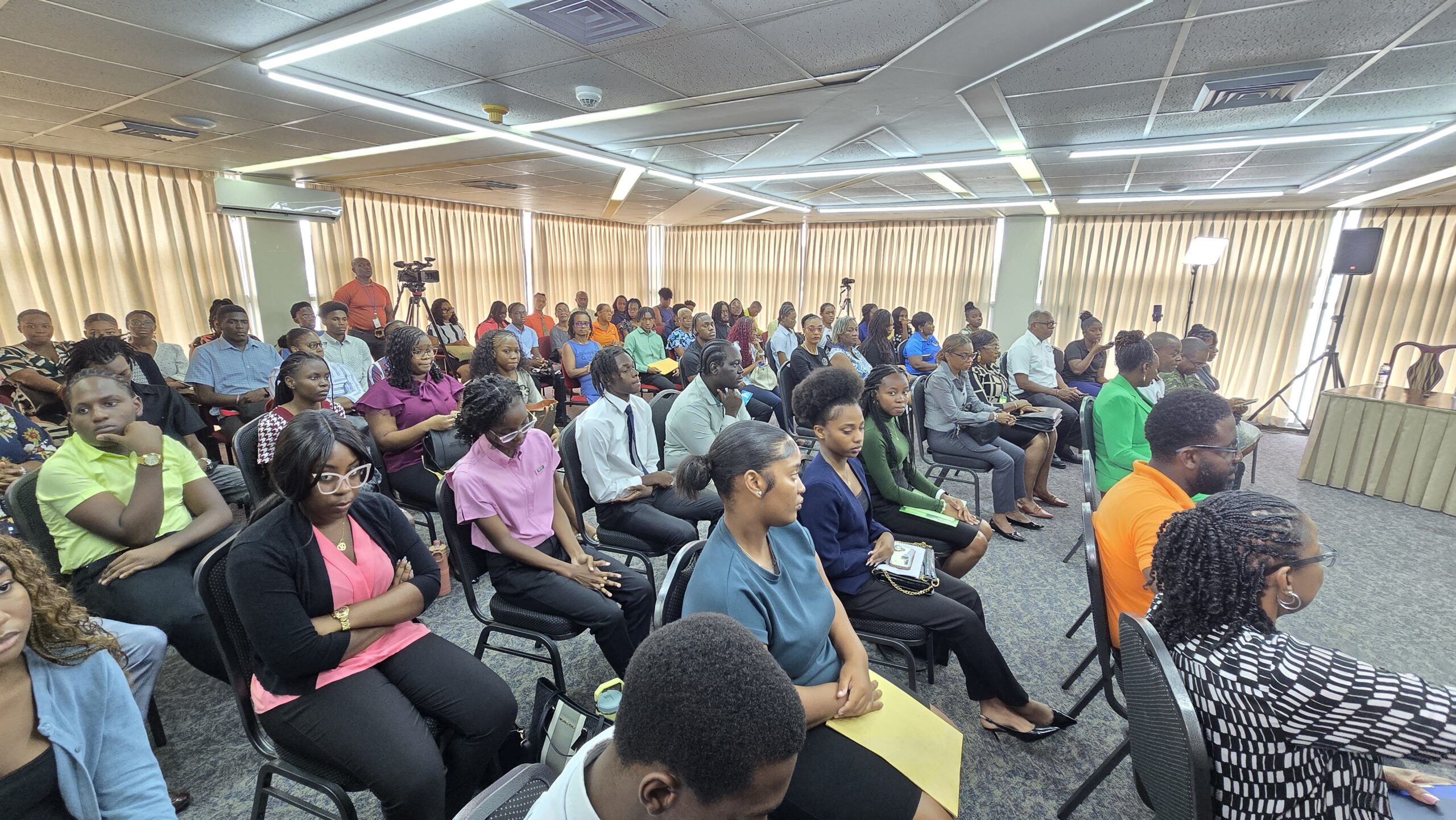
Prescod shared his concerns Wednesday during a cultural heritage workshop hosted by the Pinelands Creative Workshop (PCW), arguing that the core spiritual essence of the Barbados Landship can only survive when anchored in the rural village communities that spawned the movement more than 160 years ago.
Originating in 1863 in Licorish Village, My Lord’s Hill, the Landship is a one-of-a-kind cultural tradition modeled after a seafaring vessel, featuring naval-style hierarchical ranks, community parades, and choreographed movement sequences designed to simulate a ship sailing across dry land. Beyond its performative elements, the movement was originally founded as a mutual aid society for working-class Barbadians: it provided members with collective fellowship, cooperative savings programs, and funeral support, while using immersive music, dance, and ceremonial practice to strengthen and preserve Afro-Barbadian cultural identity and local community bonds. The tuk band music that accompanies Landship performances even carries layered historical roots, adapted from the drum-and-fife marching traditions of the 19th century British military.
Prescod, who represents Licorish Village as part of his St Michael East constituency, notes this small community remains one of the only places where the Landship still operates according to its original community-focused model. Today, by contrast, the tradition has shifted dramatically: from being woven seamlessly into the fabric of daily village life, it now exists primarily as a curated spectacle for national civic events and international tourists.
“I still believe that the landship should go back to the village occasionally. That’s where the spirit and the dynamics of the life that formed the landship itself emerge,” Prescod said, reflecting on the rich, informal grassroots cultural life that once sustained local community bonds. He recalled a bygone era when neighborhoods were filled with spontaneous street performances, including the familiar sound of a penny whistle player busking early in the morning beneath residential windows — casual, community-rooted expression that shaped the Landship from its earliest days.
In a subsequent interview with Barbados TODAY, Prescod expanded on his concerns, explaining that the Landship’s historic role as a self-sustaining community support network has eroded significantly amid the shift to commercial tourism-focused performance. The movement once operated as a formal economic and social safety net for working-class members: it ran collective savings schemes known locally as “susu” or “meeting turn” that helped members fund home construction, and offered practical and financial support to families grieving the loss of a loved one.
“It has been commercialised and because it has been commercialised, it is losing its indigenous value,” he told the outlet.
Despite these growing challenges, efforts to safeguard the tradition are already underway. The Barbados Landship Association is currently working to expand public engagement with the movement through school education programs and social development community projects. Just recently, the tradition earned international recognition when UNESCO added it to the 2003 Convention List of Intangible Cultural Heritage in Need of Urgent Safeguarding, a designation that draws global attention to at-risk cultural practices.
Still, Prescod emphasized that international recognition alone is not enough to preserve the Landship’s core identity. He warned that modern commercial adaptation must not erase the tradition’s original purpose and cultural meaning, and called on the Pinelands Creative Workshop to support efforts to revive its grassroots roots. For the minister, the work ahead goes far beyond simple preservation of the status quo.
“It’s not even a case of retaining it now,” he said. “We have to give it a rebirth.”
-

Central Bank, BARP partner to advance digital literacy for seniors
Barbados is taking a major step toward inclusive digital financial transformation, as the Central Bank of Barbados and the Barbados Association of Retired Persons (BARP) have formalized a new collaborative partnership focused on empowering the island nation’s senior population. The newly signed Memorandum of Understanding, finalized this week, paves the way for a targeted digital literacy initiative designed to give older adults the practical skills they need to engage confidently with modern digital financial systems.
At the core of the training program is preparation for BiMPay, Barbados’ upcoming national instant payment system scheduled to launch to the public on June 12. Beyond instruction on using this new platform, the program will also cover fundamental skills for navigating a range of essential digital financial tools that are increasingly central to daily commerce and personal finance management. The multi-pronged initiative has four key goals: to enable seniors to complete routine financial transactions independently via BiMPay, to deliver immersive, hands-on training using dedicated digital devices, to narrow the intergenerational digital divide, and to expand meaningful financial inclusion for older Barbadians. The partnership also reinforces institutional collaboration between the Central Bank and BARP, advancing national digital modernization targets while driving early awareness and adoption of the new BiMPay system.
Dr. Kevin Greenidge, Governor of the Central Bank of Barbados, emphasized that inclusive growth is a non-negotiable foundation of the country’s digital transition. “Digital transformation must work for everyone. As we introduce systems like BiMPay, we must ensure that our seniors are not left behind, but are instead equipped with the knowledge and confidence to benefit fully from these advancements,” Greenidge stated. “This partnership with BARP allows us to take a practical, hands-on approach to bridging that gap and strengthening financial inclusion.”
Under the terms of the agreement, the Central Bank will take the lead on program implementation. The institution will sponsor and supply tablets to enable hands-on practice for participants, develop a comprehensive, age-adjusted BiMPay training curriculum customized to meet the needs of older learners, and deploy experienced technical staff and dedicated BiMPay specialists to lead interactive training sessions across the program.
-

FOD president wants proactive approach in tackling gun violence
Two deadly shootings that unfolded over Barbados’ Easter weekend have amplified already growing fears over the nation’s accelerating gun violence crisis, prompting senior lawmaker and attorney Karina Goodridge to push for sweeping policy changes: a nationwide zero-tolerance mandate for homicide and the immediate launch of a proactive early warning system to stop attacks before they occur. In a firm, clear statement released to the public Wednesday, Goodridge — who also serves as president of the civic organization Friends of Democracy — argued that the small island nation can no longer afford to downplay the threat or treat it as an abstract concern, as brutal killings increasingly take place in crowded public spaces, carried out by perpetrators acting in open defiance of the law.
Goodridge emphasized that Barbados is confronting a shifted, dangerous landscape that demands urgent action: as of the Easter weekend, the country had already logged at least 18 homicides for the year, a sharp upward trajectory that she called alarming. Many of these killings have happened in broad daylight, in areas packed with bystanders, and in contexts that offer no logical explanation for the violence. “Each life lost is a tragedy… [and] a stark reminder that complacency is no longer an option,” she said.
Her call to action follows three separate shooting incidents that took place on Easter Monday alone, which left two men dead and multiple other people injured, pushing community anxiety over the growing violence to new heights. Goodridge pushed back against the common framing of these killings as isolated, disconnected events, arguing that what Barbados needs instead is a unified, preventive national strategy that addresses violence at its roots.
“The time has come to adopt a zero-tolerance approach to homicide. Violence, especially gun violence, has ripple effects that permeate society,” she explained, noting that the damage of a single attack extends far beyond the immediate victims and their families, tearing at the fabric of entire communities. Drawing on lessons from neighboring Caribbean nations, Goodridge pointed to successful interventions in Trinidad and Tobago, where law enforcement has leveraged data-driven policing and rapid response frameworks to anticipate criminal plots and break them up before violence can occur. She argued that Barbados can adapt these proven models to fit its own context, building systems that can detect, prevent, and disrupt violent acts before they lead to tragedy.
At the center of Goodridge’s proposal is the creation of a holistic early warning system that integrates three key pillars: active community engagement, intelligence-led policing, and targeted enforcement. Key measures she outlined include boosting sustained police presence in areas identified as high-risk for violence, using data-driven crime mapping to spot emerging patterns of criminal activity, and running coordinated, multi-agency operations to remove illegal firearms from communities across the country.
The senator stressed that enforcement measures alone cannot reverse the trend of rising violence. She called for complementary social programs that address the root causes that drive violent crime, including unaddressed mental health challenges, widespread substance abuse, and a lack of positive mentorship for at-risk young people. Highlighting one of the most recent Easter weekend attacks — the fatal shooting of 22-year-old Raul Clarke in Oistins — Goodridge said the tragedy serves as a stark warning of the immediate danger that unregulated illegal firearms pose to public safety, adding that “Barbados cannot wait for tragedy to strike again.”
“Removing illegal guns, combined with community vigilance and social interventions, is a proven formula for reducing violent crime and safeguarding lives. Every confiscated weapon is a potential life saved,” she argued. Digging into the deeper drivers of the current violence epidemic, Goodridge noted that core social and familial breakdowns — including inadequate parenting support, unaddressed mental illness, and rampant substance misuse — are at the root of the crisis. To tackle these issues, she called for closer collaboration between families, schools, and local community organizations to instill core values of respect and personal accountability in children from a young age.
Goodridge also emphasized that supporting frontline law enforcement officers is a non-negotiable part of any effective strategy, noting that officers need timely compensation, ongoing specialized training, and dedicated mental health resources to carry out their work effectively. “Supporting our police with timely payments, adequate training, and mental health resources is not optional – it is essential for effective enforcement and deterrence,” she said. In addition to supporting law enforcement, she urged national and local authorities to prioritize transparency and ongoing public engagement, proposing regular town hall meetings and deeper formal partnerships between police and community groups as core components of a national crime prevention strategy.
Goodridge concluded that Barbados must build a national culture where violence of any kind is never accepted, and where citizens feel both safe from harm and empowered to report potential threats to authorities before violence occurs. Warning that continued inaction will only allow the crisis to escalate further, she noted that the country has the resources and capacity to address the problem decisively — but collective political, social, and community will is required to make meaningful change. “What is required now is resolve: political, social, and communal,” she said.
-

BRA advises early filers to refile 2025 Tax Returns following PIT update
Barbados’ top tax regulatory body has announced a mandatory refiling requirement for more than 3,000 individuals who submitted their 2025 Personal Income Tax (PIT) returns ahead of the rollout of an updated official form.
The Barbados Revenue Authority (BRA) confirmed that all returns submitted prior to March 27, 2026, were completed using an outdated version of the form. The previous iteration failed to incorporate key adjustments rolled out as part of the 2026 national budget: expanded tax credits and revised income thresholds, which were formally unveiled by the Minister of Finance in a March 16, 2026 address. To guarantee that eligible taxpayers can access the full benefits granted by these new budget provisions, all prematurely filed returns will be removed from the system.
BRA Revenue Commissioner Jason King stressed that precision during the tax filing process is non-negotiable for both the agency and taxpayers. “This update is specifically designed to make sure taxpayers get every benefit they are entitled to from the enhanced credits and expanded income thresholds we introduced last month,” King explained. “That said, it is critical that people set aside a few minutes to go over their personal information carefully before they resubmit. Getting the details right at this early stage avoids processing delays and ensures you walk away with all the eligible benefits.”
Beyond the refiling mandate, the BRA has also flagged a separate issue impacting a subset of taxpayers who already filed using the updated form: incomplete or erroneous third-party submitted data.
By legal requirement, all third-party entities including employers, pension providers, labor unions and unemployment agencies were required to submit relevant statutory data, including PAYE schedules, pension income records, union dues documentation, unemployment benefit statements, and other third-party issued payment records, by February 28, 2026. However, the BRA reports that in a number of cases, this critical data has not yet been uploaded to taxpayer accounts, or contains inaccuracies that could throw off the final calculation of a filer’s tax liability or benefits.
King urged individual taxpayers to take personal responsibility for verifying the information tied to their accounts, rather than relying on third-party submissions to be automatically correct. “Taxpayers should never just assume that their pre-filled records are complete and accurate,” King noted. “It is absolutely essential that every person check that all relevant information has been uploaded to their account and that all entries are correct before they finalize their filing. A quick 10-minute review can mean the difference between a seamless filing process and unnecessary, time-consuming complications down the line.”
The BRA clarified that only the original third-party submitting entity, such as an employer or pension administrator, has the authority to correct errors or missing information in their submitted data. In line with this, the agency is encouraging all taxpayers, regardless of whether they are affected by the refiling mandate, to carefully review their BRA accounts, confirm all required data is present and accurate, and ensure their final submission is completed using the most up-to-date version of the 2025 PIT form.
-

Government launches programme to assist most vulnerable
Facing persistent global economic turbulence driven by volatile energy markets and stubbornly high inflation, the government of Barbados is rolling out a targeted Cost of Living Cash Credit program, a core policy included in the latest national budget, designed to ease financial strain on the country’s most vulnerable residents. First disbursements are scheduled to begin April 20, with senior pensioners and recipients of special needs grants prioritized in the program’s opening phase.
During a formal press briefing hosted at the National Insurance and Social Security (NISS) headquarters on Culloden Road, Finance Minister Ryan Straughn and NISS Chief Executive Officer Kim Tudor walked reporters through the administrative structure of the relief package, clarifying eligibility rules and disbursement processes for the public. Straughn framed the initiative as a proactive, forward-thinking intervention to provide much-needed financial certainty for households amid ongoing global market uncertainty.
Straughn noted that while global oil prices have experienced temporary dips in recent months, the underlying volatility of energy markets remains an outsized risk for small island developing states like Barbados, which rely heavily on energy imports. “Given all the uncertainty that’s taking place within the energy space, we wanted to make sure that we give Barbadians the opportunity to be able to plan their budgets over the course of the next 12 months,” he explained. He added that the cash credit complements broader government actions, including a completed fuel price hedge that has stabilized domestic fuel costs for consumers, to insulate the country from international market swings.
One key clarification the minister emphasized during the briefing is that the cash credit is a one-off targeted relief measure, not a permanent increase to standard national insurance pensions. He addressed widespread confusion among residents, many of whom had expected an adjustment to their regular April pension checks: “The cash grant is separate and distinct from the pensions that are paid by the National Insurance. The reason that they did not see an increase on the pension check is because the cash credit is not tied to your pension. Eligibility follows the framework laid out in the national Budget.”
NISS, which has been tapped to administer the bulk of payments, will draw on lessons and logistics infrastructure developed during previous large-scale government relief disbursements to streamline the process. Tudor confirmed that for the vast majority of pre-registered eligible beneficiaries, no additional action is required to receive funds. Payments will be issued on the 20th of each month, or the immediately preceding business day if the 20th falls on a weekend or public holiday.
“For existing NIS and public sector pensioners, as well as current special needs grant recipients, we already have your contact information and payment details on file. If you are accustomed to receiving a cheque, you will receive a cheque. If you receive your pension via direct bank lodgement, it will come via lodgement. You don’t have to do anything,” Tudor advised. That said, two specific groups of potential beneficiaries are required to complete an in-person registration process to access the benefit: people over the age of 65 who are unemployed and do not receive any local or international pension, and new welfare recipients who did not participate in 2023’s Solidarity Allowance program.
Registration opened this week at the Steel Shed in Queen’s Park, and will remain open for the next two weeks. Applicants must bring valid government-issued photo identification, and those requesting direct bank deposit must also bring recent bank statements to confirm account details. Tudor also reminded the public of a strict eligibility cap: any pensioner with an annual income exceeding BBD $50,000 does not qualify for the credit, which is reserved exclusively for Barbadian residents facing tangible cost-of-living hardships.
Beyond the core cost-of-living credit for low-income vulnerable groups, the government is also activating a new multiple births support benefit. Families with multiple children under the age of five born from a single pregnancy are invited to submit birth certificates and banking details to the newly formed Social Empowerment Agency, an amalgamation of the former Child Care Board, Welfare Department, and National Assistance Board.
Straughn framed the rollout of these two programs as a key step in the government’s broader mission to modernize public service delivery and streamline inter-agency data sharing. He pointed to the upcoming June launch of the BiMPay digital payment platform as a transformative milestone that will revolutionize how the government disburses funds to citizens. “As we seek to harmonise our systems, it is going to be important that persons are confident that once they share the information with a specific agency, we can process that information very quickly,” he said. “It is really my desire that the government and the country will be able to move to a different stage of being able to deliver all types of government payments in a much more seamless way.”
While monthly disbursement is the default option to support ongoing household budget planning, the government has added flexible payment scheduling to accommodate different needs. Beneficiaries who prefer to receive their credit on a quarterly or annual basis can opt into these alternative schedules during the April-to-June opt-in window, with the new payment frequency taking effect in the third quarter starting September. With the first payments set to reach accounts on April 20, government officials project that approximately 60,000 Barbadians will benefit from the program over the coming 12 months, and express confidence that the targeted, focused strategy will provide meaningful relief amid ongoing global economic uncertainty.
-

Retired judge sues State, ex-CJ, alleges unlawful removal
A landmark legal challenge has rocked Barbados’ judicial sector, as retired High Court Justice Dr. Sonia Richards has brought a sweeping constitutional claim against the state of Barbados and its former top judicial officer, Sir Patterson Cheltenham. The unprecedented suit alleges multiple violations of Richards’ fundamental constitutional rights, including being unlawfully locked out of her official chambers and pushed out of her judicial post against established law.
Filed by Richards last year and formally served on all named respondents just last week, the 25-page legal filing lays out a detailed series of grievances against the two defendants: the Office of the Attorney General, listed as the first respondent, and Sir Patterson, named in his former capacity as Chief Justice at the time of the alleged incidents. Richards, who was appointed to the High Court bench in April 2006 and formally left the judiciary in May 2022 at the age of 66, outlines multiple claims against the pair, including breach of constitutional protections, defamation, violation of her judicial employment terms, and severe personal harm stemming from the alleged actions.
Per the court documents dated April 4, 2025, Richards is seeking multiple legal remedies, including exemplary and vindicatory damages, legal costs permitted for two senior counsel, accrued interest, and any additional relief the court deems appropriate. She has also asked the court to issue formal declarations confirming that the respondents violated core constitutional rights: protection against uncompensated property seizure, right to equal protection under the law, and protection against inhumane or degrading treatment.
The core incident at the center of the suit dates back to April 2022, just over a month before Richards’ scheduled retirement. Richards alleges that on April 6, 2022, Sir Patterson ordered her to surrender her official building access swipe card and office keys, a demand she refused. Six days later, when she arrived for work at the Supreme Court Complex on White Park Road, she found neither her key nor swipe card worked to grant entry. Though security escorted her into the building, she discovered the lock to her office had been replaced, and her nameplate had been removed from the door. When she ultimately gained entry to the space, she found unfamiliar files left inside, and later learned an acting judge had already been assigned to use the office. While her access card was reactivated shortly before her official retirement, she never received a replacement office key, she claims.
Beyond the April 2022 lockout incident, Richards alleges the event was the end result of years of unfair treatment in her role. She claims she was consistently assigned a heavier caseload than her fellow judges, routinely working until 9 or 10 p.m. on weekdays. The retired justice also argues the lockout amounted to defamation, as it implied to fellow judicial staff, legal practitioners, and the general public that she had acted improperly and no longer held authority to occupy her office.
On the matter of her tenure extension, Richards notes that six months before she turned 65—the mandatory retirement age for judges without an extension—she submitted a formal request to the prime minister for a two-year extension of her term. She was ultimately granted only a one-year extension by the then-governor general, but she alleges the required consultation between herself and the viceroy, mandated under Section 84(1A) of the Barbados Constitution, never took place.
Richards says the alleged actions of the defendants and other senior judicial and government officials left her with severe negative health impacts, including clinical depression, social withdrawal, loss of appetite, chronic insomnia, and a reluctance to leave her home.
When contacted for comment this Tuesday, Attorney General Wilfred Abrahams declined to share further details beyond confirming he was aware of the legal action. Sir Patterson, however, issued an emphatic denial of all claims during an exclusive interview with Barbados TODAY. “I reject all of the assertions in there… deny all, reject all,” the former Chief Justice stated. He added that he had already held preliminary discussions with the Attorney General about legal representation, and was waiting for confirmation on which external counsel would be assigned to defend him in the case. No hearing date has been scheduled for the suit as of yet.
-

Two shot dead, three hurt in holiday gun attacks
A string of unconnected gun violence incidents across Barbados on Easter Monday has left two men dead, including a 22-year-old father of two, and three other people injured, pushing local communities to demand immediate, decisive action from law enforcement to curb rising violent crime.
The youngest fatality, Raul Clarke from Gall Hill, Christ Church, was enjoying the final hours of the popular annual Oistins Fish Festival with a group of people around 10:05 p.m. when a sudden conflict erupted. Shots rang out into the crowd, striking Clarke, an unidentified second man, and a woman. Clarke was rushed to the island’s main Queen Elizabeth Hospital by private vehicle, but he succumbed to his wounds shortly after arrival. The other two injured victims were transported by emergency paramedics and are currently receiving care for non-life-threatening injuries.
When reporters from Barbados TODAY visited Clarke’s tight-knit Gall Hill neighborhood this week, neighbors remembered the young father, whose second child is only a newborn, as a polite, helpful member of the community. “He didn’t deserve that; nobody deserves that,” shared one long-time neighbor, a mother who previously lost two of her own children to gun violence eight years apart. “I know how his mother must feel right now. It’s very sad.” Clarke’s immediate family was too overwhelmed by grief to speak to reporters during the visit.
Hundreds of kilometers north in the parish of St Michael, two more separate shooting incidents unfolded during the island’s public Easter beach celebrations. First, just before 7 p.m., officers from the Hastings/Worthing police division responded to reports of gunfire near Brownes Beach. Upon arrival, they discovered the body of an unidentified man lying close to a local commercial establishment. Roughly two hours later, at St Stephen’s Hill – a neighborhood long labeled as a known crime hotspot – a car pulled up alongside a group of people gathered outside a private residence. A passenger exited the vehicle and fired multiple shots, wounding one man before fleeing the scene.
Acror the affected areas, residents and local business owners have voiced growing frustration and exhaustion with the persistent cycle of gun violence that has upended daily life on the Caribbean island. Many business leaders warned that the escalating crime wave is already hurting local commerce and risks damaging Barbados’ reputation as a safe tourist destination, the backbone of the national economy.
“It’s about time that this foolishness stops, because it doesn’t help anyone,” one long-time St Michael resident told reporters. “It’s just leaving a trail of fatherless children behind from all this senseless killing. It ain’t worth any of it.”
Jojo, a small business owner operating near the St Stephen’s Hill area, said while she refuses to live in fear, the constant proximity to violence has left her weary. “This happened pretty close to my shop, and I work right out by the road. If something went wrong here, there’s nowhere for me to run,” she explained. “I’d feel safer having another person with me, but it shouldn’t have to be a requirement just to run a business.”
Another nearby business owner, who asked to remain anonymous out of safety concerns, shared that even though he does not reside in the neighborhood, his family has grown increasingly worried for his well-being. “I try not to think about it too much, because the truth is you can’t be safe anywhere, no matter what you do,” he said. “Whether you’re inside, outside, at work – you can’t control when and where violence will hit.” He added that the ongoing crime wave already threatens his customer base: “You don’t know how your customers feel about coming here. We still have to wait and see what the long-term impact on business will be, beyond the personal stress.”
Arkay, a 10-plus year business owner who operates and lives near the Montgomery playing field in Cave Hill, has joined the growing chorus calling for a far more aggressive police crackdown on violent crime, even suggesting combining national police resources with the Barbados Defence Force to root out criminal networks. “The police have got to do their work,” he stressed. “If they need to lock down high-crime areas, get the criminals off the streets, even if they bring in the Defence Force to help – they just need to get the job done.”
A former taxi driver, Arkay recalled that he once proudly boasted to visiting tourists about Barbados’ historically low crime rate, but said that reputation is now a thing of the past. Today, the violence has reshaped daily life and hurt local business: “By seven o’clock at night, everybody is off the streets. Before, people would come down to the bars, have a drink, then head home. Now nobody wants to come out at all.”
He warned that if the crisis is not addressed quickly, it will eventually deter international travelers from visiting the island, with devastating consequences for the entire national economy. “If it’s affecting Barbadian citizens, of course it’s going to affect visitors too. The government and police need to do something about this now,” he said.
Arkay also highlighted a worrying shift in the demographics of those involved in violent crime, noting that perpetrators are getting younger every year. “The age group getting pulled into these criminal acts is exactly the working-age population that’s supposed to be the next generation pushing Barbados forward,” he explained. “If that generation is destroyed by violence and incarceration, what is going to happen to our country?”