标签: Barbados

巴巴多斯

  • Barbados urged to deepen platform economy, trade readiness

    Barbados urged to deepen platform economy, trade readiness

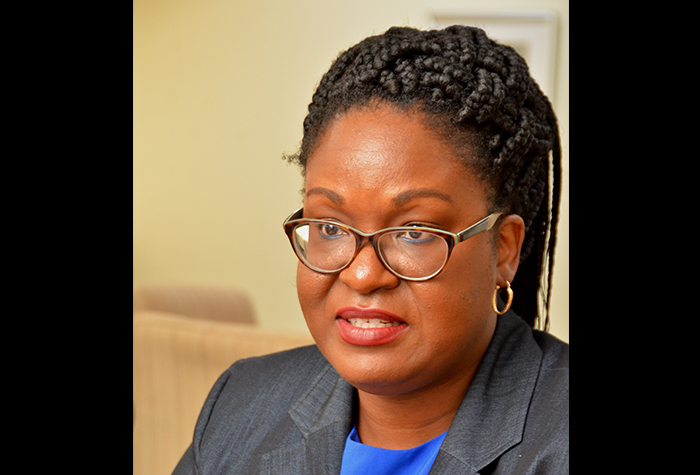
    At a closing ceremony for the European Union’s landmark Economic Partnership Agreement (EPA) held at Bridgetown’s Courtyard by Marriott on Monday, a senior Barbadian trade official delivered a stark warning: small island developing economies like Barbados will fail to convert preferential market access into tangible economic growth without immediate action to address deep structural weaknesses and upgrade competitiveness to meet rising global trade standards.

    Paula Byer, Director of Foreign Trade at Barbados’ Ministry of Foreign Affairs and Foreign Trade, emphasized that while regional and international trade pacts — including the CARIFORUM-EU EPA and the Caribbean Single Market and Economy (CSME) — open new commercial doors, access alone does not guarantee shared prosperity. For small, trade-reliant Caribbean nations, the ability to capitalize on these opportunities hinges entirely on three core pillars: expanded productive capacity, robust institutional preparedness, and sustained improvements to global competitiveness, she argued.

    The 11th European Development Fund (EDF) EPA Programme, an EU-funded regional initiative launched to help CARIFORUM states — a bloc comprising the EU’s former Caribbean colonies — implement and benefit from the CARIFORUM-EU trade deal, concluded its core funding cycle this week, though supporting activities will continue through the mid-2020s. Originally launched under the 2014–2020 EDF cycle, the program replaced decades-old Lome and Cotonou trade and aid agreements between the EU and African, Caribbean and Pacific nations, with a core mission to boost trade competitiveness across the Caribbean. It has focused on advancing customs and border management reform, upgrading quality testing and certification infrastructure, strengthening regional value chains for agriculture and agro-processing, and supporting micro, small and medium-sized enterprises (MSMEs) that form the economic backbone of most Caribbean economies.

    Byer highlighted that international development partnerships are not a discretionary bonus for small vulnerable economies like Barbados — they are a fundamental necessity for survival and growth. She outlined the persistent structural barriers that hold Caribbean MSMEs back from global trade: limited production scales that prevent businesses from competing on price, exorbitant logistics costs for island nations that rely almost entirely on maritime shipping, small domestic markets that limit growth potential, gaps in export readiness training and infrastructure, and cutthroat competition from large multinational firms and low-cost imported goods.

    Beyond these long-standing challenges, Byer noted that global trade is rapidly evolving, with increasingly strict requirements for product testing, certification, and accreditation becoming non-negotiable for access to premium export markets. “Without meeting those requirements, our products simply cannot compete,” she stressed. She added that even for compliant producers, many small Caribbean firms lack the resources to invest in product development, attractive packaging, brand building, and export marketing — key differentiators that help products stand out in crowded global markets.

    Port efficiency, Byer argued, is another make-or-break issue for island economies. Even minor delays and operational inefficiencies at port facilities directly raise business costs and erode competitiveness, making it harder for local producers to get their goods to market on time and at competitive price points. She noted that the 11th EDF EPA Programme was specifically designed to tackle many of these systemic barriers. It has delivered funding and technical support for modern border management systems, trade facilitation regulatory reforms, and digital trade solutions that cut operational costs and speed up processing times.

    In Barbados, Byer highlighted one tangible early win: the rollout of a new port community system that has already improved inter-stakeholder coordination, boosted operational transparency, and cut cargo processing times — a critical upgrade that will directly strengthen the country’s overall trade performance. Across the wider Caribbean, the program has also upgraded regional quality infrastructure, supported small agricultural and agro-processing producers by improving certification access, strengthened regional value chains, and expanded export readiness training for small producers.

    “These efforts recognise a fundamental truth — our MSMEs are the backbone of Caribbean economies, yet they face the greatest barriers in international trade,” Byer said. Tying the regional program to Barbados’ long-term national development goals, she reiterated that deeper regional integration is non-negotiable for unlocking growth. A more integrated regional economic platform allows Caribbean nations to pool limited resources, expand cross-border production networks, and compete far more effectively on the global stage, while strategic external partnerships like the CARIFORUM-EU EPA remain critical to driving export diversification and inclusive, sustainable growth, she explained.

    As global trade continues to shift, driven by digital transformation, stricter sustainability standards, and rapidly changing consumer preferences, Byer concluded that Barbados must maintain consistent investment in modern trade infrastructure, strong, adaptive regulatory frameworks, and private sector innovation to keep pace and secure long-term economic gains from international trade.
  • Charity launches to support ‘invisible’ citizens

    Charity launches to support ‘invisible’ citizens

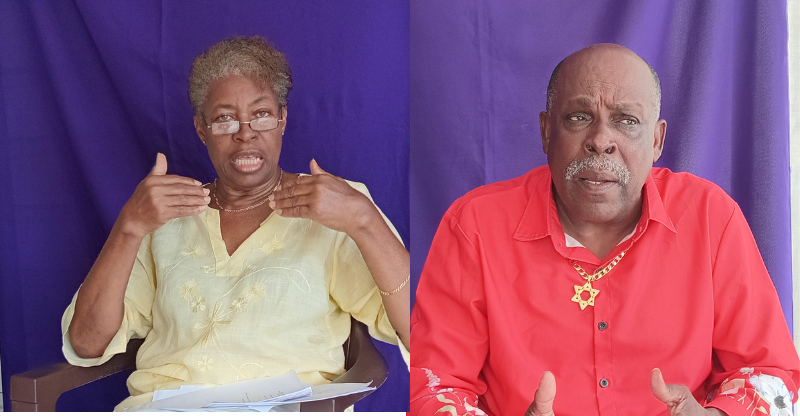
    Against a backdrop of overstretched public and non-profit social services across Barbados, a newly registered Christian faith-based charity has officially launched with an ambitious mission to reach vulnerable populations that have fallen through the cracks of existing support systems. Founded by Dr. Belfield Belgrave, the Compassionate Hands Foundation aims to address unmet needs ranging from shelter for survivors of domestic abuse to care for neglected elderly populations, and even community-level intervention to curb rising gang violence.

    At its recent launch event held in Strathclyde, St. Michael, foundation leadership laid out a dual mission that combines spiritual encouragement with hands-on, practical support for marginalized groups. Dr. Belgrave, who founded the organization after experiencing a personal calling to serve what he calls the “least of these” in Barbadian society, emphasized that the foundation’s core purpose is to build a critical safety net for people overlooked by mainstream institutions.

    One of the organization’s flagship initiatives is the development of a purpose-built safe home for abused women and their children, a project that fills a growing gap in domestic violence support services as existing providers struggle to meet rising demand. “Right now, our top priority is securing a suitable building and recruiting qualified staff to get this shelter up and running,” Dr. Belgrave told local outlet Barbados TODAY. “Our vision is to create a space where survivors, especially children who often bear the brunt of domestic abuse, can receive consistent care and live free from the threat of harm.”

    Beyond domestic violence support, the foundation has also made care for Barbados’ aging population a key focus. Dr. Belgrave noted that many elderly Barbadians, who dedicated their working lives to building the nation, are increasingly abandoned or neglected once they reach retirement age. Compassionate Hands aims to step in to provide consistent support and connection to keep elderly residents thriving across the island.

    Dr. Jonlyn Harewood, a foundation director and trained economist and urban planner, clarified that the organization has no interest in public recognition or financial gain, instead prioritizing quiet “invisible work” that centers people who feel unseen by broader society. Since completing its official registration, the foundation has worked diligently to meet all national legal and regulatory requirements, and is now fully prepared to roll out its core programs.

    These initiatives extend far beyond shelter and elder care: the charity plans to partner with local churches to provide urgent mental health counseling for at-risk groups, support people living with disabilities through small targeted infrastructure projects such as installing accessible bathroom fixtures for those who have recently acquired disabilities, assist students who have fallen out of the formal education system, provide support to widows, and run youth engagement programs in high-need communities.

    “We exist specifically to fill the gaps and cracks that other organizations can’t cover,” Dr. Harewood explained. “So many government and non-profit agencies are overwhelmed by rising demand that they simply can’t meet every need. Our goal is to help the people who fall through those gaps, without seeking any public reward or recognition.”

    In response to the recent surge in gun violence across Barbados, Dr. Belgrave has proposed a bold, direct approach: open, face-to-face engagement with gang leaders to broker community peace agreements, modeled after international diplomatic negotiation. “We plan to go directly to gang leaders to sit down and talk, to see if we can broker ceasefires and lasting peace between rival groups,” Dr. Belgrave said. “So many of our young people are adrift; gangs give them a sense of belonging and love that they aren’t getting anywhere else. We want to go into these violence-affected hotspots and make a meaningful, long-term difference in their lives.”

    Despite the organization’s ambitious agenda, Dr. Harewood stressed that all programming will be rooted in data-driven decision making rather than impulsive action. Unlike many new initiatives that launch without first assessing community needs, the Compassionate Hands Foundation plans to conduct systematic needs assessments to identify where demand is greatest. “If you take the time to listen to communities, you can clearly see the unmet needs that are bubbling under the surface,” she said, noting that this research-first approach will allow the charity to deliver the most effective support possible to the people who need it most.

  • Bajan sweet potato on rebound after 2024 crisis

    Bajan sweet potato on rebound after 2024 crisis

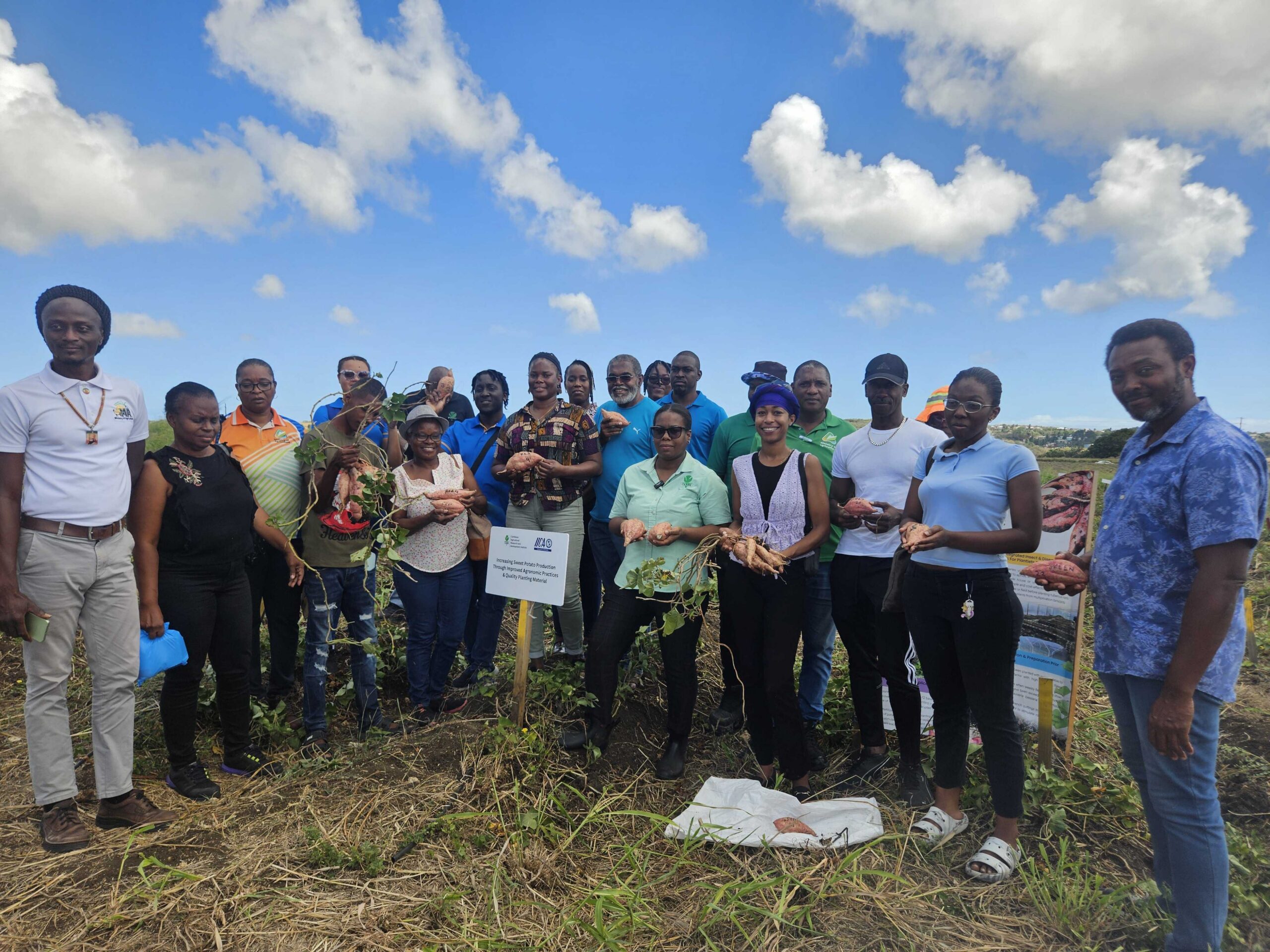
    After a devastating 2024 production shortfall that sent retail sweet potato prices skyrocketing to three to four times their normal level, Barbados’ major sweet potato producers have staged a remarkable yield recovery, with farmers crediting targeted planting and crop treatment innovations for the dramatic turnaround. The rebound comes after a coordinated industry response spearheaded by local agricultural stakeholders, who gathered this week for an open day highlighting the successful new practices that pulled the sector back from crisis. The event, hosted by Barbados’ Ministry of Agriculture in partnership with the Caribbean Agricultural Research and Development Institute (CARDI) and the Inter-American Institute for Cooperation on Agriculture (IICA), combined an educational workshop seminar with an on-site field tour of research plots at St George’s Valley Island Farm, where the new growing techniques were first tested. Ron Hope, farm manager at Valley Island Farm, laid out the full scope of the 2024 crisis, which originated from a widespread complex of viral diseases that crippled output across the island’s largest commercial growing operations, including Edgecumbe Plantation and Armag Farms. For Hope’s own operation, the impact was catastrophic: established fields that typically produced tens of thousands of pounds of sweet potatoes saw total output collapse under the pressure of untreated infection. Facing the prospect of ongoing industry collapse, farmers began testing targeted adjustments to traditional planting and crop management protocols, starting with pre-planting treatment of sweet potato slips (the root cuttings used to establish new crops) and a shift away from heavy chemical fertilization toward organic nutrient management. “I dipped my planting material in a light organic soil mixture to boost rooting strength and improve tuber development,” Hope explained of his modified process. The results were immediate and visible: farmers reported a sharp drop in the number of plants showing clear symptoms of viral infection. “I saw a major reduction in the number of virus-looking plants in my fields,” Hope said. Alongside slip treatment, Hope also adjusted his fertilization strategy, doubling down on organic inputs even as he already avoided heavy chemical use. “I started to fertilise differently. I don’t use a lot of chemical fertilisers either way but I used more organic fertiliser basically,” he noted. These small but impactful changes translated directly into an extraordinary rebound in total production. “Production increased a lot last year, big time, big time, big time,” Hope emphasized. Multiple growing fields on his property delivered robust yields: two roughly four-acre plots combined to produce 120,000 pounds of sweet potatoes, equal to around 25,000 pounds per acre – a level Hope described as exceptional productivity for the region. Looking ahead to 2025 full-season output, Hope noted that while consistent yield improvements remain the long-term goal, further gains will depend on sustained investment into infrastructure and clean planting material. He added that a target of 20,000 pounds per acre would represent a sustainable, profitable output that balances production volume with operational scalability. So far in 2025, early harvest results have exceeded even optimistic expectations: in some sections of his fields, Hope is harvesting up to 1,500 pounds of sweet potatoes per planting row, with growth so strong that harvesting teams have not yet finished digging all mature tubers in some areas. The successful model developed at Valley Island Farm has already been adopted across the wider Barbados sweet potato farming community, with other major producers replicating the slip treatment and crop management strategies and sourcing access to improved, tested planting material. “Guys came, got different planting material. Edgecumbe [plantation in St Philip] had a big, big problem up there. He got it sorted out,” Hope said, framing the recovery as a collective achievement by local farming communities. During the open day’s workshop, Michael James, Barbados’ chief agricultural officer, confirmed that while the sector is no longer in full-blown crisis, it continues to face ongoing pressure from viral pathogens and insect pests, with long-term stabilization dependent on consistent adoption of improved management practices. “I wouldn’t say we are in a crisis,” James stated, “but pest and disease management remains central to stabilising production.” James explained that the primary pathways for viral spread are infected planting material and insect vectors, making access to disease-free planting stock the single most critical step for controlling outbreaks. “If most of the viruses spread through planting material as well as by vectors, how do you control this? By using clean planting material. And that’s where the tissue culture facility would assist,” he said. Beyond improved management of existing stock, the Ministry of Agriculture is working to strengthen the local sweet potato crop base by introducing new, resilient cultivars developed through international research. “We are also looking to bring in some new varieties out of the International Potato Centre, which will help augment what we currently have as well as to look at how we can improve the ability of some of these cultivars to withstand or tolerate some of the viruses that we have now,” James explained. The scale of yield loss across the island still varies widely from farm to farm, James noted, with outcomes directly tied to each operation’s management practices and the quality of the planting material they use. “You’re not going to get 100 per cent, but… it can be reduced 10, 15, 20 per cent, all depending on the type of material you have that you’re planting, as well as the type of pests that you’re dealing with,” he said. The ongoing expansion of Barbados’ local tissue culture laboratory will play a central long-term role in supplying farmers with consistent access to clean planting stock, though James cautioned that initial production volumes will be limited, and farmers will be expected to multiply the clean stock on their own operations to meet growing demand. In the near term, James urged all local sweet potato producers to adhere strictly to established best management practices to prevent future outbreaks. “If you’re going to grow it, seek some advice from the ministry, CARDI or IICA. Check with the persons who you’re getting planting material from to make sure that the planting material is clean,” he advised. He also stressed the often-overlooked importance of on-field and post-harvest sanitation protocols in limiting pathogen spread: “Make sure that you use proper sanitation practices both in your field as well as post-harvest because that helps with reducing most of the diseases as well as the pests that can harm your crop.”

  • 11-plus students urged to improve writing skills ahead of exam

    11-plus students urged to improve writing skills ahead of exam

    With just a few weeks remaining before Barbados’ annual Common Entrance Examination, education leaders at two top Christ Church primary schools are sounding the alarm about pervasive gaps in students’ composition and reading comprehension skills — gaps that they warn could drag down the performance of even well-prepared test-takers, according to findings from a recent region-wide mock assessment.

    Tyrone Marshall, principal of Water Street’s Milton Lynch Primary School, acknowledged that while the vast majority of students have dedicated significant time and effort to exam preparation, external socioeconomic factors often create unaddressed barriers to academic success. Many working parents in the community are forced to take on two or even three jobs to make ends meet, leaving them unable to provide consistent after-school support for their children’s studying. Even so, Marshall expressed cautious confidence in his students, noting that most have followed their teachers’ guidance closely and are on track to deliver solid results on exam day.

    Fonda Boyce Small, principal of nearby Christ Church Girls’ School — also located on Water Street — echoed Marshall’s concerns, confirming that the mock exam’s results aligned with longstanding observations from classroom instructors. Educators at her school have spent months prioritizing extra practice for composition and comprehension, two areas that have consistently challenged student cohorts for years. Comprehension Section B, in particular, remains a persistent stumbling block for many test-takers. Small expressed hope that students would internalize the feedback from the mock assessment and apply their full effort when they sit for the official exam.

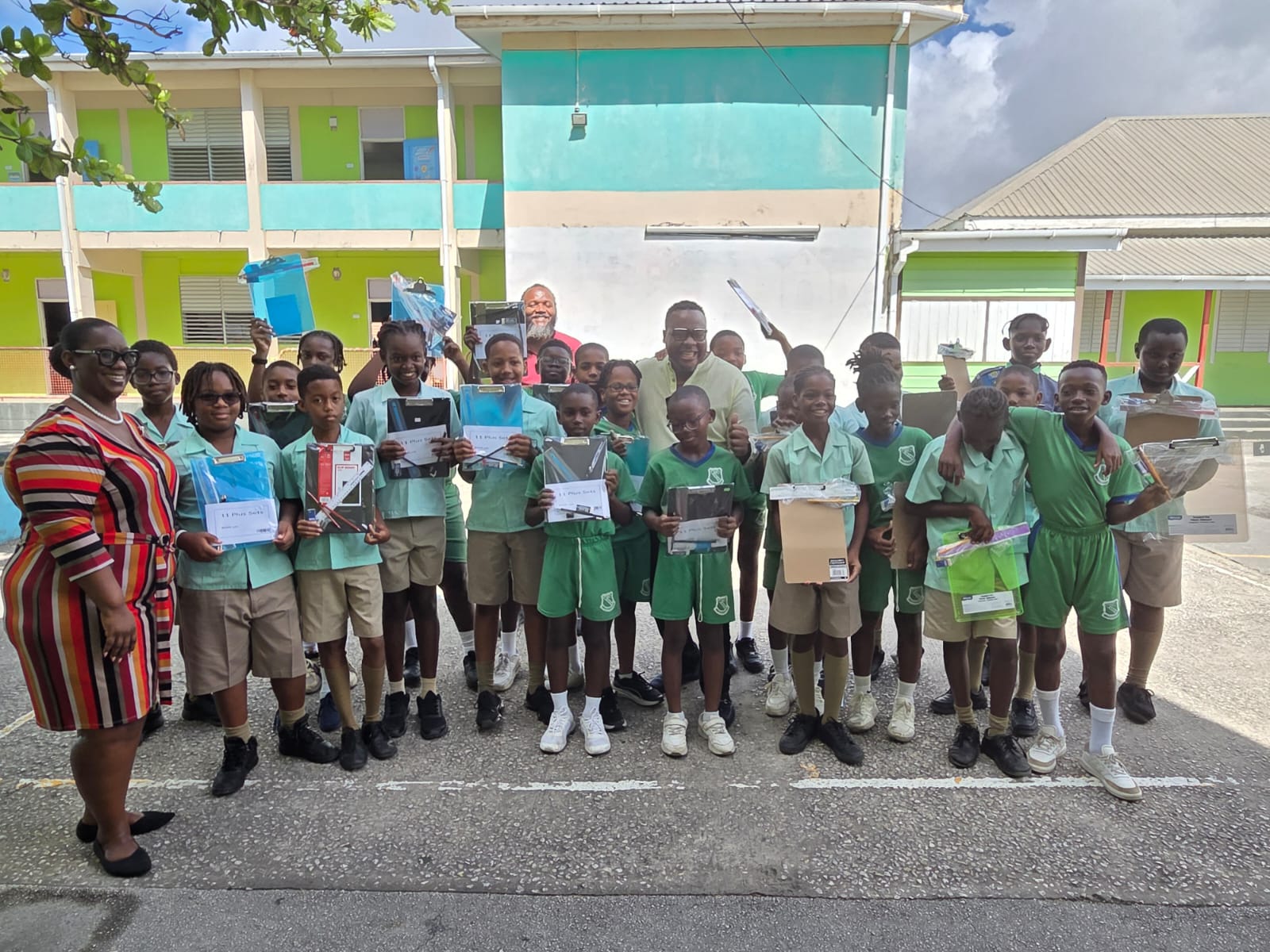
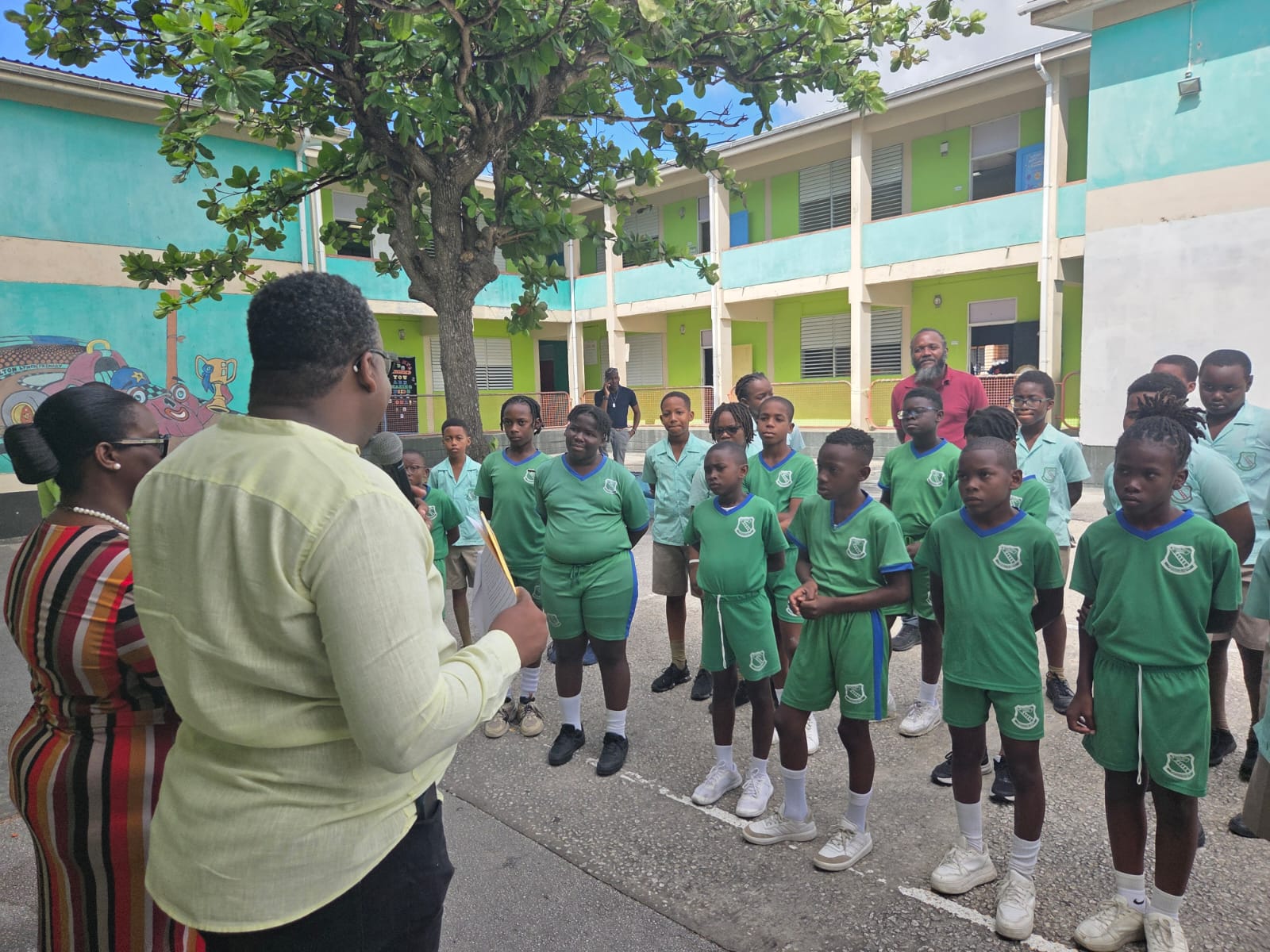
    The cross-school mock assessment was organized and led by Quincy Jones, founder and director of the local Trident Charity, who administered the practice test to students across 12 institutions in the St Michael and Christ Church zones. During a visit to Water Street schools on Monday to distribute customized “11-Plus Kits” for upcoming test-takers, Jones — who is also the Democratic Labour Party candidate for the constituency in the upcoming February 11 general election — flagged a growing modern threat to formal writing performance: the informal, text-based language that students increasingly use on platforms like WhatsApp.

    Jones pointed to the mock exam results that confirmed composition as the lowest-performing section across participating schools, highlighting common informal errors that students continue to make. Examples include grammatically incorrect phrasing such as “me and John” instead of the standard “John and I,” and casual text slang like abbreviating “you” to “U” and “because” to “BC” in formal essays. In the lead-up to the official exam, Jones encouraged students to focus on incorporating descriptive adjectives into their writing and mastering core technical rules like subject-verb agreement to avoid unnecessary point deductions.

    Beyond test performance, Jones reminded the Class 4 students sitting for the exam that dedication and personal leadership matter more than the specific secondary school they gain admission to, emphasizing that every public secondary institution in Barbados has produced successful national leaders. As the countdown to the official exam continues, both school principals and the charity organizer have stressed that the immediate priority is building student confidence and helping learners correct the technical writing errors identified during the mock assessment.

  • Reggae Weekend draws record crowds, says organiser

    Reggae Weekend draws record crowds, says organiser

    After three electric nights of world-class reggae and dancehall performances at Bridgetown’s iconic Kensington Oval, the 2026 edition of Barbados Reggae Weekend closed to rave reviews, with organizers celebrating the event’s highest turnout in recent history. Running across Friday, Saturday and Sunday, the 2026 festival brought back its three fan-favorite signature events: the opening night Mount Gay Legends of Reggae showcase, the high-energy Guinness Showdown, and the closing weekend staple Reggae in the Gardens.

    In a post-festival press briefing Sunday night, sponsorship manager Michelle Straughn shared that audience numbers surged across all three days of the event. Attendance at the Guinness Showdown doubled compared to previous stagings, while turnout for Reggae in the Gardens tripled, marking a dramatic rebound for the festival after a period of hiatus.

    Straughn acknowledged that the 2026 edition faced unforeseen production hurdles and logistical adjustments, particularly as this was the first time the festival was hosted at Kensington Oval, a venue most known for international cricket matches. Despite these challenges, she emphasized that the event achieved its core goal: reestablishing Barbados as one of the Caribbean’s premier festival and entertainment destinations. “When Barbados Reggae Weekend went on hiatus, we lost some of that traction as a go-to festival spot,” Straughn explained. “This event is our commitment to rebuilding that legacy for the island, and we couldn’t be happier with how it turned out.”

    Another milestone for the 2026 festival was its first-ever global livestream, which allowed digital patrons around the world to purchase access tokens to stream all three nights of performances. Straughn reported that the livestream operation ran seamlessly, and organizers plan to retain the digital access option for all future editions of the festival. On the topic of the new Kensington Oval venue, Straughn praised the space as “stunning” for large-scale live entertainment, noting that teams took extra precautions to preserve the venue’s cricket pitch to keep it available for future sporting events.

    Looking ahead, Straughn shared that the festival is strategically timed to boost pre-summer tourism to the island, with organizers hoping the successful 2026 edition will drive a surge of visitor arrivals starting in April, ahead of the traditional peak summer travel season that begins in July.

    A Look Back at Festival Highlights
    The 2026 festival kicked off Friday with the Mount Gay Legends of Reggae Show and Dance, a nostalgic celebration featuring some of the genre’s biggest icons, including Barrington Levy, Super Cat, Sister Nancy, Norris Man, JC Lodge, and Biggie Irie. Though brief technical issues interrupted portions of the opening night set, the legendary performers delivered standout sets that kept the crowd engaged, with Barrington Levy earning particular acclaim for his performance. Resident deejays Jerry Dan and Lil Rick kept energy high between performer sets, bridging gaps caused by the technical disruptions.

    Saturday’s Guinness Showdown upped the tempo with a dancehall-focused lineup headlined by fan favorite Popcaan, with additional high-energy sets from Capleton and General Degree. Local emerging acts including Maasta T, Doejay, Brutal Crankstar, Weather 40, and Idea the Artist earned enthusiastic responses from the packed crowd. Originally scheduled to perform Saturday, dancehall artist 450 had to rearrange his set, with organizers quickly moving his appearance to Sunday’s lineup to accommodate the change.

    The festival wrapped Sunday with Reggae in the Gardens, a diverse closing bill led by international headliner Fantasia. The closing night lineup also featured Dexta Daps, Kranium, Admiral Tibet, DJ Puffy, D’Yani, Spice and Company, and Rite Side of Red, a collaborative set featuring Buggy Nhakente and Rhesa Garnes.

    Barbados Reggae Weekend is produced by FAS7STAR Entertainment, led by veteran promoter Comar “Frankie” Campbell.

  • Vaccination push ramps up into communities as rates dip

    Vaccination push ramps up into communities as rates dip

    Against the backdrop of lingering post-COVID-19 disruptions to routine public health programming, Barbados’ national health authorities have launched an intensified national immunization campaign, bringing critical vaccination services directly into local communities through a schedule of targeted polyclinic open days. The push comes amid official warnings that current vaccination coverage remains far below the threshold required to block outbreaks of dangerous, vaccine-preventable diseases.

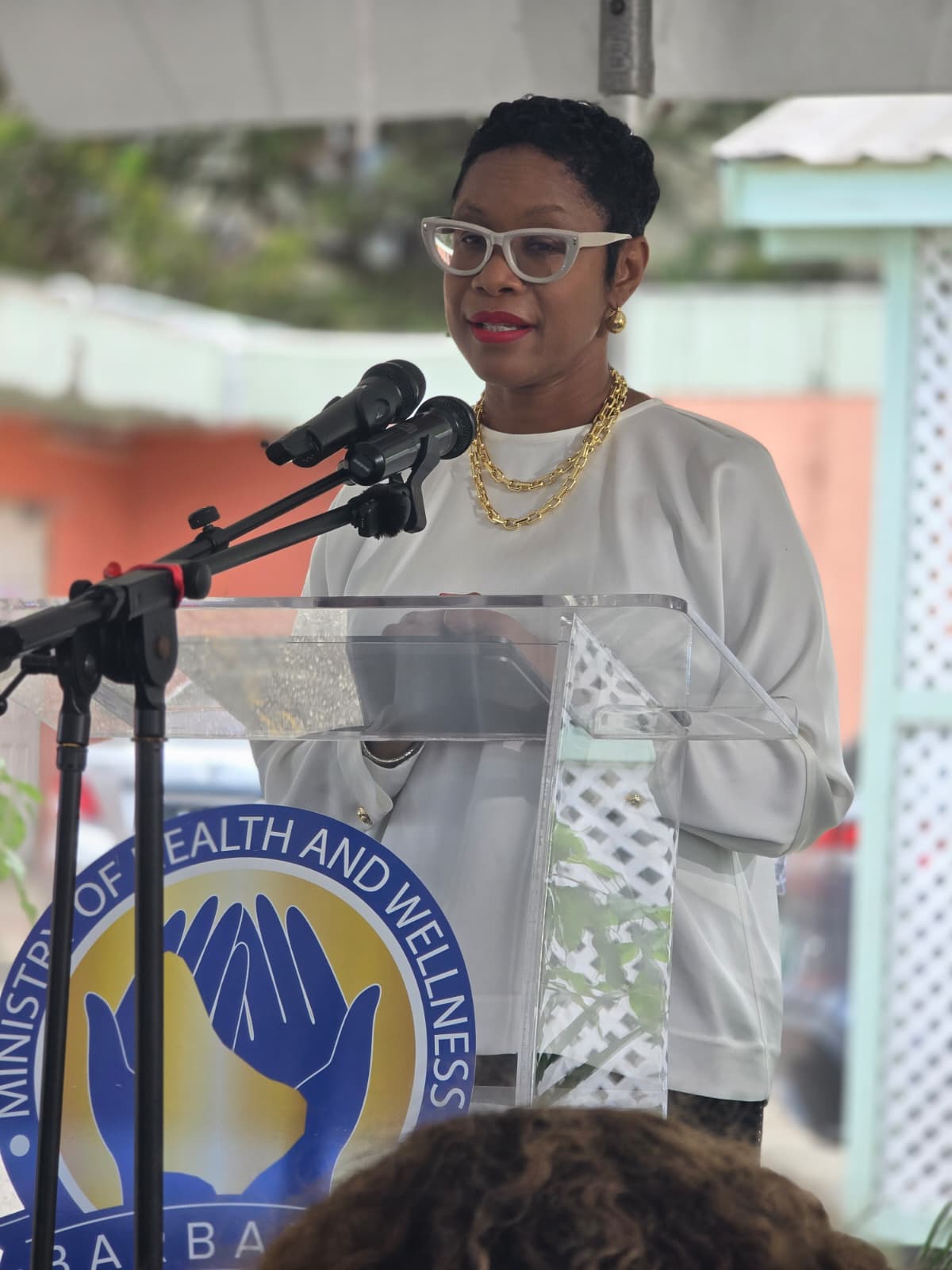
    Barbados Minister of Health Lisa Cummins recently shared key data confirming that national inoculation rates have not yet rebounded to the pre-pandemic benchmarks that once kept the island’s population protected. “Coverage for the first dose of measles, mumps, and rubella increased to 89 per cent, and the second dose rose to 86 per cent. That is meaningful progress, but we have to be able to reach that threshold of 95 per cent coverage to secure herd immunity,” Cummins explained.

    This expanded immunization initiative is a core component of the 24th annual Vaccination Week in the Americas, a regional public health campaign that runs from April 25 to May 2 under the unifying theme “Your Decision Makes a Difference. Immunisation for All”. On Monday, local health officials and international public health partners convened a special community-focused open day at the Edgar Cochrane Polyclinic, centered on expanding prevention outreach, improving public health education, and removing barriers to vaccine access.

    Addressing one of the biggest barriers to progress – widespread vaccine hesitancy fueled by rampant online misinformation – Cummins noted that the COVID-19 pandemic created a unique public health challenge: virtually anyone with a smartphone could now position themselves as a self-styled medical expert, spreading unvetted, misleading claims that have eroded public confidence in routine vaccination across local communities.

    Cummins also emphasized that the risk of falling short of the 95% coverage target is not hypothetical. “These vaccines are protecting us from diseases that are one single flight away from our shores. If we don’t reach the 95 per cent threshold, then our communities are at real risk of a large-scale outbreak,” she warned.

    While the minister highlighted Barbados’ long, successful history of robust immunization programming that has protected generations of island residents – including the elimination of polio through sustained, coordinated public health efforts – she cautioned against complacency in the post-pandemic era. “Vaccines have always been and remain to this day the most effective tool we have to protect our communities. When enough of us are protected, we create what we call herd immunity. It is a collective shield that protects every member of our society, including those who cannot be vaccinated for medical reasons,” Cummins said.

    To reassure the public about the safety of nationally administered vaccines, Cummins added that all vaccines used in Barbados undergo rigorous, repeated international testing and meet the highest global safety standards set by leading global health bodies. She also clarified that frontline healthcare workers are not focused on pressuring hesitant parents to vaccinate their children; instead, their role is to listen to concerns, answer questions, and provide evidence-based guidance to help families make informed decisions.

    Amalia Del Riego, the Pan American Health Organization/World Health Organization (PAHO/WHO) Representative for Barbados, reinforced the urgency of closing immunization coverage gaps across the region, noting that decades of steady progress in preventing vaccine-preventable diseases is now under growing threat. “In 50 years in the region of the Americas, we have prevented 15 million deaths and 1.1 billion cases of disability through immunization,” Del Riego said. But she warned that the public health landscape has shifted dramatically in recent years, with measles transmission becoming re-established in the region and confirmed cases tripling compared to 2023.

    Del Riego stressed that immediate collective action is needed to reverse these troubling trends. “Without a decision and engagement from communities, we are losing if we are not very careful. We need to be a little bit more assertive. It is really the time to act now,” she said.

    Senior Health Sister Hazel Forde, who helped organize the polyclinic open day events, underscored the core mission of the campaign, aligning with the Vaccination Week theme. “Today is centered on one simple but powerful idea: Your decision makes a difference. We are not here only to provide services, but to promote and provide advocacy, to support you, to educate you, and to empower you as you take charge of your own health,” Forde explained.

    She added that the campaign extends far beyond routine childhood immunization, offering a full spectrum of community health services to address a wide range of public health needs. “Whether you are accessing vaccinations, learning about non-communicable diseases, or taking advantage of our confidential STI testing, you are making a meaningful investment in your well-being,” Forde said, echoing the WHO’s definition of health as a complete state of physical, mental, and social well-being, not just the absence of disease. “It is about prevention. It’s about awareness, and it’s about community,” she noted.

    Forde also emphasized that Vaccination Week is more than a one-off public health campaign; it is part of a broader, sustained movement to embed shared responsibility for public health across Barbadian society. “Health is a shared responsibility. And that by working together we can protect generations from preventable disease,” she said.

    Cummins added that the vast majority of Barbadian parents already support routine childhood vaccination, but everyday life challenges often prevent families from keeping scheduled vaccination appointments. “Life happens, people get busy. Some parents sometimes forget appointments. It’s okay to have questions, and that’s what our medical health professionals are here for,” she said.

    The ongoing polyclinic open days offer a broad range of integrated services beyond immunization, including general health screenings and evidence-based public health education sessions. Organizers say the goal of the community-focused model is to close persistent coverage gaps and ensure that underserved populations across the country have equal access to life-saving vaccination services.

  • Commonwealth Sport wraps up ‘successful’ tour of Barbados

    Commonwealth Sport wraps up ‘successful’ tour of Barbados

    After a week of high-level meetings, venue assessments and cultural engagements across Barbados, the top leadership of Commonwealth Sport has declared the organization’s first executive board visit to the Caribbean nation a resounding success.

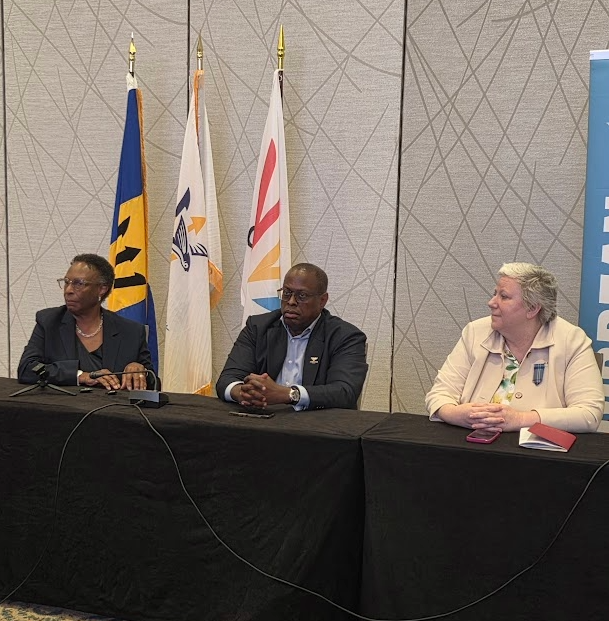
    In closing remarks delivered at a press briefing hosted at Hilton Barbados last week, Commonwealth Sport President Dr. Donald Rukare highlighted the multiple productive outcomes of the trip, beyond the formal scheduled business. Beyond the warm hospitality extended by local organizers, Rukare noted that the board secured valuable face time with senior Barbadian leadership, including President of Barbados and the country’s Minister of Youth and Sports.

    During their stay, board members also toured the island’s existing sports infrastructure, explored key tourist and cultural landmarks, and got a first-hand taste of Barbados’ beloved local pastime: road tennis. “That cultural connection was just as important as our formal business,” Rukare told reporters.

    Looking ahead, the organization’s immediate top priority is the smooth delivery of the 26th edition of the Commonwealth Games, set to kick off in Glasgow, Scotland in the coming months. Rukare confirmed that the organization is already in full preparation mode, and expressed excitement for strong participation from Barbados and other Caribbean nations at the multi-sport event.

    Commonwealth Sport Chief Executive Officer Katie Sadleir expanded on the key business outcomes of the Barbados meetings, noting that the board advanced progress on several critical governance priorities. The most significant action taken was the formal approval of the organization’s annual business plan for the coming fiscal year, which aligns with the group’s existing 10-year long-term strategic framework. As is standard annual practice, the board conducted a full review of the 10-year strategy during the meeting to update key priorities and align upcoming work with evolving member needs. The board also signed off on the full budget tied to the newly approved business plan, Sadleir confirmed.

    One topic that gained attention during the visit was the push to add road tennis, a popular Barbadian homegrown sport, to the official Commonwealth Games lineup. Sandra Osbourne, President of the Barbados Olympic Association and Commonwealth Sport Vice-President, shared that while local leaders strongly support the eventual inclusion of the sport, the path to formal recognition comes with significant structural hurdles.

    Osbourne explained that the dual mandate of the local organization, which serves both as the national Commonwealth Sport association and the Barbados Olympic Association, requires it to only formally recognize sports that already hold International Olympic Committee (IOC) recognition. At present, road tennis has not secured that IOC status, meaning it cannot be formally affiliated or recognized by the local body.

    Still, Osbourne emphasized that the organization remains committed to supporting the Barbadian government’s goal of growing and promoting the sport, even with the structural limitations. “Whenever we are asked, we work collaboratively with the government to map the path forward, and have shared clear guidance on the steps required to achieve international recognition and eventual inclusion in the Games,” she noted, adding that the group is still learning the process itself as it supports the local push for road tennis.

  • Call for intervention after 11 plus mock exams reveals learning gaps

    Call for intervention after 11 plus mock exams reveals learning gaps

    A newly released diagnostic assessment of 150 Barbadian primary school students has uncovered stark learning disparities in core academic subjects, pushing a local education charity to call for immediate, targeted support across all regional primary institutions to help at-risk students prepare for their high-stakes 11+ entrance examinations.

    The assessment was carried out by Trident Charity, an education-focused nonprofit founded and led by Quincy Jones, a former first-time candidate for the Democratic Labour Party (DLP) in February’s general election. Jones shared the preliminary findings during on-site visits to two participating schools: Milton Lynch Primary School and Christ Church Girls’ School, both located in the Christ Church East Central electoral constituency where Jones ran for office.

    In total, 12 primary schools across the parishes of Christ Church and St Michael took part in the initiative, which was designed to act as a formative diagnostic tool. The goal of the project was not just to test students, but to generate actionable data that could help parents and educators tailor support to students as they approached the final stretch of preparation for the 11+ exam, a key milestone that determines secondary school placement. The mock examination assessed student proficiency across three core domains: written composition, mathematics, and English reading comprehension.

    Overall, the results painted a picture of deep stratification within the student cohort, with a clear gap emerging between high-performing students and those in need of urgent academic support. Just 8% of participating students earned the top A (Excellence) grade, and another 22% scored a B (Good), combining to make up less than a third of all test-takers. The largest share of students, 45%, reached a C (Satisfactory) grade, but the charity flagged the remaining 25% of results as a major cause for concern: 15% scored a D (Developing), and 10% scored an E, a rating that signals a need for significant, immediate improvement to reach grade-level standards.

    Jones framed these findings as a call to action rather than a cause for despair, emphasizing that early intervention can close gaps before they become insurmountable. “These results tell us two important things,” Jones shared in remarks following data analysis. “First, there is a solid academic foundation among many students, and second, there is an urgent need to support those who are falling behind. This is not a crisis; it is an opportunity to intervene early, close the learning gaps, and give every child a fair chance at success in the 11+ examination.”

    When broken down by subject, the data identified written composition as the area of greatest weakness. Only 18% of test-takers earned top marks in writing, while 40% performed below the expected grade-level standard. Jones noted that students struggled most with foundational writing mechanics: grammar rules, sentence structure, logical organization of ideas, spelling, and subject-verb agreement were all common pain points for low-performing students. In contrast, English reading comprehension showed far stronger results, with roughly 60% of students scoring above 70% on that section of the exam. Even so, Jones pointed to a “noticeable gap” between a student’s ability to understand a written text and their ability to clearly communicate their analysis and ideas in writing.

    Mathematics results presented what Jones described as a “mixed picture.” While 35% of students earned strong scores, an equal 35% scored below the 50% pass threshold. The assessment uncovered major gaps in basic numeracy skills and strategic problem-solving, particularly in the exam’s extended response section. Jones added that many students lost unnecessary points to careless calculation errors and a lack of practice showing their step-by-step working, a habit that not only costs points but also makes it harder for teachers to identify where students are going wrong in their reasoning. Key foundational topics including decimals, percentages, angles, and fractions were consistent areas of weakness, with Jones estimating that between 10% and 15% of participating students need immediate one-on-one or small-group intervention to get on track for the official 11+ exam.

    In the immediate aftermath of the assessment, every participating student and their family has received an individual performance report breaking down their strengths and weaknesses, paired with practical study and test-taking tips. Looking ahead to the 2026–2027 academic year, Trident Charity has committed to moving beyond data collection to build out a sustained support system for struggling students. Planned programs include small-group tutoring for all students scoring below 50% on the diagnostic, a structured sequential writing program to build composition skills from the ground up, and targeted mathematics support that prioritizes explicit instruction in step-by-step problem-solving. The charity also plans to roll out monthly mock exams to track student progress over time, and introduce family engagement initiatives to help parents support their children’s learning at home.

    Jones emphasized that the vast majority of students who are currently behind can make significant gains with the right targeted support, reaffirming the charity’s core mission to ensure no child is left behind due to unaddressed learning gaps. “Our findings indicate that over 60% of these students can significantly improve with the right support,” Jones said. “Trident Charity is committed to implementing targeted programmes and differentiating learning approaches to ensure no child is left behind. We are focusing on early intervention to ensure that every student has the tools they need to excel.”

  • Mayers rewrites BKA history books

    Mayers rewrites BKA history books

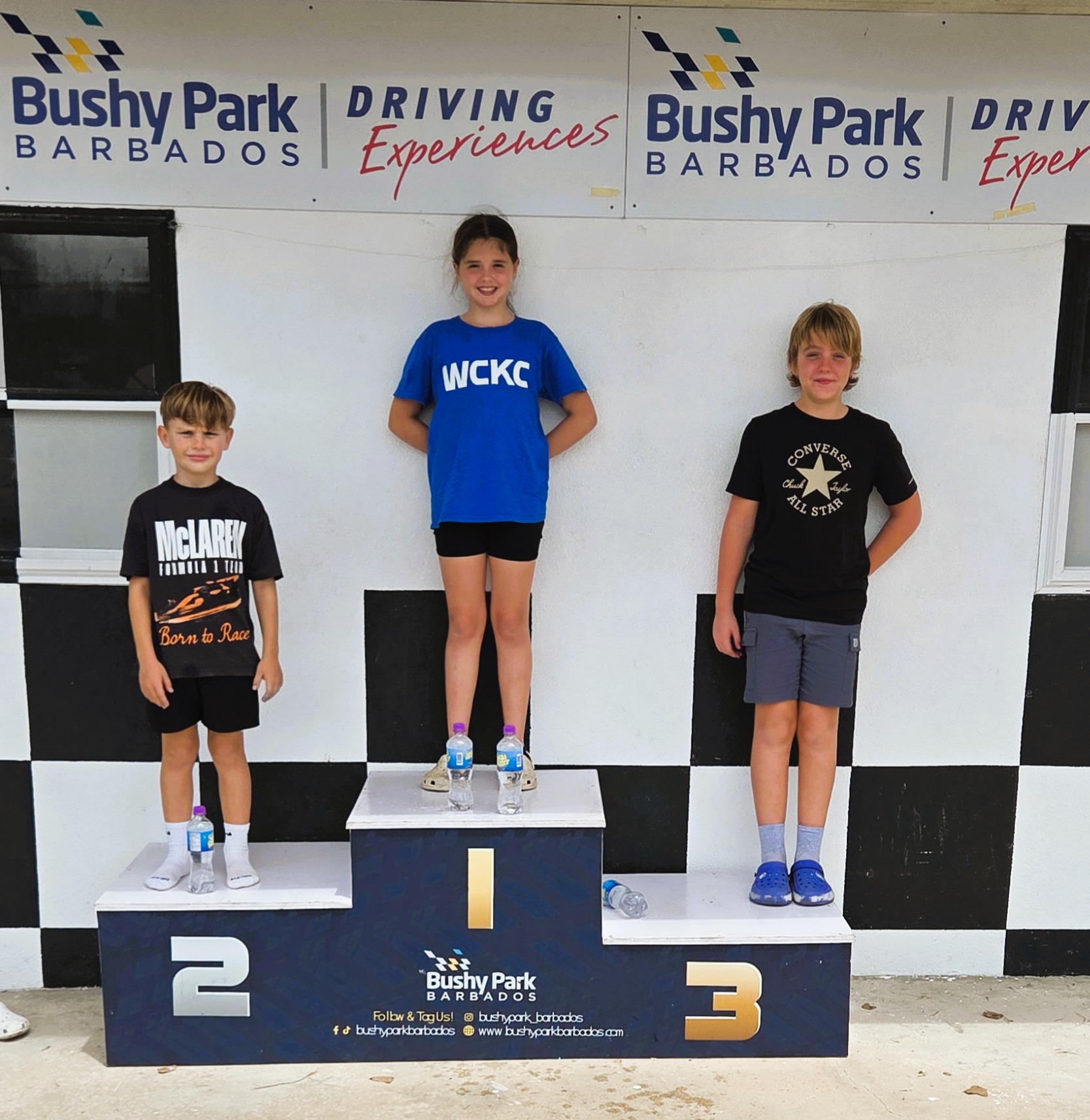
    The 2026 Sectus Technologies Barbados Karting Association (BKA) Championship held its third competitive round on Sunday, and the event made unforgettable history for the island nation’s karting community. Eleven-year-old Ava Mayers delivered a stunning performance in the Easykart 60cc Cadet class, claiming three race victories and securing the highest overall points total across all classes on raceday – a milestone never before achieved by a female karter in the BKA’s 40 years of organized competition.

    While a small number of female drivers have claimed individual class victory at past BKA racedays – most notably Kayleigh Catwell, who topped her class twice in 2018 before finishing second overall in the 100cc championship behind Calem Maloney – no woman had ever climbed to the very top of the day’s overall standings before Mayers’ historic win.

    Mayers set the tone for her historic day early, posting the fastest qualifying time out of the six competing Cadet drivers. She grabbed the lead early in the opening race and held off all challenges to cross the finish line more than two seconds ahead of championship leader Edward Norris, who put on an impressive comeback drive of his own after a qualifying first-lap breakdown left him starting at the back of the grid. Finn Cox crossed the line in third position to round out the opening race podium.

    In the reverse-grid second race, Mayers again seized the advantage immediately after the green flag, with Norris and Cox replicating their opening race results to finish second and third respectively. The third race saw a shift in momentum, as Norris reclaimed his pace at the front of the pack. A first-lap collision between Mayers and Cox dropped Mayers to the back of the starting order, but the young driver fought her way through the field to reclaim a podium position. Cox received a penalty for the incident that pushed him from second place down to fourth, behind Mayers and Shamer Eversley.

    Mayers sealed her perfect day with a third victory in the final race of the class, with Cox and Norris completing the overall podium for the round. Despite his solid second-place finish across the round, Norris retains his lead in both the 60cc class standings and the overall BKA championship.

    The event also saw intense competition in the Easykart 125cc class, where Mayers’ older brother Jacob Mayers also put on a dominant performance to start the round. Jacob claimed pole position in qualifying and posted the first of three fastest laps on his way to a flag-to-flag victory in the opening race. Aaron Blackett finished second in the opening contest, while Aeden Bruce held off a hard challenge from Cody Mark to take third.

    Blackett led every lap of the reverse-grid second race, while Jacob recovered from an early first-lap spin to cross the line third. That result was revised after the race, however, when Bruce received a 10-second penalty for starting outside the designated track lines, moving Jacob up to second.

    Jacob’s luck turned for the worse at the start of the third 125cc race, when his kart’s starter failed, ending his day of competition early. Blackett claimed a narrow victory in the contest, beating Bruce to the line by just nine-tenths of a second after Bruce fought a tense late-race battle with Mark.

    Jacob returned to form in the final 125cc race of the day, claiming a comfortable victory. Bruce put on a late charge to overtake Blackett for second place on the very last lap. Despite the late race loss of position, Blackett still managed to overhaul Jacob’s earlier points lead, taking the top spot in the 125cc class standings by just three points heading into future rounds.

    In the Easykart 100cc class, pole sitter Jaydn Brathwaite turned his qualifying pace into an unprecedented clean sweep for the 2026 season, winning all four races held at the round and posting the fastest lap in every contest. Jordyn Hinkson and Jaylan Priddee matched their podium positions across every race of the round, finishing second and third overall respectively.

  • Bajan volleyballers create history by qualifying for World Championships

    Bajan volleyballers create history by qualifying for World Championships

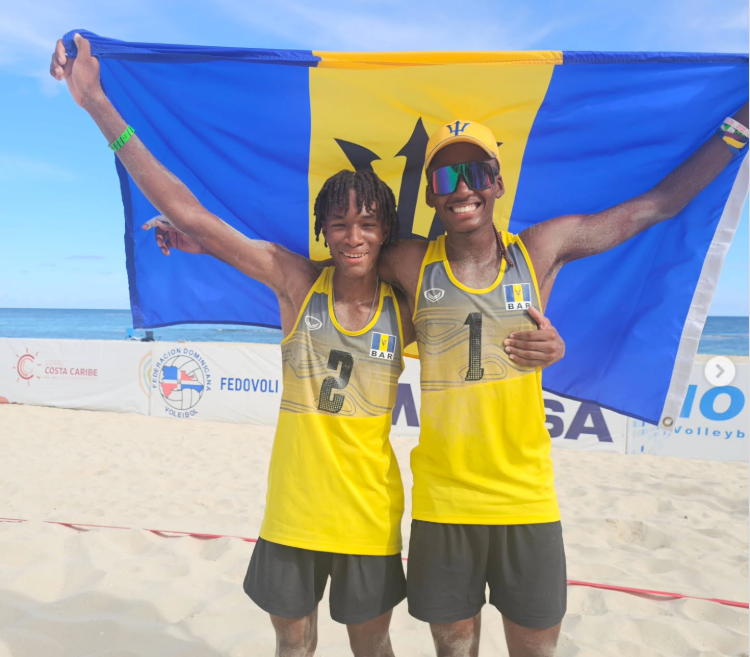
    For the first time in Barbadian volleyball history, a pair of young local athletes have broken through to qualify for a global world championship event. Teenagers Joshua Ashby and Cael Greenidge etched their names into Barbados’ sporting record books last week by claiming one of the final remaining berths at the upcoming Under-18 Beach Volleyball World Championships, sealing their qualification at the NORCECA Qualifiers held in the Dominican Republic.

    The road to qualification was far from smooth for the young Barbadian duo. They got off to a rocky start, dropping their opening matchup 0-2 to a tough Puerto Rican side. With elimination staring them down, the pair needed back-to-back wins in their remaining matches to claim the last available qualifying spot for the July tournament, set to run from July 8 to 12 in The Hague, Netherlands.

    Their first comeback test came against Costa Rica. After dropping the opening set 18-21, Ashby and Greenidge fought back to claim the second set and force a decisive third frame, eventually pulling out a hard-won 15-13 victory to keep their qualifying dream alive. Next up was a showdown with a highly ranked Canadian team for the final spot.

    History repeated itself in the decisive matchup: the Barbadians dropped the opening set 18-21 after Canada broke a late deadlock with three straight points, but they rallied once again to edge Canada in a tight second set 21-19 to force a third-set decider. The final frame stayed neck-and-neck through the opening stages, with both teams trading points to stay locked. When the score reached 13-all, Ashby delivered two consecutive game-winning points to secure a dramatic 15-13 upset and punch Barbados’ first ever ticket to a volleyball world championship.

    In an interview with Barbados TODAY from the qualifying event in the Dominican Republic, team manager Anica Wood said the historic result was the product of years of consistent hard work and relentless dedication from the pair and their coaching staff. “There’s no question about the commitment these young men have shown, and the endless hours they’ve put in training at home with our coaches, Mark Lewis and Cuban coach Jose Hernandez Murray,” Wood explained. “They’ve been putting in this work for years now, and it’s all finally paying off. Both Ashby and Greenidge are incredibly dedicated to this sport, and they wanted this qualification more than anything. When they realized the final qualifying spot was still within reach heading into the final matchday, they shifted their mindset entirely, seized the opportunity and made the most of it.”

    While celebrating the groundbreaking achievement, Wood also opened up about the structural changes Barbadian volleyball needs to make to turn this single success into consistent qualification for global events. The biggest shift needed, she said, is greater athlete specialization. Currently, most of the island’s volleyball athletes compete in both indoor and beach volleyball, spreading their training focus thin across two codes. This challenge is amplified by Barbados’ small overall population, which limits the pool of available talent.

    “Right now, our athletes are balancing training for both indoor and beach volleyball, and we’ve seen a huge growth in age-group competitions at all levels – Under-17, Under-19, Under-21, all the way to seniors – that these young athletes are competing across,” Wood noted. “To excel consistently, we need to adjust our structure so that athletes can specialize fully in either beach or indoor volleyball, so they can dedicate all their training time to that one code. This time around, Joshua and Cael put in extra hours on the sand, but if we want to keep reaching this level, we need fully dedicated beach athletes moving forward.”

    Ahead of the World Championships, Wood said the pair needs more competitive experience on the NORCECA circuit to sharpen their skills ahead of the tournament, and called for additional funding to support the team’s travel to these regional events. “Local training and competitions can only take you so far. Getting out and competing against top teams from across North America, Central America and the Caribbean does wonders for these young athletes’ confidence and skill development,” she explained. “More funding to let us compete in as many NORCECA events as possible would be a huge boost to their preparation ahead of the World Championships.”

    Wood also credited the new dedicated beach sports facility opened recently in Wildey as a critical contributing factor to the team’s success. “We’ve been using that facility nonstop since it launched,” she said. “In the past, we could only train for an hour or so after school or work before sunset, but this new facility has lights, so we can train both in the morning and evening. We’ve been able to double our practice hours because of it, and we’re so grateful for that resource.”

    In the girls’ division of the NORCECA Qualifiers, Barbados’ pairing of Destiny Layne and Gabrielle Sandiford capped off their tournament with two lopsided wins in the ninth place classification round, defeating the Cayman Islands 21-9, 21-8 and following that up with a 21-8, 21-18 victory over Nicaragua.