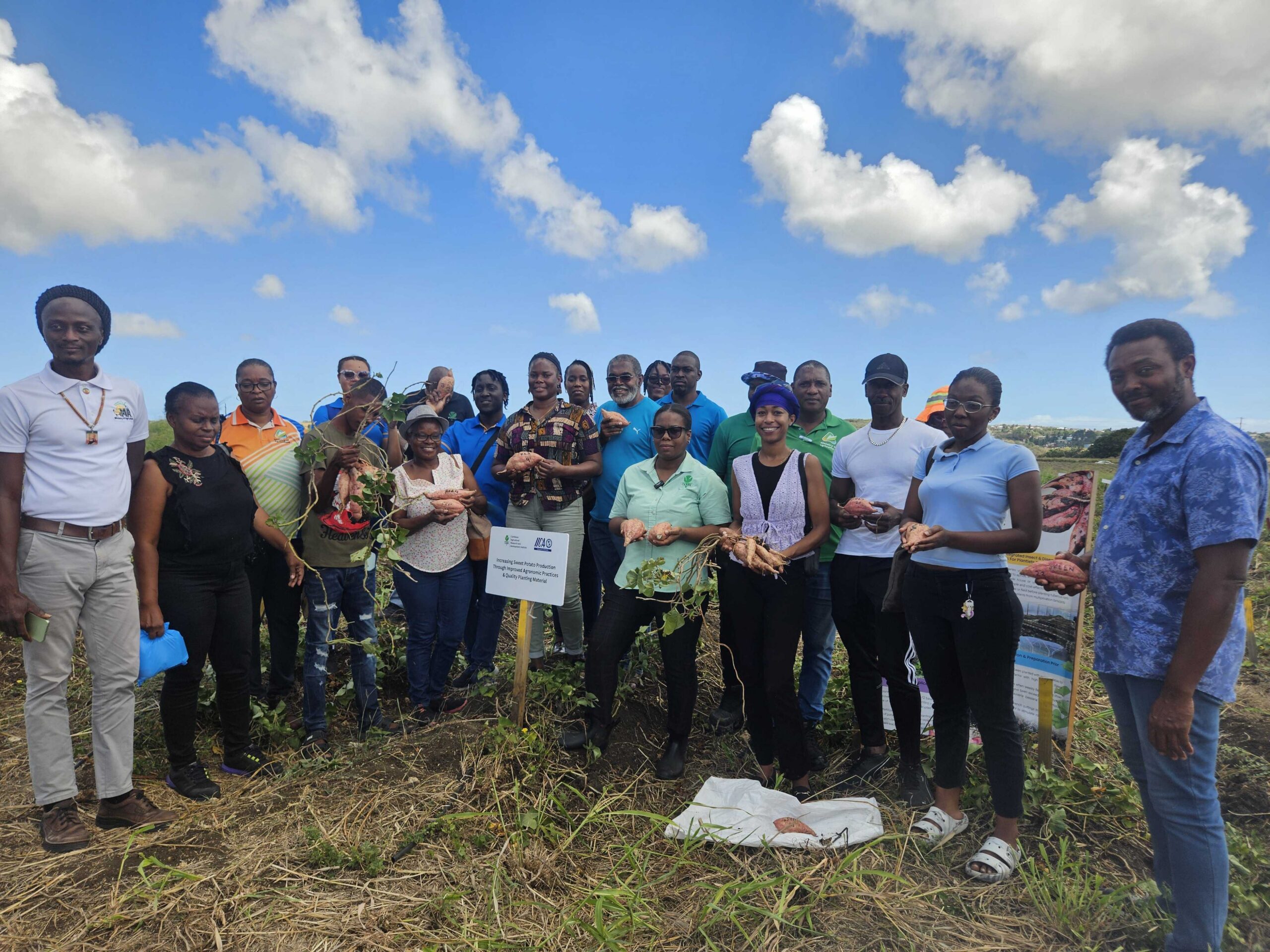
After a devastating 2024 production shortfall that sent retail sweet potato prices skyrocketing to three to four times their normal level, Barbados’ major sweet potato producers have staged a remarkable yield recovery, with farmers crediting targeted planting and crop treatment innovations for the dramatic turnaround. The rebound comes after a coordinated industry response spearheaded by local agricultural stakeholders, who gathered this week for an open day highlighting the successful new practices that pulled the sector back from crisis. The event, hosted by Barbados’ Ministry of Agriculture in partnership with the Caribbean Agricultural Research and Development Institute (CARDI) and the Inter-American Institute for Cooperation on Agriculture (IICA), combined an educational workshop seminar with an on-site field tour of research plots at St George’s Valley Island Farm, where the new growing techniques were first tested. Ron Hope, farm manager at Valley Island Farm, laid out the full scope of the 2024 crisis, which originated from a widespread complex of viral diseases that crippled output across the island’s largest commercial growing operations, including Edgecumbe Plantation and Armag Farms. For Hope’s own operation, the impact was catastrophic: established fields that typically produced tens of thousands of pounds of sweet potatoes saw total output collapse under the pressure of untreated infection. Facing the prospect of ongoing industry collapse, farmers began testing targeted adjustments to traditional planting and crop management protocols, starting with pre-planting treatment of sweet potato slips (the root cuttings used to establish new crops) and a shift away from heavy chemical fertilization toward organic nutrient management. “I dipped my planting material in a light organic soil mixture to boost rooting strength and improve tuber development,” Hope explained of his modified process. The results were immediate and visible: farmers reported a sharp drop in the number of plants showing clear symptoms of viral infection. “I saw a major reduction in the number of virus-looking plants in my fields,” Hope said. Alongside slip treatment, Hope also adjusted his fertilization strategy, doubling down on organic inputs even as he already avoided heavy chemical use. “I started to fertilise differently. I don’t use a lot of chemical fertilisers either way but I used more organic fertiliser basically,” he noted. These small but impactful changes translated directly into an extraordinary rebound in total production. “Production increased a lot last year, big time, big time, big time,” Hope emphasized. Multiple growing fields on his property delivered robust yields: two roughly four-acre plots combined to produce 120,000 pounds of sweet potatoes, equal to around 25,000 pounds per acre – a level Hope described as exceptional productivity for the region. Looking ahead to 2025 full-season output, Hope noted that while consistent yield improvements remain the long-term goal, further gains will depend on sustained investment into infrastructure and clean planting material. He added that a target of 20,000 pounds per acre would represent a sustainable, profitable output that balances production volume with operational scalability. So far in 2025, early harvest results have exceeded even optimistic expectations: in some sections of his fields, Hope is harvesting up to 1,500 pounds of sweet potatoes per planting row, with growth so strong that harvesting teams have not yet finished digging all mature tubers in some areas. The successful model developed at Valley Island Farm has already been adopted across the wider Barbados sweet potato farming community, with other major producers replicating the slip treatment and crop management strategies and sourcing access to improved, tested planting material. “Guys came, got different planting material. Edgecumbe [plantation in St Philip] had a big, big problem up there. He got it sorted out,” Hope said, framing the recovery as a collective achievement by local farming communities. During the open day’s workshop, Michael James, Barbados’ chief agricultural officer, confirmed that while the sector is no longer in full-blown crisis, it continues to face ongoing pressure from viral pathogens and insect pests, with long-term stabilization dependent on consistent adoption of improved management practices. “I wouldn’t say we are in a crisis,” James stated, “but pest and disease management remains central to stabilising production.” James explained that the primary pathways for viral spread are infected planting material and insect vectors, making access to disease-free planting stock the single most critical step for controlling outbreaks. “If most of the viruses spread through planting material as well as by vectors, how do you control this? By using clean planting material. And that’s where the tissue culture facility would assist,” he said. Beyond improved management of existing stock, the Ministry of Agriculture is working to strengthen the local sweet potato crop base by introducing new, resilient cultivars developed through international research. “We are also looking to bring in some new varieties out of the International Potato Centre, which will help augment what we currently have as well as to look at how we can improve the ability of some of these cultivars to withstand or tolerate some of the viruses that we have now,” James explained. The scale of yield loss across the island still varies widely from farm to farm, James noted, with outcomes directly tied to each operation’s management practices and the quality of the planting material they use. “You’re not going to get 100 per cent, but… it can be reduced 10, 15, 20 per cent, all depending on the type of material you have that you’re planting, as well as the type of pests that you’re dealing with,” he said. The ongoing expansion of Barbados’ local tissue culture laboratory will play a central long-term role in supplying farmers with consistent access to clean planting stock, though James cautioned that initial production volumes will be limited, and farmers will be expected to multiply the clean stock on their own operations to meet growing demand. In the near term, James urged all local sweet potato producers to adhere strictly to established best management practices to prevent future outbreaks. “If you’re going to grow it, seek some advice from the ministry, CARDI or IICA. Check with the persons who you’re getting planting material from to make sure that the planting material is clean,” he advised. He also stressed the often-overlooked importance of on-field and post-harvest sanitation protocols in limiting pathogen spread: “Make sure that you use proper sanitation practices both in your field as well as post-harvest because that helps with reducing most of the diseases as well as the pests that can harm your crop.”