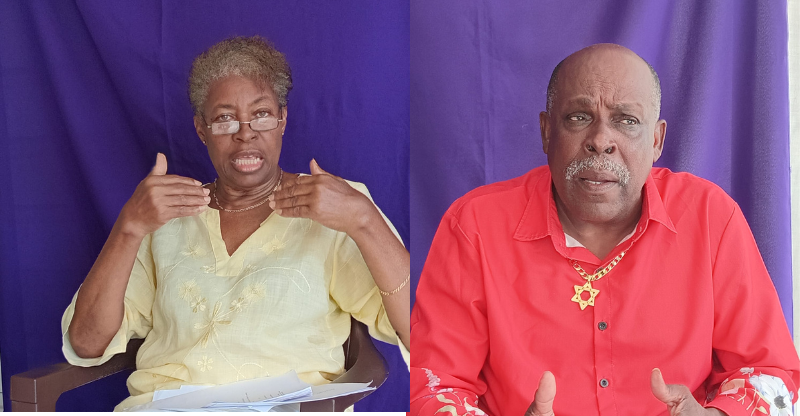
Against a backdrop of overstretched public and non-profit social services across Barbados, a newly registered Christian faith-based charity has officially launched with an ambitious mission to reach vulnerable populations that have fallen through the cracks of existing support systems. Founded by Dr. Belfield Belgrave, the Compassionate Hands Foundation aims to address unmet needs ranging from shelter for survivors of domestic abuse to care for neglected elderly populations, and even community-level intervention to curb rising gang violence.
At its recent launch event held in Strathclyde, St. Michael, foundation leadership laid out a dual mission that combines spiritual encouragement with hands-on, practical support for marginalized groups. Dr. Belgrave, who founded the organization after experiencing a personal calling to serve what he calls the “least of these” in Barbadian society, emphasized that the foundation’s core purpose is to build a critical safety net for people overlooked by mainstream institutions.
One of the organization’s flagship initiatives is the development of a purpose-built safe home for abused women and their children, a project that fills a growing gap in domestic violence support services as existing providers struggle to meet rising demand. “Right now, our top priority is securing a suitable building and recruiting qualified staff to get this shelter up and running,” Dr. Belgrave told local outlet Barbados TODAY. “Our vision is to create a space where survivors, especially children who often bear the brunt of domestic abuse, can receive consistent care and live free from the threat of harm.”
Beyond domestic violence support, the foundation has also made care for Barbados’ aging population a key focus. Dr. Belgrave noted that many elderly Barbadians, who dedicated their working lives to building the nation, are increasingly abandoned or neglected once they reach retirement age. Compassionate Hands aims to step in to provide consistent support and connection to keep elderly residents thriving across the island.
Dr. Jonlyn Harewood, a foundation director and trained economist and urban planner, clarified that the organization has no interest in public recognition or financial gain, instead prioritizing quiet “invisible work” that centers people who feel unseen by broader society. Since completing its official registration, the foundation has worked diligently to meet all national legal and regulatory requirements, and is now fully prepared to roll out its core programs.
These initiatives extend far beyond shelter and elder care: the charity plans to partner with local churches to provide urgent mental health counseling for at-risk groups, support people living with disabilities through small targeted infrastructure projects such as installing accessible bathroom fixtures for those who have recently acquired disabilities, assist students who have fallen out of the formal education system, provide support to widows, and run youth engagement programs in high-need communities.
“We exist specifically to fill the gaps and cracks that other organizations can’t cover,” Dr. Harewood explained. “So many government and non-profit agencies are overwhelmed by rising demand that they simply can’t meet every need. Our goal is to help the people who fall through those gaps, without seeking any public reward or recognition.”
In response to the recent surge in gun violence across Barbados, Dr. Belgrave has proposed a bold, direct approach: open, face-to-face engagement with gang leaders to broker community peace agreements, modeled after international diplomatic negotiation. “We plan to go directly to gang leaders to sit down and talk, to see if we can broker ceasefires and lasting peace between rival groups,” Dr. Belgrave said. “So many of our young people are adrift; gangs give them a sense of belonging and love that they aren’t getting anywhere else. We want to go into these violence-affected hotspots and make a meaningful, long-term difference in their lives.”
Despite the organization’s ambitious agenda, Dr. Harewood stressed that all programming will be rooted in data-driven decision making rather than impulsive action. Unlike many new initiatives that launch without first assessing community needs, the Compassionate Hands Foundation plans to conduct systematic needs assessments to identify where demand is greatest. “If you take the time to listen to communities, you can clearly see the unmet needs that are bubbling under the surface,” she said, noting that this research-first approach will allow the charity to deliver the most effective support possible to the people who need it most.