标签: Barbados

巴巴多斯

  • Antigua and Barbuda election review 2026

    Antigua and Barbuda election review 2026

    After the final votes were counted and all results certified, the dust has settled on the 2026 general election in Antigua and Barbuda – the second major Caribbean electoral contest of the year, one that follows a distinct regional political trend while carving out its own unprecedented place in Caribbean political history. This historic result offers rich analytical ground for scholars and political observers, with several standout takeaways that invite deeper examination from local and regional commentators.

    ### Unprecedented Regional Milestones
    The Antigua and Barbuda Labour Party (ABLP), led by incumbent Prime Minister Gaston Browne, first claimed national power in 2014. With its 2018, 2023, and now 2026 election victories, this marks four straight consecutive terms for the ABLP under Browne – a feat never before seen in Antigua and Barbuda’s national political history, and an extremely rare accomplishment across the broader Caribbean. Browne joins a small elite group of regional leaders that includes Dominica’s Roosevelt Skerrit and St. Vincent and the Grenadines’ Ralph Gonsalves, all of whom have broken the widely held psychological three-term barrier for incumbent prime ministers.

    What makes Browne’s fourth-term win unique among this elite group is the scale of his victory. Unlike Gonsalves, who saw just 1% growth in popular support during his fourth consecutive win, and Skerrit, who recorded a modest 2% gain, Browne and the ABLP secured a 13% double-digit swing in popular vote share and picked up additional parliamentary seats. This puts the 2026 result firmly in landslide territory, a historic first for any fourth-term incumbent government across the Caribbean.

    A second rare achievement is that this landslide swing to the incumbent occurred while the ABLP already held office. For most governments globally, and particularly across the Caribbean, first election wins usually mark a peak of support, with gradual erosion in subsequent contests. It is extremely uncommon for an incumbent government to grow its support share over time. The few exceptions include Skerrit in Dominica, former Barbados Prime Minister Owen Arthur, Jamaica’s Andrew Holness, and St. Lucia’s Philip Pierre. What sets Browne apart is that this is the second time he has pulled off this feat (following his 2018 win), placing him in the same rarefied air as Skerrit, who has also twice improved his incumbent support share.

    ### Key National Observations from the Contest
    Beyond the regional milestones, several national-level trends emerged from the 2026 election, most notably a sharp drop in overall voter turnout. While total registered voters grew by 4% (adding 2,397 new names to the roll) compared to the 2023 contest, this marked a major slowdown from 2023, when a 19% expansion added nearly 10,000 new voters. This contraction is largely attributed to a national voter recertification exercise, which required eligible voters to reconfirm their registration to receive a new polling card. Many disinterested voters opted not to complete the process, removing them from the active roll.

    Even accounting for the cleaner voter list, overall turnout remained far lower than the 2023 election and historical averages. It is worth noting that Antigua and Barbuda’s polling card requirement already produces a cleaner voter list than most regional counterparts, leading to historically higher reported participation than countries like Barbados, where bloated, outdated voter rolls skew turnout data. Even so, the 11% drop in turnout compared to 2023 represents a significant decline that warrants further discussion.

    The drop in participation disproportionately harmed the main opposition United Progressive Party (UPP). Data shows the ABLP won support from 38% of all registered voters, a 14% increase from 2023, while the UPP captured just 23% of registered voters – a 27% decline. This outcome aligns with pre-election polling from Caribbean Development Research Services (CADRES), which projected a convincing ABLP win and detected a major motivation gap among UPP supporters that kept many from heading to the polls.

    ### Political Context and Projection Accuracy
    A core factor behind the ABLP’s historic win was Prime Minister Browne’s decision to call an early election, a move that political analysts describe as a strategic masterstroke. While critics debate whether prime ministers should hold the power to call snap elections for political advantage, the region’s constitutions explicitly permit this practice, and Browne joins other recent leaders including Skerrit (2022, Dominica), Mia Mottley (2022 and 2026, Barbados), and Pierre (2025, St. Lucia) who have turned early election calls into major victories.

    Browne now enters his fourth term as the most electorately dominant fourth-term prime minister in Caribbean history, benefiting both from his own strong personal approval and significant weaknesses in the UPP. This was the first national election contested by UPP leader Jamal Pringle, and his debut at the head of the opposition ended in political disappointment. Pre-election CADRES polling from March accurately predicted the final result: it projected a 13% swing to the ABLP, which matched the exact swing recorded on election day, April 30. The poll also found 60% of voters preferred Browne as prime minister, compared to just 15% who favored Pringle – a gap that left Pringle unable to mobilize his base to turn out.

    The 13% swing to the ABLP represents a complete reversal of the 12% negative swing the party recorded in 2023. It restored the parliamentary configuration last seen in 2018, with the UPP holding just a single seat (won by Pringle himself), spurring the popular post-election moniker “Single-Pringle.” This swing is also a national historic record: it is the largest positive swing ever recorded for the ABLP, and the largest any party has ever achieved in Antigua and Barbuda’s electoral history.

    The only outlier in the national result was the constituency of Barbuda, which bucked the national trend to easily return Barbuda People’s Movement (BPM) incumbent Trevor Walker. This marked the only constituency where the ABLP lost support, even after the party fielded a cross-over candidate in an attempt to peel support away from the BPM. The candidate failed to gain any BPM backing and also lost existing ABLP support, leaving Walker with a comfortable win. This outcome aligns with Barbuda’s long history of distinct voting patterns, though it still surprised many observers given the ABLP’s national momentum.

    On policy issues, the election followed a familiar regional trend: cost of living was one of the most frequently cited voter concerns, matching results from recent contests in Barbados, St. Vincent, and St. Lucia. In Antigua and Barbuda, however, cost of living ranked second behind local issues of water access, road quality, and general infrastructure. The persistent prioritization of water access is particularly notable – the issue has topped CADRES polling in the country since 2004, when the UPP held office, and it was a core issue that helped the ABLP win power in 2014. Twenty years later, the problem remains unresolved, alongside long-running concerns over road quality. Even so, voters demonstrated that they viewed the Browne administration as the most capable of addressing these persistent issues, leading to their historic victory.

    *Peter W. Wickham is a political consultant and director of Caribbean Development Research Services (CADRES)*

  • Residents demand action after near-fatal fall into uncovered well

    Residents demand action after near-fatal fall into uncovered well

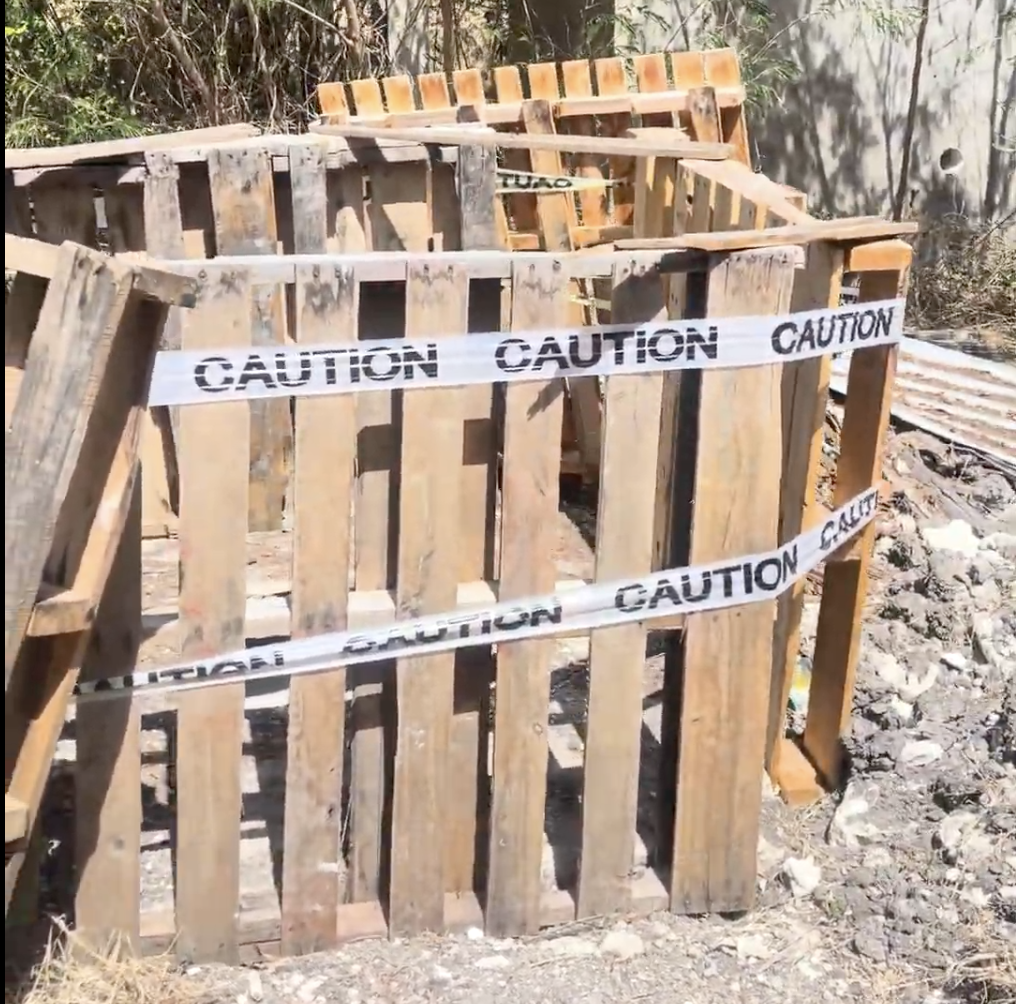
    The normally peaceful residential neighborhood of Goodland Gardens in Christ Church has been thrown into turmoil after a 72-year-old local resident, Lolene Rawlins, survived a near-death plunge into an unmarked, uncovered well hidden beneath thick brush in January. Swift emergency response teams ultimately pulled Rawlins from the 87-foot shaft, but the terrifying incident has reignited long-simmering anger among locals over years of unaddressed safety hazards across the area. For decades, residents say, abandoned open wells have been allowed to sit neglected across Goodland Gardens, with repeated warnings about the risk of injury or death falling on deaf ears. Now, after Rawlins’ close call, the community is coming together to demand systemic action before a tragedy occurs. One long-time female resident, still shaken by the event, emphasized that local residents have long been aware of the presence of unmarked wells across the area, and that dangerous close calls have happened repeatedly before. “I walk through that stretch all the time – I could just as easily have been the one who fell,” she said. “This should never have gotten to the point where someone almost died. Fixing the problem doesn’t have to be a complicated, expensive project. We all know these wells exist; the simplest solution is just to secure and cover them. We shouldn’t have to wait for another person to get hurt before someone acts.” Another local resident, Anthony Yearwood, pointed out that at least two additional open wells on the same plot of land where Rawlins fell remain unsecured and exposed to the public. He echoed calls for immediate remediation of these remaining hazards to prevent another incident. For many locals, the danger extends far beyond the single well that caused Rawlins’ fall, pointing to a broader failure of oversight and mapping that has left the community unaware of how many abandoned shafts lie hidden across the area. “I know the area well and I can point out most of the wells here, but this one was completely unknown to me,” explained Christopher Alleyne, another Goodland Gardens resident. “It was hidden completely by overgrown brush. If one can slip past even long-term residents’ knowledge, how many more are out there that we don’t know about?” Alleyne criticized the longstanding pattern of reactive, after-the-fact action on these hazards, warning that this approach will eventually lead to an avoidable death. “It’s always the same story: we wait until something terrible happens, issue a temporary alert, then go back to business as usual until the next incident,” he said. “Next time, we might not get lucky – the victim might not survive to be rescued.” This uncertainty has left everyday life in the neighborhood altered, with residents reporting constant anxiety about moving through green and bushy areas, especially for families with young children. “I definitely feel less safe now, of course you do,” Alleyne said. “Kids run around, fly kites, play in the brush all the time. We have no idea where all these hidden wells are, so no one can warn the children away.” While some local residents have taken matters into their own hands, launching independent efforts to locate, map and mark abandoned wells across the neighborhood, the community is unified in calling for national-level coordination, clear regulatory accountability, and a formal plan to address the hazard across the country. “There should be a central registry of these abandoned wells somewhere, so authorities and residents know where they are,” Alleyne argued. “Right now, no one seems to know who is actually in charge of securing these sites. Where do we even go to report this? Are we just supposed to sit and wait for the next casualty?” Despite widespread frustration with the lack of prior action, Alleyne also emphasized that community members have a role to play in solving the problem, urging locals to move past complaining and get involved. “Instead of just sitting back and talking about the issue, everyone can do their small part,” he said, encouraging residents to report potential hazards they find and work together to map unrecorded shafts. In the immediate aftermath of Rawlins’ fall in January, workers from Barbados’ Ministry of Transport and Works attended the site to secure the well with temporary plywood barriers, and a permanent perimeter gate has now been installed around the opening. However, Transport Minister Kirk Humphrey has not yet responded to requests for comment on broader plans to address unmarked wells across Goodland Gardens or the wider area. For residents of the shaken community, the clock is already ticking. With multiple unsecured hazards still unaddressed and unknown wells potentially scattered across the neighborhood, locals say another incident could end in death – and there is no more time to wait.

  • Searles man acquitted of 2019 robbery of fast-food employee

    Searles man acquitted of 2019 robbery of fast-food employee

    After a months-long legal proceeding that wrapped up with a jury deliberation, a Christ Church resident has been cleared of all wrongdoing in a high-profile 2019 armed robbery case targeting a KFC outlet.

    Alvin George Chung, a 59-year-old resident of the Searles Plantation community, had staunchly maintained his innocence from the moment he was charged. The prosecution alleged that on New Year’s Eve 2019, Chung held up KFC employee Llewelun Walthurst, stealing a total of BDS $69,881 and US$1,259 in cash that belonged to the fast-food chain.

    Over the course of the 12-week trial, both the defense and prosecution laid out their competing cases before a nine-member jury. Veteran defense attorney Kaviar Callender led the legal team for Chung, mounting a rigorous challenge to the prosecution’s evidence. Senior State Counsel Kevin Forde argued the case on behalf of the state, presenting the government’s narrative of the alleged robbery.

    After reviewing all testimony and evidence presented during the trial, the nine-member jury returned a not guilty verdict, acquitting Chung of the single robbery charge. Presiding Justice Pamela Beckles formally confirmed the verdict in court, directly notifying Chung that he was no longer in legal custody and was free to leave the courthouse.

    The case marks the conclusion of a years-long legal process that hung over Chung’s head since the alleged incident nearly four and a half years ago, ending with the jury’s finding that the prosecution failed to prove guilt beyond a reasonable doubt.

  • King laments values erosion, urges ‘humanity’ in elder care law

    King laments values erosion, urges ‘humanity’ in elder care law

    During parliamentary debate on the Protection of Older Persons Bill, Barbadian Senator John King delivered a searing rebuke of the island nation’s shifting cultural values, arguing that the very need for this new legislation is a devastating indicator that the iconic Barbadian community-centered “village spirit” has fractured beyond expectation.

    Opening his address to the Senate, King pushed back against the idea that legal mandates can instill basic human decency, questioning why a formal regulatory framework is required to force people to extend simple compassion to older generations. He emphasized that seniors built the foundation for the comfortable lifestyles modern Barbadians enjoy today, so caring for them should be an inherent, automatic instinct rather than a requirement enforced by legal penalties.

    “The simple fact that we must draft and pass legislation to force people to follow basic guidelines when caring for elders, whether those elders live in dedicated care institutions or within their own families, should trouble every single one of us deeply,” King stated.

    In one of the most striking moments of his speech, King shared a decades-old anecdote from his earlier career working on cruise ships, when a foreign passenger accidentally mispronounced “Barbadians” as “barbarians.” At the time, King laughed off the innocent slip of the tongue, but he told the Senate that recent documented cases of widespread elder abuse—including robberies, physical assaults, and targeted exploitation of vulnerable seniors—have made the accidental slur feel devastatingly accurate.

    “Can we truly call ourselves Barbadians, or are we really ‘barbarians’? Our current behavior has sunk to a level that borders on that harsh term. I never wanted to be in a position where I had to stand in this Senate and debate a bill like this. My ideal society would never need such legislation at all,” King said.

    While King commended the current government for stepping forward to address the crisis through legislative action, he did not hesitate to outline the clear limits of legal reform. He stressed that lasting cultural change must start in households and schools, not in courtrooms.

    “No matter how carefully a bill is drafted, no matter how harsh the penalties it imposes for violations, legislation can never change harmful behavior when that behavior has already become normalized across society. We need a major, sustained educational push to reorient how we think about elders, and that work has to begin in primary schools, when values are first formed,” King explained.

    King also shone a light on a widely overlooked and often mocked form of elder abuse: the financial and emotional exploitation of older men seeking romantic connection or companionship. He called on the public to stop framing these incidents as lighthearted comedy and recognize them for what they are: serious violations of basic human rights.

    “We older men are robbed constantly, in every direction, and when these cases come to light everyone laughs it off as a joke. No one labels it abuse, but it absolutely is. It is not a laughing matter. We have to give these cases the same urgent attention we give any other form of abuse against seniors,” King said.

    Turning his message directly to the younger generations of Barbadians, the government senator challenged youth to reframe how they view aging and elders, urging them to see older people as irreplaceable reservoirs of cultural memory and community history rather than useless burdens. He closed with a stark reminder: the way current society treats its elders will shape the treatment younger people receive when they reach old age themselves.

    “Take a hard look in the mirror and ask yourself: Do I see my grandmother, my aunts, my uncles as a burden? Once you start viewing them that way, every part of how you treat them changes. At the end of the day, this bill isn’t just about rules and penalties—it’s about asking people to be human, to extend the basic kindness to those who gave us everything that we deserve.”

  • Long-term NHC tenants to gain ownership as Senate cuts red tape

    Long-term NHC tenants to gain ownership as Senate cuts red tape

    Barbadian lawmakers have passed a transformative new bill on Wednesday that clears years of bureaucratic backlog to grant homeownership to nearly 3,900 long-term tenants of National Housing Corporation (NHC) properties, a move cross-party senators have praised as a long-overdue step to deliver tangible social and economic uplift for low-income households across the country.

    The legislation, officially named the State (Acquisition and Vesting of Property) Bill, covers nine major housing estates located across the island: Deacons Farm, Grazettes, Fernihurst, Wildey, Bonnetts, Golden Acre, Silver Hill, Gall Hill and Wotton. Unlike a 2013 predecessor law that required time-consuming, case-by-case property transfers that left more than 85 percent of eligible applicants waiting indefinitely for title deeds, the new framework streamlines the entire process into a single administrative action. Under the new rules, all qualifying properties will first be legally vested to the Barbadian state, then immediately transferred to eligible tenants – cutting out the lengthy red tape that derailed the earlier policy effort.

    During Senate debate ahead of the bill’s approval, two independent senators – Karina Goodridge and Jamal Slocombe – emphasized the bill’s potential to reshape the lives of low-income Barbadians who have waited decades for housing security. Goodridge framed the legislation as a direct response to years of public outcry over Barbados’s persistent housing access challenges. “This bill does not only just bring a practical answer and solution to the long-standing issues that many Barbadians have faced, but it will cement the fact that persons who are waiting for so long will now become homeowners and that gives those people a sense of security,” Goodridge told the chamber, adding that the reform should have been enacted years earlier.

    Goodridge also raised critical concerns about transparency and equitable allocation, urging the sitting administration to put safeguards in place to ensure properties go to the tenants who rightfully qualify. She called attention to anecdotal reports of fraudulent rent arrangements, where third parties have held NHC unit tenancy agreements while collecting inflated market rent from low-income households actually living in the properties. To prevent eligible residents from being displaced, Goodridge proposed that all applicants be required to disclose the date they began occupying their unit and their total monthly gross income, with income details verified directly through the Barbados Revenue Authority.

    Slocombe echoed Goodridge’s support while pushing for the fastest possible rollout of the new policy, noting that overcrowding is widespread in many of the NHC units. “We recognise there are people who in those small housing units, there are seven and eight people living in two-bedroom houses sometimes, and it provides a unique opportunity for Barbadians to be able to feel a sense of pride and dignity,” he said.

    Introducing the bill to the Senate, Leader of Government Business Senator Lisa Cummins outlined the core benefits of the streamlined process, noting that homeownership will unlock new economic opportunities for thousands of qualifying residents that were out of reach as long-term tenants. Cummins confirmed that eligibility is restricted to tenants who have occupied their NHC unit for 20 years or more, maintain a positive rental payment history, and meet all structural and legal requirements for property transfer. She emphasized that the reform imposes no additional financial burden on beneficiaries, as the transfer is an internal administrative process between the NHC and the state. Where the 2013 policy only managed to complete transfers for 567 of more than 3,900 eligible units over its decade-long implementation, Cummins said the new bill will resolve all pending cases in a single unified action, fulfilling the original unmet promise of the 2013 reform.

  • CARPHA urges vigilance after cruise ship hantavirus cluster, regional risk low

    CARPHA urges vigilance after cruise ship hantavirus cluster, regional risk low

    A recent hantavirus outbreak on a Central Atlantic cruise ship that has claimed three lives has prompted regional health authorities in the Caribbean to move swiftly to assess risks and strengthen public health defenses, even as they confirm the overall threat to the region remains minimal.

    The incident first came to global attention on May 2, when the United Kingdom’s focal point for the International Health Regulations (2005) formally notified the World Health Organization (WHO) of a cluster of respiratory illnesses among passengers and crew on the vessel. Laboratory testing later confirmed hantavirus in one critically ill patient, and the Caribbean Public Health Agency (CARPHA) received an alert about the emerging situation via its automated monitoring and information network on May 3. As of the latest WHO update on May 6, the outbreak has been linked to eight total cases: three lab-confirmed infections and five suspected cases, alongside three fatalities.

    Hantaviruses are naturally carried by rodent populations, and spread to humans primarily through contact with materials contaminated by infected animals’ urine, feces, or saliva. In a public statement addressing the outbreak, CARPHA Executive Director Dr. Lisa Indar emphasized that the Caribbean faces far lower exposure risk than many other regions. “At this time, the risk to the Caribbean region is considered low,” she explained, noting that in the Americas, hantavirus transmission is most often tied to wild field rodents, rather than the urban rat populations common across Caribbean island nations, where sustained spread to humans is far less likely. Dr. Indar also added context on a key secondary transmission route: while rare cases of human-to-human hantavirus spread have been recorded, such events are extremely uncommon, further lowering the risk of a widespread outbreak in the region.

    The Caribbean is the world’s leading cruise tourism destination, handling roughly 44% of all global cruise traffic and welcoming an projected 16.3 million passengers by 2025. Given the region’s deep economic and logistical ties to the cruise industry, CARPHA is urging all its member states to maintain proactive vigilance against emerging public health threats linked to maritime travel. The agency has advised national governments to review and upgrade existing vessel surveillance protocols and public health screening procedures, particularly at major ports of entry where thousands of passengers disembark daily.

    To support these efforts, CARPHA already maintains two region-wide monitoring systems designed specifically to catch public health threats before they reach local communities: the Tourism and Health Information System (THiS) and the Caribbean Vessel Surveillance System (CVSS). These platforms are built to deliver early warnings of health risks connected to tourism accommodations and maritime travel, enabling faster information sharing between nations, more informed public health decision-making, and rapid targeted responses by national health authorities. The CVSS in particular has already proven its effectiveness: the system detects syndromic (symptom-based) suspected cases before any vessel docks at a Caribbean port, and it delivers more than 96% of all cruise ship public health alerts to member states within 24 hours of detection.

    Moving forward, CARPHA says it will remain committed to supporting safe tourism across the Caribbean through enhanced monitoring and collaboration. The agency will continue tracking the Atlantic cruise outbreak closely in partnership with regional and global health partners, including the WHO, and will issue public updates to member states and the general public as new information becomes available.

  • Independent senators warn of gaps in elder care reforms

    Independent senators warn of gaps in elder care reforms

    A groundbreaking piece of legislation designed to safeguard the rights and well-being of Barbados’ senior population has secured overwhelming support in the country’s Senate, but two independent legislators are sounding a clear note of caution: without sufficient public funding and a widespread shift in societal attitudes toward aging, the bill’s transformative potential will remain unfulfilled.

    Independent Senators Jamal Slocombe and Mary Ann Redman both expressed broad endorsement of the new Older Persons Care and Protection Bill, but stressed that standalone legislation cannot address the deep-rooted systemic and cultural challenges facing the island’s rapidly growing aging demographic. Slocombe commended the bill’s core goals, but drew attention to a long-standing “implementation deficit” that has repeatedly hampered effective governance across the Caribbean region. He explained that while a formal legal framework is an essential first step, the legislation risks becoming bogged down in unnecessary bureaucracy if the government fails to allocate adequate human and financial resources to put its provisions into practice.

    Beyond structural resourcing concerns, Slocombe pointed to a gradual erosion of the traditional Barbadian values that once prioritized intergenerational respect. He cited the disappearance of the island’s historic “bus culture”, where younger people would automatically cede their seats to older passengers as a small but telling example of shifting social norms. “You cannot legislate culture,” he noted. “Culture in itself lives and breathes, not on statute books. It doesn’t breathe in bills and acts. It is the way in which we interact with each other.” Slocombe emphasized that Barbados was founded on a foundation of mutual respect for elders, arguing that the nation has gradually lost sight of the core values that shaped its early development.

    Drawing on his own personal family experience, Slocombe also highlighted the crippling financial pressure that falls on households caring for elderly relatives at home. He called for targeted, tangible policy support for families purchasing essential specialized care equipment, such as pressure-sore mattresses and incontinence supplies, noting that the government does not have the capacity to house every senior in a public or private residential care facility. “The truth is, government is not going to be able to put everyone in a residential or public facility,” he said. “There’s a greater consideration that needs to be made for those who have to look after their loved ones.” With Barbados’ existing National Ageing Policy set to expire in 2028, Slocombe urged policymakers to leverage the growing “silver economy” to align future aging strategies with the evolving needs of the island’s expanding senior population.

    Redman framed the bill as a much-needed correction to a gradual societal breakdown that has left thousands of Barbadian seniors exposed to neglect and financial or physical exploitation. She noted that adults over the age of 60 now make up 25 percent of the island’s total population, meaning the complex, multi-faceted needs of an aging population require modern, explicit legal protections. Echoing a widely held ethical principle, she argued that “a society that does not value its older people denies its roots and endangers its future,” adding that meaningful elder protection must be rooted in the core principles of dignity, reciprocity and intergenerational justice.

    Redman also lamented the erosion of traditional filial duty driven by growing societal pressure to pursue material success, a shift that has given rise to the troubling phenomenon known as “granny dumping”—the practice of abandoning elderly relatives at hospitals and public care facilities. She praised the bill’s accessible, plain language, which allows ordinary Barbadians to easily understand the new protections it enshrines, including mandatory reporting of suspected elder abuse, a confidential national register of elder abuse offenders, and the authority to emergency remove seniors from dangerous or harmful living situations. She also highlighted the bill’s groundbreaking provision codifying explicit rights for seniors living in residential care facilities, noting that the legislation allows residents to form independent advocacy committees to improve their daily quality of life. “What is novel about this legislation is that it provides explicitly for persons in residential facilities to have rights… Residents can form committees to encourage a better daily quality of life,” she explained.

    To address the cultural shift needed to complement the new law, Redman proposed expanding intentional intergenerational exposure programs, suggesting that healthy, active retirees serve as mentors for at-risk youth to rebuild fractured community cohesion and restore mutual respect between generations. Like Slocombe, however, Redman echoed the urgent concern that the bill’s success is entirely dependent on sustained government resourcing. She stressed that the Social Empowerment Agency, the body tasked with overseeing the law’s implementation and conducting inspections of care facilities, must receive full and consistent funding, warning that without adequate financial backing, all the new legal protections for seniors would remain “entirely theoretical.”

    Despite their clear reservations about implementation, both independent senators concluded that the bill marks a significant step forward for the region, positioning Barbados as a leader in elder protection and care policy across the Caribbean. Redman added that if the government prioritizes public education campaigns and caregiver training alongside the bill’s passage, the legislation can not only protect seniors but also help drive the cultural shift needed to restore the island’s tradition of respect for its older population.

  • Forensics expert details discovery of Samara Bristol’s body

    Forensics expert details discovery of Samara Bristol’s body

    As the high-profile murder trial of Roger Delisle Sealy unfolds before Supreme Court Justice Laurie-Ann Smith-Bovell and a 12-member jury, a top forensic investigator has laid out chilling, detailed findings from the case that have become central to the prosecution’s argument.

    Sergeant Mervin Grace, a veteran forensic scenes of crime officer, took the witness stand this week to recount his investigation into the November 2021 death of Samara Bristol, whose body was found in remote, bushy terrain in the Mangrove district of St Thomas. On November 21, 2021, when Grace arrived at the scene, he located Bristol’s remains 86 feet from an unpaved cart road, positioned face down in thick vegetation.

    Along the narrow footpath leading to the body, Grace discovered scattered strands of synthetic hair that matched the hair the deceased wore. What he found on the body itself painted a grim picture: a rope tied to Bristol’s right ankle, with a segment of metal fastened to the rope. A gold-toned anklet rested on her left ankle, a matching gold bracelet on her left wrist, two rings on her left ring finger, and a gold necklace around her neck. Two nose rings were recovered from beneath her heavily disfigured face. Most notably, Grace confirmed that Bristol’s skull was fractured and split open, a fatal injury that has been a key focus of the trial.

    Sealy, a resident of Airy Cot, St Thomas, stands accused of murdering Bristol sometime between November 16 and November 21, 2021. Before detailing the body recovery, Grace walked the court through an earlier site visit he conducted on November 17, 2021, to the shared Airy Cot home of Bristol’s mother Samantha and the accused. What he found there was extensive structural damage from a suspicious blaze. The kitchen, living room, and dining room had suffered direct heat and fire destruction, while bedrooms and bathrooms were left heavily damaged by smoke and water used to extinguish the fire.

    After a thorough examination of the fire site, Grace concluded that the blaze originated on a three-seat sofa in the home’s living room. While pinpointing the exact source of ignition remained undetermined, the forensic officer classified the fire as incendiary — meaning it was intentionally set by human action in an area where a fire had no logical reason to start.

    Grace also noted that he found potential traces of blood on the home’s exterior roadway, an insect screen covering a window, and an interior floor, collecting swabs of the substance for DNA testing. Later that same day, investigators were led to a black-and-yellow motor lorry that had been hidden in a bushy area well off a main road in Vaucluse. After the lorry was moved to District ‘E’ Speightstown Police Station, Grace collected swab samples from the vehicle’s cargo tray for forensic testing.

    The following day, Grace traveled to a private residence in Halls Village, St James, to conduct a forensic sweep. There, he collected a doormat and a single pair of socks as evidence. Investigators also turned over to Grace a set of clothing and footwear belonging to the accused: a T-shirt, pants, and boots, all of which were taken into custody for testing.

    The prosecution is being led by Acting Deputy Director of Public Prosecutions Alliston Seale SC, joined by State Counsel Paul Prescod. Sealy is represented by defence counsel Sian Lange. The trial is scheduled to resume on Thursday, with more witnesses expected to take the stand as proceedings continue.

  • Elder abandonment crisis looms, senator warns

    Elder abandonment crisis looms, senator warns

    On Wednesday, Barbados’ Health Minister sounded the alarm over a rapidly escalating “crisis of elder abandonment”, as sweeping new draft legislation was brought to the Senate to impose binding legal duties on relatives and reinforce state protections for the country’s aging senior population. Senator Lisa Cummins, who also serves as leader of government business in the upper legislative chamber, used the second reading debate of the Older Persons Care and Protection Bill to urge a nationwide cultural reckoning, arguing that the crisis extends far beyond gaps in regulation to a gradual erosion of intergenerational empathy.

    Cummins painted a grim, unflinching portrait of a growing trend: the same generation that laid the foundation for modern Barbados is increasingly being forgotten, left to reside indefinitely in hospital wards and community care facilities cut off from contact with the children and families they raised. The crisis comes at a demographic turning point for the small island nation: the national median age has climbed to 42.5 years, and the country’s death rate now outpaces its birth rate, transforming what was once a private family care burden into a pressing national emergency.

    Opening her remarks to the Senate, Cummins appealed directly to Barbadian families, pointing out that for thousands of abandoned elders, hospital nurses and doctors have stepped into the role of surrogate family. She emphasized that abandonment is not merely a physical act of leaving a senior in a care facility; it inflicts deep emotional and psychological harm, as elders are left with the painful awareness that their loved ones have no interest in checking in, bringing favorite foods, or even carving out 30 minutes of free time to visit.

    Cummins drew on firsthand observations from her recent tours of the island’s Queen Elizabeth Hospital and Psychiatric Hospital to illustrate the scale of the crisis. She detailed a troubling trend she labeled the “cruel to be kind” phenomenon, where family members intentionally drop off elderly relatives at hospital accident and emergency departments, knowing they will receive safe care but intentionally abdicating their own long-term care responsibilities. What is most distressing, she added, is the total absence of contact after admission: when she asked medical staff how many families visit their elders admitted for long-term care, the overwhelming answer was that most never show up at all.

    “From the Queen Elizabeth Hospital to the Psychiatric Hospital, there is no family engagement,” Cummins lamented. “In our district hospitals, whether it is St Lucy or St Philip, family members not only are leaving them there, but they’re not coming back even to visit them. There’s something fundamentally wrong in Barbados with that. These are our elders. These are our older persons.”

    The Older Persons Care and Protection Bill has been framed as a robust legal framework that will shift the Barbadian government’s role from passive tolerance of neglect to active safeguarding of seniors. For the first time in Barbadian legal history, the bill explicitly recognizes elderly people as rights-holders, redefining respect and care from discretionary acts of kindness to enforceable legal entitlements. The legislation seeks to break the long-standing culture of silence around domestic elder neglect by introducing mandatory reporting requirements, granting broad investigative powers to state authorities, and imposing enforceable penalties for anyone found to have abused or exploited vulnerable seniors.

    Beyond addressing physical abuse and neglect, the bill targets non-physical harms including financial exploitation—most notably the widespread practice of cashing elderly seniors’ pension checks while leaving them to be cared for in state facilities—psychological manipulation, and the deliberate withholding of necessary medical care. Cummins also noted that the legislation will introduce consistent regulation for the fast-growing private residential care industry, requiring both state-owned and private facilities to meet a strict “gold standard” for comfortable, home-like environments with proper amenities including air conditioning.

    Despite these sweeping legal changes, Cummins was open about the clear limitations of legislation alone. No amount of legal reform, she argued, can replace the fundamental care and connection that comes from families and local communities. She pointed to everyday examples of normalized ageism across Barbadian society, from able-bodied young people refusing to give up seats on public transit to drivers taking disabled parking spots for quick, unneeded trips.

    “Legislation can punish abuse, it can regulate facilities, it can create duties and responsibilities… but legislation on its own will not create care,” Cummins told the Senate. “Legislation on its own will not provide for our elderly. We must still take responsibility for teaching our families respect and care for our elderly. It must be taught, it must be reinforced, and it must be socially expected.”

    The proposed bill forms just one part of a broader whole-of-society government strategy to address population aging, which is also tied to ongoing mental health system reforms and new workplace flexibility policies designed to help working-age people balance caregiving responsibilities with employment. The overarching goal is to build a sustainable support system for an aging population that does not leave the shrinking working-age population facing financial and personal ruin.

    Closing her address, Cummins challenged all Barbadians to confront the crisis within their own communities, noting that the “builders of our nation” deserve far more than just a hospital bed—they deserve the fundamental dignity of being remembered by the families they built. “This bill applies to all of us who want change, because change begins with us,” she said. “Let the answer be clear for all of us. Let us focus on the rights of our elderly. Let us ensure that we enforce this bill in our homes and in our society.”

  • Opposition senator criticises ‘vague drafting’ in new Older Persons Bill

    Opposition senator criticises ‘vague drafting’ in new Older Persons Bill

    A heated legislative debate has unfolded in the Barbadian Senate over the proposed Protection of Older Persons Bill, with opposition Senator Karina Goodridge launching a detailed critique of what she describes as dangerously vague drafting and overconcentration of power in the hands of government ministers.

    While Goodridge openly praised the administration for responding to public calls to protect vulnerable adults aged 65 and over, she emphasized that the current iteration of the legislation is too open to subjective interpretation, a flaw that could lead to legal chaos and wrongful targeting of ordinary citizens. Her criticism focused heavily on Section 2, the bill’s clause defining elder abuse. According to Goodridge, the existing wording casts an overly broad “net” that fails to include a clear, objective legal standard, specifically the widely accepted reasonable person’s test that would guide consistent application of the law.

    Beyond the definition of abuse, Goodridge raised pointed questions about the bill’s framework for approving caregivers for older adults. The legislation grants the responsible minister sole authority to designate “fit persons” to provide care, but it does not outline explicit qualification criteria for either the caregivers or the standards the minister must use to make these decisions. She argued that leaving this determination open to subjective judgment rather than clear, written rules creates unnecessary risk of future disputes and unfair outcomes. “Why is this power given to the minister, and what qualifies the minister now to make that decision?” Goodridge asked, noting that clear guidelines would avoid preventable problems down the line.

    Goodridge also turned scrutiny to Section 10, which sets harsh penalties for violations: a fine of up to $100,000 and a five-year prison sentence. She warned that without explicit definitions of specific offenses, the bill could inadvertently criminalize accidental or unintentional actions that cause no harm to older people. “If the punishments are to become onerous, then the crime must be explicitly defined with no room for misinterpretation,” Goodridge said. “We really don’t want to set that kind of precedent as a country.”

    One of the most controversial points of her critique targeted Section 34, which imposes legal liability on publication distributors for content they distribute that relates to elder care and protection. Goodridge questioned why third-party distributors, who do not edit or curate the content they deliver, should be held legally responsible for material they carry, arguing the provision effectively forces distributors to take on the role of editorial oversight that does not align with their job function. “If I’m distributing a paper, then I could be liable. That didn’t make no sense to me in Bajan terms. It is asking the distributor to also have editor responsibilities,” she said.

    Goodridge’s line-by-line analysis drew immediate pushback from government lawmakers. Leader of Government Business Senator Lisa Cummins rejected Goodridge’s concerns about excessive ministerial power, noting that references to the “minister” in Barbadian legislation conventionally refer to the office and its team of professional technical staff, not unilateral decision-making by a single individual. Senate Deputy President Liz Thompson joined Cummins in pushing back, reminding Goodridge that clause-by-clause review is reserved for the committee stage of legislative debate, not the first reading of the bill.

    Critics also questioned Goodridge’s experience with legislative drafting, but the opposition senator stood firmly by her analysis. She argued that all senators have a duty to flag drafting flaws regardless of procedural conventions, noting that legal opinions often vary among attorneys and that the body has a responsibility to pass clear, well-crafted law. “I will give my opinion on the sections fairly in accordance with the knowledge that I have,” Goodridge responded. “Many times attorneys will say one thing and the next attorney will say the other… we have to ensure any bill we are passing is properly drafted for us senators to accept.”

    Closing her remarks, Goodridge urged the full Senate to revise the bill to clarify ambiguous language before advancing it, warning that failing to fix the issues now would force the country’s judicial system to resolve costly and time-consuming legal disputes over ambiguities later. “We care about the elderly,” she emphasized. “But we have to ensure the legislation is properly defined and every section is clear so that we can avoid misinterpretation.”