标签: Barbados

巴巴多斯

  • QEH bolstering surveillance to protect staff, patients

    QEH bolstering surveillance to protect staff, patients

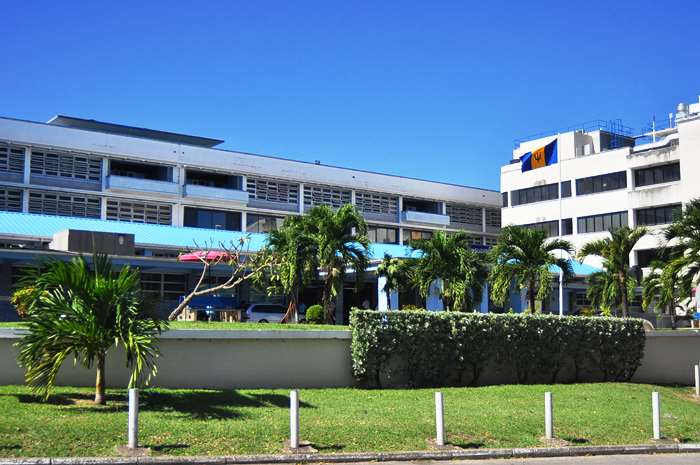
    Against a backdrop of growing frequency of shootings and violent encounters that have strained hospital operations across Barbados, Queen Elizabeth Hospital (QEH) is moving forward with a targeted set of security upgrades to safeguard frontline staff and patients, chief executive Neil Clark has confirmed. In an exclusive interview with Barbados TODAY Wednesday, held on the sidelines of the launch event for digital information management firm Abergower, Clark outlined the timeline and scope of the planned changes, emphasizing that the enhanced measures have become a critical necessity for the facility at this juncture.

    First on the agenda is specialized additional training for all QEH security personnel, set to be delivered by the national prison service this month. The training will focus on de-escalation and safe management of aggressive, high-risk individuals, equipping on-site security teams with the tools to respond effectively to volatile situations.

    Alongside training, the hospital is rolling out body-worn cameras for all security staff, a transparency and accountability measure Clark says will benefit both security officers and the public. “The core purpose of these cameras is two-fold: it creates an official record of any incident that unfolds, and the knowledge that interactions are being recorded often encourages calmer behavior from all parties involved,” Clark explained. “This not only helps clarify what happens in the event of a dispute, but also acts as a proactive deterrent to aggression.”

    Unlike broad overhauls that would add large numbers of new security staff, QEH’s strategy prioritizes improving infrastructure and capability within its existing workforce structure. The hospital is also expanding its closed-circuit video surveillance network across more areas of the facility, giving management real-time visibility into developing incidents across the campus. Clark noted that once training is complete and body cameras are fully deployed, QEH leadership will conduct a review to assess whether further upgrades are required. For now, he says, the existing split of in-house security personnel and contracted outsourced staff remains sufficient to handle current demand.

    Clark explained that the hybrid staffing model is strategically deployed to leverage the strengths of both teams: in-house security, who are on-site full-time, have stronger familiarity with QEH’s layout and protocols, making them far more responsive to emerging incidents. Outsourced staff primarily handle static gate monitoring duties, allowing the in-house team to be deployed to high-risk areas that require rapid, flexible support.

    The QEH chief also commended the existing partnership between hospital security and local law enforcement, pointing to their fast, coordinated response during violent incidents that bring shooting and stabbing victims to the hospital’s Accident and Emergency (A&E) department. “Whenever we receive a patient with a gunshot wound, officers arrive on site within minutes, and maintain a visible physical presence to prevent follow-up attacks from rival parties who may try to come to the hospital to complete an act of violence,” Clark said. “Security teams work hand-in-hand with A&E clinical staff to secure the area quickly, which has been extremely effective so far.”

    Even with effective response protocols in place, Clark acknowledged that violent incidents create major disruptions to hospital operations. Most shootings require an immediate full or partial lockdown of the emergency department to contain risk, which slows the delivery of care for other patients and creates anxiety among clinical staff and visitors. Redirecting clinical and security staff to manage the lockdown also pushes out wait times for patients seeking care for unrelated conditions, a trade-off Clark says is unavoidable when safety is at stake.

    Beyond physical security measures, QEH has put in place dedicated mental health support for staff who experience trauma during violent incidents. Clark says the facility offers access to professional counsellors for all employees, and the local vicar also provides on-demand emotional support. Team leaders conduct routine debriefs after major incidents to normalize any stress or anxiety that staff may experience, and encourage employees to access support services even if they don’t feel immediate impacts, since traumatic responses can emerge over time.

    “Our priority is two-fold: keep everyone on campus safe physically, and make sure our team has the support they need to process these traumatic events,” Clark added.

  • Govt defends migration policy at UN forum

    Govt defends migration policy at UN forum

    Just days after facing heated parliamentary pushback over its controversial planned immigration overhauls, Barbados’ government has carried its policy argument to the global stage, telling a key United Nations gathering that strategic migration management is non-negotiable for the small island nation’s economic survival amid cascading demographic decline, workforce contraction and accelerating climate change pressures.

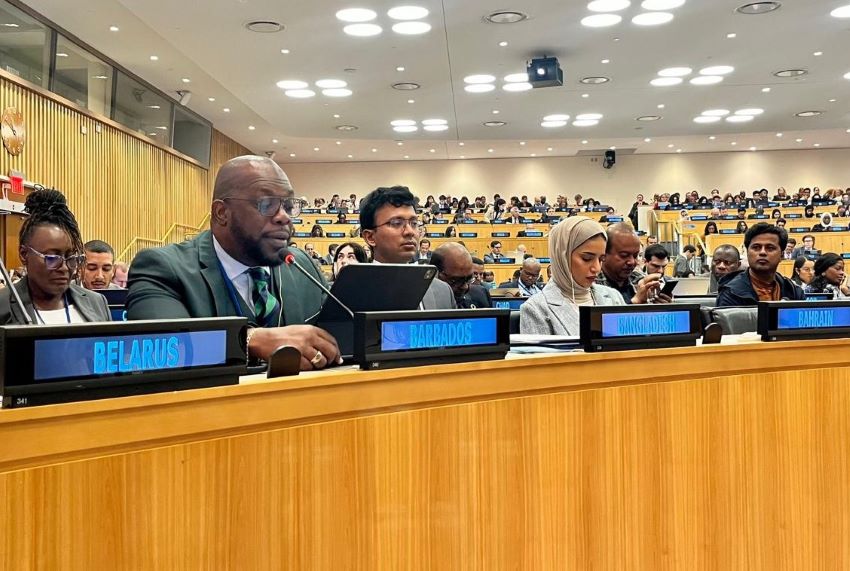
    Speaking at the Second International Migration Review Forum in New York, Barbados’ Minister of Home Affairs Gregory Nicholls framed migration as a core development strategy rather than a policy challenge for small island developing states (SIDS) grappling with widespread labor gaps, aging populations and climate-driven instability. The quadrennial forum serves as the UN’s flagship global convening, bringing together governments, civil society and private sector stakeholders to evaluate progress on the Global Compact for Safe, Orderly and Regular Migration, share lessons from implementation hurdles, and align on future commitments to improve global migration governance.

    “Migration, managed well, is not a burden. It is an engine for creativity, innovation and growth,” Nicholls told assembled delegates in his address.

    His comments came on the heels of a fiercely contested debate in Barbados’ House of Assembly over proposed updates to the country’s immigration and citizenship legislation, which the administration has positioned as a critical response to years of population shrinkage, high rates of outward migration among skilled workers, and growing strain on the domestic labor market. During the parliamentary debate, Nicholls emphasized that Barbados’ shrinking and rapidly aging population poses an existential threat to long-term economic growth, the long-term solvency of the national pension system, and the country’s ability to compete in the global tourism and digital services sectors.

    Expanding on that framing for the international audience, Nicholls stressed that for SIDS, climate change and migration are inextricably linked policy priorities, not separate issues. “For small island developing states, climate change and migration are not parallel agendas – they are the same agenda,” he said.

    Nicholls also used the UN platform to highlight Barbados’ recent progress advancing regional integration through a landmark free movement agreement launched last October with three other Caribbean nations: Belize, Dominica, and St Vincent and the Grenadines. The pact grants citizens of all participating states the right to live and work without time limits across member territories, while guaranteeing equal access to public healthcare and primary and secondary education for migrant workers’ children. “This is not generosity. It is obligation built on political will, regional solidarity and human rights,” Nicholls said of the agreement.

    Barbados is also currently developing a comprehensive national migration policy aligned with regional frameworks from the Caribbean Community (CARICOM) and the UN Global Compact for Migration. According to Nicholls, the new policy will streamline legal migration pathways, upgrade border management infrastructure and systems, and align immigration rules with the country’s broader economic growth goals.

    This policy direction mirrors key provisions of the Immigration Bill currently under parliamentary consideration, which includes expanded temporary residency categories, more flexible eligibility requirements for permanent residency, and a new points-based merit immigration system designed to attract skilled workers, foreign direct investment, and high-net-worth retirees. The government has repeatedly argued that the reforms are critical to offset decades of demographic decline and boost Barbados’ competitiveness in the global race to attract high-value human capital and business investment.

    Nicholls used his address to renew international backing for climate finance reform through the Bridgetown Initiative, a global advocacy push led by Barbados Prime Minister Mia Mottley to restructure global development finance and unlock more affordable funding for climate adaptation and loss and damage in vulnerable developing nations. He warned that climate-related displacement is already placing unprecedented strain on border systems, food security and domestic political stability for small island states, stressing that proactive migration planning is a core part of climate adaptation.

    “Migration should be seen as an option, and not a mere act of survival,” he said.

    The minister also outlined ongoing efforts to deepen engagement with the large Barbadian diaspora communities in the United Kingdom, Canada and the United States, through initiatives to encourage diaspora investment, skills sharing with domestic workers, and return migration for Barbadians living overseas who wish to resettle in their home country.

    Closing his address, Nicholls emphasized that Barbados’ participation in the UN forum was not only to share its national perspective, but to build new global and regional partnerships to advance the shared goal of “safe, orderly and dignified migration” for all.

  • Onion glut leaves farmers struggling as imports persist, BAS warns

    Onion glut leaves farmers struggling as imports persist, BAS warns

    A paradoxical crisis has hit Barbados’s onion sector: after a successful government-backed push to expand domestic cultivation that delivered a strong harvest, hundreds of local farmers are now unable to offload their produce, according to warnings from the Barbados Agricultural Society (BAS).

    James Paul, chief executive officer of the industry association, laid out the roots of the crisis during a press briefing. Over the past year, agricultural advocates successfully persuaded local growers to scale up onion planting, pushing total cultivated acreage past the 100-acre mark – a major milestone for the country’s goal of boosting food security and reducing reliance on imports. But this win has laid bare deep, long-unaddressed flaws in the sector’s marketing, distribution and infrastructure frameworks.

    The most pressing issue, Paul explained, is the unregulated flow of imported onions that continues to saturate the local market exactly when domestic crops reach peak harvest. Competing against cheaper foreign shipments puts local producers, who already face far higher production costs than their international competitors, at an insurmountable disadvantage. Paul argued this misaligned policy undermines the very government efforts to expand domestic agriculture.

    “I do not think it makes any logical sense to allow imports during windows where we know a large local harvest is incoming,” Paul said. “When we encourage farmers to invest in expanding production, we have a responsibility to plan ahead for how that produce will reach consumers. Right now, we are forcing growers to compete with imported goods on uneven ground, and that is unfair.”

    Beyond misaligned import policy, gaps in post-harvest infrastructure and storage are compounding farmers’ struggles. Unlike imported onions, which are treated to withstand long-haul shipping, locally grown onions require carefully controlled, well-ventilated storage environments that protect the crop from pests and spoilage. Many of these specialized facilities have fallen into disrepair, Paul said, pointing to the shuttered historic drying plant in Foursquare, St. Philip as an example of the lost infrastructure the sector needs to restore or replace.

    Fragmented coordination among individual farmers has also weakened the sector’s position, Paul added. Without collective organizing, small-scale growers lack collective bargaining power when negotiating with middlemen, and cannot deliver the consistent supply and pricing that major buyers require. This disorganization leaves individual producers vulnerable to exploitation, often forcing them to sell their crop below the cost of production just to clear inventory.

    This dynamic threatens the long-term viability of domestic onion cultivation: if farmers cannot earn a reasonable return on their investment this season, Paul warned, few will be willing to expand planting in the coming year. Currently, just 20% of Barbados’s total onion demand is met by local production, but Paul said the country has the natural capacity to meet 100% of domestic demand if systemic flaws are addressed. With targeted improvements to storage, marketing and coordination, Paul estimated that total cultivated acreage could double to 200 acres within 12 months, creating a more resilient, self-sufficient domestic onion sector.

    As intermittent rainfall threatens remaining unharvested crops, Paul has urged all local onion farmers to share real-time updates on their yields and harvest timelines with the BAS to enable better cross-sector market coordination. He also called for closer collaboration between private sector stakeholders and the state-owned Barbados Agricultural Development and Marketing Corporation (BADMC) to fix gaps in the national onion value chain.

    “Barbados has the ability to fully supply our own onion demand, we can do this,” Paul emphasized. “Right now, we are holding ourselves back from reaching our full potential by failing to put the right systems in place. We all have to work together to fix this – we cannot let farmers invest their time and money into a crop just to be left stuck with unsellable produce.”

  • Worrell: Currency shifts won’t affect Caribbean economies

    Worrell: Currency shifts won’t affect Caribbean economies

    Long-established market forces have cemented the United States dollar’s position as the undisputed global standard of value, and recent fluctuations in other major currencies will bring no meaningful economic shifts to Caribbean nations, according to a prominent former central banking leader from the region.

    Dr Delisle Worrell, former governor of the Central Bank of Barbados and a veteran International Monetary Fund consultant, laid out this argument in the May issue of his regularly published Economic Letter, which carries the headline *The Dollar is the World’s Standard of Value*.

    Worrell stressed that Caribbean economies are structured entirely around the US dollar for cross-border activity. Every key external transaction for the region—from pricing tourist packages to settling export and import trades, to securing foreign debt—uses the US dollar as the benchmark, and all clearing processes run through dollar-denominated accounts hosted by American commercial banks and the Federal Reserve Bank of New York. Against this backdrop, recent upward movements in the value of sterling, the Canadian dollar, the euro, the Japanese yen and the Chinese renminbi will not alter core economic conditions for Caribbean countries, he said.

    The former governor, who also founded the Central Bank of Barbados’ research department, pointed out that the primary spillover harm from today’s global economic instability hitting Caribbean nations is imported inflation. He outlined a clear threshold for policy response: only countries where governments hold a fiscal surplus of revenue over current expenditure exceeding 2% of GDP have the capacity to roll out targeted subsidies to cap fuel and essential goods prices. For all other regional economies, there are few policy tools available to ease inflationary pressure, he added.

    Worrell also issued a strong caution against one commonly proposed policy adjustment: revaluing domestic currencies to counteract inflation brought in from global markets. He explained that if a central bank drew down its foreign currency reserves to push the domestic exchange rate higher, market participants including commercial banks, import and export firms, and tourism operators would almost certainly hoard the cheapened US dollars instead of passing the exchange rate benefits through to consumers and other end users.

    Global monetary data backs his broader claim about the dollar’s dominance: out of 180 legally recognized sovereign currencies across the world, the value of all 179 non-US currencies is defined relative to the dollar, Worrell noted. This status quo is not dependent on US government policy, shifts in the US or global economy, or price movements of gold, oil or other commodities, he said. It also has not been dislodged by the emergence of cryptocurrencies built on blockchain technology or any other fintech innovation. “All economic values are based on the dollar,” he concluded.

    Worrell frames the dollar’s global benchmark status as a historical convention, comparable to the widespread adoption of Greenwich Mean Time as a global time standard. He traced the 80-year evolution of this arrangement: after World War II ended in 1945, the global economy split into two separate geopolitical and economic blocs, with the United States holding overwhelming sway over trade and finance in the Western democratic sphere. This established the dollar as the reference currency for all nations outside the Soviet-led bloc. When the Soviet Union collapsed in the early 1990s, the dollar’s use as a global reference spread to every corner of the world.

    Crucially, Worrell emphasized that the dollar’s dominance emerged from organic market practice rather than top-down policy mandate from the United States or global institutions. Individual consumers, multinational companies and financial institutions across the world have consistently chosen the dollar as the go-to reference for settling cross-border transactions. He offered a common example: a consumer in Jamaica purchasing goods from Chinese suppliers will almost always first calculate the cost in US dollars before converting the total to Jamaican dollars for their final budgeting.

    This entrenched market preference has outlasted every challenge to the dollar’s status, Worrell argued. Even as major economies including post-war Germany, Japan and most recently China rose to become the world’s second-largest economy, global markets have retained the dollar as the primary settlement currency. The dollar’s benchmark position also emerged unscathed from the 2007–2008 global financial crisis and the subsequent downgrading of market confidence in US government creditworthiness.

    Today, despite growing uncertainty around the direction of US policy and the global economic volatility this unpredictability generates, there is no evidence of a broad global shift away from the dollar toward the euro, renminbi or any other alternative currency to serve as the universal standard of value, Worrell said.

  • Dad: ‘Most intense month’ as Noi begins cancer treatment

    Dad: ‘Most intense month’ as Noi begins cancer treatment

    A 19-year-old Barbadian woman, Noi Jemmott, is now in Bogotá, Colombia, entering what medical professionals call the most high-stakes phase of her fight against an aggressive, fast-growing blood cancer. Jemmott received a diagnosis of Acute Lymphoblastic Leukaemia (ALL), a rapidly progressing cancer that impacts bone marrow and blood cell production, and began urgent, intensive chemotherapy earlier this week, according to her father Janson Jemmott. In an exclusive interview with Barbados TODAY Thursday, Janson, a Barbadian barber, shared that the coming 30 days of treatment will be a pivotal turning point for his daughter’s chance of full remission.

    Over the first few days of her arrival in Colombia, clinical teams completed a battery of confirmatory tests to verify the initial diagnosis, map the spread of the cancer, and refine a targeted treatment plan tailored to Noi’s specific case. “The first couple of days they were running tests to make sure that the diagnosis was correct, and to find the best course of action to deal with the diagnosis,” Janson explained. “As of [Wednesday], they have started treatment – she has started chemo – and that will run for the first month. It’s gonna be the most intense month.”

    As part of the first phase of care, Noi is scheduled to undergo two routine procedures this week: a minor surgery to place a central venous catheter in her chest to simplify consistent chemotherapy administration, and a lumbar puncture (spinal tap) to test whether cancer cells have spread to her central nervous system. Despite the gravity of her diagnosis and the grueling treatment schedule ahead, Janson said his daughter has maintained an extraordinary level of resilience and positive spirit.

    “I video called her earlier this morning and she was smiling,” Janson shared. “I tell her keep your smile. So that is comforting – very comforting – when I call her and I can see that she is still who she is. She is a very beautiful girl, very sweet girl.”

    Janson admitted that the journey has been emotionally devastating for the entire family, but the overwhelming wave of support from strangers and loved ones across Barbados has softened the blow and given them strength to keep fighting. Donations to cover Noi’s costly overseas treatment have poured in from across the island, ranging from small $5 contributions to larger gifts, and Janson says each donation carries a meaning that goes far beyond its monetary value.

    “Each time I get a call from some person, it’s extremely emotional for me,” he said. “You live in a world where there’s so much negative stuff going on, but when something like this happens, you can see the positive feedback from people. The people that donated $5 – that might have been that person’s last $5 – but they still donated. To feel the love from people that I don’t even know, it’s very overwhelming. In this day where so much negatives are going on, people need something positive to hold on to.”

    Janson also opened up about the emotional toll the diagnosis has taken on Noi, revealing that she recently broke down in tears for the first time since learning she had cancer – a moment that he says drove home how difficult this fight is for her. Even so, he added, her strength has never wavered for long. “She has been very strong,” he said. “I really admire her.”

    In the coming days, Janson will travel to Colombia to be by his daughter’s side ahead of the most intensive weeks of chemotherapy, a treatment that nearly always causes full hair loss. He plans to personally cut Noi’s hair before treatment begins, a small act of love and support to help her prepare for what’s ahead.

    For Janson, every donation and message of support is more than just financial help to cover medical bills and travel costs. “Each donation I see as hope – not as dollars,” he said. “I know it’s going on account as dollars, but I see hope. I just want to thank everyone that has supported so far. Each call is very emotional. It has made me feel like, yes, there’s still hope.”

    Janson is optimistic that Noi will respond well to treatment, and is holding onto hope that she will be able to return home to Barbados to resume her normal life within six months. If complications arise, the treatment and recovery process could extend to almost a year, but Janson says the family is preparing for whatever comes and remains committed to fighting alongside Noi. “Best case scenario, I’m hoping that in six months, my daughter should be back in Barbados,” he said. “Worst-case scenario, we could have this fight going on for almost one year. But I’m hoping that’s not the case. I want my daughter back… I miss her.”

    Community members who wish to support Noi’s treatment can contribute via three channels: a dedicated GoFundMe page at https://www.gofundme.com/f/help-noi-jemmott-fly-to-colombia-for-lifesaving-treatment, a CIBC bank account numbered 1001282704, or through First Pay to the registered email cathyallman@gmail.com.

  • Simmonds retained by Royals

    Simmonds retained by Royals

    The Caribbean Premier League (CPL), one of the world’s most exciting regional Twenty20 cricket tournaments, is moving forward with preparations for its 2026 season by doubling down on its commitment to nurturing homegrown emerging talent. Ahead of the upcoming player draft, every CPL franchise has exercised their one allowed pre-draft retention, all of which went to young prospects in the league’s mandatory Breakout Player category.

    Leading the group of retained rising stars is 24-year-old left-arm fast bowler Ramon Simmonds, who will remain with the Barbados Royals. A native of Barbados, Simmonds has already earned four T20 international caps for the West Indies national team, marking him as one of the most promising young fast bowling talents in the Caribbean.

    The five other Breakout Players retained by their respective franchises include Joshua James, who will stay with the Antigua & Barbuda Falcons; Quentin Sampson, retained by the Guyana Amazon Warriors; Navin Bidaisee, who remains with the St Kitts & Nevis Patriots; Ackeem Auguste, held by the Saint Lucia Kings; and Nathan Edward, retained by the Trinbago Knight Riders.

    All six selected players earned their retention spots thanks to strong recent performances, proven on-field potential, and rapidly growing influence across regional domestic cricket circuits. Under the 2026 CPL competition rules, each franchise will ultimately include three Breakout Players in their final full season squad. To ensure these young prospects get meaningful high-level game time, the league has also introduced a mandate requiring every team to play at least one Breakout Player in every match of the upcoming season.

    This regulatory structure marks a clear, intentional step forward for the CPL’s long-running mission to cultivate emerging cricket talent across the Caribbean. By reserving the only allowed pre-draft retention exclusively for a Breakout Player, league organizers have guaranteed that young domestic prospects get priority attention and secure spots in squad plans ahead of the open draft. With all pre-draft business now complete, all six CPL franchises will fill their remaining vacant roster spots during the upcoming player selection event, which is shaping up to be one of the most competitive and highly anticipated drafts in the league’s history.

  • Odwin wins coveted award at SMU

    Odwin wins coveted award at SMU

    Barbados’ leading women’s golfer Emily Odwin has earned another prestigious milestone in her burgeoning athletic and academic career, taking home Southern Methodist University’s top individual honor for student-athletes.

    The 22-year-old senior was named Female Student-Athlete of the Year at SMU’s annual Mustang Awards held earlier this week, an award that celebrates exceptional excellence both on the competitive course and in the classroom. Designed to recognize standout team leaders who lift their peers and elevate the university’s athletic reputation, the honor puts a spotlight on Odwin’s consistent contributions to the SMU Mustangs women’s golf program over the past season. Beyond her win, she also earned nominations for two additional awards at the McFarlin Auditorium ceremony: the Student-Athlete Choice Award and the Perseverance Award.

    This collegiate season has stood out as one of Odwin’s most impressive to date. Across 31 competitive rounds, she posted a stellar average score of 71.82, a mark that secures her fifth place on the SMU women’s golf program’s all-time leaderboard. She also earned a coveted spot in the nationally recognized Augusta National Women’s Amateur, all while maintaining an impressive 3.76 cumulative grade point average. Currently the reigning Barbados Olympic Association Senior Female Athlete of the Year, Odwin was quick to share credit for her latest recognition, emphasizing the critical role her teammates and support staff have played in her success.

    “It’s really easy to succeed when you’re surrounded by great teammates and a dedicated support system,” Odwin said in comments after the awards ceremony. “At the end of the day, this isn’t just my award – it’s a collective achievement for our whole group.”

    Fresh off her award win, Odwin and the Mustangs are already preparing for their next big test: the Waco Regional of the NCAA Division I Women’s Golf Championship, which tees off this coming Monday in Texas. The team, seeded fourth in the regional, will compete over three days at Waco’s Ridgewood Country Club, with a spot in the national championship tournament on the line. A win or high enough placement would send SMU to its third national championship appearance in the last four seasons, with the final tournament scheduled for May 22-27 in Carlsbad, California.

    Odwin made clear her focus remains fixed on the road ahead, not on past accolades. “The job’s not done,” she said. “We head to Regionals this weekend, and I’m so excited for what this team can do. I truly believe this group has what it takes to contend for a national championship – I wouldn’t have returned for my senior season after the fall if I didn’t believe that deep down. Right now, our goal is to get through Regionals, and we’re taking it one round at a time.”

    The award win comes on the heels of another strong performance for Odwin just weeks prior: in late April, she tied for seventh place at the U.S. Women’s Open Qualifying Tournament held in Corral de Tierra, California, cementing her status as one of the top young amateur golfers in the hemisphere.

  • Service programme to become mandatory in secondary schools

    Service programme to become mandatory in secondary schools

    Barbados’ national secondary education system is rolling out an ambitious new Community Service Learning (CSL) initiative, crafted to redefine student engagement with local communities and expand learning beyond traditional classroom boundaries. Introduced as a core component of the Ministry of Education Transformation’s whole-child education framework, the programme will require compulsory participation from every student, spanning first form through sixth form. Its core goal is to shift learning focus from purely academic achievement to hands-on service development, leadership practice, and intentional cultivation of civic responsibility.

    Hannah Connell, the national coordinator of the new CSL initiative, shared details of the programme’s mission and rollout timeline in an interview with Barbados TODAY on Thursday. A former national hurdler who recently returned to Barbados after completing overseas study, Connell emphasized that the programme is far more than a standard volunteering requirement. It is structured to help young Barbadians forge a strong personal identity, clarify their sense of purpose, and gain tangible, real-world life experience that cannot be taught from a textbook.

    “For me, being part of this work is about embodying the same ethos of community investment that shaped so many of us,” Connell explained. “When people pour their time and energy into lifting you up, it changes your life forever. This programme gives students the chance to pass that impact forward to their own communities. Giving back gives you a profound sense of national pride, and it reminds you that you’re capable of more than just advancing your own goals—you have the power to lift up your community and help it grow.”

    The initiative traces its origins to advocacy from Minister of Education Transformation Chad Blackman, with planning kicking off earlier this year. Unlike many education reforms that focus solely on improving test scores, the CSL programme aligns with the Barbadian government’s broader push to expand learning beyond four walls of the classroom, prioritizing the holistic development of young people.

    Full implementation is proceeding in a phased, deliberate rollout across all secondary schools on the island to avoid disruption to existing school operations. Right now, the programme leadership team is holding working sessions with school administrations, training principals, identifying on-site school coordinators, developing standardized planning templates, and building out the sustained support systems required for long-term success. Connell stressed that while participation is mandatory for all students, the national ministry will provide ongoing support to every school to ensure rollout stays manageable and well-structured.

    Service activities will be tailored to each school’s unique strengths and community needs, Connell noted. Students have the flexibility to participate through existing school clubs or design new community-focused projects that align with their personal interests. The programme also rejects passive participation: instead of simply attending meetings or showing up for one-off events, students are expected to take active, ongoing roles in their community projects.

    A core long-term objective of the initiative is to prepare young people for life after graduation, Connell explained. By exposing students to hands-on professional and community experiences early on, the programme helps build the soft skills and real-world awareness that make graduates more competitive for employment and more prepared to navigate adult life. “When students leave school, they won’t just have textbook knowledge—they’ll have a voice, an understanding of how the world works, and the confidence to take on whatever opportunity comes next, whether that’s further education or full-time work,” she said.

    At its core, the CSL programme’s vision is to nurture well-rounded, civically engaged young people through intentional, meaningful community interaction. It balances academic priorities with investment in character growth, active citizenship, national pride, and practical life skills that will serve students long after they graduate. To expand the programme’s impact, Connell is calling on local community groups, churches, individual volunteers, and private citizens to partner with secondary schools to create safe, rewarding service opportunities for participating students. She added that the team will put tailored provisions in place to accommodate any group or individual that expresses interest in supporting the initiative, whether they want to contribute to existing projects or help develop new ones.

    Connell also addressed concerns from parents who may worry that the mandatory requirement will place extra stress on students or pull focus from academic coursework. “This programme was never designed to overwhelm students or take away from their academic work,” she reassured. “Its whole purpose is to build character, confidence, responsibility, and national pride, while giving students hands-on experience that prepares them for success across every area of their adult lives.”

  • BCU president hails Greaves’ record breaking performance at Pan Am Games

    BCU president hails Greaves’ record breaking performance at Pan Am Games

    Young Barbadian track cycling prospect Arielle Greaves has delivered a career-defining performance at the Pan American Junior Track Cycling Championships held in Mexico, shattering her own previous national junior record in the women’s flying 200 meters to earn high praise from the head of the Barbados Cycling Union (BCU).

    Competing on Wednesday, Greaves crossed the finish line with a blistering time of 11.319 seconds, beating the 11.800-second record she set last year at a competition in Peru by a significant margin. The outstanding result comes against a challenging backdrop for the rising star: Barbados currently has no operational velodrome for domestic training, forcing Greaves to relocate to Trinidad for consistent access to proper training facilities. This requires the teen athlete to make extraordinary personal sacrifices to advance her cycling career, a reality that makes her new record even more impressive, BCU president Omar Beckles emphasized in an interview with local outlet Barbados TODAY.

    Speaking on behalf of the BCU executive board, Beckles expressed immense pride in Greaves’ achievement. “If anyone’s been following her steady progress, they know how much commitment it takes for an athlete her age to relocate to another country just to get the training she needs,” Beckles said. “We are absolutely delighted to see her hard work, discipline and sacrifice pay off with this historic result. What she has accomplished already is tremendous.”

    Beckles noted that Greaves has now reached a competitive milestone that demands long-term strategic planning to nurture her talent. At the Pan American championships, she competed against the top junior riders from major cycling nations across the region, including Mexico and Colombia – the strongest field young riders can face outside of European junior competition. This result confirms she can hold her own against the best junior talent in the Americas, Beckles said, but added that there is still work to do to close the gap with the world’s elite. Greaves finished behind a Colombian rider who took gold in the event, and Beckles pointed out that this performance demonstrates even without access to home infrastructure, Greaves’ natural talent is undeniable. The next step will be creating opportunities for her to compete consistently against top global riders to continue refining her skills.

    Greaves’ breakthrough is part of a growing legacy of elite female cycling talent emerging from Barbados, following in the footsteps of senior rider Amber Joseph, who has represented the country with distinction at the international level for multiple years. Beckles noted that Joseph continues to deliver strong results at the senior level, and Greaves’ early success at a younger age points to even more room for growth as she develops.

    The lack of a domestic velodrome in Barbados stems from an ongoing infrastructure upgrade project: the old Randolph Field Velodrome at the former National Stadium site was demolished to clear space for a new, modern facility planned for Bushy Park. As of the latest update, no firm construction timeline has been confirmed, though Sports Minister Griffith has publicly outlined the government’s plans for the new venue. Beckles said the BCU understands that large infrastructure projects require time, and while the cycling community is eager for the new facility to open, the union is working closely with government stakeholders to move the project forward. He added that the government has remained committed to supporting Barbadian cyclists in the interim, ensuring athletes do not face disadvantages due to the lack of domestic training infrastructure.

  • Caribbean get stronger voice in global equestrian sport

    Caribbean get stronger voice in global equestrian sport

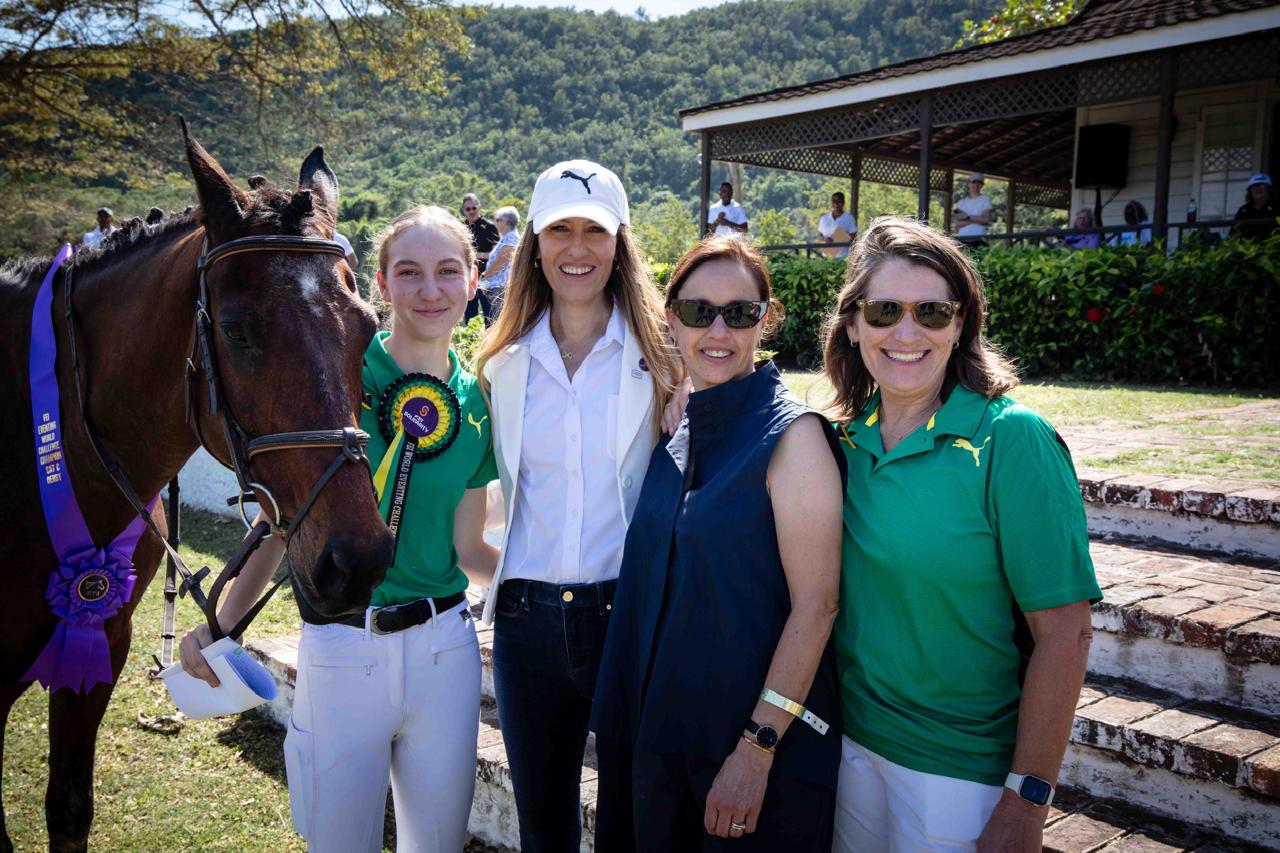
    The global equestrian landscape is set to gain a powerful new Caribbean perspective at its top decision-making tables, after Heidi Lalor, president of the Equestrian Federation of Jamaica (EFJ), secured a historic appointment to the prestigious International Equestrian Federation (FEI) Solidarity Committee. The confirmation of Lalor’s appointment came during the FEI General Assembly held in Hong Kong, where she won a seat representing Group IV — a regional bloc encompassing Canada, the United States, and the entire Caribbean. She takes her place on a diverse, globally representative panel that also includes delegates from Qatar, Bolivia, Cambodia, Kenya, Uzbekistan, Finland, and Guatemala. This milestone marks the first time a Jamaican representative has earned a seat on the influential committee, extending a regional legacy of Caribbean participation that previously included representatives from Haiti, the Cayman Islands, and the Bahamas. Lalor’s appointment comes on the heels of five years of strategic, results-driven leadership at the head of the EFJ. During her tenure, she has overseen transparent and effective management of international development grants, boosted community morale across the regional equestrian community, and expanded support for athlete training, coach education, and participation in FEI World Challenge competitions. Reflecting on her selection, Lalor attributes the achievement to both aligned priorities and a proven track record of delivering impact across the Caribbean. “I believe my selection is due to alignment with global initiatives that raise awareness and participation, such as the Racehorse Retraining Programme and the Eventing World Challenge, as well as my ability to deliver and positively promote the sport throughout the Caribbean,” she shared. “It’s a pleasure to represent the Caribbean after five years of committed National Federation leadership and positive results. We’ve seen increased motivation, volunteerism, sponsorship, and raised standards, along with the development of new officials under the Jamaican flag.” Lalor notes that her appointment is part of a broader, tangible upward trend for Caribbean equestrian sport on the global stage. She pointed to recent regional wins: Barbados now holds a seat at the FEI Board level, Trinidad and Tobago maintains consistent, high-quality performance across Olympic disciplines using horses bred and trained locally, and nations including the Cayman Islands, Bermuda, and the Bahamas are advancing their own FEI Solidarity-backed development projects. For Lalor, the appointment is also a deeply personal full-circle moment, rooted in decades of support from FEI development programs. Since 2003, she has benefited from FEI-funded coaching initiatives across the Caribbean, training in Trinidad and Tobago, the Cayman Islands, and her home country of Jamaica. “I’m a product of these initiatives,” she explained. “They provided coaching education for local federations that helped athletes and also established professional frameworks for federations to govern and support the sport effectively.” Now working directly alongside Ingmar De Vos — FEI President, Solidarity Chair, and newly appointed International Olympic Committee Board member — Lalor says her role will go far beyond formal representation to drive active, inclusive global development of the sport. “This position proves that doors are opening,” she said. “It allows me to support multiple countries, assist with funding allocation, and contribute to shaping the future of equestrian sport on a global scale.” Looking ahead, her priorities are clear: unify Caribbean equestrian nations to raise the region’s global profile, and expand access to the sport by creating more development opportunities on individual Caribbean islands. “My goal is to continue enhancing regional standards and creating more on-island access through professional courses provided by FEI Solidarity,” she said, noting that expanded certification for local coaches and officials will be a core pillar of long-term, sustainable growth. She also emphasized the foundational role of strong governance, noting that robust administrative frameworks build trust with international stakeholders and unlock sustained development support. “With governance in place, there is greater confidence and productive management, which allows for long-term development,” Lalor said. “I look forward to elevating the Caribbean’s presence with energy, inspiration, and a deep passion for sustainable growth.” Even as she celebrates this milestone, Lalor acknowledges the persistent challenges facing small island equestrian communities, most notably the gap between grassroots participation and elite international competition. “Bridging that gap is always a challenge on the islands,” she admitted, “but with vision, a strong foundation, and advocacy, initiatives like the FEI World Challenge Series can help close it.” Beyond infrastructure, funding, and governance, Lalor says her appointment carries a critical message for young Caribbean equestrians. “It is very important for young people to see this level of international representation,” she said. “One of my first goals as president in 2022 was to show that pathway, that there is a broader vision through Federation involvement.” Her advice to emerging equestrian leaders and athletes is simple but impactful: “Whether you are an Olympian, rider, or coach, support your National Federation. Show up, stay positive, and put in the work, support will follow.” Launched in 2012, the FEI Solidarity programme remains focused on its core mission: expanding global access to equestrian sport, growing grassroots participation, raising competitive and administrative standards, and strengthening connections across the global equestrian community.