标签: Barbados

巴巴多斯

  • Man injured in Brittons Hill shooting

    Man injured in Brittons Hill shooting

    A violent shooting incident in the Brittons New Road neighborhood of Brittons Hill, St. Michael, has left one man wounded and in ongoing medical care, as law enforcement in Barbados launches a full investigation and calls on the public for critical tips to catch the attackers.

    The attack unfolded shortly after 9:10 p.m. local time on Friday, when the unidentified male victim was approached by a group of suspects near a local commercial business, according to official statements from the Barbados Police Service. After being confronted, the victim attempted to escape the encounter, but the group of armed assailants chased him down and opened fire, striking him with at least one bullet.

    Rather than waiting for emergency medical transport, the injured man was rushed to the Queen Elizabeth Hospital in a private vehicle by associates. As of the latest police update, he remains admitted at the facility, where clinical teams continue to treat him for his gunshot injuries.

    The investigation into the shooting is currently being led by detectives assigned to the Hastings/Worthing Police District. To advance the case and identify and apprehend the attackers, law enforcement officials are urgently asking any member of the public who may have been in the area Friday night, witnessed the confrontation or shooting, or has any other information related to the incident to come forward.

    Tipsters can share information anonymously through the Crime Stoppers hotline at 1-800-8477, contact the 24/7 police emergency line at 211, or reach investigators directly at the Hastings/Worthing Police Station through the dedicated contact numbers 430-7612 and 430-7608. Police have not yet released additional details about possible motives for the attack or descriptions of the suspects as the inquiry remains ongoing.

  • BUT raises no objection to ministry’s school closure plan

    BUT raises no objection to ministry’s school closure plan

    The Barbados Union of Teachers (BUT) has publicly signaled that it holds no core opposition to a recent policy move from the Ministry of Education, which has approved early summer closure for a targeted group of primary schools across the island. The early shutdown is designed to create a clear window to carry out much-needed infrastructural improvement projects before the new academic term begins.

    In an official public statement, the teachers’ union emphasized that upgrading outdated learning environments has been a longstanding priority on its advocacy agenda. For years, the organization has pushed for government investment to modernize school facilities that directly impact the daily experiences of both learners and education workers. As such, the union says it fully endorses the comprehensive upgrade initiative, which aims to deliver safer, more functional spaces that support high-quality teaching and better learning outcomes for all stakeholders.

    Despite this broad backing, the BUT has not shied away from flagging a key potential risk that could trigger its opposition. The union’s core concern centers on project timelines: if contractors fail to complete all scheduled renovation and upgrade work by the end of the scheduled summer vacation period, the knock-on effect would disrupt the planned reopening of schools and throw off the delivery of planned instruction when the new academic year gets underway. The implicit message from the union is that it will hold both the Ministry of Education and contracted work teams accountable for meeting the established timeline to avoid negative impacts on students and staff.

  • Barbados warns of ‘false flag’ trend after Iran claims oil vessel capture

    Barbados warns of ‘false flag’ trend after Iran claims oil vessel capture

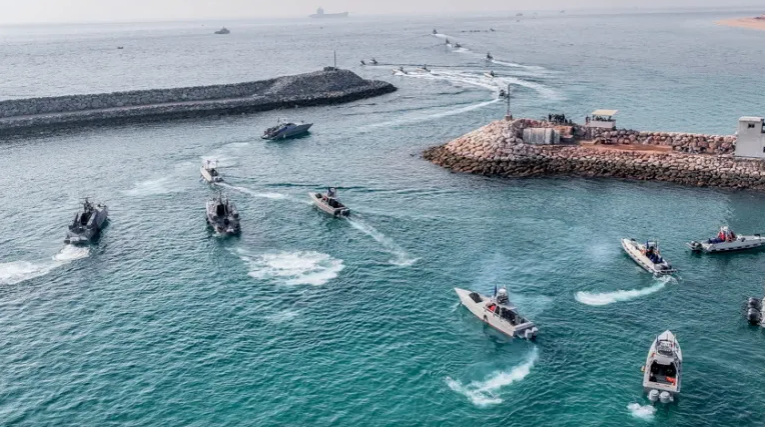
    Fresh regional tensions have flared in the strategically critical Gulf of Oman after Iranian naval forces seized a tanker reportedly flying the Barbadian flag, prompting Barbadian foreign officials to highlight a worrying global trend: ship owners deliberately using falsified flags to conceal their true identities and evade international sanctions.

    According to Iranian state media reports, the Islamic Revolutionary Guard Corps Navy carried out a targeted special operation to take control of the vessel, identified as the *Ocean Koi*, in the gulf. Iranian media, quoting an official military statement, accuses the tanker of undermining Iran’s national interests and disrupting its oil exports by taking advantage of heightened regional volatility. The *Ocean Koi* was previously placed under United States sanctions back in February, and Tehran confirmed after the seizure that the vessel was escorted to Iran’s southern coastline and turned over to national judicial authorities.

    But in Bridgetown, Barbados’ capital, senior foreign ministry officials push back on the claim that the tanker is legally registered in the country. Acting Foreign Minister Kerrie Symmonds told local outlet Barbados TODAY that his office has not received any formal notification of the incident. “I am unable to confirm the veracity of this claim and of course cannot even be sure that, if true, the ship is not sailing under a false flag which, unfortunately, is now a developing trend with vessels or ships’ owners who are evading sanctions and are trying to obscure their true identity and nationality,” Symmonds stated.

    This latest incident comes just months after another Barbados-registered vessel was attacked in the nearby Strait of Hormuz, a vital chokepoint that carries roughly 20 percent of the world’s daily oil trade. In March, the Barbados Maritime Ship Registry (BMSR) confirmed that the bulk carrier *Ocean Pretty* came under rocket and gunfire attack while transiting the strait, with no warning given before the strike. No crew members were injured in that attack, but the vessel has remained stranded off the coast of the Iranian southern port of Bandar Abbas ever since, waiting for Iranian inspection. The full extent of damage the ship sustained is still undisclosed.

    In a bid to reduce risk while traveling through the high-tension region, the crew of the *Ocean Pretty* had raised Chinese flags ahead of the incident, a common tactic used by commercial vessels to lower the chance of attack in the area. However, private security warnings shared among shipping industry groups have repeatedly noted that this precaution does not guarantee safe passage.

    Following both incidents, the London-based BMSR has ramped up monitoring of maritime security in the region, which has grown increasingly volatile amid ongoing escalating tensions between Iran, the United States and Israel. The registry has issued formal operational guidance for all Barbados-registered vessels transiting the Strait of Hormuz, and reaffirmed its position under the United Nations Convention on the Law of the Sea (UNCLOS): the strait is classified as an international passage that guarantees free navigation for all commercial vessels, and Iran has no legal basis to unilaterally close the waterway to global traffic. Barbados-flagged vessels retain full legal right to transit the area, the BMSR confirmed.

    Despite this affirmation of international legal rights, the registry has issued a strong advisory for ship owners, managers and captains to carry out comprehensive risk assessments before entering the region, and to avoid transiting the strait entirely whenever operationally possible to protect the safety of their crews. The BMSR has not yet issued a formal mandatory marine circular regarding the new *Ocean Koi* incident, but says it will continue to closely track developments in the region and update guidance as needed. Since regional tensions escalated earlier this year, a large number of commercial shipping companies have rerouted their vessels away from the strait entirely, while many others are holding at anchor in nearby waters waiting for conditions to stabilize before proceeding.

  • St David’s residents endure weeks-long water shortage

    St David’s residents endure weeks-long water shortage

    For more than six weeks, residents of the quiet Christ Church neighborhood of St David’s have endured a daily battle to access basic drinking water, a crisis that has upended routine life, strained household budgets, and sparked growing fears over public health – all compounded by a near-total lack of clear, consistent communication from local water officials, according to multiple community members who spoke to local outlet Barbados TODAY.

    The island’s ongoing dry season has made the intermittent supply even more punishing. Locals described a grueling daily schedule that now revolves around chasing scarce water: many wake in the pre-dawn hours to scramble for whatever small amount of water trickles through their taps, while others rely on infrequent water truck deliveries and costly store-bought bottled water to meet their families’ needs.

    Residents say the outage stems from a burst water main, a problem that was initially rumored to take just two weeks to repair. Those timelines have long since expired, with no official update or resolution put forward by the Barbados Water Authority (BWA). The little water that does reach homes almost exclusively flows in the dead of night, forcing residents to sacrifice critical sleep just to fill enough containers for basic hygiene, cooking and household chores.

    “It’s been off since early April,” one anonymous resident explained. “It’d be mostly coming back on at nighttime, so you have to get up if you want to go to work to catch water. When you come home to cook something, you go scramble to get the little drops that start coming out. The situation real stiff, real stiff for real.”

    For some, the water shortage is far more than a daily inconvenience: it threatens both personal health and small livelihoods. A 61-year-old small business owner who keeps livestock shared that he has been forced to stay up through the night to collect every possible drop of water to keep his chickens alive. “I’m affected very badly. This is six weeks now, we haven’t had water,” he said. “And if it come at night, one o’clock in the morning, we have to full every saucepan. I have chickens; I have to replenish the water as it comes to make sure they do not die. I never ever seen nothing like this yet. Never.”

    Many residents have lost trust in the water supplied by BWA tankers for drinking, especially for children, leading to added financial strain on top of the physical exhaustion of the daily water scramble. “I don’t drink water from the tank [truck borne water provided by BWA]. I buy bottled water,” one resident said. “We have children and we have to send them to school. We can’t risk drinking water provided by the water tanker. We have to buy water for the children to make tea. Please come and tell us something, say something. It will mean a lot if you all come and tell us something, please.”

    Another resident, hurrying to collect water before it stopped flowing again, summed up the community’s collective exhaustion: “It’s a lot. You got a bucket in the bath to catch water. Last night it ain’t even come on until about three o’clock. That ain’t easy, boy. Not easy.”

    In a response to inquiries about the crisis, the BWA acknowledged the ongoing disruptions, attributing the intermittent outages and low pressure to consistently low water levels at the pumping station that serves St David’s and surrounding districts. The authority issued a formal apology to customers for the service disruption, noting that it will continue to provide temporary water access via its fleet of tanker trucks while crews work to resolve the underlying issue.

  • Sweeping new law to expand maritime powers

    Sweeping new law to expand maritime powers

    As a small island nation with an outsized maritime footprint, Barbados is moving to cement its legal control over territorial waters, offshore natural assets, and fast-growing emerging maritime sectors through a sweeping new piece of legislation that also addresses two of the 21st century’s most pressing and emerging priorities: climate change-driven sea level rise and the growing intersection of ocean activity and outer space innovation.

    The comprehensive Maritime Areas (Jurisdiction and Rights) Bill was formally tabled in Barbados’ House of Assembly this Friday by Ian Gooding-Edghill, the country’s Minister of Tourism and International Transport. Gooding-Edghill framed the legislation as a landmark update that brings the nation’s domestic legal framework fully into alignment with the United Nations Convention on the Law of the Sea (UNCLOS), the foundational global agreement governing maritime rights and responsibilities.

    Speaking to fellow members of parliament, the minister outlined the core goals of the proposed law: to build a clear, robust legal regime governing all of Barbados’ maritime territories, formalize the boundaries of the nation’s sovereign authority and jurisdiction, enable more effective sustainable stewardship of marine resources, and embed internationally recognized standards for the protection of fragile marine biodiversity. Beyond foundational boundary-setting, the bill grants expanded enforcement authority to Barbados’ maritime law enforcement personnel, including the right to board, arrest individuals on, and seize vessels without a warrant in specific high-priority circumstances.

    The legislation formalizes Barbados’ long-held claims under UNCLOS to its full network of maritime zones, including internal waters, a 12-nautical-mile territorial sea, and a 200-nautical-mile exclusive economic zone (EEZ). Within the 12-nautical-mile territorial sea, the bill confirms Barbados’ full sovereignty over all assets, from the airspace above to the seabed and subsoil below the water column. The EEZ designation grants the nation exclusive economic rights to all offshore resources and commercial activity within that zone, a protection Gooding-Edghill emphasized has grown increasingly critical as oil and mineral exploration accelerates across the Caribbean region.

    “There are people drilling for oil all over the globe and especially within the Caribbean Sea,” Gooding-Edghill told MPs. “It is important for us to ensure that we have exclusive jurisdiction of our zones and that we maintain our sovereign rights.”

    The bill also extends Barbados’ legal authority to offshore islands, artificial installations, and maritime infrastructure, granting regulators oversight over key governance areas including customs, immigration, and public health and safety rules. Beyond resource protection, the legislation unlocks new economic development potential: Barbados’ total maritime area is far larger than its land territory, opening opportunities across shipping, coastal infrastructure development, and sustainable marine tourism.

    Forward-looking provisions set the legislation apart from outdated existing frameworks. It includes explicit legal language that preserves Barbados’ sovereign claims and maritime boundaries even in worst-case climate scenarios, where rising sea levels lead to partial submergence of the nation’s territory. The bill also breaks new ground by addressing the fast-growing overlap between the maritime and space sectors, explicitly extending legal oversight to “space-related ocean activities” and even research related to extraterrestrial oceans, under the purview of the government ministry responsible for space affairs.

    Gooding-Edghill confirmed his team is already exploring the synergies between the two sectors, hinting at upcoming opportunities that could benefit key parts of the Barbadian economy, including education, tourism, and youth employment. “Barbadians should ‘stay tuned’ for interesting and exciting opportunities” that will deliver widespread benefits, the minister added.

  • Formula E driver set to compete in Rally Barbados for the first time in three years

    Formula E driver set to compete in Rally Barbados for the first time in three years

    Barbados’ homegrown motorsport prodigy Zane Maloney is set for a highly anticipated homecoming, with organizers officially confirming the 22-year-old Formula E competitor will line up for the 2025 edition of BCIC Rally Barbados, one of the Caribbean’s most prestigious annual motor racing events. This year’s tournament will run from May 29 to 31, spread across 19 challenging special stages, and features a stacked provisional entry list of 123 competing crews that already matches or is on track to surpass last year’s record participation.

    Rally Director Neil Barnard made the announcement of Maloney’s return during a press briefing hosted at Bushy Park Circuit, noting that the young driver — currently competing full-time in the FIA Formula E World Championship for ABT Yamaha Lola — will pilot a Porsche 992 Rally GT for his home rally, alongside co-driver Luke Staffner. Maloney’s return marks a full-circle moment for the local racing star, who claimed his place in Barbadian rally history in 2022 when he became the youngest ever winner of the First Citizens King of the Hill, the tournament’s official seeding event, at just 18 years old behind the wheel of a Skoda Fabia Rally 2.

    Maloney’s last appearance at Rally Barbados came in 2023, where he notched an early win by taking top honors at the opening Friday night Sol Super Special held at Bushy Park, but was forced to retire from the main race after a crash on the event’s second day. This year, Maloney will compete in both the King of the Hill seeding event — scheduled for May 24 at Stewart’s Hill in St. Philip — and the full three-day main rally, with backing from sponsors Rock Hard Cement, Bushy Park Barbados, MJT FBO, Stone Atelier, Flo and Maloney Racing.

    The young Barbadian star will enter the race as one of the top contenders to dethrone the 2024 defending champions: Jamaican driver Kyle Gregg and Barbadian co-driver Kreigg Yearwood, who will return to defend their title in a Ford Fiesta Rally2.

    Barnard highlighted that the 2025 iteration of Rally Barbados is shaping up to be one of the largest in the event’s decades-long history. Of the 123 registered crews, 29 are first-time competitors and 74 are based locally, putting the 2025 entry count on track to equal or even surpass 2024’s record of 126 entered teams. For spectators, Barnard promised a packed, action-packed schedule of racing, kicking off with the fan-favorite floodlit Ridara Super Special on opening Friday night, which will see two drivers compete side-by-side in reverse seeding order on a 2.5-kilometer purpose-built racing course.

    Beyond the on-track action, event stakeholders emphasized the major economic and tourism impact of BCIC Rally Barbados for the island nation. Kamal Springer, Sports Manager at the Barbados Tourism Management Inc (BTMI), noted that the tournament has become a cornerstone of the country’s sports tourism strategy, helping to boost visitor numbers during the normally slower off-peak travel season that begins in late May.

    “Last year, the event drew more than 600 international visitors to the island, and we’re on track to break that record this year,” Springer explained. “To see consistent, year-over-year growth for any event is remarkable, and we couldn’t ask for a better way to kick off the off-peak tourism season than this iconic local race.”

    Alexandra Leacock, Branch Manager of title sponsor BCIC Barbados, echoed that sentiment, noting that the company’s backing of the event goes far beyond a standard corporate sponsorship. “For us, this is a long-term partnership with one of the Caribbean’s most legendary sporting events. Rally Barbados is deeply woven into Barbadian cultural identity: it brings entire communities together, generates excitement across the whole island, and showcases the energy, passion and national pride that Barbados is known for around the world,” Leacock said. “That connection means everything to us, and we are proud to continue supporting an event that means so much to so many Barbadians.”

    Rodney Mayers, Area Manager at First Citizens Bank, sponsor of the King of the Hill seeding event, added that the race has evolved into a premier showcase of driving talent in the region. “King of the Hill has grown into a premier test of driver skill, discipline and resilience, which is exactly why our partnership with the event has endured for so long. We are proud to align ourselves with excellence, and to support an event that performs at the highest level year after year,” Mayers said.

  • Kid illustrators, storytellers emerge at showcase

    Kid illustrators, storytellers emerge at showcase

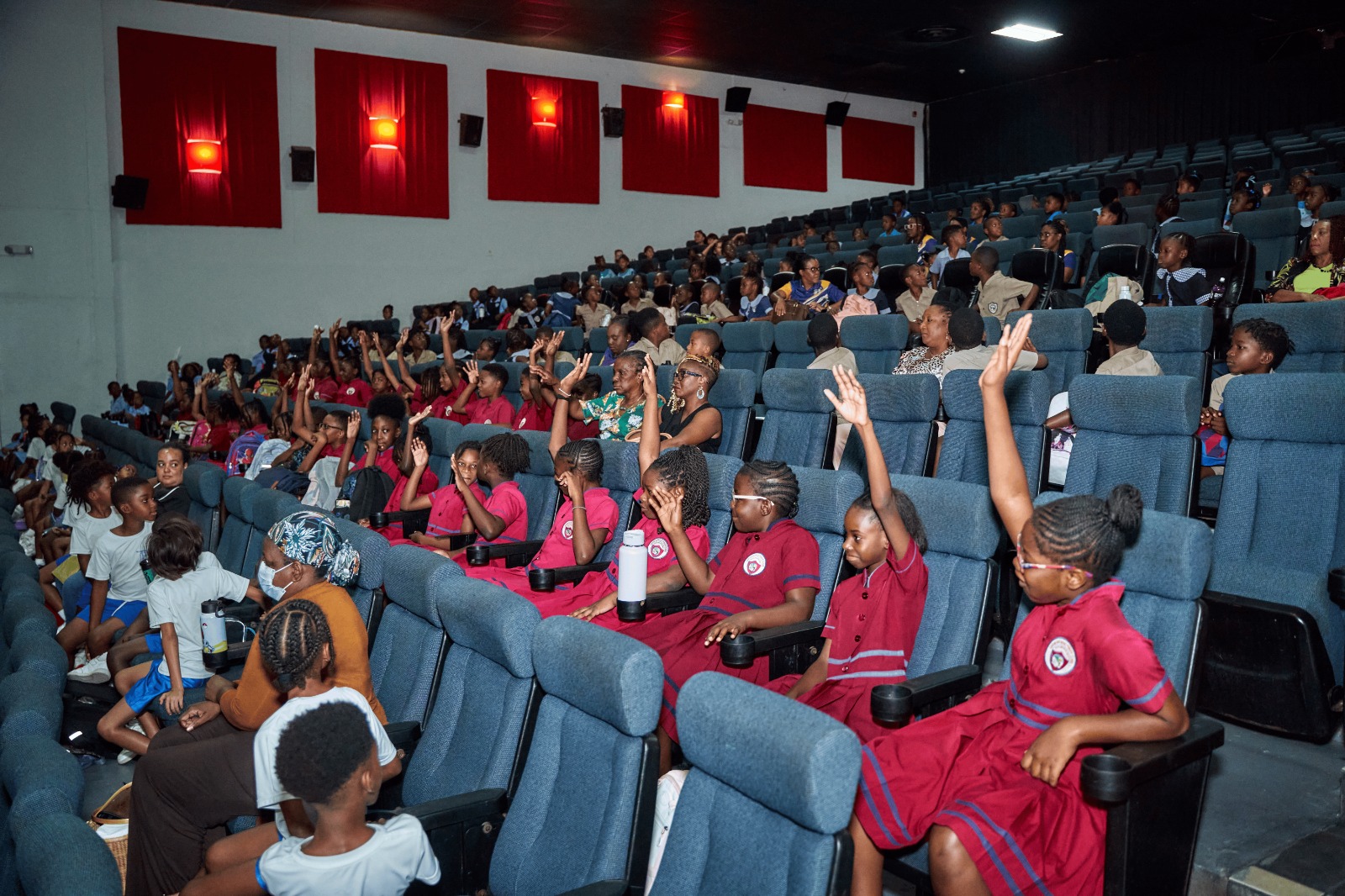
    A rising wave of young creative interest in illustration and storytelling took center stage Friday as Barbados hosted its first-ever Children’s Book Illustrator and Author Showcase at Olympus Theatres, a landmark event designed to celebrate and cultivate emerging local youth talent in literary creation.

    Organized by Bookscape Studio and generously sponsored by The Sandy Lane Charitable Trust, the free, day-long event welcomed primary school students from across the island for an immersive, hands-on introduction to the full process of children’s book development. Through interactive live presentations, dynamic storytelling sessions, and step-by-step illustration demonstrations, participants got an up-close look at what it means to work as a professional children’s author or illustrator.

    Headlining the showcase were three experienced creators: Barbadian authors and illustrators Cherise Harris and Ruth Amanda, alongside visiting Canadian writer Yolanda T. Marshall. Each creator used their platform to encourage young attendees to lean into writing and visual art as powerful, accessible outlets for personal self-expression.

    In an interview with Barbados TODAY, Amanda explained that the event grew out of a desire to open young people’s eyes to the diverse career and creative opportunities available in the fields of literacy and illustration. “I was so grateful to be invited by Cherise and Yolanda to be part of this wonderful showcase,” she said. “It’s a chance to show what creators right here in Barbados can build: literacy projects for a global audience, and books filled with familiar, relatable imagery that local children can truly connect with.”

    A core goal of the interactive exercises and discussions hosted at the event was to dismantle the misconception that illustration is bound by strict rules or single acceptable styles. “We want children to leave knowing there’s no one ‘right’ way to illustrate a story,” Amanda emphasized. “What matters most is that your unique story comes through. Our big hope is to inspire an entirely new generation of literary creators, whether that means they become authors, illustrators, or both. For these young creatives, the sky really is the limit.”

    Amanda also shared her observations of shifting artistic trends among young creatives in Barbados, noting a clear evolution in interest over the past several years. Older children, she explained, are increasingly drawn to illustration styles shaped by anime and graphic novel aesthetics, a growing movement that has gained significant traction across the island’s youth creative community. For younger children, meanwhile, trends are moving in a different direction: many are developing a new appreciation for softer, more traditional artistic approaches, such as watercolor illustration, though digital illustration with bold, bright colors also remains widely popular. “The diversity of styles available today is incredible,” Amanda added, “there truly is something for every young creator to explore.”

    For young people eager to build their illustration and storytelling skills, Amanda offered simple, actionable advice that prioritizes passion and practice over formal training. “Consistent practice is key. Draw inspiration from the world around you: take photos of what catches your eye, break subjects down into basic shapes, add details little by little, and keep showing up for your craft,” she said. “You don’t need formal art training to become an illustrator. Anyone can do this. Just keep exploring the world around you, and draw what inspires you.”

  • Portable benefits plan needs national education push – AG

    Portable benefits plan needs national education push – AG

    As debate over the transformative National Portable Benefits Framework continued in Barbados’ House of Assembly Friday, top law enforcement official Attorney General Wilfred Abrahams has pushed for an immediate, nationwide public outreach campaign to ensure all Barbadian workers understand the new system’s rules and advantages. He warned that gaps in public knowledge could leave working people locked out of critical protections and new opportunities that the proposed policy is designed to deliver.

  • UWI AI institute launches with $5m regional investment

    UWI AI institute launches with $5m regional investment

    The University of the West Indies (UWI) has launched a groundbreaking artificial intelligence institute, backed by a $5 million investment from regional financial leader Sagicor Financial Corporation, marking a historic step toward Caribbean technological self-reliance in the fast-growing global AI sector.

    Named the Institute for Intelligent Systems Governance and Human-Centered Technology (I-INSIGHT), the new institution aims to move the Caribbean beyond its long-standing role as a passive consumer of imported AI tools, which often fail to accommodate the unique social, economic and environmental nuances of regional communities. Professor Justin Robinson, principal of UWI’s Five Islands Campus and the lead designer of the initiative, announced that the institute’s first operational division—the Sagicor UWI AI and Financial Services Hub—will launch across all UWI campuses this August.

    In his remarks at the launch, Robinson emphasized that AI stands poised to reshape nearly every dimension of modern life, ranking among the most transformative technological developments in human history. As the Caribbean’s preeminent academic institution, UWI has made it a priority to position the region to capitalize on AI’s opportunities while mitigating its inherent risks, he said.

    Robinson framed the institute as a deliberate rejection of a future of permanent digital dependency for the Caribbean. For decades, the region has relied on foreign-built digital tools misaligned with local needs: tourism platforms that fail to understand Caribbean hospitality ecosystems, agricultural advisory tools trained on data from temperate climates that do not exist in the region, healthcare algorithms calibrated for entirely different population demographics, and regulatory compliance systems designed for legal systems unrelated to Caribbean jurisdictions. This status quo forces the region to spend valuable foreign currency on technology that misinterprets local realities, then holds regional communities responsible for the resulting gaps, Robinson noted.

    While the initiative’s first focus is on integrating AI into the Caribbean’s critical financial services sector, I-INSIGHT already has plans to launch additional specialized hubs in key regional industries: tourism, agriculture, healthcare, climate resilience, and public administration. Beyond technical innovation, the partnership between UWI and Sagicor serves as a replicable model for collaboration between the Caribbean’s private sector and academic institutions to build a sustainable, homegrown AI talent pipeline.

    Robinson highlighted that Sagicor—one of the Caribbean’s most influential homegrown financial institutions—has sent a powerful message to the region by anchoring the investment: Caribbean stakeholders can build their own AI ecosystem, in partnership with the region’s leading university, for the benefit of Caribbean people. In 2026, regional self-reliance is not just a rhetorical slogan, he argued—it is a tangible commitment, reflected in concrete investment, a defined research agenda, and a clear plan to develop local talent.

    The institute also prioritizes addressing the ethical and regulatory challenges that come with widespread AI adoption. Robinson confirmed that I-INSIGHT will support Caribbean national governments in developing fit-for-purpose regulatory frameworks to govern AI safely and responsibly, tailored to regional priorities.

    With the launch, Robinson said, Sagicor and UWI have already proven that Caribbean institutions can lead the region’s AI transition. The open question now is which other public and private stakeholders will step forward to join the effort, and how quickly they will act. AI development and global competition do not pause, Robinson said, and no external power will deliver technological self-determination to the Caribbean. The region must build its own future—and with the launch of I-INSIGHT, that work has already begun.

  • Public service minister backs portable benefits framework

    Public service minister backs portable benefits framework

    Against a backdrop of rapidly evolving global labour markets where gig work, freelancing, self-employment, and short-term contract roles are growing rapidly, Barbados has tabled a groundbreaking policy proposal to extend critical social protection to millions of workers left excluded from traditional welfare systems. Public Service and Talent Development Minister Kay McConney, who also serves as the Member of Parliament for St Philip West, formally backed the National Portable Benefits Framework resolution during a Friday sitting of the House of Assembly, framing the policy as a long-overdue correction to gaps in the country’s existing social security infrastructure.

    McConney emphasized that the framework is designed to serve a broad cross-section of underprotected workers across Barbados, from small-scale farmers in Ebenezer to independent masons in Chapel, and countless other non-traditional workers who have gone without safety nets for decades. She stressed that the proposal goes far beyond creating a new bureaucratic structure; it centers on making benefit access accessible, understandable, and inclusive for all workers regardless of their employment arrangement. A core priority of the policy will be widespread public outreach, ensuring workers from all sectors understand how the system works, see themselves reflected in its coverage, and recognize the tangible value it brings to their daily financial and personal security.

    In her address to the chamber, McConney framed the framework as more than a routine policy adjustment: it is a transformative pathway to social security access and long overdue peace of mind for workers locked out of traditional systems. She noted that Barbados’ labour market has shifted dramatically away from the mid-20th century “cradle-to-grave” full-time employment model that existing social security laws were built to serve. By 2026, she pointed out, the majority of the current workforce is navigating a far more fluid economy, where workers pursue multiple income streams, switch roles regularly, and actively choose self-employment or gig work over long-term positions with a single employer.

    “As the nature of work changes, our social safety nets must evolve alongside it,” McConney argued, linking the proposal to the government’s ongoing policy push to boost skills development and entrepreneurship across the country. “We are actively encouraging Barbadians to build new skills, launch their own businesses, and pursue self-employment. If we are serious about supporting that shift, we cannot leave these workers without the same protection that traditional employees have enjoyed for generations. We need to build a system that meets them where they are.”

    Beyond protecting workers, McConney highlighted that the portable benefits framework will also strengthen Barbados’ competitive position in the global race for skilled talent. In today’s borderless labour market, countries around the world are competing to attract high-quality independent workers and skilled professionals, and comprehensive portable benefits will create a more welcoming environment for talent that drives economic growth, she explained.

    The minister also outlined the key structural difference between the new framework and the existing system. Currently, social security benefits are tied to individual employers, meaning workers who switch jobs, pursue side hustles, launch home-based businesses, or work in informal sectors face gaps or complete loss of coverage. Under the new proposal, benefits will be registered in the worker’s own name, rather than an employer’s, and travel with the worker through every career transition. This eliminates the disruptive stops and starts in coverage that currently plague workers who move between roles, creating continuous protection no matter how someone chooses to work.

    Universal access is another central pillar of the framework: McConney confirmed that the policy will expand social security eligibility to all workers, regardless of how their employment is categorized. One key problem this will solve is the widespread issue of “job lock,” where workers are trapped in unsatisfying full-time roles solely because they cannot afford to lose their employer-tied benefits. The new framework removes this barrier, giving workers the freedom to pursue entrepreneurship, switch careers, or take on flexible work without sacrificing access to critical social protection.

    Finally, McConney framed the proposal as a core component of broader labour market modernization efforts across Barbados. “We cannot claim to have a current, effective labour policy if our laws are stuck in a bygone era that no longer matches how people actually work today,” she said. “This framework brings our social security system in line with the reality of 21st century work, and delivers long-overdue protection to the workers who are increasingly the backbone of our evolving economy.”