标签: Barbados

巴巴多斯

  • Flow increases sponsorship for Grand Kadooment

    Flow increases sponsorship for Grand Kadooment

    Barbados’ annual iconic cultural celebration, the Crop Over festival, has received a major vote of confidence from local telecommunications leader Flow Barbados, which announced a more than 20 percent increase in its sponsorship investment for this year’s flagship event, the Flow 5G+ Grand Kadooment, during the official launch event Thursday at Pelican Village.

    Speaking to assembled media at the launch, Desron Bynoe, vice-president and general manager of Flow Barbados, confirmed the firm’s third consecutive term as title sponsor of the island’s largest public cultural spectacle, with total sponsorship for the 2024 Crop Over season exceeding $300,000. The increased investment covers both official events organized by the National Cultural Foundation (NCF) and independent private events across the festival calendar.

    In his remarks, Bynoe emphasized that the expanded commitment reflects Flow’s decades-long commitment to nurturing Barbados’ creative sector and cultural heritage. “For decades our company has supported Crop Over and the creative industry,” he stated, noting that the company also holds the official title of telecommunications partner for the full Crop Over festival. Sister brand Liberty Caribbean continues its role as associate sponsor for Fusion, a popular event that centers the innovation and artistic skill of local Barbadian creators. Bynoe also highlighted the integration of the firm’s latest infrastructure milestone into the event name, rebranding this year’s celebration as the Flow 5G+ Grand Kadooment to mark the rollout of the island’s fastest mobile connectivity launched the previous year.

    During the launch, Liberty Caribbean CEO Inge Smidts formally presented a $160,000 cheque to the NCF to support event operations.

    NCF chair Dr. Jasmine Babb framed Grand Kadooment as the cornerstone of Barbados’ annual cultural calendar, describing it as the cumulative culmination of months of collaborative work from thousands of creatives and stakeholders across the island. “Grand Kadooment is not only the penultimate event of this Crop Over season, but the grand expression of months of creativity, planning, craftsmanship and cultural energy,” Babb explained. “It is where masquerade bands, designers, musicians, dancers, revelers, vendors, service providers, and communities all come together to present Barbados at its most vibrant.”

    Dr. Babb added that the event aligns directly with the NCF’s core mandate, which extends far beyond just organizing public events. For the foundation, the work of building platforms like Grand Kadooment is critical to preserving, promoting, and sustaining Barbadian national identity for future generations. “Our role is not only to produce events, but to create platforms that allow Barbadian culture to be seen, experienced, respected and sustained. Grand Kadooment does exactly that,” she said.

    This year’s celebration carries extra cultural weight as Barbados marks the 60th anniversary of its independence, a milestone that deepens the meaning of the festival’s public display of heritage. “This year, as Barbados marks its 60th anniversary of independence, Grand Kadooment carries even greater meaning. It reminds us that our culture is one of the strongest expressions of who we are,” Dr. Babb noted. “The colour, movement, music and artistry on the road are not simply entertainment; they are part of our national identity and part of the story we continue to tell as a people.”

  • Predictable West Indies Women’s World Cup squad named

    Predictable West Indies Women’s World Cup squad named

    Cricket West Indies (CWI) has officially named its 15-player squad set to compete at the 2026 ICC Women’s T20 World Cup, scheduled to take place across England and Wales from June 5 to July 5. The selection was built around three core pillars: aggressive powerplay strategy, deep batting lineup, and adaptive performance in the cool, variable conditions common to British cricket, following weeks of comprehensive assessment by the national selection panel and senior team management.

    In an official media statement released Thursday, CWI confirmed that every selection decision was made after careful alignment with the specific tactical and technical standards required to deliver consistent, high-impact results on English pitches. Head coach Shane Deitz emphasized that the final squad is the product of a targeted strategy tailored exclusively to the unique challenges of hosting international cricket in England.

    “We know that in English conditions, powerful powerplay batting and consistent run scoring through the middle overs are non-negotiable for winning matches,” Deitz explained. “Our own performance analysis shows that when we post more than 45 runs in the powerplay, we put ourselves in a far stronger position to control the entire match. Defensively, our priority is to limit boundary concessions both in the powerplay and across every stage of the opposition innings.”

    He went on to outline the strategic logic behind individual selections: “To meet these goals, we’ve picked a group that offers massive flexibility at the top of the batting order. Every player selected can handle both pace bowling and spin effectively, and crucially, our batters are capable of maintaining an aggressive approach even after early wickets fall. We’ve also prioritized batting depth to keep up attacking play deep into the final overs. With our bowling unit, we’ve selected athletes who can push for wickets when needed, but can also switch quickly to defensive modes and execute under pressure at any point in an innings.”

    Miles Bascombe, CWI’s Director of Cricket, detailed the months of intentional preparation work that has already gotten underway to help the squad acclimatize to English conditions, build consistent form, and build momentum heading into the tournament. “We’ve been extremely deliberate in how we structured preparation for this World Cup,” Bascombe said. “Our recent training camp in Wales was designed to immerse players in conditions nearly identical to what they’ll face throughout the tournament, giving them time to fine-tune their technical skills and tactical decision-making in that environment.”

    “Just as important as technical preparation is giving the group time to build team cohesion, confidence, and consistent chemistry together over an extended period,” he added. “The upcoming tri-nation series in Ireland is another critical piece of our preparation plan, because it gives the squad valuable competitive match experience against top-tier international opposition just days before the World Cup kicks off. Every single element of our preparation has been planned intentionally to make sure players arrive at the tournament fully adapted to conditions, clear on their individual roles, and carrying positive team momentum.”

    Before the main World Cup gets underway, West Indies Women will first compete in the Evara Women’s International tri-series against Ireland and Pakistan, which runs from May 28 to June 3 in Ireland. Following the tri-series, the squad will return to England for two warm-up matches: against India on June 8 and defending champions Australia on June 10. Their first official group stage match of the 2026 World Cup is scheduled for June 13 against New Zealand.

    The full 15-member West Indies Women’s 2026 ICC T20 World Cup squad is: Hayley Matthews (captain), Chinelle Henry (vice-captain), Aaliyah Alleyne, Shemaine Campbelle, Jahzara Claxton, Deandra Dottin, Afy Fletcher, Jannillea Glasgow, Shawnisha Hector, Zaida James, Qiana Joseph, Mandy Mangru, Ashmini Munisar, Karishma Ramharack and Stafanie Taylor.

  • CARICOM envoy hails Barbados-Guyana ID-only travel

    CARICOM envoy hails Barbados-Guyana ID-only travel

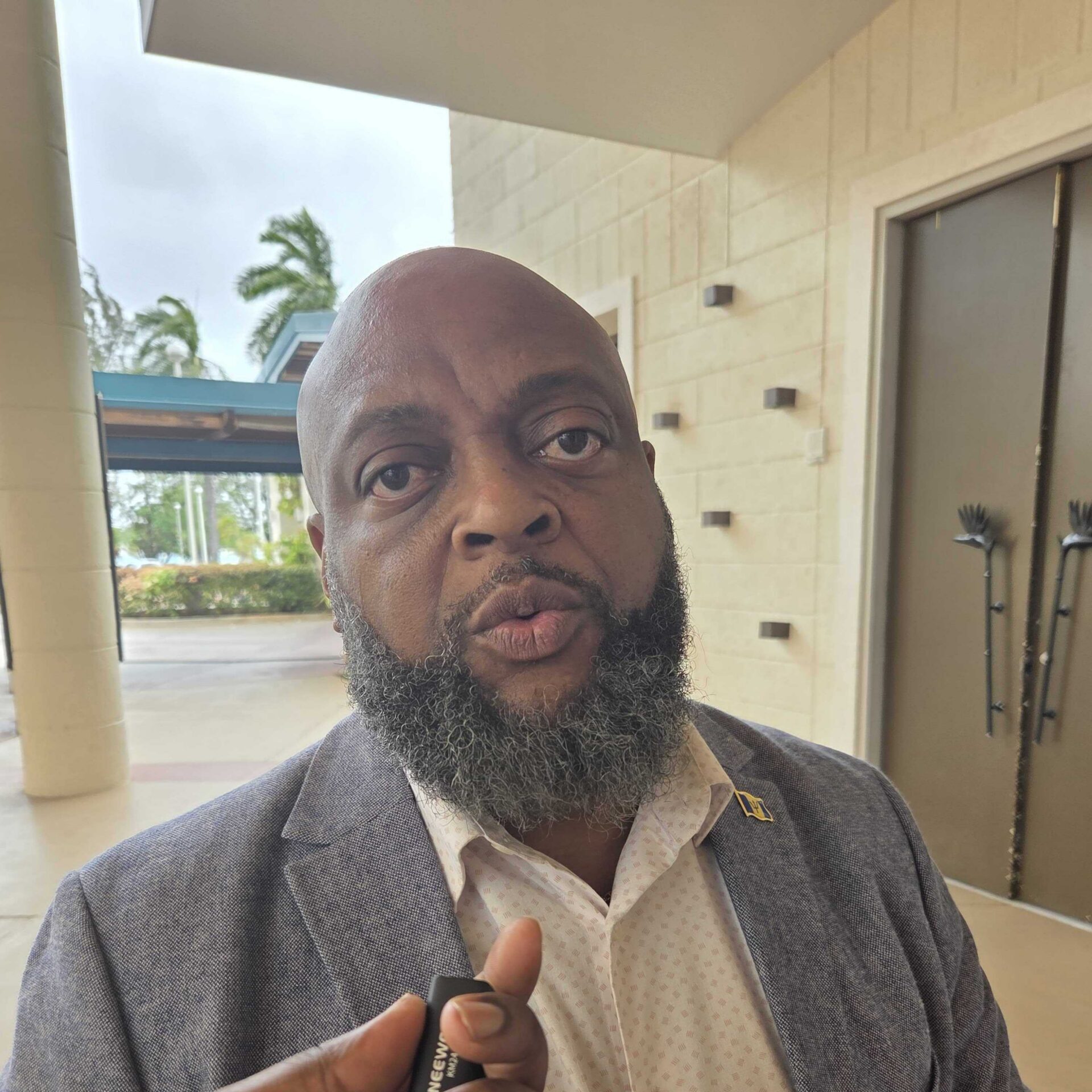
    A new travel agreement allowing cross-border movement between Barbados and Guyana using only national identification cards is being hailed as a landmark step toward realizing the Caribbean Community (CARICOM)’s long-held vision of full free movement across the regional bloc, Barbados’ top envoy to the organization confirmed Wednesday.

    Ambassador David Comissiong told local outlet Barbados TODAY that this new bilateral arrangement, paired with the October 2025 launch of full free movement between four founding member states – Barbados, Belize, Dominica, and St. Vincent and the Grenadines – marks a transformative breakthrough for regional integration. He emphasized that the smooth implementation of the four-nation free movement scheme, combined with the new ID-only travel policy announced by Barbadian Prime Minister Mia Mottley and Guyanese President Irfaan Ali, represents one of the most encouraging developments for CARICOM in recent years.

    “The pleasant experience thus far of the full free movement along with the recent announcement of this new initiative to facilitate movement between our citizens simply with the national ID card, I think it’s a very positive development,” Comissiong said.

    Since the new ID-travel policy was made public, the ambassador revealed that regional leaders have already reached out to express interest in expanding the framework to other CARICOM territories. Comissiong shared that immediately after the announcement, a fellow ambassador from one of the four full free movement nations reached out to ask why a similar ID-based system could not be rolled out across all four participating countries. He added that Barbados has long supported the principle of ID-enabled travel across the Caribbean bloc, viewing it as a practical way to cut red tape for regional citizens.

    While Comissiong acknowledged that extending the arrangement to Belize could face initial hurdles, as the country lacks direct air links with Barbados, he said regional officials remain confident that a practical, functional system can be developed over time.

    Beyond travel liberalization, the envoy pointed to promising shifts in regional labor mobility, highlighting migration flows from Jamaica to Barbados as a model of mutually beneficial movement. Historically, most migration from Jamaica to Barbados consisted of skilled professionals or Barbadian students returning home with spouses after completing studies at the University of the West Indies. But Comissiong noted that recent migration patterns have seen more working-class Jamaicans filling critical unmet service roles in Barbados, particularly in caregiving and domestic support.

    “From what I can see, they have really fitted in well, they have found a niche, and they are responding to a real need in Barbados, especially in the area of caregivers and home helpers,” he said.

    New data from Barbados’ Ministry of Home Affairs, obtained by Barbados TODAY, shows that between the launch of the four-nation free movement scheme in October 2025 and April 2026, roughly 14,758 nationals from Dominica, St. Vincent and the Grenadines, and Belize have entered Barbados under the new liberalized rules.

    Comissiong also disclosed that multiple other CARICOM member states are already in the process of preparing to join the free movement framework launched by the four pioneering nations. He explained that the four founding participants always intended their initiative to be a starting point for broader regional integration, not a closed group.

    “The idea always has been that the others would join us,” he said. “All the signs we are seeing with the movement of people across the Caribbean community seem to be positive [and] moving in the right direction.”

  • Defending Rally Barbados champs set to compete following accident

    Defending Rally Barbados champs set to compete following accident

    One week after a dramatic, rollover crash at a pre-event shakedown competition, defending Rally Barbados champions Kyle Gregg and co-driver Kreigg Yearwood are confirmed to line up for the start of BICIC Rally Barbados when the iconic motorsport event kicks off this Friday with the Riddara Bushy Park Super Special stage.

    Rumors had swirled in local motorsport circles over whether the pair would be able to compete, after widely circulated footage of their high-speed crash at last Sunday’s First Citizens King of the Hill event showed their vehicle overturn and sustain severe chassis damage – though both competitors walked away from the incident completely unhurt. Sources close to the team have confirmed to Barbados TODAY that rapid repair work on their Ford Fiesta Rally2 has proceeded on schedule, clearing the way for their entry.

    Rally director Neil Barnard confirmed the updated entry list in an interview with Barbados TODAY following the mandatory pre-event competitor briefing on Wednesday, adding that another driver involved in last weekend’s crash, Jamaica’s Frasier McConnell, will also compete after sourcing a replacement ride. McConnell will pilot a R5-spec Skoda Fabia this year, stepping in for his heavily damaged original Mitsubishi Evolution that was written off in the Sunday rollover.

    Beyond the last-minute entry adjustments, this year’s running of Rally Barbados brings back a fan-favorite format that hasn’t been featured on the event calendar in years: mixed day-and-night stage action. Barnard explained that through the event’s first 15 years, it was standard to run a marathon 12 to 15-stage Saturday schedule that extended well into the evening, before organizers shifted to an all-daylight format with only limited Friday night competition. For 2024, organizers are revisiting that classic format without reviving the punishing 10 to 12 hour full-day grind, adding a small set of twilight stages to Saturday’s running to bring back the unique skill challenge of after-dark rallying.

    Organizers are projecting record crowds to turn out across the island for the weekend’s racing, and Barnard shared his top picks for spectator viewing locations across all three days of competition. For Saturday’s running, Barnard highlighted the Automotive Art Padmore stages as an unbeatable option for fans, noting the large open areas south of Bushy Park offer free unrestricted access and ample convenient parking for spectators. On Sunday, multiple accessible vantage points avoid the congestion and road access issues common at popular stages, with the corridor between Cherry Grove and Culleton ranked among the best. Areas around Easy Hall and Malvern also offer solid viewing, but Barnard said the event’s closing Sunday stage – which runs from Three Houses to a finish line inside the Bushy Park circuit, directly ahead of the awards podium ceremony – offers the most comfortable experience for casual fans.

    Last Sunday’s King of the Hill pre-event, which served as a warm-up for many competitors, crowned Britain’s Joe Cunningham and co-driver Kari Bates overall champions, with Suleman Esuf and Asif Suleman taking the top spot in the two-wheel drive class.

    With defending champs Gregg and Yearwood recovering from their crash, a deep competitive field including 2024 class champions Stuart Maloney and Kristian Yearwood, and the withdrawal of leading two-wheel drive contender Roger Mayers, Barnard says this year’s event is one of the most unpredictable in recent memory. “It’s one of the most open rallies that we’ve seen, whether it’s for outright runners, four wheel drive or two wheel drive competitors, and I think that it’s going to be closely fought,” he explained.

    Forecasters are calling for dry conditions across the rally route, a factor that should level the playing field for all competitors, but even with that clarity Barnard says predicting a winner is far from certain. “The weather forecast is for a dry rally, which is a good thing, but honestly, you’d be a brave man to bet on who’s going to win,” he concluded.

  • Two charged in Easter Monday Bay Garden killing

    Two charged in Easter Monday Bay Garden killing

    A fatal public shooting that unfolded over the Easter holiday weekend in Barbados has led to formal criminal charges against two local men, authorities have confirmed. The incident, which took place on Easter Monday at the popular Oistins Bay Garden entertainment and dining hub, claimed the life of 34-year-old Raul Clarke, leaving local communities shocked just days after the holiday celebration.

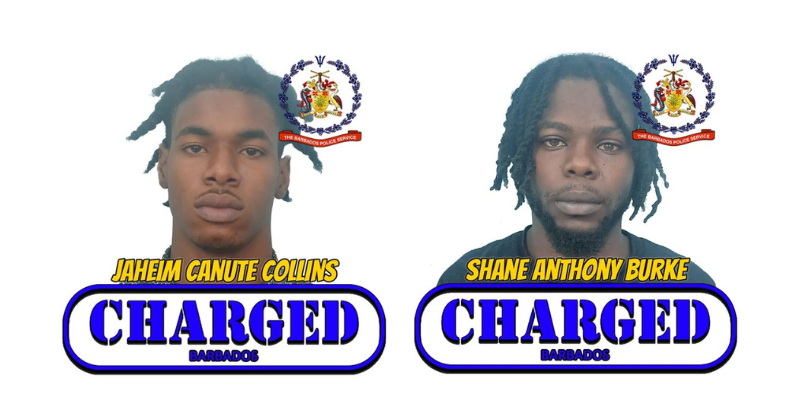
    Law enforcement officials have identified the two accused as 18-year-old Jaheim Canute Collins, a resident of Inch Marlow, Silver Sands, and 29-year-old Shane Anthony Burke, who also previously went by the name Shane Anthony Greene and resides in Ashby Land along Lodge Road. In addition to the primary charge of murder, the pair face a string of other serious criminal offences linked to the shooting. These include multiple violations of national firearms legislation, charges of violent disorder, wounding with intent to cause grievous bodily harm, and endangering the lives of other bystanders who were present at the busy bay venue during the attack.

    Barbados Police Service confirmed that all charges have been formally filed against the two men, and the accused are scheduled to make their first public court appearance on Wednesday at the Oistins Magistrates’ Court. Investigations into the motive and full circumstances of the shooting remain ongoing as authorities work to build their case for the preliminary hearing. Local residents have called for increased safety patrols at the popular tourist and local spot in the wake of the killing, which has been marked as one of the island’s violent incidents recorded so far this year.

  • BMF Rally2 Championship battle heats up

    BMF Rally2 Championship battle heats up

    As the most decisive weekend of the 2026 Barbados Rally2 championship approaches, the top of the overall standings remains razor-thin, with just a single point separating defending championship frontrunners Stuart Maloney and Josh Read. The iconic BCIC Rally Barbados 2026, scheduled to run across May 29 to 31, will serve as both the third and fourth rounds of the Barbados Motoring Federation (BMF) national championship, carrying a massive maximum haul of 66 available points that could completely reshape the season standings. \n\nMaloney, who claimed the 2022 Rally2 title, catapulted from third place to the top of the overall leaderboard after securing victory in the FIA R5 class at last Sunday’s First Citizens King of the Hill event. The win pushed his total season points to 32, putting him narrowly ahead of 2024 champion Josh Read, who sits just one point back on 31. Jamaican driver Kyle Gregg, who previously held a top-three position, has dropped all the way to fifth after a high-speed crash on the opening run of Sunday’s event that left his car heavily damaged. \n\nRead’s strongest result of the season came back in March at the year’s opening round, the BRC Shakedown Stages, where he and co-driver Mark Jordan fought a wheel-to-wheel battle against Gregg in their matching Ford Fiesta Rally2 machines, ultimately taking the win by just two seconds. While Read crossed the line in fourth place at Sunday’s King of the Hill, Gregg’s early incident ended his day before he could clock a competitive time. \n\nTied for fourth place in the overall standings, just four points adrift of Read, are two drivers separated by generations of experience: 22-year-old Adam Mallalieu, the youngest driver competing full-time in the 2026 championship, and Jeff Panton, a two-time Rally2 champion widely regarded as the most experienced competitor in the entire field. Mallalieu and his co-driver Peredur Davies turned in a stunning performance at King of the Hill, finishing just seven hundredths of a second behind winner Maloney. \n\nIn sixth place overall, David Husbands, competing in only his second full season of rally competition with notes from Trinidad & Tobago co-driver Joshua Plaza in his Volkswagen Polo GTI R5, has moved ahead of British driver Rob Swann. Swarn contested King of the Hill in a Ford Fiesta WRC, a car outside the Rally2 regulations, making him ineligible to score championship points for the event. \n\nRounding out the top 10 in the standings are Roger Hill and Graham Gittens, who debuted their new GR Yaris Rally2 at Sunday’s event; the Skoda crew of father-son pairing Mark and Justin Maloney; and American driver George Sherman paired with Trinidad & Tobago co-driver Scott Pinheiro. \n\nSunday’s event also marked a milestone for the 2026 championship, as three new Rally2 recruits earned their first championship points of the season, bringing the total number of points-scoring drivers this year to 14. Additional competitors who opened their points accounts include Jamaica’s Tarik Minott (Fiesta Rally2), Mark Thompson (Citroen C3\Rally2), Bryan Gill (Fabia Rally2 evo) and Wayne Archer (Fiesta R5). \n\nFor the upcoming BCIC RB26, the FIA R5 class will host a record-breaking field of 22 entries, boosted by the addition of seven overseas guest drivers who are not eligible to score championship points. Notable among these international guests are Aaron McLaughlin (Polo GTI R5) and Conor Wilson (Hyundai i20 R5), who finished first and second overall in last year’s Northern Ireland Tarmac Championship.

  • PM: Soaring insurance rates could choke economies ‘within decade’

    PM: Soaring insurance rates could choke economies ‘within decade’

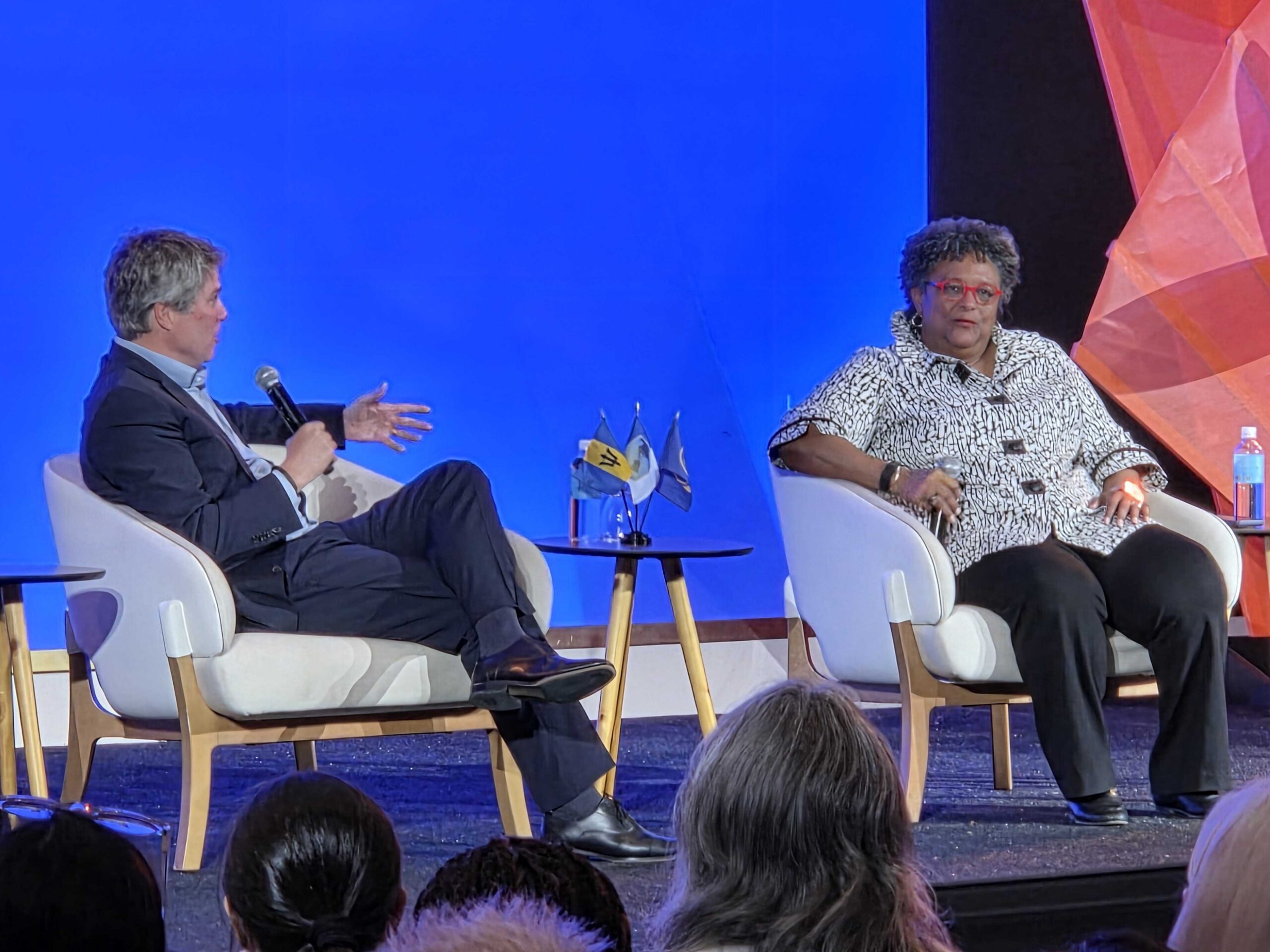
    Barbados Prime Minister Mia Mottley issued a stark warning Wednesday that a growing “mentality disconnect” between global political leaders and the governing boards of multilateral development banks is severely hampering emergency response efforts for climate-vulnerable small island nations. Speaking during a high-level fireside chat at the Inter-American Development Bank (IDB) Sustainable Week conference held in Barbados, Mottley delivered a typically unfiltered assessment of flaws in the existing global financial architecture, alongside IDB Invest CEO James Scriven.

    Mottley highlighted a stark gap between rhetorical commitments from world leaders and on-the-ground bureaucratic gridlock that has delayed critical funding for Caribbean nations already grappling with escalating climate disasters and economic instability. She pointed to persistent institutional inertia at the IDB, where outdated regulatory frameworks adopted a decade ago block much-needed policy-based lending, even though the bank’s own balance sheet has more than enough capacity to support these critical investments. “When I meet the political class, it’s all ‘yes, yes, yes,’” Mottley explained. “And when we get to the board, all of a sudden, you can’t even do proper policy-based lending at the IDB because of a foolishness that seeks to rely on artificial rules that were set ten years ago.” For small island states with limited economic buffers, Mottley emphasized, there is no time to wait for bureaucratic systems to adapt to the growing climate crisis. “I can’t sustain the mentality disconnect between capitals and the boards,” she told the audience of investors and policymakers. “And that’s what’s killing us… It’s not right, it’s not fair, and what is happening because we’re in a bloody crisis moment. We do not have the buffer. We do not have the time that people think that we have.”

    The discussion also shone a spotlight on the transformative impact of the Bridgetown Initiative, the Barbados-led plan to overhaul global financial systems to better support climate-vulnerable developing nations. Scriven acknowledged that the proposal has fundamentally reshaped the global development finance landscape, noting that many of the most significant recent shifts in international development have grown out of the initiative. Mottley detailed how the initiative’s once-radical ideas have now moved into the global financial mainstream, crediting it with推动 the launch of the International Monetary Fund’s Resilience and Sustainability Fund, as well as popularizing groundbreaking debt-for-nature and debt-for-climate swap agreements. She also revealed that Barbados is now pushing forward a new innovative proposal: a scaled “debt-for-social swap” developed in collaboration with the World Bank, Caribbean Development Bank and Latin American Development Bank.

    Mottley also pushed back against early skepticism from Wall Street over the inclusion of natural disaster and pandemic clauses in sovereign bonds, which temporarily pause debt repayments when a catastrophic event strikes. Critics had claimed global markets would never accept these clauses, but Mottley pointed to Barbados’ own successful $500 million bond issuance on U.S. markets in June last year, which saw overwhelming demand of $2.7 billion, with no pushback on the disaster and pandemic protections. She explained that these clauses deliver critical fiscal certainty, unlocking the equivalent of 17 to 18% of Barbados’ GDP over two years if a disaster strikes, benefiting both borrowing nations and lenders by creating clear predictability.

    One underaddressed threat Mottley flagged that could destabilize Caribbean economies within a decade is a rapidly unfolding climate-driven commercial insurance crisis. As climate risks intensify, premiums have skyrocketed and coverage has become increasingly inaccessible, putting local businesses — particularly major tourism operators, the backbone of many Caribbean economies — at risk. Without insurance, many businesses cannot meet the requirements to secure commercial loans, threatening their ability to operate and compete globally. “The big elephant in the room as well for the Bridgetown Initiative, which we’ve not seen sufficient progress on, and I don’t think the world is taking it seriously enough, is the issue of insurance,” Mottley said. “If the cost of insurance becomes prohibitive or, worse than that, inaccessible… we then have problems because these hotels that are depending on access to that funding will not now be able to compete.” To avoid the impending “collision” she projects will arrive in 5 to 10 years, Mottley called for a regional structural overhaul: rather than local carriers acting only as brokers for international reinsurance markets, she urged the sector to aggregate climate risk across small island nations in the Caribbean, Indian Ocean and Pacific Ocean to create enough market scale to make coverage affordable.

    Turning to broader global climate action, Mottley made a passionate case for urgent, targeted cuts to methane emissions, noting that methane is 80 times more harmful than carbon dioxide in the near term. She pushed back against framing the oil and gas sector as the inherent enemy, arguing that the core target should be harmful emissions, rather than the industry itself. Cutting methane, she explained, can buy the critical time the planet needs to scale up long-term decarbonization technologies. “If you can control the emissions, whether from methane or from carbon, then we begin to win the battle,” she said.

    Mottley closed the talk by highlighting a promising local scientific innovation tied to one of the Caribbean’s most persistent environmental nuisances: invasive sargassum seaweed that plagues tourist beaches across the region. She shared that Indian-born Barbadian scientist Dr. Bidyut Mohapatra has discovered three new microbes living in sargassum that could unlock breakthrough applications ranging from new antibiotics to plastic degradation, nitrogen fixation and oil spill cleanup. Despite widespread global interest in the discovery, Dr. Mohapatra has committed to keeping all economic benefits of the innovation within the Caribbean, and Mottley noted that the nation is now seeking international partnership to scale the research. “Everything about Sargassum, it is a nuisance,” Mottley concluded, “but it may well have some serious benefits to the global community.”

  • Barbados in global minimum tax race as filing deadline approaches

    Barbados in global minimum tax race as filing deadline approaches

    As the June 30 deadline for the first round of global minimum tax filings approaches, two leading Barbadian professional bodies — the Institute of Chartered Accountants of Barbados (ICAB) and the Association for Global Business in Barbados — are ramping up pressure on multinational enterprises, tax advisors and legal professionals to complete their mandatory submissions on time, with tax authorities already warning of strict penalties for late filings or non-compliance.

    To help affected entities prepare for the rapidly approaching regulatory milestone, ICAB partnered with the local business association to host a targeted joint workshop, bringing together cross-sector expertise to walk stakeholders through the complex new compliance regime. The workshop, held at Barbados’ Hilton hotel, drew attendees from multinational finance teams, independent tax practitioners and legal firms, all seeking clarity on domestic implementation of the global framework.

    ICAB Chief Executive Officer Lisa Padmore highlighted the urgent need for the capacity-building initiative in an interview with Barbados TODAY, framing the current timeline as a race against the clock to align with the island’s overhauled international tax system. “We are acutely aware of the fast-approaching filing deadlines for all entities scoped into the new global minimum tax and top-up tax rules,” Padmore explained. She emphasized that the educational workshop was designed as a collaborative effort between professional bodies, pulling in specialized knowledge from across Barbados’ financial services sector to ensure affected firms have all the tools to navigate the untested compliance requirements.

    Padmore noted that while many financial professionals have already completed international general training on the broader implications of the global minimum tax regime, the local workshop filled a critical gap by addressing jurisdiction-specific technical details that generic training does not cover. “A lot of practitioners have already pursued independent training, either through overseas programs or online courses, but many are here today specifically to get clarification from the Barbados Revenue Authority (BRA) on the domestic filing process,” she said. She added that eligible entities have already been making monthly prepayments since the regime was enshrined in 2024 income tax amendments, making the pre-deadline workshop a critical final step for first-time filers to confirm their processes meet regulatory requirements ahead of June 30.

    BRA Revenue Commissioner Jason King reinforced the urgency of the deadline during the workshop, outlining the sweeping fiscal reforms that have reshaped Barbados’ corporate tax landscape over the past two years. King emphasized that the rollout of the new global minimum tax framework is a defining shift for Barbados’ economy, as the island moves from policy development to full operationalization of its updated corporate tax system.

    King explained that over the last 24 months, Barbados restructured its core corporate tax rate to 9% for most entities, with the exception of small businesses and specific out-of-scope sectors including shipping, patent box arrangements and insurance, which retain alternative tax rates. The new regime aligns with the OECD/G20 Pillar 2 global minimum tax regulations first published in 2022, and Barbados’ status as an early adopter puts it in a unique position to protect its domestic tax base, King noted.

    Because Barbados’ standard 9% corporate rate falls below the 15% global minimum rate set by the agreement, the island qualifies as a “qualifying domestic minimum top-up tax jurisdiction”, meaning it can collect additional tax from eligible multinationals to bring their effective rate up to the required minimum — rather than ceding that revenue to other jurisdictions under the Pillar 2 framework. “In simple terms, for any effective rate between our 9% base rate and 15% global minimum, Barbados will collect that top-up difference right here in our jurisdiction,” King clarified.

    The top-up tax applies to all multinational enterprise groups that maintain operational entities in Barbados, introducing a new standardized layer of international tax reporting to the island’s fiscal system. King explained that depending on specific qualifying criteria, multinationals may file their required global return in Barbados or in another jurisdiction where the group operates. For entities with taxable liability in Barbados, accurate calculations rooted in existing tax records already held by BRA are required to confirm compliance. Once the calculation is complete, a single top-up tax payment is made on behalf of the entire group through Barbados’ tax system.

    Addressing preparedness ahead of the deadline, King confirmed that registration for the new regime closed at the end of 2025, as dictated by the 12-month registration window following the first in-scope year end (December 2024). While the BRA faced initial technical challenges with the online registration system, those issues were resolved earlier in the year, and the large majority of eligible multinational groups have already completed registration. The focus is now squarely on supporting first-time filers to meet their June 30 submission and payment obligations, with full compliance enforcement set to kick in after the deadline.

    King made clear that BRA will apply standard fiscal penalties and accrued interest to any entities that miss the filing or payment deadline, consistent with standard tax enforcement practices on the island. Despite the steep learning curve and compliance burdens for the private sector, King framed the implementation of the global top-up tax as a historic fiscal milestone for Barbados that will unlock new, previously inaccessible tax revenue for the government, delivering widespread long-term benefits for the island’s population. “This is a net benefit for the entire country, because it opens up a whole new stream of tax revenue that we have never had access to before,” King said. “Ultimately, all Barbadians will share in those benefits.”

  • BIBA welcomes passport-free Barbados-Guyana travel

    BIBA welcomes passport-free Barbados-Guyana travel

    As both Caribbean Community (CARICOM) nations mark 60 years of political independence in 2024, a landmark new bilateral agreement eliminating passport requirements for travel between Barbados and Guyana is being celebrated by private sector leaders as a transformative step toward deeper regional integration and expanded cross-border commerce.

    The arrangement, the latest operational milestone under the 2013 St. Barnabas Accord, a sweeping bilateral cooperation framework designed to align economic and political ties between the two countries, allows eligible citizens to cross borders using only their government-issued secure national identification cards – including Barbados’ biometric Trident ID card. For business leaders, the reform cuts through longstanding administrative delays that have hampered regional investment and collaboration, opening the door to more agile, on-the-ground project development for stakeholders across both markets.

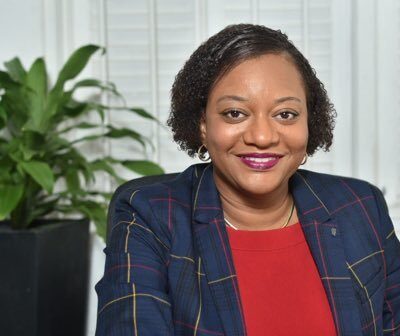
    Carmel Haynes, Executive Director of the Barbados International Business Association (BIBA), which represents the country’s $8 billion international business sector, framed the policy shift as both a strategic economic adjustment and a symbolic milestone for south-south cooperation. “This is exactly the kind of tangible progress we need to turn the long-held CARICOM vision of a single economic space into reality,” Haynes told local media outlet Barbados TODAY. She noted that the reform comes as Barbados actively pursues a strategic reorientation away from overreliance on traditional financial services markets in Canada, Europe, and the United Kingdom, where competition from onshore financial centers has eroded Barbados’ market share in recent decades.

    The timing of the reform could not be more aligned with the shifting economic trajectories of both nations. Guyana is currently experiencing one of the fastest economic booms in modern history, driven by an unprecedented surge in offshore oil production that has pushed annual GDP growth above 60% in 2023. This rapid expansion has created urgent demand for professional services, cross-border investment infrastructure, and corporate expertise to scale its growing economy. For Barbados, which has built a 50-year track record as a leading Caribbean hub for international corporate services, the agreement unlocks new opportunities to export its specialized talent and financial infrastructure to support Guyana’s growth, while delivering mutual benefits to businesses in both countries.

    Haynes highlighted that Barbados’ extensive network of double taxation agreements and its membership in the CARICOM single market create a clear advantage for businesses looking to access Guyana’s expanding energy and infrastructure sectors. “Companies can register in Barbados, leverage our established tax treaty network to enter Guyana, and unlock significant tax savings that would not be available through other entry routes,” she explained. Beyond tax benefits, Barbados boasts a deep, mature pool of professional talent in law, accounting, corporate governance, and cross-border transaction management – expertise that can help Guyana build out its business ecosystem as it scales.

    This is not the first time the region has tested a passport-free travel framework. During the 2007 ICC Cricket World Cup, which was hosted by nine Caribbean nations, temporary legislation was enacted to create a single travel space for the duration of the tournament. Haynes said the widespread praise for that trial, from both business and tourism stakeholders, has kept the demand for permanent free movement alive for nearly two decades.

    Despite the liberalization of travel rules, Haynes emphasized that the new arrangement is not an unregulated open border system. Both countries have upgraded to advanced, biometrically secured national ID cards, with rigorous security vetting protocols built into the agreement to mitigate risks. “Security has been a core priority throughout the design of this arrangement, and it is by no means a free-for-all,” Haynes noted. “Barbados’ Trident ID is far more secure than our previous national identification system, and Guyana has also rolled out its own secure credentialing, so we have full confidence in the integrity of the process.”

    Private sector stakeholders across the region now view the deal as a blueprint for deeper integration across CARICOM, demonstrating that tangible progress toward a single economic space is possible even amid broader regional gridlock on free movement negotiations. For both Barbados and Guyana, the agreement is expected to unlock new investment flows, strengthen business-to-business linkages, and set a precedent for further collaboration across the Caribbean.

  • BADMC launches data platform to boost farming

    BADMC launches data platform to boost farming

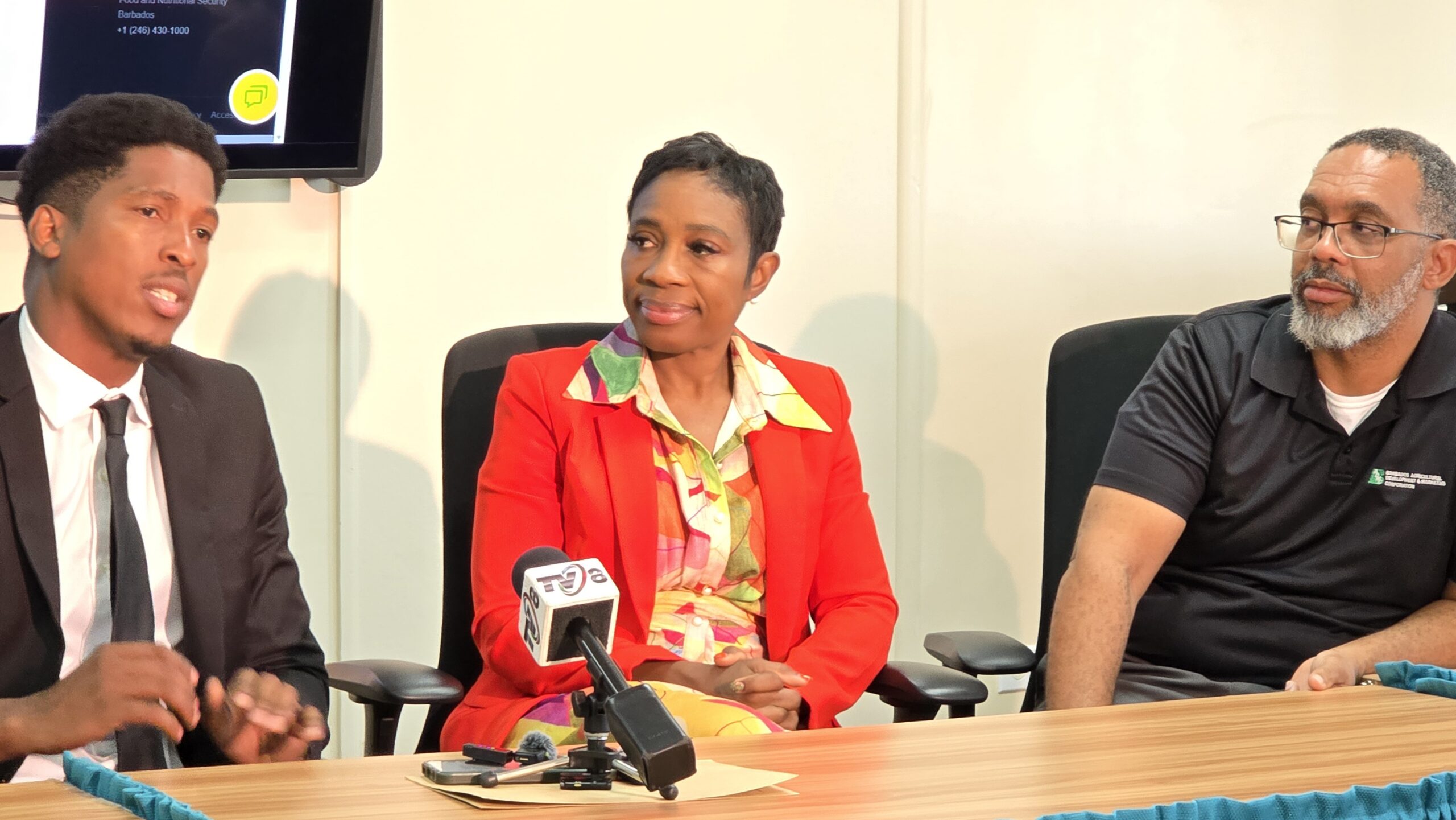
    Against a backdrop of heavy reliance on imported food that costs Barbados $80 million annually, the Barbados Agricultural Development and Marketing Corporation (BADMC) has launched a transformative, data-powered Agricultural Statistics Platform designed to modernize domestic farming coordination, ramp up local output, and shrink the nation’s food import dependency. The initiative is a core component of the country’s broader 25-by-25 strategy, which aims to cut the national food import bill by 25 percent by the end of 2025.