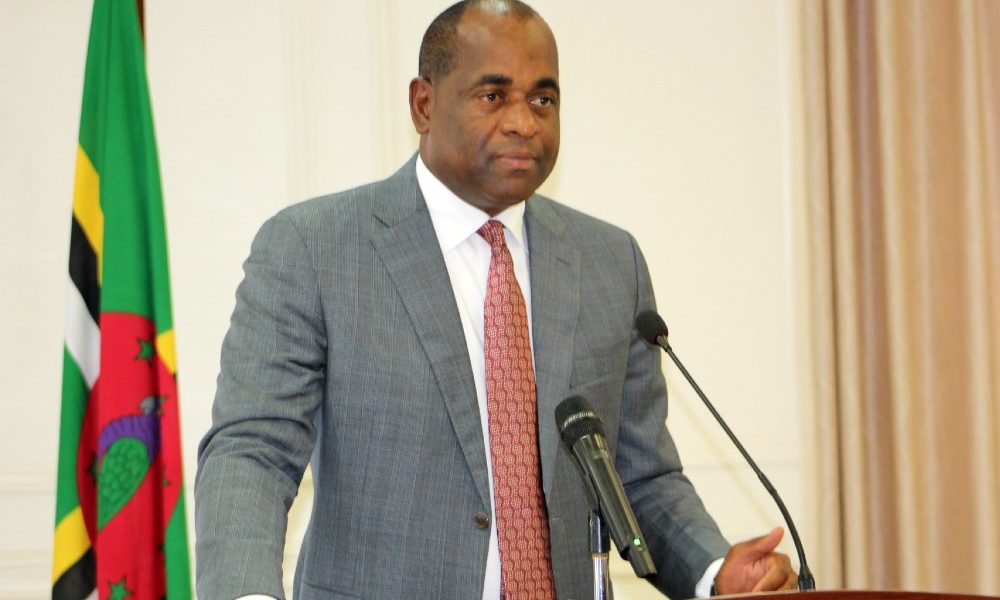
Barbados’ top sports official is pushing the private sector to take a more active and transformative role in advancing the island’s sports ecosystem, calling out longstanding gaps in corporate support for local athletic talent. Minister of Sport Charles Griffith made the call during a special forum focused on unlocking the commercial potential of Barbadian sports, held at the Wildey Gymnasium to mark World Intellectual Property Day. The event, themed “Who Owns the Game? Unlocking the Business of Sport in Barbados”, brought together key industry stakeholders to discuss strategies for growing sports as a viable economic sector.
标签: Barbados
巴巴多斯
-

Regional cricket in mourning following death of Norman Gilbert
The Caribbean cricketing community is in mourning this week following the unexpected death of Norman Gilbert, a beloved former leader of Grenada’s cricket governing body and long-serving member of the Windward Islands Cricket Board. Dr. Kishore Shallow, president of Cricket West Indies (CWI), has released an official statement extending heartfelt sympathies to Gilbert’s loved ones and the regional cricketing fraternity after the sudden passing.
In his address, Shallow highlighted the widespread respect Gilbert earned across the sport throughout his decades of service, pointing to his well-documented integrity, quiet humility, and rare ability to motivate everyone from emerging young players to senior cricket administrators and industry stakeholders. Shallow emphasized that Gilbert’s impact stretched far beyond his official roles, cementing his status as one of the most influential stewards of the game in the Eastern Caribbean.
“On behalf of the entire Cricket West Indies organization, I want to extend our deepest condolences to Norman’s family, his close friends, and every member of the cricketing community across Grenada and the wider region,” Shallow wrote in the statement.
Shallow remembered Gilbert as a deeply committed, forward-thinking leader who served cricket with exceptional distinction throughout his tenure. His consistent, unshakable commitment to growing and elevating cricket in Grenada, paired with his authentic enthusiasm for lifting up the sport at every level from grassroots to elite competition, has left a permanent, meaningful mark on the region’s cricketing ecosystem.
Notably, Shallow noted that Gilbert’s contributions went far beyond the day-to-day work of sports administration. Gilbert was a true custodian of cricket who firmly believed in the game’s unique ability to bring divided communities together and improve life for residents across the island. “At this incredibly difficult time, the entire CWI family stands in full solidarity with the Grenada Cricket Association and the people of Grenada as they grieve this enormous loss,” Shallow added. “Norman’s legacy will endure long through the countless lives he touched, and the robust foundation he helped build for cricket in Grenada. May his soul rest in eternal peace.”
-

Jordan warns ‘unethical’ employers could be barred from public contracts
Against a backdrop of rapidly shifting work arrangements across the Caribbean, Barbados’ Labour Minister Colin Jordan has announced a sweeping new push to enforce labor protections, threatening to bar exploitative firms that evade social security obligations from accessing public sector government contracts. The tough new stance comes as the island nation grapples with the exponential growth of informal, non-standard and gig economy work, which has left millions of workers without basic social safety nets.
The policy announcement was made during a heated debate in the House of Assembly, where lawmakers unanimously backed a private member’s resolution tabled by Toni Moore — a government backbencher who also serves as General Secretary of the Barbados Workers Union. Moore’s resolution lays out a clear roadmap to extend critical social protections to workers in non-traditional employment roles, particularly the fast-expanding cohort of workers active in digital platform and gig economies.
Jordan made clear that his primary target is the widespread culture of cutting corners that has seeped into two of Barbados’ biggest economic pillars: the construction and tourism industries. He argued that unethical firms gain an unfair competitive edge over law-abiding businesses by skipping out on mandatory National Insurance contributions and refusing to provide even the most basic labor rights to their staff, often pushing ethical employers out of the market entirely. To illustrate this harm, he shared a firsthand account of a responsible, worker-first construction firm that collapsed, while a competing firm that cut corners on labor protections continues to operate today. Labeling these exploitative practices as “dirty” and “unsavoury”, Jordan stressed that the national government holds a clear moral obligation to intervene to level the playing field for ethical businesses and protect vulnerable workers.
“Those of us who sit here, particularly as ministers, have a responsibility to ensure that those organisations that treat their employees in a less than desirable manner… do not benefit from public funds. In other words, that they don’t get contracts,” Jordan told the chamber. He issued a direct appeal to leaders across infrastructure and productive sector ministries, demanding that both political and technical officials stop rewarding exploitative “bad actors” with taxpayer-funded contracts.
Central to Jordan’s argument is a fundamental rebuke of the modern business worldview that frames workers as disposable units of production. He drew a sharp contrast between the meticulous maintenance and care that companies give to inanimate industrial machinery and the routine neglect faced by human workers, arguing that human workers deserve far greater protections than equipment, because of their inherent humanity. “We cover down machinery. We service machinery. We do all kinds of things for inanimate objects,” Jordan noted. “Workers who are human beings deserve not similar protection; they deserve greater protection because of their humanity. They are people.”
This human-centered approach to economic development, Jordan argued, is the bedrock of Barbados’ social and economic progress over the past century. He credited decades of trade union advocacy and the working-class roots of the governing Barbados Labour Party for the major social gains the nation has secured since the 1930s, emphasizing that long-term economic productivity is impossible if the workers who drive growth — the “drivers of development” — are not guaranteed basic security and rights.
The debate also shone a spotlight on the rise of what Jordan called the “precariat”, a term coined by economist Guy Standing to describe the growing global class of workers trapped in precarious, informal work with no consistent safety net. Jordan warned that the explosion of digital platforms for ride-hailing, freelance translation, remote data entry and other gig work has made it even harder to enforce social protections, because the platform acts as a distant intermediary with no direct human connection between employer and worker. “In the platform economy, you do not connect with a human being. The platform is the intermediary,” he explained.
To build an evidence base for new policy reforms, Jordan revealed that the Decent Work Team of the International Labour Organization (ILO), based in Trinidad, has agreed to conduct a joint study of the platform economy across both Barbados and Grenada. The study will map the full size and scope of the platform workforce in both nations, filling a critical gap in current data that has delayed policy action.
Jordan also pushed back against critics who argue that extending social security to informal and gig workers is too costly for the small island nation to sustain. He argued bluntly that any business that cannot afford to contribute to the social security system that allows retired senior citizens to afford basic necessities has no right to operate in Barbados. “if a business cannot contribute to a system that allows a 68-year-old citizen to buy basic groceries, that business “shouldn’t be existing in this country,” he said.
Closing his address, Jordan rejected calls for political procrastination on labor reform, using a vivid everyday analogy to frame the government’s duty to act immediately. “We will not be waiting for any perfect time to protect people,” the minister declared. “We do not believe that the rain should be falling and you should wait for some appropriate time before you run and put an umbrella over the person’s head. Once you realize the rain is starting to fall, you run out.”
By endorsing Moore’s resolution and committing to establish a tripartite technical committee in partnership with the Barbados Workers Union to advance reforms, the government has signaled a clear shift toward a “portable” social security model, where benefits follow the worker regardless of their job type, employment status or which platform they use to find work. The new framework marks one of the most significant overhauls of Barbados’ labor and social protection system in decades, responding to the changing nature of work in the 21st century.
-

Surveillance ‘critical’ as vaccine defences strengthened
As global outbreaks of vaccine-preventable diseases (VPDs) and the resumption of unrestricted international travel expose long-dormant gaps in population immunity across the Caribbean, Barbados has launched an urgent push to strengthen its national immunization framework and disease surveillance systems to fend off renewed public health threats. Though the island nation built a decades-long reputation for successful VPD control through consistent vaccination programs, health leaders confirm the country is now working to reverse recent declines in coverage and rebuild robust defenses against high-risk pathogens like measles and polio.
This week, Barbados’ public health authorities accelerated the national immunization campaign, expanding access to life-saving vaccines by bringing services directly into local communities through a scheduled series of open house events at polyclinics across the country. Speaking at a nurse training workshop hosted by the National Union of Public Workers in Dalkeith on Wednesday, Chief Public Health Nurse Larond Hyland outlined the new challenges facing the nation’s once-heralded immunization program.
“For decades, Barbados, like much of the Caribbean, achieved extraordinary success controlling vaccine-preventable diseases through our immunization programs,” Hyland told attendees, which included both public and private sector nursing staff. “But in recent years, we have seen coverage decline, and we are now in an active recovery phase that demands urgent strengthening. To protect our most vulnerable communities and reach the 95 percent herd immunity threshold critical for measles control, we cannot afford to relax our efforts.”
Hyland pointed to alarming trends in North America as a warning for the Caribbean: both the United States and Canada have already lost their official measles elimination status in recent years due to sustained, ongoing outbreaks. While the Caribbean region has not yet reached that tipping point, Barbados’ heavy reliance on international tourism leaves it uniquely exposed to imported cases of highly contagious VPDs.
“Tourism is the backbone of our economy, but it also makes us extremely vulnerable to imported disease,” Hyland emphasized. “We must never lose sight of that risk. Infants are our most at-risk group – they are not yet fully vaccinated, and if an imported case takes hold in this population, the consequences could be catastrophic.”
Under the country’s updated public health strategy, measles and polio have been flagged as top priority pathogens for continuous active monitoring. Hyland stressed that retaining VPD elimination status requires unwavering vigilance and regular verification, even for diseases that have been controlled for decades. Measles, one of the most contagious viral pathogens circulating globally, has been monitored by Barbadian health authorities for more than 25 years as part of the regional elimination effort, while polio surveillance remains critical despite decades of successful eradication efforts in the Americas.
Laboratory confirmation is a core pillar of the country’s enhanced surveillance framework. The Pan American Health Organization (PAHO) requires Barbadian authorities to submit a set number of laboratory-tested samples annually to verify suspected cases of measles and polio, a process that also helps health officials assess the overall performance of their immunization program. For example, a spike in confirmed measles cases among fully vaccinated people would signal a potential gap in vaccine effectiveness or coverage that requires immediate intervention.
Hyland called on all healthcare providers across Barbados – not just physicians – to strictly adhere to established protocols for suspect cases, particularly for patients presenting with fever and unexplained rashes, a common early symptom of measles. She also highlighted the critical need for collaboration with the private healthcare sector, given that international tourists are far more likely to seek care at private facilities than public polyclinics or public emergency departments when visiting the island.
To illustrate this risk, Hyland shared details of a recent incident involving an unvaccinated child from the United Kingdom who arrived in Barbados and developed measles symptoms, seeking care at a private facility. The case triggered urgent public health response protocols and laid bare the gaps that can emerge when private sector providers are not fully integrated into national surveillance efforts.
“We can have perfectly designed plans in the public sector, but every link in the public health response chain matters,” Hyland said. “Unvaccinated tourists who develop measles symptoms will almost always turn to private care first, so we need our private sector colleagues to be just as trained and prepared to act quickly.”
Reinforcing her call for action, Hyland cited longstanding guidance from the World Health Organization, describing vaccination as “the most important public health intervention in history, full stop.” She closed by encouraging all Barbadian healthcare workers to remain proactive and engaged in the work of strengthening national surveillance and immunization systems to protect the island’s 20 years of hard-won public health gains.
-

Moore proposes ‘portable’ social security for all workers
As Barbados prepares to mark May Day, also known as International Workers’ Day, a governing backbench lawmaker and prominent trade union leader is pushing for urgent, transformative change to the country’s social safety net, warning that a growing share of the modern workforce is being locked out of critical coverage amid the global shift away from traditional full-time employment.
Toni Moore, who represents the St George North constituency, has tabled a parliamentary resolution calling for the creation of a National Portable Benefits Framework — a policy she frames as a long-overdue update to the island nation’s 56-year-old National Insurance Scheme (NIS), which she argues was built for a labor market that no longer exists for nearly a third of working Barbadians.
Moore told fellow legislators that the current social security system, launched in 1967, was designed exclusively for an economy defined by stable, long-term roles with a single employer. That model, she emphasized, has become increasingly disconnected from how thousands of Barbadians actually earn a living today, where gig work, freelance contracts, informal roles, and multiple concurrent jobs have become the norm for many.
At its core, the proposed framework would upend how social security contributions and benefits are structured: instead of tying coverage to a specific job, coverage would move with the worker across every role they take. Moore explained that this shift is critical to closing growing gaps in protection for workers holding multiple roles across a single workday. “A Barbadian worker might find himself or herself working in a rideshare in the morning, going up to the airport and hustling as a red cap in the afternoon, and in the evening time, working security,” Moore said, pointing out that domestic workers who split their time across multiple households also face identical gaps in coverage.
These non-standard workers, from ride-share drivers and musicians to artists, journalists and other media professionals, are often misclassified as independent contractors by employers seeking to avoid contributing to social protection, leaving them without basic access to sickness benefits, unemployment support, or retirement pensions. Contrary to the misconception that these workers are a small marginal group, Moore argued they are the actual backbone of Barbados’ modern economy. The gap between current labor patterns and outdated protection rules is widening every year, she added, creating an immediate crisis for workers locked out of the system.
Citing data from the 2022 17th Actuarial Review of the NIS, Moore confirmed that roughly 30 percent of Barbados’ employed population works in the informal sector, and fewer than 20 percent of self-employed workers were actively enrolled in the national insurance scheme at the time of the review. Beyond leaving workers vulnerable, she warned, this low enrollment puts unsustainable strain on the NIS fund, and inaction could eventually lead to the fund’s collapse.
By bringing non-standard workers into mandatory coverage, Moore explained, the scheme would expand its contribution base, strengthening long-term fund sustainability and securing more stable pensions for all enrollees. “Widening the contribution base must be seen as the most sustainable path to NIS solvency,” she said.
Addressing anticipated pushback that the new framework would place an unfair financial burden on small businesses and low-income workers, Moore pushed back, arguing that the real burden is the status quo. Under the current system, she explained, compliant employers and workers already carry the cost of entities that evade their contribution obligations. For workers themselves, she added, the cost of being unprotected far outweighs any perceived cost of participation: “They pay it when they get sick and have to be at home with no income… they pay it when they reach old age and realise they have nothing to fall back on except the discretion of the system. Portable benefits do not add a burden; they end the burden of workers carrying every crisis on their own.”
To support the new framework, Moore called for investment in a modern digital infrastructure capable of tracking small, frequent contribution transactions in real time, moving away from the current system that relies on monthly reporting tied to traditional employer payrolls. She also proposed the creation of a tripartite technical implementation committee chaired by an independent senior actuary to oversee the design and rollout of the new framework, with an ambitious target to launch the system by November 30, 2026 — timed as an anniversary gift to the nation marking five years of Barbados as a republic.
Moore framed the proposal as the next chapter in Barbados’ national development, drawing parallels to the original launch of the NIS as a foundational nation-building project in 1967, and the 2021 transition to a republic as a declaration that sovereignty rests with the people. “Now in 2026, this resolution is asking this Parliament of Barbados to make a third declaration: that every worker belongs to the social contract,” she said. “If fairness is radical, then let us get radical.”
Ultimately, the resolution aims to guarantee that no Barbadian worker will reach retirement after decades of work to find they have no accumulated benefits to rely on, sending a clear message that every worker in the country is seen, valued, and entitled to the protection of the social contract.
-

Immigration overhaul as workforce shrinks, ages
Facing a growing demographic crisis driven by shrinking birth rates, sustained population shrinkage, and an aging national workforce, Barbados has introduced sweeping updates to its immigration and citizenship legislation to shore up long-term economic stability. Home Affairs Minister Gregory Nicholls presented the amended Immigration and Citizenship bills to the country’s House of Assembly on Wednesday, framing the reforms as a urgent response to decades-long demographic shifts that have begun to erode the island nation’s economic standing.
Nicholls outlined the gravity of the challenge facing Barbados, noting that decades of declining fertility rates, sustained out-migration of skilled workers, and stagnant population growth have pushed the country into a clear period of demographic contraction. A comparison of 60 to 70 years of population data reveals a stark reversal from steady growth to consistent decline, a trajectory that already threatens core government functions and national competitiveness, the minister argued. “This shrinking and ageing population threatens to undermine long-term GDP growth, our capacity to fund our pensions, our capacity to be able to deliver on our social services and also all the other services that the government provides,” Nicholls told lawmakers. “This erosion of the productive population threatens the nation’s competitiveness; it limits our ability to attract investment and be able to make good on all of the things that we want to say attracts people to Barbados.”
With official growth targets enshrined in the country’s 2026 Barbados Economic Recovery and Transformation Programme at stake, the government has overhauled existing immigration and citizenship frameworks to expand access to residency, formalize longstanding uncodified administrative practices, and open new pathways for permanent residency for high-potential migrants. Many flexible residency and work permission arrangements have been used by immigration authorities for years, but existed only as informal administrative policies rather than formal statutory law. The new legislation codifies these practices, streamlines application processes, and extends protections to spouses and dependent family members of legal residents who previously fell outside formal eligibility requirements, strengthening family stability for people already residing in Barbados.
A centerpiece of the reform is the expansion of permanent residency eligibility, which now explicitly includes spouses of Barbadian citizens, financially independent retirees, and their dependents — including minor children and adult dependents with disabilities. Previously, many spouses of citizens were only eligible for temporary visitor status, creating unnecessary strain on cross-border families. The legislation also eliminates the outdated “immigrant” categorization and introduces a first-of-its-kind merit-based points assessment system for permanent residency applicants.
Under the new merit-based framework, applicants earn points across eight key criteria: age, Barbadian ancestral lineage, educational attainment, professional skills, work experience, available financial resources, and senior diplomatic or international public service experience. Applicants must reach a 10-point threshold to qualify for permanent residency. Nicholls explained that the targeted system is designed to counter the ongoing brain drain of skilled Barbadian workers who have relocated abroad, by attracting skilled new migrants to strengthen the domestic labor market.
Beyond addressing labor gaps, the reforms are crafted to position Barbados as a leading regional hub for global investment and innovation. By formalizing flexible residency pathways for entrepreneurs and skilled workers, the government aims to draw in foreign business founders who bring new technologies and commercial activity to the island, building a competitive advantage over other regional and hemispheric economies. “The bills before the chamber today, provide that legislative framework to strengthen the nation’s competitive edge in the global marketplace, which is key in attracting valuable human capital, also attracting investment, which can also promote innovation by the use of the introduction of technology from people who come to set up businesses here,” Nicholls said. “Barbados becomes a leader to attract investment of a kind and a nature in this era that other countries in the region and even in the wider hemisphere are not attracting.”
The reforms also bring Barbados’ immigration framework into alignment with its existing regional and international commitments. The legislation codifies commitments made under the Revised Treaty of Chaguaramas, which enables free movement for citizens of other Caribbean nations, and aligns with the terms of Barbados’ economic partnership agreement with the European Union. Nicholls emphasized that the updates modernize the country’s immigration system and reinforce Barbados’ reputation as a forward-looking, integrated player in global and regional affairs.
Following its introduction on Wednesday, the Immigration Bill has been referred to parliament’s joint select committee on economic policy for further review and amendment before a final vote.
-

Bowen: Team has stepped up to another level
After a turbulent opening to the 2024 West Indies Championship, Barbados Pride have defied early setbacks to punch their ticket to the tournament’s playoff round, with team management and leadership crediting the squad’s unwavering tenacity for their comeback.
Last year’s tournament runners-up got off to a discouraging start, dropping their opening fixture to the Jamaica Scorpions in their three-match bilateral series. But the side bounced back in dramatic fashion: they secured a draw in the second encounter before delivering a dominant innings-and-11-run victory over the Scorpions at Kingston’s Sabina Park on Wednesday, a result that locked in their playoff berth.
In an interview with local media outlet Barbados TODAY following the decisive win, team manager Colin Bowen explained that the squad never lost confidence even after their opening loss, maintaining strong team morale through the entire series. “Jamaica has produced some explosive opening partnerships across this tournament – they’ve notched two 200-run stands and another close to 100,” Bowen noted. “But in this decisive innings, we managed to remove their opening pair very early, which is exactly the strategy we’d banked on to break through their batting lineup.”
While Barbados Pride’s batters have turned in consistent standout performances throughout the competition, Bowen emphasized that the bowling unit was the driving force behind the lopsided final win. He explained that playing surfaces at Jamaican venues have offered consistent, batting-friendly conditions throughout the championship, forcing bowlers to put in long, grueling shifts to gain an edge. It was only in an afternoon session on the final day of the third match that the pitch finally developed enough turn and bounce to let Barbados Pride’s bowlers take control, Bowen added, noting the surface reverted to its slow, docile state the following day.
Up next, the side will travel to Antigua to face Trinidad and Tobago Red Force in a playoff clash on May 10, with the winner advancing to the championship final to take on defending champions Guyana Harpy Eagles. Though all other participating teams have already played a match in Antigua this tournament – giving them prior experience of the local playing surfaces – Bowen said the squad does not view this as a major disadvantage.
“We don’t see that as a significant edge for our opponents,” he said. “We’ve always held the belief that no matter where we play, if we perform to the best of our abilities, we can get the result we want.” Bowen added that the squad has avoided any major injury concerns through the competition so far, with the team’s physiotherapist and trainer successfully managing minor muscle and joint issues. The week-long break before the playoff will be used to address any lingering discomforts and get the full squad fully fit for the knockout round.
Team captain Kraigg Brathwaite echoed Bowen’s confidence, praising his players for their relentless effort and never-say-die attitude that turned the series around. “I’m incredibly proud of this group,” Brathwaite said. “We put in solid work starting from the second match, claiming first innings points even after Jamaica posted a huge total, and pulling off this win in the final game is a fantastic effort from everyone.”
-

Central Bank outlines financing safety net for shocks, hurricanes
Barbados is gearing up to launch negotiations with the International Monetary Fund in the coming weeks on a new standby arrangement, a pre-approved financial buffer designed to deliver immediate access to funding when unexpected economic or climate shocks hit, the island nation’s central bank governor Dr. Kevin Greenidge has confirmed.
This new step comes roughly one year after the Mia Mottley-led administration wrapped up its previous two IMF programs: the Extended Fund Facility (EFF) focused on medium-term economic structural reform and the Resilience and Sustainability Facility (RSF) aimed at long-term climate adaptation. After completing those initiatives last June, the government has repeatedly stated its goal of keeping the IMF “on speed dial” for rapid emergency support, a promise that is now moving into active negotiation.
Speaking exclusively to local media outlet Barbados TODAY, Greenidge outlined that the formal discussions are scheduled to kick off between next week and the following week, with the parties set to hash out the specific parameters of the new agreement. Unlike the traditional, rigorous program structures of past IMF arrangements such as the EFF, this standby arrangement is framed as a proactive insurance policy rather than a bailout for existing economic instability, Greenidge explained.
The core advantage of the pre-negotiated setup is the drastically reduced waiting period for accessing funds, he noted. In the event of an unexpected crisis such as a major hurricane – a constant risk for small Caribbean island states – a pre-approved arrangement would allow Barbados to access financing in days rather than the three to four months required for a new, from-scratch program. The framework will involve ongoing policy dialogue between Barbadian authorities and IMF teams, with minor self-set targets that, when met, earmark funds for the country to draw on immediately if a shock occurs.
“This is part of a layered emergency funding strategy,” Greenidge emphasized, pointing to the multiple complementary buffers Barbados has built to respond to crises. In addition to the proposed IMF standby arrangement, the country can access rapid payouts from the Regional Catastrophe Fund, pre-allocated emergency bonds from the World Bank, and built-in deferral clauses in its climate debt agreements that allow the government to pause debt payments for one to two years to free up critical funding during emergencies. The overarching goal of the strategy is to secure immediate access to capital while minimizing outgoing government spending in the immediate aftermath of a crisis, so response and recovery efforts can launch without delay.
The previous IMF programs, wrapped up in June 2023, concluded with the disbursement of a final $116 million loan tranche, marking the successful completion of Barbados’ Building Economic Resilience Transformation (BERT) 2.0 reform program. The prime first announced the “speed dial” plan for ongoing IMF engagement back in May 2023, ahead of the conclusion of BERT 2.0, saying that structural reform efforts would continue regardless of the end of the previous lending arrangements.
Prime Minister Mottley has framed the next phase of national economic development, labeled BERT 3.0, around two core priorities: upgrading the country’s skills base and modernizing national governance structures. Addressing the skills gap, Mottley noted that while the government prioritizes hiring Barbadian nationals for all open positions, the country has repeatedly been forced to recruit skilled workers from overseas due to shortages in critical fields. This makes expanded skills development a central pillar of long-term economic growth, she said.
Alongside the ongoing economic resilience work the standby arrangement supports, governance modernization will also be a core focus of the BERT 3.0 agenda, as Barbados works to become more agile, competitive and adaptable for the challenges of the 21st century, Mottley added. The central bank also confirmed that the country has recorded 20 consecutive quarters of economic expansion, with continued growth recorded in the first quarter of this year, demonstrating the success of past reform efforts and creating space to proactively build future shock buffers.
-

Unite, unions urged, as CTUSAB warns of weakened labour voice
As Barbados grapples with escalating economic headwinds that put worker livelihoods at growing risk, the island nation’s peak labor coordinating body has issued an urgent appeal for greater unity across the country’s trade union movement, warning that ongoing fragmentation threatens both worker bargaining power and long-term national development.
Speaking at a Wednesday press conference held at CTUSAB (Congress of Trade Unions and Staff Associations of Barbados) headquarters in the Garrison, St. Michael, CTUSAB president Ryan Phillips emphasized that cross-union cohesion is non-negotiable in today’s climate of mounting economic and industrial uncertainty. “If we are to properly represent labor as a collective, we must speak with one voice,” Phillips told reporters. “We have repeatedly called on all union groups to come to the table. Even with existing differences between organizations, there are pressing national-interest issues that demand collaborative conversation to advance the wellbeing of every worker.”
Phillips warned that internal division within the broader labor movement erodes its collective influence, most acutely on high-stakes issues including wage negotiations and national economic policy formation. “We must gather around the table to speak with a unified voice to guarantee that no worker is disadvantaged in any process, especially salary reviews. That is just one of the critical issues at stake here,” he said.
CTUSAB publicly acknowledged that three of Barbados’ largest and most influential worker organizations — the Barbados Workers Union, the Barbados Secondary Teachers’ Union, and the Association of Principals of Public Primary Schools — are currently not part of its membership, a gap that directly undermines the goal of a single, representative national labor voice. “CTUSAB laments the fact that these groups, which were once part of the national trade union center, currently remain outside our membership fold,” the organization said in a statement during the conference.
Despite this rift, the peak body made clear it remains fully open to repairing divisions and rebuilding broad-based unity. “The congress welcomes these organizations, as well as any other recognized trade unions and staff associations, to join our membership, provided they meet the established criteria for membership,” CTUSAB stated.
Phillips added that the push for a unified umbrella labor body aligns with global best practices and international labor standards set by the International Labour Organisation (ILO), and it is an especially critical priority for small island states navigating complex, shifting global economic conditions. “Creating an umbrella body that brings all worker representatives together in solidarity to speak with one voice makes clear strategic sense,” Phillips noted. “This structure is explicitly recognized within the ILO’s framework. As a small country, it makes good sense to pursue approaches that help us grow and develop with all stakeholders aligned behind a common voice.”
The CTUSAB president acknowledged that minor disagreements between independent unions are inevitable, but argued such differences do not need to escalate into permanent, damaging division. “Differences will emerge in any organization, but that does not mean we have to be divided,” he said. “It does not mean we have to undermine one another’s rights to achieve our goals.”
Beyond strengthening worker representation and bargaining power, CTUSAB argues that a unified labor movement improves national governance overall, by creating a clear, reliable channel for worker input into national policy discussions. The organization stressed that workers do not only advocate for their own rights and benefits — they also have a direct, vested stake in inclusive, sustainable national development that benefits all Barbadians.
With Barbados’ annual Labor Day celebrations approaching, CTUSAB says its call for unity is rooted in both historical lessons from the global labor movement and current on-the-ground realities, as Barbadian workers adapt to persistent economic pressures and ongoing structural shifts in the local labor market.
-

White-clad gunman kills worker in Wildey daylight shooting
A quiet residential community in Wildey, Barbados, is reeling from shock after a bold public shooting left a local worker dead on Wednesday morning. The attack, carried out by a single attacker disguised in a white hazmat suit, has shattered the normally peaceful atmosphere of the area, prompting law enforcement to issue an urgent appeal for members of the public to come forward with any information that could help solve the killing.
The incident unfolded just after 10 a.m., when Barbados Police received an emergency call reporting the shooting, confirmed Acting Inspector Ryan Brathwaite, the force’s public affairs and communications head. According to the caller, the gunman – clad in the distinctive protective hazmat suit – had opened fire on the victim before fleeing the scene on Meadow Road, where the attack took place.
First responder units rushed to the location within minutes of the report, and found the victim’s body lying on the roadside. Preliminary investigative work has revealed that the man killed was part of a work crew carrying out activities in the neighborhood when the assailant approached. Brathwaite detailed that the attacker fired multiple rounds at close range, causing critical wounds that proved fatal before a medical professional could arrive at the scene to provide care. As of Wednesday, the victim’s identity has not been released to the public pending next-of-kin notification.
For long-term residents of Meadow Road, the brazen mid-morning attack is an unprecedented break from the area’s normally low-crime culture. Ian Gilkes, a resident who has lived in the neighborhood for years, told reporters he heard the rapid succession of gunfire that signaled the attack. “I hear pop, pop, pop,” Gilkes said, emphasizing that brutal violence of this kind has no place in the quiet community. “It don’t happen so [here].”
Other local residents shared their lingering shock and growing concern over rising gun violence across Barbados. One elderly resident, still visibly shaken when speaking to journalists, recalled speaking to the victim just 24 hours before the killing. “The last thing I said was yesterday before he left to go to church,” the resident said, shaking his head at the escalating rate of gun-related crime across the island. Another anonymous resident, who was at home watching television when the shots rang out, described the sudden disruption of an ordinary day. “I was watching sports on TV when all of a sudden I heard a few shots, that’s all I could tell you,” the resident said, adding “I don’t feel good about these shootings.”
While forensic investigators processed the crime scene to collect physical evidence, Brathwaite issued a public plea for community cooperation to address the violence, calling on Barbadians to return to foundational community and spiritual values. “We must continue to appeal to our fellow Barbadians, let’s be your brother’s keeper,” he said. “If you know something, if you have seen something, please say something. Let us make Barbados a safe place. It does not have to be this way.”
Brathwaite stressed that communities cannot afford to surrender to fear in the wake of the tragedy. “We must not put up our hands and give up on this situation. We must continue to work together for the betterment of Barbados,” he said. Calling for a return to spiritual guidance as a path forward, the police spokesperson added: “Let us get back to the basics. Let us take our young children to church… Let God be our guiding light. This is the way for us to come back.”
Authorities have released multiple contact points for anyone with information about the shooting or the gunman’s identity to come forward. Tipsters can reach Crime Stoppers anonymously at 1-800-8477, contact the police emergency line at 211, or reach the investigating team directly at District ‘A’ Police Station via 430-7242.