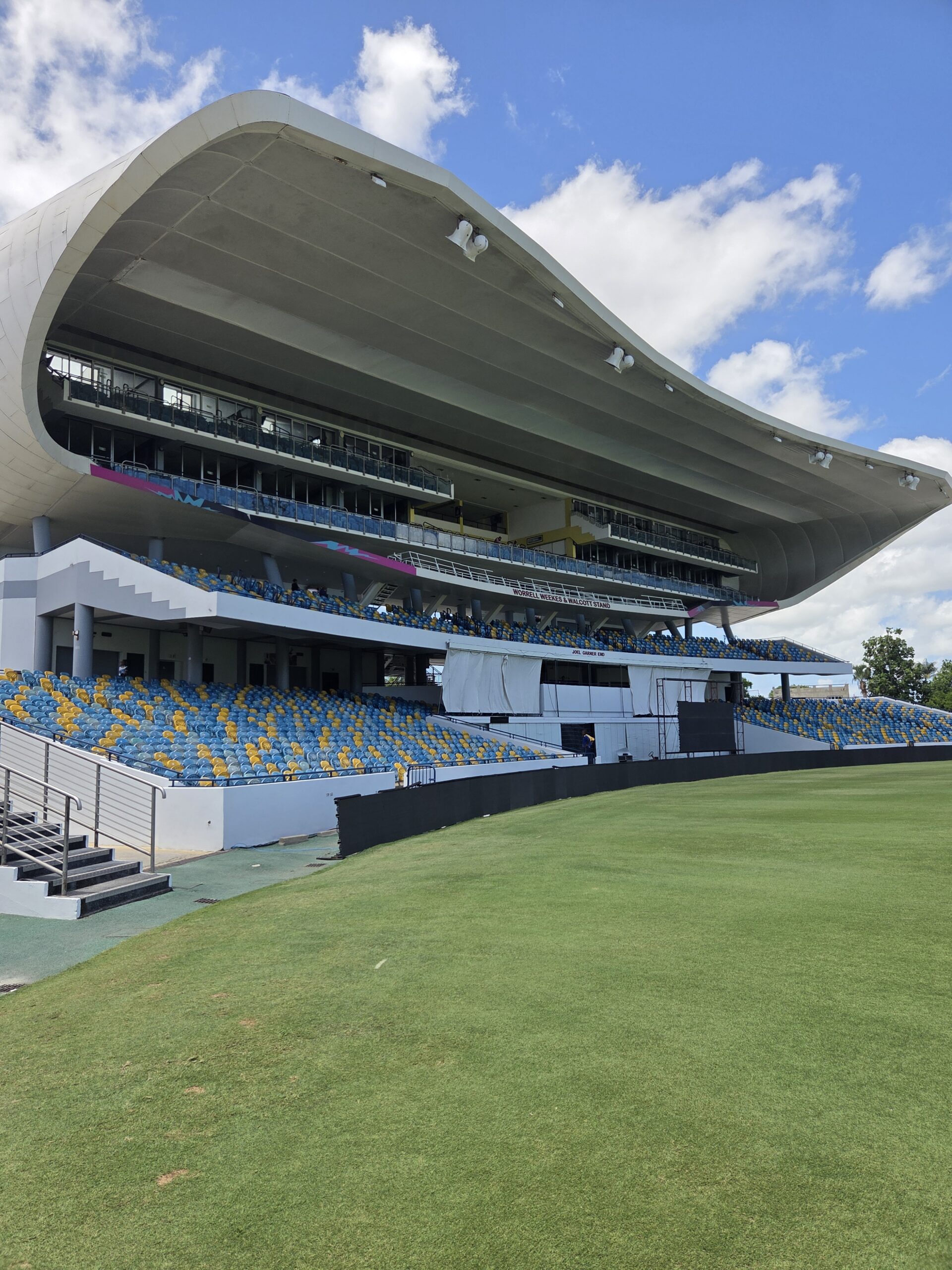
The Republic Bank Caribbean Premier League delivered one of its most thrilling matches of the 2024 season on Saturday night, as an all-round masterclass from Gudakesh Motie carried the Barbados Tridents to a dramatic last-ball victory over the Jamaica Kingsmen at Kensington Oval. The win secured the Tridents’ spot in the tournament playoffs with one regular-season match still remaining, capping a nail-biting contest that had the home crowd on their feet from the first delivery to the final hit.
When Tridents captain Chris Green won the toss and elected to bowl first, the Jamaica Kingsmen got off to a promising start, reaching 50 for the loss of just one wicket by the end of the mandatory powerplay. But the Tridents’ bowling attack turned the tide in the middle overs, dragging the Kingsmen into a steep collapse. By the middle of the 16th over, Jamaica had slumped to 112 for six, with Motie leading the charge with key breakthroughs.
The left-arm spinner claimed the wickets of Jamaica’s top batter Maaz Sadaqat, who had smashed 47 runs off 34 deliveries, and Usman Khan for 18, finishing his incredible three-over spell with figures of two wickets for just seven runs. Pacer Jakeem Pollard continued his strong run of form, picking up three wickets for 38 runs, while all-rounder Daniel Sams chipped in with two wickets for 41 runs. The combined bowling effort restricted the Kingsmen to a total of 150 for nine at the end of their 20 overs, a target that seemed gettable but far from comfortable for the home side.
The Tridents’ run chase got off to a rocky start, extending the team’s pattern of inconsistent batting through the group stage. By the end of the powerplay, Barbados was reeling at 36 for three, with early losses to Zachary Carter (3), Brandon King (18) and Rivaldo Clarke (1). More wickets fell quickly: Quinton de Kock departed for 14, and Sherfane Rutherford was run out for five, leaving the Tridents at 76 for five in the 14th over and the outcome looking increasingly likely to go Jamaica’s way.
Shadrack Descarte held the crumbling innings together with a polished 56 runs off 42 deliveries, hitting six fours and two sixes to keep the Tridents in the hunt. But when he fell with the total at 107 for six at the start of the 17th over, Barbados was still left in a precarious position. Daniel Sams added five runs, and captain Chris Green struck a quick 17 off 12 balls, but Green’s dismissal on the fifth ball of the penultimate over left the home side with a mountain to climb: 17 runs needed from the final six deliveries to secure the win that would seal their playoff spot.
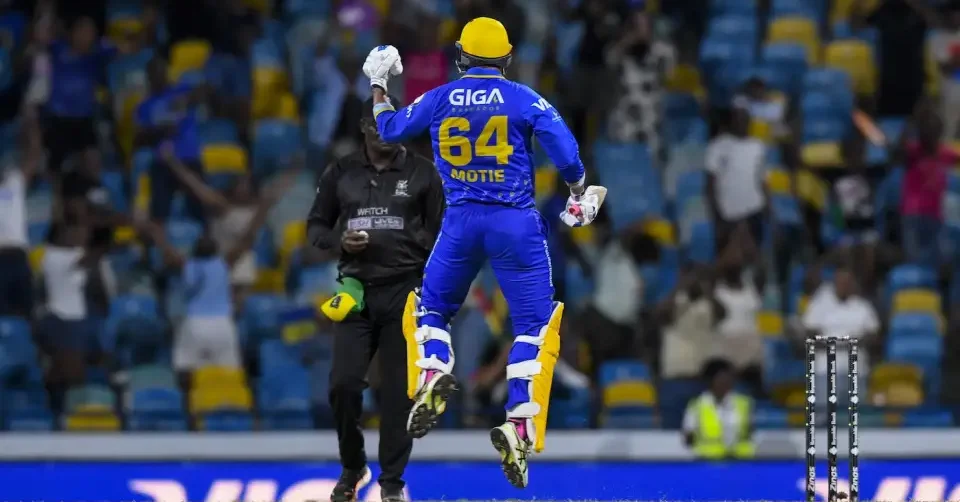
That set the stage for Motie, who was already at the crease unbeaten on six, to produce one of the most memorable finishes in Caribbean Premier League history. The Kingsmen assigned fast bowler Odean Smith to bowl the decisive final over, and Motie took control from the first ball, hammering it for a boundary through the off side. A rattled Smith conceded consecutive wides before Motie launched the second legal delivery over the long off boundary for a massive six.
A leg bye off the third ball, a pair of runs from batting partner A.M. Ghazanfar, and a single from Ghazanfar off the penultimate delivery of the match leveled the scores, leaving just one run required off the final ball to win. With the capacity crowd at Kensington Oval rising to their feet and chanting Motie’s name as Smith prepared to deliver, the all-rounder pulled a short ball over the midwicket boundary to seal the win. Motie finished the innings unbeaten on 17 runs off just eight deliveries, completing a performance for the highlight reels with match-winning contributions in both disciplines.
After the match, an visibly relieved Tridents skipper Green praised his star player, after the side locked in their playoff berth ahead of their final group stage match against the Guyana Amazon Warriors on Sunday. “We’ve obviously got a lot of depth all the way down to Motie, and look, what a game he had! The way he stepped up with the bat and finished the game off, I’m immensely proud. To get us over the line and qualify was an amazing effort from a key player to this side.”