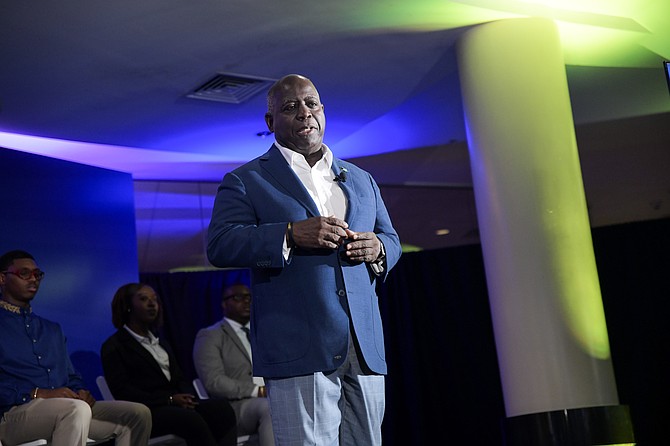
As the Progressive Liberal Party (PLP) kicks off its re-election bid, Bahamas Prime Minister Philip Davis is pushing back against growing criticism over a string of unkept pre-election promises centered on government transparency and accountability. Speaking to reporters this week, Davis framed the core issues of transparency and accountability as fundamentally questions of personal character and public trust, arguing that voter confidence in his leadership underpins belief in his administration’s agenda.
When the PLP took office after the last general election, it ran on a platform that included sweeping transparency reforms: full implementation of the Freedom of Information Act, new national integrity legislation, and comprehensive campaign finance reform. With the party now seeking a new term, none of these key pledges have been completed, a gap opposition critics have repeatedly highlighted on the campaign trail.
Pressed on this discrepancy between campaign promises and governing action, Davis did not deny that many commitments remain unfulfilled. Instead, he urged Bahamian voters to balance these unmet goals against the full record of his administration’s achievements over the last term. “We could accept the things we didn’t fulfil, you know,” Davis told reporters. “As I keep saying, we did a lot, please acknowledge that.”
The prime minister also addressed recent backlash over new policy pledges unveiled at the PLP’s Wednesday launch of its “Blueprint for Progress” campaign platform. Critics have argued that rolling out new policy proposals ahead of an election, when the party failed to deliver on old promises, is a disingenuous politically motivated move. Davis rejected that characterization outright, noting that laying out a forward-looking policy agenda is a core part of any democratic electoral process.
“We are in the political season,” Davis said. “I expect my critics to attack, not debate me on the issues and the ideas. If you look at what we’re saying, we are building upon which we have already started, some of which we promised and wasn’t able to complete and we’re building on that.”
He emphasized that presenting future policy initiatives is how political parties share a national vision with voters, rather than a cynical political tactic. “The critics will continue to say, anything I say now, I’m doing it for politics,” he added. “But what we are doing now is, we are saying to the Bahamian people, the politics is about the future. So we have to paint the future for the people and to give them a vision of The Bahamas that will include the initiatives that we think we have to put in place.”
To shore up public credibility, Davis pointed to his administration’s overall track record, claiming that hundreds of smaller campaign commitments were completed over the last term. He also highlighted unplanned policy actions not included in the party’s original election platform as proof of the government’s responsiveness to public needs, specifically calling out the popular school breakfast programme rolled out during his tenure as an example of meaningful, unpledged progress.