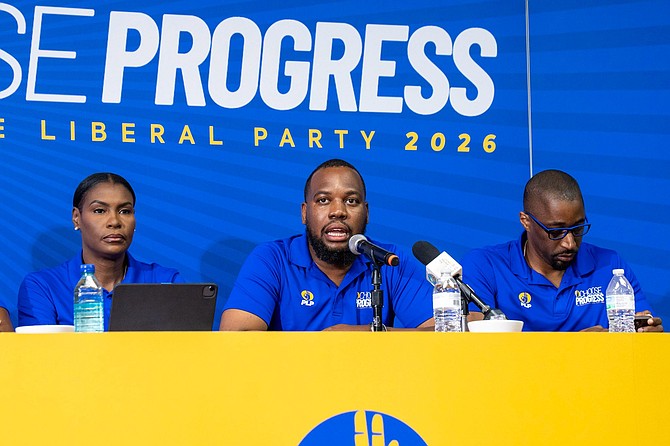
As The Bahamas counts down to its general election on May 12, the ruling Progressive Liberal Party (PLP) has thrown its tentative support behind integrating campaign finance reform into the country’s long-term national development strategy, while declining to lock the party into binding legislative action if it retains power after the vote.
Speaking at the PLP’s first scheduled weekly press briefing on Sunday, party Communications Director Latrae Rahming framed long-debated campaign finance overhauls as a critical topic for national planning. “Looking ahead, and even right now, we need a structured approach to this issue that is woven into our national development plan,” Rahming explained.
Rahming added that Bahamian policymakers should look to successful regulatory models from comparable jurisdictions around the world to identify a framework that aligns with the country’s unique political context, noting that reform “definitely ought to be a consideration in the national development plan, and we absolutely need to benchmark which policies work for our jurisdiction.”
The call for broader discussion comes amid a years-long national debate over campaign finance regulation that has never resulted in enacted legislation. Both major Bahamian political parties have campaigned on promises of reform for years, facing sustained pressure from good governance groups including the Organisation for Responsible Governance, as well as international bodies like the Organisation of American States. No major legislative progress has materialized to date.
Most recently, Prime Minister Philip “Brave” Davis clarified in September 2024 that despite the PLP including reform promises in its 2021 Blueprint for Change manifesto, the policy was not a current administration priority. “I don’t know where this renewed focus on this issue came from,” Davis said at the time, adding “I will not disclose our campaign donors unless those donors personally give me permission to do so.” The prime minister argued that reform legislation would not directly address the immediate economic and social struggles facing most Bahamian households, noting the administration is focusing on more urgent priorities while still reviewing the issue.
Rahming on Sunday acknowledged that existing financial safeguards are already in place for political campaigns, but stressed that cross-party consensus is required to move reform forward. “This is a conversation that all major political parties in the country need to have together,” he said.
Alongside the discussion of campaign finance, the PLP’s legal advisor Keenan Johnson used Sunday’s briefing to outline key electoral deadlines for the upcoming May 12 vote, to help voters and candidates prepare. Nomination Day, when all candidates must complete official documentation to appear on the ballot, is scheduled for April 16. Johnson emphasized that despite many parties having already publicly ratified their chosen candidates, no candidate is officially registered until they complete this formal process.
Additional key dates include an April 17 deadline for overseas voters to submit their ballot applications via the MyGateway digital voting portal, and an April 25 deadline for applications from voters requesting special access to polling. Advance in-person polling for eligible voters will be held on April 30. Johnson also confirmed that voters can use either a valid passport or driver’s license as official photo identification to cast a ballot, expanding options for eligible participants.
The party confirmed that it will hold weekly press briefings every Sunday leading up to election day to keep voters updated on its platform and campaign activities. Golden Gates Member of Parliament Pia Glover-Rolle noted that the campaign has now entered its most critical phase, with just 30 days remaining until polling day. “Every single day counts between now and May 12,” she said.