标签: Bahamas

巴哈马

  • Police investigate viral video of Abaco man being slapped

    Police investigate viral video of Abaco man being slapped

    A disturbing video capturing a prolonged physical assault on an older man in Abaco has gone viral across social media platforms, triggering widespread public anger and prompting local law enforcement to launch a formal investigation, according to a report from the Tribune. The clip, which has been shared hundreds of times across major social networks, shows the victim – a man who appears to be in his 50s – remaining completely unresisting throughout the entire attack, never fighting back against his aggressors.

    In the graphic footage, one attacker grabs the victim by the front of his shirt to hold him in place, while delivering no less than 19 consecutive slaps to the man’s head and face. A second assailant joins the attack, adding his own slaps before landing a single hard punch to the victim’s stomach. Around 10 onlookers are gathered at the scene to watch the assault unfold; while one bystander makes a weak attempt to intervene, the two attackers ignore the effort and continue beating the victim.

    Shockingly, the person holding the camera to record the entire incident can be heard laughing uncontrollably from start to finish, and other bystanders in the background also join in the laughter. The disturbing behavior of both the attackers and the laughing onlookers quickly sparked fierce backlash after the video spread online, with social media users lining up to condemn the incident in comment sections.

    Local police official Sheria King has confirmed that law enforcement received an official complaint over the incident and is moving forward with an investigation to identify the attackers and hold them accountable for their actions. Social media commenters across the platform have directed widespread criticism at all parties involved, calling out the attackers as bullies and cowards for ganging up on an unresisting older man, while also condemning the person who filmed the attack for laughing rather than stepping in to stop it. Many users emphasized that the public humiliation and violence the victim suffered is no laughing matter, stressing that the entire incident exposes a disturbing lack of empathy among those involved.

  • BUT president urges minister to fix teacher shortages

    BUT president urges minister to fix teacher shortages

    The head of the Bahamas’ largest educators’ organization is pushing the country’s newly appointed Education Minister to confront deep-rooted, long-unresolved flaws in the public education system, warning that many critical problems have dragged on for generations despite repeated calls for reform from teaching professionals.

    Belinda Wilson, president of the Bahamas Union of Teachers, outlined the union’s top priorities during an interview on Guardian Radio’s popular morning talk show Morning Blend, where she drew particular attention to crippling inefficiencies in the Ministry of Education’s teacher recruitment pipeline that have left countless newly graduated educators stuck in bureaucratic limbo for months.

    Wilson shared that some newly qualified educators, who were supposed to receive classroom assignments at the start of the academic year, only received their official postings mere weeks before the school year came to a close – a stark example of the systemic delays that have plagued the ministry’s hiring process for years. Her public remarks come as educators across the country continue to sound the alarm over three core issues: persistent understaffing, crumbling school infrastructure, and unaddressed workplace concerns.

    The union leader recently held a formal meeting with new Education Minister Chester Cooper and his senior leadership team, which she described as a productive opening dialogue that covered the full scope of challenges facing the nation’s public education sector. During the meeting, Wilson presented Cooper with a comprehensive 20-page policy document that details both the strengths and critical weaknesses of the current education system, paired with concrete, actionable recommendations for systemic improvement.

    The discussion touched on everything from teacher placement protocols and curriculum updates to the employment status of Cuban educators working in Bahamian schools, school repair backlogs, plans for new campus construction, and the lack of internal communication that has slowed progress on key initiatives.

    Wilson painted a grim picture of staffing shortages across the entire public school network, which serves thousands of students spread across 164 campuses located on 24 of the Bahamas’ islands and cays. She explained that while substitute teachers are intended to only fill temporary gaps created by educator absences or extended leave, the system now relies heavily on retired teachers to work full-time as long-term supply instructors, because hundreds of permanent vacancies remain unfilled.

    One of the most persistent bottlenecks, Wilson emphasized, is the drawn-out timeline required to process and appoint newly graduated teaching candidates. Many students enrolled in education programs at the University of The Bahamas receive government-funded grants or scholarships, meaning the Ministry of Education is already aware of these candidates long before they complete their degrees. Even with this advance knowledge, Wilson said, graduates often wait months to receive their official appointment letters while civil servants collect transcripts, background check results, and other required documentation.

    To illustrate the scope of the problem, Wilson used a common enrollment scenario: for a cohort of 100 new teaching graduates invited to orientation in August ahead of the new school year, only 20 to 30 leave the orientation ceremony with a signed appointment letter in hand. The rest of the cohort is left in uncertain limbo while paperwork moves slowly through multiple layers of bureaucracy.

    “Every delay is blamed on another department: ‘Oh, we’re waiting for the public service. Oh, we’re waiting for police to complete vetting. Oh, we’re waiting for them to submit their diploma. Oh, we’re waiting for their transcript,’” Wilson said. “That entire bureaucratic backlog is enough to drive young teachers away.”

    She added that these unnecessary delays are deeply demoralizing for early-career educators, who invest four years in their professional training and are eager to begin working with students, only to be sidelined by avoidable administrative gridlock.

  • St Vincent PM urges united front on climate threats

    St Vincent PM urges united front on climate threats

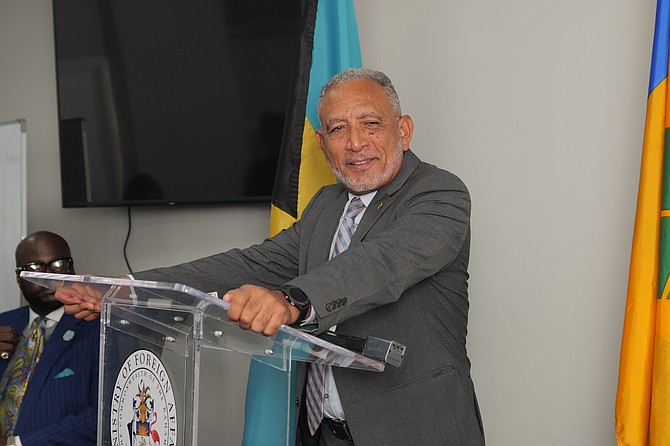
    During a diplomatic stop at The Bahamas’ Ministry of Foreign Affairs this Thursday, St Vincent and the Grenadines Prime Minister Dr. Godwin Friday delivered a pressing call for unified global action on transboundary challenges, emphasizing that geographically small island developing states cannot turn a blind eye to risks that originate far beyond their territorial boundaries. The visit came amid Dr. Friday’s attendance at regional discussions hosted by the Caribbean Development Bank in the country, putting critical regional priorities on the international agenda.

    Addressing assembled foreign affairs officials, Dr. Friday centered his remarks on two interconnected pillars: the growing urgency of deepened international collaboration and accelerated climate action. In an era of unprecedented global interconnectedness, he argued, every nation—no matter its population size or total land area—has a stake in developments unfolding across the world. For small open economies like his own, this reality is not an abstract political talking point, but a daily lived experience.

    “Our status as small, open, disproportionately vulnerable economies is exactly why we must raise our voices louder than most,” Dr. Friday stated. He pointed to the stark injustice of climate change’s impacts on Caribbean island states: while the region contributes a negligible share of global carbon emissions, it bears the brunt of climate-fueled extreme weather, with communities forced to allocate scarce resources to annual hurricane preparedness that could otherwise fund social and economic development.

    For years, Caribbean regional leaders have advocated for the creation of structured rapid-response frameworks within the global multilateral system. These mechanisms would allow climate-vulnerable states to access critical emergency aid and recovery resources immediately in the aftermath of climate-linked disasters, cutting through bureaucratic delays that often exacerbate damage and human suffering. Dr. Friday acknowledged that the push for these frameworks has faced significant headwinds over decades of international negotiations, but he struck a cautious note of progress, reporting that the campaign has steadily won growing backing from the broader international community.

    Beyond policy discussions, the visit also carried personal and professional significance for the prime minister. Reflecting on his long-standing ties to The Bahamas, Dr. Friday recalled his first trip to the country in the early 1980s, when he traveled as a senior undergraduate student to conduct on-the-ground field research for his final degree project. Ministry officials also highlighted that his graduate academic work centered on Bahamian external policy: his master’s thesis focused specifically on analyzing the foreign affairs priorities and strategies of the Bahamian government.

  • Fishermen face threat of 12.5% trump tariff

    Fishermen face threat of 12.5% trump tariff

    A new 12.5% tariff threat from the Trump administration targeting Bahamian exports to the U.S. is sending ripples of concern through the Caribbean nation’s key industries, with its $90 million annual fisheries exports facing the most immediate competitive danger. The penalties were announced after the Office of the U.S. Trade Representative (USTR) determined The Bahamas lacks both enacted legislation and active enforcement measures to block forced labor-made goods from entering its borders, placing the country among 54 global jurisdictions facing new trade restrictions.

    Adrian LaRoda, president of The Bahamas Commercial Fishers Alliance (BCFA), sounded the alarm on the proposed tariffs in an interview with Tribune Business, warning that the new levy would push the nation’s spiny lobster exports – one of its most valuable fisheries products – into a critical competitive disadvantage against U.S. domestic supplies. LaRoda noted that Bahamian spiny lobster already sells for 70% more than Maine lobster in U.S. retail locations, and the 12.5% tariff would effectively push the total cost increase to 15%, eroding what thin profit margins the sector already holds. “We are already breaking even and in survival mode, caught between shifting U.S. market trends and constant uncertainty over Washington’s trade policies,” LaRoda explained, adding that the new threat would only squeeze the industry further.

    The USTR’s June 2, 2026, final investigation finding, released after months of written consultations and public hearings, concluded that The Bahamas’ failure to implement and enforce a forced labor import ban is “unreasonable” and “burdens or restricts U.S. commerce.” The penalty structure varies by jurisdiction: nations that have already enacted forced labor import bans or made formal commitments to do so face a lower 10% tariff, while countries like The Bahamas that have neither existing laws nor active enforcement face the full 12.5% rate. Major developed economies including Canada, Australia, the United Kingdom, the European Union, Israel, New Zealand, Saudi Arabia, the United Arab Emirates and Singapore are also among the jurisdictions targeted for tariffs.

    Bahamian officials and industry leaders have roughly one month to take action to avert the tariffs, with the USTR scheduled to open a final round of consultations starting July 7, 2026, following a July 6 deadline for written submissions. Based on 2024 trade data submitted to USTR during the first consultation round by former Bahamian Attorney General Ryan Pinder KC, up to $985 million in annual Bahamian exports to the U.S. could be subject to the 12.5% tariff. The largest affected category is refined petroleum, valued at $610 million annually, with other impacted sectors including documents of title ($95.2 million), styrene polymers ($55.7 million) and pearl products ($39 million).

    The USTR has signaled that some exports may qualify for exemption on the grounds of U.S. economic and national security, as well as critical supply chain needs. Refined petroleum from The Bahamas is widely seen as a likely exemption candidate: Buckeye Bahamas’ Grand Bahama refining facility currently supplies up to 40% of California’s gasoline demand after the state lost significant domestic refining capacity in recent years.

    The Davis administration has moved swiftly to address the USTR’s concerns, tabling amendments to the nation’s Customs Management Act alongside the 2026-2027 national budget just last week. The Customs Management (Amendment) Bill 2026 adds a new Section 208A that grants the government power to ban imports of any goods produced wholly or partially by forced labor, with the explicit goal of blocking forced and child labor-made goods from entering Bahamian markets. During public hearings before the USTR, Danya Wallace, director of legal affairs at the Bahamian Attorney General’s Office, conceded that no existing Bahamian law directly addresses forced labor imports, but the new legislation would close that regulatory gap.

    It remains unclear whether the last-minute legislative change will be enough to satisfy the Trump administration, as the USTR’s findings emphasize that it requires both enacted legislation and proof of active enforcement to avoid tariffs. For The Bahamas’ fishing industry, the uncertainty alone is already causing damage, LaRoda said. Currently, The Bahamas exports 12 million pounds of spiny lobster annually, worth approximately $90 million, with 4 million pounds (valued between $30 million and $60 million) destined for the U.S. market. While a slowdown in U.S. exports would not immediately cause catastrophic job losses on its own – much of the industry’s employment is seasonal – LaRoda warned of potential knock-on impacts if domestic markets cannot absorb the excess supply, leading processors and wholesalers to cut purchases and reduce staffing.

    To insulate the industry from long-term trade volatility, LaRoda urged the Bahamian government to prioritize diversifying fisheries export markets, noting that the nation already benefits from existing spiny lobster sales in Europe, particularly France, but must expand further into markets like Canada to reduce reliance on the U.S. “Where does it end? We’ve already seen other Caribbean neighbors face tariffs as high as 45%, which would devastate our economy,” he said, calling for immediate trade and foreign policy intervention to protect the industry. “We depend on this export for critical economic injection. We’re already at breaking point on pricing, and we don’t know how much more of this we can take.”

    U.S. Trade Representative Jamieson Greer defended the investigation and upcoming tariffs, arguing that failure by major U.S. trading partners to block forced labor goods creates an unlevel playing field that harms American workers. “Some trading partners have taken initial steps to prevent the importation of forced labor goods… However, each of our trading partners must do more to ensure that trade does not perversely encourage and entrench forced labour globally,” Greer said in a statement following the release of the findings.

    Independent media analysts have noted the investigation carries wider geopolitical overtones, suggesting it is partially a targeted effort to limit the flow of Chinese goods through major U.S. trading partners like The Bahamas. The U.S. has long accused China of using forced labor for manufacturing, particularly against ethnic minority Uyghurs in the Xinjiang Uyghur Autonomous Region. Commentators also added that the probe could be a backdoor means for the Trump administration to reimpose its controversial 2025 “Liberation Day” tariffs, which were previously ruled unlawful by both the U.S. Supreme Court and U.S. Trade Court and are currently under appeal.

  • NIB director insists pension fund is ‘actually not in crisis’

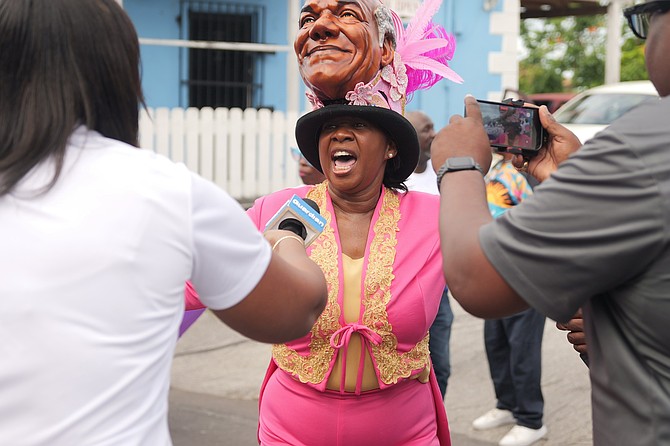
    NIB director insists pension fund is ‘actually not in crisis’

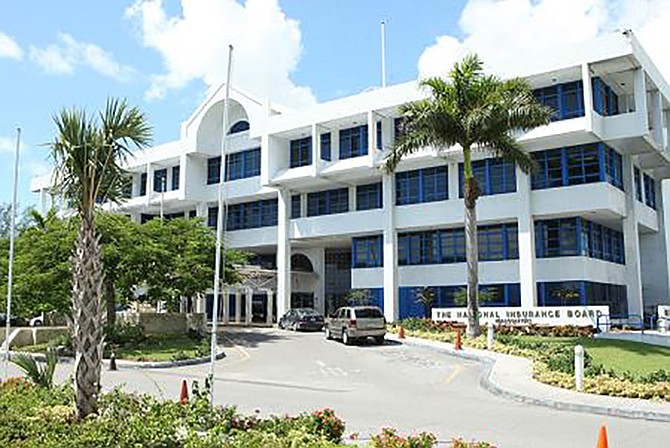
    The Bahamas’ National Insurance Board (NIB) is pushing back against claims of an impending pension fund collapse, even as senior officials acknowledge steep long-term challenges driven by shifting national demographics. At a recent press conference, NIB Director Dr. Tami Francis stressed that the country’s public pension system is far from a state of crisis, pushing back on prior government warnings and actuarial analyses that have flagged growing unsustainability driven by a shrinking working-age population, rapidly rising retiree numbers, and years of below-replacement fertility rates.

    Demographic pressure has been building on the Bahamas’ social security system for decades. When NIB was first established in 1974, the ratio of working contributors to pensioners stood at roughly seven workers for every retiree. Today, that number has fallen to just three workers per retiree – a figure that former Social Services Minister Myles Laroda warned in 2025 puts unsustainable strain on the system, with a healthy benchmark holding at around six contributors per beneficiary. Laroda added that the Bahamas’ national fertility rate currently sits at 1.7 children per woman, well below the 2.1 replacement rate needed to sustain a stable population, and that the number of pensioners has tripled since the 1980s while the contributing workforce has failed to keep pace. Actuarial projections have repeatedly warned that without systemic reform, the fund’s reserves could face critical depletion in the coming years.

    Against this backdrop, Dr. Francis highlighted early progress from one key reform already implemented: a 1.5 percentage point increase in the mandatory contribution rate rolled out in July 2024, which lifted the rate from 9.8% to 10.3%. The adjustment has already generated an extra $4 million in monthly revenue for the fund, Dr. Francis reported, enough to improve short- and medium-term financial stability and put the fund’s performance ahead of earlier projections. “While we may still have a slight difference in our contribution income versus our benefit expenditure, what we would have expected or predicted, we are doing a lot better than expected,” she said.

    However, Dr. Francis emphasized that the contribution hike alone is not enough to secure the fund’s long-term future. “That does not mean we are to rest on our laurels, but an increase of this nature would not be something that will ultimately save the fund,” she noted. Instead, NIB is pursuing a holistic strategy that combines the revenue adjustment with a slate of additional reforms aligned with recommendations from multiple consecutive actuarial reviews.

    Key among these are administrative and operational overhauls designed to cut costs and boost compliance. NIB has rolled out new digital tools, including the Employer Self Service portal and C10 Mobile App, that allow employers and self-employed workers to complete contributions electronically without in-person office visits, streamlining processes and reducing barriers to consistent payment. To crack down on delinquent employers, the agency has expanded its on-the-ground inspection team by 22 additional officers, and uses a balanced “carrot and stick” approach that includes interest waiver programs (with expanded incentives for hard-hit regions like Grand Bahama and Abaco) to encourage settlement of outstanding debts, paired with formal enforcement action for non-compliant parties.

    These efficiency efforts have already yielded results: administrative costs as a share of spending have fallen from 21% in 2018 to roughly 15% today, though Dr. Francis acknowledged the agency still has work to do to reach the international social security benchmark of 10%.

    Dr. Francis stressed that demographic pressure on public pension systems is a global challenge, not one unique to the Bahamas, as declining birth rates, rising life expectancy, and shifting workforce patterns reshape social security systems across the world. To meet this challenge, NIB must continue evolving rather than remaining static, she said, with the ultimate goal of extending the fund’s solvency to 60 years or more to ensure it can support both current retirees and future generations of beneficiaries. “We are having less children, and we have that ageing population, so we have to come up with innovative ways to ensure that the fund is increased over the long term,” she said. “There are several things that we may do to increase it over the short and medium term, but we want that stretch, we want that 60-year, we want that 78-year, that’s our ultimate goal.” Reports indicate additional contribution rate increases remain under consideration as part of ongoing reform efforts.

  • Rollins warns of ‘dangerous’ loophole in residency bill

    Rollins warns of ‘dangerous’ loophole in residency bill

    A controversial push by the Davis administration of the Bahamas to enact a sweeping change to the country’s immigration rules has sparked sharp criticism from the opposition, with a senior lawmaker warning that the proposed amendment could open the door to widespread misuse of the nation’s citizenship system.

    Dr. Andre Rollins, Long Island Member of Parliament and the Free National Movement’s shadow minister for foreign affairs and immigration, has accused the governing party of attempting to rush the 2026 Bahamas Nationality (Amendment) Bill through parliament by attaching it to the upcoming budget debate — a process he frames as an underhanded attempt to avoid rigorous public and legislative scrutiny of the policy change.

    The proposed amendment would add a new provision, Section 7A, to the existing Bahamas Nationality Act. Under this new clause, if the immigration minister rejects an applicant’s request for citizenship, the minister retains the discretionary authority to grant the applicant permanent residency in exchange for a one-time $500 fee. The terms and conditions of that permanent residency status would be set entirely at the minister’s discretion. Currently, Section 7 of the act outlines the eligibility criteria for citizenship for groups not granted automatic citizenship at birth, including women married to Bahamian citizens, people born in the Bahamas to non-Bahamian parents, and people born abroad to Bahamian women who are married to non-Bahamian men.

    Immigration and citizenship policy is one of the most politically charged and long-running contentious issues in Bahamian public life. Two separate national referendums, held in 2002 and 2016, both failed to pass reforms that would have granted equal citizenship rights to Bahamian women married to non-Bahamian men. Under current law, children born outside the Bahamas to these couples do not receive automatic citizenship at birth, and only have a narrow window between ages 18 and 21 to apply for citizenship. Similarly, people born in the Bahamas to non-Bahamian parents are not granted automatic citizenship at birth, and only have 12 months after their 18th birthday to submit an application — a restriction that has long drawn international criticism over the elevated risk of statelessness for this group.

    Current law already lays out clear grounds for the immigration minister to reject citizenship applications, including prior criminal convictions resulting in a sentence of more than one year or the death penalty, failing a character assessment, engaging in activity that threatens public safety or order, bankruptcy, inability to financially support oneself that would make the applicant a public charge, or determinations that granting citizenship would harm the public good. If the amendment passes, however, even applicants rejected on these grounds could still be granted permanent residency at the minister’s discretion for just $500, a fee lower than the cost of an annual work permit in the country.

    Rollins argues that this vague grant of discretionary power creates a critical gap in the law that bad actors could exploit for improper gain. In a formal statement, he urged the government to abandon its plan to attach the amendment to the budget debate, noting that Opposition Leader Michael Pintard has already called on the administration to convene a bipartisan select committee to examine the country’s entire immigration framework through a transparent, public process.

    “Despite this recommendation, the government is attempting to use the upcoming budget debate exercise as an opportunity to introduce by stealth a significant amendment to our nation’s immigration laws, which potentially will create a dangerous loophole for future exploitation,” Rollins said. The Free National Movement remains firm that all changes to citizenship and permanent residency policy deserve full, open review by a select committee rather than being rushed through as part of budget proceedings, he added.

  • Bowe warns of banking barriers for cannabis sector

    Bowe warns of banking barriers for cannabis sector

    As The Bahamas prepares to launch its long-awaited medicinal cannabis sector in the coming weeks, the country’s top banking industry leader has sounded a urgent alarm: existing international banking rules, particularly those enforced by major U.S. financial institutions, will leave the newly legal industry largely locked out of mainstream Bahamian banking services.

    Gowon Bowe, chairman of the Clearing Banks Association, laid out the structural challenges in comments to local media, explaining that the root of the problem lies in Washington’s persistent federal classification of cannabis as an illegal controlled substance. Despite individual U.S. states legalizing both medicinal and recreational cannabis, federal law still bars financial institutions from processing any transactions tied to the marijuana industry. This ban extends to correspondent banking relationships, which form the backbone of The Bahamas’ international financial system.

    Most global transactions for Bahamian banks are cleared through top-tier U.S. correspondent banks, including household names like Citibank, JPMorgan Chase, Bank of America, and Wells Fargo. Bowe confirmed that all of these major institutions explicitly prohibit any business with financial entities that work with cannabis-related companies. Even though The Bahamas has passed domestic legislation legalizing medicinal cannabis and is set to open licensing for operators imminently, that domestic legal status does not override the dependence of Bahamian commercial banking on the U.S. financial infrastructure.

    Bowe noted that The Bahamas’ unique currency dynamic makes this problem far more intractable than in other countries that have legalized cannabis, such as Canada. Canada’s national currency is freely traded on global markets, allowing cannabis businesses to operate largely outside of U.S. dollar transaction flows. The same cannot be said for The Bahamas: the Bahamian dollar has no international trading market, and every import, export, and major commercial transaction conducted in the country is settled in U.S. dollars.

    “The reality is there’s no commercial bank that can feasibly ring fence this activity to say that these particular persons or these particular businesses will have absolutely no activity that would involve correspondent banks,” Bowe explained. Without the ability to fully separate cannabis transactions from all interaction with U.S. correspondent banks, serving the new industry would put Bahamian banks’ entire international operating licenses at risk.

    This challenge is not theoretical, Bowe added, pointing to the experiences of other legal cannabis markets in the Caribbean. Jamaica reformed its laws to legalize cannabis years ago, but the industry remains almost entirely cash-based today due to the same international banking restrictions. Operating on an all-cash basis leaves businesses vulnerable to theft, fraud, and other criminal activity, a risk Bowe said The Bahamas cannot ignore as it builds out its new sector.

    The timing of Bowe’s warning is significant: the Bahamas Cannabis Authority recently signed an agreement with U.S.-based cannabis tracking firm Metrc, and is on track to launch its official licensing platform, public website, and application process by the end of June, with the first commercial operations expected to launch within weeks.

    Bowe outlined potential alternative banking avenues, including European financial institutions and non-traditional providers like credit unions or postal banking services. But even these options carry major risks, he cautioned, as most alternative providers still maintain critical correspondent relationships with U.S. banks, and could lose those relationships if they are found to be handling cannabis funds.

    Most notably, Bowe criticized a lack of substantive progress between the government and the banking sector on addressing the gap between the new legal cannabis framework and the practical commercial realities of global banking. While informal conversations have occurred, no formal collaborative negotiations or policy planning have taken place. He called out the government’s approach as a modern-day “ostrich with its head in the sand,” noting that just because domestic law permits cannabis activity does not mean banks can legally or practically serve the industry under existing international rules.

    Bowe urged policymakers to set aside finger-pointing and work collaboratively with the banking sector to address the hurdle. He warned that resolving the issue will require significant diplomatic effort and geopolitical negotiation, and that a feasible solution for banking cannabis businesses in the near term is far from guaranteed.

  • Union rejects govt pension reforms

    Union rejects govt pension reforms

    A major public sector labor organization in The Bahamas is pushing back against a central component of the national government’s long-awaited pension reform initiative, arguing that long-tenured public workers should not be forced to abandon the retirement benefits they were promised when they were hired.

    The Bahamas Public Services Union (BPSU), which represents thousands of public sector employees, confirms it supports broad pension modernization in principle, but is drawing a line at a proposal that would automatically shift all public servants with fewer than eight years of service into a new contributory pension system. BPSU President Kimsley Ferguson outlined the union’s objection during an interview with Guardian Radio’s Morning Blend on Wednesday, emphasizing that the measure unfairly penalizes workers who joined the public service under the explicit expectation of receiving a government-funded, non-contributory pension.

    “When these workers were first hired, they were told they held permanent, pensionable positions with the government covering their retirement benefits,” Ferguson explained. “It is wrong to change those core terms of employment years into their careers. If we are going to implement this new system, it should apply to new hires moving forward — you do not strip an entitlement from someone who has already put seven years of service into the public sector.”

    The union’s objection comes as the Bahamas government moves forward with the reform package, which was designed to address a looming public pension crisis. Unfunded public sector pension liabilities currently stand at an estimated $3 billion, and government projections show that figure will surge to $4.1 billion by 2032 if no changes are made.

    The reform plan, outlined in a White Paper tabled alongside the 2026-2027 national budget, would replace the decades-old taxpayer-funded defined benefit pension system with a new Contributory Public Sector Pension Plan. Under the new framework, participating employees would be required to contribute a minimum of 3 percent of their pensionable salary to the fund, while the government would contribute 5 percent as the employer. All workers who have not yet fully vested in the current system — those with less than eight years of service — would be automatically enrolled in the new fund, along with all future new public sector hires. Existing longer-tenured workers would also have the option to voluntarily opt into the new system.

    Despite opposing the forced enrollment of current less-tenured workers, Ferguson stressed that the BPSU does not oppose the broader shift to a contributory model. In fact, he noted that the structure offers tangible benefits for both public finances and workers themselves. “A contributory pension plan is actually something we can get behind,” he said. “It eases pressure on the public purse, and it also gives workers more control over how much they can save for retirement, letting them build a larger pension if they choose.”

    Ferguson also raised additional questions about the policy development process, arguing that adequate consultation with union stakeholders did not take place before the White Paper was introduced to Parliament.

    For its part, the government has defended the reform as a fiscally necessary step to avoid long-term budget collapse. Government projections included in the White Paper show that annual public pension payout costs will climb from $154.4 million in the current fiscal year to $166.75 million by the 2028-2029 fiscal year. “The continued growth of pension liabilities and annual cash outflows is fiscally unsustainable,” the policy document states. The government has not yet issued a formal response to the BPSU’s specific objection to the eight-year enrollment rule.

  • Bahari receives backlash for using AI in campaign

    Bahari receives backlash for using AI in campaign

    A growing national debate over artificial intelligence’s role in creative industries has landed Bahari, a well-known Bahamian-owned apparel brand, at the center of public scrutiny after its decision to use AI-generated models for a new collection sparked fierce pushback from segments of its customer base. The controversy, which broke out across social media in late May, has forced brand leadership to defend its longstanding commitment to local talent while making the case that AI has become an unavoidable tool for modern fashion brands navigating a shifting digital landscape.

    The conflict began on May 31, when Bahari shared a series of promotional graphics to its official Facebook page to launch its highly anticipated Coral World collection. Unlike the brand’s nearly 11-year tradition of featuring local people in its campaign imagery, this rollout relied entirely on AI-created models rather than working with Bahamian talent. The choice immediately drew sharp criticism from social media users, who argued that a brand built on showcasing authentic Bahamian culture had a responsibility to elevate local models, particularly given the career-changing exposure such brand partnerships can provide to emerging creators.

    One commenter wrote, “It’s embarrassing for a well-respected local brand to turn to AI for this work. There are dozens of talented Bahamian models who would have jumped at this opportunity and done incredible work with the collection.” Other critics framed their pushback as a defense of the brand’s own core value, rather than an attempt to interfere with its internal business decisions. “No one is telling them how to run their company,” one user noted. “But luxury and cultural brands live or die based on their prestige and the trust consumers have in their authenticity. Pointing out that this choice undermines that authenticity isn’t dictation—it’s critical consumer feedback.”

    Not all reactions to the campaign were negative, however. A number of social media users came to Bahari’s defense, arguing that marketing and branding are evolving rapidly around the world, and that the same level of criticism is rarely leveled at large international brands that regularly use AI for their promotional content. They questioned why a small local brand should be held to a different standard than the global corporations that dominate the fashion industry.

    Carole Barnett, general manager of Bahari, pushed back firmly against claims that the brand has abandoned its commitment to local models. She emphasized that since the company launched its inaugural Independence Collection back in 2014, nearly every campaign has featured local Bahamian faces, and that core policy has not changed. “For the past 11 years, we have centered Bahamian models in all our shoots. Nothing about that has shifted,” Barnett explained. “We believe deeply in the talent of Bahamian creators, and that’s why we’ve prioritized them for every project for over a decade.”

    Barnett went on to explain the specific creative reasoning behind using AI for the Coral World collection, noting that the choice was directly tied to the collection’s nostalgic theme. Named for the iconic Bahamian marine park and resort that first opened on Silver Cay back in 1987, the collection pays homage to a beloved local landmark that is no longer operational. At its peak, Coral World drew tourists from across the globe, offering visitors the chance to observe native marine life from a one-of-a-kind underwater observatory without getting in the water, alongside a range of nature exhibits and resort amenities. After the park closed, only the iconic observation tower remained standing as a landmark.

    Because the attraction itself is no longer active, Barnett said the brand determined AI was the most effective tool to capture the nostalgic, otherworldly feel of the vintage Coral World experience for the campaign photoshoot. The collection itself, which is currently available for purchase through Bahari’s official website, includes a range of apparel from shirts and dresses to pants, all printed with vivid, nostalgic imagery inspired by the former landmark.

    The backlash has broader implications beyond Bahari’s latest launch, putting a spotlight on a growing global conversation about AI’s impact on fashion marketing. Critics across the industry warn that increased reliance on AI-generated models risks eroding opportunities for working creators, while stripping culturally rooted brands of the authentic connection to local identity that consumers value most. For Bahari specifically, that connection has always been central to the brand’s identity: the company has built its reputation on powerful campaigns featuring Bahamian leaders and creators who have contributed to the country’s development, and it has long served as a launching pad for aspiring local models looking to break into the industry.

    Barnett reiterated that Bahari has never stopped prioritizing local hiring across all areas of its business, from design to marketing to campaign production. She questioned why Bahari is facing such intense criticism when many international fashion houses and even other local Bahamian businesses regularly use AI in their work. At its core, she said, Bahari remains a brand rooted in Bahamian culture, and its choice to experiment with AI is simply part of evolving the business to compete on a global stage.

    “We are a Bahamian company trying to grow and evolve,” Barnett said. “Our goal is to showcase the Bahamian island lifestyle to a global audience and put The Bahamas on the map internationally. At the end of the day, you’re never going to be able to please every single customer.”

  • FOIA Commissioners term ends amid budget worries

    FOIA Commissioners term ends amid budget worries

    The landmark push for greater government transparency in the Bahamas has hit a fresh roadblock, following the expiration of the leadership terms of the nation’s first Freedom of Information (FOI) commissioner and deputy commissioner last month. Retired Supreme Court Justice Keith Thompson, who made history as the inaugural holder of the commissioner role, saw his appointment officially conclude in May, alongside deputy commissioner Shane Miller whose contract ended the same month, local newspaper The Tribune has confirmed.

    First appointed to launch the FOI framework back in May 2021 under the former Minnis administration, the two leaders spent three years grappling with systemic barriers that slowed their work from the start. Chronic underfunding and a persistent lack of operational resources have plagued the office since its inception, forcing repeated missed deadlines and preventing meaningful progress on rolling out the transparency law. Year after year, the office’s total budget allocation has held steady at just $140,000 – a figure that office leaders have long warned falls drastically short of the $1 million estimated to fully implement the national freedom of information legislation. As recently as this year, Thompson emphasized in comments to The Tribune that the current budget was far too small to allow the office to deliver on its core mandate.

    In comments to The Tribune this week, Attorney General Wayne Munroe confirmed that an assistant FOIA commissioner remains on staff and will deliver an official briefing on ongoing efforts to fully operationalize the independent office. However, Munroe offered no clear timeline for when the top two leadership posts will be filled, leaving uncertainty hanging over the body’s day-to-day work and long-term direction.

    Good governance advocates have raised sharp concerns about the leadership vacuum and continued lack of resourcing, at a time when the current administration has repeated promises to prioritize transparency and accountability reform. Matt Aubry, executive director of the Organisation for Responsible Governance (ORG), noted that filling both the commissioner and deputy commissioner posts is non-negotiable to advancing the office’s statutory work, and the lack of clarity around replacements has fueled serious questions about the government’s commitment to the reform.

    Aubry pointed out that the FOI legislation explicitly requires the office to be led by an independent commissioner appointed under specific statutory criteria, who can only be removed under limited circumstances. The sudden leadership vacancy, he said, leaves multiple critical questions unanswered: What priorities will the government set for the office moving forward? When will new appointments be confirmed? Does the current $140,000 annual allocation even cover the salary of a new commissioner, let alone operational costs for the entire unit?

    “That’s not a lot of money to achieve what is a very significant policy objective, so I think it would be important to understand and have better clarity across the board,” Aubry said.

    The push for fully implemented freedom of information legislation has been a years-long process marked by repeated unfulfilled promises from successive Bahamian administrations. Anti-corruption and good governance advocates have long warned that prolonged delays in enacting this reform amount to a deliberate choice to avoid public oversight of government activity. Ahead of the 2021 general election, the Progressive Liberal Party (PLP) included a pledge to fully enact FOI reform in its official Blueprint for Change campaign platform, but the party failed to deliver on that promise during its first term in office. Now, in its second administration, the PLP has once again promised to fully implement the freedom of information law.

    Aubry is calling on the current government to follow through on its repeated pledges, noting that clear timelines, adequate funding, and transparent planning are essential to building public trust in government reform efforts. “If you’re going to make a promise, it’s really important that we want to establish public trust and understanding how that will come to fruition, what the timeline is, what the clear budget is,” he said. “But if you see in our budget book that the next two years are allocated as $140,000, unless the money is somewhere else that’s not specified, it doesn’t look as feasible for what needs to happen to bring the act into full force.”