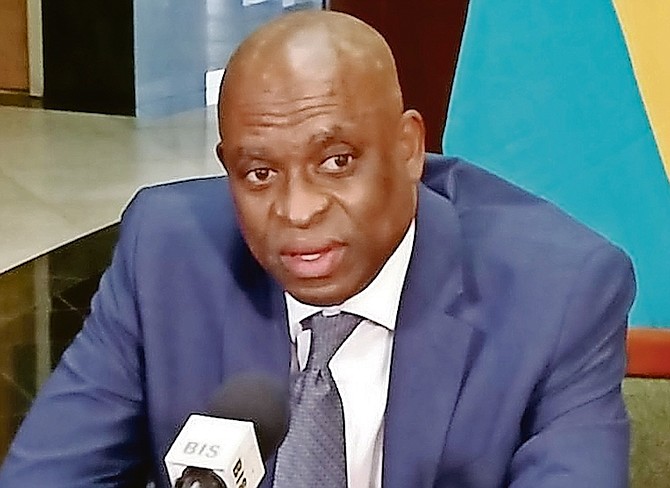
The landmark push for greater government transparency in the Bahamas has hit a fresh roadblock, following the expiration of the leadership terms of the nation’s first Freedom of Information (FOI) commissioner and deputy commissioner last month. Retired Supreme Court Justice Keith Thompson, who made history as the inaugural holder of the commissioner role, saw his appointment officially conclude in May, alongside deputy commissioner Shane Miller whose contract ended the same month, local newspaper The Tribune has confirmed.
First appointed to launch the FOI framework back in May 2021 under the former Minnis administration, the two leaders spent three years grappling with systemic barriers that slowed their work from the start. Chronic underfunding and a persistent lack of operational resources have plagued the office since its inception, forcing repeated missed deadlines and preventing meaningful progress on rolling out the transparency law. Year after year, the office’s total budget allocation has held steady at just $140,000 – a figure that office leaders have long warned falls drastically short of the $1 million estimated to fully implement the national freedom of information legislation. As recently as this year, Thompson emphasized in comments to The Tribune that the current budget was far too small to allow the office to deliver on its core mandate.
In comments to The Tribune this week, Attorney General Wayne Munroe confirmed that an assistant FOIA commissioner remains on staff and will deliver an official briefing on ongoing efforts to fully operationalize the independent office. However, Munroe offered no clear timeline for when the top two leadership posts will be filled, leaving uncertainty hanging over the body’s day-to-day work and long-term direction.
Good governance advocates have raised sharp concerns about the leadership vacuum and continued lack of resourcing, at a time when the current administration has repeated promises to prioritize transparency and accountability reform. Matt Aubry, executive director of the Organisation for Responsible Governance (ORG), noted that filling both the commissioner and deputy commissioner posts is non-negotiable to advancing the office’s statutory work, and the lack of clarity around replacements has fueled serious questions about the government’s commitment to the reform.
Aubry pointed out that the FOI legislation explicitly requires the office to be led by an independent commissioner appointed under specific statutory criteria, who can only be removed under limited circumstances. The sudden leadership vacancy, he said, leaves multiple critical questions unanswered: What priorities will the government set for the office moving forward? When will new appointments be confirmed? Does the current $140,000 annual allocation even cover the salary of a new commissioner, let alone operational costs for the entire unit?
“That’s not a lot of money to achieve what is a very significant policy objective, so I think it would be important to understand and have better clarity across the board,” Aubry said.
The push for fully implemented freedom of information legislation has been a years-long process marked by repeated unfulfilled promises from successive Bahamian administrations. Anti-corruption and good governance advocates have long warned that prolonged delays in enacting this reform amount to a deliberate choice to avoid public oversight of government activity. Ahead of the 2021 general election, the Progressive Liberal Party (PLP) included a pledge to fully enact FOI reform in its official Blueprint for Change campaign platform, but the party failed to deliver on that promise during its first term in office. Now, in its second administration, the PLP has once again promised to fully implement the freedom of information law.
Aubry is calling on the current government to follow through on its repeated pledges, noting that clear timelines, adequate funding, and transparent planning are essential to building public trust in government reform efforts. “If you’re going to make a promise, it’s really important that we want to establish public trust and understanding how that will come to fruition, what the timeline is, what the clear budget is,” he said. “But if you see in our budget book that the next two years are allocated as $140,000, unless the money is somewhere else that’s not specified, it doesn’t look as feasible for what needs to happen to bring the act into full force.”