标签: Antigua and Barbuda

安提瓜和巴布达

  • Urgent Appeal Issued for Blood Donations to Help Leadi Fabian Hunt

    Urgent Appeal Issued for Blood Donations to Help Leadi Fabian Hunt

    Health authorities and family members have issued a pressing public call for urgent blood donations to support Leadi Fabian Hunt, a patient widely known by the nickname “Gravel Stone,” who is currently receiving care at the Sir Lester Bird Medical Centre and requires ongoing life-saving transfusions.

    While the appeal specifically prioritizes donors with B-positive (B+) blood, it also notes that O-negative (O-) donors, whose blood type is universally compatible for most emergency transfusions, are strongly encouraged to donate. Importantly, organizers stress that people with any blood type are welcome to contribute, as every new donation helps replenish the hospital’s strained overall blood inventory, which supports Hunt and other patients in need of transfusions across the facility.

    Members of the public who wish to donate are instructed to travel to the Sir Lester Bird Medical Centre at their earliest convenience, and inform hospital staff that their donation is earmarked specifically for Hunt. For anyone seeking additional details about donation eligibility, hours of operation, or the patient’s status, a dedicated contact line has been set up at 723-6869.

    The appeal emphasizes that time is critical in this case, noting that every passing minute increases the urgency of meeting Hunt’s transfusion needs. Organizers also remind the public that a single, voluntary blood donation carries the power to save an entire life, making even one individual’s contribution meaningful to this emergency effort.

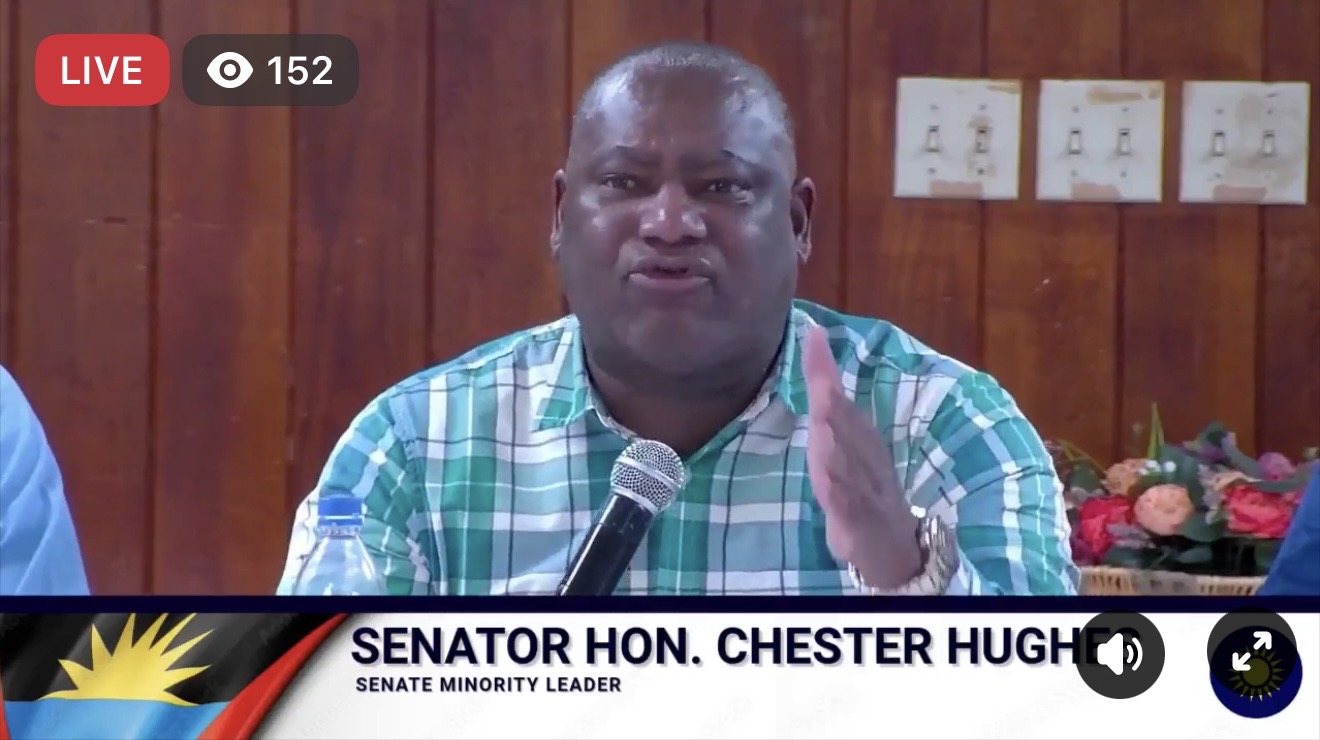
  • Hughes Claims US Dictated Deportee Arrangement, Says Antigua Did Not Negotiate

    Hughes Claims US Dictated Deportee Arrangement, Says Antigua Did Not Negotiate

    A heated political debate has erupted in Antigua and Barbuda over a proposed third-country deportee agreement with the United States, after opposition Senator Chester Hughes launched a scathing attack on the incumbent Gaston Browne administration, accusing leaders of accepting Washington’s terms outright rather than engaging in genuine bilateral negotiations.

    Hughes laid out his criticisms during a United Progressive Party (UPP) town hall gathering focused on the government’s recently released White Paper detailing the agreement, pushing back hard against the ruling party’s framing of the process as a collaborative negotiation between the two nations.

    According to Hughes, the Gaston Browne cabinet finalized a Memorandum of Understanding (MOU) with U.S. authorities months ago but has yet to provide any transparent, detailed explanation of the deal’s terms to Antigua and Barbuda citizens. The senator claimed that the agreement was not negotiated at all, but rather dictated to the local government by U.S. officials. “America did not negotiate with any of these governments. America told them, ‘You’re going to take these persons.’ And that’s it,” Hughes stated during the meeting.

    A core point of Hughes’ criticism centers on the Prime Minister’s shifting public statements about the scope of the agreement, specifically the number of deportees that Antigua and Barbuda will be required to accept. Hughes said the Prime Minister has offered conflicting figures: first claiming the country would take no more than 10 people, then revising that number to 16 in recent remarks, before suggesting the country would accept whatever number of people arrives on any single deportation flight from the U.S. Hughes called these inconsistent claims “fanciful wordplay” meant to confuse the public.

    The senator also highlighted a series of critical unanswered questions about the practical implementation of the deal, most notably where newly arrived deportees will be housed and how they will be integrated or managed once in the country. He questioned whether the government plans to place deportees in existing residential communities, underutilized state-owned housing, or another location entirely, noting that no official guidance has been shared with the public to date.

    Another key grievance raised by Hughes is the administration’s decision to sign the MOU before launching any public consultation process. He emphasized that the White Paper outlining the agreement was only published after the deal was already finalized, meaning citizens had no opportunity to weigh in on a policy that will have significant social and economic impacts on the country.

    Beyond domestic criticism of the Browne administration, Hughes also lashed out at Caribbean leaders more broadly, arguing that regional governments should have negotiated a unified collective position with the United States on the deportee issue, rather than negotiating separate deals individually. He echoed the Prime Minister’s own acknowledgement that regional collective action would have been preferable, but argued that the current crop of regional leaders are too arrogant and self-interested to prioritize the needs of their populations over political expediency.

    Looking ahead, Hughes called on members of Antigua and Barbuda’s Parliament to use the upcoming debate on the government’s White Paper to hold the Browne administration accountable for its handling of the agreement. He urged lawmakers to demand clear, direct answers to outstanding questions on behalf of the Antiguan and Barbudan public, challenging the executive’s opaque approach to the controversial deal.

  • Antigua and Barbuda Officials Take Key Roles at ECVA U20 Beach Volleyball Championship

    Antigua and Barbuda Officials Take Key Roles at ECVA U20 Beach Volleyball Championship

    The 2026 Eastern Caribbean Volleyball Association Under-20 Beach Volleyball Championship has gained significant local expertise from Antigua and Barbuda, with three of the country’s top volleyball officials stepping into critical technical positions for the regional tournament.

    The Antigua and Barbuda Volleyball Association, the governing body for the sport in the twin-island nation, confirmed the appointments this week. Orson James has taken up the post of ECVA VIS Supervisor, responsible for overseeing the tournament’s official information system that tracks results, player statistics and competition logistics. Tori-Ann Browne will lead the championship’s scoring operations as ECVA Head Scorer, while Michael Hamilton joins the event’s officiating team as a certified Continental Referee.

    ABAVA officials emphasized that these appointments mark a new milestone for Antigua and Barbuda’s engagement in regional volleyball, going far beyond the traditional role of fielding competing athletes. The selected officials will play an integral part in every stage of the tournament, working alongside regional counterparts to ensure smooth, fair and successful delivery of the championship.

    The national volleyball association has formally extended its congratulations to the three appointed officials, expressing confidence in their ability to carry out their duties effectively while representing their country on the regional stage. ABAVA added that the selection of three Antiguan and Barbudan officials for these key positions underscores the high level of professional skill and specialized expertise that the nation continues to bring to the development of volleyball across the Eastern Caribbean region.

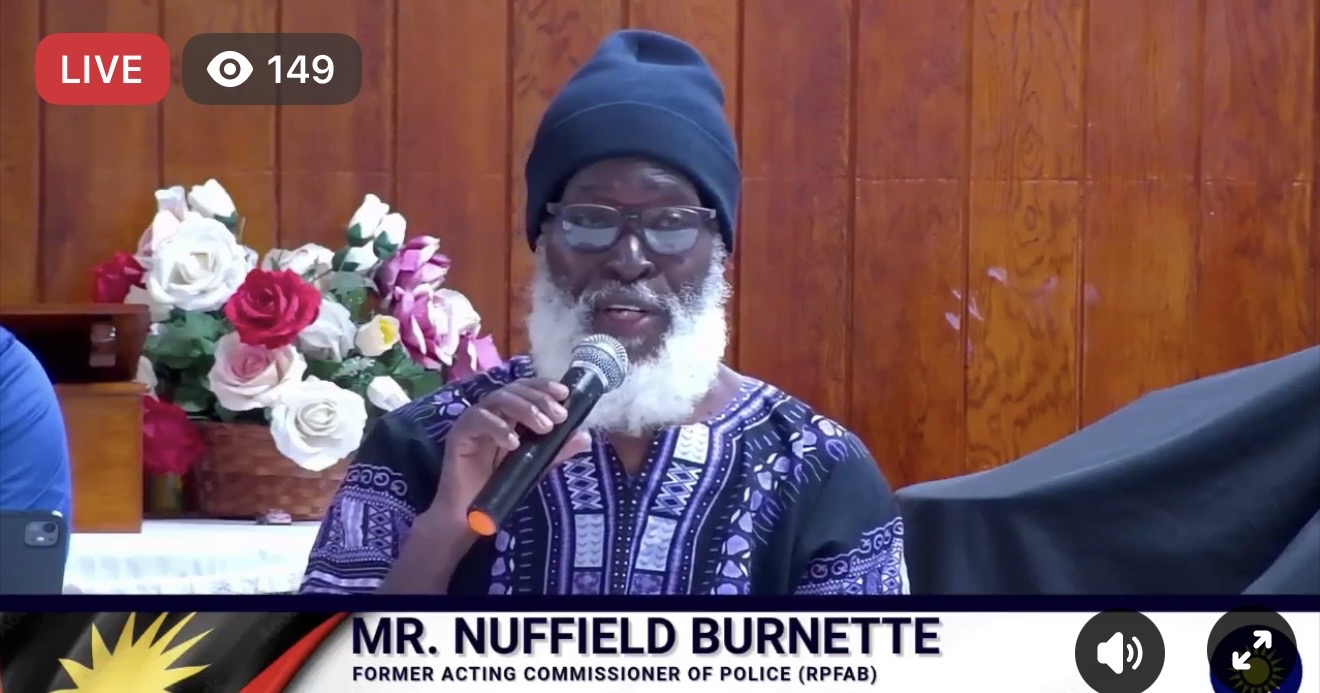
  • Former Police Says Antigua Not Equipped to Handle Third-Country Deportees

    Former Police Says Antigua Not Equipped to Handle Third-Country Deportees

    A retired senior law enforcement leader in Antigua and Barbuda has sounded a stark alarm over the Caribbean nation’s ability to absorb a planned influx of third-country deportees sent from the United States, warning that the arrangement would deepen already severe public safety and policing challenges the country currently faces.

    Speaking at a United Progressive Party town hall focused on the government’s recently released policy White Paper, former Assistant Commissioner of Police Nuffield Burnette framed the proposal as a high-risk gamble that the country can ill afford. With the island nation’s law enforcement apparatus already stretched thin by persistent domestic crime, Burnette questioned why local leaders would voluntarily agree to take on unplanned additional responsibilities that would further strain institutional capacity.

    “If our law enforcement agencies are already failing to keep up with day-to-day domestic crime, what will happen when we add this new layer of demands laid out in the White Paper?” Burnette said during the event. “We need to make our position clear to the country’s leadership while we still have the chance: we do not support this potentially damaging proposal as it stands.”

    Burnette also pushed back against the common narrative that Antigua and Barbuda ranks among the safest nations in the Caribbean. He argued that official assessments that rely almost exclusively on homicide rates paint an incomplete and misleading picture of the country’s true crime landscape, erasing the widespread impact of violent home invasions and other offenses that leave long-term psychological trauma on survivors.

    To illustrate his point, he referenced a string of fatal home invasion attacks carried out by young offenders years earlier, saying these incidents prove the country’s public safety challenges are far more severe than official cross-border comparisons often acknowledge. “No crime leaves a deeper trauma than a home invasion,” Burnette explained. “Our homes are supposed to be our safe sanctuaries, our castles. When intruders break into that space and commit acts like sexual assault within those four walls, that means we have a very serious crisis that cannot be ignored.”

    The retired senior officer also cast doubt on the accuracy of the government’s official crime statistics, noting that a large share of criminal incidents are never reported to police, and that officials have been accused of downplaying the true scale of crime to project a more positive image. “I made a deliberate choice not to bring any official statistics with me tonight,” Burnette said. “The numbers are not reliable. People do not report every crime they experience, and what the government releases to the public rarely matches the actual reality of crime across the country.”

    Burnette went on to criticize the performance of Antigua and Barbuda’s Royal Police Force, pointing to systemic issues including slow emergency response times, gaps in leadership, and a steady decline in overall operational effectiveness. “We are not properly managing the current crime situation in Antigua and Barbuda,” he said. “Police often fail to respond to calls in a timely manner, sometimes do not show up at all, and more often than not their response is unacceptably delayed.”

    Against this already challenging backdrop, Burnette argued that accepting third-country deportees would introduce a host of new complexities that the country’s institutions simply do not have the capacity to address. He noted that the government’s White Paper covers a broad range of people including asylum seekers, refugees, and stateless persons, but Antigua and Barbuda currently has no dedicated legal framework in place to manage the arrival and integration of these groups.

    “Our existing laws have absolutely no provisions to accommodate any of these populations,” Burnette said. “That is the most alarming detail that stuck with me when I reviewed the proposal.”

    Burnette concluded by calling for a full, open national debate on the plan before any binding decisions are made, emphasizing that the proposal carries sweeping long-term implications for the country’s public safety and the future of its law enforcement system.

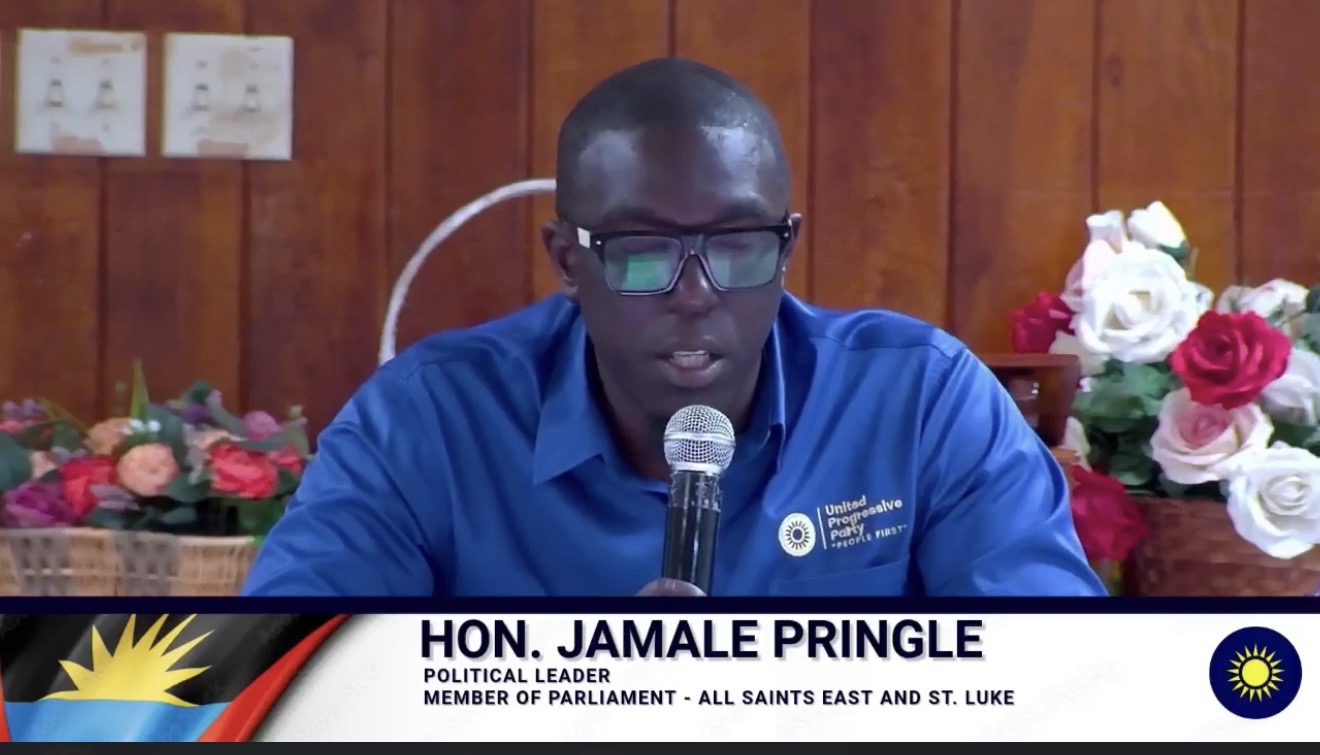
  • Pringle Says Government Failed to Secure Better Terms in US Deportee Agreement

    Pringle Says Government Failed to Secure Better Terms in US Deportee Agreement

    A fierce political clash has erupted in Antigua and Barbuda over the Gaston Browne administration’s proposed third-country deportee agreement with the United States, with Opposition Leader Jamale Pringle launching sweeping criticism of the government’s diplomatic handling and lack of transparency around the deal.

    Speaking at a United Progressive Party (UPP) town hall focused on the government’s recently released White Paper on the arrangement, Pringle argued that the administration failed to secure any meaningful protections for Antigua and Barbuda before committing to accept deportees from third countries transferred via the United States. Far from showcasing the prime minister’s self-proclaimed diplomatic prowess, Pringle said the deal demonstrates mere compliance with U.S. demands rather than successful negotiation on behalf of the island nation.

    “Prime Minister Gaston Browne has repeatedly boasted about his diplomatic skills, but a close reading of the available documents makes clear that no real negotiation ever took place,” Pringle told attendees. “The U.S. is set to send these individuals to our country, and we are simply expected to accept them, with no safeguards in place for our nation.”

    Pringle pointed to a critical timeline laid out in the White Paper itself to back his claims: the Browne administration signed a Memorandum of Understanding (MOU) with the U.S. before American officials even submitted draft operating procedures for the arrangement. Only after the MOU was finalized did the government draft counterproposals to the U.S. plan — yet neither the original signed MOU nor the government’s counterproposals have been released to the public or parliament.

    This lack of disclosure has forced lawmakers and citizens to debate only the government’s curated description of the deal, rather than the full, official text of the agreement itself, Pringle emphasized. He added that the government’s commitment to the arrangement was locked in long before any parliamentary debate was scheduled, undermining the purpose of public and legislative scrutiny.

    “The actual text of the MOU remains behind closed doors,” Pringle said. “Antiguans and Barbudans are not allowed to review the agreement themselves; we only get the version of events the government chooses to publish in the White Paper. That is not how transparent democracy works.”

    Pringle also noted that Browne has already confirmed the deportee transfers will move forward regardless of debate, saying “the prime minister admitted it is not a question of if they are coming — he confirmed they are already on their way.”

    The opposition leader extended his criticism beyond the deportee deal to question the Browne administration’s overall track record on international diplomacy, pointing to ongoing challenges that have harmed Antigua and Barbuda’s citizens. He noted that the country already faces U.S. visa restrictions, added to existing Canadian visa rules, and is at risk of losing visa-free travel access to the European Union — outcomes he says are evidence of the government’s failed diplomatic strategy.

    “Voters have been told for years about the prime minister’s great diplomatic skill, but we have yet to see that skill deliver results for our people,” Pringle said.

    He also hit out at the government’s ongoing refusal to share full details of the negotiations with the public, even as the arrangement carries profound social and economic implications for the small island nation. “This is an extraordinarily complex issue, and you cannot have an honest, open debate when all the critical information is hidden from the people who are affected by this deal,” he said.

    In response to the opposition’s criticism, the government has reaffirmed that parliament will hold a formal debate on the White Paper outlining the proposed deportee arrangement in the coming period.

  • Cost Pro Workers Fear They May Never Receive Outstanding Pay After Sudden Closure

    Cost Pro Workers Fear They May Never Receive Outstanding Pay After Sudden Closure

    The sudden and permanent shutdown of Cost Pro Supermarket at Woods Mall has left dozens of its employees facing deep uncertainty over unpaid wages, severance, and earned benefits, after workers were given unsigned termination notices with little advance warning of the closure.

    According to one anonymous long-tenured staff member, the entire team finished their scheduled shifts without any indication that the grocery location would close its doors permanently. It was only after employees had finished their workday and gone home that word spread via colleague-to-colleague messages that all staff were required to return to the supermarket that same evening to collect formal termination documents.

    “Most of us had to turn around and head back to the mall after our shift to pick up these letters,” the employee explained in an interview. “There was no formal communication from management ahead of time — we only found out through word of mouth from other staff.”

    What has deepened workers’ distrust and anxiety is the unusual nature of the termination notices they received. The documents, which confirm that all positions have been eliminated due to redundancy, do not explicitly state that the supermarket has permanently closed, nor do they carry a signature from any member of the company’s management team. Instead, workers were told the manager would only place a company stamp on the notices, and that they would need to return at a later date to collect their final paychecks.

    “This letter doesn’t even name who the management is, or clearly state the business is closed,” the employee said. “How do we know this document is even valid?”

    Concerns over unpaid compensation have been amplified by past labor disputes involving the same business owner, Duggins, who operates another separate establishment in the region. According to the employee, that previous location also shut down suddenly without warning, and workers never received the back pay, salaries, or severance compensation they were owed for their years of service.

    “We already saw this happen with Mr. Duggins’ other business,” the employee alleged. “One day workers showed up for their shift and the doors were locked, and they never got a cent of what they were owed. That history has all of us really worried this will happen again here.”

    Long-serving staff members, including those who have worked at the supermarket for nine years or more, say they are especially anxious about the outcome. Many have spent decades building their careers at the location, and are now facing unemployment with no guarantee they will receive the severance and end-of-service benefits they are legally entitled to. “How can we be confident we’ll get what we’re owed, when we’ve already seen what happened with his other business?” the employee asked.

    For its part, the unsigned termination notice issued to workers does lay out a formal timeline for final payments: the document confirms that all salaries will be paid through July 9, and that a full final payment statement — including any owed vacation pay, statutory notice pay, and applicable severance — will be issued to all employees by July 17. The notice also requires all workers to return any company-owned property, such as uniforms or work equipment, by that same deadline. But workers say past experience has left them with little faith that this timeline will be honored, leaving them in limbo as they navigate sudden unemployment.

  • Antiguan-Born Attorney Beverly Benjamin George Installed as President of Queens County Women’s Bar Association

    Antiguan-Born Attorney Beverly Benjamin George Installed as President of Queens County Women’s Bar Association

    On June 23, at the Queens County Women’s Bar Association’s (QCWBA) Annual Installation Dinner, a historic milestone was marked as Antiguan-born attorney Beverly Benjamin George officially took office as the organization’s president for the 2026–2027 term. The ceremonial swearing-in drew a diverse crowd of distinguished guests, including sitting members of the judiciary, prominent figures from New York’s legal community, elected public officials, local community leaders, as well as George’s close family and friends.

    Founded nearly a century ago in 1930, QCWBA holds the distinction of being one of the oldest enduring women’s bar associations in the state of New York. For nearly 100 years, the organization has anchored its mission around four core pillars: advancing the fair and equal administration of justice across the legal system, creating pathways for the professional advancement of women in legal careers, supporting ongoing skill-building and growth for its members, and delivering public value to neighborhoods across Queens through educational outreach and community-focused service.

    George, whose entire professional career has been rooted in public service and work with the New York State Unified Court System, expressed deep humility and gratitude for the opportunity to lead the historic organization. As she accepted the role of QCWBA’s 95th president, she reflected on the long, interconnected journeys that brought all members and stakeholders together to mark this moment in the association’s legacy.

    “It is with profound gratitude and humility that I assume the office of the 95th President of the Queens County Women’s Bar Association,” George shared in her remarks after the swearing-in. “As we celebrate this milestone, I pause to reflect upon the many winding paths that have been drawn between us, all converging at this singular moment of our Association’s history.”

    She added: “It is an extraordinary honor to serve as President of the Queens County Women’s Bar Association. I look forward to building upon the Association’s proud legacy while fostering meaningful connections among our members, supporting the next generation of attorneys, and continuing our commitment to service within the legal profession and the communities we serve.”

    Beyond her work in the New York legal sphere, George is a widely recognized public figure in her home country of Antigua and Barbuda. She is a founding member of Antiguans and Barbudans for Constitutional Reform and Education (ABCRE), an educational non-profit forum that produces a weekly radio segment on Observer Radio. The program focuses on unpacking constitutional issues and expanding civic education for audiences across the twin-island nation.

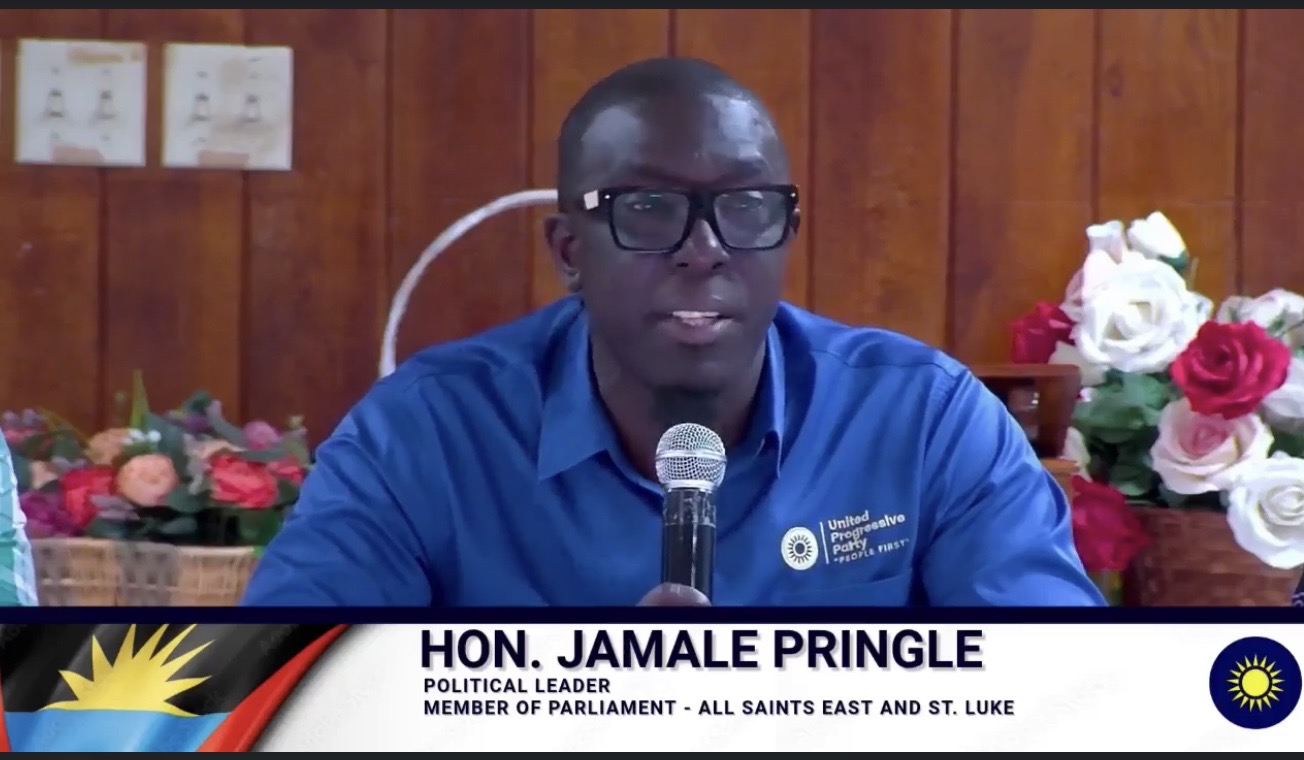
  • Pringle Warns Antigua and Barbuda Lacks Capacity to Manage Third-Country Deportees

    Pringle Warns Antigua and Barbuda Lacks Capacity to Manage Third-Country Deportees

    The leader of Antigua and Barbuda’s main opposition bloc, Jamale Pringle, has raised urgent alarms over a proposed bilateral deportation agreement with the United States, arguing that the small Caribbean nation lacks both the foundational legal structure and institutional resources to responsibly manage third-country deportees transferred under the deal. Pringing made these criticisms during a public town hall meeting hosted by the United Progressive Party, where he centered his remarks on gaps explicitly acknowledged by the ruling government in its own policy White Paper for the arrangement.

    Pringle pointed out that Antigua and Barbuda currently has no independent, standalone Refugees Act, nor does it have dedicated legislation to address the legal status of stateless people or individuals who cannot be removed to another country. This is particularly concerning, he emphasized, because the government’s own White Paper acknowledges that transferred deportees could easily fall into one of these unregulated categories. Without a formal legal framework in place, people who cannot be repatriated to either their country of origin or the United States would be left in permanent legal limbo, with no domestic statutes to guide the government in determining their residency, rights, or long-term status.

    Beyond the legal gaps, Pringle stressed that the strain of absorbing deportees would extend far beyond immigration policy, placing additional unnecessary pressure on public services that are already operating at maximum capacity. Even if the government initially caps the number of transfers, he argued, accepting any deportees would trigger binding international legal obligations that the country’s current domestic legislation is not equipped to uphold.

    Pringle went on to note that the government’s White Paper itself confirms the country’s limitations: as a small island developing state, Antigua and Barbuda has limited population and infrastructure absorptive capacity, and its public services are already stretched thin by existing demand. The document, he said, explicitly warns that receiving third-country deportees carries tangible risks to domestic public order and social cohesion.

    “The government’s own paper tells us that accepting these people will create major challenges that we are not positioned to handle, because it could harm public order and our social fabric,” Pringle said during the meeting. “If all of these risks are already laid out on the table, why is the government still moving forward with this as an inevitability, rather than a choice that requires fixing these gaps first?”

    The opposition leader also outlined a series of unanswered practical questions about the proposal, including where transferred deportees would be housed, how administrative and legal processes for their status would be funded and operated, and what protocols would be put in place to address unforeseen issues that arise. He further argued that parliament is being blocked from conducting a full, transparent debate of the proposal because lawmakers have not been granted access to the full underlying Memorandum of Understanding and other core operational documents. Instead, he said, legislators are only able to review the government’s curated interpretation of the agreement, rather than the full binding text itself.

    For its part, the ruling government has confirmed that parliament will hold a formal debate on the White Paper outlining the proposed third-country deportation arrangement in the near future.

  • COMMENTARY: The Citizenship Crossroads

    COMMENTARY: The Citizenship Crossroads

    In late June 2026, a formal request from the European Commission landed on the desks of five Eastern Caribbean governments: Antigua and Barbuda, Dominica, Grenica, St Kitts and Nevis, and St Lucia. The demand was clear: phase out their long-running Citizenship by Investment (CBI) programs by June 1, 2028. Backed by the EU’s revised visa-suspension framework, continued operation of these schemes now qualifies as grounds for reviewing the island nations’ visa-free access to the Schengen Area, making the 2028 deadline non-negotiable. For these small, trade-reliant open economies, the stakes could not be higher.

    While initial framing has painted this as a David-and-Goliath standoff between a powerful European bloc and vulnerable small island states, this narrative overlooks a far more nuanced reality. Both sides hold legitimate, mutually aligned interests in resolving the impasse, and a collaborative negotiated transition remains the most promising path forward.

    ### Why CBI is a Cornerstone of Eastern Caribbean Development
    For the Eastern Caribbean, CBI is far more than a marginal policy or the simple passport-selling scheme it is often caricatured as. It is a foundational pillar of public finance for nations that lack large domestic tax bases, extensive natural resources, and face repeated, intensifying climate shocks.

    St Kitts and Nevis hosts the world’s longest-running CBI program, launched in 1984. Across the five states, CBI contributes between 15% of government revenue (St Lucia) and more than 50% (Dominica and St Kitts and Nevis). In the 2022–2023 fiscal year alone, Dominica drew 37% of its total GDP from CBI revenue, equal to roughly $232 million. These funds have delivered tangible, transformative development across the region: new hospitals and clinics, upgraded road and bridge infrastructure, climate-resilient housing post-hurricane, expanded tourism infrastructure, and Dominica’s new international airport. For St Kitts and Nevis, consistent CBI revenue delivered years of budget surpluses that cut public debt below regional targets. For these small states, CBI has been an engine of both development and climate resilience, a reality any productive negotiation must acknowledge upfront.

    Even so, overreliance on a single externally driven revenue stream carries growing, already visible risks. When global scrutiny tightened and investor demand softened in 2024, St Kitts and Nevis saw CBI revenue plummet, pushing its fiscal deficit to 11% of GDP. Prudent long-term planning has long required these states to diversify away from CBI, a reality regional leaders have increasingly acknowledged.

    ### The EU’s Legitimate Security Concerns
    The European Union’s position is not arbitrary or unfair; it stems from concrete regulatory and security concerns that deserve a fair hearing. Visa-free Schengen access is a valuable shared asset that underpins much of the value of Eastern Caribbean CBI passports, and the EU bears a responsibility to protect the integrity of its visa system.

    Brussels’ concerns are specific: across the five programs, roughly 107,000 passports have been issued to date, with high application volumes and low rejection rates that raise questions about the rigor of due diligence checks. The Financial Action Task Force has repeatedly warned that poorly regulated CBI schemes can be exploited for identity fraud and money laundering. A 2025 ruling by the European Court of Justice further cemented the EU’s legal position, finding that Malta’s similar CBI program violated EU law. While the 2028 timeline remains open to negotiation, the underlying concerns held by EU regulators are reasonable and made in good faith.

    ### Shared Interests That Outweigh Public Rhetoric
    The simplistic Brussels-versus-Caribbean framing obscures a critical truth: on core governance issues, the two sides are far more aligned than headlines suggest. Rigorous due diligence is not merely a European demand—it is directly in the Eastern Caribbean’s own self-interest. Weak vetting and opaque ownership structures that trouble Brussels also erode confidence among international correspondent banks, and lost correspondent banking access is an existential threat the region has already faced. A CBI program held to the highest global standards is not a concession to Europe; it is a defense of the Caribbean’s own financial stability.

    The real disagreement is narrow: it is not whether CBI programs should be well-run—both sides agree they should. It is about the pace of phase-out and how to replace the lost revenue. These are issues for negotiation, not confrontation.

    ### The Region Has Already Taken Unilateral Action to Strengthen Regulation
    The Eastern Caribbean has already made significant progress toward addressing EU concerns, a fact often overlooked in public discourse. In September 2025, after two years of negotiations with the EU, United States, and United Kingdom, the five states signed a 92-article agreement establishing the Eastern Caribbean Citizenship by Investment Regulatory Authority (ECCIRA). Headquartered in Grenada (selected for its strong compliance track record) with national offices in each member state, ECCIRA will become fully operational in 2026.

    ECCIRA is no symbolic gesture: it enforces binding, uniform standards across all five programs, including mandatory due diligence, applicant interviews, biometric data collection, genuine residency requirements, shorter passport validity terms, uniform investment minimums, and a centralized shared registry of rejected applicants, agents, and developers. It also has the power to compel audits, impose sanctions, and revoke operating licenses. In short, the Eastern Caribbean has already proactively built most of the regulatory architecture Brussels has demanded. This progress demonstrates that the region is a willing partner that deserves to be met halfway.

    Even so, ECCIRA is a starting point, not a final solution. The authority was designed solely to make existing CBI programs compliant with European and North American standards—but the EU’s June 2026 letter makes clear that even perfectly run programs must be phased out. The EU’s objection is now one of principle, not just regulation. ECCIRA’s greatest achievement is not saving CBI, but proving that the five Eastern Caribbean states can collaborate effectively on critical regional issues, ceding limited sovereignty to a shared regulator for the collective good. This capacity for collective action is the region’s most durable asset, far more valuable than any single revenue stream.

    ### What a Constructive Path Forward Looks Like
    A successful outcome requires two core priorities: first, a managed transition, not an abrupt fiscal cliff. A firm 2028 deadline does not require an immediate hard stop. A phased, negotiated redesign that shifts toward longer-term residency-based investment models aligned with EU security demands, while maintaining an orderly flow of investment during the transition, benefits both sides. The EU protects its visa regime integrity, while the region gains time to adjust its fiscal and economic models.

    Second, and most critically, the region needs support to replace lost CBI revenue. The Caribbean has already laid out an ambitious growth agenda for the next decade: the Eastern Caribbean Central Bank’s (ECCB) “Big Push” strategy targets doubling the regional currency union’s economy by 2031, requiring 7% annual growth, while the Caribbean Development Bank (CDB) labels the 2020s a “decade of decision” requiring $65 billion in financing by 2033 to avoid economic stagnation. Abruptly losing CBI revenue—which contributes 5% of the currency union’s total GDP, and 37% of Dominica’s GDP—would derail these plans, eliminating the core capital source for critical infrastructure that underpins long-term growth.

    Regional leaders have already outlined the core of a path forward: CBI revenue generated during the transition can be reinvested to seed economic diversification across priority sectors, including renewable energy, food security, medical tourism, the creative economy, and special economic zones. The existing framework for diversification already includes clear, actionable priorities:
    – Publish annual Diversification Indexes alongside national budgets, tracking shifts in GDP, employment, and revenue across core sectors with five-year targets
    – Establish a regional Regional Medical Excellence Fund, funded by a share of CBI revenue, to build one accredited specialty medical center per state to grow high-margin, climate-resilient medical tourism
    – Require states with high CBI dependence to publish formal fiscal transition plans outlining how revenue losses will be absorbed without unsustainable new debt
    – Negotiate a regional energy partnership with Guyana to replace costly imported fuel oil, the largest structural cost for most Eastern Caribbean economies
    – Launch a regional agricultural credit guarantee facility in partnership with the ECCB and CDB to lower borrowing costs for smallholder farmers
    – Extend the ECCIRA collaborative regulatory model to other sectors including healthcare accreditation, agricultural standards, and digital asset regulation

    ### A Unified Regional Negotiating Strategy Is Key
    To advance these goals, Eastern Caribbean governments should convene a permanent standing panel under the Organization of Eastern Caribbean States (OECS), drawing representatives from ECCIRA, the ECCB, the CDB, and regional trade negotiators. This panel will carry a unified regional position into direct diplomatic talks with the EU and United States, with a mandate to secure a binding, mutually beneficial agreement.

    Negotiations should proceed on two tracks. First, test at the highest level whether a CBI regime rebuilt to ECCIRA’s strict standards can address the EU’s security concerns. Second, and more importantly, plan for a phase-out by framing the transition as a reciprocal negotiation, not a request for charity. If the EU gains its goal of eliminating CBI to protect Schengen integrity, the region should gain expanded, guaranteed market access for its exports under existing frameworks including the CARIFORUM-EU Economic Partnership Agreement and U.S. Caribbean Basin trade preferences.

    Agriculture is the logical starting point for this agreement: Europe can provide long-term guaranteed access for Caribbean agricultural and value-added produce, while the region commits to building the infrastructure—packing facilities, cold chains, port capacity, phytosanitary certification—needed to meet export demand. This shifts revenue from passport fees to earnings from goods and services, creating a more sustainable, dignified foundation for long-term growth that benefits both sides.

    ### A Moment for Regional Unity
    This challenge also offers an unexpected opportunity. For decades, Eastern Caribbean states have competed against one another for CBI investment, fragmenting their negotiating power. ECCIRA has already proven that collective action delivers stronger results. The 2028 deadline is the strongest argument for regional integration the Caribbean has seen in a generation. No single small island can negotiate favorable terms with Brussels or Washington, but a unified Eastern Caribbean has leverage, shared interests, and a legitimate claim to reciprocal partnership.

    This is not a contest between a powerful Europe and a vulnerable Caribbean. It is a shared governance challenge between partners who both want a clean, secure CBI regime and a prosperous Eastern Caribbean. The EU’s commitment to regulatory integrity is legitimate, and the region’s need for time to replace lost revenue is equally legitimate. The 2028 deadline is real, but so is the opportunity to build a more diversified, sustainable regional economy. The Caribbean has navigated far greater challenges, and it will succeed if it negotiates as one, in good faith with its partners, to build a transition that works for everyone.

  • Sir VC Bird and Dame Eugenia Charles Among Icons Replacing Queen on New EC Banknotes

    Sir VC Bird and Dame Eugenia Charles Among Icons Replacing Queen on New EC Banknotes

    In a landmark moment for the Eastern Caribbean Currency Union (ECCU), the Eastern Caribbean Central Bank (ECCB) has launched a fully redesigned series of Eastern Caribbean (EC) banknotes that reframes regional currency around the people, native heritage, and collective achievements of the ECCU’s eight member states.

    ECCB Governor Timothy N.J. Antoine presented the new designs to the public during a special ceremony held at the InterContinental Dominica Cabrits Resort in the Commonwealth of Dominica, coinciding with the event to mark the change in chairmanship of the ECCB Monetary Council. The launch stands as a historic milestone in the decades-long evolution of EC currency, marking the first time the region’s banknotes will not carry the portrait of the late Queen Elizabeth II.

    In place of the former British monarch’s image, the new banknote series highlights celebrated national heroes and pioneering leaders from across the ECCU’s member nations, a choice designed to reflect the region’s unified shared identity, unique independent history, and transformative collective accomplishments. Each denomination features two influential figures that have shaped Eastern Caribbean life:
    – The $100 banknote honors Sir William Arthur Lewis, the Caribbean-born Nobel laureate in economic sciences, alongside The Right Honourable Sir John George Melvin Compton
    – The $50 denomination showcases The Honourable Sir K. Dwight Venner, who served as ECCB Governor from 1989 to 2015, paired with The Right Excellent Sir Robert Llewellyn Bradshaw
    – The $20 banknote features The Right Honourable Sir Vere Cornwall Bird Snr and The Honourable Dame Mary Eugenia Charles
    – The $10 banknote spotlights The Most Excellent William Henry Bramble and The Honourable James Ronald Webster
    – The $5 banknote pairs founding leader The Right Honourable Robert Milton Cato with Olympic champion Sir Kirani James, LLD (Hons)

    The shift to a locally focused banknote design followed formal approval from the ECCB Monetary Council at its 105th meeting held on July 21, 2023, when council members voted to replace Queen Elizabeth II’s portrait and directed the ECCB to lead a period of public outreach and consultation on the new concept. Those public consultations, carried out across all member states between July and December 2023, revealed overwhelming public support for the plan to feature national heroes and nation builders on the redesigned currency.

    ECCB officials frame the new banknote series as a meaningful step forward for the EC dollar that balances cultural reorientation with long-term stability. The redesign celebrates the rich cultural diversity of the eight ECCU members and enshrines the enduring legacy of the individuals who built modern Eastern Caribbean society. At the same time, the new series retains all of the advanced security features that have preserved the integrity and public trust that has long defined the EC dollar.