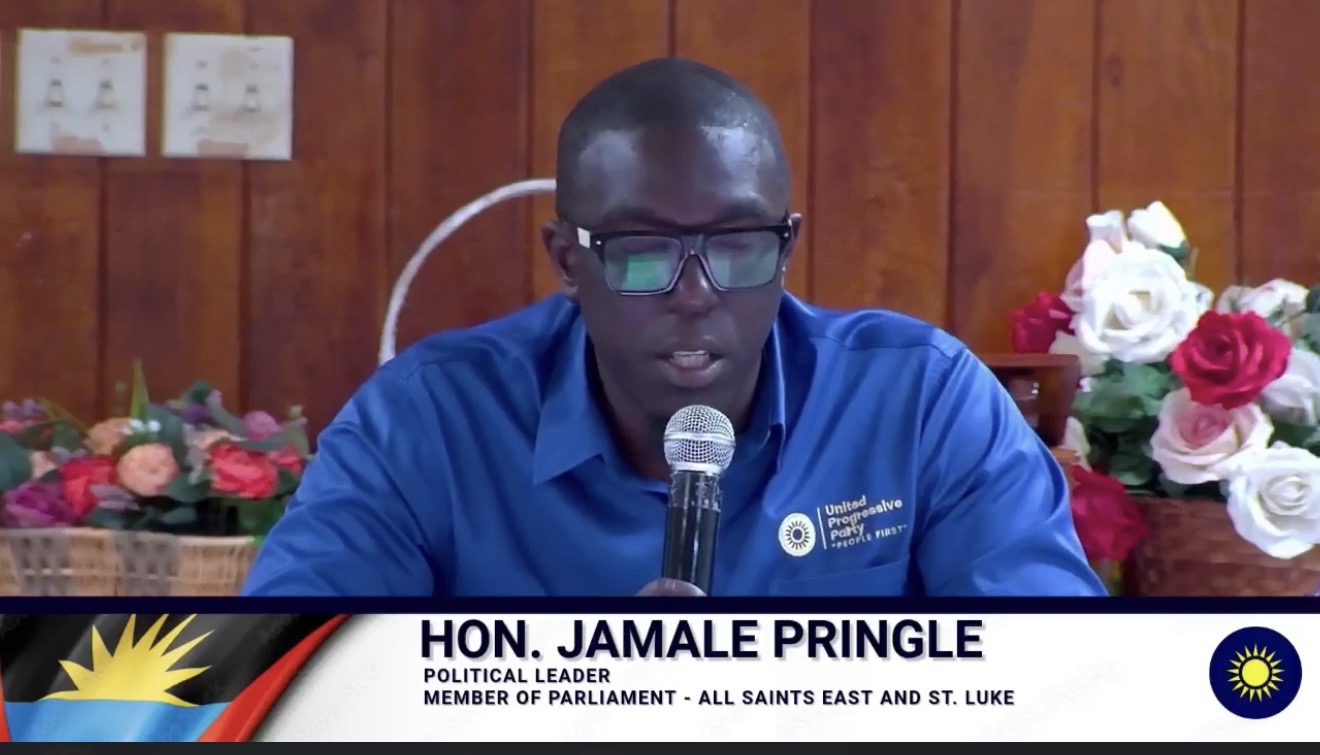
A fierce political clash has erupted in Antigua and Barbuda over the Gaston Browne administration’s proposed third-country deportee agreement with the United States, with Opposition Leader Jamale Pringle launching sweeping criticism of the government’s diplomatic handling and lack of transparency around the deal.
Speaking at a United Progressive Party (UPP) town hall focused on the government’s recently released White Paper on the arrangement, Pringle argued that the administration failed to secure any meaningful protections for Antigua and Barbuda before committing to accept deportees from third countries transferred via the United States. Far from showcasing the prime minister’s self-proclaimed diplomatic prowess, Pringle said the deal demonstrates mere compliance with U.S. demands rather than successful negotiation on behalf of the island nation.
“Prime Minister Gaston Browne has repeatedly boasted about his diplomatic skills, but a close reading of the available documents makes clear that no real negotiation ever took place,” Pringle told attendees. “The U.S. is set to send these individuals to our country, and we are simply expected to accept them, with no safeguards in place for our nation.”
Pringle pointed to a critical timeline laid out in the White Paper itself to back his claims: the Browne administration signed a Memorandum of Understanding (MOU) with the U.S. before American officials even submitted draft operating procedures for the arrangement. Only after the MOU was finalized did the government draft counterproposals to the U.S. plan — yet neither the original signed MOU nor the government’s counterproposals have been released to the public or parliament.
This lack of disclosure has forced lawmakers and citizens to debate only the government’s curated description of the deal, rather than the full, official text of the agreement itself, Pringle emphasized. He added that the government’s commitment to the arrangement was locked in long before any parliamentary debate was scheduled, undermining the purpose of public and legislative scrutiny.
“The actual text of the MOU remains behind closed doors,” Pringle said. “Antiguans and Barbudans are not allowed to review the agreement themselves; we only get the version of events the government chooses to publish in the White Paper. That is not how transparent democracy works.”
Pringle also noted that Browne has already confirmed the deportee transfers will move forward regardless of debate, saying “the prime minister admitted it is not a question of if they are coming — he confirmed they are already on their way.”
The opposition leader extended his criticism beyond the deportee deal to question the Browne administration’s overall track record on international diplomacy, pointing to ongoing challenges that have harmed Antigua and Barbuda’s citizens. He noted that the country already faces U.S. visa restrictions, added to existing Canadian visa rules, and is at risk of losing visa-free travel access to the European Union — outcomes he says are evidence of the government’s failed diplomatic strategy.
“Voters have been told for years about the prime minister’s great diplomatic skill, but we have yet to see that skill deliver results for our people,” Pringle said.
He also hit out at the government’s ongoing refusal to share full details of the negotiations with the public, even as the arrangement carries profound social and economic implications for the small island nation. “This is an extraordinarily complex issue, and you cannot have an honest, open debate when all the critical information is hidden from the people who are affected by this deal,” he said.
In response to the opposition’s criticism, the government has reaffirmed that parliament will hold a formal debate on the White Paper outlining the proposed deportee arrangement in the coming period.