标签: Antigua and Barbuda

安提瓜和巴布达

  • U.S. Coast Guard Intercepts Drug Vessel Near Haiti, Seizes $3.8M in Marijuana

    U.S. Coast Guard Intercepts Drug Vessel Near Haiti, Seizes $3.8M in Marijuana

    A coordinated anti-narcotics operation carried out by a U.S. Coast Guard law enforcement detachment deployed on a U.S. Navy vessel has successfully intercepted a vessel suspected of smuggling illegal drugs in waters off Haiti’s northern coast. The operation resulted in the seizure of approximately 3,200 pounds of marijuana, with an estimated street value of $3.8 million, U.S. officials confirmed.

    Based on an official statement released by U.S. Coast Guard Southeast, the interception occurred Thursday approximately eight nautical miles off the coast of Mole Saint-Nicolas, a coastal town in Haiti’s northwestern department. During the boarding and inspection of the suspect vessel, the enforcement team took one individual into custody. Three days after the interception, on Sunday, both the seized contraband and the detained suspect were handed over to Haitian law enforcement officials for further processing and prosecution.

    Lt. Cmdr. Cory Arsenault, the U.S. Coast Guard’s liaison officer to Haiti, emphasized the ongoing commitment of U.S. forces to collaborative regional security. “In close coordination with the Haitian government, the U.S. Coast Guard remains steadfast in our shared mission to safeguard the maritime approaches of the Caribbean,” Arsenault said. “Together, we are strengthening joint operations to disrupt the illegal flow of narcotics, protect vulnerable communities, and uphold the security and stability of the region.”

    The successful interdiction was not a solo effort: it drew on coordination and intelligence support from a network of multiple U.S. and regional security agencies, including Joint Interagency Task Force South, the multi-national body tasked with countering illicit trafficking in the Caribbean and Eastern Pacific, and U.S. Southern Command, which oversees U.S. military operations in the region. Transnational drug trafficking has long been a persistent security challenge for Caribbean nations, with unpatrolled maritime routes often used by smuggling networks to move contraband between North, Central, and South America, fueling domestic instability and organized crime in the process.

  • The boxer on the ropes – an analysis of the Antigua and Barbuda 2026 General Elections | Part II

    The boxer on the ropes – an analysis of the Antigua and Barbuda 2026 General Elections | Part II

    When the final votes were tallied in Antigua and Barbuda’s 2026 general election, the Antigua and Barbuda Labour Party (ABLP) secured a historic fourth term in office. But to understand the true weight of this victory, one must look beyond raw seat counts and vote totals to the deeper shifts in party identity, national vision, and democratic practice that it reveals. This election win is more than a political triumph—it is a case study in intentional institutional renewal, reconnection to core roots, and the resilience of democratic governance in an era of global democratic backsliding.

    One of the most striking markers of ABLP’s success is its deliberate commitment to generational rebuilding rather than superficial cosmetic change. Ahead of the poll, the party fielded 10 new candidates, a large share of whom are under 40 years old, bringing fresh perspective and energy to the political landscape. This blend of seasoned veteran leadership and emerging young talent sends a clear message: the ABLP is no static relic of the nation’s independence era, but a dynamic, evolving institution adapting to the demands of a new age.

    The party has redefined leadership as a relay race rather than a permanent throne—prioritizing the smooth passing of the baton to the next generation over clinging to power. This marks a tangible shift away from the individualistic politics and personality cults that have eroded democratic institutions in many parts of the world, refocusing instead on collective responsibility and long-term institutional continuity. It is a reminder that robust democracies are built on robust, self-renewing parties that survive not by centering individual personas, but by refreshing their values, updating their leadership, and staying rooted to the communities they exist to serve.

    Beyond internal renewal, the 2026 election also revealed a stark shift in national vision between Antigua and Barbuda’s two major parties. Where the ABLP’s historic opposition, the United Progressive Party (UPP), once built its brand on a “broad tent” philosophy of inclusive politics, the party has gradually drifted from that founding ethos in recent years: its outreach has shrunk, its policy focus has narrowed, and its appeal has become far more limited. The ABLP, by contrast, has returned to its foundational roots as a working-class movement, expanding the modern “House of Labour” to reflect the diverse reality of work in the 21st century.

    Today’s working class encompasses far more than the traditional labor movements of the past: the ABLP recognizes that teachers, hotel workers, young coders, fishermen, nurses, technicians, and small business owners are all workers contributing to Antigua and Barbuda’s national progress. The party’s flagship policy push for a living wage is not just a campaign slogan—it is a reflection of its core belief that democracy must deliver more than just the right to vote; it must deliver tangible, improved quality of life for all citizens.

    Any analysis of ABLP’s present must acknowledge the weight of its storied past. The legacy of Sir Vere Cornwall Bird, the father of Antigua and Barbuda’s independence, remains a cornerstone of the nation’s identity. Bird’s lifelong sacrifice, unwavering commitment to working people, and steady leadership through the transition from colonial rule to self-governance are etched permanently into the country’s history. But national progress does not end with political independence: today’s unfinished work lies in securing economic independence—narrowing systemic inequality, expanding access to opportunity, and ensuring that free education, quality healthcare, and dignified employment are universal guarantees, not privileges reserved for a select few.

    That legacy of working-class empathy lives on in the leadership of current Prime Minister Gaston Browne, who carries forward Bird’s vision into the complex landscape of 21st-century global competition and technological change. Like U.S. President Franklin D. Roosevelt’s iconic fireside chats, Browne prioritizes open, direct communication with the public, explaining policy and direction in plain, honest language. His regular “Browne and Browne” public affairs program, a frequent, unscripted space for national conversation, represents a modern iteration of this accessible leadership tradition, embodying the democratic principle that leadership requires visible, accountable connection, not distant authority.

    This election was not only a test for the ABLP—it was a test for Antigua and Barbuda’s democracy as a whole, and the nation passed with flying colors. At a time when democratic norms are under growing strain across the globe, Antigua and Barbuda delivered a calm, peaceful, transparent election that fully honored the will of the people. Voters turned out in force, cast their ballots freely, and accepted the outcome unified, reaffirming the core democratic truth that sovereign power belongs to the people.

    Citizens evaluated the competing visions on offer, and chose the path they believed best aligned with their hopes, needs, and national ambitions. They made clear that while they do not expect perfection—no government is without flaw—they approve of the country’s current direction, the leadership’s willingness to adapt and adjust, and its commitment to inclusive national development.

    To frame this moment in sporting terms: the ABLP once found itself backed against the ropes, weathering heavy criticism and electoral setbacks. Instead of collapsing, it absorbed the blows, learned from its mistakes, and rebuilt itself from the inside out: it restructured internal party institutions, elevated new generational talent, returned to its working-class roots, and put forward an inclusive national vision big enough to unify all corners of the country. What we see today is a party that has stepped off the ropes and back to the center of the ring, ready for a new term of leadership.

    Now the question turns to what the ABLP will do with this historic mandate. The party won the right to lead for a fourth term, and it must approach this responsibility with humility, responsiveness, and courage. The core questions that will define this term are straightforward: Will the ABLP deepen democratic participation? Will it expand economic opportunity for all? Will it transform national institutions to ensure that future generations never have to choose between dignity and economic survival?

    Early signs point to a positive path forward—if the party retains the lessons that brought it to this moment: why it was once written off by political observers, and why the people of Antigua and Barbuda chose to give it a renewed mandate. If this lesson is fully embraced, the 2026 election will stand as a defining turning point for the nation: a moment when a party, a people, and a democracy chose transformation over complacency, and forward-looking leadership over stagnation.

    As former U.S. President John F. Kennedy famously noted, the future is not inherited—it is built, and the challenges we face as people can be solved by people. The charge ahead for the ABLP and the people of Antigua and Barbuda is clear: now that the party has returned to the center of the political ring, it must use this mandate not just to hold power, but to continue the collective work of building a more just, more inclusive, and more prosperous nation. As iconic Antiguan calypso artist Short Shirt long urged, nation-building requires collective effort: “put your shoulder to the wheel,” he urged, and remember that work, not empty talk, is what builds a strong nation—progress demands relentless, shared toil.

  • Congratulatory Message from CARICOM Chair to the Prime Minister of Antigua and Barbuda

    Congratulatory Message from CARICOM Chair to the Prime Minister of Antigua and Barbuda

    Following the conclusion of Antigua and Barbuda’s general elections on April 30, the Chairman of the Caribbean Community (CARICOM) has issued a formal message of warm congratulations to Prime Minister Gaston Browne, who secured a historic fourth consecutive term in national office.

    Browne’s landslide win at the polls is widely interpreted as a clear demonstration that the electorate of Antigua and Barbuda retains unwavering confidence in his leadership style and long-term development blueprint for the twin-island nation. The outcome of the election has not only cemented Browne’s political legacy but also reaffirmed the public’s commitment to the regional democratic norms that the Caribbean has long prioritized.

    In the congratulatory statement, the CARICOM Chairman also extended praise to the people of Antigua and Barbuda for upholding the region’s longstanding, proud tradition of conducting free, fair, and peaceful democratic elections. This peaceful transition of power through the ballot box stands as a testament to the maturity of the country’s democratic institutions, the statement added.

    Looking ahead, the Chairman expressed sincere well wishes for a productive and impactful new term, highlighting hopes that Browne’s leadership will drive continued social and economic progress across Antigua and Barbuda. The statement also underscored CARICOM’s eagerness to maintain close collaborative work with Browne’s administration, as both sides work together to tackle the wide range of cross-border challenges that impact the entire Caribbean region.

  • Ministry Invites Public to Access Free HPV Screening on Select Weekends in May

    Ministry Invites Public to Access Free HPV Screening on Select Weekends in May

    A new public health initiative led by the Ministry of Health, Wellness, Environment, and Civil Service Affairs is calling on all local residents to access no-cost human papillomavirus (HPV) screening services, available exclusively on selected weekends throughout the month of May. This outreach effort is the latest addition to the Ministry’s long-running campaign to embed proactive health habits across communities, with a core focus on boosting early illness detection, expanding preventive care access, and lifting overall population wellness levels. HPV, one of the most prevalent sexually transmitted viruses globally, often presents no obvious symptoms in its early stages. If left undiagnosed and untreated, however, the infection can trigger a range of severe, life-altering health complications, most notably multiple forms of cancer that develop gradually over time. Senior public health officials have emphasized that consistent, routine screening remains the single most effective proactive step individuals can take to lower their personal risk of HPV-related complications and dramatically improve long-term health prognosis for those who do test positive. To help residents plan their visits, the Ministry has urged all community members to review official informational flyers distributed across local communities, which contain full details on exact screening dates, facility locations, and eligibility requirements for the free services. Repeating its call to action, the ministry reiterated that early detection through accessible screening plays an irreplaceable role in protecting lifelong health for people of all eligible age groups, making this no-cost opportunity a resource the public should not overlook.

  • Antigua and Barbuda Delivers Standout Performance in Dominican Republic

    Antigua and Barbuda Delivers Standout Performance in Dominican Republic

    Against the backdrop of Santo Domingo’s bustling sports arena in the Dominican Republic, Antigua and Barbuda’s young table tennis prospects have turned heads across three top-tier regional tournaments, delivering a breakout campaign led by rising stars Stuti Kashyap and Mekhi Simmons that marks a historic turning point for the small nation’s standing in Caribbean table tennis.

    The pair’s impressive run got off to a strong start at the CAC Qualifier, where Kashyap locked in her position among the top ranked players in the Central American and Caribbean region. Simmons, meanwhile, just missed out on a top-four finish, but claimed the first alternate spot — a result that confirms his rapidly growing competitive edge at the regional elite level.

    Next up, the young athletes stepped onto the court of the Senior Central American & Caribbean Championships, testing their skills against far more experienced opponents from across the region. Neither athlete backed down from the challenge: both held their own against seasoned competition, picking up invaluable high-stakes experience and proving that Antigua and Barbuda can compete confidently alongside the region’s top table tennis programs.

    The climax of the tournament trifecta came at the Caribbean Youth Championships, where the Antigua and Barbuda squad surged to claim podium honors in multiple events. Kashyap led the charge, first capturing the highly sought-after U19 Girls Singles national title, before pairing with Shatal Charles of St. Lucia to take home U19 Girls Doubles gold. Her dominant performance across both disciplines cements her status as one of the top young table tennis talents in the entire Caribbean.

    Kashyap and Simmons then joined forces for the U19 Mixed Doubles draw, where the young pairing added another hardware to Antigua and Barbuda’s tally with a bronze medal finish, further underlining the program’s rapid upward trajectory in the region.

    Beyond the immediate medal haul, the campaign has delivered historic long-term success for the nation: Kashyap’s performance has secured her qualification for three major 2026 international tournaments — the CAC Games set for July, the ITTF Youth Pan American Championships in August, and the ITTF Americas Championships in October. This achievement marks an unprecedented milestone for both Kashyap as an individual athlete and for Antigua and Barbuda’s table tennis program as a whole.

    Per the Antigua and Barbuda Table Tennis Association (ABTTA), this standout campaign is far more than a collection of strong results: it is a clear signal of growing momentum for the sport across the nation. With a new wave of talented young players emerging, growing competitive confidence at the regional level, and tangible, consistent results to prove their progress, Antigua and Barbuda table tennis is no longer just showing up to compete — it is steadily climbing the ranks to become a contender to watch in the Caribbean.

  • New 14-Member Cabinet Sworn In as Government Begins Fresh Term

    New 14-Member Cabinet Sworn In as Government Begins Fresh Term

    Following a decisive landslide win in the April 30 general election that gave the ruling party 15 out of 17 parliamentary seats, Antigua and Barbuda has formally completed the formation of its new government, with 14 cabinet ministers — including Prime Minister Gaston Browne and Attorney General Sir Steadroy “Cutie” Benjamin — receiving their official instruments of office during a ceremony held Tuesday.

    Prime Minister Browne and Attorney General Benjamin, who completed their initial swearing-in over the weekend, formally accepted their portfolio assignments at the event hosted at the American University of Antigua. The remaining 12 ministerial appointees took the required oaths of allegiance, office, and secrecy directly before Governor General Sir Rodney Williams, bringing the full constitutional formation process to a successful close. This ceremony also marked the first official use of newly updated oaths that were approved by legislative bodies earlier this year, aligning the process with modernized governance guidelines.

    Under the country’s constitutional framework, the Prime Minister holds full authority to allocate ministerial portfolios and oversee the distribution of government responsibilities. Each newly appointed ministry has been assigned broad, clearly defined oversight of critical national institutions and priority development programs. For example, the Information, Communication Technologies, Utilities and Energy portfolio will supervise the Antigua Public Utilities Authority and lead the country’s ongoing digital transformation agenda. The Ministry of Housing and Works takes charge of national infrastructure development, public housing initiatives, and road maintenance projects, while the Education, Science and Technology ministry oversees the nationwide education system, including the regional University of the West Indies Five Islands Campus.

    The Ministry of Health, Wellness, Environment and Civil Service Affairs, one of the public-facing portfolios highlighted during the formation process, will govern the Sir Lester Bird Medical Centre, all national public health services, national environmental management, and civil service administrative operations. The newly structured Ministry of Sports and the Creative Industries holds responsibility for national sports infrastructure, cultural programming, the annual Antigua Carnival, and growth support for the broader creative economy, a fast-growing sector for the island nation.

    Two key appointments that will shape core public services and national growth drew particular focus: Michael Joseph takes the helm of the health, environment, and civil service portfolio, while Dwayne George assumes leadership of the sports and creative industries ministry. Other full cabinet appointments include E.P. Chet Greene as Minister for Foreign Affairs, Trade and Immigration; Charles “Max” Fernandez leading Tourism, Civil Aviation, Transportation and Investment; Melford Nicholas heading Information, Communication Technologies, Utilities and Energy; Maria Vanessa Browne taking responsibility for Housing and Works; Daryll Matthew leading Education, Science and Technology; Anthony Smith Jr. overseeing Agriculture, Lands and the Blue Economy; and Rawdon Turner heading Social and Urban Transformation.

    To bolster operational capacity across high-priority departments, three additional Ministers of State were appointed to assist senior cabinet ministers: Randy St. Clair Baltimore will support the agriculture portfolio, Michael Freeland will back the tourism team, and Kiz Johnson will assist with social and urban transformation initiatives.

    As the country finalizes its full parliamentary structure, one key position remains unfilled: a Deputy Speaker for the new parliament has not yet been appointed, though Dr. Philmore Benjamin, the newly elected Member of Parliament for St. Mary’s North, is widely expected to be nominated for the role. Upcoming parliamentary proceedings will also see all appointed Senators officially sworn in at 10 a.m. Friday at Government House, marking the final step in establishing the new legislative term.

    In closing remarks at Tuesday’s cabinet ceremony, Governor General Sir Rodney Williams delivered a charge to the newly appointed ministers, urging them to carry out their public duties with unwavering integrity and collective unity. He reminded appointees that holding public office is not a privilege, but a core duty that must be discharged exclusively for the benefit of all citizens of Antigua and Barbuda.

  • Health Ministry Welcomes Michael Joseph as New Minister

    Health Ministry Welcomes Michael Joseph as New Minister

    A new chapter of leadership is set to begin at one of the Caribbean’s most crucial government departments, as the Ministry of Health, Wellness, Environment and Civil Service Affairs has formally announced its warm welcome to incoming Minister Michael Joseph. Joseph’s appointment is scheduled to take official effect on May 5, 2026, marking a fresh term of leadership for the sprawling public agency that oversees three core pillars of national development.

    In an official public statement released by the ministry, leadership and staff extended formal congratulations to the Honorable Michael Joseph, who will step into the top role guiding the institution’s work. The statement emphasized the outsize importance of the ministerial portfolio Joseph is set to lead, noting that it touches nearly every aspect of daily life for citizens across the country.

    Beyond overseeing the delivery of clinical and public health services that keep communities healthy, the ministry is tasked with driving national wellness initiatives, advancing urgent environmental sustainability action, and continually strengthening the country’s entire civil service system. These interconnected responsibilities make the role a central one in the national cabinet, touching everything from public health infrastructure to climate protection to the efficiency of government services for all residents.

    The full ministry team, from frontline public servants to senior leadership, expressed collective eagerness to collaborate with Joseph as he takes on his new responsibilities. “We look forward to working under his guidance and vision to continue delivering high-quality healthcare, promoting national wellness, protecting our environment, and enhancing service delivery across the civil service,” the statement read.

    To close out the official announcement, the entire ministry extended sincere well wishes for Joseph’s tenure, saying: “We wish you every success in this new chapter of service to our country.”

  • Governor General Says Nation Must Move Forward Together After Election

    Governor General Says Nation Must Move Forward Together After Election

    Fresh off the conclusion of Antigua and Barbuda’s April 30 general election, the nation’s top constitutional figure has delivered a stark and unifying message to both newly elected leaders and the public: political divisions must not tear the country apart, and all sectors must work together to advance the shared national interest.

    Governor General Sir Rodney Williams made his call for national healing and collective action during Tuesday’s formal swearing-in ceremony for the incoming cabinet, an event that followed a lopsided election result where the incumbent governing party claimed 15 of the 17 available parliamentary seats.

    In his address to the new ministers and assembled guests, Sir Rodney emphasized that democratic competition, by its nature, produces divergent preferences among voters, but those differences should never fracture the bonds that hold the national community together. “At moments such as this, we are reminded that while elections may divide us in choice, they must never divide us as a people,” he stated. “Once the ballots are counted, we are called to come together—not as supporters of different parties, but as one nation, united in purpose and shared destiny.”

    Beyond his appeal to national unity, Sir Rodney used the occasion to remind incoming cabinet members that public office is a solemn responsibility rather than a trophy for political victory. “Public office is not a prize to be claimed, but a duty to be discharged with humility, discipline, and unwavering integrity,” he argued.

    He stressed that the new government owes representation to every resident of Antigua and Barbuda, not just those who cast ballots for the governing party. “You are now called upon to serve not only those who supported you, but every citizen and resident of this nation,” Sir Rodney said. “In this regard, you are ministers not of a party alone, but of Antigua and Barbuda as a whole.”

    The Governor General also pushed back against the idea that ministerial oaths are empty procedural formalities, noting that the promises carry profound legal and moral weight. “The oaths which you are about to take are not mere formalities. They represent a binding commitment to the Constitution of Antigua and Barbuda, to the rule of law, and to the faithful execution of your duties,” he explained.

    Effective governance, Sir Rodney added, depends on collaborative work rather than individual achievement, urging the new cabinet to prioritize collective purpose. “These are times that demand not only competence, but courage—not only vision, but collaboration,” he said. “The strength of your administration will depend not solely on individual effort, but on collective purpose and shared responsibility.”

    His closing remarks turned to the wider public, reaching out both to supporters of the winning party and to voters who left the election disappointed by the outcome. Sir Rodney encouraged all residents to maintain active, constructive engagement with public life to support the nation’s long-term progress. “I therefore encourage all citizens—those who celebrate today and those who may feel disappointed—to remain engaged, to remain constructive and committed to the advancement of our nation,” he added.

  • PM Browne Warns Cabinet: ‘No Room for Mediocrity’

    PM Browne Warns Cabinet: ‘No Room for Mediocrity’

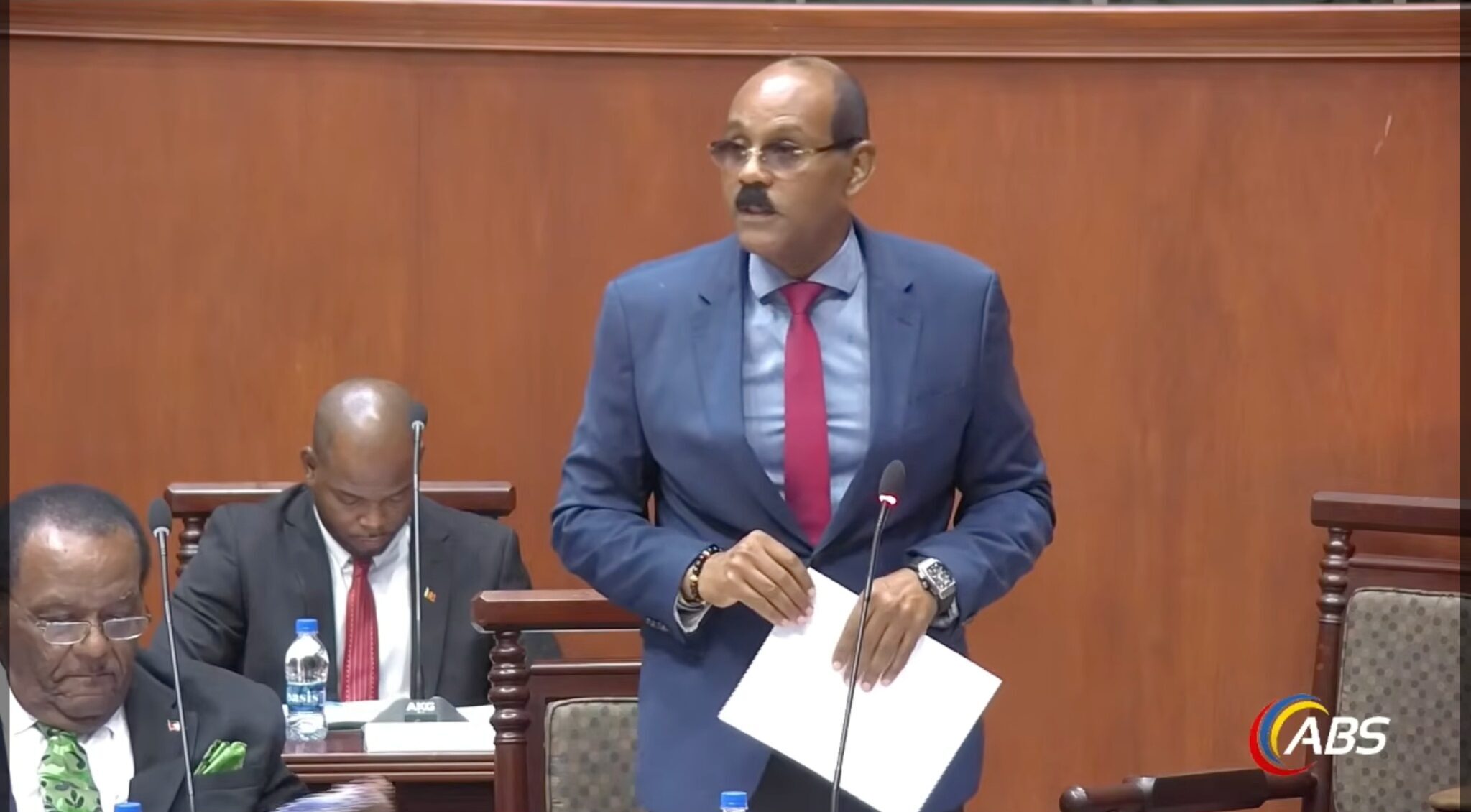
    Fresh off a decisive landslide win in the April 30 general election, Antigua and Barbuda Prime Minister Gaston Browne has laid out strict expectations for his newly inaugurated Cabinet, drawing a clear line in the sand against underperformance and complacency as the administration kicks off its fourth term.

    Speaking at Tuesday’s official swearing-in ceremony for the new Council of Ministers, Browne tied his administration’s overwhelming electoral mandate—securing 15 out of 17 available parliamentary seats—to a dramatically elevated standard of accountability to the voting public. The Prime Minister stressed that the unprecedented trust voters placed in his party cannot be treated as a given, and all appointed ministers must hold themselves to the highest possible standards of service.

    “You have been entrusted with a tremendous responsibility by the people of this nation,” Browne told the assembled ministers. He went on to urge every Cabinet member to honor the electorate’s confidence and avoid betraying the support that carried the party to a resounding victory at the polls.

    In firm, uncompromising language, Browne made clear that underperformance and mediocre work will not be tolerated in his new administration. He emphasized that his government must be defined by consistent excellence and tangible, on-the-ground delivery for citizens, repeating: “There must be no mediocrity.” All ministers, he insisted, are required to carry out their official duties at the peak of their capabilities.

    Browne also pushed back against the common framing of public office as a privilege, reframing it as a solemn duty to the Antiguan and Barbudan public. He called on all Cabinet members to approach their roles with unwavering discipline, unassailable integrity, and an unrelenting focus on delivering measurable results. “You are here to serve the people of this country,” he said, warning that any failure to uphold this core mission would erode the trust voters have extended to the new administration.

    Beyond individual accountability, the Prime Minister also emphasized the critical need for cross-ministerial unity. Collective collaborative effort, he noted, is the only foundation for hitting the country’s ambitious long-term development targets. “We must work together in unity,” Browne said, encouraging ongoing coordination and partnership between government departments to move forward with the administration’s top development priorities.

    Framing this new fourth term as a period of transformative national progress, Browne highlighted a pipeline of current and upcoming initiatives focused on three core goals: upgrading the country’s core infrastructure, raising overall living standards for all citizens, and positioning Antigua and Barbuda for long-term, sustainable economic growth.

    He also doubled down on the importance of widespread national productivity, noting that meaningful national progress will rely not just on government action, but on buy-in and effort across all sectors of Antiguan and Barbudan society. Repeating his core message—“You cannot accept mediocrity”—Browne reinforced his commitment to delivering tangible, visible outcomes that match the overwhelming mandate the party received from voters.

    Browne’s opening remarks to the new Cabinet have set a clear, results-first tone for the administration’s incoming term, signaling an uncompromising zero-tolerance approach to complacency as the newly sworn-in ministers prepare to begin their official work.

  • BREAKING: Former Senator and ABLP General Secretary Mary-Clare Hurst Dies

    BREAKING: Former Senator and ABLP General Secretary Mary-Clare Hurst Dies

    A moment of unexpected sorrow interrupted a key moment of political transition in Antigua and Barbuda on Wednesday, as Prime Minister Gaston Browne interrupted his new Cabinet’s swearing-in ceremony to share the devastating news of the passing of Mary-Clare Hurst, the Antigua and Barbuda Labour Party’s trailblazing former General Secretary.

    Browne told the assembled gathering of politicians, dignitaries, and guests that he had received word of Hurst’s death only moments before taking the stage to lead the ceremony. Grieving alongside the party and the nation, he described Hurst as not just a trusted colleague, but a dear personal friend whose decades of dedication shaped the modern ABLP. Calling her sudden passing an utter shock to all who knew her, Browne extended his deepest condolences to Hurst’s family, friends, and loved ones, and pledged that the entire party would stand with them through this period of profound loss.

    A trailblazer for women in Antigua and Barbuda’s political landscape, Hurst made history as the first woman to hold the post of ABLP General Secretary, a role that placed her at the very center of the party’s operations and strategy for years. Beyond her work within the party, she held multiple senior public offices across her decades of public service: she served as a Senator, Leader of Government Business, and Minister of State for Tourism and Investment, and also chaired the Board of the Antigua and Barbuda Port Authority, a critical role for the island nation’s trade-focused economy.

    Born in Antigua’s Villa neighborhood on November 6, 1962, Hurst was embedded in community life from childhood. Long before her rise to political prominence, she was a standout national athlete, competing for Antigua and Barbuda in national basketball, and later parlayed her love of the sport into administrative leadership, holding key governance roles within the Antigua and Barbuda Basketball Association.

    Hurst brought both academic training and global experience to her public service roles. She earned a Bachelor of Arts in Management and Administration from the City University of New York, followed by a Master of Science in Public Administration from Pacific Western University. Early in her career, she also served on the staff of Antigua and Barbuda’s Mission to the United Nations in New York, giving her invaluable insight into global diplomacy and governance that she brought to her work back home.

    Within the ABLP, Hurst worked her way up through the party’s ranks, cutting her political teeth leading the party’s youth wing before growing into one of its most respected senior leaders. She played an integral behind-the-scenes role in election campaigns and national governance after the ABLP returned to power in the 2014 general election, shaping the party’s agenda and policy direction for years.

    After sharing the news, the Prime Minister led a moment of quiet remembrance, offering a prayer that Hurst would “rest in peace and rise in glory”, before resuming the official swearing-in ceremony. Additional biographical reporting for this story was provided by Petra from The Spectator, with extended coverage of Hurst’s life and legacy available separately.