标签: Antigua and Barbuda

安提瓜和巴布达

  • “Stronger Together: Building a Resilient Future for Antigua and Barbuda”

    “Stronger Together: Building a Resilient Future for Antigua and Barbuda”

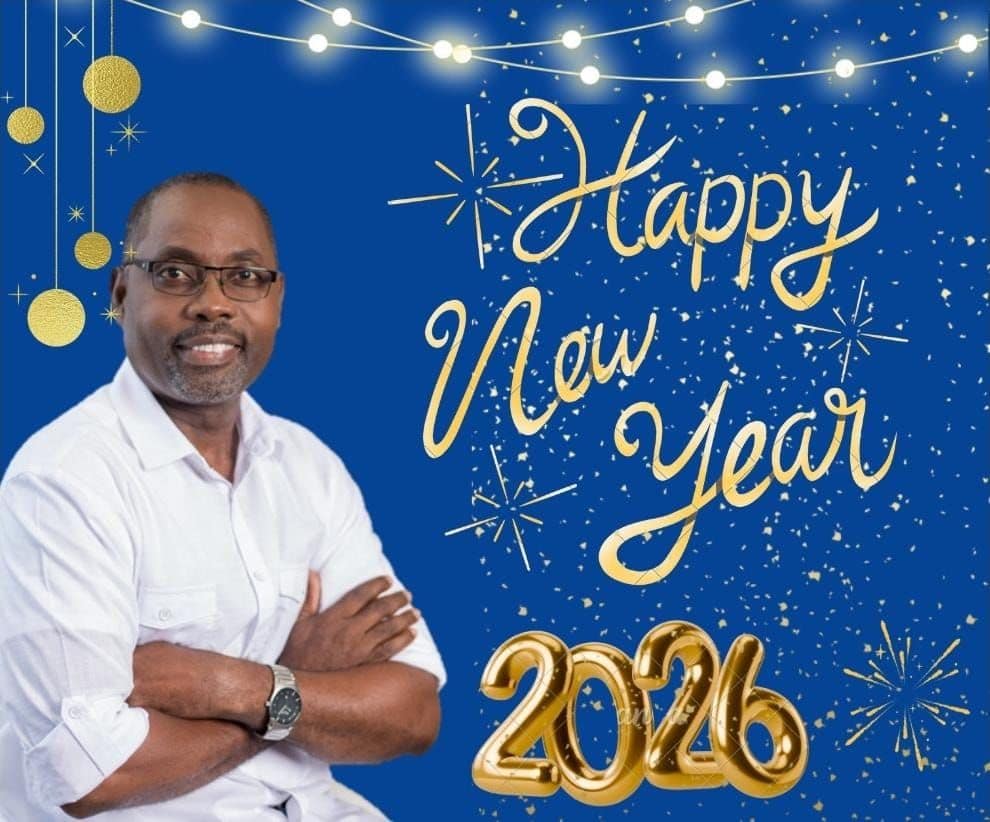
    In a profound New Year’s message addressing the nation, community advocate Jermaine N. Edwards has articulated a vision of collective resilience and purposeful action for Antigua and Barbuda. The statement, originating from St. John’s Rural South but resonating across the twin-island nation, moves beyond conventional seasonal greetings to offer a strategic framework for national perseverance.

    The reflection acknowledges the underlying anxieties that have characterized the past year, noting governmental transitions, regional instability, evolving global alliances, and pressing concerns regarding national security, food sovereignty, and transportation accessibility. For small island developing states like Antigua and Barbuda, these challenges underscore their particular vulnerability to external shocks and the critical importance of interdependency.

    The address proposes a dual approach to building national resilience. First, it emphasizes reconnecting with agricultural foundations through practical measures like backyard gardening, framing this not merely as a food security initiative but as an act of dignity and self-reliance. The philosophy that ‘little is much’ when combined with faith and determination serves as a guiding principle.

    Second, the message highlights the indispensable role of social cohesion. Resilience is portrayed as cultivated through knowing neighbors, mutual support systems, and community networks that facilitate sharing, trading, and collective upliftment. This community-first approach is presented as essential armor against uncertainty.

    The philosophical core of the address centers on compassionate action and theological pragmatism. While affirming divine presence, it equally stresses human responsibility—choosing empathy over judgment, unity over division, and preparedness over complacency. The reflection on life’s uncertainty serves as a powerful reminder that today’s hardship experienced by one could become tomorrow’s challenge for all.

    Looking toward 2026, the message concludes with an empowering declaration: the presence of breath signifies the persistence of purpose. It calls for courageous hearts, steadfast faith, and renewed commitment to intergenerational solidarity—uplifting youth as the nation’s promise while honoring seniors who built the foundation through sacrifice. The ultimate conclusion is that unified standing makes a nation unshakeable.

    The communication stands as both a spiritual meditation and a practical manifesto for national development through community action, collective faith, and purposeful unity.
  • COMMENTARY – Antigua and Barbuda Constitutional Reform

    COMMENTARY – Antigua and Barbuda Constitutional Reform

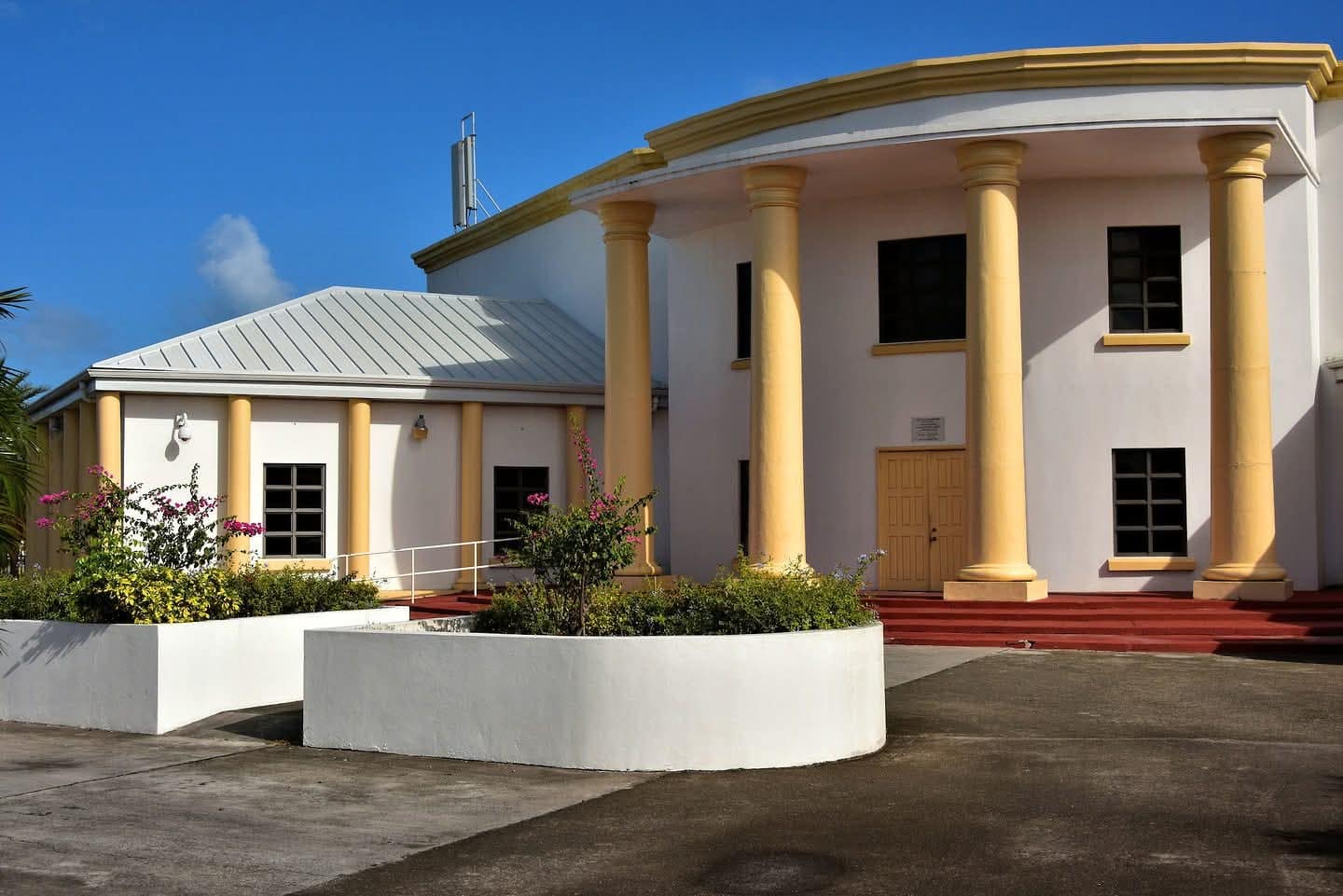
    Antigua and Barbuda has embarked on a significant constitutional modernization effort targeting its 44-year-old foundational document. Legal expert Yves Ephraim has initiated a comprehensive proposal series addressing what he describes as critical gaps in the current constitution’s protection mechanisms against state overreach.

    The reform initiative centers on establishing robust safeguards against potential government abuse, emphasizing that constitutional frameworks must account for human fallibility within leadership structures. Ephraim argues that blind trust in government officials is fundamentally misguided, noting that positions of power don’t transform individuals into infallible entities. This perspective shapes his proposed reforms targeting two primary areas of governance.

    The first major proposal concerns parliamentary leadership selection. Ephraim recommends fundamentally restructuring the appointment process for the Speaker of the House of Representatives, suggesting the opposition leader should nominate candidates requiring two-thirds majority approval. This approach aims to ensure broader consensus and prevent majority party domination. Additionally, he proposes transforming the Senate into a non-political body with members selected by civil society organizations including chambers of commerce, labor unions, and professional associations to serve as an effective check on parliamentary decisions.

    The second proposal addresses ministerial composition, recommending strict limitations on elected representatives serving in Cabinet positions. Ephraim highlights the inherent conflict of interest when parliamentarians simultaneously hold executive roles, citing the Bendals quarry case where constituents lost representation due to their representative’s cabinet allegiance. He suggests permitting no more than two elected MPs beyond the prime minister in Cabinet, arguing that ministerial positions should be allocated based on capability rather than as electoral rewards.

    These constitutional amendments aim to rebalance power dynamics, enhance representation safeguards, and create institutional mechanisms that prioritize national interest over partisan politics. The proposed reforms represent one of the most substantial reconsiderations of governance structures in the nation’s recent history.

  • NEW YEAR MESSAGE from the Incoming Chair of the Caribbean Community, Prime Minister of St Kitts and Nevis

    NEW YEAR MESSAGE from the Incoming Chair of the Caribbean Community, Prime Minister of St Kitts and Nevis

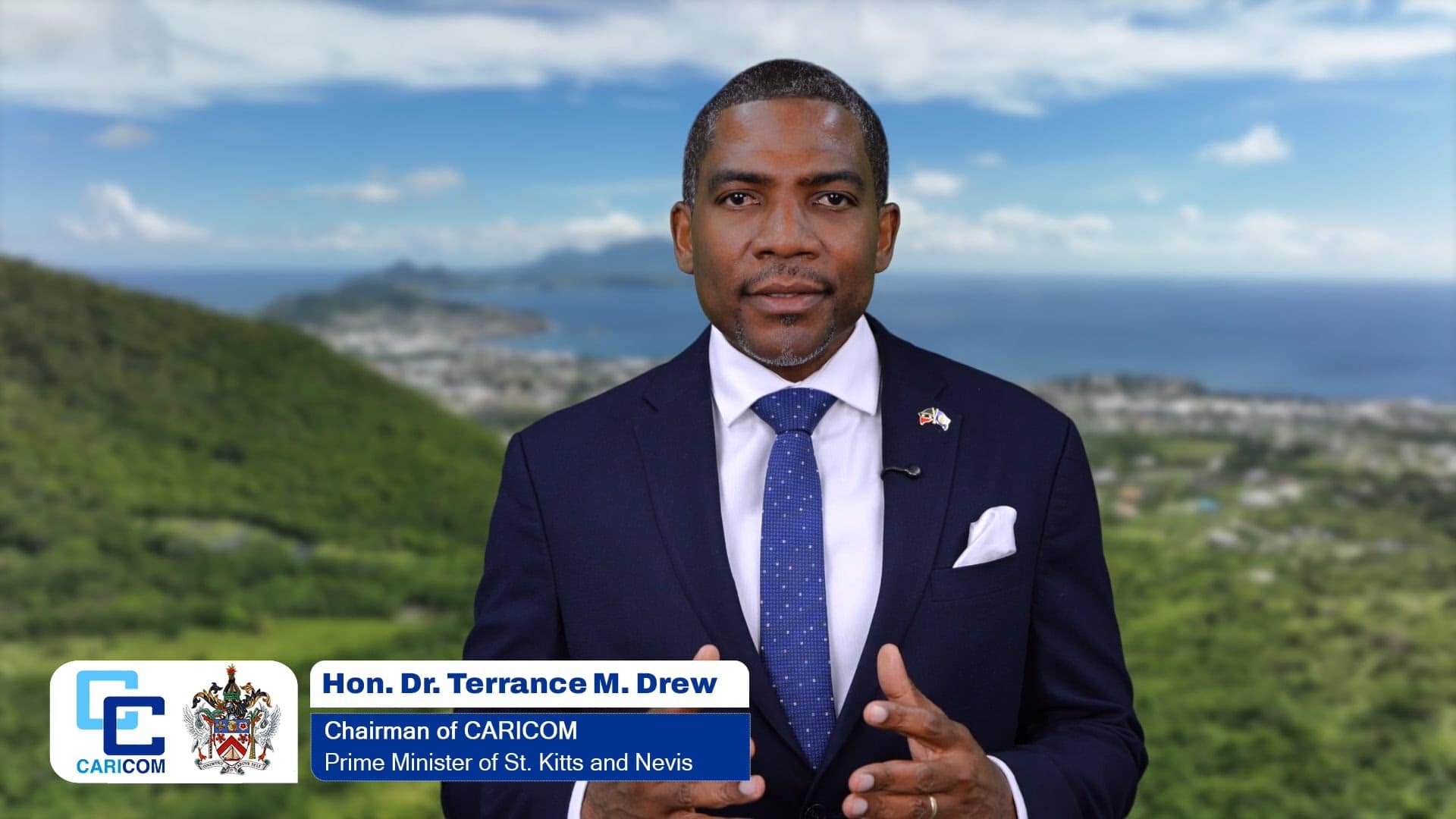
    Dr. Terrance Drew, Prime Minister of St. Kitts and Nevis, has officially assumed the rotating chairmanship of the Caribbean Community (CARICOM) on January 1, 2026, marking the beginning of his six-month tenure leading the regional bloc. His installation coincides with a comprehensive New Year’s address directed toward Caribbean citizens and diaspora communities worldwide.

    In his inaugural message as CARICOM Chairman, Dr. Drew commenced by extending gratitude to his predecessor, Jamaican Prime Minister Andrew Holness, for his stewardship during a period of regional instability. He further acknowledged the collaborative efforts of fellow CARICOM Heads of Government, the Secretariat, and regional leadership in fortifying the Community’s foundational objectives.

    The address reflected deeply on CARICOM’s historical context, noting its establishment in 1973 via the Treaty of Chaguaramas. This foundational agreement emerged from a strategic recognition by regional forebears that smaller, vulnerable states required collective action to navigate an evolving global landscape. The core mission—to foster economic integration, harmonize foreign policy, and amplify the Caribbean’s international voice—was characterized as an act of strategic foresight and regional self-confidence.

    Dr. Drew enumerated CARICOM’s tangible achievements, highlighting expanded markets through regional trade, enhanced mobility of skills and labor, and advancements in health systems, disaster management, education, and climate advocacy. He emphasized that in today’s volatile global environment, regional integration transcends choice and has become an imperative for sustainable development.

    The message also addressed pressing regional concerns, reaffirming CARICOM’s commitment to reparatory justice through its dedicated Commission and Ten Point Plan. Regarding Haiti, Dr. Drew confirmed the Community’s sustained engagement to support stabilization and rebuilding efforts, including through the Eminent Persons Group and implementation of UN Security Council resolutions.

    Celebrating the Caribbean’s profound cultural and intellectual contributions—from pioneering musical genres and literary movements to global sporting excellence—the Chairman framed these achievements as products of resilience and disciplined imagination rather than historical accident.

    Addressing recent public disagreements among Member States, Dr. Drew acknowledged that differences are inherent within a diverse community but stressed the necessity of managing dialogues with mutual respect and regional responsibility. CARICOM, he clarified, was designed not as a frictionless space but as a constructive forum for resolving differences internally, underpinned by the conviction that collective strength outweighs individual disputes.

    The Chairman concluded with a call for renewed commitment to CARICOM’s principles, stronger institutional coordination, and strategic maturity on the global stage. He announced St. Kitts and Nevis’ preparations to host the 50th Regular Meeting of the Conference of Heads of Government from February 24-27, 2026, extending a formal invitation to fellow leaders to collaborate on priority issues affecting regional welfare.

  • Pringle Says UPP Would Move Quickly to Repair U.S. Relations

    Pringle Says UPP Would Move Quickly to Repair U.S. Relations

    Antigua and Barbuda’s political landscape is bracing for potential diplomatic shifts as Opposition Leader Jamale Pringle announced ambitious plans to repair strained relations with the United States should his United Progressive Party (UPP) gain power. The declaration comes amid escalating concerns over recently imposed visa restrictions that threaten both citizen mobility and economic stability.

    In his comprehensive New Year’s address, Pinter highlighted the immediate ramifications of the visa constraints, noting that effective January 1st, numerous visa categories have become inaccessible to Antiguan and Barbudan nationals. “Prospective applicants find themselves confronting closed doors at the dawn of this new year,” Pinter emphasized, adding that those without existing valid visas face indefinite limitations on US entry permissions.

    The opposition leader challenged the current administration’s approach, asserting that Prime Minister Gaston Browne’s assurances of diplomatic resolution have yielded no tangible progress. “Despite repeated governmental promises that negotiated solutions would emerge, the situation remains fundamentally unchanged,” Pinter stated, positioning his party as the alternative capable of genuine diplomatic breakthrough.

    Pinter outlined a strategic framework for engagement, promising that a future UPP government would leverage all available diplomatic channels and historical goodwill to rapidly normalize relations with Washington. Central to this initiative would be preventing additional economic sanctions that could further destabilize the nation’s fragile economy and compromise citizen welfare. The proposed diplomatic offensive aims to safeguard national interests while restoring critical access to American markets and mobility options.

  • Pringle Warns Citizenship Programme May Be Doing More Harm Than Good, UPP Reviewing CIP

    Pringle Warns Citizenship Programme May Be Doing More Harm Than Good, UPP Reviewing CIP

    In a significant political development, United Progressive Party (UPP) Leader Jamale Pringle has announced a comprehensive internal review of Antigua and Barbuda’s Citizenship by Investment Programme (CIP). This decisive action comes amid mounting international scrutiny and newly implemented restrictions affecting visa access to the United States for Antiguan and Barbudan nationals.

    During his 2026 New Year’s address, Pringle revealed that his opposition party is critically examining whether the controversial program continues to serve the nation’s best interests. He emphasized that the current administration has created excessive dependency on CIP revenues, with even essential government obligations like monthly Social Security Scheme payments now relying on the program’s proceeds.

    “Our caucus is actively evaluating the viability of our Citizenship by Investment Programme,” Pringle stated. “Due to the Browne Administration’s inadequate management, numerous critical governmental functions have become disproportionately dependent on CIP revenues.”

    The opposition leader outlined plans to engage financial experts, policy analysts, and key stakeholders to conduct a thorough risk-benefit analysis. This consultation aims to determine whether the program’s advantages still justify the associated challenges and international concerns.

    Pringle directly connected the CIP review to recent visa access issues, noting that since January 1st, many citizens have found themselves unable to obtain certain categories of U.S. visas. He criticized the government’s diplomatic approach, stating that despite Prime Minister Gaston Browne’s assurances of resolution through diplomatic channels, the restrictions remain firmly in place.

    The UPP leader pledged that a future administration under his leadership would prioritize restoring positive relations with the United States and preventing additional restrictions that could destabilize the nation’s economy. Pringle framed the CIP evaluation as part of a broader initiative to reestablish governance credibility and protect Antigua and Barbuda’s international reputation throughout 2026 and beyond.

  • PM Browne Urges Young People to Pursue Skills or Degrees in 2026

    PM Browne Urges Young People to Pursue Skills or Degrees in 2026

    In a comprehensive New Year’s address to the nation, Prime Minister Gaston Browne of Antigua and Barbuda articulated a transformative vision for national development centered on educational advancement, continuous skill acquisition, and community harmony. The leader positioned 2026 as a pivotal year for the twin-island nation, emphasizing that sustainable progress hinges on cultivating a knowledgeable, adaptable citizenry dedicated to perpetual self-improvement.

    Browne’s address specifically targeted the nation’s youth, urging them to aggressively pursue both academic qualifications and technical proficiencies. He characterized education as the fundamental catalyst for enabling meaningful participation in the workforce and driving comprehensive national development. The Prime Minister’s message, however, extended beyond young citizens, challenging adults to embrace learning as an ongoing civic responsibility rather than a concluded chapter of early life.

    The Prime Minister framed productivity and national competitiveness as direct outcomes of this collective commitment to growth, asserting that progress must transcend traditional barriers of political affiliation, age, and socioeconomic status. In a significant connection, Browne explicitly linked educational attainment and personal discipline to social stability, calling for a unified rejection of crime and violence. He posited that destructive behaviors fundamentally erode community foundations and cripple the collaborative effort required to build a resilient society.

    Browne concluded by asserting that true national development transcends economic policy alone, identifying shared values, disciplined cooperation, and social cohesion as the indispensable drivers of lasting advancement. He called upon all citizens to approach the coming year with renewed purpose and responsibility, framing education, lifelong learning, and peaceful coexistence as the cornerstones of Antigua and Barbuda’s future prosperity.

  • New Year’s Day Message ABEC’s Chairman Ambassador Arthur G.B Thomas

    New Year’s Day Message ABEC’s Chairman Ambassador Arthur G.B Thomas

    In his annual New Year’s address, Chairman of the Antigua and Barbuda Electoral Commission (ABEC) Ambassador Arthur G.B. Thomas articulated a comprehensive vision for democratic consolidation throughout 2026. The message emphasized the Commission’s ongoing dedication to enhancing electoral integrity through systematic modernization initiatives while honoring the nation’s democratic legacy.

    The commencement of the new year represents a pivotal moment for national reflection and renewed commitment to constitutional principles that form the foundation of Antigua and Barbuda’s governance structure. Throughout the previous year, ABEC has implemented strategic measures to reinforce electoral safeguards and advance systemic modernization, operating under core values of transparency, professional excellence, and institutional integrity.

    Chairman Thomas formally acknowledged critical partnerships that have supported these efforts, specifically highlighting Canadian Bank Note as the Commission’s principal technology provider. Their technical expertise has proven instrumental in developing essential electoral infrastructure components. The Commission additionally expressed gratitude toward dedicated staff members, civil society organizations, and political representatives whose collaborative engagement remains vital to successful election administration.

    The address included solemn recognition of the late Sir Gerald Watt, whose profound contributions to democratic institution-building and constitutional governance established an enduring legacy. His exemplary public service continues to inspire current democratic strengthening initiatives.

    Looking toward future electoral processes, the Commission urged all eligible citizens to complete voter registration procedures and confirmed registrants to verify their identification documents remain current. ABEC reaffirmed its commitment to promoting active civic participation, comprehensive voter education, and informed citizenship as fundamental pillars of democratic vitality.

    Chairman Thomas concluded by reiterating ABEC’s dedication to collaborative governance through open consultation and shared responsibility with the citizens of Antigua and Barbuda. This cooperative approach aims to ensure democratic institutions maintain responsiveness, credibility, and public trust throughout the coming year and beyond.

  • Pringle Pledges ‘People-First’ Governance in New Year’s Message

    Pringle Pledges ‘People-First’ Governance in New Year’s Message

    In a landmark New Year’s address to the nation, Premier Pringle articulated a transformative vision for governance, placing citizens at the epicenter of all policy and administrative actions. The speech, broadcast nationally, marked a significant departure from traditional rhetoric by introducing a comprehensive ‘People-First’ framework designed to recalibrate the government’s operational ethos.

    The Premier’s message meticulously detailed a multi-faceted strategy focused on enhancing public service efficiency, expanding social welfare protections, and fostering inclusive economic growth. This initiative promises to prioritize healthcare accessibility, educational reform, and housing affordability as foundational pillars of the new governance model. Pringle emphasized that every governmental department will undergo restructuring to ensure bureaucratic processes are streamlined to serve citizens more effectively, rather than perpetuate administrative hurdles.

    Beyond domestic policy, the address situated this people-centric approach within a broader global context, suggesting that rebuilding public trust is paramount in an era of geopolitical uncertainty and technological disruption. The Premier acknowledged past systemic shortcomings and pledged unprecedented transparency measures, including real-time performance tracking of public services and community-led oversight committees.

    Political analysts are already characterizing the speech as a defining moment for Pringle’s administration, potentially setting the ideological course for the remainder of their term. The commitment to a ‘People-First’ agenda signals a deliberate pivot towards empathetic and accountable leadership, with tangible benchmarks expected to be unveiled in the upcoming parliamentary session.

  • MP Richard Lewis’ New Year Message

    MP Richard Lewis’ New Year Message

    As the calendar turns to 2026, Member of Parliament Richard S. Lewis has delivered a contemplative New Year’s message blending spiritual gratitude with a call to civic action. The representative for St. John’s Rural West framed the transition between years as both a moment of reflection and an opportunity for national transformation.

    Lewis commenced his address by expressing theological thankfulness for safe passage through 2025 while invoking divine grace for the uncertainties ahead. His message honored citizens who passed away in the previous year while extending prayers to grieving families throughout Antigua and Barbuda.

    The parliamentarian’s narrative then pivoted toward national development, emphasizing that meaningful change must originate from individual citizens rather than external forces. “Many of us desire change in many aspects of life here in Antigua and Barbuda,” Lewis observed. “Let the change begin with us. Let us be the change we want to see.”

    Central to his address was the advocacy for substantive governance reforms characterized as “true people-centered governance – not only in words but in deeds.” Lewis articulated a vision of collective progress through the national motto “Each Endeavouring, All Achieving,” positioning communal effort as the foundation for national improvement.

    The MP made specific commitments to his constituency, promising continued advocacy for infrastructure development and services through engagement with central government agencies. He characterized his representation as both ongoing and deeply rooted in local identity, signing his message with the phrase “Rural West to the Bone” and the hashtag “#Homegrown.”

    Lewis concluded with traditional seasonal blessings wishing citizens health, prosperity, and the realization of personal aspirations for 2026, framing these hopes within the context of national unity and collaborative nation-building.

  • Magnitude 3.8 Earthquake Recorded North of Antigua and Barbuda

    Magnitude 3.8 Earthquake Recorded North of Antigua and Barbuda

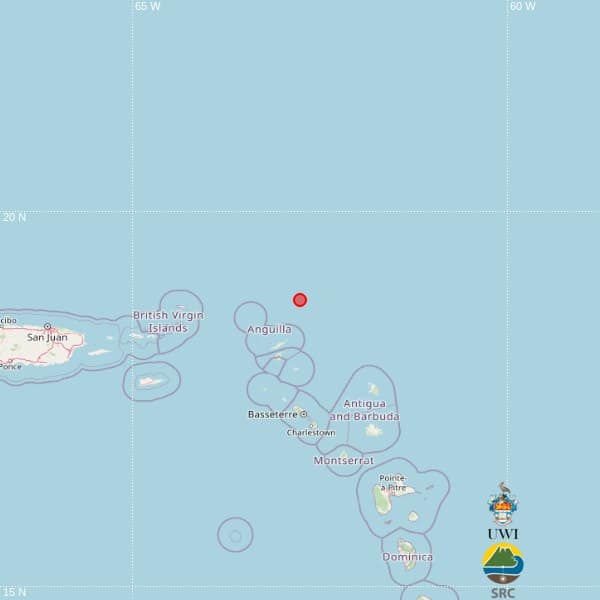
    The Eastern Caribbean region experienced a moderate seismic event in the opening hours of 2026, as confirmed by preliminary data from the University of the West Indies Seismic Research Centre. The tremor, registering magnitude 3.8 on the Richter scale, occurred at 6:24 a.m. local time (10:24 UTC) on January 1, 2026.

    According to automated monitoring systems, the earthquake’s epicenter was precisely located at coordinates 18.82°N latitude and 62.77°W longitude, with the seismic activity originating at a depth of approximately 10 kilometers beneath the Caribbean Sea floor. The event was situated approximately 169 kilometers north of Basseterre, St. Kitts and Nevis; 215 kilometers northwest of St. John’s, Antigua and Barbuda; and 233 kilometers north-northwest of Brades, Montserrat.

    The Seismic Research Centre emphasized that their initial measurements were automatically generated and remain subject to verification and detailed analysis by their team of seismic experts. Standard procedure requires thorough review of all preliminary data to ensure accuracy in location and magnitude assessment. No immediate reports of structural damage, coastal impacts, or injuries have been documented across the potentially affected regions. The earthquake’s moderate strength and offshore positioning significantly reduced any potential impact on populated areas.