标签: Antigua and Barbuda

安提瓜和巴布达

  • PM Browne Says Antigua and Barbuda Will Respond to Global Pressures With Diplomacy, Not Anger

    PM Browne Says Antigua and Barbuda Will Respond to Global Pressures With Diplomacy, Not Anger

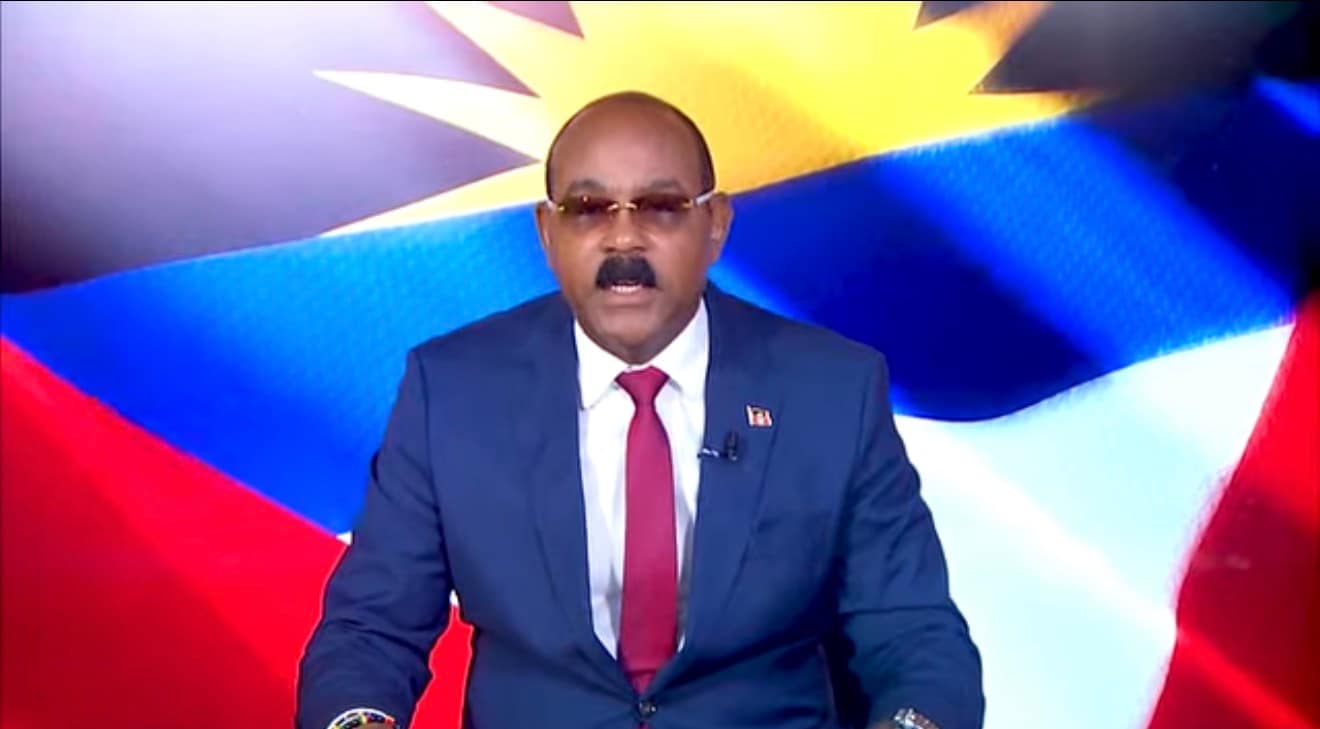
    In his 2026 New Year’s Address, Prime Minister Gaston Browne articulated Antigua and Barbuda’s strategic approach to navigating an increasingly volatile global landscape. The Caribbean leader emphasized that small states like his nation face disproportionate impacts from international policy decisions and geopolitical shifts occurring beyond their borders.

    Browne acknowledged the substantial challenges confronting small, open economies in today’s uncertain world, where foreign decisions frequently create direct consequences for vulnerable nations. Rather than adopting confrontational or reactionary positions, Browne outlined a foreign policy framework rooted in disciplined diplomacy, competence, and restraint.

    ‘Global currents shift from time to time, creating geopolitical challenges,’ Browne stated, observing that ‘decisions taken elsewhere ripple across small states such as ours.’ Despite these external pressures, the Prime Minister asserted that Antigua and Barbuda would engage from a position of strength, emphasizing that true national power derives not from grievance or anger but from steadfast diplomacy and resilience.

    Browne positioned diplomacy as an essential pillar of national survival and advancement for smaller states that lack military might or economic scale. He stressed that emotional or divisive reactions to international developments ultimately weaken a country’s capacity to protect its interests. Using the maritime proverb ‘Calm seas never made a skilled sailor,’ Browne underscored the necessity of steadiness and resolve when confronting global uncertainty.

    The Prime Minister further connected domestic unity to international credibility, asserting that ‘Unity at home is our first line of defense abroad.’ This cohesion, he argued, enhances the nation’s negotiating power on the global stage. Browne concluded by urging citizens to maintain confidence and patience, reaffirming that Antigua and Barbuda would continue pursuing constructive engagement with international partners while safeguarding national interests through principled diplomacy rather than hostility.

  • ABEC Pledges Greater Public Consultation on Electoral Modernisation

    ABEC Pledges Greater Public Consultation on Electoral Modernisation

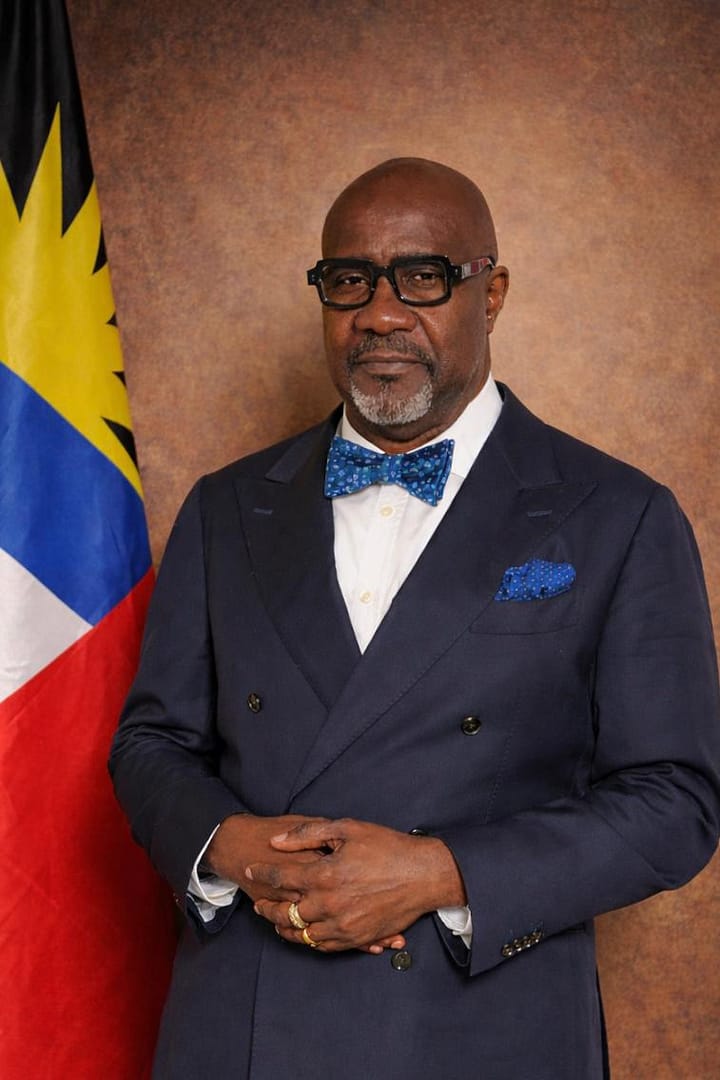
    The Antigua and Barbuda Electoral Commission (ABEC) has announced a significant initiative to strengthen democratic processes through expanded public consultation. Chairman His Excellency Ambassador Arthur G.B. Thomas declared in a New Year’s Day address that the Commission will intensify engagement with citizens, political representatives, and stakeholders regarding the ongoing modernization of the nation’s electoral framework.

    Ambassador Thomas emphasized that democratic development constitutes a dynamic, evolving process rather than a static achievement. “Democratic consolidation is not a static achievement, but a continuing process,” stated Thomas, underscoring the necessity of sustained dialogue and active participation from all sectors of society.

    The Commission’s modernization efforts will include comprehensive review of electoral legislation, particularly the Representation of the People Act, to align with contemporary democratic standards, technological innovations, and evolving public expectations. Thomas highlighted that transparency, professional conduct, and institutional integrity form the cornerstone of ABEC’s operational philosophy, noting these principles are fundamental to maintaining public confidence in electoral outcomes.

    “As Chairman, I reaffirm ABEC’s commitment to working with the people of Antigua and Barbuda in a spirit of openness, consultation, and shared responsibility,” Thomas affirmed. This commitment to collaborative governance represents a strategic approach to ensuring electoral institutions remain credible, responsive, and deserving of public trust in an era of rapidly changing democratic landscapes.

  • Senator Michael M. Joseph Reflects on Year of Service, Pledges Continued Focus on Youth and Community Development

    Senator Michael M. Joseph Reflects on Year of Service, Pledges Continued Focus on Youth and Community Development

    Senator Michael M. Joseph has characterized his inaugural year representing St. John’s Rural West as a period dedicated to foundational, people-centric governance. In a comprehensive New Year’s address, the Senator emphasized a philosophy of leadership built on persistent engagement and tangible results over public spectacle.

    Reflecting on his tenure, Joseph detailed a multifaceted agenda that prioritized education reform, youth development initiatives, healthcare accessibility, community safety measures, sports programs, and critical infrastructure upgrades. He articulated a belief that genuine progress is frequently the product of meticulous, consistent effort rather than intermittent high-profile declarations.

    The Senator issued profound gratitude to a broad coalition of community stakeholders, explicitly acknowledging teachers, medical professionals, local leaders, volunteers, parents, senior citizens, and the youth. He credited their ongoing input and diligent work as instrumental in informing his legislative priorities and operational methodology in public service.

    Looking forward, Joseph conveyed his aspirations for the constituents of St. John’s Rural West and the nation at large, wishing for a new year defined by enhanced well-being, security, collective unity, and the uninterrupted advancement of community-driven projects. His message concluded with a pledge to continue his focused advocacy on the issues impacting everyday citizens.

  • UPP’s Bowen Says U.S. Visa Restrictions Crush Dreams of Young Antiguans

    UPP’s Bowen Says U.S. Visa Restrictions Crush Dreams of Young Antiguans

    In a poignant address published Wednesday, United Progressive Party Deputy Leader Sherfield Bowen delivered a scathing critique of Antigua and Barbuda’s diminished international standing following recent U.S. visa restrictions. The opposition parliamentarian contrasted his personal journey four decades ago—when he pursued American educational opportunities without financial means or support—with the current reality facing young Antiguans.

    Bowen emotionally recounted how contemporary youth with similar aspirations now face insurmountable barriers since the implementation of stringent U.S. visa policies effective midnight Tuesday. He attributed these developments to the current administration’s diplomatic failures, asserting the nation has effectively placed itself on a U.S. ‘banned countries list.’

    The ramifications extend beyond elite travel, significantly impacting ordinary citizens seeking first-time visas for family visits, educational pursuits, employment opportunities, and tourism. Bowen particularly highlighted how the Citizenship by Investment Programme has undermined confidence in the nation’s passport, rendering what was once ‘precious’ now ‘worthless’ in multiple jurisdictions. He described the program as a ‘golden calf’ now on ‘life support.’

    While emphasizing his primary concern rests with young citizens rather than the investment scheme itself, Bowen lamented how their aspirations for education, healthcare, travel, and work in the United States have been ‘suddenly ignited into a ball of fire.’ The opposition leader concluded with a solemn declaration: ‘Antigua and Barbuda, I cry for thee.’

  • New Year, New Numbers: CARICOM’s 2026 Forecast

    New Year, New Numbers: CARICOM’s 2026 Forecast

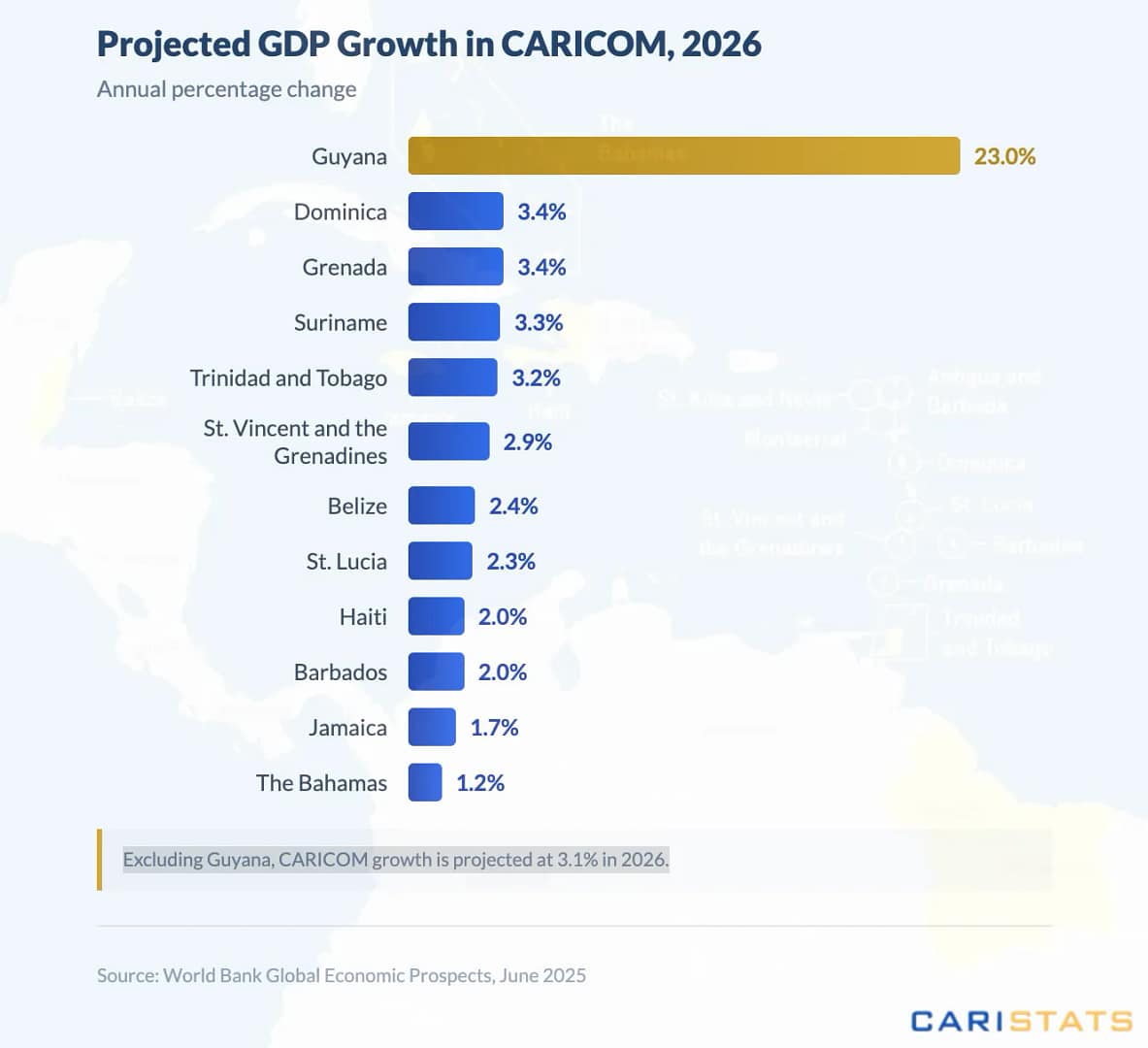
    The Caribbean region is positioned for substantial economic expansion in 2026, with the World Bank’s latest Global Economic Prospects report indicating a collective growth rate of 5.8%. This impressive regional performance is primarily driven by Guyana’s extraordinary economic surge, projected at 23% as its oil and gas sector continues its rapid development.

    Even excluding Guyana’s exceptional numbers, the Caribbean demonstrates remarkable stability with a solid 3.1% growth forecast. Multiple economies are contributing to this positive outlook, with Dominica and Grenada both expected to expand by 3.4%, closely followed by Suriname (3.3%) and Trinidad and Tobago (3.2%). St. Vincent and the Grenadines complete the upper growth tier with a projected 2.9% increase.

    Tourism-dependent nations are maintaining steady progress, with Belize anticipated to grow at 2.4%, St. Lucia at 2.3%, and Barbados at 2.0%. While Jamaica (1.7%) and The Bahamas (1.2%) show more modest growth projections, they continue positive economic trajectories. Haiti’s forecast of 2.0% growth remains surrounded by significant uncertainty due to ongoing challenges.

    The comprehensive data from the World Bank’s June 2025 assessment reveals a region establishing firm economic footing with substantial potential for continued development and investment opportunities across multiple sectors.

  • U.S.-CARICOM Relations: Year in Review (2025)

    U.S.-CARICOM Relations: Year in Review (2025)

    The Caribbean Community (CARICOM) concluded 2025 with notable achievements in regional integration and economic development, yet simultaneously confronted significant diplomatic challenges stemming from the foreign policy approach of Donald Trump’s second presidential term. According to analysis by Dr. Nand C. Bardouille, an international relations expert at The University of the West Indies, the Trump 2.0 administration has introduced substantial uncertainty into U.S. relations with the bloc’s fourteen sovereign member states.

    A particularly consequential development has emerged from Trinidad and Tobago, where a major recalibration of foreign policy alignment with the United States has created fissures within CARICOM’s unity. This shift reflects broader regional apprehensions about Washington’s renewed military presence across Caribbean territories and its evolving approach to hemispheric affairs.

    Dr. Bardouille’s comprehensive analysis, documented across multiple scholarly publications throughout 2025, identifies this foreign policy divergence as a critical test for regional cohesion. His research examines how member states are navigating competing national and regional interests amid heightened geopolitical tensions, particularly regarding Venezuela policy and great-power competition.

    The analytical series highlights how CARICOM nations have experienced foreign policy setbacks during the initial months of Trump’s renewed presidency. These challenges occur against the backdrop of escalating great-power politics that have intensified focus on spheres of influence throughout the Caribbean region.

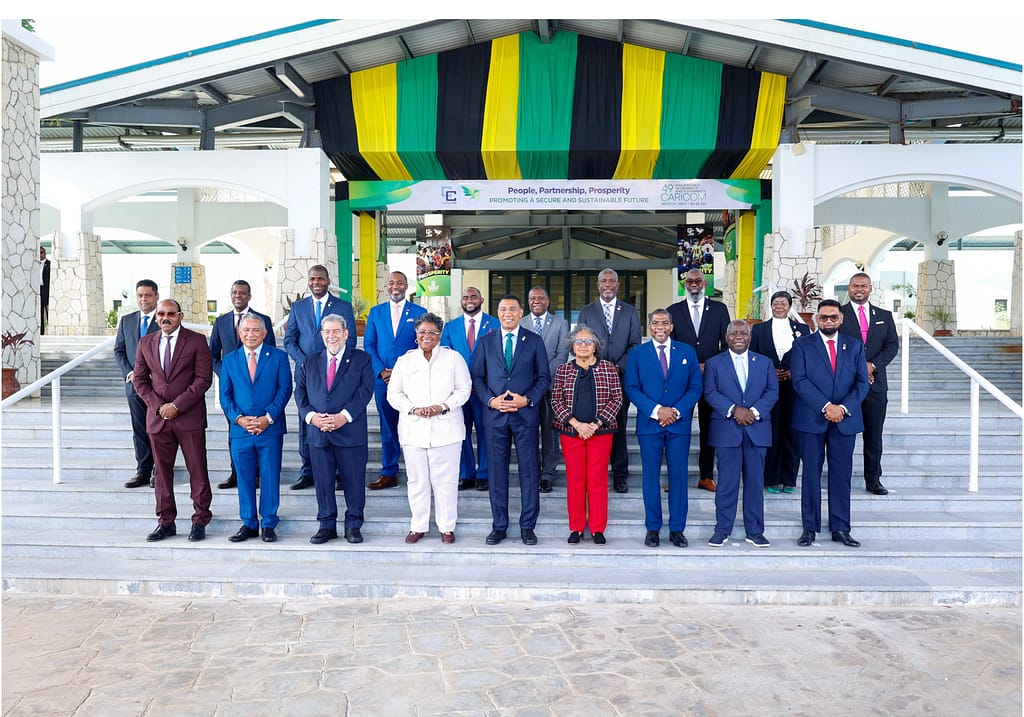
    Looking toward 2026, expectations are mounting that regional leadership will prioritize cooperative solutions over confrontation. The forthcoming Fiftieth Regular Meeting of the Conference of Heads of Government of CARICOM, scheduled for February in St. Kitts and Nevis, represents a crucial opportunity for diplomatic reconciliation.

    Incoming CARICOM Chairman Terrance Drew, Prime Minister of St. Kitts and Nevis, has signaled his commitment to fostering ‘reflection, calm leadership, and renewed commitment to the Caribbean ideal.’ This statement has been positively received by regional stakeholders who anticipate his chairmanship will help reset intra-CARICOM relations during this period of geopolitical uncertainty.

  • 2025 RECAP: Smith Says Progress in All Saints West Built on Steady Work, Community Support

    2025 RECAP: Smith Says Progress in All Saints West Built on Steady Work, Community Support

    Anthony Smith Jr., Member of Parliament for All Saints West, has characterized 2025 as a period of consistent advancement and meaningful community engagement in his annual review. The parliamentarian emphasized that his approach to governance remained firmly rooted in tangible outcomes and visible service delivery throughout the constituency and the broader nation of Antigua & Barbuda.

    Smith’s comprehensive review highlighted significant achievements across multiple sectors, with particular focus on infrastructure modernization, agricultural enhancement, and youth and family support programs. The MP’s methodology centered on maintaining constant visibility through regular town hall meetings, community project implementations, and strategic regional partnerships that collectively formed his service-oriented governance model.

    “Our progress is fundamentally built through incremental steps, with community needs forming the cornerstone of every decision,” Smith stated in his year-end address. He expressed profound gratitude toward constituents for their sustained trust and patience, acknowledging that their unwavering support proved indispensable to the year’s accomplishments.

    Looking toward 2026, Smith maintains an outcome-driven vision focused on expanding opportunities and accelerating development initiatives. “We enter the new year with renewed focus and energy, committed to delivering even greater results across All Saints West,” he affirmed, promising continued dedication to constituency service while concluding with optimistic New Year’s wishes for all residents.

  • Lovell Cites Roads, Closed Clinic as Key Concerns in All Saints West New Year’s Message

    Lovell Cites Roads, Closed Clinic as Key Concerns in All Saints West New Year’s Message

    Harold Lovell, caretaker representative for All Saints West from the United Progressive Party (UPP), has launched a scathing critique against the current administration for its failure to address critical infrastructure and healthcare deficiencies in his constituency. Speaking in a New Year’s address commemorating his fourth month in the caretaker role, Lovell highlighted the alarming state of road conditions and the prolonged shutdown of the area’s sole public health clinic.

    Lovell emphasized that despite repeated governmental assurances, All Saints Road and Buckley Line continue to rank among the island’s most deteriorated thoroughfares. These transportation routes, essential for daily commutes and local commerce, have suffered from neglect, causing significant disruption to residents’ lives.

    The healthcare crisis in All Saints West has further deepened with the ongoing closure of the public health clinic since April 2023. This absence of medical facilities has compelled residents to seek basic healthcare services elsewhere, creating unnecessary hardships and limiting access to urgent medical attention.

    Lovell revealed that even when the UPP organized a temporary free health clinic to address immediate community needs, the initiative faced criticism from government supporters. Meanwhile, the promised government polyclinic remains non-operational with no visible progress toward completion.

    Characterizing these issues as fundamental matters of fairness and dignity, Lovell asserted that reliable infrastructure and accessible healthcare directly impact every household’s quality of life. He contrasted the UPP’s approach of practical solutions and people-focused governance against what he described as the current administration’s pattern of unfulfilled commitments.

    The opposition leader pledged to maintain pressure on the government for accountability while advocating vigorously for constituent needs. As 2026 commences, Lovell encouraged residents to remain hopeful and united, emphasizing that collective advocacy and vocal demands for improved conditions are essential for driving meaningful change.

  • Massiah Raises Concerns Over U.S. Immigration Policy Impact on Antigua and Barbuda

    Massiah Raises Concerns Over U.S. Immigration Policy Impact on Antigua and Barbuda

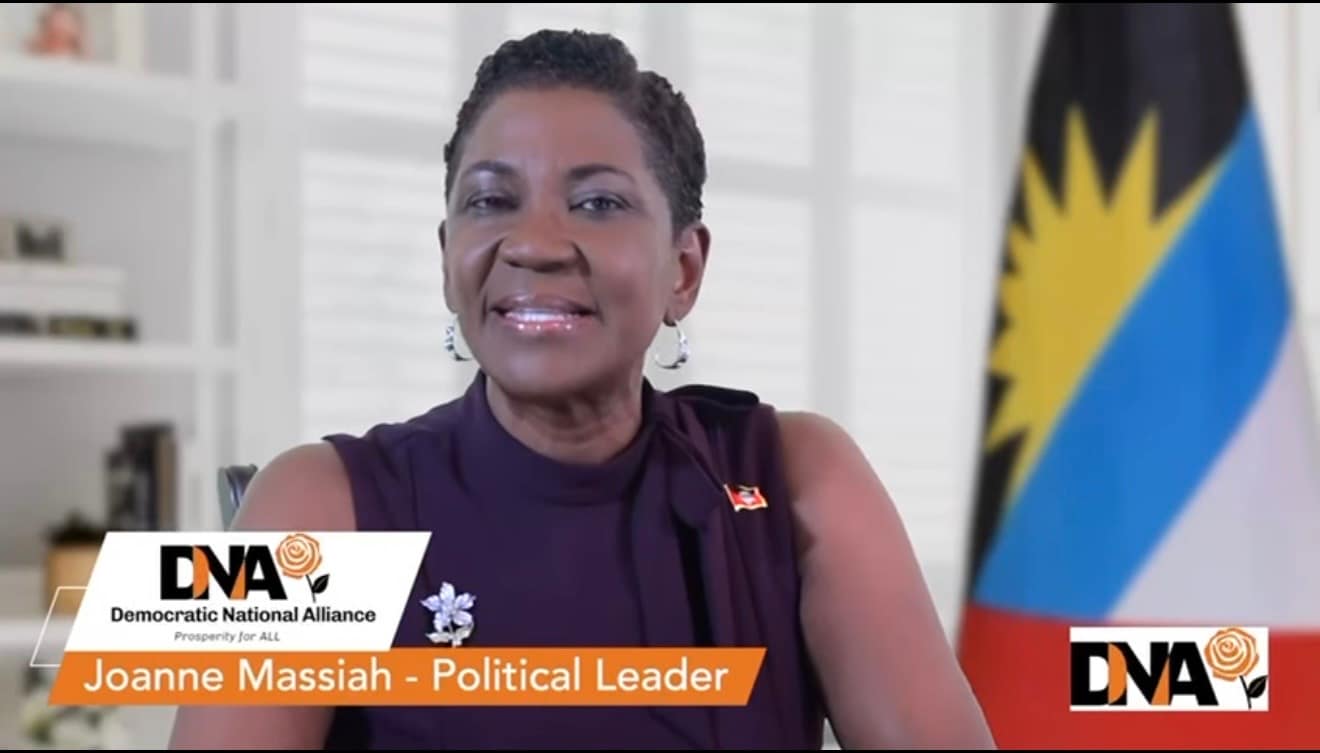
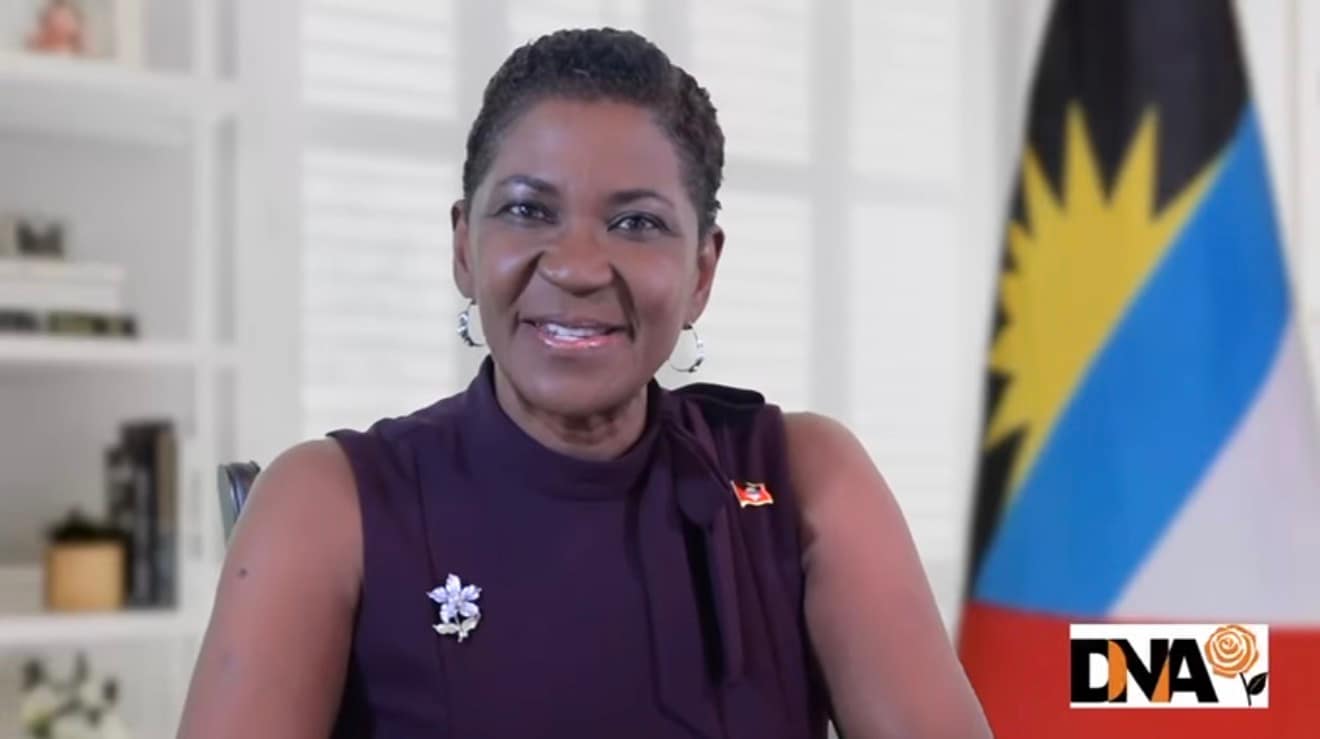
    Democratic National Alliance leader Joanne Massiah has issued a stark warning regarding recent U.S. immigration policy changes, indicating they may produce substantial ripple effects across Antigua and Barbuda’s economy and society. In her New Year’s address, Massiah revealed that the policy announcement has generated significant concern among citizens both domestically and within the diaspora community.

    The political leader emphasized that limitations affecting Antiguan and Barbudan passport holders could potentially disrupt travel patterns, commercial exchanges, family connections, and economic stability—particularly for those maintaining strong ties to the United States. Massiah noted that apprehensions have emerged across political and social spectrums, with many questioning whether the situation could have been prevented through more careful diplomatic handling.

    While expressing confidence that ongoing discussions with Washington would ultimately yield a resolution, Massiah acknowledged public anxiety about potential concessions the nation might need to make to secure policy adjustments. She stressed that small island states must exercise particular caution in international relations, emphasizing that diplomatic engagements require sober judgment and strategic wisdom, especially when dealing with more powerful global partners.

    Massiah highlighted that communication missteps on the international stage could have severe consequences for vulnerable economies like Antigua and Barbuda’s. Despite current uncertainties, she urged national unity and calm, advocating for continued focus on long-term national interests. The DNA leader reiterated her party’s support for diplomatic solutions while emphasizing that governmental decisions must prioritize accountability, foresight, and citizen welfare—both at home and abroad.

    Concluding her message, Massiah called for collective determination, asserting that national strength resides in unity and shared commitment to protecting Antigua and Barbuda’s future within an increasingly complex global landscape.

  • DNA’s New Years Day Message

    DNA’s New Years Day Message

    In a significant New Year’s Day address, the Democratic National Alliance (DNA) has articulated a powerful vision for national renewal, positioning itself as a formidable force for change in the political landscape. The message, delivered against a backdrop of ongoing socio-economic challenges, serves as both a critique of the current administration and a manifesto for a future built on transparency, accountability, and collective effort.

    The party’s leadership framed their communication not merely as seasonal goodwill but as a strategic call to action. They emphasized the urgent need to move beyond partisan divides and political stagnation, advocating for a collaborative approach to governance. The core of the message centered on the restoration of public trust in institutions, which the party argues has been eroded by systemic issues and unfulfilled promises.

    A substantial portion of the address was dedicated to outlining a path toward economic revitalization. The DNA proposed a multi-faceted strategy focusing on sustainable development, job creation, and support for local enterprises. This economic blueprint is presented as a direct alternative to existing policies, which the alliance deems insufficient for addressing the cost-of-living crisis and widening inequality.

    Furthermore, the message underscored a commitment to social justice and strengthening community infrastructure. It called for comprehensive reforms in healthcare and education, framing these not as expenses but as vital investments in the nation’s human capital and future prosperity. The tone was decidedly forward-looking, aiming to inspire hope and mobilize citizens toward active participation in the democratic process.

    The DNA’s New Year proclamation ultimately functions as a defining moment, clearly staking its claim as a government-in-waiting ready to steer the country toward a more unified and prosperous era.