
As the global maritime community marks World Maritime Day 2024 on September 26, calls are growing louder to turn aspirational policy commitments into tangible, daily action that advances the sector toward long-overdue excellence. This year’s official theme, “From Policy to Practice: Powering Maritime Excellence,” aligns with a multi-year strategic focus from the International Maritime Organization (IMO): the 2026–2027 thematic framework prioritizes translating international maritime standards into enforceable national legislation, consistent on-the-ground implementation, targeted workforce training, and embedded equitable practices across every level of daily operations.
标签: Antigua and Barbuda
安提瓜和巴布达
-

Adrian Richardson Elected Chairman of ABLP’s St. Philip’s South Branch
An internal leadership election held by the St Philip’s South Constituency Branch of the Antigua and Barbuda Labour Party (ABLP) has delivered a decisive outcome, with Adrian Richardson claiming the position of branch chairman in a landslide win over his competitor. Held on Wednesday, the election was not limited to the top leadership post: party members turned out to cast ballots for six full executive branch positions, ranging from chairman and vice chairman to secretary, treasurer, women’s development officer and youth development officer.
In the race for chairman, Richardson outpaced former branch vice chairman Linda Josiah by a wide margin, securing 34 votes to Josiah’s 10. Following the confirmation of the final results, ABLP General Secretary Senator Shenella Govia extended official congratulations to Richardson on his electoral win. Govia shared that the party is eager to collaborate with Richardson in his new role, and looks forward to productive working relationship moving forward.
For his part, Richardson expressed surprise and gratitude at the scale of his victory, describing the outcome as a humbling show of support from party members. In his first public remarks after the win, he made a public pledge to prioritize the branch’s interests and commit his full effort to serving members throughout his tenure. He also issued a call for unity across all faction of the constituency branch, emphasizing that collective collaboration is key to advancing the party’s goals in the region. To guide his decision-making as he takes office, Richardson added that he will seek spiritual guidance throughout his term.
-
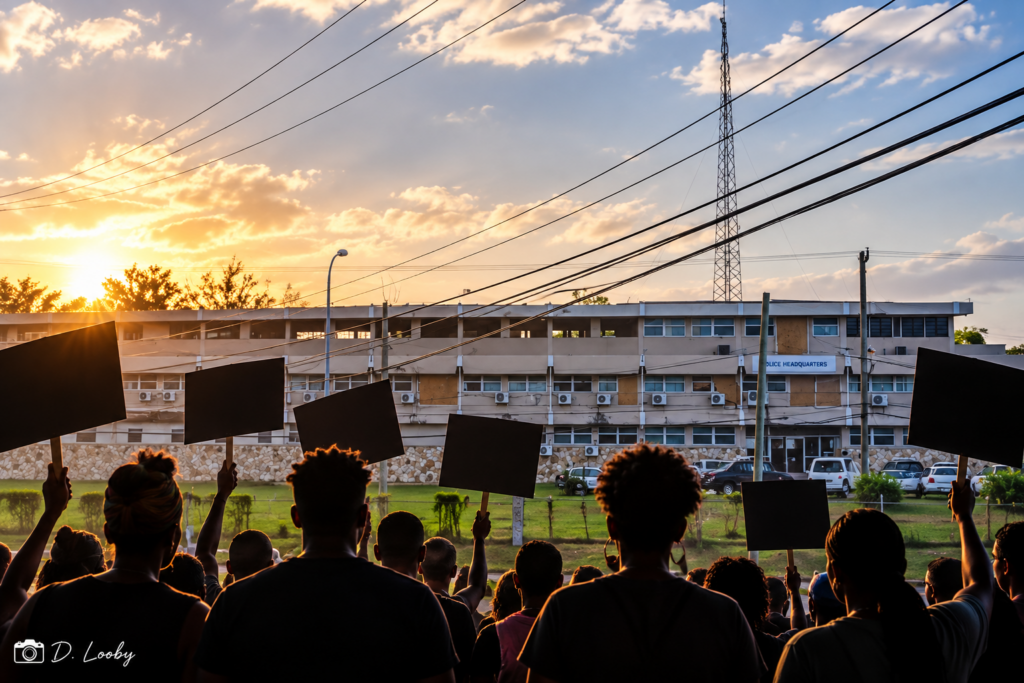
Justice Now to Stage Peaceful Picket at Police Headquarters Thursday
An Antigua and Barbuda-based justice advocacy organization, Justice Now, has issued a public call for community members to join a peaceful demonstration outside the national Police Headquarters this month, pushing law enforcement authorities to deliver long-awaited clarity on a backlog of unsettled criminal cases.
The planned picket is set to kick off at 4 p.m. on Thursday, September 24, at the Police Headquarters located on American Road in St. John’s — an address officially confirmed as the force’s central command by the Royal Police Force of Antigua and Barbuda. Under the rallying slogan “Justice Now — The Wait Has Gone On Long Enough,” the event is designed to shine a sustained spotlight on a wide range of unresolved cases that have left families without closure. These include uninvestigated or unsolved murders, unresolved missing person reports, suspicious deaths in custody, and other unaddressed criminal matters where victims and their loved ones continue to wait for formal police support and answers.
In a public statement announcing the demonstration, representatives from Justice Now emphasized that far too many homicide cases remain closed without resolution across the country, while dozens of missing person cases have been left stagnant, leaving grieving families with no concrete information about their loved ones’ fates. The organization firmly holds that every family affected by these unresolved cases has a fundamental right to have their concerns heard by authorities, and no case should be pushed out of public consciousness and official priorities simply because months or years have passed since the incident.
“Every life matters, every family deserves to be heard, and no case should simply fade from public memory because time has passed,” the group reiterated in its statement.
The upcoming picket is the latest high-profile action from Justice Now, which has emerged as a prominent voice calling for reform in the country’s correctional system in recent weeks. The group has been openly critical of conditions inside His Majesty’s Prison, particularly around handling of inmate deaths in custody, and has repeatedly pushed for stronger institutional accountability and systemic changes to the treatment of incarcerated people living with mental health conditions. Organizers are urging all community members who support the call for justice for affected families to join the peaceful gathering next week.
-

ASPIRE Calls for Wider Contraceptive Access Ahead of World Contraception Day
Every September 26, global reproductive health advocates mark World Contraception Day (WCD), a coordinated campaign designed to shine a spotlight on the critical need for equitable access to reliable contraception, counter widespread misinformation, and ensure all people can make autonomous decisions about their reproductive futures. This year’s WCD theme, “No Barriers, Just Choices: Contraceptive Access Now,” amplifies a urgent demand to eliminate systemic and legal obstacles that leave millions without the resources they need to plan their families.
For the past four years, regional advocacy group ASPIRE has worked to challenge the constitutionality of existing abortion laws across the Caribbean, building on a recent successful legal victory in Dominica. The organization now awaits a key court ruling on the challenge with cautious, measured optimism, framing the outcome as a make-or-break moment for reproductive rights in the region.
At its core, WCD’s mission is straightforward: to educate the public on the full range of contraceptive options available today, breaking down misconceptions that often prevent people from accessing the method that best fits their needs. Options span five broad categories: barrier methods such as condoms and diaphragms; hormonal methods including oral pills and injectable contraceptives; long-acting reversible contraceptives like intrauterine devices (IUDs) and subdermal implants; permanent sterilization methods such as vasectomy for men and tubal ligation for women; and emergency contraception, which can prevent unplanned pregnancy up to 72 to 120 hours after unprotected intercourse.
Advocates emphasize that expanding contraception access is not just a matter of individual autonomy—it is a proven strategy to reduce the number of unsafe abortions globally. The root of high abortion rates, they argue, is not demand for abortion itself, but unplanned pregnancy. By increasing access to reliable contraception and supporting consistent use, communities can cut rates of unintended pregnancy and, in turn, reduce the number of people seeking abortions.
New regional data collected across the Caribbean paints a stark picture of the current reproductive health crisis. Among women seeking care at public health clinics across the region, 80% reported that their most recent pregnancy was unplanned. Nearly 40% of these unplanned pregnancies end in abortion, and a shocking analysis of abortion patient data reveals that 81% of people who received an abortion were teenagers when they had their first procedure. Of that group, 59% were under the age of 16—statistics that point to widespread child sexual abuse and statutory rape, a problem long overlooked by regional policymakers.
These sobering numbers make clear that incremental changes to abortion law are not enough to address the region’s challenges, ASPIRE argues. Systemic change, including reform of outdated contraception access laws, is urgently needed. For example, nearly 40 years ago in 1984, the region amended the Age of Majority Act CAP 11, s.13 to legally allow 16-year-olds to access reproductive health care, including contraception, without parental consent. To this day, however, the law remains virtually unknown: adolescents, healthcare workers, health educators, and social workers are all largely unaware of the policy change, which has never been effectively disseminated to the public.
That 1984 reform only closed one critical legal gap: it aligned the age of contraceptive access with the age of consent, which is set at 16, eliminating the previous absurd requirement that people who could legally engage in sexual activity still needed parental permission to access contraception until age 18. But ASPIRE argues that further reform is needed to address the reality of early sexual debut across the region. To meaningfully tackle the crisis of teen pregnancy and child exposure to unprotected sex, there should be no arbitrary age restrictions on contraceptive access, the group says. Instead, policymakers should trust the professional judgment of frontline healthcare workers to provide confidential, appropriate care to young people regardless of their age.
The current reality across the Caribbean is dire: the region has the highest abortion rate in the world, and the second earliest average age of sexual debut globally. ASPIRE points to a glaring, unjust inconsistency in existing law to highlight the failures of current policy: the region holds children as young as 12 criminally responsible for their actions, yet denies them the ability to access confidential contraceptive care without parental consent until age 16. This four-year gap between criminal responsibility and reproductive autonomy makes no sense, advocates say, and puts countless young people at unnecessary risk of unintended pregnancy and abuse.
As the world marks World Contraception Day 2024, ASPIRE is calling on regional governments to act immediately to remove all barriers to contraceptive access, educate the public about existing reproductive rights, and address the root causes of the Caribbean’s ongoing reproductive health crisis.
-

Jaquan Shaw Charged With Murder, Two Counts of Attempted Murder in Bathlodge Shooting
In a developing criminal investigation out of the Eastern Caribbean, law enforcement authorities in Antigua and Barbuda have secured formal charges against a 20-year-old local man connected to a deadly mass shooting that left one young person dead and two others injured earlier this week.
The Royal Police Force of Antigua and Barbuda’s Office of Strategic Communications confirmed in an official media release Wednesday, September 23, 2026, that Jaquan Shaw, a resident of the Cashew Hill neighborhood, faces one count of murder and two counts of attempted murder for the September 21 incident in Bathlodge.
According to preliminary investigative details, the violence unfolded just after 11:30 p.m. at a private residential property in the Bathlodge community. At the time of the attack, multiple people were gathered inside the home when three individuals wearing masks forced their way into the building and opened fire, releasing multiple rounds into the residence.
First responding police officers arrived at the scene within minutes after receiving multiple emergency calls about the active shooting. Once on site, they found 20-year-old Saquania Anthony, also of Bathlodge, unresponsive with multiple apparent gunshot wounds. Emergency medical personnel pronounced Anthony dead at the scene.
Two other victims—24-year-old Kelvin Samuel and 13-year-old Joshua Meade, both from Bathlodge—also suffered gunshot injuries during the attack. They were rushed by emergency transport to the Sir Lester Bird Medical Centre, the island nation’s main public hospital, to receive urgent medical care. As of the latest police update, no further information has been released on their current conditions.
In the hours following the shooting, law enforcement launched an intensive manhunt for the suspects connected to the attack. Shaw was taken into police custody as investigators built their case against him, and he has now been formally charged with all three criminal offences connected to the incident.
Police officials confirmed that Shaw is scheduled to make his first court appearance on the charges before the end of the week. The two other suspected masked intruders remain at large as of Wednesday, and investigations into the attack are still ongoing.
In a statement accompanying the announcement of charges, the Police Administration of Antigua and Barbuda extended public gratitude to community members who have supported the investigation so far. Officials thanked the general public for their ongoing assistance, patience and cooperation as the case continues to move forward, and have asked that anyone with additional information about the attack or the whereabouts of the other two suspects contact local law enforcement immediately.
-

SpaceX Among Major Sponsors of Commonwealth Business Forum in A&B
The upcoming Commonwealth Business Forum, scheduled to take place in Antigua and Barbuda (A&B), has secured Elon Musk’s aerospace and space transportation company SpaceX as one of its headline sponsors, organizers confirmed in an official announcement this week.
The high-profile gathering, which brings together business leaders, government policymakers, and innovation stakeholders from across the 56-nation Commonwealth bloc, is focusing this year on expanding global connectivity, advancing technological innovation, and unlocking infrastructure investment across developing small island states. Organizers say SpaceX’s participation as a major sponsor aligns perfectly with the forum’s core priorities, particularly the company’s work in developing satellite internet constellations that aim to bridge the digital divide in remote and underserved regions.
Commonwealth Business Council officials noted that the inclusion of a leading technology and aerospace firm like SpaceX reflects the shifting focus of global business cooperation toward next-generation industries that can drive inclusive economic growth. Small island developing states such as Antigua and Barbuda have repeatedly identified improved digital connectivity as a critical catalyst for boosting tourism, expanding remote work opportunities, and strengthening climate resilience — all key agenda items for this year’s forum.
Industry analysts point out that the sponsorship also opens new doors for SpaceX to deepen its partnerships with Commonwealth nations, potentially expanding the adoption of its Starlink satellite internet service across multiple small island economies that have long struggled with limited terrestrial connectivity infrastructure. The forum, expected to host more than 1,000 delegates from around the world, will run alongside the Commonwealth Heads of Government Meeting, which is also being held in Antigua and Barbuda this year. Additional major sponsors include multinational banking groups, renewable energy firms, and global technology consultancies, but SpaceX’s backing has drawn particular attention due to the company’s high profile and its disruptive work in both space exploration and global digital infrastructure.
-

Man Found dead in Warehouse
A tragic workplace incident has shaken the staff of Chase Supermarket in Antigua, after a Hispanic employee was found unresponsive inside the store’s warehouse, days after he first reported feeling unwell to his colleagues.
Local outlet Antigua Newsroom received preliminary details of the incident, which indicate that the worker notified teammates that he was experiencing discomfort before taking an over-the-counter pill and returning to his regular duties. For much of the day after that interaction, coworkers were unable to track him down, and growing concern eventually prompted a search of the facility.
That search led to the discovery of the employee unresponsive in the warehouse section of the supermarket. As of the initial reporting, critical details surrounding the event remain undisclosed: authorities and store management have not released the man’s identity, nor have they shared any confirmed information about the exact cause or circumstances of his death.
The sudden passing has left the supermarket’s close-knit staff reeling, with colleagues describing feelings of profound shock and deep sadness over the loss of their coworker. Additional updates are expected to be released to the public as more official details become available.
-
PM Browne Weighs In on Jamaican Lawyers’ Protest Ahead of Antigua Parliament Debate on Higher Minimum Sentences
A fierce regional debate over mandatory minimum sentencing has escalated this week, as Antigua and Barbuda prepares to table new legislation introducing harsher fixed prison terms for serious crimes, just days after Jamaican defence attorneys staged a high-profile protest against existing strict sentencing rules on the island.
At the center of the push for tougher penalties is Antigua and Barbuda Prime Minister Gaston Browne, who has defended the policy push amid growing pushback from legal professionals across the Caribbean. In a recent public statement, Browne emphasized that his government remains committed to upholding fundamental human rights, constitutional protections, and judicial independence. But he drew a clear line: the rights of convicted offenders, he argued, can never override the collective right of ordinary citizens to live free from violence and harm.
Browne leveled sharp criticism at what he describes as a long-standing “lenient sentencing orthodoxy” that has taken root across Caribbean judiciaries, a trend he says has systematically eroded public safety. Short, lenient sentences, he explained, allow repeat offenders to return to communities quickly and resume their criminal activity, placing unnecessary additional strain on already overstretched law enforcement agencies.
To illustrate his point, Browne cited several troubling, unspecified examples of what he calls unjustifiably soft sentences. He claimed that in multiple cases, offenders caught in illegal possession of firearms and ammunition have received prison terms of just one to two years, only to be released back into society to go on to commit far more brutal, heinous crimes. He also alleged that some offenders convicted of sexually abusing children as young as two years old have been sentenced to just two or three years behind bars. Browne did not name specific cases or provide court documentation to back up these claims in his public statement.
Against this backdrop, Browne argued that regional parliaments have no choice but to step in to counter the trend of leniency. By codifying mandatory minimum sentencing into law, he said, lawmakers can curb the judicial practice that some officials have sought to normalize. Browne acknowledged that the Caribbean’s current crisis of violent crime requires extreme, unprecedented intervention. While he recognized the critical roles that lawyers and judges play in the justice system, he stressed that elected parliamentary bodies and executive branches hold ultimate constitutional responsibility for protecting public safety.
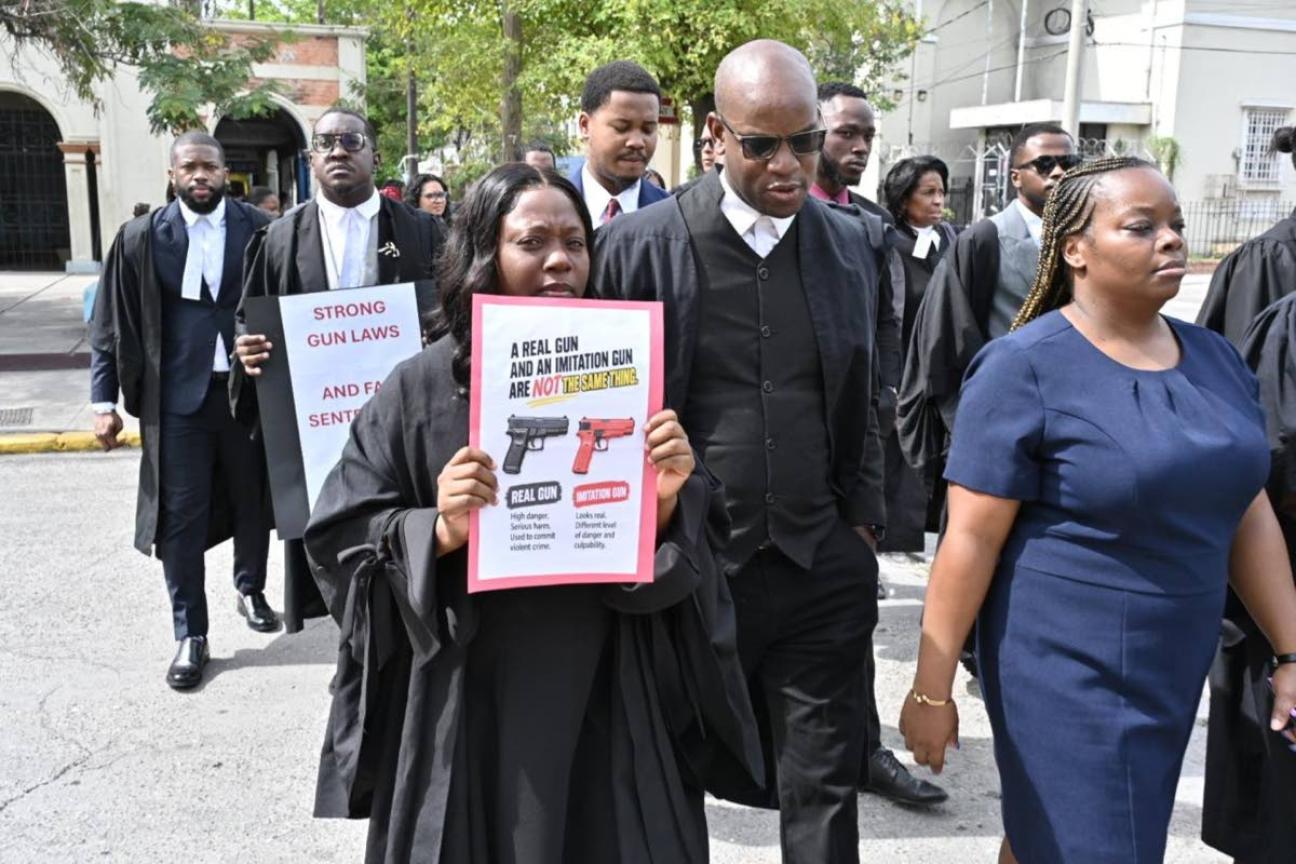
Browne’s comments came in direct response to a silent demonstration organized by Jamaican defence lawyers outside the Supreme Court in Kingston earlier this week. The attorneys, all dressed in black, carried handwritten placards calling for a full legislative review of the mandatory sentencing provisions included in Jamaica’s 2022 Firearms (Prohibition, Restriction and Regulation) Act. One prominent sign at the protest read: “Tough on guns: yes. Tough on children: no.”
Under the existing Jamaican law, certain firearms offences carry a mandatory minimum prison sentence of 15 years, with no opportunity for judicial leniency. Protesting attorneys argue that these rigid provisions strip judges of the flexibility needed to account for the unique circumstances of each case and distinguish between minor, non-violent offenders and career violent criminals.
King’s Counsel Peter Champagnie, a prominent legal figure who participated in the demonstration, emphasized that the legal profession is not opposed to cracking down on dangerous gun crime. He told reporters that the legal community simply wants a full, transparent review of the controversial legislation, adding that the Office of the Director of Public Prosecutions shares many of the same concerns about the law’s inflexibility.
Tenneshia Watkins, President of the Jamaican Bar Association, echoed these calls, noting that judges must retain the discretionary power to hand down sentences that fit the unique facts of each individual case. Jamaica’s main opposition party, the People’s National Party, has also publicly raised concerns about key provisions of the 2022 law.
Despite the growing opposition, Jamaican Justice Minister Delroy Chuck has ruled out any full repeal of the mandatory minimum sentencing provisions. Chuck cited data and input from Jamaica’s national security forces, who argue the law has already contributed to measurable reductions in murder and shooting rates across the island.
As the debate over judicial discretion versus public safety continues to simmer across Jamaica, the conversation is now shifting east: Antigua and Barbuda is set to hold its own parliamentary debate on introducing tougher mandatory minimum penalties of its own, with the outcome likely to set a precedent for other Caribbean nations grappling with rising violent crime.
-
Massiah: AI Is Already Affecting Antigua and Barbuda’s Workforce
As artificial intelligence continues to integrate into workplaces across the globe, small island nations are not immune to its disruptive impacts. David Massiah, General Secretary of the Antigua and Barbuda Workers’ Union (ABWU), has issued a stark call to action for local workers, stressing that AI is already reshaping the national workforce and that employees must proactively adapt to keep pace with rapid technological change.
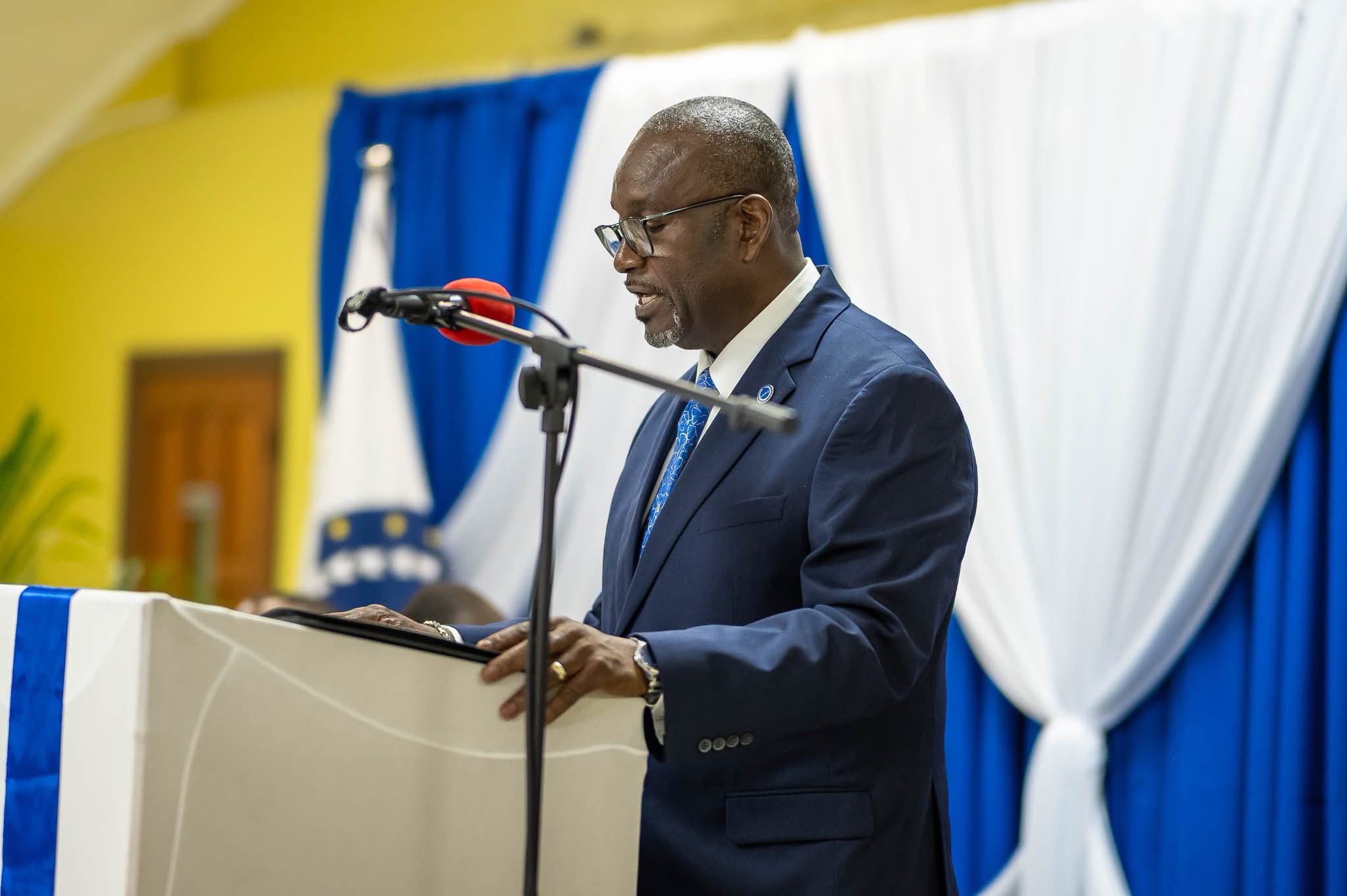
Speaking at the ABWU’s 59th Annual Delegates Conference, Massiah pushed back against the common misconception that AI remains a distant, hypothetical innovation limited to science fiction lore and elite industry gatherings. “AI is here, and it is real,” he emphasized to assembled delegates, underlining that the technology has already moved beyond theoretical discussion to become a tangible presence in local work environments.
The transformative effects of AI are already visible across the country’s labor landscape, Massiah explained. It is restructuring core workplace processes: altering how organizations handle data processing, reshaping the delivery of public and private services, and rewiring the day-to-day responsibilities of employees across nearly every sector. In the long term, he warned, this shift could even redefine the fundamental concept of what constitutes work itself.
Massiah outlined that the most immediate change will come in the form of evolving job roles: many existing positions will be restructured to incorporate AI tools, while workers in heavily impacted sectors will need to pursue upskilling or complete retraining to transition into entirely new roles. While he acknowledged that the full scope of AI’s impact on Antigua and Barbuda’s local economy and labor market remains unclear, he stressed that workers can no longer afford to assume their livelihoods will remain untouched by the shift. “It has already started to affect the workforce,” he reiterated.
Instead of approaching AI with two common unproductive mindsets—unfounded fear or unexamined blind optimism—Massiah urged trade unions and their members to take a balanced, proactive approach. The key to navigating the transition, he argued, is building foundational AI literacy, leaning into uniquely human durable skills that cannot be automated, and committing to lifelong learning as job requirements continue to evolve.
Among the critical skills that will grow in importance for workers, Massiah named analytical reasoning, complex problem-solving, and active listening—all interpersonal and critical thinking abilities that AI cannot replicate at scale. He also called for a widespread cultural shift away from the long-held assumption that a single set of professional qualifications can support a worker through an entire 40-plus-year career.
Massiah also emphasized that workers and their union representatives must have a seat at the table when organizations make decisions about AI adoption in the workplace. Their input should shape what upskilling and retraining programs are offered to employees, as well as what safeguards are put in place to ensure that the transition to AI-powered workplaces is implemented fairly, without leaving vulnerable workers behind. As workplaces continue to evolve, he added, shop stewards will take on an increasingly critical role in educating members about changes and advocating for their interests. He also encouraged unions to leverage the existing technical familiarity of younger workers, who often have more hands-on experience with emerging technologies like AI.
Looking internally, Massiah said the ABWU itself must evaluate its own readiness for the AI shift: assessing whether it is communicating effectively with members, delivering timely information and training, leveraging technology to improve member services, and cultivating a new generation of union leaders prepared for the changing labor landscape.
While Massiah acknowledged that new technologies can offer tangible benefits to both unions and workers, he made clear that no digital tool can replace the core collective strength that has always been the foundation of trade unionism. To ensure workers have a meaningful voice in shaping the future of work, he called for stronger collective bargaining, expanded union-led education programs, and greater cooperation among workers across sectors. “We need to be involved in the discussions, the decision-making, the training, the fairness and the changes that will affect the workplace,” Massiah said.
-
Walker Calls for Repair of Barbuda Wave-Monitoring Station
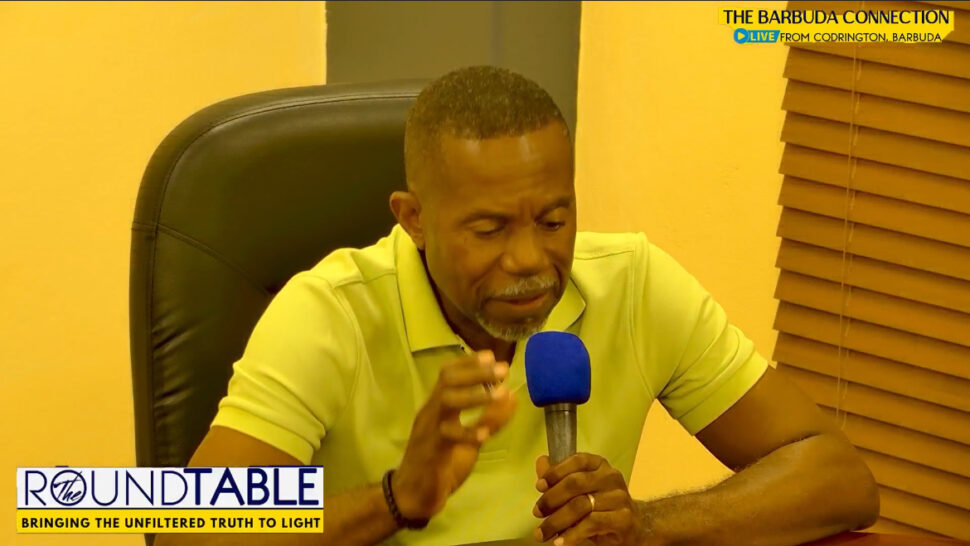
Barbuda’s Member of Parliament Trevor Walker is pushing for urgent repairs to a non-operational wave-monitoring station, a critical piece of infrastructure that would boost the island’s tsunami preparedness, days after the Caribbean community earned its official Tsunami Ready certification. Speaking at Wednesday’s official designation ceremony, Walker shared new details about the out-of-service facility, which was originally installed near Barbuda’s River region back in 2010. The lawmaker has formally called on relevant government officials to assess the station to determine if restoration is possible, a move that would allow the Antigua and Barbuda Meteorological Service to track real-time wave heights from a remote location.
Addressing Junior Minister Kiz Johnson directly during the ceremony, Walker stressed: “If it’s possible for you to see whether or not we can get that up and going and repaired.” He noted that a functional monitoring station would strengthen the island’s existing emergency preparedness frameworks, giving forecasters and emergency responders more actionable data to warn residents of incoming tsunami risks.
Walker also expressed strong support for Barbuda’s new Tsunami Ready status, highlighting the far-reaching benefits the years-long designation process has already delivered for local communities. He explained that the public outreach and planning work tied to the certification has dramatically improved resident understanding of tsunami hazards and clearly marked safe evacuation routes. Walker recalled that growing up on the island, residents were only told to evacuate to the Highlands area during a tsunami event, but the new planning initiative has identified multiple additional safe zones across Barbuda.
The official Tsunami Ready designation followed months of coordinated work across government and community stakeholders, including the development of detailed evacuation maps, installation of clear emergency signage, widespread public education campaigns, and a full-scale community tsunami response exercise. Christa von Hillebrandt, a representative for the Tsunami Ready program, shared that advanced tsunami modeling conducted as part of the process confirmed Sir McChesney George Secondary School falls outside of mapped hazard zones, making it a secure evacuation site for local residents.
In closing remarks at the ceremony, Walker urged both government authorities and local residents to continue prioritizing tsunami awareness and preparedness moving forward, rather than treating the designation as a final milestone. Notably, Walker’s comments did not include details on when the wave-monitoring station stopped operating, or the specific scope of repairs that would be required to bring it back online.