标签: Antigua and Barbuda

安提瓜和巴布达

  • Antigua and Barbuda and Honduras Establish Diplomatic Relations

    Antigua and Barbuda and Honduras Establish Diplomatic Relations

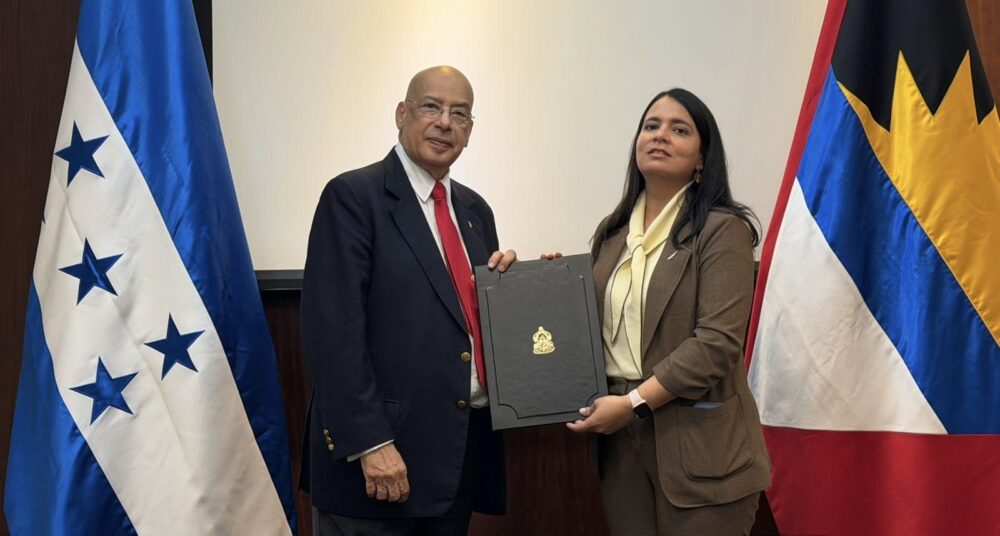
    In a landmark step for regional cooperation, Antigua and Barbuda and the Republic of Honduras have formally established full diplomatic relations, following the signing of a joint communiqué Wednesday at a ceremony in Panama City. The signing event took place on the sidelines of concurrent high-level meetings for the Association of Caribbean States (ACS) and the Organization of American States (OAS), bringing together two longstanding members of the Latin American and Caribbean intergovernmental community.

    The historic agreement was signed by Sir Ronald Sanders, Antigua and Barbuda’s permanent ambassador to the OAS, and Pamela Handal, Honduras’ Vice Minister of Foreign Affairs. In post-signing statements, both envoys framed the new diplomatic connection as a transformative milestone that deepens existing informal ties between the two nations and lays the official groundwork for targeted collaboration on issues that impact both populations.

    As members of the broader Latin American and Caribbean regional bloc, the two countries share a set of pressing common priorities rooted in shared geopolitical and economic realities. Both governments identified climate change’s disproportionate harmful impacts, systemic vulnerability to sudden external economic shifts, and the urgent need to expand access to low-cost development financing as core shared concerns that will guide their new cooperative partnership.

    Ambassador Sanders and Vice Minister Handal both expressed optimism that formal diplomatic relations will open new doors for coordinated action in regional and global multilateral forums. Beyond multilateral cooperation, the new ties are expected to boost people-to-people and economic exchanges across a range of high-potential sectors, including cross-border trade, foreign direct investment, international tourism, academic and educational exchange, cultural programming, and targeted technical cooperation projects.

  • ONDCP Participates in ECCB-Led Cyber Crime Awareness Effort

    ONDCP Participates in ECCB-Led Cyber Crime Awareness Effort

    Across the Eastern Caribbean, cross-agency and cross-border cooperation has taken center stage in the fight against evolving financial crime, as leading regional and national institutions joined forces for a groundbreaking anti-fraud initiative focused on cyber-enabled threats.

    The collaborative effort was anchored by a regional webinar hosted by the Eastern Caribbean Central Bank (ECCB), titled *“Click. Call. Drain – Disrupting Cyber Fraud Networks through Intelligence-Led Policing”*. The virtual event drew a diverse cohort of attendees, including compliance experts, leaders from regional financial institutions, financial regulators, and law enforcement officials from all member jurisdictions of the Eastern Caribbean Currency Union. Its core mission was to address the rapidly growing risk of cyber-facilitated financial crime and map out coordinated strategies to boost prevention, detection, incident reporting, and enforcement actions across the region.

    Antigua and Barbuda sent an official delegation featuring specialists from two of the country’s key anti-crime bodies: the Office of National Drug and Money Laundering Control Policy (ONDCP) and the Royal Police Force of Antigua and Barbuda. This participation underscores the island nation’s firm commitment to building a unified national framework to counter financial crime and cyber fraud. Representing ONDCP were senior specialists Lennique Quashie and Kebra Gardner, while the Royal Police Force was represented by ASP Wilkin Cuffy. Together, the delegation contributed actionable insights to panel and open discussions covering shifting emerging fraud patterns, practical defensive measures for financial institutions, and the critical role of cross-sector partnerships between banks, financial intelligence units, law enforcement, telecom providers, and other key stakeholders.

    Following the conclusion of the webinar, ECCB leadership publicly recognized the valuable contributions from all participating delegations. The central bank reaffirmed that sustained inter-agency and cross-border collaboration is non-negotiable for strengthening the region’s collective ability to counter not just cyber-enabled fraud, but also interconnected threats including money laundering, terrorist financing, proliferation financing, and other newly emerging financial crime risks.

    Lt. Col. Edward Croft, Director of Antigua and Barbuda’s ONDCP, praised the regional event as a critical step forward for collective security. He emphasized that ongoing, robust coordination between stakeholders at the national, regional, and international levels is essential to addressing evolving threats. “Cyber-enabled fraud continues to present significant challenges to our financial systems and our citizens. Effective prevention and disruption require cooperation, information sharing, public awareness, and a coordinated response among all relevant agencies,” Croft stated in remarks after the webinar. “Initiatives such as these demonstrate the value of collaboration in protecting the integrity of our financial systems and enhancing public confidence in the institutions responsible for safeguarding them.”

    In closing, ONDCP extended its formal gratitude to the ECCB for organizing and facilitating the landmark regional initiative. The office also reaffirmed its long-term commitment to working hand-in-hand with partners at all levels to build Antigua and Barbuda’s institutional capacity to prevent, detect, investigate, and disrupt both traditional financial crime and modern cyber-enabled fraud threats.

  • Trump Admirer Wins Colombia Presidential Election

    Trump Admirer Wins Colombia Presidential Election

    Colombia has wrapped up one of the tightest presidential contests in its modern history, with right-wing lawyer and entrepreneur Abelardo de la Espriella edging out left-wing incumbent-aligned senator Iván Cepeda to claim the nation’s highest office.

    As electoral officials finished counting nearly all cast ballots, preliminary results show de la Espriella captured just under 50% of the total vote, holding a lead of roughly 250,000 votes over his left-wing challenger. The outcome marks a stark political reversal for Colombia, ending four years of progressive leadership under Gustavo Petro, the country’s first ever left-wing head of state, and clearing the way for a return to conservative governance.

    A prominent public supporter of former U.S. President Donald Trump, de la Espriella framed his win as a transformative turning point for Colombia during his victory speech. He told supporters he had spoken directly with Trump shortly after the preliminary results were confirmed, and reiterated his campaign pledge to deepen diplomatic and economic ties between Bogotá and Washington.

    Security policy dominated de la Espriella’s campaign, where he positioned himself as a hardline alternative to Petro’s approach to the country’s persistent insecurity. He has proposed sweeping harsher crackdowns on transnational criminal organizations, committed to large-scale expansion of the country’s prison infrastructure, and vowed to ramp up military operations against illicit drug trafficking networks. These policy priorities stand in direct opposition to Petro’s signature strategy of pursuing negotiated peace talks with armed factions to curb systemic violence.

    In the wake of the preliminary result, Petro and defeated candidate Cepeda have refused to formally concede the race. The pair have raised unsubstantiated concerns over potential voting irregularities in the preliminary count, and are demanding that the full official audit of all ballots be completed before they will recognize the final election outcome. No concrete evidence of widespread fraud has been presented to support their claims as of yet.

    This election unfolded against a backdrop of rising public anxiety over violence and insecurity across Colombia. More than eight years after the 2016 historic peace accord with the FARC guerrilla movement, non-state armed groups and drug trafficking cartels still retain substantial territorial and political influence across large swathes of the country.

    Notably, de la Espriella has never held public elected office before. He is set to be inaugurated on August 7, and will immediately inherit a nation deeply divided along political lines, as well as a Congress where his allied political bloc does not hold a governing majority.

    Political analysts across the region argue that de la Espriella’s win is not an isolated shift, but rather reflects a broader conservative and rightward movement gaining traction across much of Latin America. Voters across the region have increasingly cited rising security risks, persistent economic strain, and widespread dissatisfaction with sitting incumbent governments as key drivers pushing them to back alternative right-wing candidates.

  • New OECS Chairman Wants Leaner, Faster OECS Commission

    New OECS Chairman Wants Leaner, Faster OECS Commission

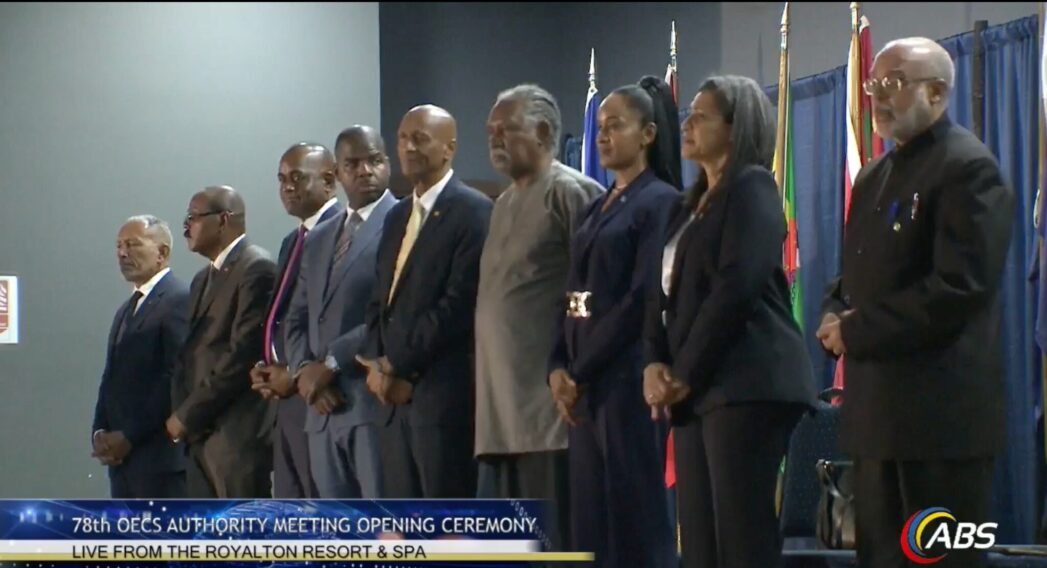
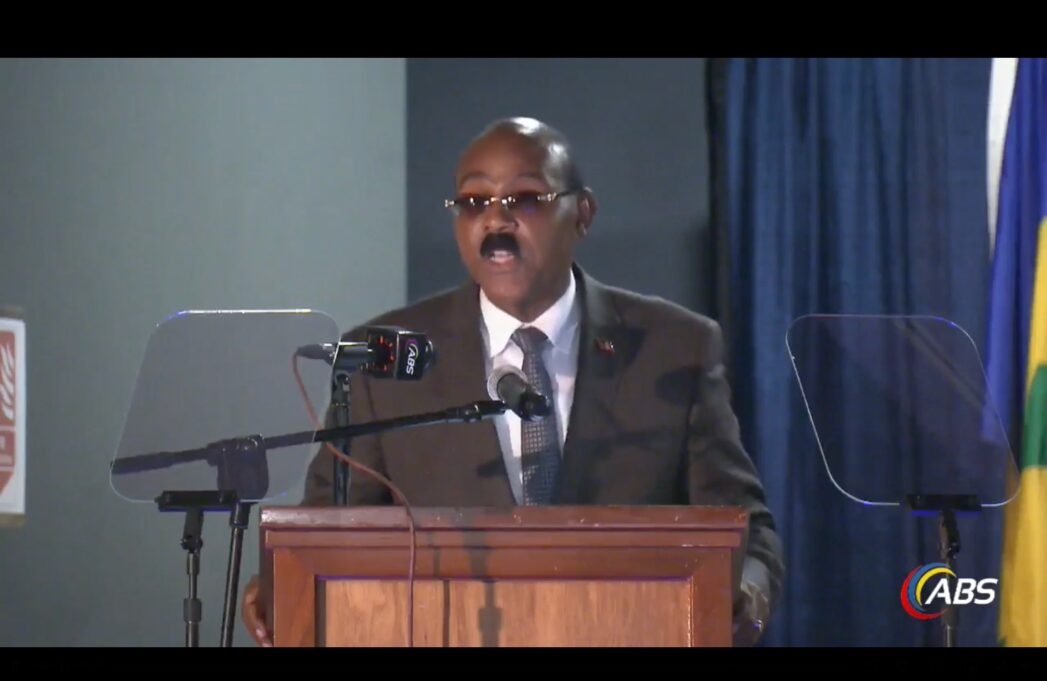
    In his inaugural address as the newly appointed chairman of the Organisation of Eastern Caribbean States (OECS) Authority on Sunday, Antigua and Barbuda Prime Minister Gaston Browne has tabled a bold demand for a sweeping restructuring of the OECS Commission, the 11-nation bloc’s central administrative body. Browne argues that the institution must trim bureaucratic bloat, speed up decision-making processes, and boost its overall performance to effectively tackle the growing array of challenges facing member states.

    Taking over the one-year rotating chairmanship from St. Vincent and the Grenadines Prime Minister Dr. Godwin Friday, Browne publicly directed OECS Director General Didacus Jules to draft a comprehensive reform blueprint focused on three core goals: sharpening operational efficiency, cutting unnecessary administrative costs, and elevating the quality of public services delivered across all member countries. The prime minister revealed that he had already held frank, private discussions with Jules on the reform agenda before bringing the proposal into the public domain, framing the changes as a necessary evolution for the decades-old regional body.

    Reflecting on the OECS’ 45-year history of regional integration, Browne praised the bloc as one of the most successful regional cooperation frameworks globally, highlighting landmark achievements delivered through its existing institutions. He pointed to the enduring stability of the Eastern Caribbean dollar, which has maintained a fixed peg of 2.70 Eastern Caribbean dollars to 1 U.S. dollar for decades, the significant cost savings unlocked by the joint regional pharmaceutical procurement program, and the consistent work of institutions like the Eastern Caribbean Central Bank and Eastern Caribbean Supreme Court as proof of the power of collective action.

    “What we cannot do alone, we can certainly accomplish together,” Browne said, noting that this founding principle has guided the bloc’s progress to date and must remain the cornerstone of its future work. He emphasized that current regional leaders carry a dual responsibility: to safeguard the institutions built by past generations of leaders, and to build new, adaptive structures equipped to address 21st-century challenges. “Many of us are better trained, and if we’re better trained and we have more resources, it means that we too can establish sustaining institutions for the benefit of the OECS people,” he added.

    Browne’s call for reform comes amid a shifting global landscape marked by rising geopolitical friction, widespread global supply chain disruptions, skyrocketing cost of living, and growing macroeconomic uncertainty that disproportionately impacts small island developing states. He warned that in today’s fractured global order, individual OECS member states operating in isolation face far greater exposure to external shocks and economic vulnerability, but unified collective action turns small individual economies into a stronger, more resilient regional entity.

    While Browne stopped short of laying out specific, granular reform measures for the commission, he confirmed that the reform plan will be developed over the coming months as part of a broader push to make the OECS more effective and responsive to the needs of its population. “We must re-engineer the OECS Commission into a leaner, faster and more effective institution that is fit for purpose,” Browne reiterated, framing the restructuring as a critical step to secure the bloc’s relevance and impact for decades to come.

  • PM Browne Says Antigua and Barbuda Being ‘Coerced’ to Accept Deportees

    PM Browne Says Antigua and Barbuda Being ‘Coerced’ to Accept Deportees

    In a landmark address marking the start of his 12-month term as chairman of the Organisation of Eastern Caribbean States (OECS) Authority, Prime Minister Gaston Browne of Antigua and Barbuda has announced a firm rejection of a United States deportation proposal that would have sent 120 deportees annually to the small twin-island nation, countering with a binding self-imposed cap of no more than 10 deportees per year.

    Browne used his first public address in the new OECS leadership role to highlight the mounting geopolitical pressures that small island developing states face, and to underscore the critical need for coordinated regional cooperation to address these shared external challenges. The prime minister made clear that his administration has pushed back against coercive pressure from Washington to accept a dramatically higher volume of deportees, most notably individuals with prior criminal convictions that Browne argues pose a clear threat to Antigua and Barbuda’s domestic public safety.

    “We have been coerced to take these deportees, encouraged by the great United States, and if we don’t cooperate, they punish us,” Browne told attendees of the OECS gathering Sunday. “As the Prime Minister of Antigua and Barbuda, I cannot willingly cooperate with any other power, any country, to destroy our beautiful twin-island state. And we have insisted that we will not accept any criminal elements.”

    The prime minister framed the counterproposal as a balanced compromise that preserves willingness to cooperate while protecting the nation’s sovereign interests. “We want to be cooperative, so we are not being uncooperative here. But this idea that they could send us 120 individuals, we’ve said to them that is totally unacceptable,” he explained. “We have sent them a counterproposal. We said that we’ll accept 10 annually, no more than 10. So I hope that this will not result in any acrimony and further restrictions, but that they will respect our position and respect our sovereign right to determine how many of those individuals we accept.”

    Despite taking a firm stance on the deportation cap, Browne emphasized that Antigua and Barbuda remains fully committed to its long-standing mutually beneficial partnership with the United States, and acknowledges Washington’s sovereign authority to set its own immigration and border security policies.

    “We acknowledge the sovereign right of all states to determine their border security policies. We ask only that such rights be exercised with due regard for a historically close and mutually beneficial relationship,” he said.

    Browne also warned that punitive economic or travel restrictions imposed on Caribbean nations would backfire for the United States, pointing to the sizable US trade surplus with the region. “Our people purchase American goods, use American financial services, and send their children to American universities,” he noted. “We are beneficial partners for the American economy, not adversaries to be restricted.”

    The prime minister additionally raised concerns about the disproportionate harm that new travel restrictions would inflict on Caribbean diaspora communities, the largest of which is based in the United States, and separated family ties that span both regions. “We need to ensure that the diaspora here in the Caribbean and certainly our people in the United States can move freely,” he said.

    Reaffirming shared priorities between the two nations, Browne stressed that Antigua and Barbuda will continue collaborating with the US on issues of common interest, including countering transnational drug trafficking and organized crime. “We particularly stand with the U.S. in opposing drug trafficking and organized crime. That is our mutual interest. We too want to make sure that we have safe and secure societies,” he said.

    Browne’s assumption of the OECS Authority chairmanship comes as the bloc prioritizes deeper regional integration, strengthened economic resilience, and collective action to address the unique systemic challenges facing small island developing states across the Eastern Caribbean, from climate change to external geopolitical pressures.
  • Authorities Seek Relatives of Unresponsive Woman Believed to Be From Bendals

    Authorities Seek Relatives of Unresponsive Woman Believed to Be From Bendals

    Law enforcement officials have issued an urgent public call for community help to track down the family and acquaintances of a local woman, identified as Kerrianne Eubanks, who was discovered unconscious over the weekend. The woman is believed to be a resident of Bendals, and was found unresponsive this past Saturday, according to an official public notice distributed by relevant authorities. The primary goal of the appeal is to connect with Eubanks’ closest immediate relatives, as well as any individual who holds information that could help law enforcement get in touch with her family members. Authorities have stressed that time is of the essence, asking any member of the public who knows Eubanks personally or has information about where her family can be reached to step forward immediately. As of the latest update, officials have not released additional details regarding the woman’s current medical condition or the circumstances surrounding how she was found.

  • Antigua and Barbuda expresses support for BVI’s aspirations for greater self determination

    Antigua and Barbuda expresses support for BVI’s aspirations for greater self determination

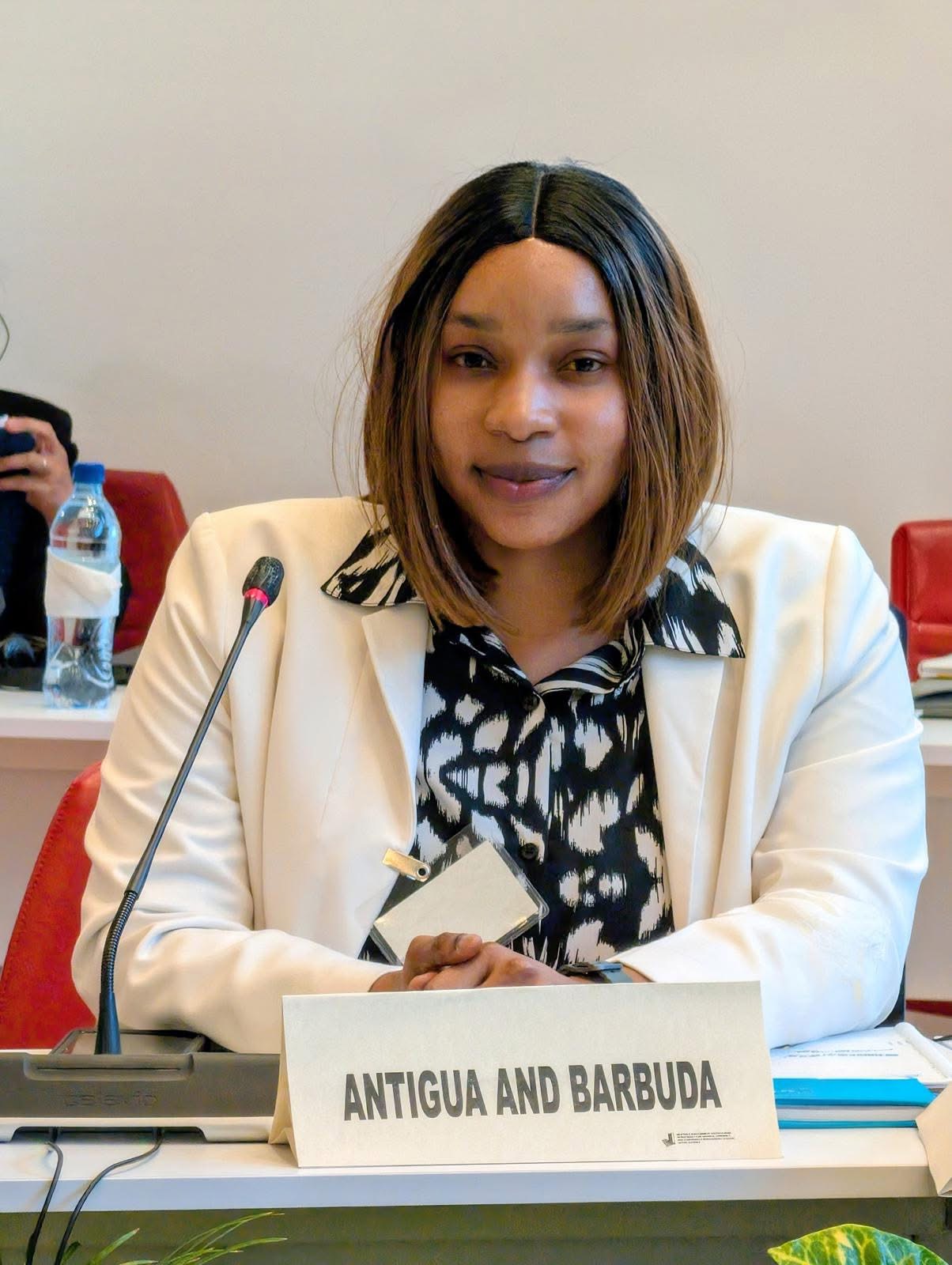
    MANAGUA, NICARAGUA – In a recent gathering focused on advancing global decolonization goals, representatives from Antigua and Barbuda have publicly reaffirmed their longstanding solidarity with the Government and people of the British Virgin Islands (BVI) as the territory pushes forward its pursuit of full political self-determination. For nearly a quarter of a century, Antigua and Barbuda has leveraged its position within a key United Nations body – the Special Committee on the Situation with Regard to the Implementation of the Declaration on the Granting of Independence to Colonial Countries and Peoples – to champion the cause of political independence for multiple non-self-governing territories across the Caribbean, including the BVI. This work aligns with the United Nations’ ongoing framework of the Fourth International Decade for the Eradication of Colonialism, a global initiative dedicated to ending colonial rule worldwide. The Special Committee convened its annual Caribbean Regional Seminar in Nicaragua this year, a key gathering that brings together regional stakeholders, envoys, and representatives to advance the decolonization agenda. During the seminar, BVI Special Envoy Benito Wheatley presented a comprehensive update on the territory’s upcoming constitutional negotiation process with the United Kingdom, the current administering power for the BVI. Representing Antigua and Barbuda at the Central American seminar was Dr. Jerri-Anne Jeremy, Second Officer of Antigua and Barbuda’s Permanent Mission based in New York. In her address to assembled delegates, Dr. Jeremy explained that Antigua and Barbuda’s support for the BVI’s self-determination journey is deeply rooted in shared experience: the two nations are bound by overlapping colonial histories, close cultural connections, and generations of familial ties. She emphasized that Antigua and Barbuda’s own transition from a former British colony to an independent sovereign state has given the nation a unique and personal commitment to supporting other territories still working toward full self-governance. “We continue to regard the decolonization process as one of the United Nations’ most important responsibilities, and we reaffirm our full commitment to the core objectives of the Fourth International Decade for the Eradication of Colonialism,” Dr. Jeremy stated during her remarks. Dr. Jeremy also extended formal congratulations to the BVI government on the completion of its landmark legislative reform initiative, widely described as the most sweeping package of governance changes in the territory’s history. She specifically noted that these progressive reforms directly enabled the United Kingdom to lift the previous Order in Council, a controversial regulatory measure that had allowed for the full suspension of the BVI’s constitution and the imposition of direct UK rule over the territory. Dr. Jeremy made clear that while Antigua and Barbuda remains a committed close partner to the United Kingdom, the nation recognizes that constructive collaboration between the administering power and the BVI government is critical to the continued strengthening of democratic governance institutions within the territory. Beyond the constitutional reform process, Dr. Jeremy highlighted the BVI’s growing leadership footprint across regional and international multilateral bodies, noting that the territory already holds prominent positions in the Economic Commission for Latin America and the Caribbean (ECLAC), the Caribbean Development and Cooperation Committee, the Regional Conference on South-South Cooperation, and the BVI-UN Sustainable Development Forum. “These collective achievements clearly demonstrate the territory’s growing institutional maturity and its expanding capacity to participate meaningfully and effectively in both regional and global affairs,” Dr. Jeremy observed. Antigua and Barbuda has been an active member of the UN Special Committee on decolonization for 23 years, with the nation’s former Permanent Representative to the United Nations, Dr. Walton Webson, once serving as chair of the committee. In addition to the BVI, five other remaining Caribbean non-self-governing territories fall within the scope of the committee’s regional work.

  • WISH Mourns the Death of 19-Year-Old Zowie Tomlinson and Calls on the Nation to Prioritise Youth Mental Health

    WISH Mourns the Death of 19-Year-Old Zowie Tomlinson and Calls on the Nation to Prioritise Youth Mental Health

    On June 21, 2026, a devastating loss has sparked a urgent national call for mental health reform in Antigua and Barbuda, after local mental health non-profit WISH (The Wadadli Initiative for Self-care and Healing) confirmed the death of 19-year-old Zowie Tomlinson, a resident of the Parham community.

    Tomlinson’s body was recovered from waters near Devil’s Bridge early Sunday morning, following a hours-long joint search and rescue operation carried out overnight by the Antigua and Barbuda Royal Police Force and the Antigua and Barbuda Defence Force Coast Guard. The young woman’s passing has left her family, friends, and local community in mourning, and prompted WISH to issue a stark wake-up call to the entire nation.

    In an official public statement released immediately following the recovery, WISH founder Chaneil Imhoff expressed the organization’s profound grief over the tragic death. “Zowie was somebody’s daughter, somebody’s friend, somebody’s neighbour. Nineteen years is no age to feel that there is no way forward,” Imhoff said. “We grieve with her family today, and we grieve as a country that has not yet done enough to ensure that our young people can access mental health support when they need it most.”

    Beyond extending sincere condolences to everyone affected by Tomlinson’s death, WISH also reached out directly to vulnerable young people across the country who may be struggling with unaddressed mental distress. The organization emphasized that no one has to carry pain alone, and that feelings of hopelessness are not permanent, urging anyone in crisis to reach out for available support.

    Founded to transform mental health discourse and care across Antigua and Barbuda, WISH’s core mission is to break long-standing cultural silence around mental illness, shatter harmful stigmas that prevent people from seeking help, and drive systemic change through public education and policy advocacy. In the wake of this tragedy, the organization has reaffirmed its commitment to advocating for long-term, accessible, culturally appropriate mental health services that meet the needs of all citizens, particularly young people.

    For WISH, Tomlinson’s passing is not just another tragedy to be mourned and forgotten. It is a urgent, non-negotiable call to action for national leaders, communities, and individual citizens to finally prioritize youth mental health as a critical public issue. More information about WISH’s ongoing work and available mental health resources for Antigua and Barbuda residents can be found on the organization’s official website, wish-wadadli.org.

  • Pringle Urges Greater Appreciation for Fathers in Father’s Day Message

    Pringle Urges Greater Appreciation for Fathers in Father’s Day Message

    As Father’s Day is observed across Antigua and Barbuda, Opposition Leader Jamale Pringle has issued a heartfelt appeal to families nationwide, calling on them to step up and give the nation’s fathers the appreciation and affection that many of them currently go without. In his official holiday address, Pringle pushed for a meaningful shift in how paternal contributions are acknowledged, asking both children and adult family members to intentionally honor fathers for the quiet, steady work they put into lifting their households and local communities. “It is my sincere hope that families in every corner of this nation will take the time to pay tribute, show genuine gratitude, and share the love that so many fathers crave – but all too often, do not receive in the full measure that they have earned,” Pringle shared in his statement. Beyond his call for greater appreciation, Pringle also offered public praise for fathers who take an active role in nurturing their children and stepping into clear leadership positions within their family units. “I want to use this opportunity to commend all the dads who are stepping up to the plate, guiding their families down the right path, and leading from the front,” he said. Pringle also highlighted the far-reaching influence that fathers hold across the country, noting that their example extends far beyond their own four walls. In addition to serving as foundational role models for their own children, Pringle emphasized that fathers set critical standards of behavior and responsibility for young men growing up in communities across Antigua and Barbuda. “You are an example not only to your own offspring, but to the young males in our communities,” he added. Closing out his address, Pringle extended warm, sincere Father’s Day greetings to every father across the twin-island nation, wrapping up his call for greater recognition with a message of well-wear for the holiday.

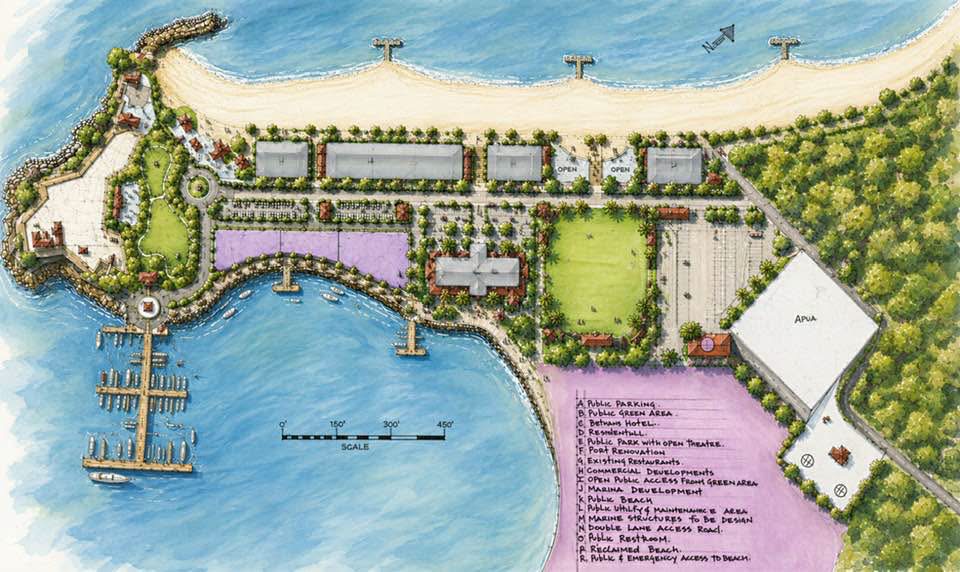
  • Fort James Renaissance Park to Break Ground by September, Browne Says

    Fort James Renaissance Park to Break Ground by September, Browne Says

    Antigua and Barbuda’s Prime Minister Gaston Browne confirmed Saturday that construction on the highly anticipated Fort James Renaissance Park will break ground by September, marking a key milestone in the government’s push to expand and diversify the nation’s tourism sector. Speaking during the locally broadcast Browne and Browne radio program, Browne revealed the $5 million in seed funding for the transformative project has been sourced directly from funds recovered through a recently settled tax dispute with international hospitality brand Sandals Resorts.

    “We have allocated $5 million from the Sandals settlement to begin the Fort James Renaissance project,” Browne stated, noting that contracting processes are already underway, with awards for construction tenders expected to be finalized in the coming months as pre-development preparations move forward.

    The redevelopment blueprint for the historic coastal site extends far beyond basic infrastructure upgrades. Planned works include comprehensive beach restoration and enhancement, new commercial dining spaces, modern public recreational facilities, and targeted environmental improvements across the surrounding area. According to Browne, the core vision for the project is to create a shared, inclusive destination that delivers value for both local residents and international visitors, while protecting the site’s unique historical heritage and natural coastal beauty.

    Beyond the Fort James project, the Prime Minister also outlined two additional coastal tourism initiatives: the planned development of Barnacle Point and a purpose-built artificial reef, which is designed to serve as both a new environmental habitat and an educational eco-attraction. Browne confirmed that all prefabricated reef modules have already been shipped from the United States, with the government targeting a completion date ahead of Antigua and Barbuda’s hosting of the Commonwealth Heads of Government Meeting, scheduled for 2025.

    As one of Antigua and Barbuda’s most iconic historic landmarks, Fort James has long been recognized for its untapped tourism potential, thanks to its prime beachfront location on the western coast and deep cultural and historical significance. The redevelopment project sits at the center of a broader national strategy to move beyond reliance on traditional sun-and-sand tourism, expanding the country’s tourism product offering to encourage longer stays and higher visitor spending.

    Browne added that the government is currently in ongoing discussions with private stakeholders about complementary private investment in the area, with a focus on tourism-related developments that will boost the appeal of the entire western coastline while preserving permanent public access to the beach.

    Government projections indicate the project will deliver widespread economic benefits, creating both short-term construction jobs and long-term operational employment once the park opens, while establishing a new regional recreational hub that serves the entire community.