标签: Antigua and Barbuda

安提瓜和巴布达

  • NOTICE: Section of Newgate Street Temporarily Closed for APUA Repiping; Businesses Remain Open

    NOTICE: Section of Newgate Street Temporarily Closed for APUA Repiping; Businesses Remain Open

    A short stretch of Newgate Street will be shut down to all through traffic starting today, as crews from the Antigua Public Utilities Authority (APUA) carry out critical repiping work along the corridor. Local transportation officials have confirmed that despite the closure, all retail shops, restaurants, service providers and other commercial operations located along the affected section of the street will continue normal operating hours throughout the duration of the construction project. Commuters and recreational drivers who typically rely on this route to reach their destinations are being urged by transportation authorities to map out alternate paths in advance, and build extra time into their travel schedules to account for inevitable traffic congestion and delays stemming from the blocked roadway.

  • Blue Economy Department Launches Ocean Month Art Competition for Young Children

    Blue Economy Department Launches Ocean Month Art Competition for Young Children

    To kick off official programming for Ocean Month 2026, the Department of the Blue Economy has unveiled a one-of-a-kind art competition open exclusively to children between the ages of 7 and 11, centered on ocean conservation and sustainable blue economy themes.

    Organized in partnership with the Ministry of Education’s Education Broadcasting Unit and a coalition of additional community and institutional partners, the competition invites young creative minds to translate their personal understanding of the blue economy into visual art. Participants can choose to create either murals or posters, with encouraged themes ranging from vibrant depictions of native marine life to illustrations of actionable ocean conservation practices.

    According to event organizers, the competition serves two core goals: to foster the creative talent of young people across the region, and to build broader public awareness of the critical role healthy oceans and marine ecosystems play in supporting communities and economic activity. Unlike many youth art competitions that end with a simple award ceremony, this initiative offers a unique lasting opportunity for the top participant: the winning entry will be converted into a full-size public mural that will be displayed in a community space, leaving a permanent legacy of the young artist’s vision and work.

    Submissions for the competition opened to participants on April 13, and the submission window will remain open through to May 7. Following a period of judging, the winner is set to be publicly announced on June 8, which aligns with the annual observance of World Ocean Day, tying the event to a global movement for ocean protection.

    Department officials are actively encouraging parents, primary school teachers, and guardians to guide and support children in entering the competition. They frame the event as more than an art contest: it is a targeted opportunity to nurture the next generation of creative thinkers, innovative problem-solvers, and dedicated environmental stewards who will carry forward the work of protecting the world’s oceans for decades to come.

  • Kia Kirwan to Represent Antigua and Barbuda Wednesday in Caribbean Queen Pageant in St. Maarten

    Kia Kirwan to Represent Antigua and Barbuda Wednesday in Caribbean Queen Pageant in St. Maarten

    The highly anticipated annual Caribbean Queen Pageant is just around the corner, set to kick off this Wednesday on the vibrant island of St. Maarten. One of the most anticipated participants stepping onto the competition stage is Kia Kirwan, who has been selected to carry the hopes and national pride of Antigua and Barbuda in this year’s contest.

    The Caribbean Queen Pageant has long served as a premier cultural event across the region, bringing together talented young women from dozens of Caribbean nations and territories to celebrate Caribbean heritage, leadership, and personal achievement. Beyond the traditional components of beauty competition, the event also highlights contestants’ community engagement work, cultural knowledge, and commitment to advancing social causes across the region.

    As the official representative for her country, Kirwan has spent months preparing for the pageant, engaging in local community outreach, practicing performance routines, and showcasing the unique cultural traditions of Antigua and Barbuda. Organizers of the event have reported strong pre-event turnout, with attendees from across the Caribbean and North America traveling to St. Maarten to watch the competition and celebrate regional culture. For Kirwan, the opportunity to compete is not just a personal milestone, but a chance to shine a global spotlight on the beauty, culture, and community spirit of the twin-island nation she represents.

  • COMMENTARY: What Happens When You Get a Poor Report Card?

    COMMENTARY: What Happens When You Get a Poor Report Card?

    Every person who has navigated the formal education system understands the weight of assessments, from small end-of-topic quizzes to high-stakes national examinations. For most, exams are a universal source of dread — yet they remain a universally accepted mechanism to measure academic progress, a necessary evil that paves the way for growth. After years of traversing this landscape of testing, students ultimately learn that these evaluations are designed to build the skills needed to become independent, contributing members of society.

    Central to this process of academic accountability is the report card: a consistent record of performance that documents a student’s progress from one grade to the next, regardless of whether the student agrees with the marks they received. Unlike self-assessment, report cards are graded by independent third parties — teachers — who score work based on observed performance. Report card day is always a day of reckoning: parents learn whether their child has made them proud or squandered a year of opportunity, and grades determine whether a student moves on to the next level or is held back. Being held back, or “stopped down,” carries a heavy social stigma, marking a student out for ridicule from peers.

    This well-known educational process offers a perfect analogy for general elections, argues political commentator Yves Ephraim. Just as students wait for their end-of-year report cards after a term of coursework, politicians who have held office for a full term receive their assessment from the only graders that matter: the voting public.

    Most popular framing of general elections focuses on the slate of new candidates standing for office, but Ephraim argues this perspective misses the core purpose of democratic elections. The fundamental role of a general election, he contends, is not just to pick new leaders — it is to evaluate the performance of the incumbent administration that has held power over the previous term, and decide whether they deserve another term in office. Challenging candidates represent alternative options, but it is impossible to fairly judge individuals who have never held executive power; grading untested challengers alongside sitting incumbents amounts to comparing apples to oranges. Only after a candidate has served a full term can voters produce an evidence-based report card to decide whether they deserve re-election. Even the most experienced sitting leaders had no executive experience before their first election win, after all.

    With this framing in mind, Ephraim has produced a comprehensive 12-year report card for Antigua and Barbuda’s current ruling administration, grading it across three core pillars: delivery of basic government functions, progress on major national initiatives that advance sovereignty, sustainability and self-sufficiency, and protection of individual civil freedoms.

    ### Grading Basic Government Functions
    Ephraim weights basic government functions as follows: policing and crime-fighting (20%), border protection (10%), maintenance of the legal system (15%), citizen empowerment (10%), and public infrastructure (40%).

    On policing, the administration earns low marks: the national police force lacks independence, struggles to solve most non-trivial crimes, and is grossly under-resourced in both equipment and expertise, leaving it unable to curb rising robbery rates. For border protection, the 2010s Antigua Airways scandal and the case of Cameroonian refugees, who were able to enter and exit the country with equal ease despite being granted temporary residency, exposed critical gaps in border security. Little meaningful action has been taken to tighten border controls since that incident, Ephraim notes, raising questions about how porous borders enable gun violence and other criminal activity. The national legal system also continues to languish under persistent underfunding and resource shortages.

    On citizen empowerment, the administration has confused handouts and temporary subsistence jobs with genuine empowerment, Ephraim argues. True empowerment focuses on teaching citizens to “fish” rather than giving them fish, yet current policies have fostered widespread dependency that is particularly visible during this election cycle. For infrastructure, decades of neglect have only been met with last-minute activity ahead of the upcoming election and the hosting of the Commonwealth Heads of Government Meeting (CHOGM). Poor drainage systems across the country stand as evidence of rushed, low-quality work done to meet a political deadline rather than deliver long-term public benefit.

    ### Grading Major National Initiatives
    For key initiatives, the grading breakdown is: water sector reform (15%), foreign direct investment attraction (10%), and new port facilities (60%).

    Before 2014, an estimated 40% of water produced by the Antigua Public Utilities Authority (APUA) was lost to leaks in the country’s aging distribution network. Ephraim notes that basic engineering logic makes fixing distribution leaks the clear top priority for the water sector, as it would deliver the highest return on investment — analogous to a bakery fixing waste in its production process before expanding output. Instead, the government ignored the distribution network and pursued a costly strategy of expanding production through multiple new reverse osmosis plants. This inefficient approach means that to deliver 100 gallons of water to end users, APUA must pump 167 gallons, wasting 67 gallons daily and leaving the country with higher national debt and still no reliable running water for many residents. Most high-profile signature foreign investments, including the YIDA project, never moved past the planning stages. Only the new St. John’s harbour facility earns a passing grade from the author.

    ### Grading Protection of Individual Freedoms
    For civil liberties, the grading breakdown is: personal property rights (0%), cost of living relief (20%), and public access to beaches (0%).

    Since Antigua and Barbuda gained independence in 1981, the current administration holds the unenviable record of widespread violation of individual property rights across multiple high-profile cases from Booby Alley to Barbuda. It also famously coerced citizens into accepting injection of an untested medical substance against their free will during the COVID-19 pandemic. On the cost of living, recent temporary cuts to food tariffs demonstrated that high government taxes are a major driver of rising consumer prices: for example, the cost of a standard quantity of strawberries fell from $35 to less than $15 immediately after tariffs were cut. This proves far more could be done to ease financial pressure on households by cutting taxes and reducing the size of government. Finally, the recent dismissed trespassing charge against a citizen accessing a public beach highlights the administration’s failure to uphold public access rights. The government has failed to act as a guardian of public beach access, instead enabling adjacent private property owners to block public pathways to the coast.

    ### Unintended Consequences of Incumbent Policy
    Ephraim also outlines multiple negative unplanned outcomes of the administration’s 12 years in power: the loss of U.S. visa access for most Antiguans and Barbudans, even for educational travel; unchecked government spending that has doubled the national budget from less than $1 billion in 2014 to more than $2 billion, pushing the country deeper into debt; a steady shift toward becoming a full welfare state; sky-high youth unemployment, demonstrated by the thousands of young people who queued for a single temporary job at the Ministry of Works; and secretive negotiations over a memorandum of understanding to accept deportees from the United States without public consultation.

    After compiling this full 12-year report card, Ephraim concludes that the incumbent administration has failed to earn passing marks, and does not deserve to graduate to another term in office — regardless of the positive self-assessment the government has promoted to voters.

  • Walker Campaign in Barbuda Centers on Land Rights, Services and Local Control Ahead of April 30 Vote

    Walker Campaign in Barbuda Centers on Land Rights, Services and Local Control Ahead of April 30 Vote

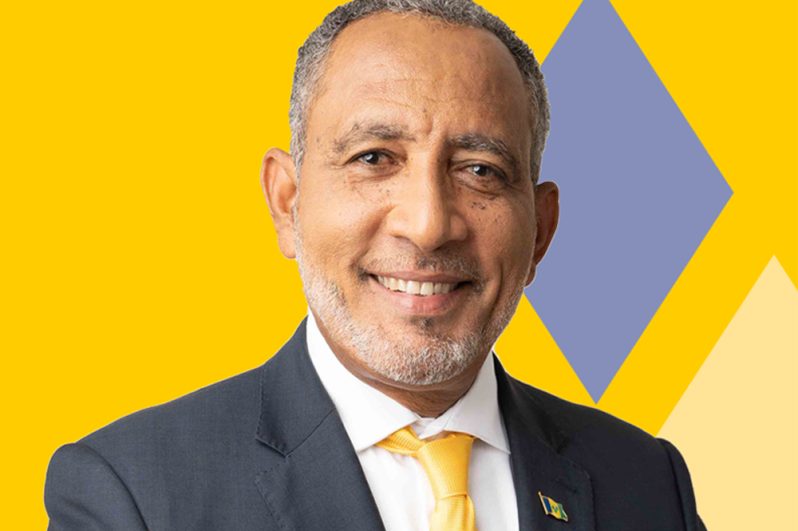
    As Antigua and Barbuda prepares for its April 30 general election, incumbent Barbuda People’s Movement (BPM) candidate Trevor Walker launched his re-election bid at a raucous political rally in Barbuda Monday night, framing his campaign around three core pillars: securing communal land rights, upgrading public services, and expanding local self-governance to a packed crowd of enthusiastic supporters.

    At the top of Walker’s policy platform is the preservation of Barbuda’s unique communal land system, a cornerstone of the island’s cultural identity that campaign speakers argue is indispensable to Barbuda’s long-term economic prosperity. The issue dominated discussion throughout the event, with repeated appeals to voters to mobilize and protect their collective claim to land, ensuring it remains permanently under community control rather than being opened up to external ownership.

    A veteran parliamentarian with decades of legislative experience, Walker emphasized that Barbuda needs a resolute, unwavering voice in national parliament to advance the island’s interests in key government decision-making processes. Addressing the crowd, Walker stressed, “We need a strong, principled representative in Parliament to stand up for Barbuda,” as he urged attendees to cast their ballots to return him to office for another term.

    Beyond land rights, Walker’s campaign platform prioritizes long-overdue upgrades to public health and social support systems. The candidate specifically called for expanded access to critical medical services, including the introduction of on-island dialysis treatment, as well as system-wide improvements to community care networks that serve vulnerable Barbudan residents.

    On the economic development front, the BPM laid out a slate of completed ongoing and proposed infrastructure projects, including ongoing road repair and expansion works, and plans to construct a new multi-purpose community facility. The venue will be able to host hundreds of residents for gatherings, while also serving as a dedicated space for cultural events and community programming.

    Campaign speakers also pushed for greater economic self-sufficiency on the island, encouraging local residents to leverage the island’s abundant communal land to expand domestic agriculture and local food production. The push aligns with the BPM’s broader sustainability goals, designed to reduce Barbuda’s reliance on imported food and strengthen local economic resilience.

    Across every policy area discussed, local control emerged as the unifying theme of the night. Rally speakers and attendees alike emphasized that all development decisions affecting Barbuda must be designed and led by Barbudans, shaped to fit the island’s unique needs rather than imposed by outside political or economic interests.

    The rally also reflected the increasingly competitive tone of the pre-election cycle, with speakers leveling sharp criticism at Walker’s political opponents as all parties scramble to lock in support ahead of polling day. For Walker and the BPM, the April 30 election is being framed as a defining turning point for Barbuda. The party is fighting to retain its single parliamentary seat on a platform that balances the defense of traditional communal land rights with concrete pledges to improve public services and deliver targeted, community-led development.

  • Kendra Beazer is calling for more responsive leadership in Barbuda

    Kendra Beazer is calling for more responsive leadership in Barbuda

    BARBUDA, Antigua and Barbuda – April 13, 2026: With less than three weeks remaining until Antigua and Barbuda’s upcoming general election, Antigua and Barbuda Labour Party (ABLP) Barbuda candidate Kendra Beazer has ramped up his campaign push, centering his platform on a call for responsive, community-focused governance that prioritizes the unique needs of the island’s residents.

    Addressing a packed political gathering of supporters on the island, Beazer framed the April 30 vote as a defining turning point for Barbuda, arguing that the territory has long been failed by unresponsive leadership that has failed to deliver tangible, long-lasting progress for local people. “Enough is enough,” he told attendees. “Barbudans deserve leadership that listens, and leadership that delivers. We have waited long enough for meaningful change that lifts our community.”

    A familiar name rooted in Barbuda’s local community, Beazer leaned into his longstanding connection to the island to reinforce his credibility as a people’s candidate. “Everybody on this island knows Kendra Beazer,” he said. “But what no one can question is my lifelong commitment to serving the people who call this place home. That commitment is non-negotiable.”

    Beazer thanked the growing base of supporters who have backed his candidacy, and made a formal pledge to consistently champion Barbuda’s interests if elected. “I vow to represent your best interests at every step of this journey,” he stated. As voters prepare to cast their ballots, he urged them to center their own community’s needs over narrow political or personal interests. “When you mark your ballot on April 30, remember you are voting for yourself, for your family, and for this community. You are electing someone to look out for our shared future, not someone who looks out only for their own gain.”

    Framing his campaign as a grassroots, people-led movement, Beazer described his bid for office as a “labor movement for the people of Barbuda” built on the core values of unity, inclusive growth, and community resilience. Unlike divisive political rivals, he noted, the ABLP’s manifesto for Barbuda is rooted entirely in advancing the public good, not sowing division. “Our platform is centered on people and the future of Barbuda. We don’t rely on division to win votes; we are a community built on love, resilience, and care for one another,” he explained.

    A central plank of Beazer’s campaign is the promise of stronger, more persistent advocacy for Barbuda at the national level, particularly inside the national Cabinet. He argued that generic, one-size-fits-all national policies fail to address the unique challenges and priorities of the island, laying out a clear “Barbuda-first” agenda for his term if elected. “We are going to send a representative straight to Cabinet to fight for Barbuda’s issues,” he said. “One-size-fits-all policies don’t work for us, that is our clear message: Barbuda comes first.”

    Beazer did not shy away from criticizing his opponent’s track record in government, arguing that after more than 20 years in office – totaling 7,500 days – his rival has little meaningful progress to show for the people of Barbuda. “If my opponent were honest with himself, he would step away, understanding that after all that time in government, he has nothing substantial to deliver to the people of this island,” Beazer claimed.

    Closing his remarks, Beazer issued a final call to action for supporters to mobilize in the final weeks of the campaign, reminding voters of the opportunity the election presents to shift the trajectory of Barbuda. “On the 30th of April, you will get your chance to elect a representative that actually shows up for your interests,” he said. “That change starts with you, and it starts on election day.”

  • APUA Nears Completion of Tyrells Booster Station, Promises Improved Water Pressure for Liberta Communities

    APUA Nears Completion of Tyrells Booster Station, Promises Improved Water Pressure for Liberta Communities

    ST. JOHN’S, Antigua – April 13, 2026 – A critical upgrade to Antigua’s regional water distribution network is entering its final completion phase, with the Antigua Public Utilities Authority (APUA) confirming that a new water booster station in the community of Tyrells will be fully commissioned within days.

    In an official public notice released this Monday, APUA’s Water Business Unit outlined that the facility, which has undergone months of planning, construction and safety testing, is on track to be fully operational by the end of this week. The core goal of this infrastructure investment is to address uneven water access that has plagued higher elevation neighborhoods across the region for decades.

    Once the new booster station is brought online, the entire local water network will see improved hydraulic function, a change that project managers say will deliver far more consistent and dependable water delivery to homes and businesses across the service area. The communities positioned to see the most immediate and tangible benefits include Liberta and its surrounding sub-neighborhoods, specifically Green Hill, Evergreen Tree Road and Horsford Hill, where residents have long struggled with underwhelming water pressure and intermittent supply.

    APUA officials emphasized that the Tyrells booster station is just one component of a broader, multi-year initiative to overhaul outdated water infrastructure across Antigua. The authority has prioritized upgrading distribution systems in high-elevation zones, where geographic challenges have historically created systemic low pressure that undermines supply reliability for local residents.

  • Joseph says St Mary’s North “coming home” to UPP

    Joseph says St Mary’s North “coming home” to UPP

    As the April 30 general election in Antigua and Barbuda draws near, United Progressive Party (UPP) senatorial candidate Johnathon Joseph has made clear his optimism about securing the St Mary’s North constituency seat for his party. Speaking to supporters and reporters at the official launch of his constituency campaign, Joseph framed the upcoming vote as a homecoming for the UPP in the district, backing his confidence with three years of consistent on-the-ground canvassing and sustained community outreach work.

    “I’m pretty confident,” Joseph stated firmly during the event. “St Mary’s North is coming home under the column of the United Progressive Party.”

    Joseph explained that his campaign strategy has centered on grassroots engagement: rather than imposing a pre-written policy platform, his team has prioritized listening directly to residents to document their top priorities. “It’s their community… they know the kind of community that they want to see,” he noted, emphasizing that a successful representative must center voter needs above partisan interests.

    A lifelong connection to the region has also helped Joseph build rapport with local voters, he said. Having grown up in the St Mary’s North community of Jennings, Joseph said he shares the daily experiences of local constituents. “Their struggles are my struggles, their concerns are my concerns,” he explained.

    Joseph will face off against Philmore Benjamin, the candidate for the incumbent Antigua and Barbuda Labour Party (ABLP), who was tapped earlier this year to replace retiring long-serving MP Sir Molwyn Joseph. Joseph acknowledged that the race is competitive, but argued that the outcome will tilt in his favor because of his ongoing, consistent investment in constituent relationships.

    Looking ahead to the final weeks of campaigning before voting day, Joseph said he will stick to his grassroots approach, continuing to hold in-person meetings with voters across the constituency and encouraging all eligible residents to participate in the democratic process. “Exercise your democratic right… and select a representative who will listen and speak on your behalf,” Joseph urged voters.

  • Independent candidates among persons nominated to contest April 30 elections

    Independent candidates among persons nominated to contest April 30 elections

    With the nomination period now closed for Antigua and Barbuda’s upcoming April 30 general election, election officials have finalized the full slate of competing candidates, marking the official entry of three independent contenders into races across key constituencies. This development has introduced competitive multi-candidate contests that break the long-standing two-party dynamic in three districts across the twin-island nation.

    For the majority of the 19 House of Representatives constituencies, the electoral landscape remains dominated by the country’s two leading political forces: the incumbent Antigua and Barbuda Labour Party (ABLP) and the main opposition United Progressive Party (UPP). Just one candidate from the smaller Barbuda People’s Movement (BPM) is also in the running, alongside the three independent contenders who qualified to appear on the ballot after meeting all requirements laid out in the Representation of the People Act.

    On the island of Barbuda, the race pits ABLP nominee Kendra Beazer against BPM incumbent Trevor Walker, a matchup that will determine the constituency’s single House seat. The independent candidates have turned three mainland districts into crowded competitive contests: in St. George, ABLP’s Michael Freeland and UPP’s Kelton Dalso will now face off against independent contender Debbie Pero Georges. St. Paul sees another three-way race, with ABLP incumbent EP Chet Greene and UPP candidate Franz deFreitas competing against independent Alan Weston. In St. John’s Rural West, independent Nigel Bascus joins the contest between the two major party nominees, creating a third multi-candidate race.

    In the capital district of St. John’s, high-profile matchups have been confirmed across the city’s constituencies. In St. John’s City West, ABLP leader and incumbent Prime Minister Gaston Browne will challenge for re-election against UPP challenger Alister Thomas. Neighboring districts see equally clear matchups: St. John’s City South pits incumbent ABLP minister Steadroy “Cutie” Benjamin against UPP’s Adrian Williams, while St. John’s City East sees ABLP incumbent Melford Nicholas go up against UPP challenger Pearl Quinn-Williams.

    Across rural St. John’s, most districts feature head-to-head contests between the two major parties. St. John’s Rural South matches ABLP’s Daryll Matthew against UPP’s Emanuel Peters, while St. John’s Rural North sees ABLP’s Henry Charles Fernandez face off against UPP’s Malaka Parker. St. John’s Rural East, like most rural constituencies, is a straight ABLP-UPP race, with only St. John’s Rural West disrupted by the addition of the independent candidate.

    Matchups across the rest of the mainland hold to the two-party pattern. In St. Mary’s North, ABLP’s Dr. Philmore Benjamin will contest against UPP’s Jonathan Joseph, while St. Mary’s South sees ABLP’s Dwayne George face off against UPP’s Kelvin Simon. All Saints East and St. Luke has ABLP’s Lamin Newton James competing against UPP’s Jamal Pringle, and All Saints West matches ABLP’s Anthony Smith Jr. against former UPP leader Harold Lovell. In St. Peter, ABLP’s Rawdon Turner will challenge UPP’s George Wehner Weste, while both St. Philip North and St. Philip South host straight two-party contests. All candidates have been verified as eligible under national electoral law, and voters across Antigua and Barbuda will head to the polls on April 30 to select their new House of Representatives.

  • ABLP Barbuda Candidate Kendra Beazer Pledges People-Focused Development After Nomination

    ABLP Barbuda Candidate Kendra Beazer Pledges People-Focused Development After Nomination

    As Antigua and Barbuda gears up for its upcoming general election on April 30, Nomination Day has marked a key milestone for the Barbuda constituency, with Kendra Beazer officially securing the spot as the Antigua and Barbuda Labour Party (ABLP) nominee. Fresh from completing her nomination formalities on Monday, Beazer opened up about what the moment means to her and the island community, framing the nomination as the start of a transformative new era for Barbuda. Speaking in an official public statement, she shared that she feels deeply humbled and privileged to carry the ABLP banner into the upcoming electoral contest. At the core of Beazer’s campaign platform is a people-centered vision that ties together three foundational pillars: preserving the island’s unique cultural and historic heritage, advancing inclusive social development, and lifting up local community interests. She laid out clear priorities for her term ahead: protecting Barbuda’s long-held legacy, creating new pathways for empowerment among the island’s young population, expanding and upgrading public services that meet the growing needs of Barbuda’s senior residents, and collective action to build greater community resilience across the island. Beazer emphasized that sustainable, meaningful progress for Barbuda cannot be achieved through top-down planning alone. Instead, she argued, any long-term development strategy must be rooted in the shared values of local residents and built on consistent, meaningful involvement from across the Barbuda community. “With collective leadership and community spirit, we will ensure Barbuda’s development is rooted in dignity, opportunity, and hope,” Beazer said, reinforcing her commitment to collaborative governance. Beazer’s nomination is part of the wider candidate selection process that wrapped up on Nomination Day, where contenders across all of the country’s electoral constituencies, including the Barbuda seat, secured their places on the April 30 ballot. When election day arrives, registered voters across Antigua and Barbuda will head to the polls to select their parliamentary representatives for the new term, with the Barbuda contest set to be a key race to watch in the national election.