博客

  • 11 qualifying spots within reach as Grenada prepares for CAC Games selection decisions

    11 qualifying spots within reach as Grenada prepares for CAC Games selection decisions

    As the qualification window for track and field events at the 2026 XXV Central American and Caribbean (CAC) Games closed officially on 8 June 2026, Grenada has emerged with a strong showing, locking in 11 qualification slots — 6 for male athletes and 5 for female athletes — for the regional tournament. Now, all attention turns to administrative preparations, with Grenada’s national sporting bodies facing a tightly packed timeline of key deadlines to finalize their travelling delegation ahead of the games, which are set to run from 2 to 8 August 2026 at the Félix Sánchez Olympic Stadium in Santo Domingo, Dominican Republic.

    This edition of the CAC Games holds extra historical significance: it marks not only the 25th iteration of the regional multi-sport event but also the 100th anniversary of Centro Caribe Sports (CCS), the governing body that oversees the games. Final qualification rankings published on the official website of the North America, Central American and Caribbean Athletics Association (NACAC) confirm that Grenada will field a balanced, highly competitive squad that blends elite, globally accomplished veterans with exciting emerging collegiate prospects.

    In field events, two-time World Championship gold medallist and Olympic bronze medalist Anderson Peters leads Grenada’s medal hopes as the top-ranked javelin thrower across the entire CAC region. Peters booked his spot with an outstanding seasonal best throw of 89.53 metres, cementing his status as one of the tournament’s top contenders for gold. Joining him in the javelin competition is Suerena Alexander, a collegiate competitor based in the United States, who qualified for the women’s event with an impressive personal mark of 49.66 metres.

    Grenada’s squad also boasts exceptional depth in sprints and 400-metre events. Olympic gold medallist Kirani James, along with Gamali Felix, Devonni Ferguson, and Joshem Sylvester, all hit the automatic qualification standard for the men’s 400 metres. However, strict CAC regulations cap the number of competitors per nation at two athletes per individual event, meaning national selectors will have to make a difficult decision on which two runners will get the chance to compete in Santo Domingo.

    The outlook for Grenada’s relay teams is mixed as they work toward finalizing the team roster. The men’s 4×400-metre relay squad fell just short of automatic qualification, finishing ninth overall at the 2025 NACAC Senior Championships with a season-best time of 3:07.94 — one spot outside the top-eight cutoff required for automatic entry. In contrast, the men’s 4×100-metre relay team delivered a breakout performance at the 2025 Barbados Grand Prix, setting a blistering new national record of 39.16 seconds that has placed them firmly among the top eight ranked teams in the region, securing their automatic qualification spot.

    One of the most impressive individual performances of the qualification period came from sprinter Nazzio John, who earned a coveted double qualification across both the 100-metre and 200-metre individual events. John clocked a 10.13-second qualifying run in the 100m and matched the existing national senior record with a 20.27-second finish in the 200m.

    On the women’s side, Grenada has multiple elite athletes ranked high enough to contend for medals in their qualified events. Kelsie Murrel-Ross qualified for the women’s shot put with a dominant throw of 18.07 metres, while Ahshareah Enoe enters the high jump competition ranked joint-second in the CAC region after clearing an outstanding 1.93 metres. Jamora Alves secured her spot in the discus throw with a new national record mark of 57.56 metres, and Jamora Patterson rounded out the women’s automatic qualifiers on the track with a swift 50.98-second run in the 400 metres.

    With the final roster still pending confirmation from national sporting bodies, several key administrative milestones must be met before the Grenada Olympic Committee and the Grenada Athletics Association (GAA) formalize the full travelling delegation. 15 June 2026 marks the deadline for Grenada to accept any reallocated qualification slots, followed by final confirmation of reallocated entries on 17 June. The official finalized list of qualified athletes will be published on 20 June, and the nominal entry window for the tournament will close on 25 June.

    As CCS puts the finishing touches on the official competition rosters, Grenada enters the final pre-tournament phase in a position of clear athletic strength. The small tri-island nation has combined proven global competitive excellence with a fast-rising new generation of young talent, putting it in a strong position to deliver notable results at this historic centennial edition of the CAC Games.


  • GAA powerhouse 25-member roster for NACAC U18/U23 Championships

    GAA powerhouse 25-member roster for NACAC U18/U23 Championships

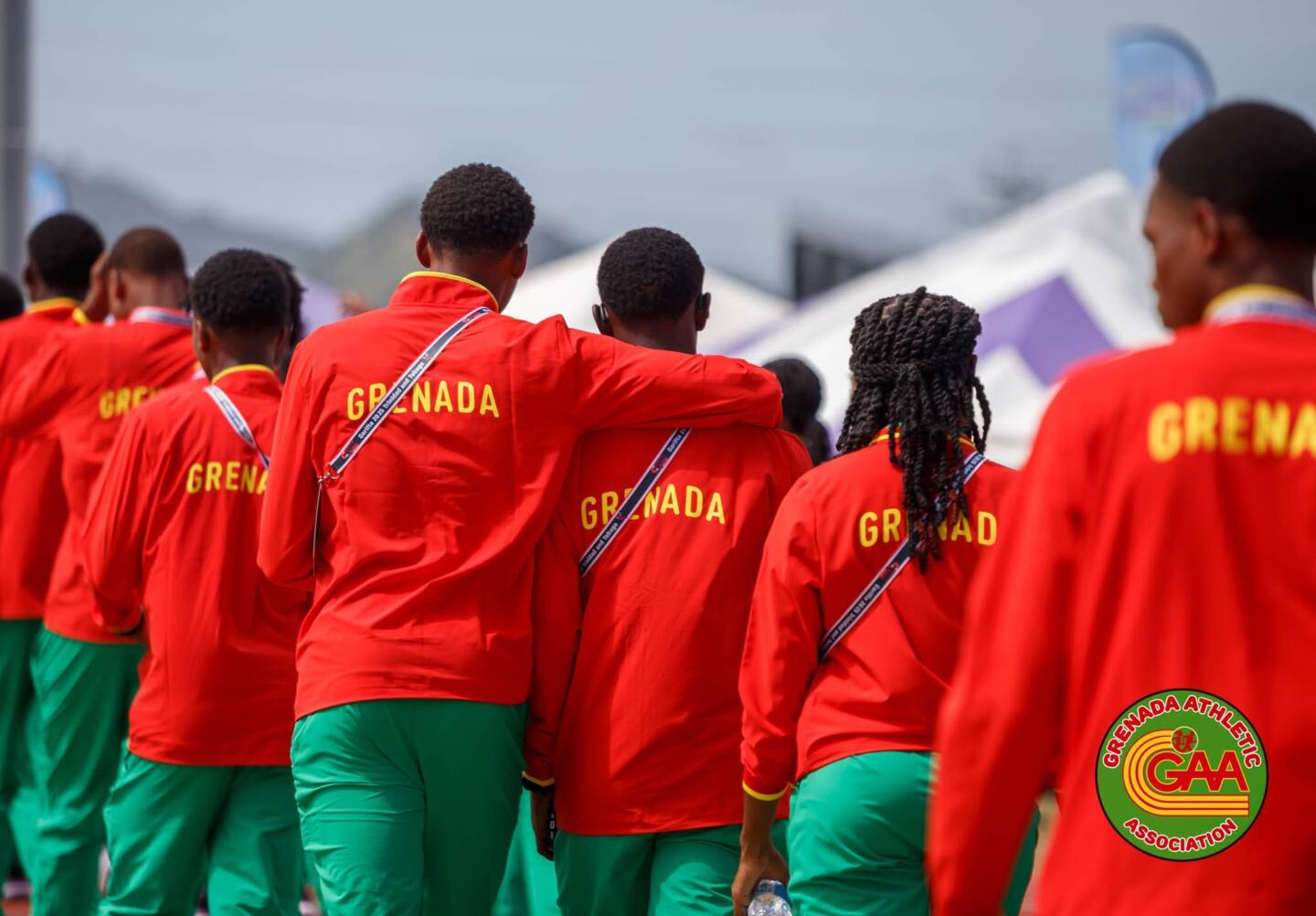
    The Grenada Athletics Association (GAA) has officially announced its most competitive developmental athletics squad in recent memory: a 25-strong national team set to compete at the 2026 North America, Central American and Caribbean Athletics Association (NACAC) Under-18 and Under-23 Championships, taking place July 10–12 in Apizaco, Mexico.

    This tri-island nation’s delegation blends decorated regional medalists and standout collegiate talents competing in the United States, with five women athletes and 20 men athletes split across the Under-18 and Under-23 age divisions. The women’s roster is led by Suerena Alexander, the current United States National Junior College Javelin champion, and backed by an impressive supporting cast: five-time All-American sprint hurdler Shantay Augustine, 2025 CARIFTA Triple Jump title holder Christana Charles, 2025 CARIFTA Mixed Relay bronze medalist Ameiah Samuel, and 2026 CARIFTA 800m silver medalist Annalisa Brown, who is the team’s sole Under-18 female competitor.

    The men’s roster carries an equally formidable competitive pedigree, with 11 athletes slotted for the Under-23 division and nine set to compete in the Under-18 group. The Under-23 men’s squad features a high-profile 4x400m relay pool anchored by Devonni Ferguson, Joshem Sylvester, and Shaquane Toussaint. Ferguson enters the championship in peak form, fresh off earning All-American honors with a runner-up finish at the 2026 National Junior College Athletics Championships. Sylvester and Toussaint return to regional competition after claiming 4x400m relay bronze at the 2025 NACAC Athletics Championships, with Sylvester also holding an individual Under-20 400m bronze medal from the 2024 CARIFTA Games.

    Five-time CARIFTA medalist Ethan Sam joins national champions Ian George and Samuel Greene on the Under-23 squad. Sam and George were core members of the 2026 CARIFTA bronze medal 4x100m relay team that set a new Grenadian Under-20 national record of 40.18 seconds. Field and distance events for the Under-23 division are led by three-time All-American thrower Jaylon Calder, who recently took second place in discus and sixth in shot put at the 2026 US National Junior College Championships. He is joined by 2026 CARIFTA 800m silver medalist Nicholas Frederick and up-and-coming sprint hurdler Kyle Nedd, a 2025 CARIFTA 4x400m bronze medalist.

    Grenada’s Under-18 boys’ squad is packed with emerging talent primed to deliver standout performances. It features 2025 CARIFTA Octathlon silver medalist Shyiem Phillip, who will contest the decathlon in Mexico, 2024 CARIFTA Triple Jump champion Christophe Calliste, and 2026 CARIFTA Javelin champion Deshawn Smart. Two-time CARIFTA throws silver medalist Kazim Telesford, 2025 CARIFTA 4x100m silver medalists Karmal Joseph and Nathaniel Douglas, and InterCol standouts Nathaniel Alfred and Phillip Mitchell round out the young men’s group. With final team entries now officially confirmed, GAA officials note this 25-member delegation stands as one of the strongest young teams Grenada has ever sent to a continental developmental championship, with high hopes for strong performances and medal finishes in Mexico.

    Full Official GAA National Team Roster

    Under-18 Boys
    – Karmal Joseph: 400m, 4x100m, 4x400m
    – Nathaniel Douglas: 100m, 4x100m
    – Phillip Mitchell: 100m, 200m, 4x100m, 4x400m
    – Nathaniel Alfred: 200m, 4x100m
    – Jovanie Greene: 400m, 4x100m, 4x400m
    – Deshawn Smart: Javelin
    – Kazim Telesford: Discus, Shot Put
    – Christophe Calliste: Long Jump, Triple Jump, 4x400m
    – Shyiem Phillip: Decathlon

    Under-23 Boys
    – Ian George: 100m, 200m, 4x100m
    – Kanick Nixon: 4x100m, 4x400m, 4x400m Mixed Relay
    – Ethan Sam: 100m, 4x100m, 4x400m
    – Shaquane Toussaint: 200m, 4x100m, 4x400m, 4x400m Mixed Relay
    – Joshem Sylvester: 400m, 4x400m, 4x400m Mixed Relay
    – Devonie Ferguson: 400m, 4x100m, 4x400m, 4x400m Mixed Relay
    – Samuel Greene: 4x100m
    – Kyle Nedd: 110m Hurdles, 4x400m
    – D’Angelo Brown: 800m, 4x400m
    – Nicholas Frederick: 800m, 1500m
    – Jaylon Calder: Discus

    Under-18 Girls
    – Annalisa Brown: 800m, 1500m, 4x400m Mixed Relay

    Under-23 Girls
    – Ameiah Samuel: 800m, 4x400m Mixed Relay
    – Shantay Augustine: 100m Hurdles
    – Christiana Charles: Long Jump, Triple Jump
    – Suerena Alexander: Javelin

  • Federation faces prolonged drought as El Niño suppresses rainfall, officials warn

    Federation faces prolonged drought as El Niño suppresses rainfall, officials warn

    BASSETERRE, St. Kitts – Officials from St. Kitts and Nevis have issued an urgent call for widespread water conservation across the Federation, as a powerful El Niño event continues to suppress rainfall and push the island nation into a prolonged drought that is expected to last through the end of the 2026 Atlantic Hurricane Season.

    Though the 2026 hurricane season officially began on June 1, official rainfall data confirms that precipitation across the Federation has remained drastically below average for the first five months of the year, with no meaningful relief seen in the first half of June. National Disaster Response Coordinator Livingston Pemberton delivered a stark update on the conditions, drawing on long-range climate projections from the Caribbean Institute for Meteorology and Hydrology (CIMH), which confirm that El Niño will sustain severe dry conditions through November.

    Pemberton stressed that the ongoing drought cannot be dismissed as a minor inconvenience, noting that it will impact the Federation’s economy one way or another if residents do not take urgent conservation action. Senior Meteorological Officer Elmo Burke expanded on the scope of the crisis, explaining that El Niño is triggering drought of differing intensity across the entire Caribbean region, not just St. Kitts and Nevis.

    Official measurements from the Robert L. Bradshaw International Airport, a key monitoring site for the islands, illustrate the severity of the precipitation deficit. Through the end of May 2026, the airport recorded just 8.66 inches of rain, 6.84 inches below the 30-year long-term average (1991-2020) of 15.5 inches for the same period. That equals a 44 percent drop in total rainfall compared to historical norms. The dry trend has not let up in June: as of the mid-June update, only 0.05 inches of rain had been recorded, a dramatic drop from the average June rainfall of 3.41 inches.

    “A drought warning was issued for St. Kitts and Nevis back in May, and this warning and the underlying dry conditions are expected to persist through the entire hurricane season, up to the end of November,” Burke confirmed during a press briefing hosted by the National Emergency Management Agency (NEMA). “Even though hurricane season is typically our wettest period of the year, current forecasts show the drought trend will hold strong throughout this season.”

    Burke went on to explain the scientific mechanics behind El Niño’s drying effect on the Caribbean. El Niño is defined by abnormal warming of surface waters in the eastern equatorial Pacific Ocean, which triggers far-reaching shifts in global weather patterns. For the Caribbean, this shift creates increased upper-atmosphere wind shear and sinking dry air across the region. These conditions block the deep convection that generates heavy rainfall from tropical waves and cyclones moving through the area, drastically cutting total precipitation.

    The sinking air associated with El Niño also drives higher than average temperatures, particularly during the peak summer heat between July and August. Compounding these challenges, the annual influx of Saharan dust – which typically blankets the Caribbean through the summer months – will further stabilize atmospheric conditions to prevent rain, while also reducing local air quality for residents. Burke noted that while occasional heavy rainfall events remain possible during the 2026 hurricane season, the combined impact of strong El Niño and recurring Saharan dust intrusions will keep total precipitation well below normal for the full season.

    As reservoir levels decline and public water supplies come under growing strain, emergency and water officials are urging all residents to immediately cut back on non-essential water use, including outdoor lawn watering and personal vehicle washing. Water Engineer Cromwell Williams emphasized that public cooperation is the most critical factor in managing the current water shortage, pushing back against suggestions that the islands need a full overhaul of their long-term water strategy.

    “We do not lack a water development strategy, nor do we need to rewrite our existing framework. Our current water scarcity stems from a failure to fully implement the strategy we already have,” Williams explained. “Today, I am here to appeal to every water consumer: your active participation is central to our ability to respond to this drought. Every cut in non-essential use makes a difference.”

    Williams pointed to a formal drought response plan published by the Water Services Department that clearly outlines the shared responsibilities of consumers and government agencies during periods of water scarcity, stressing that meaningful drought relief depends on collective action from all members of the public.

    For context, the 2026 Atlantic Hurricane Season runs from June 1 through November 30. Forecasters at the U.S. National Oceanic and Atmospheric Administration (NOAA) predict a near-to-above average season, with 8 to 14 named storms (packing winds of 39 mph or higher). Of those, 3 to 6 are expected to strengthen into hurricanes, with 1 to 3 forecast to become major Category 3, 4, or 5 hurricanes with winds exceeding 111 mph.

  • G7-leiders zonder China zou een vergissing kunnen zijn

    G7-leiders zonder China zou een vergissing kunnen zijn

    When world’s major economic powers gathered at a French chateau in 1975 to address a faltering global economy, one giant was already missing from the table: China. That first gathering, which laid the groundwork for the annual Group of Seven (G7) meetings of wealthy industrialized nations, would have been unrecognizable to today’s observers. Back then, China under revolutionary leader Mao Zedong was far from the global economic superpower it is today, and geopolitical tensions kept it out of the room from the start.

    Mao’s open support for communist forces in Vietnam, which had defeated both French and American military interventions, made any Chinese invitation all but impossible. The initial Rambouillet summit brought together six nations, and the bloc eventually expanded to seven with Canada’s inclusion, forming an exclusive club of like-minded democratic nations bound by shared political values.

    More than 48 years later, as current U.S. President Donald Trump gathers with fellow G7 leaders once again on French soil, China’s absence from the summit looks increasingly anachronistic. Today, China is an undisputed global economic giant whose influence ripples through every corner of international affairs, and its exclusion from a forum focused on global economic governance strikes many observers as increasingly untenable.

    By any economic measure, China has long earned a seat at the table. Since Mao’s death, China has transformed from a largely agrarian, closed economy into the world’s second largest overall economy, outstripping the combined GDP of every G7 member except the United States. Leading G7 scholar John Kirton, director of the G7 Research Group at the University of Toronto, compares the current situation to hosting a World Cup without Brazil: it is simply incomplete without one of the most influential players in the global game. Kirton argues unequivocally that both the G7 and the wider world would benefit from granting China membership.

    Yet a core unwritten rule of the G7 has stood in the way of that outcome for decades: membership is reserved for nations committed to open democratic governance, individual liberty and shared societal progress. Under Mao’s regime, China suffered massive humanitarian crises including deadly famines and widespread political upheaval that left millions dead, and it failed to meet the bloc’s political criteria by any measure.

    Today, China remains the most pressing topic of discussion for G7 leaders even without a seat at the table. It dominates global trade with record-breaking current account surpluses, controls a large share of the global supply of critical rare earth minerals essential to green technology and advanced manufacturing, has spurred anxiety among rival nations through its rapid technological and military expansion, and is the world’s largest emitter of greenhouse gases. All of this makes China the unavoidable “elephant in the room” at this year’s summit, held in the French alpine resort of Evian-les-Bains.

    French President Emmanuel Macron has specifically carved out space on the summit agenda to address how G7 nations can rebalance trade ties with China, amid growing fears that surging Chinese exports threaten to undercut and damage industrial sectors across G7 member states. Ironically, experts note that rising tensions over China could serve as an unexpected unifying force for the bloc, even amid deep existing divisions between Trump and other G7 leaders.

    For its part, Beijing has long criticized the G7’s exclusive structure, dismissing the bloc as an outdated Cold War relic that frames China as a systemic threat rather than a constructive global partner. At the same time, Chinese officials recognize the G7 remains a powerful concentration of combined economic, technological and military influence that cannot be ignored.

    Critics and analysts, however, warn that granting China membership would risk unraveling the G7’s internal cohesion. China’s authoritarian political system, fundamentally divergent national interests, and starkly contrasting positions on geopolitical flashpoints from Russia’s invasion of Ukraine to Iran’s nuclear program put it at direct odds with the bloc’s democratic members. Some analysts warn China could act as a “Trojan horse” within the bloc, leveraging economic ties to persuade individual members to pursue special concessions that split the group’s collective unity.

    The G7’s experience with Russia offers a clear cautionary tale for leaders considering expanding membership. Russia was admitted to the bloc in 1998, following the collapse of the Soviet Union, when leaders hoped to integrate the country into the Western-led liberal order. But after Russia’s illegal annexation of Crimea from Ukraine in 2014, the bloc voted to suspend Russia’s membership permanently. That experience has cemented a consensus among current G7 leaders that expanding the bloc to include non-democratic major powers carries severe and unpredictable risks.

  • ‘We Stand With Senator Malaka Parker,’ United Progressive Party and Women’s Forum Declare

    ‘We Stand With Senator Malaka Parker,’ United Progressive Party and Women’s Forum Declare

    Critics have launched a blistering rebuke of the nation’s prime minister, accusing the sitting leader of blatant political manipulation and blatant hypocrisy after a series of inconsistent actions targeting political rivals and shielding close allies from accountability. At the heart of the current controversy is the prime minister’s ongoing campaign against Senator Parker, a political opponent who has not been linked to any unlawful activity by law enforcement agencies. Critics emphasize that without any official confirmation of law enforcement interest in Parker, the prime minister’s public moves can only be interpreted as a calculated attempt to pressure police investigations into the senator and drag Parker’s public reputation through the mud in a particularly underhanded fashion.

    This uneven treatment of political scandals, critics argue, lays bare the prime minister’s deep-seated political malice. They point to two recent high-profile drug trafficking cases that were ultimately dismissed by the director of public prosecutions, for which the prime minister offered no public commentary or criticism whatsoever. Similarly, the prime minister remained entirely silent when one of his own cabinet ministers was tied to a major drug bust connected to the national Post Office, breaking his pattern of calling out alleged wrongdoing when it touches his own inner circle.

    Perhaps the most outrageous example of the prime minister’s double standard, critics note, comes from the $15 million so-called “Vehicle-gate Scandal”, which was first brought to light by the country’s Public Works minister. When growing public pressure demanded an open, independent inquiry into the allegations, the prime minister acted unilaterally to block any transparent investigation, a move widely interpreted as a deliberate effort to shield his own wife from public scrutiny into her potential connections to the scandal.

    Critics have decried the prime minister’s inconsistent approach to political accountability as egregious and morally repugnant. They have issued a public call for all ethical, principled members of society to stand against the prime minister’s biased actions, and reject his effort to undermine the long-held legal principle that a person is innocent until proven guilty beyond a reasonable doubt. The opposition and critics have made clear that they stand in full solidarity with Senator Parker amid what they describe as an unprovoked and unfair political attack.

  • Chamber:  Cut red tape,  boost growth

    Chamber: Cut red tape, boost growth

    As the government of Trinidad and Tobago prepares for its upcoming mid-year budget review, the head of the Greater San Fernando Chamber of Commerce (GSFCC) is calling on policymakers to seize this critical moment to reinvigorate business confidence and build a more robust foundation for sustained national economic expansion.

    In an exclusive interview with local outlet Express on Wednesday, GSFCC President Kiran Singh outlined the business community’s clear priorities for the budget adjustment, emphasizing that local entrepreneurs and industry leaders are waiting for actionable, growth-focused policy measures that support business scaling, strengthen national competitiveness, and set Trinidad and Tobago on a path toward long-term economic prosperity.

    While Singh recognized that recent evaluations from major international financial bodies have delivered moderately positive signals about the country’s economic trajectory, he did not shy away from highlighting the ongoing headwinds that still hold many local businesses back. Persistent structural barriers, from restricted access to hard currency and steadily climbing operational costs to widespread public safety concerns and slow, cumbersome bureaucratic processes, continue to hinder business activity and deter new investment, Singh explained. Resolving these long-standing frictions, he added, is a non-negotiable prerequisite to upgrading the national business climate and unlocking greater capital inflows.

    Among the GSFCC’s key policy asks are targeted support programs for small and medium-sized enterprises (SMEs), which form the backbone of the local private sector. The chamber is also pushing for expanded access to affordable financing and foreign exchange, tax and regulatory incentives to encourage private investment and company-wide digital transformation, and sustained, coordinated efforts to diversify Trinidad and Tobago’s economy beyond its traditional core sectors. Singh specifically highlighted growth opportunities in manufacturing, agro-processing, tourism, and non-energy exports, areas that could create new jobs and reduce the country’s economic vulnerability to global energy market volatility.

    Singh also voiced support for a targeted, limited-time tax amnesty scheme that would allow businesses and individual taxpayers to bring their outstanding tax obligations into compliance without facing crippling, excessive penalties. According to Singh, this policy would deliver triple benefits: it would improve overall national tax compliance rates, provide much-needed breathing room for businesses already struggling to stay afloat, and generate immediate additional revenue for the government to fund public investments. He added that delayed VAT refunds remain a particularly pressing pain point for micro, small, and medium enterprises (MSMEs) across the country, a problem the government must address to keep small businesses operational.

    Beyond fiscal measures, Singh emphasized that stronger national security enforcement, streamlined and digitized government services, and a transparent, clearly articulated long-term roadmap for fiscal stability and inclusive economic development are all critical to attracting both domestic and foreign direct investment, and to creating high-quality, sustainable employment opportunities for local workers.

    Repeating the business community’s core message, Singh stressed that local industry is not looking for piecemeal or symbolic policy changes. What stakeholders need is practical, targeted action that removes barriers to growth, strengthens competitiveness, and positions Trinidad and Tobago to compete and thrive in the post-pandemic global economy. The mid-year budget review, he said, is the ideal opportunity for the government to deliver on these priorities and signal its commitment to private sector-led growth.

  • Tobago new airport  terminal soon OPENS

    Tobago new airport terminal soon OPENS

    After months of incremental progress and post-completion preparations, the billion-dollar new terminal at Tobago’s ANR Robinson International Airport has cleared its final administrative hurdle, bringing the long-awaited infrastructure project one step away from welcoming its first commercial passengers.

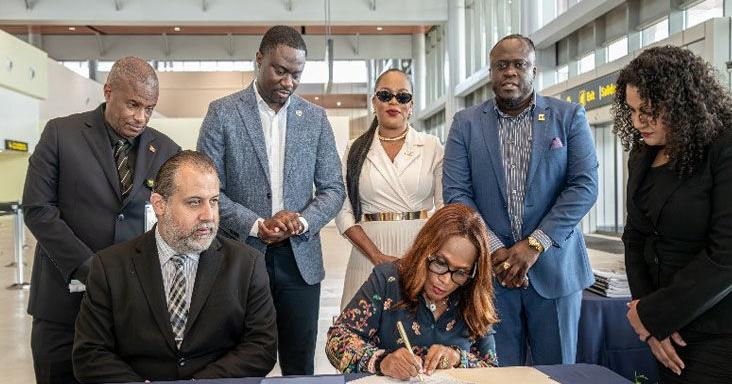
    The milestone was marked Wednesday, when the National Infrastructure Development Company (NIDCO) formally transferred the full set of required operational documentation—including all official certifications, equipment warranties, and technical operating manuals—to Trinidad and Tobago’s Ministry of Transportation and Civil Aviation and the local Airports Authority (AATT). This handover formalizes the transition from the terminal’s partial completion, which was reached back in March 2025, to full operational readiness, closing the gap that has separated the project from public opening for months.

    Key government and industry stakeholders were on hand to receive the documentation, including Transport and Civil Aviation Minister Eli Zakour, Chief Secretary of the Tobago House of Assembly Farley Augustine, and senior AATT representatives. Also in attendance were Tobago’s Secretary for Tourism Zorisha Hackett, alongside NIDCO’s chairman and president. Works and Infrastructure Minister Jearlean John confirmed to reporters that stakeholders have already collaboratively set a firm opening date, with a formal launch imminent.

    Addressing lingering concerns around aircraft fueling capacity, John assured the public that a workable short-term solution has already been finalized, and will not delay the terminal’s opening. A cross-stakeholder meeting scheduled for this week will finalize remaining logistics around the temporary arrangement, she added. Beyond operational logistics, Tobago’s leadership is already preparing a bold marketing push to capitalize on the new terminal’s capacity. John noted that Chief Secretary Augustine has prioritized an aggressive marketing strategy designed to draw millions of new visitors to Tobago, leveraging the island’s natural beauty and diverse tourism offerings. Tourism authorities have aligned on this goal, with planning already translated into immediate, short-term action, and national Cabinet has been fully briefed on the terminal’s operationalization timeline.

    The new terminal holds all required international aviation, safety, and environmental certifications to operate legally, including two Leadership in Energy and Environmental Design (LEED) accreditations from the U.S. Green Building Council, and full compliance with global standards set by the International Air Transport Association (IATA), International Civil Aviation Organization (ICAO), and U.S. Federal Aviation Administration (FAA). All core building systems are covered by valid contractor and manufacturer warranties to protect the public investment behind the project, and comprehensive technical manuals outline standardized procedures for daily operations, maintenance, and safety management.

    “What is transferred today is a certified, commissioned and fully documented terminal building,” John stated in remarks following the handover. “The certifications are its legal authority to operate, the warranties protect the public’s investment, and the operating manuals must guide every maintenance decision from this day forward.”

    In the months between the terminal’s March 2025 partial completion and Wednesday’s handover, NIDCO oversaw an extensive program of final works to bring the facility up to operational standards. Key tasks completed during this period included paving of taxiway asphalt, installation and commissioning of the full airfield lighting system, integration of constant current regulators with the air traffic control tower, testing and commissioning of all mechanical, electrical, and plumbing (MEP) systems, and calibration of baggage handling and security inspection equipment.

    A key component of the preparation phase was the Operational Readiness, Activation and Transition (ORAT) program, led by Munich Airport International. This initiative brought together all core operational stakeholders—from immigration, customs, police, fire, and public health agencies to ground handler Swissport, carrier Caribbean Airlines, and plant quarantine officials—to co-develop standard operating procedures, train frontline staff, and run full trial operations ahead of the public opening.

    With documentation now transferred, the terminal will officially enter its operational phase under the management of the Ministry of Transportation and Civil Aviation and the AATT. The completion of the handover process marks a major milestone for Tobago’s long-term economic development, delivering a modern, world-class international aviation gateway designed to support growing tourism and trade.

    Local business leaders have expressed cautious optimism ahead of the opening. Curtis Williams, chairman of the Tobago branch of the Trinidad and Tobago Chamber of Industry and Commerce, noted that the only remaining uncompleted step is fitting out commercial concession spaces, which are required to fully activate the terminal. Williams projected that opening could come within two to three months, and emphasized the critical importance of launching in time for the upcoming winter tourism peak season. “We need to get things going. We want for the upcoming winter season [that] the terminal building is open and we are using it—that’s very, very important,” Williams said. Reginald Mac Lean, president of the Tobago Hotel and Tourism Association, echoed this sentiment, reiterating the tourism sector’s eagerness for the new facility to open.

  • ‘We need to protect our children’

    ‘We need to protect our children’

    On a somber Saturday evening, hundreds of grieving community members and supporters filled the streets of Los Iros, holding flickering candles and murmuring heartfelt prayers for the family of Mercedez Layne, the 12-year-old schoolgirl brutally murdered earlier this month. The silent procession, united by shared sorrow and a collective call for stronger child protection measures, stretched through the neighborhood, bringing together a diverse crowd that included Mercedez’s relatives, close friends, long-time local residents, concerned citizens from across the region, and even cross-party political leaders.

    Most attendees chose to wear white, a quiet symbol of peace and remembrance for a young life cut far too short. As the crowd moved slowly along the residential streets, the air was filled with soft hymns, earnest prayers, and gentle messages of hope for the grieving family, cutting through the heavy grief that hung over the community. Throughout the vigil, speakers repeatedly emphasized the urgent need for all members of the public to become more vigilant and proactive in shielding children from preventable harm.

    For attendees and organizers, the event served two core purposes: to honor Mercedez’s memory, and to turn this unspeakable tragedy into a catalyst for meaningful national conversations about child safety and violence prevention. One speaker delivered a passionate, urgent address to the assembled crowd, framing Mercedez’s death as a critical wake-up call for parents, caregivers, and communities across the entire country. “We need to protect our children,” the speaker stated. “We need to wake up, people. Every child deserves to be safe, and it is our collective responsibility as a society to uphold that right.”

    The evening included multiple moments of quiet reflection and targeted prayer, including a special intercession for Mercedez’s mother, who was admitted to hospital just days after losing her daughter, overwhelmed by the devastating trauma of her death. Political leaders from opposing parties also set aside their partisan differences to join the gathering. Clyde Elder, Member of Parliament for La Brea, and Pennelope Beckles, political leader of the People’s National Movement, both addressed the crowd. Beckles noted that despite their differing party affiliations, all attendees stood united for Mercedez. “We are here as politicians, but mainly because we understand the challenge, the pain and the hurt for the family and the people,” Beckles said. “Her mom is in the hospital, so we say a special prayer for her so she will recover. We know that a mother losing a daughter under those circumstances, it is very difficult. We say a special prayer for her to deal with the pain.” As these prayers were offered, attendees bowed their heads in unison, asking for strength, healing, and comfort for Mercedez’s family during what speakers described as an unimaginable period of grief.

    Mercedez’s funeral is scheduled to take place tomorrow, when the community will gather once again to lay the 12-year-old to rest and offer their final goodbyes. The tragedy unfolded on the afternoon of June 6, when Mercedez, a primary school student, failed to return home after a relative dropped her off at a taxi that morning. She was reported missing immediately, and search teams located her body the next morning in dense bushes along a secluded dirt road near oil infrastructure on Carapal Road, just 10 minutes from her home on Los Iros Beach Road. A post-mortem examination confirmed she had been beaten to death.

    Investigators from the Region Three Homicide Bureau of Investigations quickly launched an investigation, and within days, 26-year-old Richard Renalis of Palo Seco’s Beach Road was arrested and charged with Mercedez’s murder. Renalis appeared in court last Thursday, where he was formally denied bail ahead of his upcoming trial.

  • Venezuelan woman stabbed  to death on way to work

    Venezuelan woman stabbed to death on way to work

    A brutal early-morning attack has left a 28-year-old Venezuelan migrant dead in Chaguanas, Trinidad, with local law enforcement confirming the killing is believed to stem from a domestic conflict.

    The victim has been publicly identified as Mariannys Jiménez, who also went by the nickname Sophia, a resident of Kelly Village in the Caroni district. On Saturday shortly after 9 a.m., Jiménez was walking to her shift alongside a colleague — both worked at a local Chinese restaurant located on Montrose Main Road — when an unidentified man approached her on the public roadway.

    Witness accounts confirm the man produced a knife without warning and launched the assault, stabbing Jiménez multiple times in full view of her shocked co-worker. Jiménez made a desperate attempt to escape her attacker, but quickly lost consciousness from her severe wounds and collapsed on the sidewalk. While the assailant fled the scene immediately after the attack, Jiménez’s co-worker ran to a nearby supermarket to raise an alarm and call for emergency assistance.

    Passers-by who responded to the alert rushed the injured woman to the Chaguanas District Health Facility, but she succumbed to her injuries while receiving medical treatment.

    Investigative updates from law enforcement reveal Jiménez had sought safety from the suspect the night before the attack, staying overnight at her co-worker’s home after reaching out for help. Multiple units of the Trinidad and Tobago Police Service (TTPS) responded to the incident, including officers from the Chaguanas Criminal Investigations Department and the Region Three Homicide Bureau of Investigations, who processed the crime scene shortly after the killing. TTPS forensic CCTV technicians also retrieved surveillance footage from surrounding local businesses to aid in identifying and locating the suspect.

    As of the latest update, police have launched an active manhunt for the attacker. Authorities are urging any member of the public with information related to the attack, the suspect’s identity, or his current whereabouts to contact their nearest police station, the Region Three Homicide office directly at 652-0495, or the anonymous Crime Stoppers hotline at 800-TIPS (8477). The investigation remains ongoing under the supervision of WPC Rampersad.

  • Local players confirmed for WCPL following draft

    Local players confirmed for WCPL following draft

    The 2026 edition of the Women’s Caribbean Premier League (WCPL) has locked in its full roster of domestic players after the conclusion of its annual player draft, marking a major milestone as the tournament enters an exciting new era of expansion.

    This year, top-tier women’s cricket in the Caribbean grows from three competing franchises to four, with the newly formed Jamaica Empress making its debut in the tournament. To accommodate the arrival of the expansion side, league organizers adjusted the traditional draft structure to ensure fair team building across all four competing units.

    Under the revised framework, each franchise was first allocated one designated Heritage player, a standout domestic talent drawn from the franchise’s home territory. That allocation saw Barbados Tridents secure Hayley Matthews, the region’s globally recognized star all-rounder, while Jamaica Empress claimed Chinelle Henry, Guyana Amazon Warriors locked in Shemaine Campbelle, and Trinbago Knight Riders earned Karishma Ramharack.

    Following the Heritage player allocation, the three returning, established franchises were given the opportunity to protect two additional domestic players from their 2025 tournament rosters, locking in key core talent ahead of the open selection round. After that protection phase concluded, new entrant Jamaica Empress selected two players from the remaining available domestic pool, picking up veteran star Stafanie Taylor and all-rounder Aaliyah Alleyne to build its initial foundation.

    After the completion of the early protection and selection phases, the draft moved into its final round to fill out the full local roster for each side. The full confirmed local squads for 2026 are:
    – **Barbados Tridents**: Hayley Matthews, Qiana Joseph, Afy Fletcher, Shawnisha Hector, Shabika Gajnabi, Mandy Mangru, Cherry-Ann Fraser, Naijanni Cumberbatch, Asabi Callender, Amrita Ramtahal
    – **Jamaica Empress**: Chinelle Henry, Stafanie Taylor, Aaliyah Alleyne, Rashada Williams, Zaida James, Djenaba Joseph, Kate Wilmott, Celina Whyte, Abigail Bryce, Shriya Jairam
    – **Guyana Amazon Warriors**: Shemaine Campbelle, Realeanna Grimmond, Ashmini Munisar, Shamilia Connell, Eboni Brathwaite, Sheneta Grimmond, Chedean Nation, Reniece Boyce, Latoya Williams, Tilleya Madramootoo
    – **Trinbago Knight Riders**: Karishma Ramharack, Deandra Dottin, Jahzara Claxton, Jannillea Glasgow, Steffie Soogrim, Earnisha Fontaine, Samara Ramnath, Ameila Khan, Brianna Harricharan, Sainavi Kambalapalli

    Each franchise will next add five overseas international players to reach the tournament’s 15-player squad limit for the 2026 season. In a notable rule change for this edition, all five signed overseas players will be eligible for selection in each match’s starting playing XI, giving team management far greater tactical flexibility throughout the tournament. The full list of signed international players is set to be announced in the coming weeks.

    Beyond on-field roster changes, the 2026 WCPL has launched a refreshed brand identity centered on three core values: female empowerment, competitive ambition, and deep community connection. These values are brought to life through the league’s new creative platform, “She’s In”, which will be promoted via a targeted advertising campaign across women-focused social media channels throughout the Caribbean.

    As the region’s premier professional women’s cricket competition, WCPL was reimagined for the 2026 season with a clear mission: to celebrate, empower, and elevate Caribbean women through sport, while providing a world-class stage for the region’s most talented female cricketers to showcase their skills. Beyond elite cricket action, the league integrates family-friendly matchday experiences, youth cricket development programs, public health and wellness initiatives, and business opportunities for female entrepreneurs across the region. The “She’s In” campaign specifically aims to inspire the next generation of Caribbean girls and young women, proving that there is a space for them at the highest levels of competitive sport.

    The 2026 WCPL will be hosted as a centralized cricket festival across the first two weeks of September, with all matches taking place in Barbados. Looking forward, league leadership has laid out long-term ambitions for global expansion, with plans to eventually welcome teams from outside the Caribbean as it works to establish itself as a truly elite international women’s cricket competition.