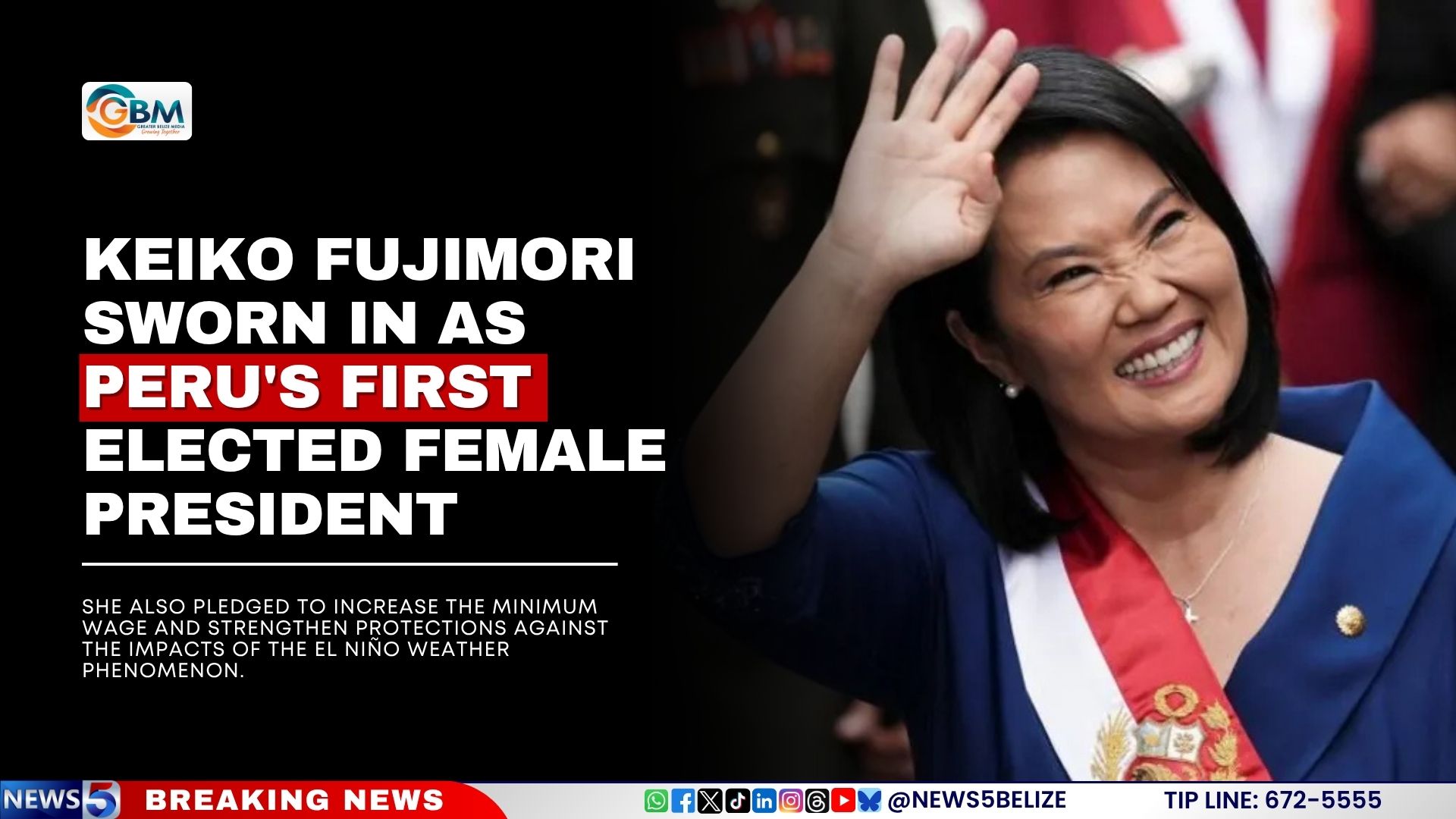
On August 3, 2026, Keiko Fujimori made history when she took the oath of office as Peru’s first woman elected to the presidency, closing a chapter of repeated political attempts and opening a new term defined by urgent national challenges. The 51-year-old conservative leader secured the executive office on her fourth electoral bid, eking out a narrow victory over left-wing challenger Roberto Sánchez in June’s general election.
Fujimori’s inauguration comes at a moment of deep instability for Peruvian politics: she becomes the country’s 10th president in just 10 years, a period marked by persistent upheaval that has left no chief executive to complete a full five-year constitutional term. In her inaugural address delivered in the capital city of Lima, Fujimori did not shy away from the gravity of the challenges facing the Andean nation, describing Peru’s current state as “catastrophic” while emphasizing that untapped economic and social potential remains across the country.
The most pressing priority outlined by the new president is addressing Peru’s worst security crisis in decades, which has been fueled by the rapid expansion of transnational criminal gangs involved in contract killings and extortion rings that have terrorized local communities. To counter this rising violence, Fujimori has announced a radical emergency measure: deploying the Peruvian military to take temporary command of security operations in regions placed under a formal state of emergency. She clarified that armed forces will remain in lead roles until domestic order is fully reestablished, framing the move as a necessary crackdown on runaway criminal activity.
Beyond security, Fujimori laid out two additional key pledges for her incoming administration: a planned increase to the national minimum wage to support low-income households, and strengthened public protections and preparedness measures to mitigate the destructive impacts of the El Niño climate pattern, which regularly brings extreme flooding and drought to parts of Peru.
Notably, Fujimori’s inauguration was not without public opposition. Thousands of demonstrators gathered in central Lima to protest her assumption of office, demanding accountability for past cases of state violence—including atrocities committed during the 1990s administration of her late father, Alberto Fujimori. The former president, who remains a deeply divisive figure in Peruvian politics, was eventually convicted of corruption and widespread human rights abuses carried out during his government’s crackdown on left-wing insurgent groups. Protesters argue that Keiko Fujimori’s political lineage and ties to her father’s authoritarian rule undermine the legitimacy of her presidency.