博客

  • Census Office Intensifies Field Operations As New Enumerators Are Deployed

    Census Office Intensifies Field Operations As New Enumerators Are Deployed

    After a temporary pause triggered by Antigua and Barbuda’s recent General Elections, the country’s national Census Office is moving forward with the 2025 Population and Housing Census, rolling out a second wave of trained enumerators to the field starting Monday, June 15.

    The first communities to see these new enumerators in action are the Greenbay Primary School neighborhood and its surrounding areas, where enumerators will begin conducting door-to-door interviews, gathering responses from both residential households and local business establishments. This deployment of additional field staff marks a key milestone in the national counting exercise, bringing the project one step closer to its successful completion.

    More than a simple headcount, the decennial Population and Housing Census stands as one of the most critical national undertakings for any country. The comprehensive, granular data collected through the census process forms the evidence base for nearly every major government policy decision, shapes long-term national development planning, and guides the fair allocation of public resources across high-priority sectors including public health, education, affordable housing, employment services, and core infrastructure development. Accurate, timely census data ensures that policy choices impacting local communities are rooted in reliable, up-to-date information rather than outdated estimates.

    To clear up common public concerns, the Census Office has emphasized that all personal information collected by enumerators is handled with the strictest confidentiality, protected by the country’s Statistics Act. No individual responses will ever be shared with any unauthorized third party or external organization, so residents can share accurate information without fear of privacy breaches.

    For easy identification by the public, all official enumerators will carry clear, verifiable credentials: they will wear branded official census vests, display government-issued photo ID cards specific to the census, and be equipped with census-provided tablets, branded census bags, and an official authorization letter issued directly by the Census Office.

    Alongside expanding field operations, the Census Office is ramping up public education and outreach efforts over the coming week. Senior census officials will make scheduled appearances across multiple local media outlets throughout Antigua and Barbuda, giving residents a dedicated opportunity to learn more about the enumeration process, ask questions about procedures or privacy protections, and get the latest updates on the progress of field work.

    The 2025 national census operates under the official theme “Mapping the Present, Shaping the Future,” a slogan that reflects the exercise’s core purpose of documenting current population and housing trends to build better long-term growth for the nation. Census leadership has expressed sincere gratitude for the public’s patience and cooperation during the post-election resumption, and stressed that the overall success of the count depends entirely on the full participation and support of every resident across the country. Residents with questions or concerns can reach census officials by phone at 562-7495, 562-7492, or 462-4775.


  • COMMENTARY: Artemis, ILRS, and Humanity’s Next Giant Leap for Mankind l PART II

    COMMENTARY: Artemis, ILRS, and Humanity’s Next Giant Leap for Mankind l PART II

    As humanity stands at the threshold of a new era of lunar exploration, two ambitious global initiatives – NASA’s Artemis Program and the collaborative International Lunar Research Station (ILRS) – are reshaping what we once thought possible for off-Earth scientific discovery and long-term space habitation. This second installment of the commentary series delves deeper into how these parallel projects, far from being purely competing efforts, are creating complementary pathways that could accelerate progress toward humanity’s next giant leap: sending the first crewed missions to Mars.

    Decades after the final Apollo mission returned to Earth, the Artemis Program reignited global public interest in lunar exploration, with a core mission to land the first woman and first person of color on the lunar south pole. This region, permanently shadowed craters hold vast reserves of water ice – a resource that could be broken down into oxygen for breathing and hydrogen for rocket fuel, transforming the Moon from a dead rock we only visit into a viable refueling stop for deeper space missions. Beyond symbolic milestones, Artemis has already laid critical groundwork: developing the Space Launch System (SLS) rocket, the Orion crew capsule, and partnering with private aerospace companies like SpaceX to build the lunar lander that will carry humans back to the surface by 2025 or 2026, delayed only slightly by technical and budgetary hurdles. In parallel, the ILRS, a collaborative project led by the China National Space Administration (CNSA) and Roscosmos with open invitations to global space agencies and scientific institutions, is focused on building a permanent, continuously crewed research outpost on the lunar surface by the 2030s. Its core goals align closely with many of Artemis’ long-term objectives: studying lunar geology, testing in-situ resource utilization technologies, and preparing for the extreme conditions of deep space travel.

    Critics have framed the two programs as a new space race, echoing the geopolitical tensions of the 1960s Apollo era. But many space policy analysts and planetary scientists argue that this framing misses the bigger picture. Across the global space community, there is growing recognition that even separate projects generate shared knowledge that benefits all of humanity. Data on lunar surface conditions, new life support technologies, and lessons learned about long-duration habitation in a reduced-gravity environment will all be openly shared in many scientific forums, lowering the risk and cost of future exploration for every participating nation.

    What makes this moment a true turning point for human spaceflight is not just the technology, but the broader participation. Unlike the mid-20th century space race, which was driven by geopolitical rivalry between two superpowers, today’s lunar efforts include contributions from private industry, smaller national space agencies, and academic institutions from every inhabited continent. This collaborative, open model creates a sustainable foundation for expansion that the early Apollo program never had. The long-term vision shared by both initiatives is clear: to turn the Moon into a testing ground for the technologies and systems that will allow humans to survive the 6-month journey to Mars, establish the first human outpost on another planet, and answer one of humanity’s oldest questions: are we alone in the universe?

    As both programs move through their development and early mission phases in the coming years, the choices made today – from how we share scientific data to how we structure international cooperation – will define the trajectory of human space exploration for generations. This is not just a race to the Moon; it is humanity’s collective preparation for the next giant leap into the unknown.

  • National Youth Parliament Association Completes Election of Executive Committee and Youth Members of Parliament

    National Youth Parliament Association Completes Election of Executive Committee and Youth Members of Parliament

    The National Youth Parliament Association of Antigua and Barbuda (NYPAAB) has officially wrapped up its democratic electoral process, finalizing the full rosters of its governing Executive Committee and Youth Parliament body for the coming tenure.

    Earlier this cycle, voters had already confirmed selections for several key leadership posts: Ezekiel Francois will lead the organization as President, joined by Jordyn Roberts as Recruitment and Mobilization Officer, Lorianna Richards as Projects and Events Manager, and Janiyah Winston as Financial Secretary. At a recent gathering of association members, the remaining executive positions were filled through democratic voting. Rainer Santos Mercado secured the role of Vice President, while Romario Hughes was elected General Secretary. Lutrell John will take on duties as Public Relations Officer, and Esther Mckenzie will serve as External Affairs Officer. Jessica Zouetr will remain on the committee as Immediate-Past President to provide institutional continuity and guidance.

    Beyond the executive leadership team, NYPAAB also celebrated the successful election of Youth Members of Parliament, who will represent geographic constituencies across the twin-island nation. These young representatives are tasked with amplifying the voices of Antigua and Barbuda’s youth, advancing priorities that matter to younger generations, and gaining hands-on experience in governance through formal parliamentary debate, targeted policy advocacy, and broader civic engagement initiatives.

    The confirmed constituency representatives are Johanna Jacobs for St. Mary’s North, Cyniya Ireland for All Saints West, Celine Edwards for All Saints East and St. Lukes, Jawan Jackson for St. Philip’s North, Chrysean Jarvis for St Johns Rural South, Alton Alcendor for St. Johns Rural West, Daniel Taylor for St. Paul, and Leanna Browne for St. John’s City South. The association has noted that caretaker appointments for the remaining unrepresented constituencies will be announced at a later date.

    In a statement following the conclusion of voting, NYPAAB extended formal congratulations to all candidates who won positions in the election and expressed gratitude to every association member who participated in the democratic process. The organization says its upcoming term will center on four core goals: cultivating leadership skills among young people, expanding opportunities for civic participation, fostering open and constructive policy dialogue, and empowering the next generation of Antigua and Barbuda’s public and community leaders.

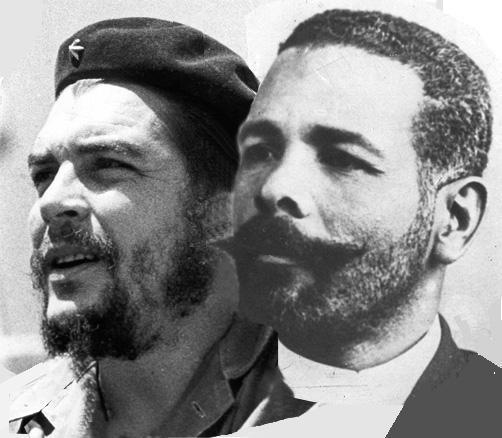
  • Maceo and Che Guevara: The rebellion of never surrendering

    Maceo and Che Guevara: The rebellion of never surrendering

    Across the sweep of history, chance often weaves together remarkable threads of shared destiny. For the Cuban people and much of Latin America, the annual arrival of June 14 is no random date on the calendar: it marks the shared birthday of two of the region’s most iconic revolutionary leaders, born 83 years apart and thousands of kilometers apart, who now hold a place of honor in the pantheon of Latin American independence.

    Antonio Maceo, born in 1845 in San Luis, Santiago de Cuba, and Ernesto “Che” Guevara, born in 1928 in Rosario, Argentina, never crossed paths in life. Yet their ideological visions and life trajectories converged on the same core goal: a fully free, sovereign Cuba, and a politically and economically united Latin America free from foreign interference.

    Though the two men came from drastically different material backgrounds, their upbringings equally forged the unyielding character that would define their revolutionary work. Maceo was born to small mixed-heritage farmers – a Venezuelan father and Cuban mother – who raised 12 children and instilled in them a deep love for their land and a fierce hatred of the colonial institution of slavery. Che, by contrast, grew up in a comfortable, intellectual middle-class Argentine household, surrounded by books and progressive thought. His father, Ernesto Guevara Lynch, held deeply progressive political views, while his mother Celia de la Serna nurtured his critical thinking, introducing him to the work of Karl Marx and Pablo Neruda from a young age.

    Neither man inherited leadership; they earned their standing through deliberate choice and consistent action. At just 23 years old, Maceo joined Cuba’s Ten Years’ War against Spanish colonial rule in 1868. With no prior military training or rank, his raw courage and sharp tactical mind allowed him to rise quickly through the ranks to become lieutenant to revolutionary general Máximo Gómez. Multiple battle wounds, and his iconic refusal to accept a compromised surrender deal with Spanish forces at the Protest of Baraguá, cemented his reputation as the “Bronze Titan,” a leader who never wavered in his commitment to independence until he fell in battle in December 1896 at the age of 51, machete still in hand.

    For Che, a trained doctor, his revolutionary convictions were forged on the road during his famous cross-continental motorcycle trip with friend Alberto Granados, where he witnessed firsthand the systemic poverty and exploitation that plagued working people across Latin America. He would go on to join the Cuban liberation struggle from 1956 to 1959, rising from serving as the doctor on board the Granma expedition yacht to commander of the Rebel Army, leading the decisive, legendary battle for Santa Clara that sealed the revolution’s victory. After the revolution, he carried his fight for global liberation to other regions of the world, first in Africa and then to Bolivia, where he was killed in 1967 at just 39 years old, rifle still at his side.

    Across more than a century, the overlapping values of Maceo and Che stand as a mirror held through time, reflecting a shared unwavering commitment to revolutionary principle. Maceo famously declared, “I understand no other word than freedom,” while Che wrote, “Our freedom and its daily sustenance are the color of blood and are filled with sacrifice.” Three core principles united the two leaders across their different eras: leadership by example, unwavering internationalism, and absolute rejection of any negotiation or mediation with colonial and imperial enemies.

    Both men fought on the front lines alongside their troops, sharing the same hunger, danger and hardship without claiming special privilege. Maceo fought first for Cuban independence, and his commitment to regional liberation extended to supporting the independence struggles of Santo Domingo and Puerto Rico. Che, who traveled to Cuba from his native Argentina carrying the experience of continental poverty, rejected the idea that national solidarity ends at a border. He became Cuban by choice, by sacrifice and by the struggle for liberation, and carried the revolutionary fight to the Global South, holding fast to his conviction that “humanity is the homeland of man.” Even when cornered by enemy forces in Bolivia’s Quebrada del Yuro, facing execution at the hands of Bolivian Rangers backed by the CIA, he remained unflinching, telling his executioners, “Calm down and aim well. You are going to kill a man.” Though his body was mutilated after death, his image and ideology have spread across every continent, inspiring new generations of activists.

    Today, as Cuba faces an intensifying U.S. economic blockade, as global media campaigns work to distort and caricature the legacy of Latin American revolutionaries, and as political discourse increasingly frames compromise and resignation as “maturity,” the parallel lives and shared values of Maceo and Che emerge as both a reminder of what is possible and a call to action. Their lives prove that true greatness is measured not by wealth or power, but by the justice of the cause for which one is willing to fight and die.

  • Antigua and Barbuda Festivals Commission Successfully Conclude Music Development Masterclass

    Antigua and Barbuda Festivals Commission Successfully Conclude Music Development Masterclass

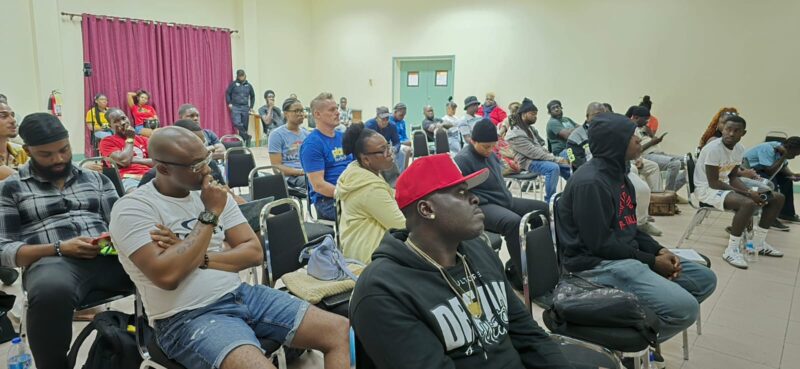
    A transformative initiative aimed at lifting up local creative talent has drawn to a successful close in Antigua and Barbuda, with the Antigua and Barbuda Festivals Commission (ABFC) celebrating the completion of its widely anticipated Music Development Masterclass. This intensive program represents the latest targeted investment by the commission into strengthening the nation’s fast-growing creative economy, unlocking new opportunities for creators across multiple disciplines.

    Hosted between June 8 and 12 at the Eustace Hill Campus located in Coolidge, the four-day training brought together a diverse cross-section of entertainment industry stakeholders. From emerging up-and-coming artistes, songwriters, producers, DJs and dancers to established industry professionals and visual creatives, all attendees gathered to deepen their understanding of the modern global music business through hands-on, immersive learning sessions.

    The program was led by three internationally recognized industry experts with decades of collective experience: Stephen “Int’l Stephen” Phillip from DSM Music Group, Daryll Gervais of Gervais Music, and Titan VCD from the NXUS Collective Agency. Throughout the course of the masterclass, facilitators emphasized the long-term value of professional networking and cross-local collaboration, urging participants to maintain the connections they built during the event and continue refining their craft long after the final session. To support ongoing development, all instructors shared their personal professional contact information with attendees, opening the door for future review of original music, creative projects and other work, as well as continued guidance.

    Dwayne George, the cabinet minister with oversight for Carnival, reaffirmed the Antigua and Barbuda government’s long-standing commitment to empowering local creatives through accessible education and targeted professional development opportunities.

    Ambassador Elizabeth Makhoul, chairperson of the Antigua and Barbuda Festivals Commission, outlined the commission’s core vision for expanding the local creative sector. “The Festivals Commission remains committed to creating pathways for growth within the creative sector. We are providing these programmes free of charge because we believe in the immense potential of our people. My appeal to creatives is simple: take advantage of every opportunity. Show up, engage, ask questions, and invest in your own development. The knowledge and connections gained through programmes like these can be transformative,” Makhoul said.

    Lead facilitator Stephen “Int’l Stephen” Phillip spoke highly of the energy and curiosity participants brought to the masterclass, noting that the next generation of Antigua and Barbuda’s creative talent shows exceptional promise. “It’s clear that the next generation is hungry, and they’re asking the right questions. The level of engagement we’ve seen over the past four days has been impressive. I genuinely believe there are quite a few global stars being born right here in Antigua and Barbuda,” Phillip shared.

    He also announced that early planning is already underway for an exciting collaborative project tied to the upcoming 70th anniversary of Antigua Carnival, a historic milestone for the nation’s biggest annual cultural celebration. “We’re already working on something special for Antigua Carnival 70 with some of the talented individuals we’ve met during this programme. What we’re building is what I like to call ‘The Carnival 70th Anthem’, something that captures the spirit, energy, and legacy of Antigua Carnival while showcasing local talent on a bigger stage,” Phillip added.

    To cap off the program, every participant received a formal certificate acknowledging their completion of the training and their commitment to ongoing professional growth within the creative industries.

  • Local Business Makes Major Donation Towards RCA Smurf Village

    Local Business Makes Major Donation Towards RCA Smurf Village

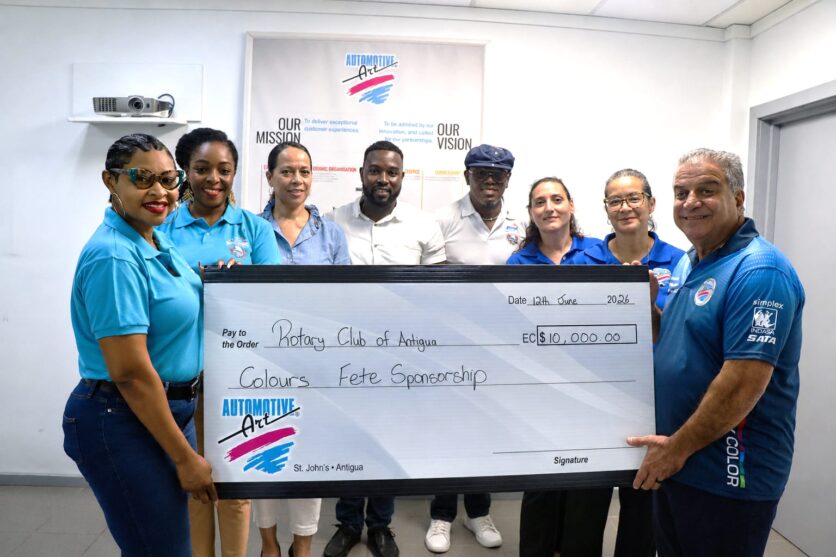
    A major local business in Antigua has stepped forward to back one of the nation’s most anticipated annual community fundraisers, marking a meaningful continuation of a decades-long family legacy of public service. On Friday, Automotive Arts and Outdoor World Antigua formally presented a donation exceeding EC$10,000 to the Rotary Club of Antigua to support the 2026 edition of its flagship fundraising event, Colours, which will carry the playful theme “Welcome to Smurf Village.”

    What drew the business to this partnership was the event’s core mission: advancing community empowerment and creating new opportunities for young people across Antigua and Barbuda, a mission that aligns perfectly with the company’s values of local investment. Robert Shoul, owner of Automotive Arts and Outdoor World Antigua, emphasized his deep personal commitment to nurturing youth entrepreneurship during the short handover ceremony. He noted that when he learned this focus would anchor the Rotary Club’s 2026 event, he was eager to join as a lead sponsor. Shoul’s involvement also carries special personal weight: it carries forward his late father Stephen Shoul’s legacy of service, as the elder Shoul was a long-standing, dedicated member of the Rotary Club of Antigua for many years.

    As the Rotary Club of Antigua’s signature annual fundraiser, all net proceeds from Colours 2026 will directly fund the organization’s wide range of community-led projects across both Antigua and Barbuda, from public infrastructure upgrades to educational programs and social support initiatives. Marsha Kalloo, group manager at Automotive Arts and Outdoor World Antigua, shared that the company’s team is working to deliver an unforgettable, one-of-a-kind experience for all event attendees. To align with the Smurf Village theme, the team is developing a custom glow-in-the-dark miniature golf zone that will feature dozens of prizes and unexpected surprises for guests of all ages, designed to elevate the overall event experience.

    Colours 2026: Welcome to Smurf Village is scheduled to kick off at 5:00 p.m. on Saturday, July 4, 2026, hosted at Antigua’s popular Coolidge Cricket Ground venue. All-inclusive tickets, priced at EC$300 per person, are currently available for purchase at two retail locations: Automotive Arts on Old Parham Road, and Tropic Wear located in Heritage Quay. Attendees can look forward to a full lineup of live musical performances throughout the evening, including sets from Kaution Band, Claudette CP Peters and the Disturbance Band, a special guest appearance from Menace XL, and a headline performance by iconic local act The Original Burning Flames.

  • AK-47 assault rifles smuggled through wharves for Venezuelan gang members

    AK-47 assault rifles smuggled through wharves for Venezuelan gang members

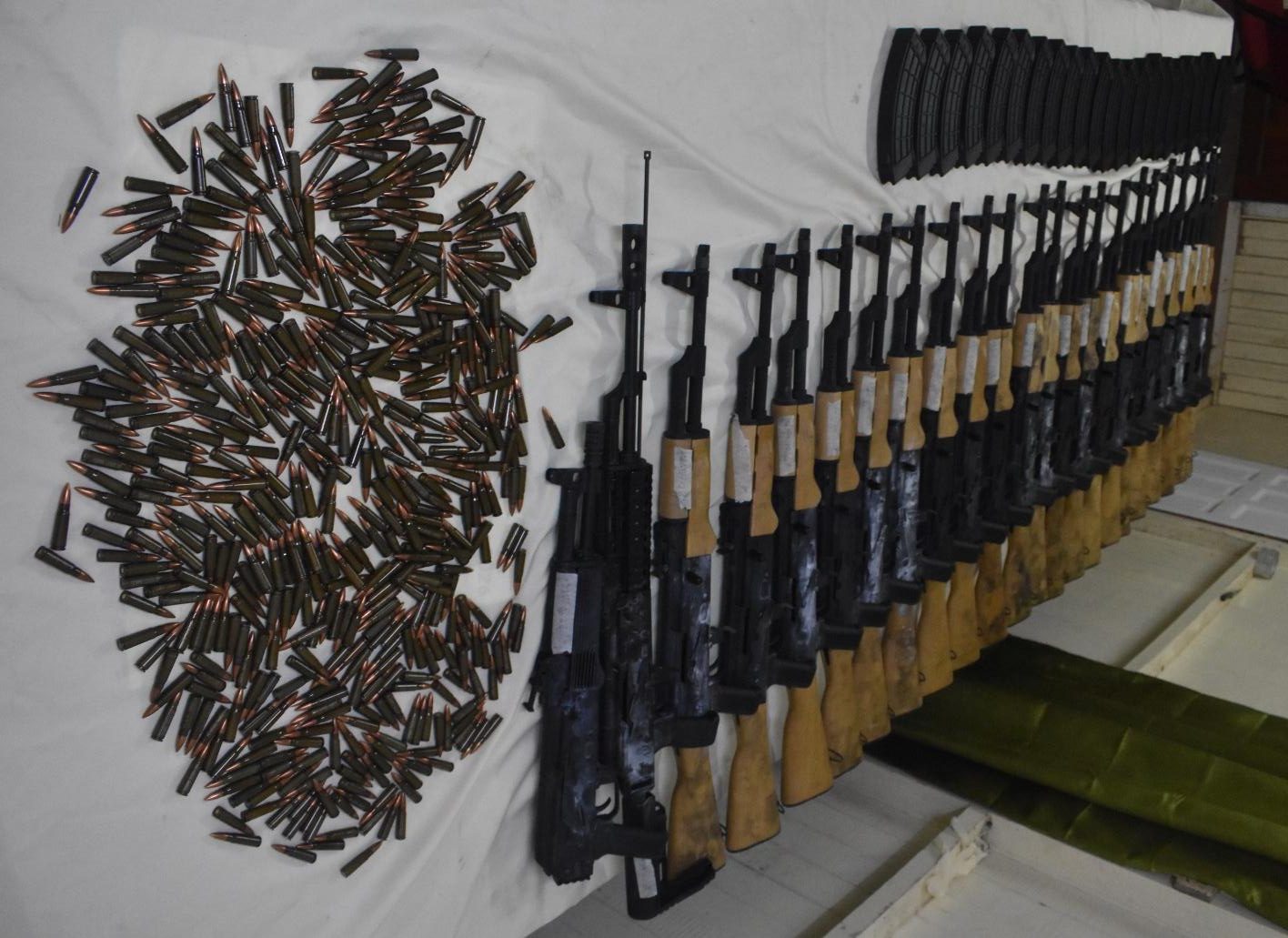
    Two major illegal weapons seizures in less than a month have put Guyana’s national security and border control systems under intense scrutiny, after a total of 33 US-manufactured AK-47 assault rifles were intercepted by law enforcement, with the cache traced to maritime smuggling through the country’s unmonitored wharves for transnational criminal gangs. The most recent bust occurred on the night of June 11, when officers recovered 23 rifles from a vehicle in Schoonard, on the West Bank of Demerara. The earlier seizure, in late May, netted 10 additional assault rifles in Berbice.

    Senior security sector sources, speaking on condition of anonymity, have confirmed that all weapons were shipped into the country via unsearched commercial maritime cargo, hidden inside barrels, crates and containerized vehicles that slipped past routine customs checks. The country currently lacks the specialized scanning technology required to detect hidden illegal weapons in incoming shipments, though officials note that the scanners have already been procured and are en route to Guyana.

    Authorities have publicly released little information about the ongoing investigation. When contacted by Demerara Waves Online News for details on the motives behind the smuggling operation, Home Affairs Minister Oneidge Walrond stated only that assessments are ongoing and the investigation remains active. Her advisor, former Home Affairs Minister Robeson Benn, declined to provide on-the-record comment, but acknowledged that the presence of unregulated high-powered firearms in the country is a constant cause for concern for all Guyanese people. “Guyanese always have to be concerned when guns are being pushed around,” Benn told the outlet.

    Deputy Police Commissioner Wendell Blanhum, head of the Guyana Police Force’s Criminal Investigations Department, has previously confirmed that the 23 rifles seized in June were manufactured in the United States. Senior officials have not yet publicly confirmed the intended end users of the weapons, or whether the smuggling was tied to political motives, a plot targeting senior law enforcement figures, or large-scale arms trafficking. The anonymous source, however, outlined the most widely held working theory among investigators: the weapons were smuggled for Venezuelan gang operatives, who were set to move the cache across the border to accomplice networks.

    Investigators believe the assault rifles are ultimately intended to protect illegal gold mining operations in the cross-border region, where gang activity has surged amid tightened firearms restrictions in Venezuela. When asked whether the notorious Venezuelan transnational gang Tren de Aragua is actively expanding its operations into western Guyana through this smuggling network, the senior official confirmed that investigators believe this to be the case.

    Multiple arrests have been made in connection with the two seizures. A 28-year-old Venezuelan man, Jonathan Gans, who resides in Grove, East Bank Demerara, was taken into custody on the night of the June bust as he attempted to flee the Schoonard search site. A 40-year-old local businessman, Randy Jagdeo, surrendered to police on June 14 alongside his legal counsel after a wanted bulletin was issued for him and a third suspect, Orlando Gabriel. Three Guyanese nationals were also arrested following the May seizure in Berbice.

    Guyana’s small opposition party, the Alliance For Change (AFC), has publicly criticized the ruling government for its decision to withhold key details of the investigation from the public. In a statement released Sunday evening, the AFC noted that while law enforcement’s success in intercepting the cache is a positive outcome, the smuggling attempt exposes major systemic gaps in the country’s border and import control frameworks. “The incident highlighted broader concerns about the movement and circulation of illegal firearms within the country,” the party said.

    The AFC emphasized that Guyanese citizens have a right to full transparency about how the high-powered weapons entered the country, who facilitated the smuggling ring, and whether any regulatory or legal failures allowed the shipment to slip into the country. The party added that news of the 33-rifle cache has sent major alarm across the country over public safety, with many residents questioning how many more illegal weapons may have already entered circulation and fallen into the hands of criminal networks and unauthorized groups.

  • Guyana-born American A.I. biotech innovator’s foundation to spearhead mobile community disease detection

    Guyana-born American A.I. biotech innovator’s foundation to spearhead mobile community disease detection

    A Guyana-born American biotech trailblazer, recently honored with one of the Caribbean’s most prestigious science and technology awards, is channeling his recognition into a transformative public health project to expand accessible early disease detection for underserved women across his home country and beyond.

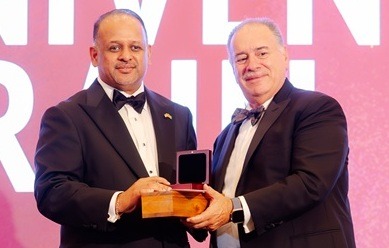
    Dr. Niven Narain, who was named a Joint Science & Technology Laureate of the 2026 Anthony N Sabga Awards for Caribbean Excellence, announced the launch of the Rukhminia Latchman Foundation for Women’s Health just moments after accepting his award. The new initiative, named to honor Narain’s grandmother, will combine grassroots outreach and cutting-edge medical technology to bring preventive testing directly to women who face barriers to accessing routine care.

    Narain will contribute his full $35,000 award prize to seed the foundation, and the gesture quickly inspired a matching donation from A. Norman Sabga, patron of the awards program and executive chairman of the ANSA McAL Group. “Dr Narain you touched me deeply; your generosity. I will match your donation,” Sabga announced during the award ceremony.

    The foundation’s first flagship program will be a women’s health on wheels service: a fleet of mobile testing units designed to deliver routine preventive screenings directly to community hubs and workplaces, with a priority focus on supporting working and single mothers. Narain emphasized that many women in Guyana are forced to choose between prioritizing their employment and caring for their health, a gap the mobile program is designed to close.

    “No woman should have to choose between her health and her livelihood,” Narain said. He has already held collaborative discussions with Guyana’s Minister of Health Dr. Frank Anthony to develop the mobile units, which will offer common preventive screenings including blood tests, Pap smears, urine analysis and breast examinations. All screening data will be logged into a centralized digital health system to streamline follow-up care. The core mission of the initiative is to catch life-threatening conditions, particularly cancer, at much earlier stages, when treatment outcomes are far more positive.

    Narain highlighted a stark public health disparity driving the project: in Guyana, young women and even adolescents are dying from breast cancer at rates not seen in the U.S., where the disease is most commonly diagnosed in patients over 60. Working women often lack the flexible time to travel to off-site clinics for routine preventive care, so the mobile units will bring initial screenings directly to their workplaces to flag potential health concerns and connect women to further care. As the foundation secures additional funding, Narain plans to expand the program to other Caribbean nations.

    Beyond his work in public health outreach, Narain is a pioneer in artificial intelligence-powered drug discovery. As co-founder and president of Massachusetts-based biopharmaceutical firm BPGbio, he developed a groundbreaking AI-driven drug discovery platform that holds more than 650 U.S. and international patents, has spawned over 100 high-impact scientific papers, and built more than 65 global partnerships with leading medical institutions, governments, and pharmaceutical companies. Multiple therapies developed through the platform are currently in late-stage clinical trials, and are under review by the U.S. Food and Drug Administration to treat conditions from aggressive cancers and rare skin disorders to age-related muscle loss and childhood mitochondrial disorders.

    A noted advocate for responsible AI innovation, Narain stressed that the scientific community must prioritize transparent, verifiable impact measurement for AI tools, as well as clear ethical frameworks to guide development. He called for balanced governance that promotes innovation while ensuring AI is deployed to serve public good, rather than strict overregulation that could slow progress.

    The 2026 Anthony N Sabga Awards ceremony honored four other exceptional Caribbean leaders alongside Narain: Barbadian visual artist Sheena Rose in the Arts & Letters category, Jamaican telecommunications entrepreneur Dean Nevers for Entrepreneurship, Barbadian social activist Shamelle Rice for Public & Civic Contributions, and Jamaican climate scientist Professor Tannecia Stephenson, who shared the Joint Science & Technology Laureate honor with Narain. Each category award carries a total cash prize equivalent to $70,000, split between the two co-laureates in Science & Technology.

  • Derde helft WK-2026: Zweden te sterk voor Tunesië en wint met 5-1

    Derde helft WK-2026: Zweden te sterk voor Tunesië en wint met 5-1

    June 15, 2026 — Sweden delivered a dominant 5-1 victory over Tunisia in their opening 2026 FIFA World Cup Group F fixture on Sunday, putting down an early marker for their knockout stage ambitions with a polished attacking display led by midfield star Yasin Ayari, who scored two goals. Right from the opening kickoff, the Scandinavian side pressed forward with clear attacking intent, and they wasted no time translating their pressure into an opening goal. In the 7th minute, Ayari found unmarked space just outside the Tunisia penalty box, unleashed a powerful low strike that beat the Tunisian goalkeeper to put Sweden 1-0 up. Sweden maintained firm control of possession and territory through the first half, doubling their lead in the 30th minute with a clinical counter-attack after breaking up a Tunisian foray forward. Newcastle United striker Alexander Isak carried the ball down the left flank, cut inside toward goal, and slot a precise finish into the bottom right corner to extend Sweden’s advantage to 2-0. Tunisia looked set for a lopsided first half, but the North African side pulled one back just before halftime to reignite tension in the match. In the 43rd minute, defender Omar Rekik directed a well-placed header from a cross into the back of the Swedish net, bringing the score to 2-1 heading into the break. Tunisia entered the second half hoping to build on their late first-half goal and push for an equalizer, but a costly defensive mistake derailed their comeback hopes just 15 minutes after the restart. In the 60th minute, Sporting CP striker Viktor Gyökeres capitalized on miscommunication between Tunisia’s backline, intercepted a sloppy pass, and coolly finished past the goalkeeper to restore Sweden’s two-goal lead at 3-1. That goal broke Tunisia’s resistance, with Sweden continuing to create high-quality chances through the final 30 minutes. In the 84th minute, Mattias Svanberg thought he had scored Sweden’s fourth, but the goal was initially ruled out for offside. After a VAR review of the footage, the decision was overturned and the goal was awarded, pushing the score to 4-1. Deep into six minutes of stoppage time, Ayari put the finishing touch on Sweden’s win with a superb individual goal, securing the final 5-1 scoreline and claiming his second brace of the fixture. The comfortable three-point win puts Sweden in an excellent position early in Group F, reinforcing their stated goal of advancing to the knockout round of the tournament. For Tunisia, the heavy defeat means the side will need to regroup quickly ahead of their upcoming group matches to keep their hopes of progressing to the next stage alive.

  • DNA begint aan intensieve begrotingsmarathon; focus op prioriteiten, sociale sector en productie

    DNA begint aan intensieve begrotingsmarathon; focus op prioriteiten, sociale sector en productie

    Suriname’s National Assembly is set to kick off public debate on the 2026 state budget on Monday morning, with lawmakers bracing for weeks of grueling work amid a persistent fiscal gap that forces tough trade-offs on government spending, according to the chair of the assembly’s rapporteurs committee, Rabin Parmessar.

    In an interview with local outlet Starnieuws, Parmessar outlined the rigorous schedule that will guide the budget process: public deliberations will open at 10 a.m. on Monday, with plenary sessions scheduled to run from 10 a.m. to 8 p.m. on nearly every workday for the coming weeks. The only exception is Wednesdays, when meetings are canceled to accommodate the weekly cabinet gathering. Any lost session time due to delayed starts will be made up with extended evening hours, Parmessar emphasized, noting the tight timeline to wrap up deliberations before the mid-July approval target. “If we start half an hour late, we will end half an hour late. The goal is to stick to the schedule and finish this process efficiently,” he said. Before public deliberations begin, the assembly will hold a closed procedural meeting to present the committee’s final pre-debate report on the budget proposal.

    A core challenge shaping the entire process is the projected budget deficit equal to 5.1% of Suriname’s gross domestic product, which has left the government with extremely limited fiscal space to fulfill all planned policy initiatives. Nearly every government ministry has submitted requests for increased funding that outpace the total resources available in the draft budget, so lawmakers will be forced to rank spending priorities to align with available funds, Parmessar explained.

    The committee has already identified four non-negotiable priority sectors that cannot afford further delays to critical investment: education, healthcare, social welfare, and domestic production. “We have a dual responsibility: we must protect vulnerable populations, while also investing in productive capacity to generate more long-term revenue for the country,” Parmessar said. “Many backlogs in critical services can no longer be put off.” These unresolved gaps include longstanding bottlenecks in healthcare access and medication supply, crumbling education infrastructure, and delayed public works projects across the country.

    The 5.1% deficit figure is expected to be one of the most contentious topics of debate, Parmessar predicted, noting that disagreements over how government loans are accounted for in budget calculations have persisted for years. He added that many discussions overlook the fact that a large share of new borrowed funds is allocated to paying down and restructuring existing sovereign debt, rather than funding new programs. Crucially, Parmessar pointed out that the current administration’s recent debt restructuring and refinancing efforts have already saved hundreds of millions of U.S. dollars in future payment obligations, easing long-term fiscal pressure.

    Beyond limited fiscal resources, the committee has flagged government implementation capacity as a top ongoing concern. Parmessar said multiple reviews during pre-debate preparation highlighted persistent shortages of specialized skilled staff, particularly for projects funded by international loans and multilateral financing. International financiers typically impose strict requirements for project preparation, implementation progress tracking, and public reporting, and a lack of trained personnel often leads to costly project delays that derail planned spending, he explained.

    Parmessar expressed satisfaction with the level of cooperation from ministries during the pre-debate preparation phase, noting that all requested additional data, budget breakdowns, and supporting documentation were submitted in recent days, allowing the committee to complete its work and enter public deliberations fully prepared.

    With only around six months remaining in the 2026 fiscal year once the budget is expected to be approved around July 13, Parmessar stressed that a fast, efficient debate process is critical to ensure approved funding can actually be disbursed and deployed for planned projects before the end of the year. “That’s why it’s so important that we move forward aggressively, so that the resources that get approved can actually be put to work for the Surinamese people,” he said. He also thanked the standing committees, legislative legal advisors, and all National Assembly staff for their work to prepare for the budget debate.