博客

  • ECFH, BOSL and NIC salute legacy of Evaristus Jn. Marie

    ECFH, BOSL and NIC salute legacy of Evaristus Jn. Marie

    The Caribbean island nation of Saint Lucia is mourning the passing of one of its most respected financial and public sector leaders, Evaristus Jn. Marie, who died Friday at age 67 after a prolonged fight with illness. Across his decades-long career, Jn. Marie held a series of the most senior leadership roles at three of the country’s most critical institutional bodies: the Eastern Caribbean Financial Holding Company (ECFH), Bank of Saint Lucia (BOSL), and the National Insurance Corporation (NIC).

    In a joint public statement released following his death, ECFH and BOSL remembered Jn. Marie as a transformative and exceptional leader whose professional legacy was anchored in unshakable personal integrity, forward-thinking strategy, lifelong commitment to public service, and an unwavering dedication to advancing both economic growth and social progress across Saint Lucia.

    When Jn. Marie assumed the role of chairman for both ECFH and BOSL in 2021, he took the helm at a critical turning point for both institutions. The organizations credit his steady, deliberate leadership with guiding them through a period of dramatic global and local economic shifts, all while championing rigorous corporate governance, increased organizational accountability, and a long-term vision for sustainable growth.

    His impact extended far beyond strategic direction, leaving an enduring imprint on the culture and work of both entities’ boards of directors and executive management teams. The joint statement noted, “Mr Jn. Marie provided steadfast leadership and invaluable guidance to our Board and Management team. His dedication to good governance, his deep understanding of business and finance and his genuine concern for the advancement of our institution and our country have left an indelible mark on ECFH and Bank of Saint Lucia Limited. We have lost not only an outstanding Chairman, but also a respected mentor, colleague and friend.”

    For the National Insurance Corporation, which provides critical social safety net services to thousands of Saint Lucians, Jn. Marie also brought steady and thoughtful leadership from February 2021 through his final days, serving across multiple NIC boards and committees. The organization emphasized that Jn. Marie’s dedication to the corporation grew from his personal understanding of the vital role NIC plays in supporting the daily lives of Saint Lucia’s residents. He approached every duty with consistent fairness and sharp professionalism, and was known industry-wide for his calm, optimistic demeanor and commitment to equitable decision-making.

    All three institutions have formally extended their deepest condolences to Jn. Marie’s family, friends, and loved ones. They note that his enduring legacy of principled leadership, uncompromising integrity, and committed public service will continue to inspire all those who had the privilege of working alongside him for years to come.

  • Who Keeps Targeting Mary Hill R.C. School?

    Who Keeps Targeting Mary Hill R.C. School?

    A community-led campus upgrade project at a Belizean primary school has become the latest target of repeated intruder attacks, leaving construction work destroyed and the campus strewn with garbage, school officials confirmed this week.

    Mary Hill Roman Catholic School, located in the Corozal District of northern Belize, has been targeted by trespassing vandals multiple times in recent months, according to a public statement released by the school administration on August 4, 2026. The most recent incident caused extensive damage to ongoing campus improvement initiatives that were designed to upgrade student facilities and upgrade the school’s infrastructure.

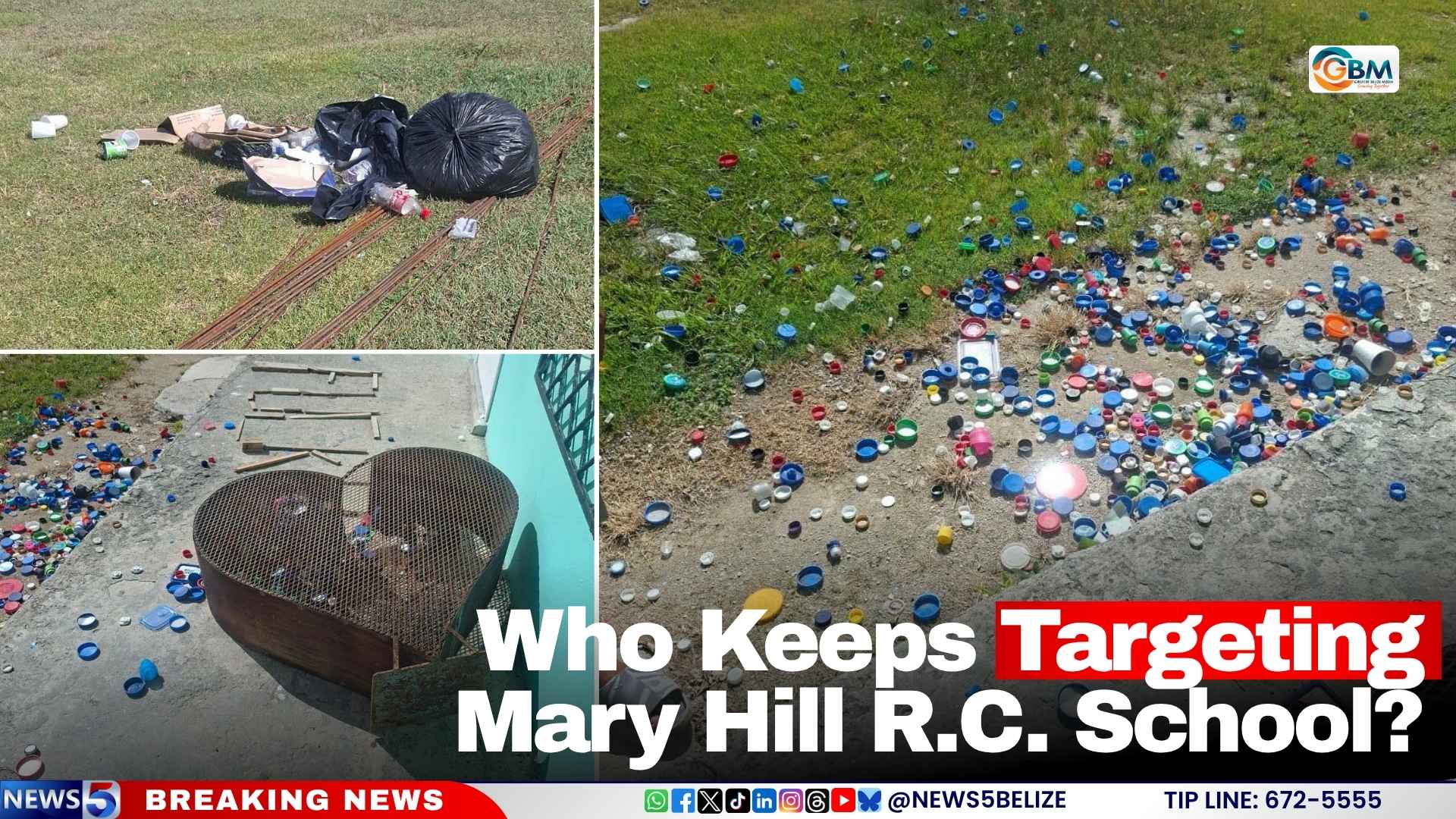
    In the statement, administration officials detailed the extent of the vandalism: after gaining unauthorized access to the campus, the intruders scattered garbage across the entire school grounds and deliberately upended containers holding collected recycled plastic bottle caps. Beyond the littering, the vandals targeted construction materials set aside for new campus sidewalks: molded concrete forms that were curing for the walkway project were completely destroyed, bulk construction sand was scattered across the site, and leftover building materials were arranged to spell out vulgar, offensive language directly outside the school’s main administrative office.

    School leaders described the repeated attacks as deeply demoralizing for staff and volunteers who have spent months working to upgrade the campus for the school’s student body. “This type of malicious, senseless act is disheartening for everyone who has put time and effort into making our school a better place for our kids,” the statement read.

    Despite the damage, officials emphasized that the vandalism will not stop the school from moving forward with its improvement plans. “Cowardly acts like this do not represent our school community, and they will not weaken our commitment to building a safe, beautiful, welcoming learning space for every one of our students,” the administration added.

    The school has launched an internal investigation into the incident and is asking members of the local public to come forward with any information that can help identify the people responsible for the repeated attacks. Anyone with details about the vandalism is encouraged to contact school administration to support the investigation.

  • OPINION | Who speaks the truth: FAO statistics, farmers…or the bees?

    OPINION | Who speaks the truth: FAO statistics, farmers…or the bees?

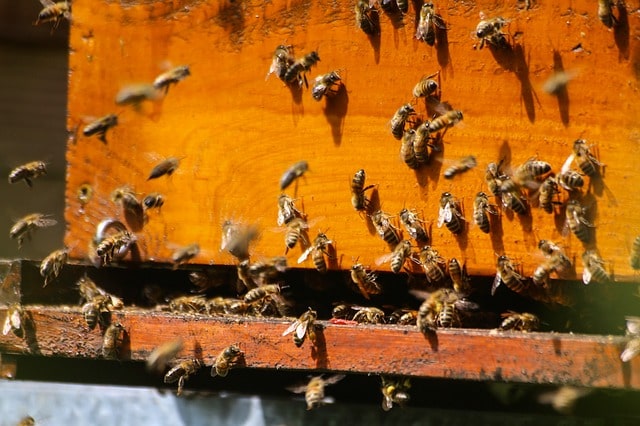
    A recent ranking from the Food and Agriculture Organization (FAO) has thrust the Caribbean island nation of Saint Lucia into an urgent public and policy debate: is it now one of the world’s most pesticide-intensive agricultural countries? While the FAO’s conclusion has split farmers, policymakers and members of the public into opposing camps, both sides of the argument share a critical flaw: neither rests on direct, on-the-ground scientific evidence of actual pesticide presence in Saint Lucia’s ecosystems. To break this deadlock, agricultural and environmental experts are proposing an innovative, nature-powered solution: turning to honey bees as living environmental sensors to generate the empirical data the debate desperately needs.

    The FAO’s methodology acknowledges that for nations that do not maintain consistent, formal pesticide use reporting, national pesticide use estimates are extrapolated from secondary sources, including import records, sales data, and statistical modeling. While these approaches work well for building broad global comparative datasets, they carry high levels of uncertainty for small island developing states (SIDS) like Saint Lucia, which have limited agricultural acreage and irregular national reporting systems. Without accurate, ground-truthed data, policymakers cannot craft evidence-based regulations and support systems for the agricultural sector, making the generation of reliable local data a top priority.

    At its core, the gap in accurate pesticide use data stems from a gap in farm-level data collection. Farmers are the primary source of on-the-ground pesticide use information, but most lack the training, infrastructure, and extension support needed to consistently track details like application frequency, total quantities used, application practices, and post-use pesticide container disposal. Low levels of trust between farming communities and regulatory bodies have compounded this challenge, resulting in sparse, low-quality data sets that cannot resolve the current debate. Experts note that this barrier is not insurmountable: stronger cross-sector partnerships between farmers, researchers and policymakers can build the trust and capacity needed to improve farm-level data collection, and farmers have a direct stake in supporting these efforts, as they deserve policies rooted in facts rather than unfounded assumptions.

    Even when farm use data is available, it only tells part of the story. Import statistics and farmer reports can only show how much pesticide was purchased or applied – they cannot reveal how much of those chemicals actually persist and accumulate in the surrounding environment. To measure real-world environmental exposure, the scientific community increasingly turns to biological indicator species, and few indicators are as effective as the common honey bee.

    Honey bees are uniquely suited to act as dynamic environmental samplers. Foraging workers travel several kilometers from their hives each day, visiting thousands of flowers across entire landscapes to collect nectar, pollen, water, and plant resins. In this process, they pick up airborne and surface-borne particulates from nearly every corner of the agricultural ecosystem. Unlike individual soil or crop samples that only capture pesticide exposure at a single point in space and time, an entire honey bee colony aggregates data from across a wide, diverse landscape. Over time, pesticide residues and other contaminants become incorporated into the colony’s hive products: nectar and pollen reflect recent exposure, while beeswax preserves a multi-month or multi-year historical record of chemical accumulation in the area. Every hive holds a comprehensive, continuously updated snapshot of the local environment’s pesticide burden that no artificial sampling program can replicate at the same scale.

    Given honey bees’ unique capacity as environmental monitors, experts are calling on Saint Lucia to launch a dedicated National Pollinator Residue Monitoring Programme to answer the open questions around national pesticide use. This program would collect consistent samples from hive products at a representative network of apiaries across the country, then test these samples for a full range of contaminants, including pesticide residues, biological pathogens and pests.

    While establishing a national monitoring program represents a significant financial investment, existing regional partnerships offer a cost-effective path to implementation. Currently, the Caribbean Agricultural Health and Food Safety Agency (CAHFSA) is working alongside the International Atomic Energy Agency (IAEA) and The University of the West Indies St. Augustine (UWI STA) on a regional food authenticity project across the Caribbean. In Saint Lucia, the project partners with the Iyanola Apiculture Collective (IAC), the Association of Caribbean Beekeepers Organisations (ACBO), and the Saint Lucia Bureau of Standards, with the core goal of building a harmonized, sustainable framework for food testing that protects consumers, supports fair trade, and strengthens regional food control systems through evidence-based practices – including pesticide residue testing across all food products.

    This existing infrastructure can be expanded to launch the pollinator monitoring program at a fraction of the cost of building a new program from scratch. By testing beeswax samples from across Saint Lucia, the program would generate the empirical, defensible data needed to confirm actual pesticide residue levels in the country’s ecosystems, track long-term accumulation trends, and guide targeted environmental rehabilitation strategies tailored to local contamination levels.

    Unlike import estimates or public debate, this science-driven approach would answer critical questions that statistics alone cannot resolve. The data would identify pesticide hotspots across different land types (comparing agricultural districts to undisturbed forest areas), map specific pesticide types and their residue concentrations, measure pollinator exposure levels, and track how pesticide exposure interacts with common bee threats such as varroa mite infestations and viral diseases to impact colony survival rates. None of these insights can be gained from imported data or opinion – they require on-the-ground, empirical scientific investigation.

    Expanding this monitoring initiative across the region would also position the Caribbean as a regional leader in evidence-based pollinator and environmental health. Existing regional collaborations between CAHFSA, UWI, IAEA, national standards bodies, and regional beekeeper organizations have already built advanced regional laboratory capacity. Expanding these partnerships to create a coordinated Caribbean Pollinator Health Observatory would allow the region to generate its own context-specific data tailored to the unique ecosystems and agricultural systems of Caribbean small island states, replacing generic international rankings with locally relevant, actionable information. The analytical infrastructure already exists through the ongoing Caribbean honey authentication project, making expansion of the network a logical, cost-effective next step for regional environmental governance.

    In conclusion, the FAO’s ranking of Saint Lucia’s pesticide intensity should be treated as a starting point for investigation, not a final verdict. Defending or criticizing Saint Lucia’s farming community without objective evidence advances neither agricultural productivity nor environmental protection. Honey bees offer a uniquely accessible, cost-effective, and scientifically sound opportunity to generate the evidence the debate needs, continuously sampling the landscapes that support the region’s food systems and livelihoods. It is time for stakeholders to set aside unproven arguments and start listening to what the bees can tell us.

  • Regering wil betalingsachterstanden aan SWM en EBS wegwerken

    Regering wil betalingsachterstanden aan SWM en EBS wegwerken

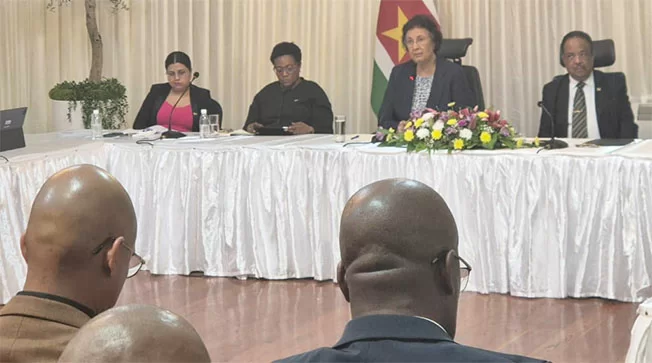
    During a weekly government press conference held on Monday, top Surinamese officials outlined urgent plans to resolve the mounting public debt crisis facing the country’s two key public utility providers, the Suriname Water Company (SWM) and Energie Bedrijven Suriname (EBS), while announcing a major restructuring of general utility subsidies to better support vulnerable populations.

    Vice President Gregory Rusland told reporters that the significant unpaid debt owed by the government to both utilities has severely restricted their ability to carry out critical infrastructure upgrades and operational investments. He confirmed that overdue payments from government ministries and public agencies to SWM alone have accumulated to approximately 100 million Surinamese dollars (SRD) over recent years.

    Rusland emphasized that ongoing public discussions about utility subsidies cannot be separated from the issue of the government’s own unpaid bills. “When the government states it provides subsidies to SWM or EBS, we must also ask whether the government is paying its own water and electricity bills,” Rusland said. He explained that a large share of current government outlays to the utilities goes toward clearing existing arrears, which cannot be accurately categorized as new subsidy spending.

    To address the backlog, the Council of Ministers has already approved a new rule requiring all government ministries to submit their water and electricity invoices for payment on a structured, timely basis going forward, a measure designed to stop further growth of the public debt to utilities. Clearing the existing backlog, Rusland noted, will immediately give both SWM and EBS the financial breathing room to complete the infrastructure investments that Suriname’s public services depend on.

    President Jennifer Simons added further details on plans for upgrading the country’s aging water distribution network, a priority as Suriname prepares for the upcoming forecast dry season. She confirmed that a previously paused infrastructure financing agreement with France’s Agence Française de Développement (AFD) has now been reactivated, following the successful completion of most of Suriname’s national debt restructuring process. This AFD lending will fund much-needed upgrades to the national water network to strengthen resilience against drought.

    Alongside resolving the debt backlog, the Suriname government confirmed it will gradually phase out broad, across-the-board subsidies for water and electricity. Simons explained that the current universal subsidy model benefits even high-consumption households that do not need public support, while failing to direct sufficient resources to low-income and vulnerable groups that need it most.

    Under the government’s proposed new framework, consumers who believe they qualify for utility subsidies will need to submit formal applications to receive support. Eligibility will be verified after applications are received, and any consumer found to have improperly received subsidies will be required to repay the full amount plus interest. Simons said this targeted approach will reduce overall government spending on general subsidies, freeing up fiscal space to boost household incomes and fund required investments at public utility companies.

  • President Mahama engages Reparation dialogue as Jamaica visit deepens Africa-Caribbean partnership

    President Mahama engages Reparation dialogue as Jamaica visit deepens Africa-Caribbean partnership

    Against a backdrop of growing global momentum for reparatory justice for the transatlantic slave trade, Ghana’s President John Dramani Mahama centered the movement’s future during an official four-day state visit to Jamaica that ran from August 2 to 5, at the invitation of Jamaican Prime Minister Dr. Andrew Holness. The visit, which aligned with Jamaica’s annual Emancipation Day observances and the 64th anniversary of the country’s political independence on August 6, was framed by Ghana’s presidency as a mission to reinforce deep historical ties between the West African nation and the Caribbean island, expand cross-regional collaboration between Africa and the Caribbean, and move the international reparations campaign forward.

    The centerpiece of Mahama’s program was a Special High-Level Reparation Dialogue, hosted by The University of the West Indies (UWI) in partnership with Jamaica’s Office of the Prime Minister. The discussion brought President Mahama together with UWI Vice-Chancellor Professor Sir Hilary Beckles, one of the world’s leading academic voices for reparatory justice, to connect centuries of historical trauma to modern policy demands and the growing global push for accountability. During the conversation, the two leaders explored the shifting priorities of the reparations agenda, outlined the shared responsibilities of national governments and global academic institutions, and emphasized the critical role of cross-regional partnerships in advancing global equity and redress for historical harms.

    In a post-event statement shared on its official Instagram page, UWI expressed honor at hosting the high-profile conversation, noting that the dialogue united sitting heads of state and leading scholars to hold a timely, urgent exchange on historical memory, justice, and the path forward for the global reparations movement.

    Beyond the landmark reparations discussion, Mahama’s agenda included a full slate of bilateral and ceremonial activities aligned with building long-term ties between the two nations. He held formal bilateral talks with Prime Minister Holness, where the pair laid out plans to expand collaborative work across key sectors including trade and foreign direct investment, education, cultural exchange, tourism, and sustainable agriculture. Both leaders reaffirmed their shared commitment to deepening institutional and people-to-people connections between the African continent and the Caribbean region.

    One key proposal revived during the talks was the creation of a direct commercial airline route between Ghana and Jamaica. President Mahama emphasized that improved direct air connectivity would unlock new tourism opportunities for both nations and foster closer personal and cultural ties between African and Caribbean communities. “Our goal is to transform the Atlantic Ocean from a historical barrier that separated families and communities into a unifying bridge connecting West Africa and the Caribbean,” the Ghanaian presidency quoted Mahama as saying during a joint press briefing with Holness in Kingston.

    The state visit included a full schedule of ceremonial engagements: Mahama received an official welcome at King’s House, Jamaica’s official governor-general residence, where he met with Governor-General Sir Patrick Allen; toured commercial operations at Kingston Wharves and the iconic Bob Marley Museum in Kingston; and explored the Independence Village exhibition hosted at the National Arena to mark the country’s independence anniversary. On the second full day of the visit, Mahama delivered a historic address to a Joint Sitting of Jamaica’s Parliament, laid a floral tribute at the shrine of iconic Black liberation leader Marcus Mosiah Garvey, visited the reconstructed Ghanaian Village at Seville Heritage Park, and attended an official state dinner hosted at King’s House ahead of his scheduled departure on August 5.

  • Sandals Early Childhood Centre celebrates Class of 2026

    Sandals Early Childhood Centre celebrates Class of 2026

    A landmark moment for early childhood education in Saint Lucia unfolded recently, as the Sandals Early Childhood Learning and Development Centre hosted its second annual graduation ceremony at the iconic Sandals Regency La Toc Golf Resort & Spa. The joy-filled event honored 15 young learners who have successfully completed the center’s foundational preparatory program, stepping forward ready to embrace formal primary education.

    Families, teaching staff, senior leadership from Sandals Resorts International, and community guests gathered to mark the occasion, creating a warm atmosphere of shared pride and celebration. Attendees enjoyed heartfelt speeches honoring the center’s work, tender moments between proud caregivers and their graduates, and reflective talks on the importance of high-quality early childhood development. In just two years of operation, the center has already cemented a strong reputation for excellence in early learning across the region.

    Speaking at the ceremony, Sunil Ramdeen, Regional Public Relations Manager for Sandals Resorts International covering the Eastern Caribbean, highlighted the long-term value of the resort group’s educational initiative. “The Sandals Early Childhood Learning and Development Centre continues to be another gem in Sandals’ crown,” Ramdeen shared. “Seeing these children grow in confidence, curiosity and character is a reminder that investing in our people and their families creates lasting value for generations to come.”

    Monica Weeks, the center’s school administrator, expanded on the institution’s core mission and proudest achievements. While the program prioritizes building a range of foundational academic skills that prepare children for formal schooling, Weeks emphasized that social-emotional development stands as the center’s defining focus. “Watching them learn to care, share, communicate, build friendships and develop confidence has been one of our greatest rewards,” Weeks explained. “These are qualities that will serve them well throughout their lives.”

    The center’s track record already speaks to its success: graduates from the inaugural 2023 cohort have adapted exceptionally well to their new primary schools, demonstrating the program’s effectiveness in smoothing the transition from early learning to formal education.

    For parent Tamara Joseph, the impact of the center’s work has been deeply personal. She shared that enrolling her child at Sandals Early Childhood Learning and Development Centre was one of the best choices her family has made. “The love, patience and guidance shown by the teachers have made a remarkable difference in our child’s growth and confidence,” Joseph said. “We are truly grateful for everything the school has done for our family, and we know our child is leaving well prepared for the next stage.”

    As the 15 graduates crossed the stage one by one to collect their completion certificates, thundering applause filled the venue from the packed crowd of supporters. The ceremony closed as a bittersweet milestone: it marked the end of the children’s first chapter of formal learning, and the opening of a new future brimming with opportunity for the young Saint Lucian learners.

  • Eco-tourism pioneer Keith Cooper dies at the age of 69

    Eco-tourism pioneer Keith Cooper dies at the age of 69

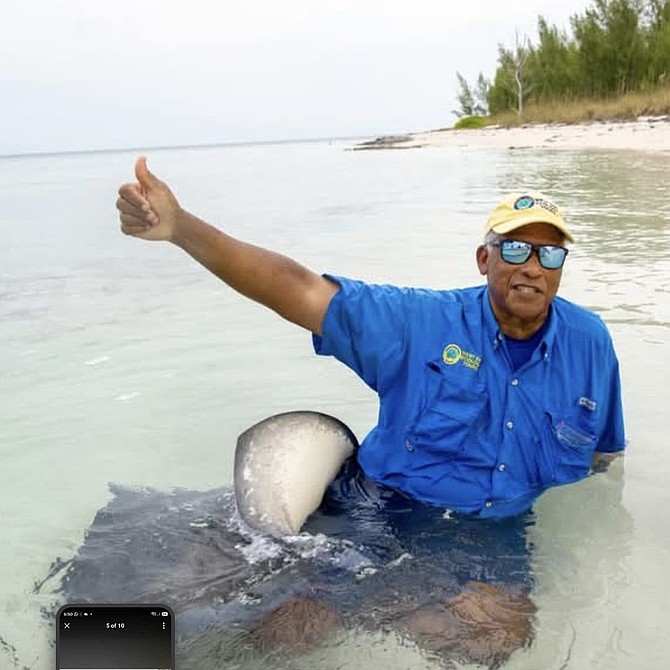
    The tight-knit coastal community of West End on Grand Bahama is gathering to mourn the passing of Keith Cooper, a trailblazing local eco-tourism entrepreneur and lifelong community champion who introduced thousands of people to the rich underwater biodiversity of the region’s waters. Cooper, the 69-year-old founder of West End Ecology Tours, collapsed and passed away unexpectedly on Sunday, August 2.

    A native of West End, Cooper launched his eco-tourism venture in 2010 after returning to his hometown more than 20 years earlier following time living abroad. He quickly built a reputation as a trusted guide, leading hundreds of excursions to the iconic Sandy Cay that gave visitors the rare opportunity to interact safely with wild stingrays, while learning firsthand about the area’s shark populations, native fish species, and the delicate interconnected marine ecosystem that supports the island’s coast.

    Kingsley Smith, the Member of Parliament for West Grand Bahama, emphasized that Cooper’s legacy stretches far beyond his successful tourism business. In the years after his return to West End, Smith said, Cooper poured his energy into lifting up the next generation of local young people, creating accessible outdoor programs that taught core skills like swimming and fishing, before expanding to add sailing opportunities. “It was something new for the community, and many young people benefited from his programme,” Smith noted.

    Cooper’s tours also reshaped West End’s tourism landscape, drawing travelers who otherwise would have only visited the area’s popular nightlife into the heart of the village to experience its unspoiled natural beauty. Most recently, he had expanded his local footprint by venturing into the restaurant industry: he purchased the former Coffee on the Bay property, renovated the space, and launched Conchshells, a new eatery designed to give both residents and visitors an authentic taste of West End’s local culture and cuisine.

    Joseph Darville, chairman of the Bahamian environmental advocacy group Save The Bays, shared that he joined Cooper on an excursion to Sandy Cay just two weeks before his death, to observe nurse sharks during their annual mating season. Darville said Cooper was enthusiastic and full of energy during the trip, updating him on the final renovations for his new restaurant and looking forward to its opening. “Keith Cooper had an intimate, almost divine knowledge of the ocean, the fish and everything connected to marine life,” Darville said, noting he had spent hundreds of hours exploring West End’s waters with Cooper over the years. “I learned a great deal from him. I always looked forward to spending time with him.”

    Cooper also regularly partnered with environmental education programs, opening his tour sites to student groups who came to study marine ecosystems firsthand. He spent countless hours teaching visitors and students alike how to safely and respectfully interact with local marine life, Darville added.

    Beyond his work in tourism and youth development, Cooper was also a critical support for West End in times of crisis. Following damaging hurricanes that have repeatedly impacted the Bahamas, Smith said Cooper leveraged his extensive network of international connections built through decades of tourism work to secure donations and emergency aid for local residents. “Any time there was a disaster, Keith used the many international contacts he had built over the years to help West End,” Smith explained. “People donated, and he always used his reach for the benefit of the community.”

    Since news of Cooper’s death broke, tributes have flooded social media from current and former residents, past tour guests, and friends, many of whom highlighted the indelible mark he left on Grand Bahama’s identity and marine conservation work. Multiple commenters described his passing as a devastating loss for the community, noting that the island will never be the same without his leadership and passion. Both Smith and Darville extended formal condolences to Cooper’s family and loved ones, reflecting on the deep void his death leaves in the West End community. “He will be greatly missed,” Darville said.

  • BPL Executive Chairman says outage rebates rarely please the public

    BPL Executive Chairman says outage rebates rarely please the public

    In the wake of a disruptive island-wide blackout that left homes and businesses across New Providence without power, Bahamas Power and Light (BPL)’s top leader has declined to commit to customer electricity bill rebates, arguing the policy rarely satisfies the public it is meant to help.

    Last Wednesday night’s widespread service disruption triggered immediate calls for relief for affected customers, prompting Prime Minister Philip Davis KC to announce last week he had formally requested BPL leadership to explore options for additional financial relief for residents and business owners grappling with repeated outages and soaring energy costs. But when pressed for details on potential rebates this week, BPL Executive Chairman Christina Alston stopped short of confirming any upcoming customer refunds, shedding light on the utility’s longstanding concerns about how such measures are received by the public.

    Alston laid out the utility’s perspective in comments to reporters yesterday, noting that no matter the size of the rebate offered—whether a $45 credit or a $100 reduction—some segment of consumers will inevitably leave disappointed. “We recognise that in the utility industry, we cannot please every customer at all times,” she explained. “It has become particularly easy to criticize BPL right now, as we navigate a challenging period marked by multiple infrastructure fires and frequent lightning-related outages that have disrupted service across the islands.”

    As of her press briefing, Alston confirmed she had not yet held discussions with Prime Minister Davis or the Minister of Energy to review the prime minister’s request, framing the final decision on rebates as a matter for political leadership to resolve. When asked directly whether she believed customers who had endured repeated service disruptions deserved a bill reduction, Alston called the question “difficult”, adding that global data from utility sectors shows consumer reaction to rebate programs is almost never universally positive.

    She emphasized that BPL operates as a publicly owned entity under the direction of the national government, meaning any rebate policy will move forward only after formal instruction from Davis and the energy ministry. “Once we receive those instructions, we know what the reaction will be: some consumers will say the relief is not enough, while others will be grateful for whatever support they get,” Alston added. Davis first confirmed the request for a rebate review last week, telling reporters he had directed BPL to assess the feasibility of concessions for customers reeling from repeated outages and high monthly energy bills, saying “they’ll see what they can do” to deliver support.

  • Moisés Ruiz calls for stronger Dominican immigration controls after Ceuta crisis

    Moisés Ruiz calls for stronger Dominican immigration controls after Ceuta crisis

    In a televised analysis broadcast this week from Santo Domingo, prominent Dominican journalist Moisés Ruiz has drawn a sharp parallel between the 2021 mass migration crossing at Spain’s Ceuta border and growing pressures on the Dominican Republic’s frontier with Haiti, calling for immediate action to reinforce immigration enforcement across the country. The Ceuta crisis, which saw thousands of irregular migrants cross the border from Morocco into Spanish territory in a sudden, mass movement, should act as a urgent wake-up call for Dominican authorities, Ruiz argued during his appearance on *Enfrentados*, a current affairs program produced by El Nuevo Diario TV.

    Ruiz was careful to frame his comments not as opposition to migration as a whole, acknowledging the core drivers that push people to cross international borders. Many people leave their home nations out of a legitimate pursuit of improved economic prospects, safer living conditions, and better opportunities for their families, he noted. That said, he emphasized that no nation can maintain public order and economic stability without clear, effective systems in place to oversee the entry, registration, and legal residence of foreign visitors and new arrivals.

    The journalist zeroed in on longstanding concerns over the growing population of undocumented Haitian migrants working across multiple key sectors of the Dominican economy, warning that unregulated migration risks straining public services, undercutting local labor standards, and creating unaddressed security gaps. He reiterated that the scale of irregular movement across the Dominican-Haitian border has expanded dramatically in recent years, making the expansion of border security infrastructure and stricter enforcement of existing national immigration laws an urgent policy priority for the Dominican government. The lessons of Ceuta, he concluded, make clear that failing to shore up border controls proactively can lead to sudden, unmanageable humanitarian and security crises that are far harder to address after they unfold.

  • EV dealers reject claims that chargers strain grid

    EV dealers reject claims that chargers strain grid

    A public dispute has erupted over the root causes of The Bahamas’ persistent electricity grid instability, with leading electric vehicle dealers accusing national power sector executives of scapegoating EV owners to distract from decades of systemic underinvestment and poor strategic planning.

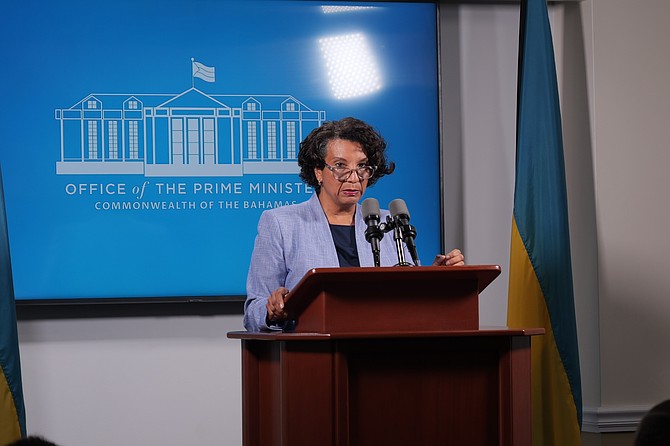
    The clash followed a joint press conference held by Bahamas Grid Company (BGC) and Bahamas Power and Light (BPL) at the Office of the Prime Minister, where top utility leaders linked recent system overloads and faults to unreported, unregulated increases in residential electricity demand. BGC Chief Operating Officer Ryan Holder highlighted unpermitted additions like extra air conditioning units as a key unaccounted-for strain on infrastructure, before BGC Chief Executive Officer Dareo McKenzie specifically called out unreported home EV chargers, framing them as a substantial, hidden drain that grid operators cannot plan for.

    But Pia and John Farmer, co-founders of the Bahamas’ leading EV specialist dealership Easy Car Sales, are rejecting that narrative outright. The couple, who sell most of the electric vehicles on Bahamian roads today, point out that there is currently no legal requirement for Bahamian homeowners to seek government or utility permission to install a residential EV charger — making the call for mandatory reporting both unnecessary and absurd.

    They further break down the data to counter claims that EV charging poses an unmanageable burden on the national grid. With only around 2,500 EVs currently operating across The Bahamas, EV adoption makes up a tiny fraction of total national electricity demand. On average, a typical EV driven for annual distances common to Bahamian motorists consumes just 3,000 kilowatt-hours per year, or 250 kWh monthly. That consumption level is on par with common household appliances like standard electric water heaters, residential pool pumps or clothes dryers, and it is far lower than the energy draw of most central home air conditioning systems — the single largest residential power user in the Caribbean island nation.

    Unlike air conditioning use, which peaks during hot daytime hours when overall grid demand is already high, the Farmers note that EV charging is far more flexible. Most motorists plug in their vehicles overnight, during off-peak periods when overall energy demand is at its lowest. To leverage this flexibility, the pair is calling on BPL to introduce discounted off-peak electricity rates for residential EV charging, a policy that would align with the conservation goals the utility itself highlighted during the press conference.

    More broadly, the Farmers argue that The Bahamas’ electricity capacity shortage is a long-standing legacy issue that predates the recent growth of EV adoption. They question why utility executives are targeting small residential EV owners instead of addressing the far larger energy consumption of large commercial operations including island resorts, major grocery chains, and the new data centers proposed for development across the country. The core problem, they insist, is not growing EV adoption, but decades of inadequate infrastructure investment and failure to plan for rising overall energy demand.

    The dispute also raises questions about whether the national power sector is aligned with the Davis administration’s national climate commitments. The Bahamas’ officially submitted nationally determined contribution (NDC) to the United Nations Framework Convention on Climate Change sets a target for 50 percent of all new vehicle sales to be fully electric by 2035, with an additional 30 percent coming from hybrid vehicles. The Farmers calculate that meeting this target will require just 25 megawatts of additional generating capacity over the next 11 years — a roughly 10 percent increase from current baselines that is entirely manageable with proactive planning and targeted investment.

    Beyond meeting climate targets, the pair emphasizes that widespread EV adoption brings substantial economic and environmental benefits to The Bahamas. Consumers are switching to EVs because they cut ownership costs by 65 percent compared to gas-powered vehicles, saving drivers thousands of dollars annually on fuel and maintenance. For the national economy, wider EV adoption would reduce the country’s reliance on costly fossil fuel imports, preserve precious foreign exchange reserves, and cut national carbon emissions. Lower emissions would in turn strengthen The Bahamas’ eligibility for international carbon credits and climate financing, critical resources for the low-lying island nation on the front lines of climate change.

    “In our opinion, EV drivers are to be applauded, not blamed for the inadequacies of our grid,” the couple said. They also pointed out that BPL itself already operates a sizeable fleet of electric vehicles, noting that the utility has already embraced the benefits of EV technology for its own operations. Closing with a call to action, the Farmers urged BGC and BPL to stop shifting blame and start proactively preparing for the global transition away from fossil fuel-powered transportation.

    “The revolution in transportation is already here,” they said. “The People and the Government are on board. BPL and BGC please plan for the energy future we Bahamians deserve and want, and don’t ask us to stay in the dark ages of fossil fuel transportation.”