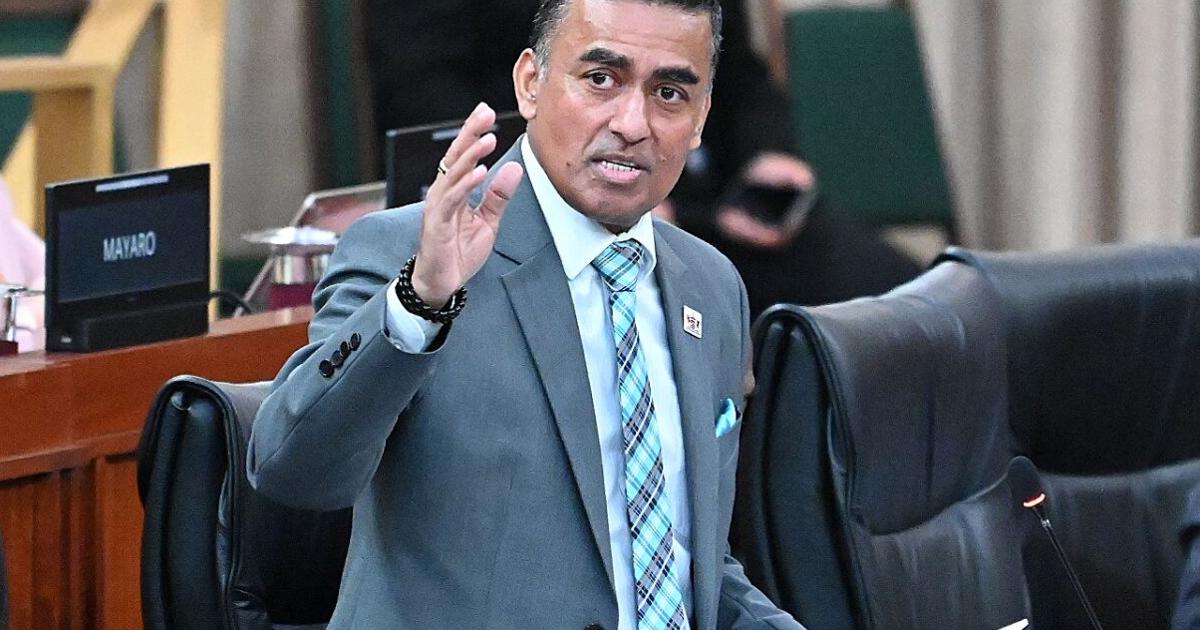
During a parliamentary sitting in Port of Spain focused on approving the Standing Finance Committee’s report, Trinidad and Tobago’s Finance Minister Davendranath Tancoo made two key fiscal announcements that shape the country’s near-term economic and public policy trajectory. First, he confirmed that dedicated budget line items will be included in the 2027 national fiscal budget to cover all obligations finalized through ongoing collective bargaining negotiations with public sector worker unions, including those representing nurses and teachers. Addressing growing anxiety among union members waiting for negotiation outcomes, Tancoo noted that the full tabulation and quantification of outstanding settlement costs will take several more weeks to complete, assuring workers that promised relief will be formalized once the 2027 budget is introduced later this year. “Relief is coming, the documentation is being provided now and in fiscal 2027 the relevant appropriations will be made,” he stated to Parliament. Beyond the union negotiation announcement, Tancoo used the debate to defend the current administration’s request for an additional $2.9 billion in supplementary government funding, explaining the allocation is needed to cover urgent recurrent and capital expenditure obligations through September 30, 2026. He clarified that until a full new Appropriation Bill is tabled at the end of the current financial year, the supplementary funding will be allocated under existing expenditure heads, with administrative safeguards in place to keep all government operations running without disruption. Tancoo also used the parliamentary session to outline the current UNC administration’s economic progress over its first year in office, contrasting its performance with the former PNM government led by previous Finance Minister Colm Imbert. He emphasized that the current government has reversed years of sustained national economic decline within 12 months, acknowledging that global external shocks continue to shape domestic economic outlooks, impact investment conditions, drive cost-of-living changes and affect citizen livelihoods. “Governments are not judged by whether economic storms arise, but by how they respond,” Tancoo told the chamber. A core point of criticism directed at the previous administration was the 2010s closure of the Petrotrin state-owned refinery, which Tancoo labeled a critical strategic national asset. He argued its closure eroded the country’s energy security and forced increased reliance on more expensive imported refined fuel. Looking forward, he confirmed the current government will continue supporting the domestic energy sector, but will not rely on energy as the country’s sole long-term economic growth strategy. Tancoo also highlighted responsible management of the country’s Heritage and Stabilisation Fund (HSF), reporting that as of June 4, 2026, the sovereign wealth fund held US$6.6 billion in assets – a roughly US$620 million increase from the US$5.98 billion valuation recorded on April 30, 2025. Defending the $2.9 billion supplementary funding request, Tancoo emphasized the allocation is tied to active government programs, ongoing infrastructure projects and core public services currently being delivered to citizens. “The machinery of Government has accelerated, projects are being executed, and the nation’s development agenda is gaining momentum,” he said, noting the funding supports school repairs, critical infrastructure upgrades, public servant payrolls and institutional restoration. “Public servants are being paid. Obligations are being honoured. We are supplementing because we are delivering.” To counter opposition criticism of the supplementary request, Tancoo compared the current ask to supplementary funding approved under the previous PNM administration, noting that between 2016 and 2024, former Finance Minister Colm Imbert greenlit a total of $20.7 billion in expenditure increases, including $17.7 billion in additional draws from the national Consolidated Fund. He accused Imbert of hypocrisy, noting that what the previous government labeled standard fiscal practice is now being framed as irresponsible by the opposition. “The financial crises that this country has been placed in, must be bolted to his chest. He and the PNM are responsible,” he said. Tancoo then laid out key fiscal improvements delivered in the administration’s first year: when the UNC took office, the national fiscal deficit stood at $10.07 billion, equal to 5.8% of GDP; that figure has now been cut to $7.01 billion, or 4% of GDP – a nearly two percentage point reduction in just 12 months. Interest payments on national debt have also fallen from $7.13 billion under the PNM to $6.91 billion, freeing up additional resources for public investment rather than debt servicing. Most notably, the country’s primary fiscal balance has shifted from a $2.93 billion deficit under the previous government to a near-balanced position of a $101 million surplus, bringing Trinidad and Tobago to the threshold of a primary surplus after years of consecutive primary deficits. On the revenue front, Tancoo highlighted new revenue reforms introduced in the 2026 national budget designed to boost collection and strengthen long-term fiscal sustainability. Three new measures – the Commercial Bank Asset Levy, Electricity Surcharge, and Landlord Registration Fee and Business Surcharge – have generated approximately $224 million in new revenue since they launched in January 2026. Broader administrative and digital reforms are also underway, including modernization of the Inland Revenue and Customs and Excise Divisions and their information technology systems, the creation of a Real Estate Investment Trust (REIT) to monetize high-value state-owned assets, and preparation for the launch of NIF Bond 3 in September 2026. Work is also progressing on a new transfer pricing regulatory regime to improve tax compliance, boost foreign exchange earnings and strengthen the country’s external position. For the first seven months of the 2026 fiscal year (October 1, 2025, to April 30, 2026), total national revenue hit $30.1 billion, exceeding the original projection of $28 billion. Total expenditure came in at $31.8 billion, below the projected $34.5 billion, resulting in a deficit of approximately $1.7 billion for the period. Oil prices averaged US$62.09 per barrel in the first quarter of 2026 and US$77.64 in the second quarter, compared to the full-year budget assumption of US$73.25 per barrel, while natural gas prices averaged US$4.20 per MMBtu, matching initial projections. Tancoo acknowledged that first-half expenditure was inflated by long-outstanding liabilities, legacy debt and structural weaknesses inherited from the previous administration, including unpaid VAT bond obligations, delayed VAT refunds owed to local businesses, accumulated subsidy liabilities, and ongoing operational and financial challenges at state-owned enterprises. The minister also highlighted the administration’s progress in resolving long-stalled public sector wage negotiations, including a finalized settlement with the Public Services Association that delivered a 10% base salary increase for public servants. To ease immediate cost-of-living pressures, tens of thousands of public workers received one-time cash advances of between $10,000 and $20,000 against their retroactive back pay, with roughly $224.8 million disbursed across multiple sectors to date. Between October 1, 2025, and May 30, 2026, the government also spent $395 million on fuel subsidies to shield domestic consumers from volatile global energy price increases. Updated projections for the remainder of the 2026 fiscal year forecast average oil prices of US$85 per barrel and natural gas prices of US$4.50 per MMBtu, up from the original budget assumptions. Combined with other adjustments, these higher commodity prices are expected to boost total annual revenue by $381.7 million, resulting in a projected full-year fiscal deficit of $7.0 billion. Tancoo confirmed the $2.9 billion in supplementary expenditure will be financed through a mix of domestic and external borrowing, including partnerships with major multilateral development institutions.